Overview
This unit introduces you to clinical practice through your first supervised placements in both non-ambulance and ambulance settings. You will begin applying foundational paramedicine knowledge and skills in authentic healthcare environments while developing confidence, professionalism, and reflective capacity. The initial placement is within a diverse (non-ambulance) healthcare setting such as an aged-care facility, providing interprofessional education. This placement will be a minimum of 70 hours, rostered across two weeks with a placement provider local to you, where possible. You will work alongside and learn from other health professionals and patients in non-emergency contexts, building skills in teamwork, communication, and person-centred care that will support future clinical practice within the ambulance and collaborative care settings. The second minimum 150-hour placement rostered across four weeks with an ambulance service, extends your learning into the prehospital environment, where you will observe and participate in emergency care under direct paramedic supervision. Across both settings, you will engage in guided reflection and feedback to support clinical reasoning, self-awareness, and ongoing professional growth. Preparation and support activities before and during placement develop workplace literacy and support your student-mentor relationship, ensuring you enjoy a positive and successful first clinical placement unit.
Details
Pre-requisites or Co-requisites
Pre-requisites: PMSC12001 Co-requisites: PMSC11004 or PMSC12007 BMSC12014 MPAT12001 Please note: Any student who has not successfully completed a PMSC residential school within the preceding 12 months or undertaken a clinical placement unit, should consult with the Head of Course to discuss completing a PMSC12001 refresher. This ensures currency with all contemporary skills and procedures in line with industry standards and professional capabilities.
Important note: Students enrolled in a subsequent unit who failed their pre-requisite unit, should drop the subsequent unit before the census date or within 10 working days of Fail grade notification. Students who do not drop the unit in this timeframe cannot later drop the unit without academic and financial liability. See details in the Assessment Policy and Procedure (Higher Education Coursework).
Offerings For Term 2 - 2026
Attendance Requirements
All on-campus students are expected to attend scheduled classes - in some units, these classes are identified as a mandatory (pass/fail) component and attendance is compulsory. International students, on a student visa, must maintain a full time study load and meet both attendance and academic progress requirements in each study period (satisfactory attendance for International students is defined as maintaining at least an 80% attendance record).
Recommended Student Time Commitment
Each 6-credit Undergraduate unit at CQUniversity requires an overall time commitment of an average of 12.5 hours of study per week, making a total of 150 hours for the unit.
Class Timetable
Assessment Overview
Assessment Grading
This is a pass/fail (non-graded) unit. To pass the unit, you must pass all of the individual assessment tasks shown in the table above.
All University policies are available on the CQUniversity Policy site.
You may wish to view these policies:
- Grades and Results Policy
- Assessment Policy and Procedure (Higher Education Coursework)
- Review of Grade Procedure
- Student Academic Integrity Policy and Procedure
- Academic Progression Policy and Procedure
- Student Refund and Credit Balance Policy and Procedure
- Complaints Policy and Procedure
- Information and Communications Technology Acceptable Use Policy and Procedure
This list is not an exhaustive list of all University policies. The full list of University policies are available on the CQUniversity Policy site.
Feedback, Recommendations and Responses
Every unit is reviewed for enhancement each year. At the most recent review, the following staff and student feedback items were identified and recommendations were made.
Feedback from SUTE data.
A disconnect between unit intent and student expectations in a clinical placement unit.
Acknowledging that this unit will undergo further change for the 2026 offering, ensure students understand that clinical placement units also address relevant professional capabilities in addition to facilitating clinical placement opportunities.
- Apply clinical reasoning and practical skills at a novice level in both ambulance and interprofessional clinical settings, providing safe, culturally responsive and evidence-informed care
- Employ reflective practice principles associated with clinical reasoning and conduct whilst supporting consumers in diverse healthcare settings
- Analyse the ethical, legal, professional and interprofessional requirements, responsibilities and boundaries associated with paramedic practice.
The Paramedicine Board of Australia requires that units align with the Professional capabilities for registered paramedics, which consist of five (5) domains. The below section aligns the proposed learning outcomes with these domains. In addition, the learning outcomes have been aligned with the National Safety and Quality Health Service (NSQHS) Ambulance Health Service Standards.
Professional Capabilities for Registered Paramedics
| Domains | Learning Outcomes |
| 1: The professional and ethical practitioner: 1.1.1, 1.1.2, 1.1.3, 1.1.4, 1.1.5, 1.1.6, 1.1.7, 1.1.9, 1.1.10, 1.1.11, 1.2.1, 1.2.2, 1.2.3, 1.2.4, 1.2.5, 1.2.6, 1.3.1, 1.3.2, 1.3.3, 1.4.1 | LO1, LO2, LO3 |
| 2: The communicator and the collaborator: 2.1.1, 2.1.2, 2.1.3, 2.1.4, 2.1.5, 2.1.6, 2.1.7, 2.1.8, 2.2.1, 2.2.1, 2.2.3, 2.2.5, 2.2.6 | LO1, LO2, LO3 |
| 3: The evidence-based practitioner: 3.1.1, 3.1.2, 3.2.1, 3.2.2, 3.2.3, 3.3.2, 3.3.4, 3.4.2, 3.4.3 | LO1, LO2, LO3 |
| 4: The safety and risk management practitioner: 4.1.1, 4.1.2, 4.1.3, 4.1.4, 4.1.5, 4.2.1, 4.2.2, 4.2.3, 4.2.4, 4.3.1, 4.3.3, 4.4.1, 4.4.2, 4.4.3, 4.4.4, 4.5.2, 4.6.2, 4.6.5, 4.7.2 | LO1, LO2, LO3 |
|
5: The paramedicine practitioner: 5.1.1, 5.1.2, 5.1.3, 5.1.4, 5.1.5, 5.2.2, 5.2.4, 5.3.4, 5.3.6, 5.4.1, 5.4.2, 5.4.3, 5.4.4, 5.4.6, 5.5.3, 5.6.1, 5.6.2, 5.6.3, 5.6.4. |
LO1, LO2, LO3 |
National Safety and Quality Health Service Standards
| Standard | Learning Outcomes |
| Clinical Governance: 1.01b, 1.01c, 1.06a, 1.10a, 1.10c, 1.11a, 1.13a, 1.16b, 1.16c, 1.19b, 1.20a, 1.20b, 1.20d, 1.21, 1.22a, 1.23a, 1.23b, 1.23c, 1.24a, 1.24b, 1.25a, 1.26, 1.27a, 1.27b, 1.28b, 1.28d | LO1, LO2, LO3 |
| Partnering and Consumers: 2.01a, 2.01b, 2.03a, 2.07, 2.08, 2.10a, 2.10b, 2.10c | LO1, LO2, LO3 |
| Preventing and Controlling Infections: 3.02b, 3.06, 3.07a, 3.07b, 3.07c, 3.07f, 3.08a, 3.08b, 3.08g, 3.08i, 3.09b, 3.09c, 3.10a, 3.10b, 3.12, 3.13a, 3.13b, 3.13c | LO1, LO2, LO3 |
| Medication safety: 4.04, 4.05, 4.06, 4.07, 4.10a, 4.10b, 4.10c, 4.11, 4.12a, 4.12b, 4.14a, 4.14b, 4.14c | LO1, LO2, LO3 |
| Comprehensive care: 5.04a, 5.04b, 5.04c, , 5.04d, 5.05a, 5.05b, 5.06, 5.08, 5.10a, 5.10b, 5.10c, 5.12, 5.13a, 5.13b, 5.13c, 5.13d, 5.13e, 5.13f, 5.14a, 5.14b, 5.14c, 5.14d, 5.33 | LO1, LO2, LO3 |
| Communicating for Safety: 6.01a, 6.01b, 6.02a, 6.03a, 6.03b, 6.03c, 6.04a, 6.04b, 6.04c, 6.07a, 6.07b, 6.07c, 6.08a, 6.08b, 6.08c, 6.08d, 6.08e, 6.08f, 6.10, 6.11a, 6.11b, 6.11c | LO1, LO2 |
| Recognising and Responding to Acute Deterioration: 8.01a, 8.01b, 8.03a, 8.03b, 8.03c, 8.04a, 8.04b, 8.04c, 8.06a, 8.06b, 8.06c, 8.06d, 8.06e, 8.07, 8.09, 8.10, 8.12, 8.13 | LO1, LO2 |
Alignment of Assessment Tasks to Learning Outcomes
| Assessment Tasks | Learning Outcomes | ||
|---|---|---|---|
| 1 | 2 | 3 | |
| 1 - Professional Practice Placement - 0% | |||
| 2 - Portfolio - 0% | |||
Alignment of Graduate Attributes to Learning Outcomes
| Graduate Attributes | Learning Outcomes | ||
|---|---|---|---|
| 1 | 2 | 3 | |
| 1 - Communication | |||
| 2 - Problem Solving | |||
| 3 - Critical Thinking | |||
| 4 - Information Literacy | |||
| 5 - Team Work | |||
| 6 - Information Technology Competence | |||
| 7 - Cross Cultural Competence | |||
| 8 - Ethical practice | |||
| 9 - Social Innovation | |||
| 10 - First Nations Knowledges | |||
| 11 - Aboriginal and Torres Strait Islander Cultures | |||
Textbooks
There are no required textbooks.
IT Resources
- CQUniversity Student Email
- Internet
- Unit Website (Moodle)
- Sonia Online
All submissions for this unit must use the referencing style: American Psychological Association 7th Edition (APA 7th edition)
For further information, see the Assessment Tasks.
a.temple@cqu.edu.au
Week 1
Begin Date: 13 Jul 2026Module/Topic
Unit Introduction
Module 1 - Communication in a Healthcare Setting
Chapter
Events and Submissions/Topic
Introductory Zoom Session (Mon 1.30pm AEST)
Week 2
Begin Date: 20 Jul 2026Module/Topic
Module 2 - Social Media, Professionalism & Ethics - Applying the Professional Capabilities during your Diverse Placements
Chapter
Events and Submissions/Topic
Zoom Session (Mon 1.30pm AEST)
Week 3
Begin Date: 27 Jul 2026Module/Topic
Module 3 - Diverse Populations and Vulnerable Clients
Chapter
Events and Submissions/Topic
Zoom Session (Mon 1.30pm AEST)
Week 4
Begin Date: 03 Aug 2026Module/Topic
Module 4 - Keeping Yourself and Your Patients Safe
Chapter
Events and Submissions/Topic
Zoom Session (Mon 1.30pm AEST)
Assessment 2 Portfolio Part B Discussion Groups Allocated
Week 5
Begin Date: 10 Aug 2026Module/Topic
Module 5 - Placement and Reflection
Chapter
Events and Submissions/Topic
Zoom Session (Mon 1.30pm AEST)
Week 1 of Non-Ambulance Placement
Week 6
Begin Date: 17 Aug 2026Module/Topic
Module 5 - Placement and Reflection (cont'd)
Chapter
Events and Submissions/Topic
Zoom Session (Mon 1.30pm AEST)
Week 2 of Non Ambulance Placement
Vacation Week
Begin Date: 24 Aug 2026Module/Topic
Break week
Chapter
Events and Submissions/Topic
Zoom Session (Mon 1.30pm AEST)
Week 7
Begin Date: 31 Aug 2026Module/Topic
Module 6 - Reflective Practice
Chapter
Events and Submissions/Topic
Zoom Session (Mon 1.30pm AEST)
Assessment 2 Portfolio Part A: Non-Ambulance Healthcare Reflection Due: Week 7 Friday (4 Sept 2026) 9.00am AEST
Week 8
Begin Date: 07 Sep 2026Module/Topic
Module 7 - Legislation & Quality Systems in Practice
Chapter
Events and Submissions/Topic
Zoom Session (Mon 1.30pm AEST)
Assessment 2 Part B: Group Discussion: Understanding the health care JIGSAW Due: Week 8 (11 Sept 2026) 9.00am AEST
Week 9
Begin Date: 14 Sep 2026Module/Topic
Module 8 - Applying the AHPRA Professional Capabilities for Registered Paramedics During Ambulance Placement
Chapter
Professional Capabilities for Registered Paramedics Domains 1-5
Events and Submissions/Topic
Zoom Session (Mon 1.30pm AEST)
Week 10
Begin Date: 21 Sep 2026Module/Topic
Module 9 - What to expect during your Ambulance Placement
Chapter
Events and Submissions/Topic
Zoom Session (Mon 1.30pm AEST) - Guest Presenter - QAS Clinical Placement Team
Week 11
Begin Date: 28 Sep 2026Module/Topic
Module 10 - Preparing for Ambulance Placement
Chapter
Events and Submissions/Topic
Zoom Session (Mon 1.30pm AEST)
Week 12
Begin Date: 05 Oct 2026Module/Topic
Module 11 - Ambulance Placements
Chapter
Events and Submissions/Topic
Zoom Drop In Sessions (Mon 1.30pm AEST) Continue throughout the placement period
Ambulance Placement Dates are:
- QAS/AV Group 1
- Commences 5 October 2026
- End 1 November 2026
- QAS/AV Group 2
- Commences 2 November 2026
- Commences 29 November 2026
Exam Week
Begin Date: 12 Oct 2026Module/Topic
Module 11 - Ambulance Placements (cont'd) - Formative & Summative Assessments
Chapter
Events and Submissions/Topic
Zoom Drop In Sessions (Mon 1.30pm AEST) Continue throughout the placement and assessment period
Ambulance Placement Interim (Formative) & Final (Summative) Placement Reports Due During and After Placement. Due dates for each group are:
- Interim (Formative) Placement Report (Sonia) Due Placement Week 3 Monday 9.00am AEST:
- QAS/AV Group 1 - Monday 19 October 2026
- QAS/AV Group 2 - Monday 2 November 2026
- Final (Summative) Placement Report (Sonia) Due 9.00am Monday after Placement Week 4:
- QAS/AV Group 1: Monday 16 November 2026
- QAS/AV Group 2: Monday 30 November 2026
Vacation/Exam Week
Begin Date: 19 Oct 2026Module/Topic
Module 12 - Post Ambulance Placement Review
Chapter
Events and Submissions/Topic
Zoom Drop In Sessions (Mon 1.30pm AEST) Continue throughout the placement and assessment period. The final Zoom Session will be Monday 7 December 2026.
Assessment 2: Portfolio Parts 2C & 2D due 2 weeks after placement completion. Due dates for each group are:
- QAS/AV Group 1: Friday 13 November 2026 9.00am AEST
- QAS/AV Group 2: 0900 Friday 11 December 2026 9.00am AEST
1 Professional Practice Placement
In this unit, you are required to complete two (2) Work Integrated Learning (WIL) placements. These placements offer you the opportunity to apply your underpinning knowledge, clinical reasoning, and practical skills to paramedic practice.
Non-ambulance health service placement
This placement will be a minimum of 70 hours, rostered across two weeks with a placement provider local to you, where possible. You will work alongside and learn from other health professionals and patients in non-emergency contexts, building skills in teamwork, communication, and person-centred care that will support future clinical practice within the ambulance and collaborative care settings.
Ambulance placement
The second minimum 150-hour placement will be rostered across four weeks with an ambulance service, extending your learning into the prehospital environment, where you will observe and participate in emergency care under direct paramedic supervision.
Task Details:
For this assessment, you must complete three (3) Professional Practice Placement Reports with your placement supervisors, via the online Sonia links.
Across both non-ambulance and ambulance settings, you will engage in guided reflection and feedback to support clinical reasoning, self-awareness, and ongoing professional growth.
Each report comprises self-assessment and supervisor feedback to provide a 360-degree review of your performance and attendance, using a structured online template in Sonia. The interim report acts as a checkpoint to identify any areas requiring additional support, while the final report determines your overall placement outcome. These reports not only verify your academic progress but also serve as important evidence of your professionalism, conduct, and clinical performance to support future employment.
Whilst total attendance and hours are logged within the Final Assessment, you will also report all absenteeism according to the requirements outlined in Moodle. Support is provided through Moodle, weekly Zoom sessions and as needed, before and during your clinical placement.
There is also a section where you are expected to critically reflect upon your clinical placement.
Both the Interim and the Final forms comprise two main sections: student self-assessment, and clinical supervisor assessment. These are broken down as follows:
Non-Ambulance Professional Practice Placement Report
- Final (Summative) Assessment: Student Self-Assessment
- Domains of the AHPRA Professional Capabilities for Registered Paramedics
- Professionalism
- Reflection prompts.
- Final (Summative) Assessment: AHPRA Registered Supervisor Assessment
- Domains of the AHPRA Professional Capabilities for Registered Paramedics
- Professionalism
- Reflection prompts
Ambulance Professional Practice Placement Report
- Interim (Formative) Assessment: Student Self-Assessment:
- Domains of the AHPRA Professional Capabilities for Registered Paramedics
- Professionalism
- Reflection prompts.
- Interim (Formative) Assessment: Clinical Supervisor Assessment:
- Domains of the AHPRA Professional Capabilities for Registered Paramedics
- Professionalism
- On-track to meet required outcomes of the clinical placement.
- Final (Summative) Assessment: Student Self-Assessment:
- Domains of the AHPRA Professional Capabilities for Registered Paramedics
- Professionalism
- Skills log
- Case type log
- Reflection prompts
- Clinical activity summary.
- Final (Summative) Assessment: Clinical Supervisor Assessment:
- Domains of the AHPRA Professional Capabilities for Registered Paramedics
- Professionalism
- Achievement of required outcomes of the clinical placement.
Submission
These reports need to be submitted as an electronic form via Sonia directly to your clinical supervisor. You are responsible for completing your submissions with your clinical supervisor by the due dates.
The 72-hour grace period does NOT apply to this assessment.
Level of GenAI use allowed
Level 1: You must not use AI at any point in this assessment. You must demonstrate your core skills and knowledge.
This means that all student free-text fields in the Sonia form must be your own work in your own words, with no assistance from AI.
Non-Ambulance Professional Practice Placement Report Due 0900 first Monday after placement completion; Ambulance Professional Practice Placement Report (Interim) Due 0900 Monday of Ambulance Placement Week 3; Ambulance Professional Practice Placement Report (Final) Due 0900 first Monday after placement completion
For non-standard clinical placement dates, your return date for this assessment is two weeks after submission.
This is a Pass/Fail assessment. You must pass both placements to pass the unit.
You are assessed according to
- Successful completion of minimum hours for both placements
- Skills log: Accurately completes the skills log section of the Final (Summative) Clinical Supervisor Assessment.
- Case type log: Accurately completes the case log section of the Final (Summative) Clinical Supervisor Assessment.
- Clinical activity: Accurately completes the clinical activity section of the Final (Summative) Clinical Supervisor Assessment.
- The marking rubrics provided in Moodle for each placement; note that passing scores vary for best fit with each domain or criteria. The rubrics are based on the capabilities in the AHPRA Registered capabilities for professional paramedics (Ahpra 2021):
- Domain 1: The professional and ethical practitioner
- Domain 2: The communicator and the collaborator
- Domain 3: The evidence-based practitioner
- Domain 4: The safety and risk management practitioner
- Domain 5: The paramedicine practitioner
The scores given to you by your Clinical Supervisor(s) are not the final say on your placement outcome; i.e. Unit Coordinators, not Clinical Supervisors, determine your outcome.
Where inconsistencies or concerns may arise around your clinical placement performance and/or professionalism, the Unit Coordinator will seek further information and clarity through discussions with the Clinical Supervisor(s) and other relevant people.
Refer to the Moodle page for full information and FAQ regarding this assessment task
- Apply clinical reasoning and practical skills at a novice level in both ambulance and interprofessional clinical settings, providing safe, culturally responsive and evidence-informed care
- Employ reflective practice principles associated with clinical reasoning and conduct whilst supporting consumers in diverse healthcare settings
- Analyse the ethical, legal, professional and interprofessional requirements, responsibilities and boundaries associated with paramedic practice.
2 Portfolio
Placements are a key part of your learning journey. Reflecting on placement experiences enables you to draw additional value and learning from them.
In this portfolio, you will complete a series of structured reflections and discussions exploring different aspects of your two placement experiences. You will discuss and share your placement experience with others and also learn from the experiences of others. Reflecting on and discussing your non-ambulance placement will provide you with an opportunity to learn about other health professionals and their context, building interprofessional education. Comparing your non-ambulance and ambulance placement experiences will help you to develop your understanding and appreciation of the wider community healthcare chain.
Constructive reflection adds value when it leads to action. Each requires you to reflect on your experience and will lead you to develop SMART actions (promises to yourself) which you will take to develop your own professional practice.
There are four (4) parts to this assessment, due progressively throughout the term. Parts A, C and D are individual submissions, Part B requires participation in a Group Discussion but will be assessed individually.
- Part A: Non-Ambulance Healthcare Reflection (Due 0900 Friday Week 8)
- Part B: Group Discussion - Understanding the heath care JIGSAW (Due 0900 Friday Week 9) (Note: Groups allocated by Unit Coordinator in Week 4)
- Part C: Ambulance Placement Reflection (Due 0900 Friday 2 weeks after placement)
- Part D: Bringing it all together (Due: 0900 Friday 2 weeks after placement)
Note: the assessment parts are due progressively throughout the term. The 72 hour rule applies individually to each part.
You need to pass all four parts to pass this assessment. You are allowed to resubmit one part.
Level of GenAI use allowed
Level 1: You must not use AI at any point in this assessment. You must demonstrate your core skills and knowledge.
This means that all student free-text fields in the Sonia form must be your own work in your own words, with no assistance from AI.
Part A is Due 9am AEST Friday 4 September 2026; Part B is Due 9am Friday 11 September 2026; QAS/AV Group 1 Parts C and D are due 9am Friday 13 November 2026; QAS/AV Group 2 Parts C and D are due 9am Friday 14 December 2026
Within three weeks of submission
This reflective portfolio will be assessed on
- Active discussion of placement activities demonstrating engagement with the placement experience
- Active reflection of placement experiences identifying and describing diverse health care environments
- Constructive sharing of knowledge of diverse non-ambulance healthcare contexts with others through critical thinking discussions
- Constructive and critical thinking of key concepts across multiple health contexts to demonstrate understanding and application of key concepts including
- interprofessional education
- cultural safety
- patient centred care
- bioethical principles
- legislative and quality standards in action
- health care pathways
- professional communication and collaboration
- Development of reflective learning into personal professional development
- Constructive consideration of mentor feedback across multiple contexts
- Explain and plan personal professional practice improvement development activities
In Part B, disrespectful posts on the group discussion forums will be considered unprofessional communications and will result in a fail for that Part.
Each part will be individually assessed against the detailed rubrics provided in Moodle.
You must pass all each of Part A, B, C and D to pass this assessment.
No submission method provided.
- Employ reflective practice principles associated with clinical reasoning and conduct whilst supporting consumers in diverse healthcare settings
- Analyse the ethical, legal, professional and interprofessional requirements, responsibilities and boundaries associated with paramedic practice.
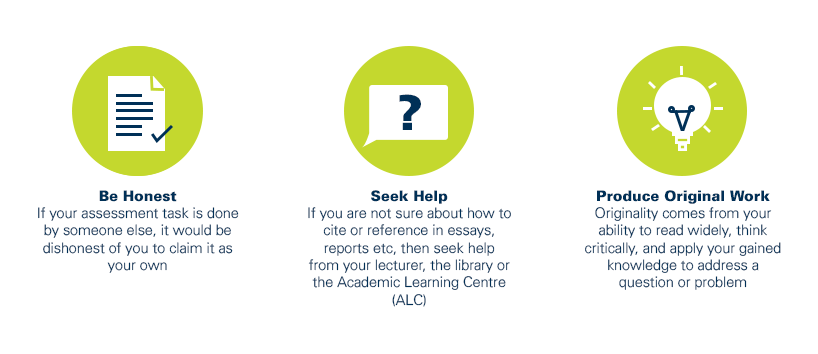
As a CQUniversity student you are expected to act honestly in all aspects of your academic work.
Any assessable work undertaken or submitted for review or assessment must be your own work. Assessable work is any type of work you do to meet the assessment requirements in the unit, including draft work submitted for review and feedback and final work to be assessed.
When you use the ideas, words or data of others in your assessment, you must thoroughly and clearly acknowledge the source of this information by using the correct referencing style for your unit. Using others’ work without proper acknowledgement may be considered a form of intellectual dishonesty.
Participating honestly, respectfully, responsibly, and fairly in your university study ensures the CQUniversity qualification you earn will be valued as a true indication of your individual academic achievement and will continue to receive the respect and recognition it deserves.
As a student, you are responsible for reading and following CQUniversity’s policies, including the Student Academic Integrity Policy and Procedure. This policy sets out CQUniversity’s expectations of you to act with integrity, examples of academic integrity breaches to avoid, the processes used to address alleged breaches of academic integrity, and potential penalties.
What is a breach of academic integrity?
A breach of academic integrity includes but is not limited to plagiarism, self-plagiarism, collusion, cheating, contract cheating, and academic misconduct. The Student Academic Integrity Policy and Procedure defines what these terms mean and gives examples.
Why is academic integrity important?
A breach of academic integrity may result in one or more penalties, including suspension or even expulsion from the University. It can also have negative implications for student visas and future enrolment at CQUniversity or elsewhere. Students who engage in contract cheating also risk being blackmailed by contract cheating services.
Where can I get assistance?
For academic advice and guidance, the Academic Learning Centre (ALC) can support you in becoming confident in completing assessments with integrity and of high standard.
What can you do to act with integrity?