Overview
In this unit, you will continue to develop your skills in recognising, diagnosing and managing patients presenting with less commonly encountered acute and life-threatening disease processes, throughout the life span. You will integrate your developing knowledge of anatomy and physiology, pathophysiology and pharmacology with patient assessment, diagnostic evaluations and clinical history to formulate a provisional diagnosis. You will use this information to design and implement the most appropriate clinical management in line with contemporary industry guidelines and protocols, and emerging evidence-based practices. Case-based learning combined with high fidelity simulation will contextualise your essential clinical skills, clinical decision making and problem-solving abilities.
Details
Pre-requisites or Co-requisites
Pre-requisites- PMSC12001 Procedures & Skills in Paramedic CarePMSC11004 Paramedic Medical Emergencies 1PMSC12004 Advanced Electrophysiology and Coronary Care
Important note: Students enrolled in a subsequent unit who failed their pre-requisite unit, should drop the subsequent unit before the census date or within 10 working days of Fail grade notification. Students who do not drop the unit in this timeframe cannot later drop the unit without academic and financial liability. See details in the Assessment Policy and Procedure (Higher Education Coursework).
Offerings For Term 2 - 2021
Attendance Requirements
All on-campus students are expected to attend scheduled classes - in some units, these classes are identified as a mandatory (pass/fail) component and attendance is compulsory. International students, on a student visa, must maintain a full time study load and meet both attendance and academic progress requirements in each study period (satisfactory attendance for International students is defined as maintaining at least an 80% attendance record).
Recommended Student Time Commitment
Each 6-credit Undergraduate unit at CQUniversity requires an overall time commitment of an average of 12.5 hours of study per week, making a total of 150 hours for the unit.
Class Timetable
Assessment Overview
Assessment Grading
This is a graded unit: your overall grade will be calculated from the marks or grades for each assessment task, based on the relative weightings shown in the table above. You must obtain an overall mark for the unit of at least 50%, or an overall grade of 'pass' in order to pass the unit. If any 'pass/fail' tasks are shown in the table above they must also be completed successfully ('pass' grade). You must also meet any minimum mark requirements specified for a particular assessment task, as detailed in the 'assessment task' section (note that in some instances, the minimum mark for a task may be greater than 50%). Consult the University's Grades and Results Policy for more details of interim results and final grades.
All University policies are available on the CQUniversity Policy site.
You may wish to view these policies:
- Grades and Results Policy
- Assessment Policy and Procedure (Higher Education Coursework)
- Review of Grade Procedure
- Student Academic Integrity Policy and Procedure
- Monitoring Academic Progress (MAP) Policy and Procedure - Domestic Students
- Monitoring Academic Progress (MAP) Policy and Procedure - International Students
- Student Refund and Credit Balance Policy and Procedure
- Student Feedback - Compliments and Complaints Policy and Procedure
- Information and Communications Technology Acceptable Use Policy and Procedure
This list is not an exhaustive list of all University policies. The full list of University policies are available on the CQUniversity Policy site.
Feedback, Recommendations and Responses
Every unit is reviewed for enhancement each year. At the most recent review, the following staff and student feedback items were identified and recommendations were made.
Feedback from - Have your say
Recommended readings from the prescribed textbook were not provided in the topic sections. Instead, it was only found on the unit profile in the schedule section.
Include all recommended readings from the prescribed textbook in the topic sections on Moodle, in the unit profile and in the eReading list.
Feedback from -Have your say
Moodle layout was appreciated by students
Keep a similar Moodle format.
Feedback from - Have your say - Stated at the end of an assessment
Students enjoyed the opportunity to be creative in their presentation assessment.
Continue to allow students to be creative while doing their assessment.
- Evaluate comprehensive patient clinical history to formulate a provisional diagnosis
- Formulate the provisional diagnosis by applying knowledge of underpinning foundational pathophysiology of less commonly encountered acute and life-threatening disease processes
- Determine the appropriate clinical management including the use of intermediate pharmacology through comprehensive knowledge and demonstration of best-practice clinical interventions.
Justification for the new unit is strongly influenced by industry feedback on first CQUniversity graduate paramedics. By increasing the paramedic-specific focus of this course the graduates will be better prepared for independent on-road practice without additional educational support from the ambulance services. This will strengthen the Paramedic Course's position when seeking full accreditation through proactively seeking industry feedback, and by demonstrating positive and prompt responsiveness to that feedback. It will also assist Paramedics with full registration through the Australian Health Practitioners Regulation Agency (AHPRA) by instilling a core base knowledge that will aid with ongoing professional development into the future.
Alignment of Assessment Tasks to Learning Outcomes
| Assessment Tasks | Learning Outcomes | ||
|---|---|---|---|
| 1 | 2 | 3 | |
| 1 - Online Quiz(zes) - 50% | |||
| 2 - Presentation - 30% | |||
| 3 - Written Assessment - 20% | |||
Alignment of Graduate Attributes to Learning Outcomes
| Graduate Attributes | Learning Outcomes | ||
|---|---|---|---|
| 1 | 2 | 3 | |
| 1 - Communication | |||
| 2 - Problem Solving | |||
| 3 - Critical Thinking | |||
| 4 - Information Literacy | |||
| 5 - Team Work | |||
| 6 - Information Technology Competence | |||
| 7 - Cross Cultural Competence | |||
| 8 - Ethical practice | |||
| 9 - Social Innovation | |||
| 10 - First Nations Knowledges | |||
| 11 - Aboriginal and Torres Strait Islander Cultures | |||
Alignment of Assessment Tasks to Graduate Attributes
| Assessment Tasks | Graduate Attributes | ||||||||||
|---|---|---|---|---|---|---|---|---|---|---|---|
| 1 | 2 | 3 | 4 | 5 | 6 | 7 | 8 | 9 | 10 | 11 | |
| 1 - Online Quiz(zes) - 50% | |||||||||||
| 2 - Presentation - 30% | |||||||||||
| 3 - Written Assessment - 20% | |||||||||||
Textbooks
Textbook of Adult Emergency Medicine
- Fifth Edition (2020)
- Authors: Peter Cameron, Mark Little, Biswadev Mitra, Conor Deasy.
- Elsevier
- Chatswood Chatswood , NSW , Australia
- ISBN: 978-0-7020-7624-4
- Binding: Paperback
Additional Textbook Information
If you prefer to study with a paper text, you can purchase one at the CQUni Bookshop here: http://bookshop.cqu.edu.au (search on the Unit code).
IT Resources
- CQUniversity Student Email
- Internet
- Unit Website (Moodle)
- Computer
- Headphones or speaker and a microphone
All submissions for this unit must use the referencing style: American Psychological Association 7th Edition (APA 7th edition)
For further information, see the Assessment Tasks.
c.legros@cqu.edu.au
Week 1 Drug Therapy for PMSC12005
Begin Date: 12 Jul 2021Module/Topic
Week 1 will cover all drugs associated with PMSC12005. You will refer to this topic throughout the whole unit.
Chapter
Textbook of Adult Emergency Medicine
Chapter 22: p.660-664.Events and Submissions/Topic
Week 2 Neurological Emergencies
Begin Date: 19 Jul 2021Module/Topic
Week 2 will explore neurological emergencies encountered by paramedics.
Chapter
Textbook of Adult Emergency Medicine
Chapter 8: p.352-355, 364-368, 379-382.
Events and Submissions/Topic
Week 3-4 Airway and Respiratory Emergencies
Begin Date: 26 Jul 2021Module/Topic
Week 3 and 4 will explore some airway and respiratory emergencies encountered by paramedics.
Chapter
Textbook of Adult Emergency Medicine
Chapter 6: p.262-269, 271-290.Events and Submissions/Topic
Verso discussion opens. Discussions to be posted on the Verso platform by the end of week 3 (1st of August 2021). Verso engagement continues and closes at the end of week 4 (8th of August 2021).
Week 5-6 Cardiovascular Emergencies
Begin Date: 09 Aug 2021Module/Topic
Week 5 and 6 will explore some cardiovascular emergencies encountered by paramedics.
Chapter
Textbook of Adult Emergency Medicine
Chapter 5: p.223-237, 254-261.
Events and Submissions/Topic
The first quiz opens on Monday 9th of August at 06:00 and will close on Sunday the 15th of August at 23:55. Content from weeks 1 to 4 will be used for this quiz.
Vacation Week
Begin Date: 16 Aug 2021Module/Topic
Enjoy the break!
Chapter
Events and Submissions/Topic
Week 7 Shock and Sepsis
Begin Date: 30 Aug 2021Module/Topic
Week 7 will explore the world of shock and sepsis and we will dive deeper into the management of anaphylaxis.
Chapter
Textbook of Adult Emergency Medicine
Chapter 2: p.35-47, 59-66.
Events and Submissions/Topic
Week 8-9 Gastrointestinal emergencies
Begin Date: 06 Sep 2021Module/Topic
Week 8 and 9 will explore some gastrointestinal emergencies encountered by paramedics.
Chapter
Textbook of Adult Emergency Medicine
Chapter 7: p.302-335, 339-343.
Events and Submissions/Topic
The presentation is due on Sunday the 12th of September at 23:55.
Week 10 Genitourinary Emergencies
Begin Date: 20 Sep 2021Module/Topic
Week 10 will explore some genitourinary emergencies encountered by paramedics.
Chapter
Textbook of Adult Emergency Medicine
Chapter 9: p.402-408.
Chapter 10 in its entirety.
Events and Submissions/Topic
Week 11-12 Endocrine, Metabolic and Heamatologic Emergencies
Begin Date: 27 Sep 2021Module/Topic
Week 11 and 12 will explore some endocrine, metabolic and haematologic emergencies encountered by paramedics.
Chapter
Textbook of Adult Emergency Medicine
Chapter 11: p.472-487, 497-504.
Events and Submissions/Topic
The final quiz will open on Monday the 4th of October at 06:00 and will close on Sunday the 10th of October at 23:55. Content from all weeks will be used for this quiz with an emphasis on weeks 5 to 12.
Exam Week
Begin Date: 18 Oct 2021Module/Topic
Chapter
Events and Submissions/Topic
Nil exams during exam week.
1 Online Quiz(zes)
You will be required to complete two online quizzes throughout this unit. The first quiz opens on Monday the 9th of august at 06:00 and will close on Sunday the 15th of August at 23:55. Content from weeks 1 to 4 will be used for this quiz. The duration for quiz one is one hour (60 minutes). The second quiz will open on Monday the 4th of October at 06:00 and will close on Sunday the 10th of October at 23:55. Content from all weeks will be used for this quiz with an emphasis on weeks 5 to 12. The duration for quiz two is one hour and thirty minutes (90 minutes). Only one attempt is allowed for each quiz.
Questions associated with this quiz will be extracted from the content presented in PMSC12005 and this includes, lecture slides, lecture recordings and recommended readings. Quizzes will include multiple-choice, short and long answer questions. This is NOT an open-book assessment. Grades from quiz one and quiz two will be combined and students must achieve a minimum of 50% overall for this assessment task.
Students are advised that to attain a passing grade for this unit, ALL assessment items must be completed. Furthermore, a passing grade of 50% must be attained for each assessment. Failure to attain this standard will cause an overall ‘Fail’ grade for this unit. The quizzes are combined meaning that a minimum of 50% between the two quizzes must be achieved. The quizzes MUST be completed and submitted by the times indicated in the assessment tasks. In the absence of an approved extension for the quiz, there will be no opportunity to complete the tasks after the specified dates, and there will be no opportunity to apply a late penalty of five percent per day. For the presentation, a 5% per day penalty will be added to all late submissions. Extensions can be submitted but these will be assessed on a case by case basis according to the CQU assessment policy and procedure.
2
Quiz one opens on Monday the 9th of august at 0600 and closes on Sunday the 15th of August at 2355 . Quiz two opens on Monday the 4th of October at 0600 and closes on Sunday the 10th of October at 2355.
Staff will aim to return assessments results within 2 weeks of closing date
Answering the questions correctly will result in full marks. Partial marks can be allocated but are dependent on the question. No partial marks will be allocated for any multiple-choice questions.
- Formulate the provisional diagnosis by applying knowledge of underpinning foundational pathophysiology of less commonly encountered acute and life-threatening disease processes
- Determine the appropriate clinical management including the use of intermediate pharmacology through comprehensive knowledge and demonstration of best-practice clinical interventions.
- Communication
- Problem Solving
- Critical Thinking
- Information Literacy
- Information Technology Competence
- Cross Cultural Competence
- Ethical practice
2 Presentation
For this piece of assessment, creativity will be put into play. You will be required to create a 5-7 minute presentation on a topic from the list provided below. How you present the topic will be based on the following options:
1- Topic presented as an audio podcast show aimed at clinicians (MP3 format only)
2- Topic presented in a creative video aimed at clinicians (MP4 format only)
Here are your topics of choice for this assessment:
1- Bell's palsy
2- Dystonic reaction
3- Malignant hyperthermia
- The podcast show and the creative video should be 5-7 minutes maximum. If the podcast show or the video is less than 4 minutes and 30 seconds you will be penalised at a rate of 5% per 15 seconds. On the other hand, information included after the 7-minute mark will not be viewed and will not be marked as part of your presentation.
- A list of references is to be submitted via Moodle along with your presentation (MP3 or MP4 format). A minimum of 5 peer-reviewed journal articles is required for this presentation. The reference list can be in a PDF or Word format and must follow the APA referencing style.
If you chose the podcast format, please read the following:
The podcast should include:
- An introduction to the show
- The topic section·
- A closing section of the show
- Description and definition of the disease
- Clinical features and causes of the disease
- Specific questioning related to the chosen topic you could ask as a practitioner
- In-hospital management
- Pharmacodynamic explanation of the drugs utilised during in-hospital treatment.
If you chose the creative video, please read the following:
Your creative video can take many forms. It is entirely up to you how you produce this video. For example, you could create a talk show or why not recreate a Grey’s Anatomy episode with your own twist! Let your imagination run free! However, it is unacceptable to simply record your presentation.
The creative video should include:
- An introduction section
- The topic section·
- A closing section
The introduction and the closing section of the podcast are entirely up to you. Be creative and have fun! However, the topic section requirements are as follow:
- Description and definition of the disease
- Clinical features and causes of the disease
- Specific questioning related to the chosen topic you could ask as a practitioner
- In-hospital management
- Pharmacodynamic explanation of the drugs utilised during in-hospital treatment.
Students are advised that to attain a passing grade for this unit, ALL assessment items must be completed. Furthermore, a passing grade of 50% must be attained for each assessment. Failure to attain this standard will cause an overall ‘Fail’ grade for this unit. The quizzes are combined meaning that a minimum of 50% between the two quizzes must be achieved. The quizzes MUST be completed and submitted by the times indicated in the assessment tasks. In the absence of an approved extension for the quiz, there will be no opportunity to complete the tasks after the specified dates, and there will be no opportunity to apply a late penalty of five percent per day. For the presentation, a 5% per day penalty will be added to all late submissions. Extensions can be submitted but these will be assessed on a case by case basis according to the CQU assessment policy and procedure.
The presentation is due on Sunday the 12th of September at 23:55 (Week 8)
Staff will aim to return assessment results within 2 weeks of the closing date.
Criteria of the presentation = 35%
Creativity and flow of information = 10%
APA referencing list = 5%
In-depth marking rubric information will be available on the Moodle site.
- Evaluate comprehensive patient clinical history to formulate a provisional diagnosis
- Formulate the provisional diagnosis by applying knowledge of underpinning foundational pathophysiology of less commonly encountered acute and life-threatening disease processes
- Communication
- Problem Solving
- Critical Thinking
- Information Literacy
- Information Technology Competence
- Cross Cultural Competence
- Ethical practice
3 Written Assessment
You are required to participate in a Clinical Discussion Forum (CDF) throughout the unit that corresponds with a selected topic associated with this unit. A topic of discussion will be made available on the Verso platform on Monday the 26th of August at 09:00 am and will close two weeks later on Sunday the 8th of August at 11:55 pm.
The CDF will utilise the ‘Verso’ education software platform and involves the entire class. Teaching staff will act as moderators for the CDF forum, however, the emphasis of these forums centers around student engagement and interaction as well as student-led constructive and contemporary contribution.
Key points for the Clinical Discussion Forums:
- Students will submit their responses on the VERSO platform by the end of the first week. Students will also need to upload a word document with their VERSO answers through the Moodle assessment page via Turnitin. In-text referencing, as well as a reference list, is expected for the Verso discussion (both submissions). Questions to peers should be asked in the first week and/or early in the second week to ensure interactivity. Prompt answers to the questions posed by peers are expected.
- As a minimum, It is expected that you provide a discussion on four different students' posts as well as reply to any discussions on your original post.
- Referencing: Please make sure you are using high-quality journals and avoid using outdated information (more than 10 years old). A minimum of three peer-reviewed journal articles should be used.
Students are advised that to attain a passing grade for this unit, ALL assessment items must be completed. Furthermore, a passing grade of 50% must be attained for each assessment. Failure to attain this standard will cause an overall ‘Fail’ grade for this unit. The quizzes are combined meaning that a minimum of 50% between the two quizzes must be achieved. The quizzes MUST be completed and submitted by the times indicated in the assessment tasks. In the absence of an approved extension for the quiz, there will be no opportunity to complete the tasks after the specified dates, and there will be no opportunity to apply a late penalty of five percent per day. For the presentation, a 5% per day penalty will be added to all late submissions. Extensions can be submitted but these will be assessed on a case by case basis according to the CQU assessment policy and procedure.
Discussions to be posted on the Verso platform by the end of week 3 (1st of August 2021). Verso engagement continues and closes at the end of week 4 (8th of August 2021).
Staff will aim to return assessment results within 2 weeks of closing date.
Word Count: 300 (+/-10%) for your response to the question/s.
Interactivity and Professionalism = 3/15
Engagement and Contribution to Dialogue = 3/15
Quality of Information = 7/15
Reference = 2/15
- Evaluate comprehensive patient clinical history to formulate a provisional diagnosis
- Determine the appropriate clinical management including the use of intermediate pharmacology through comprehensive knowledge and demonstration of best-practice clinical interventions.
- Communication
- Problem Solving
- Critical Thinking
- Information Literacy
- Information Technology Competence
- Cross Cultural Competence
- Ethical practice
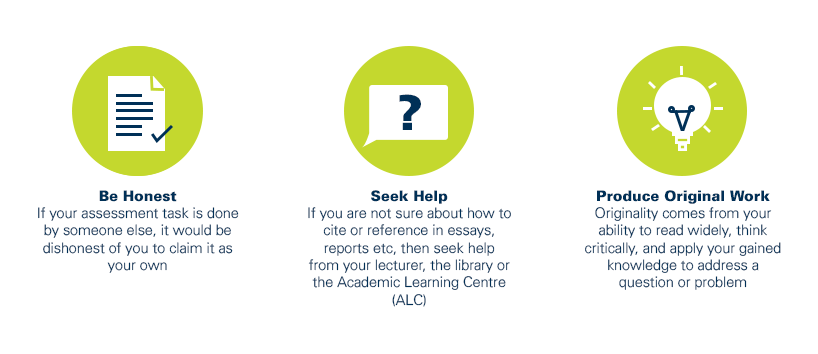
As a CQUniversity student you are expected to act honestly in all aspects of your academic work.
Any assessable work undertaken or submitted for review or assessment must be your own work. Assessable work is any type of work you do to meet the assessment requirements in the unit, including draft work submitted for review and feedback and final work to be assessed.
When you use the ideas, words or data of others in your assessment, you must thoroughly and clearly acknowledge the source of this information by using the correct referencing style for your unit. Using others’ work without proper acknowledgement may be considered a form of intellectual dishonesty.
Participating honestly, respectfully, responsibly, and fairly in your university study ensures the CQUniversity qualification you earn will be valued as a true indication of your individual academic achievement and will continue to receive the respect and recognition it deserves.
As a student, you are responsible for reading and following CQUniversity’s policies, including the Student Academic Integrity Policy and Procedure. This policy sets out CQUniversity’s expectations of you to act with integrity, examples of academic integrity breaches to avoid, the processes used to address alleged breaches of academic integrity, and potential penalties.
What is a breach of academic integrity?
A breach of academic integrity includes but is not limited to plagiarism, self-plagiarism, collusion, cheating, contract cheating, and academic misconduct. The Student Academic Integrity Policy and Procedure defines what these terms mean and gives examples.
Why is academic integrity important?
A breach of academic integrity may result in one or more penalties, including suspension or even expulsion from the University. It can also have negative implications for student visas and future enrolment at CQUniversity or elsewhere. Students who engage in contract cheating also risk being blackmailed by contract cheating services.
Where can I get assistance?
For academic advice and guidance, the Academic Learning Centre (ALC) can support you in becoming confident in completing assessments with integrity and of high standard.
What can you do to act with integrity?