Overview
This unit will consolidate your knowledge of the vast array of medical, environmental and mental health issues through varying ages, community groups, and social cohorts. In this unit, you will study the prehospital management of various medical conditions and learn how to discriminate between similar and confounding presentations. Through case-based learning, you will apply clinical knowledge and skills and develop your critical thinking and clinical judgement skills to confidently reach diagnoses. This will enable you to determine the most appropriate clinical management following contemporary industry guidelines and protocols. A residential school will consolidate your knowledge with practice in high-fidelity simulation case management exercises.
Details
Pre-requisites or Co-requisites
Pre-requisites: PMSC12002 Clinical Paramedic Practice 1 MPAT12001 Medical Pathophysiology PMSC13012 Paramedic Medical Emergencies 3
Important note: Students enrolled in a subsequent unit who failed their pre-requisite unit, should drop the subsequent unit before the census date or within 10 working days of Fail grade notification. Students who do not drop the unit in this timeframe cannot later drop the unit without academic and financial liability. See details in the Assessment Policy and Procedure (Higher Education Coursework).
Offerings For Term 2 - 2020
Attendance Requirements
All on-campus students are expected to attend scheduled classes - in some units, these classes are identified as a mandatory (pass/fail) component and attendance is compulsory. International students, on a student visa, must maintain a full time study load and meet both attendance and academic progress requirements in each study period (satisfactory attendance for International students is defined as maintaining at least an 80% attendance record).
Recommended Student Time Commitment
Each 6-credit Undergraduate unit at CQUniversity requires an overall time commitment of an average of 12.5 hours of study per week, making a total of 150 hours for the unit.
Class Timetable
Assessment Overview
Assessment Grading
This is a pass/fail (non-graded) unit. To pass the unit, you must pass all of the individual assessment tasks shown in the table above.
All University policies are available on the CQUniversity Policy site.
You may wish to view these policies:
- Grades and Results Policy
- Assessment Policy and Procedure (Higher Education Coursework)
- Review of Grade Procedure
- Student Academic Integrity Policy and Procedure
- Monitoring Academic Progress (MAP) Policy and Procedure - Domestic Students
- Monitoring Academic Progress (MAP) Policy and Procedure - International Students
- Student Refund and Credit Balance Policy and Procedure
- Student Feedback - Compliments and Complaints Policy and Procedure
- Information and Communications Technology Acceptable Use Policy and Procedure
This list is not an exhaustive list of all University policies. The full list of University policies are available on the CQUniversity Policy site.
Feedback, Recommendations and Responses
Every unit is reviewed for enhancement each year. At the most recent review, the following staff and student feedback items were identified and recommendations were made.
Feedback from Have your say survey
Students appreciated the approachability of the unit co-ordinator and the short turn around time to respond to questions via email. Several students commented on the friendliness of phone conversations and how that improved their confidence in learning the content and becoming industry-ready.
Continual reinforcement instilling in the students that they should contact the unit co-ordinator any time they have questions or are struggling with content aids in the ability to project approachability and will be continued in future units.
- Take a systematic and responsive approach to clinical assessment and evaluation
- Evaluate clinical history and assessment findings to differentiate between various medical, environmental and mental health pathologies to reach accurate diagnoses
- Apply critical thinking in case management, justifying clinical decisions with evidence-based rationale
- Manage clinical cases with appropriate prioritisation of treatment following professional guidelines and protocols.
Alignment of Assessment Tasks to Learning Outcomes
| Assessment Tasks | Learning Outcomes | |||
|---|---|---|---|---|
| 1 | 2 | 3 | 4 | |
| 1 - Written Assessment - 0% | ||||
| 2 - Online Quiz(zes) - 0% | ||||
| 3 - Practical Assessment - 0% | ||||
Alignment of Graduate Attributes to Learning Outcomes
| Graduate Attributes | Learning Outcomes | |||
|---|---|---|---|---|
| 1 | 2 | 3 | 4 | |
| 1 - Communication | ||||
| 2 - Problem Solving | ||||
| 3 - Critical Thinking | ||||
| 4 - Information Literacy | ||||
| 5 - Team Work | ||||
| 6 - Information Technology Competence | ||||
| 7 - Cross Cultural Competence | ||||
| 8 - Ethical practice | ||||
| 9 - Social Innovation | ||||
| 10 - First Nations Knowledges | ||||
| 11 - Aboriginal and Torres Strait Islander Cultures | ||||
Alignment of Assessment Tasks to Graduate Attributes
| Assessment Tasks | Graduate Attributes | ||||||||||
|---|---|---|---|---|---|---|---|---|---|---|---|
| 1 | 2 | 3 | 4 | 5 | 6 | 7 | 8 | 9 | 10 | 11 | |
| 1 - Written Assessment - 0% | |||||||||||
| 2 - Online Quiz(zes) - 0% | |||||||||||
| 3 - Practical Assessment - 0% | |||||||||||
Textbooks
Textbook of Adult Emergency Medicine
- Edition: 5th (2020)
- Authors: Cameron, P. , Little, M. ,Mitra, B. & Conor, D.
- Elsevier
- Sydney Sydney , NSW , Australia
- ISBN: 9780702076244
- Binding: Paperback
Additional Textbook Information
If you prefer to study with a paper copy, they are available at the CQUni Bookshop here: http://bookshop.cqu.edu.au (search on the Unit code). eBooks are available at the publisher's website.
IT Resources
- CQUniversity Student Email
- Internet
- Unit Website (Moodle)
All submissions for this unit must use the referencing style: American Psychological Association 7th Edition (APA 7th edition)
For further information, see the Assessment Tasks.
g.cousens@cqu.edu.au
Week 1
Begin Date: 13 Jul 2020Module/Topic
Resuscitation and Electrophysiology content
Chapter
Textbook of Adult Emergency and Trauma Care
Clinical Practice Guidelines as outlined.
Drug Therapy Protocols as outlined.
Additional readings as directed
Events and Submissions/Topic
Online Lecture/Tutorial
Week 2
Begin Date: 20 Jul 2020Module/Topic
Paramedic Medical Emergencies One content
Chapter
Textbook of Adult Emergency and Trauma Care
Clinical Practice Guidelines as outlined.
Drug Therapy Protocols as outlined.
Additional readings as directed.
Events and Submissions/Topic
Online Lecture/Tutorial
Week 3
Begin Date: 27 Jul 2020Module/Topic
Paramedic Medical Emergencies One content
Chapter
Textbook of Adult Emergency and Trauma Care
Clinical Practice Guidelines as outlined.
Drug Therapy Protocols as outlined.
Additional readings as directed
Events and Submissions/Topic
Online Lecture/Tutorial
Week 4
Begin Date: 03 Aug 2020Module/Topic
Paramedic Medical Emergencies Two content
Chapter
Textbook of Adult Emergency and Trauma Care
Clinical Practice Guidelines as outlined.
Drug Therapy Protocols as outlined.
Additional readings as directed.
Events and Submissions/Topic
Online Lecture/Tutorial
Week 5
Begin Date: 10 Aug 2020Module/Topic
Paramedic Medical Emergencies Two content.
Chapter
Textbook of Adult Emergency and Trauma Care
Clinical Practice Guidelines as outlined.
Drug Therapy Protocols as outlined.
Additional readings as directed
Events and Submissions/Topic
Online Lecture/Tutorial.
Vacation Week
Begin Date: 17 Aug 2020Module/Topic
Chapter
Events and Submissions/Topic
Week 6
Begin Date: 24 Aug 2020Module/Topic
Paramedic Medical Emergencies Three content.
Chapter
Textbook of Adult Emergency and Trauma Care
Clinical Practice Guidelines as outlined.
Drug Therapy Protocols as outlined.
Additional readings as directed
Events and Submissions/Topic
Online Lecture/Tutorial.
Week 7
Begin Date: 31 Aug 2020Module/Topic
Special Populations content
Chapter
Textbook of Adult Emergency and Trauma Care
Clinical Practice Guidelines as outlined.
Drug Therapy Protocols as outlined.
Additional readings as directed
Events and Submissions/Topic
Online Lecture/Tutorial.
Week 8
Begin Date: 07 Sep 2020Module/Topic
Mental Health content
Chapter
Textbook of Adult Emergency and Trauma Care
Clinical Practice Guidelines as outlined.
Drug Therapy Protocols as outlined.
Additional readings as directed
Events and Submissions/Topic
Online Lecture/Tutorial.
Week 9
Begin Date: 14 Sep 2020Module/Topic
Self-directed revision.
Residential school preparation.
Chapter
Events and Submissions/Topic
Online Lecture/Tutorial.
Online Quiz Due: (20th Sep. 2020) 23:59
Written Assessment Due: Week 9 Monday (14 Sept 2020) 12:00 am AEST
Week 10
Begin Date: 21 Sep 2020Module/Topic
Self-directed revision.
Residential School One
Chapter
Events and Submissions/Topic
September 21st through 24th
Week 11
Begin Date: 28 Sep 2020Module/Topic
Preparation for Residential School Two
Chapter
Events and Submissions/Topic
Week 12
Begin Date: 05 Oct 2020Module/Topic
Residential School Two
Chapter
Events and Submissions/Topic
October 8th through 11th
Review/Exam Week
Begin Date: 12 Oct 2020Module/Topic
Final marking and grades administration.
Chapter
Events and Submissions/Topic
Exam Week
Begin Date: 19 Oct 2020Module/Topic
Chapter
Events and Submissions/Topic
You will be required to attend a compulsory residential school. You must nominate your preferred residential school location through MyCQU, under My Timetable in the My Units tab. Numbers at residential schools are capped and a position at your preferred residential school is not guaranteed. Geographical proximity to and/or previous attendance at a residential school location does not guarantee placement at your preferred residential school location. Attendance at residential schools is compulsory. If for any reason you cannot attend a day at residential school you must provide appropriate evidence, as per Assessment Policy and Procedure, to justify your absence. You will be responsible for making arrangements, with the unit coordinator, to make up for the missed learning and teaching.
1 Written Assessment
You are required to choose from an existing guideline from the Australian Resuscitation Council (excluding trauma) and provide an evidence-based document from which a nationalised CPG can be drawn. The CPG must include the dosage regime for any associated medications used in the treatment of the condition being discussed to the level of a registered paramedic practising within Australia.
Requirements.
Using the format of the Australian Resuscitation Guideline as the foundation, you will expand on the information provided incorporating evidence-based literature into the introduction, recognition and management sections. Your conclusion will then incorporate a concise flow chart for the management of the condition researched including the DTP for every pharmacological intervention considered.
As the document that is being produced is being reviewed for use in a national guideline, NO REFERENCE TO CURRENT SERVICE PROTOCOLS IS TO BE UTILISED.
This assessment will contain 2000 words +/-10% (excluding cover page, in-text references, reference list and attached appendixes) and will be referenced in APA style.
Only one (1) attempt will be granted to achieve a pass mark for this assessment and you must achieve a passing grade to pass the unit.
This unit has three (3) assessment items. Each assessment is a Pass/Fail. You must pass each individual assessment item in order to pass the unit.
Week 9 Monday (14 Sept 2020) 12:00 am AEST
Submitted prior to Sunday the 13th of August 2020, 23:59
Week 11 Monday (28 Sept 2020)
Results to be released prior to 17:00 Monday the 28th of September 2020
Report formatting
- Presentation and layout: Layout formatting of the report body must be consistent and correct APA style as stipulated; cover page includes name and student number, unit ID, due date and any extension status, and calculated word count (excluding citations, reference list, and attached appendixes).
- Content: All required subsections are present and completed as directed.
- Style: This task requires writing at the standard of a third-year undergraduate student. Information is presented in a clear & logical sequence; written in academic style; conforms to word count; and demonstrates correct grammar and spelling.
- Referencing: All sources must be cited and referenced appropriately throughout this task in correct APA style; ensure that you use the Library guide for APA style.
- Word count: 2,000 words +/-10%, excluding the cover page, in-text citations, the reference list and appendixes. Calculate your word count minus exclusions prior to submission and include this on the cover page.
- Late submissions: Late submissions will be accepted, but penalties will accrue at 5% for every calendar day past the due date.
- Academic integrity: All submissions are subject to review of the associated Turnitin report.
- Cover page: State the title of your paper, your name and student number, this unit code, and the word count excluding the exclusions (title page, in-text citations, reference list and attached appendixes). Start these 1/3 down from the top, and make them horizontally centred.
- Layout and formatting: No fancy templates on the cover page or on the sides of each page of the report; keep the background plain and white.
- Margins: One-inch margins (2.54cm) on all sides (usually MS Word default margins).
- Alignment: Left margin alignment throughout; do NOT use justified margins.
- Body indentation: The first line of each paragraph of the report body is indented 3-5 characters.
- Font: Times New Roman or Arial font, size 12. Either is fine, but use just one font for the entire document.
- Spacing: Double spacing throughout the entire document; no extra returns after each paragraph or reference (this is why we have the indentations, headings, and hanging indents)
- Headings: Section headings are centred and bolded in sentence case; use the headings provided for each question within the content section of this assessment task.
- Reference list: Strictly as per APA requirements.
Content
- This assignment should be written in an essay style format. It must include an introduction to the topic discussed and contain elements such as definitions, pathophysiology, and epidemiology.
- The recognition section should thoroughly explore the clinical features associated with the topic encompassing subtle signs and symptoms through to a patient in extremes.
- Consideration of differential diagnoses should be mentioned with associated medial signs or history-related factors that might indicate other pathologies.
- The management section must contain peer-reviewed, evidence-based, best practice to support the most reasonable prehospital treatment in line with the patients presenting condition.
- The conclusion should culminate into a Clinical Practice Guidelines flow chart, including the relevant Drug Therapy Protocol regimes for the new nationalised standard base on the evidence you have accumulated.
- Note: A flow chart of the CPG and associated DTP are required to be attached as appendixes. These attachments will not be included in your overall word count.
- Evaluate clinical history and assessment findings to differentiate between various medical, environmental and mental health pathologies to reach accurate diagnoses
- Apply critical thinking in case management, justifying clinical decisions with evidence-based rationale
- Communication
- Problem Solving
- Critical Thinking
- Information Literacy
2 Online Quiz(zes)
You will be required to complete two (2) online quizzes; the first will close at the end of Week 5, the second at the end of Week 9. The quizzes will open on Monday at 08:00 the week when the quiz is due and close the following Sunday at midnight, and each will have a specific time limit imposed.
The quizzes will be made up of multiple-choice, short and long answer questions exploring content based upon previous weeks content (including lecture materials, online modules, links and required reading).
Quizzes are accumulative and the content will aggregate across both quizzes.
2
Vacation Week Monday (17 Aug 2020) 12:00 am AEST
Quiz One will close at 23:59 Sunday the 16th of August 2020. Quiz Two will close at 23:59 Sunday the 20th of September 2020.
Week 12 Monday (5 Oct 2020)
Quiz One results will be available no later than 17:00 on Monday the 31st August. Quiz Two results will be available no later than 17:00 on Monday the 5th of October.
Quiz 1 Online (Due Week 5)
This is to review and assess the content that was delivered from Week 1 to Week 4 of Consolidated Paramedic Practice.
This quiz will comprise multiple-choice, short and long answer questions.
You will receive 2 attempts at the quiz. Your results from your first attempt will not be made available or feedback supplied prior to your second attempt if you chose to attempt it. Your highest mark will be taken from your result in one quiz, and not an accumulation of the two attempts.
Assessment Requirements:
Please access the Online Quiz 1 in the Assessment Block on the Moodle page for PMSC13010.
Quiz 2 Online (Due Week 9)
This is to review and assess the content that was delivered from Week 4 to Week 8 of Consolidated Paramedic Practice.
This quiz will comprise of multiple-choice, short and long answer questions.
You will receive 2 attempts at the quiz. Your results from your first attempt will not be made available or feedback supplied prior to your second attempt if you chose to attempt it. Your highest mark will be taken from your result in one quiz, and not an accumulation of the two attempts.
Assessment Requirements:
Please access the Online Quiz 2 in the Assessment Block on the Moodle page for PMSC13010.
PLEASE NOTE: The marks for online quizzes 1 and 2 will be combined – to pass you must attempt both quizzes one and two and achieve an overall pass mark of 75% in total. These quizzes MUST be submitted by the times indicated in the assessment tasks. This is an individual assessment with no collaboration allowed. In the absence of an approved extension, there will be no opportunity to complete the tasks after the specified dates, and there will be no opportunity to apply a late penalty of five percent per day.
You must achieve a total of 75% combining the results of the two quizzes with the inability to do so resulting in a fail for the unit.
This unit has three (3) assessment items. Each assessment is a Pass/Fail. You must pass each individual assessment item in order to pass the unit.
- Take a systematic and responsive approach to clinical assessment and evaluation
- Manage clinical cases with appropriate prioritisation of treatment following professional guidelines and protocols.
- Communication
- Problem Solving
- Critical Thinking
- Information Technology Competence
- Cross Cultural Competence
- Ethical practice
3 Practical Assessment
You will complete your practical assessments during the residential school for this unit. During this practical assessment you will complete four tasks as follows:
- 2x 20-minute case management simulations, and
- 2x 10-minute skill stations.
The 20-minute case management simulations will assess your capacity to manage a realistic clinical case scenario. During these scenarios, you shall demonstrate competency at a graduate level in all aspects of case management, including communication and teamwork skills, clinical judgement, decision-making, and scene management.
The 10-minute skill stations may comprise any of the following assessment types either individually or as a collective assessment:
- Short examination.
- Skills demonstrations.
- Verbal short questions and answers.
Grading for the scenarios and the skill stations will be explained in detail prior to the residential school. During the residential school, you will have time to practice your skills and scenario management prior to assessment days.
You must pass all tasks to pass the residential school. The pass mark for each assessment piece is 75%
All assessment pieces must be attempted at the students allocated residential school.
Results of the residential school will be known at the completion of the specific block the student has attended.
The assessment criteria for the residential school component of this unit is as follows:
- You must pass all four assessment tasks to pass the residential school.
- To pass each assessment task you must attain a minimum grade of 75%.
- One (1) resit will be offered to correspond to the assessment piece a passing grade was not awarded.
- Inability to achieve a pass on two or more assessments initially will result in a fail for the unit and a resist will not be offered.
- Inability to achieve a pass on any resit attempted will result in a fail for the unit.
Further assessment criteria and relevant points are as follows:
- All resits will be conducted at the end of the residential school
- All clinical management decisions, procedures, and drug therapies must be in accordance with Queensland Ambulance Service (QAS) guidelines and protocols as current at the date of assessment.
- If you are an interstate student currently practising with your home statutory service, please contact the Unit Coordinator directly during the term to discuss the use of alternative guidelines or protocols during residential assessments.
Critical Errors: Critical errors in this unit will be classed as anything, by act or omission, that causes immediate harm or the potential to cause harm, to yourself, partner, patient or bystanders or any procedure that is performed outside your scope of practice. During any form of assessment, if any of the following critical errors are witnessed, if safety permits, the scenario will continue however, the assessment will be graded as a fail. Furthermore, any critical error discovered on review or moderation will also result in no marks being given for that particular assessment:
· Unsafe defibrillation
· Incorrect joules delivered during defibrillation
· Defibrillation of a non-shockable rhythm
· Failure to recognise a cardiac arrest (>30 seconds)
· Failure to shock a shockable rhythm in a timely manner (<1 minute)
· Failure to perform a complete drug check
· Incorrect sharps disposal or unsafe practice with a sharp
· Performing a skill or procedure or administering an incorrect drug/drug dosage outside your scope of practice
· Any grossly unsafe practice, as determined by the assessing academic.
If you do not understand any of the above, please do not hesitate to clarify with your unit coordinator.
This unit has three (3) assessment items. Each assessment is a Pass/Fail. You must pass each individual assessment item in order to pass the unit.
No submission method provided.
- Take a systematic and responsive approach to clinical assessment and evaluation
- Evaluate clinical history and assessment findings to differentiate between various medical, environmental and mental health pathologies to reach accurate diagnoses
- Apply critical thinking in case management, justifying clinical decisions with evidence-based rationale
- Manage clinical cases with appropriate prioritisation of treatment following professional guidelines and protocols.
- Communication
- Problem Solving
- Critical Thinking
- Information Literacy
- Team Work
- Information Technology Competence
- Cross Cultural Competence
- Ethical practice
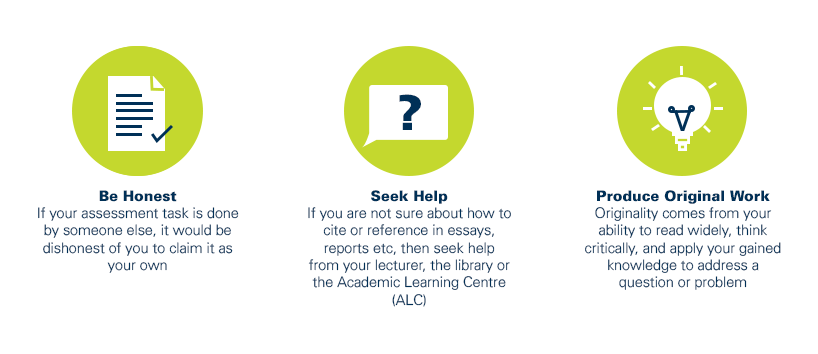
As a CQUniversity student you are expected to act honestly in all aspects of your academic work.
Any assessable work undertaken or submitted for review or assessment must be your own work. Assessable work is any type of work you do to meet the assessment requirements in the unit, including draft work submitted for review and feedback and final work to be assessed.
When you use the ideas, words or data of others in your assessment, you must thoroughly and clearly acknowledge the source of this information by using the correct referencing style for your unit. Using others’ work without proper acknowledgement may be considered a form of intellectual dishonesty.
Participating honestly, respectfully, responsibly, and fairly in your university study ensures the CQUniversity qualification you earn will be valued as a true indication of your individual academic achievement and will continue to receive the respect and recognition it deserves.
As a student, you are responsible for reading and following CQUniversity’s policies, including the Student Academic Integrity Policy and Procedure. This policy sets out CQUniversity’s expectations of you to act with integrity, examples of academic integrity breaches to avoid, the processes used to address alleged breaches of academic integrity, and potential penalties.
What is a breach of academic integrity?
A breach of academic integrity includes but is not limited to plagiarism, self-plagiarism, collusion, cheating, contract cheating, and academic misconduct. The Student Academic Integrity Policy and Procedure defines what these terms mean and gives examples.
Why is academic integrity important?
A breach of academic integrity may result in one or more penalties, including suspension or even expulsion from the University. It can also have negative implications for student visas and future enrolment at CQUniversity or elsewhere. Students who engage in contract cheating also risk being blackmailed by contract cheating services.
Where can I get assistance?
For academic advice and guidance, the Academic Learning Centre (ALC) can support you in becoming confident in completing assessments with integrity and of high standard.
What can you do to act with integrity?