Overview
This unit will introduce and familiarise you with the risks associated with conducting patient care in the direct threat environment. Wounding patterns such as blunt and penetrating trauma, blast injuries and ballistics will be discussed in depth. You will be introduced to the concepts of situational awareness and critical thinking as it applies to treatment priorities. Specialist equipment not available in mainstream pre-hospital medicine will be introduced to assist you with environment-specific treatment methodologies for major preventable causes of death. You will synthesise direct-threat related risks with treatment priorities to manage the tension between risk mitigation and favourable patient outcomes.
Details
Pre-requisites or Co-requisites
There are no requisites for this unit.
Important note: Students enrolled in a subsequent unit who failed their pre-requisite unit, should drop the subsequent unit before the census date or within 10 working days of Fail grade notification. Students who do not drop the unit in this timeframe cannot later drop the unit without academic and financial liability. See details in the Assessment Policy and Procedure (Higher Education Coursework).
Offerings For Term 1 - 2026
Attendance Requirements
All on-campus students are expected to attend scheduled classes - in some units, these classes are identified as a mandatory (pass/fail) component and attendance is compulsory. International students, on a student visa, must maintain a full time study load and meet both attendance and academic progress requirements in each study period (satisfactory attendance for International students is defined as maintaining at least an 80% attendance record).
Recommended Student Time Commitment
Each 6-credit Postgraduate unit at CQUniversity requires an overall time commitment of an average of 12.5 hours of study per week, making a total of 150 hours for the unit.
Class Timetable
Assessment Overview
Assessment Grading
This is a graded unit: your overall grade will be calculated from the marks or grades for each assessment task, based on the relative weightings shown in the table above. You must obtain an overall mark for the unit of at least 50%, or an overall grade of 'pass' in order to pass the unit. If any 'pass/fail' tasks are shown in the table above they must also be completed successfully ('pass' grade). You must also meet any minimum mark requirements specified for a particular assessment task, as detailed in the 'assessment task' section (note that in some instances, the minimum mark for a task may be greater than 50%). Consult the University's Grades and Results Policy for more details of interim results and final grades.
All University policies are available on the CQUniversity Policy site.
You may wish to view these policies:
- Grades and Results Policy
- Assessment Policy and Procedure (Higher Education Coursework)
- Review of Grade Procedure
- Student Academic Integrity Policy and Procedure
- Academic Progression Policy and Procedure
- Student Refund and Credit Balance Policy and Procedure
- Complaints Policy and Procedure
- Information and Communications Technology Acceptable Use Policy and Procedure
This list is not an exhaustive list of all University policies. The full list of University policies are available on the CQUniversity Policy site.
Feedback, Recommendations and Responses
Every unit is reviewed for enhancement each year. At the most recent review, the following staff and student feedback items were identified and recommendations were made.
Feedback from Through email correspondence
Students value the accessibility of the unit coordinator, noting their responsiveness and helpful support when needed.
It is recommended that the unit coordinator continue maintaining high accessibility and responsiveness, as this is clearly valued by students and contributes positively to their learning experience.
Feedback from Through email correspondence
Students noted that the subject was well-structured with a manageable workload.
It is recommended that the unit maintain its well-structured design and balanced workload, as students recognise these features as supporting a positive learning experience.
- Plan and prepare strategies for successful operation within the direct threat care environment
- Integrate clinical knowledge to identify clinical treatment priorities, risk and challenges in the direct threat care environment
- Articulate the concepts of risk analysis, team safety and operational control and deferment
- Evaluate the use of specialist equipment and emerging technology in the direct threat care environment.
Alignment of Assessment Tasks to Learning Outcomes
| Assessment Tasks | Learning Outcomes | |||
|---|---|---|---|---|
| 1 | 2 | 3 | 4 | |
| 1 - Online Quiz(zes) - 20% | ||||
| 2 - Case Study - 30% | ||||
| 3 - Written Assessment - 50% | ||||
Alignment of Graduate Attributes to Learning Outcomes
| Graduate Attributes | Learning Outcomes | |||
|---|---|---|---|---|
| 1 | 2 | 3 | 4 | |
| 1 - Knowledge | ||||
| 2 - Communication | ||||
| 3 - Cognitive, technical and creative skills | ||||
| 4 - Research | ||||
| 5 - Self-management | ||||
| 6 - Ethical and Professional Responsibility | ||||
| 7 - Leadership | ||||
| 8 - First Nations Knowledges | ||||
| 9 - Aboriginal and Torres Strait Islander Cultures | ||||
Alignment of Assessment Tasks to Graduate Attributes
| Assessment Tasks | Graduate Attributes | ||||||||
|---|---|---|---|---|---|---|---|---|---|
| 1 | 2 | 3 | 4 | 5 | 6 | 7 | 8 | 9 | |
| 1 - Online Quiz(zes) - 20% | |||||||||
| 2 - Case Study - 30% | |||||||||
| 3 - Written Assessment - 50% | |||||||||
Textbooks
There are no required textbooks.
IT Resources
- CQUniversity Student Email
- Internet
- Unit Website (Moodle)
All submissions for this unit must use the referencing style: American Psychological Association 7th Edition (APA 7th edition)
For further information, see the Assessment Tasks.
a.delport@cqu.edu.au
Week 1
Begin Date: 09 Mar 2026Module/Topic
Introduction.
Chapter
Events and Submissions/Topic
Week 2
Begin Date: 16 Mar 2026Module/Topic
Haemorrhage control.
Chapter
Events and Submissions/Topic
Week 3
Begin Date: 23 Mar 2026Module/Topic
Situational awareness.
Chapter
Events and Submissions/Topic
Week 4
Begin Date: 30 Mar 2026Module/Topic
Situational response.
Chapter
Events and Submissions/Topic
Week 5
Begin Date: 06 Apr 2026Module/Topic
Haematology.
Chapter
Events and Submissions/Topic
Week 6
Begin Date: 13 Apr 2026Module/Topic
Community response programs.
Chapter
Events and Submissions/Topic
Vacation Week
Begin Date: 20 Apr 2026Module/Topic
Chapter
Events and Submissions/Topic
Week 7
Begin Date: 27 Apr 2026Module/Topic
Less lethal weapon injuries.
Chapter
Events and Submissions/Topic
Week 8
Begin Date: 04 May 2026Module/Topic
Wounding patterns 1.
Chapter
Events and Submissions/Topic
Week 9
Begin Date: 11 May 2026Module/Topic
Wounding patterns 2.
Chapter
Events and Submissions/Topic
Week 10
Begin Date: 18 May 2026Module/Topic
Wounding patterns 3.
Chapter
Events and Submissions/Topic
Week 11
Begin Date: 25 May 2026Module/Topic
Contemporary attack and response models.
Chapter
Events and Submissions/Topic
Week 12
Begin Date: 01 Jun 2026Module/Topic
Review.
Chapter
Events and Submissions/Topic
Exam Week
Begin Date: 08 Jun 2026Module/Topic
Chapter
Events and Submissions/Topic
Vacation/Exam Week
Begin Date: 15 Jun 2026Module/Topic
Chapter
Events and Submissions/Topic
1 Case Study
This 1500-word essay requires you to select a recent terror attack that exhibits intentional mass violence characteristics and develop a SMEAC team briefing for warm zone operations. Emphasise attack-specific critical elements, potential pitfalls (e.g., response delays, team exposure, communication failures/plans), risk mitigation, and rationale for each point. Present as a cohesive essay explicitly addressing the graduate attributes outlined in the assessment rubric.
Use the SMEAC briefing model that addresses the following points.
- Detailed background and description of the incident.
- Team and individual tasking while the attack is in progress.
- A detailed description of how tasks will be executed.
- What is needed to perform designated tasks, and how will risks be mitigated for you and your team members based on the critical elements (unique characteristics) of the case?
- How will you facilitate communication on the macro and micro levels?
You must consider the specifics of the terror attack to inform your team briefing. Each point within your briefing must be substantiated by the critical elements (unique characteristics) specific to the case briefing, and you must discuss your rationale for each briefing point you present.
Week 6 Friday (17 Apr 2026) 11:45 am AEST
Week 8 Friday (8 May 2026)
There is a minimum word count of 1500 words and a maximum word count of 1650 words, excluding references for this assessment. Your case study briefing must be clear and concise. The case study briefing will be assessed in accordance with the information and rubric provided on the unit's Moodle page.
Level of Gen AI use allowed: Level 2: You may use AI for planning, idea development, and research. Your final submission should show how you have developed and refined these ideas.
This case study briefing is worth 30% of your overall unit mark.
- Plan and prepare strategies for successful operation within the direct threat care environment
- Articulate the concepts of risk analysis, team safety and operational control and deferment
- Knowledge
- Communication
- Cognitive, technical and creative skills
- Research
- Self-management
- Ethical and Professional Responsibility
- Leadership
2 Written Assessment
In this assessment 1500-word essay, you will evaluate Australia's approach to enhancing survivability for victims of intentional mass violence events. Present your analysis as an essay structured around a strengths, weaknesses, opportunities, and threats (SWOT) framework. You may narrow the focus to one Australian entity (recommended), such as a state fire service, ambulance service, or police service, or include broader federal or community-led efforts.
Your essay must cover:
- A clear description of the chosen service, organisation, or initiative.
- A SWOT analysis of its effectiveness.
- Its strategies for treating preventable causes of death (e.g., haemorrhage, airway compromise, tension pneumothorax) during such events.
- Targeted recommendations to remedy identified gaps or needs.
Week 10 Friday (22 May 2026) 11:45 am AEST
Week 12 Friday (5 June 2026)
There is a minimum word count of 1500 words and a maximum word count of 1650 words, excluding references, for this assessment. Your SWOT analyses must be clear and concise. The analyses will be assessed in accordance with the information and rubric provided on the unit's Moodle page.
Level of Gen AI use allowed: Level 2: You may use AI for planning, idea development, and research. Your final submission should show how you have developed and refined these ideas.
This analysis is worth 50% of your overall unit mark.
- Integrate clinical knowledge to identify clinical treatment priorities, risk and challenges in the direct threat care environment
- Articulate the concepts of risk analysis, team safety and operational control and deferment
- Evaluate the use of specialist equipment and emerging technology in the direct threat care environment.
- Knowledge
- Communication
- Cognitive, technical and creative skills
- Research
- Ethical and Professional Responsibility
- Leadership
3 Online Quiz(zes)
You will take a quiz to assess your knowledge of the unit's content. The quiz is worth 20% of the overall mark for this unit. Marks are awarded if the multiple-choice question is answered correctly, and the total marks will be tallied once the quiz has been attempted.
The use of C-TECC and CoTCCC guidelines, as well as related book chapters and journal articles, is allowed. Please take note that this is an individual assessment with no collaboration allowed.
Week 12 Friday (5 June 2026) 11:45 am AEST
Week 12 Friday (5 June 2026)
By attempting this quiz, you agree to the academic integrity standards as outlined below
I confirm that:
- This assessment is my own work
- No part of this work was completed by another person or group
I acknowledge that:
- I am responsible for this submission
- I may be required to provide further information to demonstrate my understanding of this assessment
There are penalties for breaching the Student Academic Integrity Policy and Procedure
The quiz is worth 20% of the overall mark for this unit. Marks are awarded if the multiple-choice question is answered correctly and the total marks will be tallied once the quiz has been attempted.
The use of C-TECC and CoTCCC guidelines, as well as related book chapters and journal articles, is allowed. Please take note that this is an individual assessment with no collaboration allowed.
There is an automated time limit to complete the quiz.
There will be no opportunity to complete the task after the due date.
There will be no opportunity to apply a late penalty of five percent per day.
No extensions will be granted for the quiz.
The 72-hour grace period does not apply to this assessment
Level of GenAI use allowed: Level 1: You must not use Al at any point during the assessment. You must demonstrate your core skills and knowledge
Non-attempts will score a zero mark. Once complete, the quiz cannot be reattempted.
- Plan and prepare strategies for successful operation within the direct threat care environment
- Integrate clinical knowledge to identify clinical treatment priorities, risk and challenges in the direct threat care environment
- Evaluate the use of specialist equipment and emerging technology in the direct threat care environment.
- Knowledge
- Research
- Self-management
- Ethical and Professional Responsibility
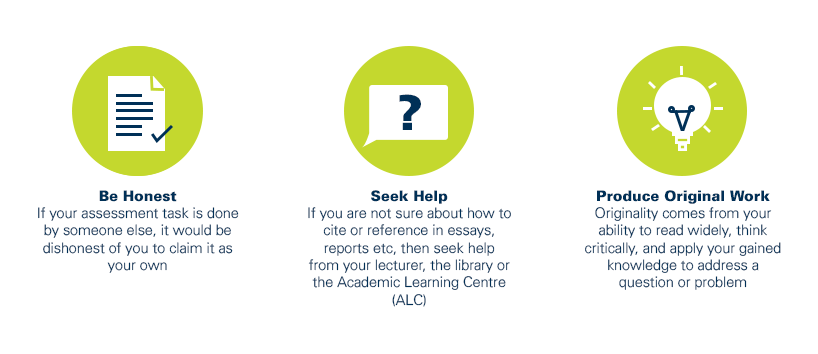
As a CQUniversity student you are expected to act honestly in all aspects of your academic work.
Any assessable work undertaken or submitted for review or assessment must be your own work. Assessable work is any type of work you do to meet the assessment requirements in the unit, including draft work submitted for review and feedback and final work to be assessed.
When you use the ideas, words or data of others in your assessment, you must thoroughly and clearly acknowledge the source of this information by using the correct referencing style for your unit. Using others’ work without proper acknowledgement may be considered a form of intellectual dishonesty.
Participating honestly, respectfully, responsibly, and fairly in your university study ensures the CQUniversity qualification you earn will be valued as a true indication of your individual academic achievement and will continue to receive the respect and recognition it deserves.
As a student, you are responsible for reading and following CQUniversity’s policies, including the Student Academic Integrity Policy and Procedure. This policy sets out CQUniversity’s expectations of you to act with integrity, examples of academic integrity breaches to avoid, the processes used to address alleged breaches of academic integrity, and potential penalties.
What is a breach of academic integrity?
A breach of academic integrity includes but is not limited to plagiarism, self-plagiarism, collusion, cheating, contract cheating, and academic misconduct. The Student Academic Integrity Policy and Procedure defines what these terms mean and gives examples.
Why is academic integrity important?
A breach of academic integrity may result in one or more penalties, including suspension or even expulsion from the University. It can also have negative implications for student visas and future enrolment at CQUniversity or elsewhere. Students who engage in contract cheating also risk being blackmailed by contract cheating services.
Where can I get assistance?
For academic advice and guidance, the Academic Learning Centre (ALC) can support you in becoming confident in completing assessments with integrity and of high standard.
What can you do to act with integrity?