Overview
In this unit you will utilise the foundational principles, knowledge and skills applicable for the implementation and translation of evidence into clinical practice and demonstrate a high level of knowledge in the recognition and resolution of complex ethical dilemmas in research. Upon completion of this unit, you will be able to undertake a literature review using the appropriate methods and search strategies to inform best practice.
Details
Pre-requisites or Co-requisites
Pre-requisitePMSC28002 Evidence-based Practice 1
Important note: Students enrolled in a subsequent unit who failed their pre-requisite unit, should drop the subsequent unit before the census date or within 10 working days of Fail grade notification. Students who do not drop the unit in this timeframe cannot later drop the unit without academic and financial liability. See details in the Assessment Policy and Procedure (Higher Education Coursework).
Offerings For Term 2 - 2026
Attendance Requirements
All on-campus students are expected to attend scheduled classes - in some units, these classes are identified as a mandatory (pass/fail) component and attendance is compulsory. International students, on a student visa, must maintain a full time study load and meet both attendance and academic progress requirements in each study period (satisfactory attendance for International students is defined as maintaining at least an 80% attendance record).
Recommended Student Time Commitment
Each 6-credit Postgraduate unit at CQUniversity requires an overall time commitment of an average of 12.5 hours of study per week, making a total of 150 hours for the unit.
Class Timetable
Assessment Overview
Assessment Grading
This is a graded unit: your overall grade will be calculated from the marks or grades for each assessment task, based on the relative weightings shown in the table above. You must obtain an overall mark for the unit of at least 50%, or an overall grade of 'pass' in order to pass the unit. If any 'pass/fail' tasks are shown in the table above they must also be completed successfully ('pass' grade). You must also meet any minimum mark requirements specified for a particular assessment task, as detailed in the 'assessment task' section (note that in some instances, the minimum mark for a task may be greater than 50%). Consult the University's Grades and Results Policy for more details of interim results and final grades.
All University policies are available on the CQUniversity Policy site.
You may wish to view these policies:
- Grades and Results Policy
- Assessment Policy and Procedure (Higher Education Coursework)
- Review of Grade Procedure
- Student Academic Integrity Policy and Procedure
- Academic Progression Policy and Procedure
- Student Refund and Credit Balance Policy and Procedure
- Complaints Policy and Procedure
- Information and Communications Technology Acceptable Use Policy and Procedure
This list is not an exhaustive list of all University policies. The full list of University policies are available on the CQUniversity Policy site.
Feedback, Recommendations and Responses
Every unit is reviewed for enhancement each year. At the most recent review, the following staff and student feedback items were identified and recommendations were made.
Feedback from SUTE
In the "Useful Knowledge/Skills" category of the SUTE for this unit, one student did not agree. No qualitative data on this topic were provided in the SUTE
Evidence-Based Practice (EBP) is a fundamental element of high-quality patient care. While this was emphasised in the first two weeks of the unit and in the preceding unit, PMSC28002, we plan to reinforce this emphasis throughout the unit in future offerings.
- Utilise the foundational principles, knowledge and skills applicable for the translation of evidence and implementation into clinical practice
- Demonstrate a high level of knowledge in the recognition and resolution of complex ethical dilemmas in research
- Undertake a literature review using appropriate methods and search strategies to inform practice.
Alignment of Assessment Tasks to Learning Outcomes
| Assessment Tasks | Learning Outcomes | ||
|---|---|---|---|
| 1 | 2 | 3 | |
| 1 - Essay - 40% | |||
| 2 - Literature Review or Systematic Review - 60% | |||
Alignment of Graduate Attributes to Learning Outcomes
| Graduate Attributes | Learning Outcomes | ||
|---|---|---|---|
| 1 | 2 | 3 | |
| 1 - Knowledge | |||
| 2 - Communication | |||
| 3 - Cognitive, technical and creative skills | |||
| 4 - Research | |||
| 5 - Self-management | |||
| 6 - Ethical and Professional Responsibility | |||
| 7 - Leadership | |||
| 8 - First Nations Knowledges | |||
| 9 - Aboriginal and Torres Strait Islander Cultures | |||
Alignment of Assessment Tasks to Graduate Attributes
| Assessment Tasks | Graduate Attributes | ||||||||
|---|---|---|---|---|---|---|---|---|---|
| 1 | 2 | 3 | 4 | 5 | 6 | 7 | 8 | 9 | |
| 1 - Essay - 40% | |||||||||
| 2 - Literature Review or Systematic Review - 60% | |||||||||
Textbooks
There are no required textbooks.
IT Resources
- CQUniversity Student Email
- Internet
- Unit Website (Moodle)
All submissions for this unit must use the referencing style: Harvard (author-date)
For further information, see the Assessment Tasks.
n.williams-claassen@cqu.edu.au
Week 1
Begin Date: 13 Jul 2026Module/Topic
Evidence-Based Practice (EBP)
Chapter
Events and Submissions/Topic
Week 2
Begin Date: 20 Jul 2026Module/Topic
Systematic Reviews
Chapter
Events and Submissions/Topic
Week 3
Begin Date: 27 Jul 2026Module/Topic
Clinical Practice Guidelines
Chapter
Events and Submissions/Topic
Week 4
Begin Date: 03 Aug 2026Module/Topic
Ethics
Chapter
Events and Submissions/Topic
Week 5
Begin Date: 10 Aug 2026Module/Topic
Ethics
Chapter
Events and Submissions/Topic
Week 6
Begin Date: 17 Aug 2026Module/Topic
Shared Decision Making
Chapter
Events and Submissions/Topic
Vacation Week
Begin Date: 24 Aug 2026Module/Topic
Chapter
Events and Submissions/Topic
Week 7
Begin Date: 31 Aug 2026Module/Topic
Clinical reasoning and EBP
Chapter
Events and Submissions/Topic
Week 8
Begin Date: 07 Sep 2026Module/Topic
Literature Review
Chapter
Events and Submissions/Topic
Week 9
Begin Date: 14 Sep 2026Module/Topic
Implementing and Embedding EBP
Chapter
Events and Submissions/Topic
Week 10
Begin Date: 21 Sep 2026Module/Topic
Implementing and Embedding EBP
Chapter
Events and Submissions/Topic
Week 11
Begin Date: 28 Sep 2026Module/Topic
Evaluating Practice - Audit
Chapter
Events and Submissions/Topic
Week 12
Begin Date: 05 Oct 2026Module/Topic
Review of content and submission
Chapter
Events and Submissions/Topic
Exam Week
Begin Date: 12 Oct 2026Module/Topic
Chapter
Events and Submissions/Topic
Vacation/Exam Week
Begin Date: 19 Oct 2026Module/Topic
Chapter
Events and Submissions/Topic
1 Essay
In this essay, you are required to critically analyse ethical challenges and ethical dilemmas across the research process, from design through to dissemination and implementation.
Ethical challenges are practical difficulties in applying ethical principles.
Ethical dilemmas involve conflicts between competing ethical values that require justified decision-making.
Your discussion should demonstrate both theoretical understanding and application in real-world research contexts.
Your essay must address:
1. Ethical responsibilities of the researcher
-Professional integrity and accountability
-Management of conflicts of interest
2. Ethical considerations for participants and communities
-Informed consent
-Protection of vulnerable populations
-Fair and equitable participant selection
3. Ethical challenges and dilemmas across the research lifecycle
Critically examine both at each stage:
-Research design (e.g., bias, risk–benefit balance; rigour vs safety)
-Data collection (e.g., privacy, consent; inclusion vs coercion)
-Data analysis (e.g., bias, data integrity; complete and transparent reporting vs selective reporting based on perceived value)
-Dissemination and implementation (e.g., transparency; benefit vs harm)
4. Strategies for ethical practice
-Propose practical strategies to manage ethical challenges and resolve ethical dilemmas across the research lifecycle
-Apply relevant frameworks (e.g., NHMRC guidelines, ethics committees, data governance) to analyse ethical challenges and dilemmas and support your conclusions.
Week 7 Thursday (3 Sept 2026) 11:45 am AEST
Week 9 Friday (18 Sept 2026)
The essay will be assessed in accordance with the rubric and information provided on the unit’s Moodle page.
The following criteria are key points to be included:
• The written assessment should be presented in an essay format
• The written assessment must address each of the main topic tasks as detailed in the task description
• Avoid superficial points or comments and be clear and concise
• As this assessment is written, you must include in-text referencing and a reference list.
There is a required word count of 2000 words with 10% deviation (+/-), excluding references, for your assessment.
This written assessment is worth 40% of your overall unit mark.
Level of GenAI use allowed:
Level 2: You may use Al for planning, idea development, and research. Your final submission should show how you have developed and refined these ideas.
- Utilise the foundational principles, knowledge and skills applicable for the translation of evidence and implementation into clinical practice
- Demonstrate a high level of knowledge in the recognition and resolution of complex ethical dilemmas in research
- Knowledge
- Cognitive, technical and creative skills
- Research
- Self-management
- Ethical and Professional Responsibility
- Leadership
2 Literature Review or Systematic Review
In this assessment, you are required to undertake a literature review using appropriate methods and search strategies to inform practice while utilising the applicable foundational principles, knowledge, and skills for the translation of evidence and implementation into clinical practice.
The literature review should be 2000 words (+/- 10% deviation) in length, excluding the appendices, figures, tables, and references. At least 15 journal articles must be cited throughout the paper. Your review topic should be relevant to your course area - primary healthcare or critical care practice.
The content of the literature review will include, at a minimum:
- Title (max 15 words)
- Keywords (3-5 words)
- Introduction
- Research Question
- Methodology – search strategy, inclusion and exclusion criteria, and study screening and selection
- Results and Discussion – critique of the literature, results and their meaning, answering of the research question, strengths and limitations of the literature review
- Conclusion - conclusions drawn and implications for clinical practice and future research
- References.
Week 12 Thursday (8 Oct 2026) 11:45 am AEST
Vacation/Exam Week Friday (23 Oct 2026)
The written assessment will be assessed in accordance with the rubric and information provided on the unit’s Moodle page.
The following criteria are key points to be included:
• The written assessment should be presented in an essay format
• The written assessment must address each of the main topic tasks as detailed in the task description
• Avoid superficial points or comments and be clear and concise
• As this assessment is written, you must include in-text referencing and a reference list.
There is a required word count of 2000 words (+/- 10% deviation), excluding the appendices, figures, tables, and references.
This written assessment is worth 60% of your overall unit mark.
Level of GenAI use allowed:
Level 2: You may use Al for planning, idea development, and research. Your final submission should show how you have developed and refined these ideas.
- Utilise the foundational principles, knowledge and skills applicable for the translation of evidence and implementation into clinical practice
- Undertake a literature review using appropriate methods and search strategies to inform practice.
- Knowledge
- Cognitive, technical and creative skills
- Research
- Self-management
- Ethical and Professional Responsibility
- Leadership
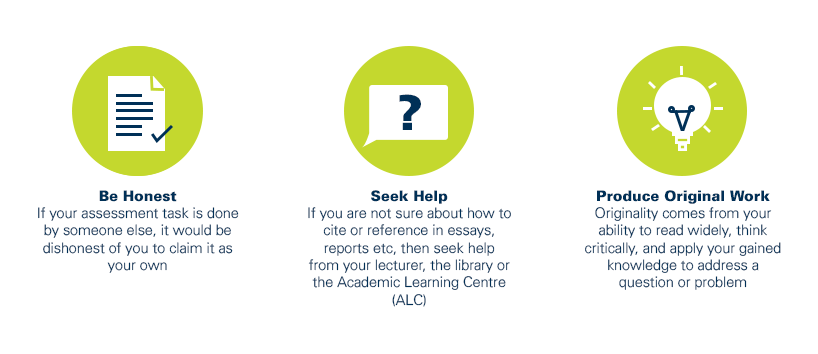
As a CQUniversity student you are expected to act honestly in all aspects of your academic work.
Any assessable work undertaken or submitted for review or assessment must be your own work. Assessable work is any type of work you do to meet the assessment requirements in the unit, including draft work submitted for review and feedback and final work to be assessed.
When you use the ideas, words or data of others in your assessment, you must thoroughly and clearly acknowledge the source of this information by using the correct referencing style for your unit. Using others’ work without proper acknowledgement may be considered a form of intellectual dishonesty.
Participating honestly, respectfully, responsibly, and fairly in your university study ensures the CQUniversity qualification you earn will be valued as a true indication of your individual academic achievement and will continue to receive the respect and recognition it deserves.
As a student, you are responsible for reading and following CQUniversity’s policies, including the Student Academic Integrity Policy and Procedure. This policy sets out CQUniversity’s expectations of you to act with integrity, examples of academic integrity breaches to avoid, the processes used to address alleged breaches of academic integrity, and potential penalties.
What is a breach of academic integrity?
A breach of academic integrity includes but is not limited to plagiarism, self-plagiarism, collusion, cheating, contract cheating, and academic misconduct. The Student Academic Integrity Policy and Procedure defines what these terms mean and gives examples.
Why is academic integrity important?
A breach of academic integrity may result in one or more penalties, including suspension or even expulsion from the University. It can also have negative implications for student visas and future enrolment at CQUniversity or elsewhere. Students who engage in contract cheating also risk being blackmailed by contract cheating services.
Where can I get assistance?
For academic advice and guidance, the Academic Learning Centre (ALC) can support you in becoming confident in completing assessments with integrity and of high standard.
What can you do to act with integrity?