Overview
Prehospital critical care requires the application of advanced theoretical frameworks and practical skills in high stimulus, high cognitive load environments with potential life and death consequences. Optimal clinician performance is expected in every patient interaction. Resilience to duplicate excellence during each interaction, sometimes multiple times a day is required throughout a clinician's career. Through an understanding of human factors related to mental and physical performance and personal-surveillance, you will apply research-based personal interventions to optimise your performance in multiple critical care domains.
Details
Pre-requisites or Co-requisites
There are no requisites for this unit.
Important note: Students enrolled in a subsequent unit who failed their pre-requisite unit, should drop the subsequent unit before the census date or within 10 working days of Fail grade notification. Students who do not drop the unit in this timeframe cannot later drop the unit without academic and financial liability. See details in the Assessment Policy and Procedure (Higher Education Coursework).
Offerings For Term 1 - 2026
Attendance Requirements
All on-campus students are expected to attend scheduled classes - in some units, these classes are identified as a mandatory (pass/fail) component and attendance is compulsory. International students, on a student visa, must maintain a full time study load and meet both attendance and academic progress requirements in each study period (satisfactory attendance for International students is defined as maintaining at least an 80% attendance record).
Recommended Student Time Commitment
Each 6-credit Postgraduate unit at CQUniversity requires an overall time commitment of an average of 12.5 hours of study per week, making a total of 150 hours for the unit.
Class Timetable
Assessment Overview
Assessment Grading
This is a graded unit: your overall grade will be calculated from the marks or grades for each assessment task, based on the relative weightings shown in the table above. You must obtain an overall mark for the unit of at least 50%, or an overall grade of 'pass' in order to pass the unit. If any 'pass/fail' tasks are shown in the table above they must also be completed successfully ('pass' grade). You must also meet any minimum mark requirements specified for a particular assessment task, as detailed in the 'assessment task' section (note that in some instances, the minimum mark for a task may be greater than 50%). Consult the University's Grades and Results Policy for more details of interim results and final grades.
All University policies are available on the CQUniversity Policy site.
You may wish to view these policies:
- Grades and Results Policy
- Assessment Policy and Procedure (Higher Education Coursework)
- Review of Grade Procedure
- Student Academic Integrity Policy and Procedure
- Academic Progression Policy and Procedure
- Student Refund and Credit Balance Policy and Procedure
- Complaints Policy and Procedure
- Information and Communications Technology Acceptable Use Policy and Procedure
This list is not an exhaustive list of all University policies. The full list of University policies are available on the CQUniversity Policy site.
Feedback, Recommendations and Responses
Every unit is reviewed for enhancement each year. At the most recent review, the following staff and student feedback items were identified and recommendations were made.
Feedback from SUTE
One student suggested that a greater focus be placed on heuristics, mindset, and strategies for managing physiological stress responses, with less emphasis on diet, sleep, and exercise.
The content balance will remain unchanged, as each component of the unit is designed to contribute equally and holistically to student development. Together, these elements build the knowledge, skills, and resilience required to perform effectively in complex and demanding environments.
- Identify human factors associated with optimal physical and psychological performance within complex clinical environments
- Utilise communication strategies to mitigate the incidence of medical error or negligence in complex clinical environments
- Employ techniques to mitigate acute stress responses within complex clinical environments
- Develop, articulate and implement physical and psychological resilience initiatives across an organisation.
Alignment of Assessment Tasks to Learning Outcomes
| Assessment Tasks | Learning Outcomes | |||
|---|---|---|---|---|
| 1 | 2 | 3 | 4 | |
| 1 - Written Assessment - 50% | ||||
| 2 - Written Assessment - 50% | ||||
Alignment of Graduate Attributes to Learning Outcomes
| Graduate Attributes | Learning Outcomes | |||
|---|---|---|---|---|
| 1 | 2 | 3 | 4 | |
| 1 - Knowledge | ||||
| 2 - Communication | ||||
| 3 - Cognitive, technical and creative skills | ||||
| 4 - Research | ||||
| 5 - Self-management | ||||
| 6 - Ethical and Professional Responsibility | ||||
| 7 - Leadership | ||||
| 8 - First Nations Knowledges | ||||
| 9 - Aboriginal and Torres Strait Islander Cultures | ||||
Alignment of Assessment Tasks to Graduate Attributes
| Assessment Tasks | Graduate Attributes | ||||||||
|---|---|---|---|---|---|---|---|---|---|
| 1 | 2 | 3 | 4 | 5 | 6 | 7 | 8 | 9 | |
| 1 - Written Assessment - 50% | |||||||||
| 2 - Written Assessment - 50% | |||||||||
Textbooks
There are no required textbooks.
IT Resources
- CQUniversity Student Email
- Internet
- Unit Website (Moodle)
All submissions for this unit must use the referencing style: American Psychological Association 7th Edition (APA 7th edition)
For further information, see the Assessment Tasks.
a.delport@cqu.edu.au
Week 1
Begin Date: 09 Mar 2026Module/Topic
Introduction.
Chapter
Events and Submissions/Topic
Week 2
Begin Date: 16 Mar 2026Module/Topic
Situational Awareness.
Chapter
Events and Submissions/Topic
Week 3
Begin Date: 23 Mar 2026Module/Topic
Situational response.
Chapter
Events and Submissions/Topic
Week 4
Begin Date: 30 Mar 2026Module/Topic
Communication.
Chapter
Events and Submissions/Topic
Week 5
Begin Date: 06 Apr 2026Module/Topic
Nutrition basics.
Chapter
Events and Submissions/Topic
Week 6
Begin Date: 13 Apr 2026Module/Topic
Nutritional implications.
Chapter
Events and Submissions/Topic
Vacation Week
Begin Date: 20 Apr 2026Module/Topic
Chapter
Events and Submissions/Topic
Week 7
Begin Date: 27 Apr 2026Module/Topic
Movement basics.
Chapter
Events and Submissions/Topic
Week 8
Begin Date: 04 May 2026Module/Topic
Implications of exercise.
Chapter
Events and Submissions/Topic
Week 9
Begin Date: 11 May 2026Module/Topic
Recovery.
Chapter
Events and Submissions/Topic
Week 10
Begin Date: 18 May 2026Module/Topic
Implications of recovery.
Chapter
Events and Submissions/Topic
Week 11
Begin Date: 25 May 2026Module/Topic
Review.
Chapter
Events and Submissions/Topic
Week 12
Begin Date: 01 Jun 2026Module/Topic
Review and feedback.
Chapter
Events and Submissions/Topic
Exam Week
Begin Date: 08 Jun 2026Module/Topic
Chapter
Events and Submissions/Topic
Vacation/Exam Week
Begin Date: 15 Jun 2026Module/Topic
Chapter
Events and Submissions/Topic
1 Written Assessment
This assessment consists of two parts, part A and part B.
Part A.
In part A, you are required to present a diary that contains a minimum of two weeks of sleep, nutrition and physical activity data.
Nutrition data must be presented visually using the excel template provided or a custom excel spreadsheet that visually shows the data. Dietary data must include all mealtimes, foods eaten, including snacks and supplements, fluid intake and macronutrient profile.
Sleep data must be presented on an excel spreadsheet as per the attached example on Moodle or a custom excel spreadsheet. Sleep data must include bedtime, wake up time, amount of sleep and subjective reflection on restfulness. Additional data such as sleep phases and heart rate variability (HRV) can be included but is not essential.
Activity data must include physical activities such as sport or exercise, type and duration. Step count can be included if available but is not a requirement.
To conclude Part A, you must provide a 1000-word reflective summary of the data that includes analyses of any correlational patterns that emerge from the documented behaviours. Please note: The unit coordinator is not assessing your behavioural patterns. Behavioural patterns are logged in order for you to subjectively correlate well-being with behavioural patterns.
Personal data divulged by you in this assessment is confidential and will adhere to the CQUni Privacy Policy and Procedure. If you have any concerns, please contact the unit coordinator.
Part B.
In part B, you will be given a link to a video that contains an emergency simulation or live event. You must analyse the footage and identify elements of cognitive, situational, and communication behaviours that contributed to the success or failure of the simulation or event. Your analysis must be written as a 1000-word essay that should analyse the following elements.
- Identify markers of physiological stress, for example, auditory exclusion.
- Identify instances of failures or successes in situational awareness and response.
- Identify communication behaviours, successes, pitfalls or misunderstandings.
- Suggest evidence-based alternative behaviours that would contribute to success.
Week 6 Friday (17 Apr 2026) 11:45 am AEST
Week 8 Friday (8 May 2026)
There is a minimum word count of 1000 (+/- 10% deviation maximum) words for part A and 1000 (+/- 10% deviation maximum) words for part B, excluding references. Your health surveillance and case study analysis must be clear and concise. You will be assessed per the information and rubric on the units Moodle page. Your assignment must be presented in Word and Excel formats. PDF file formats are not permitted.
This Health surveillance and cognitive performance case study are worth 50% of your overall unit mark.
Level of Gen AI use allowed: Level 2: You may use AI for planning, idea development, and research. Your final submission should show how you have developed and refined these ideas.
- Identify human factors associated with optimal physical and psychological performance within complex clinical environments
- Utilise communication strategies to mitigate the incidence of medical error or negligence in complex clinical environments
- Knowledge
- Communication
- Cognitive, technical and creative skills
- Research
- Self-management
- Ethical and Professional Responsibility
- Leadership
2 Written Assessment
This assessment consists of two parts, part A and part B.
Part A
In part A, you must utilise the data and insights from assessment one to develop a plan that optimises performance across three domains.
Nutrition must be optimised by presenting a plan that draws insight from assessment one and considers nutritional needs based on your unique data and working constraints. Your plan must include a macronutrient profile for optimal health and the foods you intend to eat. If you intend to incorporate a supplement protocol in your plan, you must present the protocol with rationales. You must include details on how you intend to execute your plan. Your nutrition plan and supplement protocol must be supported by contemporary evidence. Please note: This is not a weight loss plan, it is a plan to optimise your physical and cognitive performance.
Recovery must be optimised by presenting a plan that draws insight from assessment one and considers your recovery needs based on your unique data and working constraints. Your recovery plan must include contemporary strategies specific to shift workers. Your plan must be supported by contemporary evidence.
Physical performance must be optimised by presenting an activity plan that includes physical activities such as sport or exercise, type and duration. Your activity plan can be nonspecific and can include moderate goal setting, such as reaching a daily step count or a sporting milestone. However, you must rationalise your activity choice with evidence that supports an increase in physical performance that has a carryover effect on your working environment.
Personal data divulged by you in this assessment is confidential and will adhere to the CQUni Privacy Policy and Procedure. If you have any concerns, please contact the unit coordinator.
Part B
In part B, you will be presented with two common critical care or public health dilemmas that can interrupt the flow of a critical care patient encounter or public health emergency and can potentially lead to sub-optimal patient outcomes.
You must develop an immediate action intervention (IAI) to mitigate the effect of the dilemmas on outcomes. Your IAI must include the following:
· A strategy for mitigating a physiological stress response in the event of dilemmas.
· The importance of situational awareness in identifying the dilemmas.
· A check list/s for systematically addressing the dilemmas.
· A communication strategy to mitigate pitfalls and behaviours that could confound the IAI.
The IAI must be supported by contemporary evidence.
Week 11 Friday (29 May 2026) 11:45 am AEST
Exam Week Friday (12 June 2026)
There is a minimum word count of 1500 (+/- 10% deviation maximum) words for part A and 1000 (+/- 10% deviation maximum) words for part B, excluding references. Your performance optimisation plan must be clear and concise. You will be assessed per the information and rubric on the units Moodle page. Your assignment must be presented in Word format. PDF file formats are not permitted.
The Performance Optimisation plan is worth 50% of your overall unit mark.
Level of Gen AI use allowed: Level 2: You may use AI for planning, idea development, and research. Your final submission should show how you have developed and refined these ideas.
- Utilise communication strategies to mitigate the incidence of medical error or negligence in complex clinical environments
- Employ techniques to mitigate acute stress responses within complex clinical environments
- Develop, articulate and implement physical and psychological resilience initiatives across an organisation.
- Knowledge
- Communication
- Cognitive, technical and creative skills
- Research
- Self-management
- Ethical and Professional Responsibility
- Leadership
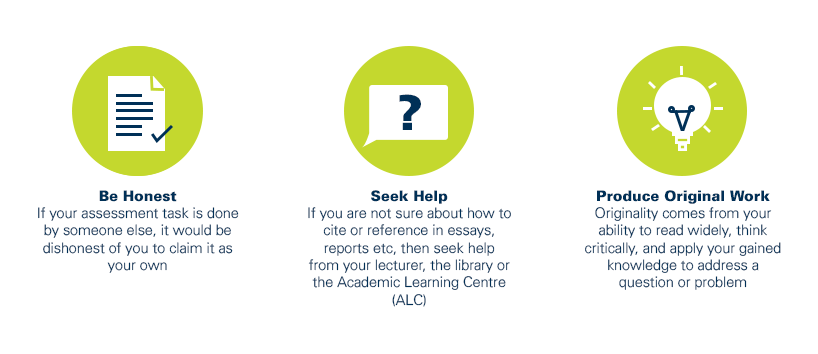
As a CQUniversity student you are expected to act honestly in all aspects of your academic work.
Any assessable work undertaken or submitted for review or assessment must be your own work. Assessable work is any type of work you do to meet the assessment requirements in the unit, including draft work submitted for review and feedback and final work to be assessed.
When you use the ideas, words or data of others in your assessment, you must thoroughly and clearly acknowledge the source of this information by using the correct referencing style for your unit. Using others’ work without proper acknowledgement may be considered a form of intellectual dishonesty.
Participating honestly, respectfully, responsibly, and fairly in your university study ensures the CQUniversity qualification you earn will be valued as a true indication of your individual academic achievement and will continue to receive the respect and recognition it deserves.
As a student, you are responsible for reading and following CQUniversity’s policies, including the Student Academic Integrity Policy and Procedure. This policy sets out CQUniversity’s expectations of you to act with integrity, examples of academic integrity breaches to avoid, the processes used to address alleged breaches of academic integrity, and potential penalties.
What is a breach of academic integrity?
A breach of academic integrity includes but is not limited to plagiarism, self-plagiarism, collusion, cheating, contract cheating, and academic misconduct. The Student Academic Integrity Policy and Procedure defines what these terms mean and gives examples.
Why is academic integrity important?
A breach of academic integrity may result in one or more penalties, including suspension or even expulsion from the University. It can also have negative implications for student visas and future enrolment at CQUniversity or elsewhere. Students who engage in contract cheating also risk being blackmailed by contract cheating services.
Where can I get assistance?
For academic advice and guidance, the Academic Learning Centre (ALC) can support you in becoming confident in completing assessments with integrity and of high standard.
What can you do to act with integrity?