Overview
This unit will allow you to synthesise your knowledge of common traumatic and environmental emergencies, incorporating contemporary evidence-based knowledge into new critical care trauma treatment paradigms. In addition, you will be able to apply critical care paramedic skills and interventions to the management of traumatic and environmental emergencies and to exercise leadership and engage in teamwork within trauma management systems.
Details
Pre-requisites or Co-requisites
Co-requisitesPMSC20002 Advanced Clinical Skills ApplicationPMSC20005 Advanced Assessment, Diagnostic Interpretation and Management
Important note: Students enrolled in a subsequent unit who failed their pre-requisite unit, should drop the subsequent unit before the census date or within 10 working days of Fail grade notification. Students who do not drop the unit in this timeframe cannot later drop the unit without academic and financial liability. See details in the Assessment Policy and Procedure (Higher Education Coursework).
Offerings For Term 2 - 2026
Attendance Requirements
All on-campus students are expected to attend scheduled classes - in some units, these classes are identified as a mandatory (pass/fail) component and attendance is compulsory. International students, on a student visa, must maintain a full time study load and meet both attendance and academic progress requirements in each study period (satisfactory attendance for International students is defined as maintaining at least an 80% attendance record).
Recommended Student Time Commitment
Each 6-credit Postgraduate unit at CQUniversity requires an overall time commitment of an average of 12.5 hours of study per week, making a total of 150 hours for the unit.
Class Timetable
Assessment Overview
Assessment Grading
This is a graded unit: your overall grade will be calculated from the marks or grades for each assessment task, based on the relative weightings shown in the table above. You must obtain an overall mark for the unit of at least 50%, or an overall grade of 'pass' in order to pass the unit. If any 'pass/fail' tasks are shown in the table above they must also be completed successfully ('pass' grade). You must also meet any minimum mark requirements specified for a particular assessment task, as detailed in the 'assessment task' section (note that in some instances, the minimum mark for a task may be greater than 50%). Consult the University's Grades and Results Policy for more details of interim results and final grades.
All University policies are available on the CQUniversity Policy site.
You may wish to view these policies:
- Grades and Results Policy
- Assessment Policy and Procedure (Higher Education Coursework)
- Review of Grade Procedure
- Student Academic Integrity Policy and Procedure
- Academic Progression Policy and Procedure
- Student Refund and Credit Balance Policy and Procedure
- Complaints Policy and Procedure
- Information and Communications Technology Acceptable Use Policy and Procedure
This list is not an exhaustive list of all University policies. The full list of University policies are available on the CQUniversity Policy site.
Feedback, Recommendations and Responses
Every unit is reviewed for enhancement each year. At the most recent review, the following staff and student feedback items were identified and recommendations were made.
Feedback from Group and individual discussion at residential school.
The students expressed that they really enjoyed the leadership and communication challenge games.
Continue with the challenge games as part of the introduction period at the start of residential school. This helps bond the full time and part time students who haven't met until this point.
Feedback from Group and individual discussion at residential school.
The Multiple Casualty Scenario was a highlight.
Keep the last day of their residential school experience as a Multiple Casualty Day. This day enables students to apply all the content learnt throughout the course to high-fidelity complex cases.
Feedback from Group and individual discussion at residential school.
They expressed that the group debrief was excellent, as they got to hear about the learning points from all the cases involved in the multicausality scenario.
A detailed group debrief was essential, allowing each case to be explored thoroughly and giving students the opportunity to articulate their individual key learning points. This approach ensured that all students were able to maximise the experience by learning not only from their own scenario but from every case undertaken throughout the day. We will continue to implement this method in future iterations of the unit.
- Synthesise knowledge of common traumatic and environmental emergencies
- Assess contemporary evidence for incorporation into new trauma treatment paradigms
- Apply evidence-based knowledge in the management of trauma and environmental emergencies
- Demonstrate advanced critical care paramedic skills and interventions in the management of traumatic and environmental emergencies
- Exercise leadership and engage in teamwork within trauma management systems.
n/a
Alignment of Assessment Tasks to Learning Outcomes
| Assessment Tasks | Learning Outcomes | ||||
|---|---|---|---|---|---|
| 1 | 2 | 3 | 4 | 5 | |
| 1 - Case Study - 50% | |||||
| 2 - Presentation - 50% | |||||
| 3 - Practical Assessment - 0% | |||||
Alignment of Graduate Attributes to Learning Outcomes
| Graduate Attributes | Learning Outcomes | ||||
|---|---|---|---|---|---|
| 1 | 2 | 3 | 4 | 5 | |
| 1 - Knowledge | |||||
| 2 - Communication | |||||
| 3 - Cognitive, technical and creative skills | |||||
| 4 - Research | |||||
| 5 - Self-management | |||||
| 6 - Ethical and Professional Responsibility | |||||
| 7 - Leadership | |||||
| 8 - First Nations Knowledges | |||||
| 9 - Aboriginal and Torres Strait Islander Cultures | |||||
Alignment of Assessment Tasks to Graduate Attributes
| Assessment Tasks | Graduate Attributes | ||||||||
|---|---|---|---|---|---|---|---|---|---|
| 1 | 2 | 3 | 4 | 5 | 6 | 7 | 8 | 9 | |
| 1 - Case Study - 50% | |||||||||
| 2 - Presentation - 50% | |||||||||
| 3 - Practical Assessment - 0% | |||||||||
Textbooks
There are no required textbooks.
IT Resources
- CQUniversity Student Email
- Internet
- Unit Website (Moodle)
All submissions for this unit must use the referencing style: Harvard (author-date)
For further information, see the Assessment Tasks.
r.p.gleeson@cqu.edu.au
Week 1
Begin Date: 13 Jul 2026Module/Topic
Clinical leadership, communication and decision making in trauma.
Chapter
Events and Submissions/Topic
Week 2
Begin Date: 20 Jul 2026Module/Topic
Key concepts in trauma
Chapter
Events and Submissions/Topic
Week 3
Begin Date: 27 Jul 2026Module/Topic
Advanced trauma assessment and triage
Chapter
Events and Submissions/Topic
Week 4
Begin Date: 03 Aug 2026Module/Topic
Head trauma
Chapter
Events and Submissions/Topic
Week 5
Begin Date: 10 Aug 2026Module/Topic
Spinal and nervous system trauma
Chapter
Events and Submissions/Topic
Week 6
Begin Date: 17 Aug 2026Module/Topic
Thoracic trauma
Chapter
Events and Submissions/Topic
Vacation Week
Begin Date: 24 Aug 2026Module/Topic
Chapter
Events and Submissions/Topic
Week 7
Begin Date: 31 Aug 2026Module/Topic
Abdominal and pelvic trauma
Chapter
Events and Submissions/Topic
Week 8
Begin Date: 07 Sep 2026Module/Topic
Extremity trauma and crush injury
Chapter
Events and Submissions/Topic
Witten Assessment due Week 8 Wednesday 1145 AM (QLD time)
Case study Due: Week 8 Wednesday (9 Sept 2026) 11:45 am AEST
Week 9
Begin Date: 14 Sep 2026Module/Topic
Multi-system trauma
Chapter
Events and Submissions/Topic
Week 10
Begin Date: 21 Sep 2026Module/Topic
Burns
Chapter
Events and Submissions/Topic
Week 11
Begin Date: 28 Sep 2026Module/Topic
Residential school
Chapter
Events and Submissions/Topic
Practical Assessment due day 3 of residential school
Practical Assessment Due: Week 11 Friday (2 Oct 2026) 5:00 pm AEST
Week 12
Begin Date: 05 Oct 2026Module/Topic
Environmental emergencies
Chapter
Events and Submissions/Topic
Exam Week
Begin Date: 12 Oct 2026Module/Topic
Chapter
Events and Submissions/Topic
Case Study Presentation Assessment due by Friday 1145 AM
Presentation Due: Exam Week Friday (16 Oct 2026) 11:45 am AEST
Vacation/Exam Week
Begin Date: 19 Oct 2026Module/Topic
Chapter
Events and Submissions/Topic
1 Case Study
-
Case Study Assessment: Critical Care Trauma Management
Assessment Overview
In this assessment, you will be presented with a simulated high-acuity trauma case and asked to write a critical care essay exploring the information provided. Your essay should demonstrate clinical reasoning by linking the patient’s mechanism of injury, clinical findings, likely pathophysiology, treatment priorities and anticipated response to management.This assessment requires more than a description of trauma care. You are expected to interpret the case information, identify the most likely and most dangerous clinical problems, justify your priorities, and explain how your management decisions are intended to influence the patient’s overall clinical trajectory.
Your discussion should be specific to this patient, this mechanism of injury, this clinical presentation and the operational context provided.
Case Description
You are presented with a 40-year-old male patient following a motorcycle crash. The incident has occurred in a semi-rural setting, approximately 25 minutes by road from a regional trauma centre. On arrival, the patient appears to have veered off the road, struck a metal guard rail, and is located approximately 20 metres from the road down a moderately slanted gully.You are a newly qualified Critical Care Paramedic working with a qualified Paramedic. No other ambulance resources are available. Police and fire personnel are on scene and able to assist with scene safety, access and extrication.
A rotary wing asset with a medical officer is available; however, it will be approximately 45 minutes from your first observations and situational report before arrival at your location.
Initial Observations
GCS: 13/15 — E3, V4, M6
Pupils: equal and reactive, 6 mm bilaterally
Respiratory rate: 26 breaths per minute
Pulse: weak radial pulse, 120 beats per minute
Blood pressure: 90/50 mmHg
ECG: sinus rhythm at 120 beats per minute12 lead ECG as per Moodle
Skin: pale and cool
Oxygen saturation: 97% on room air
Temperature: 35.4°C
Blood glucose level: 7.1 mmol/L
Past History
Past medical history: nil stated
Medications: nil stated
Estimated weight: 80 kg
Physical Examination
No obvious external trauma to the head
Helmet intact with considerable scuffing
Minor blood loss from the oral cavity; teeth intact
Thorax intact with minor abrasions
Diminished air entry on the left side
Abdomen soft in the upper quadrants, with significant left upper quadrant tenderness and distress on palpation
Right lower limb angulated laterally at greater than 90 degrees, with gross tissue destruction to the upper and lower muscle masses
No pedal pulse located in the right lower limb
Highly suspected long bone injury to the left upper arm
Essay Requirements
You are required to write a 2500-word essay addressing the following components.1. Initial impression and provisional diagnosis
Develop a concise initial impression of this patient. Your discussion should integrate the mechanism of injury, physiological observations, physical examination findings and operational context.You should identify and justify your provisional diagnosis and relevant differential diagnoses from a critical care perspective.
Higher-level responses should move beyond listing injuries and provide a clear clinical problem representation of the patient.2. Pathophysiology and clinical interpretation
Discuss the likely pathophysiological processes contributing to this patient’s presentation. You should link specific findings from the case to relevant injury patterns and physiological derangement.3. Treatment priorities and critical care reasoning
Identify and justify your immediate treatment priorities from a critical care perspective.Students should avoid providing a generic state based trauma management plan. Each priority should be justified in relation to this specific patient and clinical context.
4. Planned critical care management
Discuss your planned management of this patient, including on-scene care, extrication, packaging, transport and pre-arrival notification.5. Anticipated impact, reassessment and escalation
Explain how you anticipate your management will affect the patient’s clinical picture. This should include expected physiological responses, potential complications and reassessment priorities.6. Evidence-informed discussion
Your essay must be supported by appropriate evidence-based material. This may include contemporary clinical guidelines, current primary research, trauma literature and critical care evidence.Evidence should be used to support your clinical reasoning, not simply inserted as isolated statements. Higher-level responses will use current and relevant evidence, including statistical evidence where appropriate, to justify clinical decisions and treatment priorities.
All claims, arguments and clinical decisions must be substantiated with appropriate academic sources.
Presentation and Referencing Requirements
Your essay should be written in a clear academic style with logical structure, appropriate headings and professional clinical terminology.Harvard referencing must be used throughout. A complete reference list must be included.
Please save and upload your file in Word format, either .doc or .docx.
Word Limit
2500 words.Minimum Pass Requirement
You must achieve a minimum mark of 50% to pass this assessment.Level of GenAI Use Allowed
Level 3: You may use AI to assist with specific tasks such as drafting text, refining and evaluating your work. You must critically evaluate and modify any AI-generated content you use.
AI-generated material should not replace your own clinical reasoning, interpretation of the case, use of appropriate evidence, or understanding of critical care practice. You remain responsible for the accuracy, quality and academic integrity of your submitted work.
Week 8 Wednesday (9 Sept 2026) 11:45 am AEST
Week 10 Wednesday (23 Sept 2026)
The case study will be assessed using the rubric provided on the unit Moodle page, covering the following areas:
- Presentation and layout – presentation of material, word count etc.
- Content-based on the set questions provided and the use of supportive evidence-based material
- Referencing – use of Harvard referencing, reference list
- Please save/upload your file in a Word format (.doc or .docx).
You must achieve a minimum mark of 50% to pass this assessment.
AI Assessment Scale=3 Collaboration.Please refer to the Moodle sight for information regarding the use of AI.
- Synthesise knowledge of common traumatic and environmental emergencies
- Assess contemporary evidence for incorporation into new trauma treatment paradigms
- Apply evidence-based knowledge in the management of trauma and environmental emergencies
- Knowledge
- Communication
- Cognitive, technical and creative skills
- Research
- Self-management
- Ethical and Professional Responsibility
- Leadership
2 Presentation
Assessment Overview
You are required to present a trauma or environmental case that you have personally attended. The presentation will occur via Zoom with the Unit Coordinator and will include both a structured case presentation and a question-and-answer discussion.
This assessment requires an in-depth analysis of the patient journey from initial presentation through to delivery into tertiary care. Your presentation should demonstrate clinical reasoning, critical care synthesis, evidence-informed decision-making and reflective practice.
Your case must be de-identified. Do not include patient names, dates of birth, addresses, identifying images, location-specific details or other identifiable information in your PowerPoint or verbal presentation.
Presentation Requirements
You will be allocated 30 minutes to complete both your presentation and the Q&A session. You should structure your presentation to allow adequate time for assessor questions.
An electronic copy of your PowerPoint presentation must be submitted via Moodle at or before the scheduled presentation time.
Required Presentation Content
Your PowerPoint and verbal presentation should address the following components.
1. Initial case details
Provide a concise overview of the case, including case type, scene context, mechanism of injury or environmental exposure, available resources, transport considerations and relevant operational factors.
2. Presenting complaint and history
Discuss the patient’s chief complaint and history of presenting illness or injury, including relevant scene information and history obtained from the patient or other sources.
3. Relevant patient history
Present relevant allergies, medications, past medical history, social history and other patient factors that influenced your clinical reasoning or management decisions.
4. Assessment findings
Discuss your initial, general and focused assessment findings, including relevant clinical observations, examination findings and diagnostic values obtained.
Higher-level presentations should interpret these findings rather than simply list them.
5. Clinical impression, differential diagnoses and main diagnosis
Present your initial clinical impression, relevant differential diagnoses and main diagnosis. Explain how the patient’s history, mechanism, assessment findings and diagnostic values supported or challenged your clinical impression.
6. Overview of the main diagnosis
Provide an overview of the main diagnosis, including relevant pathophysiology, clinical manifestations and how your patient’s presentation fits the diagnosis.
7. Epidemiology and clinical significance
Discuss the epidemiology and clinical significance of the main diagnosis or presentation type. This should be relevant to the case and supported by current evidence where appropriate.
8. Management and treatment
Discuss the planned and actual management of the patient. This should include treatment priorities, clinical interventions, escalation decisions, transport decisions, handover priorities and whether a Critical Care Paramedic was involved.
You should explain the rationale for key management decisions and link these decisions to the patient’s presentation, suspected pathophysiology and relevant evidence.
9. Critical reflection and continuous improvement
Reflect on whether you would now choose to do anything differently. This is a crucial component of the assessment and must be supported by evidence.
Your reflection should consider the quality of your assessment, clinical reasoning, treatment decisions, escalation, communication, teamwork and opportunities for future improvement.
10. Further care, prognosis and outcome
Discuss the further care required in the hospital or tertiary care system, if known. If the patient’s outcome is known, include this in a de-identified manner.
If the outcome is unknown, discuss the likely ongoing care pathway and prognosis based on the patient’s diagnosis and presentation.
11. Final thoughts
Conclude with a brief summary of the key clinical lessons from the case and how these will inform your future practice.
12. References
Your presentation must include appropriate references to support your clinical claims, pathophysiology, epidemiology, treatment discussion and reflection.
References should include relevant clinical guidelines, current primary research, contemporary trauma or environmental medicine literature and other high-quality academic sources.
Question and Answer Session
Following your presentation, your assessor will ask questions about your case. The Q&A session is designed to assess your understanding of the case, your clinical reasoning and your ability to justify decisions.
You should be prepared to discuss the case beyond the content presented on your slides.
Assessment Expectations
This assessment is not intended to be a chronological recount of a case. It is an in-depth clinical analysis of a real trauma or environmental presentation.
Higher-level presentations will demonstrate clear structure, accurate assessment, strong linkage between findings and pathophysiology, evidence-informed treatment rationale, critical care decision-making, reflective practice and the ability to respond clearly during Q&A.
Descriptive presentations that simply list events, observations or treatments without explaining their clinical relevance will not meet the expected standard for critical care reasoning.
Level of GenAI Use Allowed
Level 3: You may use AI to assist with specific tasks such as drafting text, refining and evaluating your work. You must critically evaluate and modify any AI-generated content you use.
AI-generated material should not replace your own clinical reasoning, interpretation of the case, use of appropriate evidence, or understanding of critical care practice. You remain responsible for the accuracy, quality and academic integrity of your submitted work.
Exam Week Friday (16 Oct 2026) 11:45 am AEST
Vacation/Exam Week Friday (23 Oct 2026)
Your presentation, PowerPoint and Q&A performance will be marked according to the criteria outlined in the rubric provided on the unit Moodle page.
- Synthesise knowledge of common traumatic and environmental emergencies
- Assess contemporary evidence for incorporation into new trauma treatment paradigms
- Knowledge
- Communication
- Cognitive, technical and creative skills
- Research
- Ethical and Professional Responsibility
3 Practical Assessment
Practical Simulation Assessment
During the compulsory residential school, you will individually complete a practical simulation assessment involving an authentic trauma or environmental emergency case.
This assessment is designed to evaluate your ability to apply advanced critical care paramedic knowledge, clinical reasoning and practical skills in the management of complex trauma and environmental presentations.
The practical assessment will assess your ability to:
apply evidence-based knowledge in the assessment and management of trauma and environmental emergencies
demonstrate advanced critical care paramedic skills and interventions appropriate to the patient presentation
prioritise care and make clinically justified decisions in a dynamic simulation environment
communicate effectively with the patient, team members and other relevant personnel
demonstrate leadership, situational awareness and professional practice within a hands on scenario.
Level of GenAI Use Allowed
Level 1: You must not use AI at any point during this assessment. You must demonstrate your own core knowledge, clinical reasoning, practical skills and professional judgement.
Week 11 Friday (2 Oct 2026) 5:00 pm AEST
Exam Week Friday (16 Oct 2026)
Your practical assessment will be marked according to the criteria outlined in the rubric provided on the unit Moodle page. You will be offered a maximum of two (2) attempts at this assessment.
This is a PASS/FAIL assessment task.
If a critical error occurs during your assessment the assessment will immediately cease, no marks will be awarded and it will result in a failed attempt.
Critical errors in this assessment will be classed as:
- An action that causes immediate harm to yourself, partner, patient or bystanders
- Unsafe use of the defibrillator/not recognising cardiac arrest (>1 minute delay in recognition)
- No or incomplete drug check
- Incorrect sharps disposal
- Performing a skill and/or procedure outside the scope of practice of a critical care paramedic (CCP).
The 72-hour grace period does not apply to this assessment.
- Apply evidence-based knowledge in the management of trauma and environmental emergencies
- Demonstrate advanced critical care paramedic skills and interventions in the management of traumatic and environmental emergencies
- Exercise leadership and engage in teamwork within trauma management systems.
- Knowledge
- Communication
- Cognitive, technical and creative skills
- Research
- Self-management
- Ethical and Professional Responsibility
- Leadership
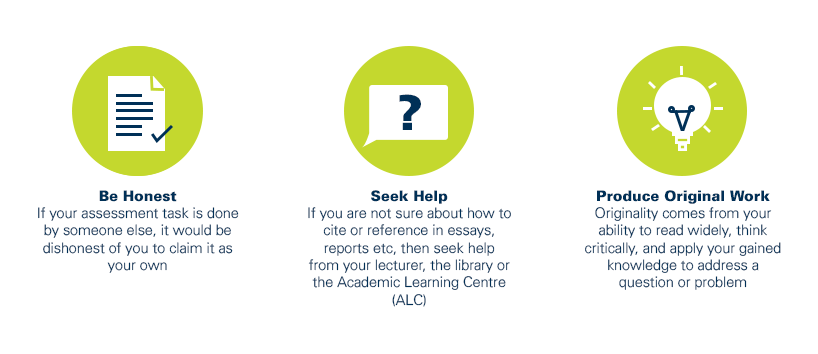
As a CQUniversity student you are expected to act honestly in all aspects of your academic work.
Any assessable work undertaken or submitted for review or assessment must be your own work. Assessable work is any type of work you do to meet the assessment requirements in the unit, including draft work submitted for review and feedback and final work to be assessed.
When you use the ideas, words or data of others in your assessment, you must thoroughly and clearly acknowledge the source of this information by using the correct referencing style for your unit. Using others’ work without proper acknowledgement may be considered a form of intellectual dishonesty.
Participating honestly, respectfully, responsibly, and fairly in your university study ensures the CQUniversity qualification you earn will be valued as a true indication of your individual academic achievement and will continue to receive the respect and recognition it deserves.
As a student, you are responsible for reading and following CQUniversity’s policies, including the Student Academic Integrity Policy and Procedure. This policy sets out CQUniversity’s expectations of you to act with integrity, examples of academic integrity breaches to avoid, the processes used to address alleged breaches of academic integrity, and potential penalties.
What is a breach of academic integrity?
A breach of academic integrity includes but is not limited to plagiarism, self-plagiarism, collusion, cheating, contract cheating, and academic misconduct. The Student Academic Integrity Policy and Procedure defines what these terms mean and gives examples.
Why is academic integrity important?
A breach of academic integrity may result in one or more penalties, including suspension or even expulsion from the University. It can also have negative implications for student visas and future enrolment at CQUniversity or elsewhere. Students who engage in contract cheating also risk being blackmailed by contract cheating services.
Where can I get assistance?
For academic advice and guidance, the Academic Learning Centre (ALC) can support you in becoming confident in completing assessments with integrity and of high standard.
What can you do to act with integrity?