Overview
This unit introduces you to fundamental aspects of podiatry practice. In preparation for future clinical practice units, you will learn about the standards, policies, codes, and guidelines which inform practice as a podiatrist in Australia, including those related to culturally responsive and safe practice. You will also set up your clinical workspace, comply with infection control principles, and occupational health and safety standards. You will learn to take a patient medical history, conduct general assessments of the foot and lower limb, and apply basic podiatric interventions in a simulated clinical setting.
Details
Pre-requisites or Co-requisites
There are no requisites for this unit.
Important note: Students enrolled in a subsequent unit who failed their pre-requisite unit, should drop the subsequent unit before the census date or within 10 working days of Fail grade notification. Students who do not drop the unit in this timeframe cannot later drop the unit without academic and financial liability. See details in the Assessment Policy and Procedure (Higher Education Coursework).
Offerings For Term 2 - 2026
Attendance Requirements
All on-campus students are expected to attend scheduled classes - in some units, these classes are identified as a mandatory (pass/fail) component and attendance is compulsory. International students, on a student visa, must maintain a full time study load and meet both attendance and academic progress requirements in each study period (satisfactory attendance for International students is defined as maintaining at least an 80% attendance record).
Recommended Student Time Commitment
Each 6-credit Undergraduate unit at CQUniversity requires an overall time commitment of an average of 12.5 hours of study per week, making a total of 150 hours for the unit.
Class Timetable
Assessment Overview
Assessment Grading
This is a graded unit: your overall grade will be calculated from the marks or grades for each assessment task, based on the relative weightings shown in the table above. You must obtain an overall mark for the unit of at least 50%, or an overall grade of 'pass' in order to pass the unit. If any 'pass/fail' tasks are shown in the table above they must also be completed successfully ('pass' grade). You must also meet any minimum mark requirements specified for a particular assessment task, as detailed in the 'assessment task' section (note that in some instances, the minimum mark for a task may be greater than 50%). Consult the University's Grades and Results Policy for more details of interim results and final grades.
All University policies are available on the CQUniversity Policy site.
You may wish to view these policies:
- Grades and Results Policy
- Assessment Policy and Procedure (Higher Education Coursework)
- Review of Grade Procedure
- Student Academic Integrity Policy and Procedure
- Academic Progression Policy and Procedure
- Student Refund and Credit Balance Policy and Procedure
- Complaints Policy and Procedure
- Information and Communications Technology Acceptable Use Policy and Procedure
This list is not an exhaustive list of all University policies. The full list of University policies are available on the CQUniversity Policy site.
Feedback, Recommendations and Responses
Every unit is reviewed for enhancement each year. At the most recent review, the following staff and student feedback items were identified and recommendations were made.
Feedback from Informal student feedback
Weekly lecture and tutorial content should be uploaded in a more timely manner to assist students preparing for the teaching time.
It is recommended the UC will ensure content is uploaded at least one week prior to the lecture/tutorial time in subsequent years of delivery.
Feedback from Informal student feedback
Content delivered in the early weeks of term could be more engaging.
It is recommended that the methods and timing of delivering content related to policies, codes, and guidelines be reviewed such that this content does not occupy the full first two-weeks of content.
- Identify standard policies, codes and guidelines that inform the scope of practice for podiatrists including collaborative practice and team-based care.
- Discuss the basic aetiology, pathogenesis, clinical presentation and treatment of common neurovascular, nail and skin disorders in podiatry practice.
- Demonstrate knowledge of safety legislation during application of manual skills using general podiatry equipment.
- Conduct a basic podiatric assessment in a professional manner demonstrating ethical and inclusive behaviour.
- Discuss culturally safe healthcare in Australia, particularly as it relates to Aboriginal and Torres Strait Islander Peoples.
The Learning Outcomes are linked to the professional standards set by the Podiatry Board of Australia.
Alignment of Assessment Tasks to Learning Outcomes
| Assessment Tasks | Learning Outcomes | ||||
|---|---|---|---|---|---|
| 1 | 2 | 3 | 4 | 5 | |
| 1 - Oral Examination - 20% | |||||
| 2 - Presentation - 40% | |||||
| 3 - Written Assessment - 30% | |||||
| 4 - On-campus Activity - 10% | |||||
Alignment of Graduate Attributes to Learning Outcomes
| Graduate Attributes | Learning Outcomes | ||||
|---|---|---|---|---|---|
| 1 | 2 | 3 | 4 | 5 | |
| 1 - Communication | |||||
| 2 - Problem Solving | |||||
| 3 - Critical Thinking | |||||
| 4 - Information Literacy | |||||
| 5 - Team Work | |||||
| 6 - Information Technology Competence | |||||
| 7 - Cross Cultural Competence | |||||
| 8 - Ethical practice | |||||
| 9 - Social Innovation | |||||
| 10 - First Nations Knowledges | |||||
| 11 - Aboriginal and Torres Strait Islander Cultures | |||||
Textbooks
There are no required textbooks.
IT Resources
- CQUniversity Student Email
- Internet
- Unit Website (Moodle)
- Zoom access: microphone and webcam required
All submissions for this unit must use the referencing style: American Psychological Association 7th Edition (APA 7th edition)
For further information, see the Assessment Tasks.
j.mcguinness@cqu.edu.au
Week 1
Begin Date: 13 Jul 2026Module/Topic
Welcome to Podiatry
Unit outline and content refresher
Chapter
Reading: CQUniversity Bachelor of Podiatry Practice Clinical Placement Handbook
Events and Submissions/Topic
Week 2
Begin Date: 20 Jul 2026Module/Topic
Introduction to governance: policies, codes, and guidelines
Infection control in Podiatry
Introduction to Podiatry equipment
Chapter
Reading: CQUniversity Health Clinic Infection Control Manual
Events and Submissions/Topic
Week 3
Begin Date: 27 Jul 2026Module/Topic
Vascular assessment of the lower limb
Chapter
Recommended reading:
Merriman's Assessment of the Lower Limb
Chapter 6 - Vascular assessment
Available online through CQU Library
Events and Submissions/Topic
Week 4
Begin Date: 03 Aug 2026Module/Topic
Neurological assessment of the lower limb
Chapter
Recommended reading:
Merriman's Assessment of the Lower Limb
Chapter 7 - Neurological assessment
Available online through CQU Library
Events and Submissions/Topic
Week 5
Begin Date: 10 Aug 2026Module/Topic
Dermatological assessments of the lower limb
Chapter
Recommended reading:
Merriman's Assessment of the Lower Limb
Chapter 8 - Dermatological assessment
Available online through CQU Library
Neale's Disorders of the Foot and Ankle
Chapter 3 - The Skin and Nails in Podiatry
Chapter 4 - Dermatological Conditions of the Foot and Leg
Available online through CQU Library
Events and Submissions/Topic
Week 6
Begin Date: 17 Aug 2026Module/Topic
Guidelines for culturally safe and accurate record keeping
SOAPE interview and presentation
Chapter
Students will need to be across the following key documents in developing culturally safe and accurate clinical records:
- Ahpra Guidelines on Clinical Records
- Ahpra Managing health records
- NSQHS User Guide for Aboriginal and Torres Strait Islander Health
Events and Submissions/Topic
Vacation Week
Begin Date: 24 Aug 2026Module/Topic
Chapter
Events and Submissions/Topic
Week 7
Begin Date: 31 Aug 2026Module/Topic
First Nations Podiatry Care
Chapter
Reading: NSQHS Standards User Guide for Aboriginal and Torres Strait Islander Health
Events and Submissions/Topic
Week 8
Begin Date: 07 Sep 2026Module/Topic
Oral examination to be undertaken during lecture and tutorial time
Chapter
Events and Submissions/Topic
Assessment 1: Oral examination (20%) during lecture and tutorial time
Oral Examination (20%) Due: Week 8 Tuesday (8 Sept 2026) 1:00 pm AEST
Week 9
Begin Date: 14 Sep 2026Module/Topic
Self-directed learning and assessment preparation.
Chapter
Events and Submissions/Topic
Week 10
Begin Date: 21 Sep 2026Module/Topic
Presentation (40%) during lecture time.
Chapter
Events and Submissions/Topic
Assessment 2: Presentation (40%) during lecture and tutorial time
Presentation (40%) Due: Week 10 Tuesday (22 Sept 2026) 1:00 pm AEST
Week 11
Begin Date: 28 Sep 2026Module/Topic
No lecture. Students will be on-campus for residential block.
Chapter
Events and Submissions/Topic
Assessment 3: On-campus activity Thursday 1st October and Friday 2nd October.
Week 12
Begin Date: 05 Oct 2026Module/Topic
No lecture. Preparation time for Written Assessment (30%). Appointments available with Unit Coordinator.
Chapter
Events and Submissions/Topic
Assessment 4: Written assessment (30%) due Friday 11:59pm
On-campus activity (10%) Due: Week 12 Tuesday (6 Oct 2026) 11:59 pm AEST
Written Assessment (30%) Due: Week 12 Friday (9 Oct 2026) 11:59 pm AEST
Exam Week
Begin Date: 12 Oct 2026Module/Topic
Chapter
Events and Submissions/Topic
Vacation/Exam Week
Begin Date: 19 Oct 2026Module/Topic
Chapter
Events and Submissions/Topic
1 Oral Examination
Students will be required to attend online or face-to-face to complete this assessment. You will be required to perform an oral examination in the format of a Viva Voce style examination. This assessment aims to assess your knowledge of the first six weeks of content in the Introduction to Podiatry Practice unit, with the examination lasting up to 60 minutes. Questions will include any content related to governance in podiatry, foot and ankle anatomy, neurovascular medicine, or dermatology assessment and diagnosis.
This style of assessment is conducted in a closed ZoomTM environment during a scheduled time which will be provided to students prior to the assessment date. Further information pertaining to this assessment will be made available to you on Moodle throughout term 2. This assessment item may take place either face-to-face or via video conferencing technology.
Permitted use of GenAI: Level 1 - No AI. You must not use AI at any point during the assessment. You must demonstrate your core skills and knowledge.
The 72-hour grace period does not apply to this assessment item.
Week 8 Tuesday (8 Sept 2026) 1:00 pm AEST
Oral examination will be undertaken during week 8
Week 10 Tuesday (22 Sept 2026)
Results will be made available via Moodle two weeks after the exam.
This Oral Examination will include questions based on weeks 1-6. Students will have the opportunity to attempt a 'mock Oral Examination' in preparation for this assessment item.
- Identify standard policies, codes and guidelines that inform the scope of practice for podiatrists including collaborative practice and team-based care.
- Discuss the basic aetiology, pathogenesis, clinical presentation and treatment of common neurovascular, nail and skin disorders in podiatry practice.
2 Presentation
You will be required to submit a PowerPoint presentation to compliment an oral presentation worth 40%. The topic of this presentation will be related to your week 7 module First Nations Podiatry Care and will be made available to you via Moodle early in Term 2.
Your oral presentation will be up to 15 minutes (+/- 10%) long with a Question and Answer session of 5 minutes. You can choose to present 'live' or play a pre-recorded video presentation during the lecture time in Week 10. You must be present to answer questions during the Question and Answer session.
Before your presentation, you must upload your PowerPoint slides on Moodle at the latest by Tuesday of Week 10 (22rd September 2026, 1:00pm) as proof of submission and completion.
Level of GenAI use allowed:
Level 2: You may use Al for planning, idea development, and research. Your final submission should show how you have developed and refined these ideas.
Please note the 72-hour grace period does not apply to this assessment item.
Week 10 Tuesday (22 Sept 2026) 1:00 pm AEST
Presentations will occur during the usual lecture time (from 1pm) on Tuesday Week 10. Students must submit their powerpoint slides prior to 1pm via Moodle.
Week 12 Tuesday (6 Oct 2026)
Grades and feedback will be made available via Moodle.
This assessment will be marked according to a rubric which will be made available to students via Moodle. The marking rubric will cover key criteria including communication and presentation skills, presentation content, critical use of resources, adherence to time limit, and performance in the question and answer time.
- Identify standard policies, codes and guidelines that inform the scope of practice for podiatrists including collaborative practice and team-based care.
- Discuss culturally safe healthcare in Australia, particularly as it relates to Aboriginal and Torres Strait Islander Peoples.
3 On-campus Activity
Students are required to attend practical intensive sessions on Thursday and Friday of Week 11 (1st and 2nd of October, 2026). Attendance and active participation in these sessions is compulsory. During these practical intensives, students will develop a range of entry-level podiatry practical skills and complete activities in their practical logbook. Students must complete all items within the logbook to the satisfaction of their intensive supervisor.
The logbook must be signed by the student and supervisor prior to submission to Moodle. Students must submit their logbook no later then Tuesday 6th of October at 11:59pm.
Level of GenAI use allowed:
Level 1: You must not use Al at any point during the assessment. You must demonstrate your core skills and knowledge.
Please note the 72-hour grace period does not apply to this assessment item.
Week 12 Tuesday (6 Oct 2026) 11:59 pm AEST
Students are to upload their Practical Intensive Logbook by the due date as evidence of completion of this task.
Vacation/Exam Week Tuesday (20 Oct 2026)
Students will receive continuous feedback during their practical intensive session. Grades will be made available via Moodle.
Students must attend their Week 11 Practical Intensive and complete all sections in the Practical Intensive Logbook to the satisfaction of their supervisor in order to pass this assessment item.
- Demonstrate knowledge of safety legislation during application of manual skills using general podiatry equipment.
- Conduct a basic podiatric assessment in a professional manner demonstrating ethical and inclusive behaviour.
4 Written Assessment
Students will be required to complete a written assessment based on the content delivered in this course. The written assessment will require students to develop a mock clinical record, using information from a range of sources. Students will be required to access and interpret information from a range of sources in order to complete this task. The assessment intstructions and rubric will be made available via Moodle.
Level of GenAI use allowed:
Level 1: You must not use Al at any point during the assessment. You must demonstrate your core skills and knowledge.
Please note the 72-hour grace period does not apply to this assessment item.
Week 12 Friday (9 Oct 2026) 11:59 pm AEST
Submit to Moodle by Friday Week 12 11:59pm
Vacation/Exam Week Friday (23 Oct 2026)
Results will be made available via Moodle
This assessment will be marked according to a rubric which will be made available to students via Moodle. Assessment criteria will cover how complete, correct, logical, and appropriate the mock clinical record is completed, as well as students ability to interpret patient assessments and formulate provisional and differential diagnoses.
- Discuss the basic aetiology, pathogenesis, clinical presentation and treatment of common neurovascular, nail and skin disorders in podiatry practice.
- Demonstrate knowledge of safety legislation during application of manual skills using general podiatry equipment.
- Conduct a basic podiatric assessment in a professional manner demonstrating ethical and inclusive behaviour.
- Discuss culturally safe healthcare in Australia, particularly as it relates to Aboriginal and Torres Strait Islander Peoples.
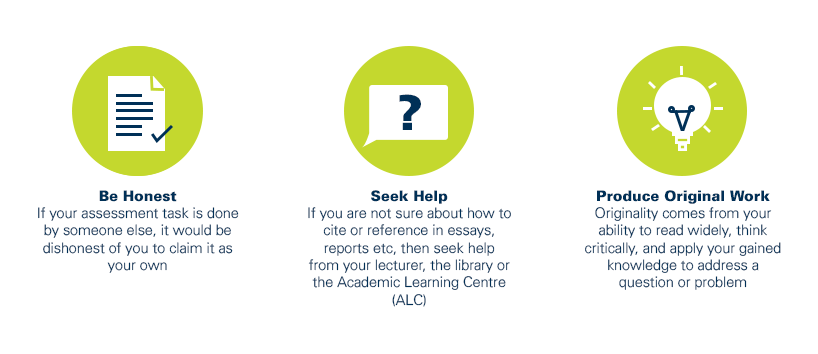
As a CQUniversity student you are expected to act honestly in all aspects of your academic work.
Any assessable work undertaken or submitted for review or assessment must be your own work. Assessable work is any type of work you do to meet the assessment requirements in the unit, including draft work submitted for review and feedback and final work to be assessed.
When you use the ideas, words or data of others in your assessment, you must thoroughly and clearly acknowledge the source of this information by using the correct referencing style for your unit. Using others’ work without proper acknowledgement may be considered a form of intellectual dishonesty.
Participating honestly, respectfully, responsibly, and fairly in your university study ensures the CQUniversity qualification you earn will be valued as a true indication of your individual academic achievement and will continue to receive the respect and recognition it deserves.
As a student, you are responsible for reading and following CQUniversity’s policies, including the Student Academic Integrity Policy and Procedure. This policy sets out CQUniversity’s expectations of you to act with integrity, examples of academic integrity breaches to avoid, the processes used to address alleged breaches of academic integrity, and potential penalties.
What is a breach of academic integrity?
A breach of academic integrity includes but is not limited to plagiarism, self-plagiarism, collusion, cheating, contract cheating, and academic misconduct. The Student Academic Integrity Policy and Procedure defines what these terms mean and gives examples.
Why is academic integrity important?
A breach of academic integrity may result in one or more penalties, including suspension or even expulsion from the University. It can also have negative implications for student visas and future enrolment at CQUniversity or elsewhere. Students who engage in contract cheating also risk being blackmailed by contract cheating services.
Where can I get assistance?
For academic advice and guidance, the Academic Learning Centre (ALC) can support you in becoming confident in completing assessments with integrity and of high standard.
What can you do to act with integrity?