Overview
This unit will provide you with comprehensive knowledge in functional anatomy and biomechanics of the lower limb specifically required in the profession of podiatry. A strong focus will be on the integration of anatomical structures and functions and how these both influence, and are influenced by the manner in which the skeletal, muscular, nervous, and circulatory systems work together. You will learn to use biomechanical terminology relating to the lower extremity that describes motion, position and structural abnormality. Theoretical principles, measurement techniques and gait analysis will also be investigated.
Details
Pre-requisites or Co-requisites
Prerequisites: BMSC11007 Medical Anatomy and Physiology 1, BMSC11008 Medical Anatomy and Physiology 2, NUP 57075 Introduction to Podiatry Practice
Important note: Students enrolled in a subsequent unit who failed their pre-requisite unit, should drop the subsequent unit before the census date or within 10 working days of Fail grade notification. Students who do not drop the unit in this timeframe cannot later drop the unit without academic and financial liability. See details in the Assessment Policy and Procedure (Higher Education Coursework).
Offerings For Term 1 - 2026
Attendance Requirements
All on-campus students are expected to attend scheduled classes - in some units, these classes are identified as a mandatory (pass/fail) component and attendance is compulsory. International students, on a student visa, must maintain a full time study load and meet both attendance and academic progress requirements in each study period (satisfactory attendance for International students is defined as maintaining at least an 80% attendance record).
Recommended Student Time Commitment
Each 6-credit Undergraduate unit at CQUniversity requires an overall time commitment of an average of 12.5 hours of study per week, making a total of 150 hours for the unit.
Class Timetable
Assessment Overview
Assessment Grading
This is a graded unit: your overall grade will be calculated from the marks or grades for each assessment task, based on the relative weightings shown in the table above. You must obtain an overall mark for the unit of at least 50%, or an overall grade of 'pass' in order to pass the unit. If any 'pass/fail' tasks are shown in the table above they must also be completed successfully ('pass' grade). You must also meet any minimum mark requirements specified for a particular assessment task, as detailed in the 'assessment task' section (note that in some instances, the minimum mark for a task may be greater than 50%). Consult the University's Grades and Results Policy for more details of interim results and final grades.
All University policies are available on the CQUniversity Policy site.
You may wish to view these policies:
- Grades and Results Policy
- Assessment Policy and Procedure (Higher Education Coursework)
- Review of Grade Procedure
- Student Academic Integrity Policy and Procedure
- Academic Progression Policy and Procedure
- Student Refund and Credit Balance Policy and Procedure
- Complaints Policy and Procedure
- Information and Communications Technology Acceptable Use Policy and Procedure
This list is not an exhaustive list of all University policies. The full list of University policies are available on the CQUniversity Policy site.
Feedback, Recommendations and Responses
Every unit is reviewed for enhancement each year. At the most recent review, the following staff and student feedback items were identified and recommendations were made.
Feedback from Unit coordinator reflection
The introduction of the biomechanical assessment manual improved the efficiency of the two practical sessions.
It is recommended that the biomechanical assessment manual continues to be used in subsequent deliveries of this unit.
Feedback from Unit coordinator reflection
Student revision of learnt practical skills may be further enhanced by the introduction of a more comprehensive video library of hands-on assessment techniques.
It is recommended that the video library of hands-on assessment techniques is expanded for subsequent deliveries of this unit.
- Describe and explain the functional anatomy of all muscle, tendon and joint units of the lower limb
- Interpret the mechanical, physiological and anatomical concepts in the context of human physical performance
- Use the key biomechanical terms and principles relating to the lower extremity, which describe motion, position and/or deformity
- Perform a range of biomechanical assessments using quantitative measurement techniques, including assessment of their validity
- Analyse the gait cycle, its determinants and the related phases of human locomotion.
Learning Outcomes are linked to the Podiatry Board Competency Standards.
Alignment of Assessment Tasks to Learning Outcomes
| Assessment Tasks | Learning Outcomes | ||||
|---|---|---|---|---|---|
| 1 | 2 | 3 | 4 | 5 | |
| 1 - Online Quiz(zes) - 30% | |||||
| 2 - Presentation - 40% | |||||
| 3 - Written Assessment - 30% | |||||
Alignment of Graduate Attributes to Learning Outcomes
| Graduate Attributes | Learning Outcomes | ||||
|---|---|---|---|---|---|
| 1 | 2 | 3 | 4 | 5 | |
| 1 - Communication | |||||
| 2 - Problem Solving | |||||
| 3 - Critical Thinking | |||||
| 4 - Information Literacy | |||||
| 5 - Team Work | |||||
| 6 - Information Technology Competence | |||||
| 7 - Cross Cultural Competence | |||||
| 8 - Ethical practice | |||||
| 9 - Social Innovation | |||||
| 10 - First Nations Knowledges | |||||
| 11 - Aboriginal and Torres Strait Islander Cultures | |||||
Textbooks
Clinical Biomechanics of the Lower Extremities
- (1996)
- Authors: Ronald Valmassy
- Mosby Elsevier
- St Louis St Louis , Missouri , USA
- ISBN: 9780801679865
- Binding: Hardcover
IT Resources
- CQUniversity Student Email
- Internet
- Unit Website (Moodle)
- Zoom
All submissions for this unit must use the referencing style: American Psychological Association 7th Edition (APA 7th edition)
For further information, see the Assessment Tasks.
b.peterson@cqu.edu.au
a.crutch@cqu.edu.au
Week 1
Begin Date: 09 Mar 2026Module/Topic
Unit overview
Anatomy of the foot and ankle
The skeletal system - development, function, and repair:
- Revise the anatomical position and anatomical planes
- Revise bony landmark terminology
- Revise directional terms
- Planes of motion
- Function of the skeleton
- Types of bones
- Anatomy of bones
- Cartilage
- Synovial joints
- Bone growth
- Processes and phases of bone remodelling
Chapter
Events and Submissions/Topic
Week 2
Begin Date: 16 Mar 2026Module/Topic
Anatomy of the leg
The muscular system - development, function and repair:
- Functions of the muscular system
- Types of muscle
- Anatomy of skeletal muscle
- Muscle shapes
- Types of muscle contraction
- Muscle contraction force, velocity, and duration
- Muscle innervation and motor units
- Agonist and antagonist muscle activity
- Muscle strength, hypertrophy, and atrophy
- Muscle tone
- Muscle fatigue
- Muscle 'tightness'
Chapter
Events and Submissions/Topic
Week 3
Begin Date: 23 Mar 2026Module/Topic
Anatomy of the knee and thigh
Kinematic concepts of human movement:
- Define kinematics
- Biomechanical terminology related to motion and spatiotemporal parameters
- Linear and circular motion
- Joint axes of rotation, axis position, and movement about an axis
- Open and closed-chain movements
- Introduction to joint positions during the gait cycle
- Measuring kinematics
- Movement in different planes of motion
Chapter
Events and Submissions/Topic
Week 4
Begin Date: 30 Mar 2026Module/Topic
Anatomy of the hip and pelvis
Kinetic concepts of human movement:
- Biomechanical terminology relating to kinetics
- Newton's laws of motion
- Introduction to ground reaction forces
- Centre of mass
- Free body diagrams
- Calculating torque
- Calculating pressure
- Introduction to internal and external forces producing and controlling motion during gait
Chapter
Events and Submissions/Topic
Week 5
Begin Date: 06 Apr 2026Module/Topic
Practical session 1: Static biomechanical assessments (attendance is essential in preparation for Assessment 1 - Online Quiz (30%) and Assessment 2 - presentation (40%))
Practical session 1 will cover a range of assessments from the biomechanical assessment manual, including:
- Assessing joint range of motion:
- Subtalar joint
- Calcaneocuboid joint
- Talonavicular joint
- First ray
- First metatarsophalangeal joint
- Ankle joint
- Identification of the subtalar joint neutral position
- Assessment of forefoot to rearfoot relationships
- Weightbearing assessments of foot posture:
- Resting and neutral calcaneal stance position
- Navicular drop and drift
- Supination resistance test
- Foot Posture Index
Chapter
Review before your practical session:
Bachelor of Podiatry (Honours) Biomechanical Assessment Manual, sections:
- Manual muscle testing (pages 4 to 14)
- Assessment of the forefoot (pages 15 to 23)
- Assessment of the midfoot (pages 24 to 26)
- Assessment of the rearfoot (pages 29 to 34; pages 37 to 39)
- Assessment of the ankle and leg (pages 40 to 43)
Events and Submissions/Topic
Week 6
Begin Date: 13 Apr 2026Module/Topic
The human gait cycle part 1:
- Spatial and temporal parameters of gait
- Factors influencing base and angle of gait
- Single and double limb support time
- Phases and events of the gait cycle
Chapter
Events and Submissions/Topic
Vacation Week
Begin Date: 20 Apr 2026Module/Topic
No lecture or tutorial during vacation week
Chapter
Events and Submissions/Topic
Week 7
Begin Date: 27 Apr 2026Module/Topic
Assessment 1 - Online Quiz (30%) occurs on-campus during lecture time.
The human gait cycle part 2:
- Brief revision of human gait cycle part 1
- Initiation and termination of gait
- Determinants of gait
- Dynamic gait analysis
Chapter
Events and Submissions/Topic
Week 8
Begin Date: 04 May 2026Module/Topic
Preparation for practical session 2.
Chapter
Students should bring an electronic (or hard) copy of the Bachelor of Podiatry (Honours) Biomechanical Assessment Manual to class.
Events and Submissions/Topic
Week 9
Begin Date: 11 May 2026Module/Topic
Practical session 2: Static and dynamic biomechanical assessments (attendance is essential in preparation for Assessment 3 - Written Assessment (30%))
- Gait analysis using instrumented treadmill
- Range of motion assessments:
- Hamstrings
- Hip internal and external rotation
- Tibial and knee position
- Single-legged squat test
- Trendelenburg test
Chapter
Review before your practical session:
Bachelor of Podiatry (Honours) Biomechanical Assessment Manual, sections:
- Assessment of the knee and thigh (pages 44 to 47)
- Assessment of the hip (pages 48 to 52)
Events and Submissions/Topic
Week 10
Begin Date: 18 May 2026Module/Topic
Student presentations (Assessment 2 - Presentation 40%) will take-place during the lecture time.
Preparing for Assessment 3 (Written Assessment, 30%).
Chapter
Events and Submissions/Topic
Week 11
Begin Date: 25 May 2026Module/Topic
No lecture or tutorial in Week 11. Self-directed assessment preparation.
Chapter
Events and Submissions/Topic
Week 12
Begin Date: 01 Jun 2026Module/Topic
No class in Week 12. Assessment 3 - Written Assessment (30%) due.
Chapter
Events and Submissions/Topic
Exam Week
Begin Date: 08 Jun 2026Module/Topic
Chapter
Events and Submissions/Topic
Vacation/Exam Week
Begin Date: 15 Jun 2026Module/Topic
Chapter
Events and Submissions/Topic
1 Online Quiz(zes)
The Online Quiz in Week 7 will consist of multiple choice and short-answer questions and cover content from Weeks 1 - 6. The quiz will have a time limit of 60 minutes and will be conducted during the usual lecture time. This assessment item will take place in the usual lecture room, under supervision. Access to unit materials is not permitted during the online quiz. Attendance to the Week 6 practicum is strongly recommended toward preparation for this assessment task.
The 72-hour grace period does not apply to this assessment item.
Approved use of artificial intelligence (AI): Level 1 - No AI. You must not use AI at any point during this assessment. You must demonstrate your core skills and knowledge.
Week 7 Tuesday (28 Apr 2026) 12:00 pm AEST
This online quiz will open at 12pm on Tuesday 28th April 2025 (Tuesday Week 7) and will close at 1:15pm Tuesday 28th April 2025. The test duration is a maximum of one hour (60 minutes).
Week 8 Tuesday (5 May 2026)
Results will be made available via Moodle by Tuesday Week 8
The assessment will be marked according to a purpose made answer guide designed specifically for this assessment task.
- Describe and explain the functional anatomy of all muscle, tendon and joint units of the lower limb
- Interpret the mechanical, physiological and anatomical concepts in the context of human physical performance
- Perform a range of biomechanical assessments using quantitative measurement techniques, including assessment of their validity
2 Presentation
This presentation can be presented 'live' or as a pre-recorded video and will cover content from Weeks 1-7. The presentation will be no longer than 15 minutes with a 'live' 5-minute question and answer session at the end. The presentation will be conducted during the lecture time in Week 10. The topic of this presentation will be a podiatric biomechanical assessment technique, which will be provided to students early in the term. This is an individual assessment task. Attendance to the Week 6 practicum is essential toward preparation for this assessment task.
The 72-hour grace period does not apply to this assessment item.
Approved use of artificial intelligence (AI): Level 2 - AI Planning. You may use AI for planning, idea development, and research. Your final submission should show how you have developed and refined these ideas.
Week 10 Tuesday (19 May 2026) 12:00 pm AEST
Prior to your presentation, please submit your powerpoint slides or video recording before the due date / time as evidence of completion of this assessment task.
Week 11 Tuesday (26 May 2026)
Results will be made available via Moodle by Tuesday Week 11.
The assessment will be marked according to a marking rubric designed specifically for this assessment task. The assessment criteria will require students to address the following:
a. A brief history and overview of the biomechanical assessment technique, including the clinically relevant anatomy
b. The advantages and disadvantages of the assessment technique, including but not limited to the reliability and validity of the measurement
c. A demonstration of the performance and interpretation of the assessment, using appropriate anatomical and biomechanical terminology
d. Adherance to APA referencing format
e. Performance in a live question and answer session addressing the relevant unit learning outcomes
The assessment rubric for the oral presentation will be provided to you at the start of term. If the presentation exceeds the 15 minute time limit, you may opt to complete the presentation but any additional content that is over the time limit will not be assessed by the examiner.
- Describe and explain the functional anatomy of all muscle, tendon and joint units of the lower limb
- Interpret the mechanical, physiological and anatomical concepts in the context of human physical performance
- Use the key biomechanical terms and principles relating to the lower extremity, which describe motion, position and/or deformity
- Perform a range of biomechanical assessments using quantitative measurement techniques, including assessment of their validity
- Analyse the gait cycle, its determinants and the related phases of human locomotion.
3 Written Assessment
This written assessment worth 30% will consist of a report of an analysis of the human gait cycle. This is an individual assessment task.
The written assessment overview and instructions will be provided to you at the start of the term via Moodle. Attendance to the Week 9 practicum is essential toward preparation for this assessment task.
Approved use of artificial intelligence (AI): Level 2 - AI Planning. You may use AI for planning, idea development, and research. Your final submission should show how you have developed and refined these ideas.
Week 12 Friday (5 June 2026) 11:59 pm AEST
Submission via moodle by the due date
Vacation/Exam Week Friday (19 June 2026)
Marks for this final assessment will be made available via moodle
The written assessment will be marked according to a purpose made marking rubric for this assessment task. The assessment instructions and marking rubric will be made available to you at the start of the term. Your written assessment must include:
- A cover page which includes assessment title, student’s name and number, Unit Coordinators name, course code and title, due date.
- The gait analysis report and completion of prescribed tasks related to podiatric biomechanical principles.
-
Referencing (if any) should follow APA format. Please also ensure that each page of your report has a page number and your student number. The text should be in Size 12 Arial font, 1.5 cm spacing with 2 cm page margins. All tables and figures must be labelled and referenced appropriately in the text.
- Use the key biomechanical terms and principles relating to the lower extremity, which describe motion, position and/or deformity
- Analyse the gait cycle, its determinants and the related phases of human locomotion.
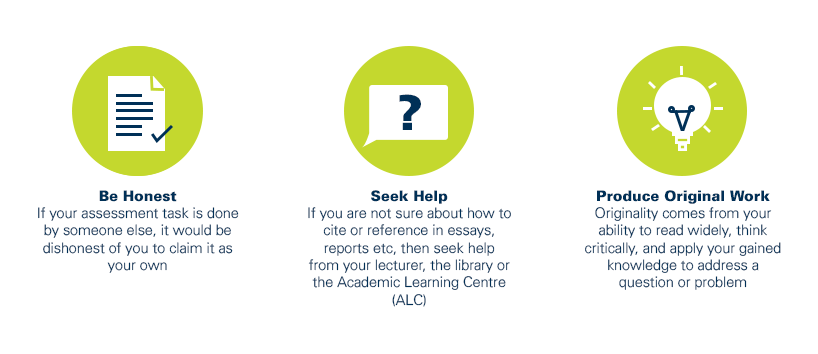
As a CQUniversity student you are expected to act honestly in all aspects of your academic work.
Any assessable work undertaken or submitted for review or assessment must be your own work. Assessable work is any type of work you do to meet the assessment requirements in the unit, including draft work submitted for review and feedback and final work to be assessed.
When you use the ideas, words or data of others in your assessment, you must thoroughly and clearly acknowledge the source of this information by using the correct referencing style for your unit. Using others’ work without proper acknowledgement may be considered a form of intellectual dishonesty.
Participating honestly, respectfully, responsibly, and fairly in your university study ensures the CQUniversity qualification you earn will be valued as a true indication of your individual academic achievement and will continue to receive the respect and recognition it deserves.
As a student, you are responsible for reading and following CQUniversity’s policies, including the Student Academic Integrity Policy and Procedure. This policy sets out CQUniversity’s expectations of you to act with integrity, examples of academic integrity breaches to avoid, the processes used to address alleged breaches of academic integrity, and potential penalties.
What is a breach of academic integrity?
A breach of academic integrity includes but is not limited to plagiarism, self-plagiarism, collusion, cheating, contract cheating, and academic misconduct. The Student Academic Integrity Policy and Procedure defines what these terms mean and gives examples.
Why is academic integrity important?
A breach of academic integrity may result in one or more penalties, including suspension or even expulsion from the University. It can also have negative implications for student visas and future enrolment at CQUniversity or elsewhere. Students who engage in contract cheating also risk being blackmailed by contract cheating services.
Where can I get assistance?
For academic advice and guidance, the Academic Learning Centre (ALC) can support you in becoming confident in completing assessments with integrity and of high standard.
What can you do to act with integrity?