Overview
In today’s competitive and fast-paced environment, learning to effectively manage a project is critical. In this unit, you will acquire the essential knowledge and essential skills to appropriately initiate and plan projects. The unit will prepare you to work on business cases, the organisation's historical information, previous projects' lessons learned and other project data to construct a project management plan. You will learn about and practice various processes in initiation and planning including project chartering, project scoping, and creating a work breakdown structure (WBS). In this unit, you will also learn about project stakeholders and management. In addition, you will identify a range of risk planning and quality management techniques. Finally, the unit introduces the concept of project integration and explores the role of the project manager in developing, implementing and maintaining the project plan while effectively managing change throughout the project life cycle.
Details
Pre-requisites or Co-requisites
There are no requisites for this unit.
Important note: Students enrolled in a subsequent unit who failed their pre-requisite unit, should drop the subsequent unit before the census date or within 10 working days of Fail grade notification. Students who do not drop the unit in this timeframe cannot later drop the unit without academic and financial liability. See details in the Assessment Policy and Procedure (Higher Education Coursework).
Offerings For Term 1 - 2026
Attendance Requirements
All on-campus students are expected to attend scheduled classes - in some units, these classes are identified as a mandatory (pass/fail) component and attendance is compulsory. International students, on a student visa, must maintain a full time study load and meet both attendance and academic progress requirements in each study period (satisfactory attendance for International students is defined as maintaining at least an 80% attendance record).
Recommended Student Time Commitment
Each 6-credit Undergraduate unit at CQUniversity requires an overall time commitment of an average of 12.5 hours of study per week, making a total of 150 hours for the unit.
Class Timetable
Assessment Overview
Assessment Grading
This is a graded unit: your overall grade will be calculated from the marks or grades for each assessment task, based on the relative weightings shown in the table above. You must obtain an overall mark for the unit of at least 50%, or an overall grade of 'pass' in order to pass the unit. If any 'pass/fail' tasks are shown in the table above they must also be completed successfully ('pass' grade). You must also meet any minimum mark requirements specified for a particular assessment task, as detailed in the 'assessment task' section (note that in some instances, the minimum mark for a task may be greater than 50%). Consult the University's Grades and Results Policy for more details of interim results and final grades.
All University policies are available on the CQUniversity Policy site.
You may wish to view these policies:
- Grades and Results Policy
- Assessment Policy and Procedure (Higher Education Coursework)
- Review of Grade Procedure
- Student Academic Integrity Policy and Procedure
- Academic Progression Policy and Procedure
- Student Refund and Credit Balance Policy and Procedure
- Complaints Policy and Procedure
- Information and Communications Technology Acceptable Use Policy and Procedure
This list is not an exhaustive list of all University policies. The full list of University policies are available on the CQUniversity Policy site.
Feedback, Recommendations and Responses
Every unit is reviewed for enhancement each year. At the most recent review, the following staff and student feedback items were identified and recommendations were made.
Feedback from UC consultation with students during and outside the class (informal discussions, feedback during workshops, and email communication)
Students reported a positive learning experience in the unit.
To continue enhancing the positive learning experience, multiple feedback sources (including informal in-class discussions and student comments during workshops) will be used alongside formal mechanisms to refine teaching practice. Interactive, student-focused activities will continue to be embedded, and a supportive and inclusive learning environment will be maintained.
Feedback from UC consultation with students during and outside the class
Students found that attending weekly workshops enhanced their learning experience.
It is recommended to continue clearly communicating the benefits of attending weekly workshops and to actively encourage regular participation to further support students’ academic progress and overall performance.
Feedback from UC observation
Weekly communication with students is considered.
The Unit Coordinator will maintain regular weekly communication with students through a structured and multi-channel approach. This will include weekly announcement posts on Moodle outlining key content, upcoming assessments, and deadlines, supplemented by targeted email communication where individual follow-up is required. In addition, progress will be monitored through workshop attendance and informal in-class check-in, allowing early identification of any learning or engagement issues.
- Identify the key project management knowledge areas, principles, tools and techniques for project initiation and planning
- Identify the key stakeholders and highlight the potential risks in a project domain
- Develop a project charter that appropriately documents a project's needs, desired deliverables and milestones
- Develop a project management plan that clearly defines actions needed to coordinate and ensure effective monitoring and control of project elements.
The learning outcomes of the proposed unit are all developed in line with the requirements of the two potential accreditation bodies, the Project Management Institute (PMI) and the Australian Institute of Project Management, for this course. Moreover, the learning outcomes are addressing the graduate attributes noted in the Engineers Australia Policy on Accreditation through incorporating the following:
- Ability to undertake problem identification, formulation and solution
- Understanding of the social, cultural, global and environmental responsibilities of the professional engineer, and the need for sustainable development.
(Engineers Australia policy on accreditation retrieved from https://www.engineersaustralia.org.au/sites/default/files/content-files/2016-12/110214_P02EA_Curr_Engineers_Australia_Policy_on_Accred_REV_0.PDF on 11/05/2021)
Alignment of Assessment Tasks to Learning Outcomes
| Assessment Tasks | Learning Outcomes | |||
|---|---|---|---|---|
| 1 | 2 | 3 | 4 | |
| 1 - Online Quiz(zes) - 20% | ||||
| 2 - Written Assessment - 30% | ||||
| 3 - Practical Assessment - 50% | ||||
Alignment of Graduate Attributes to Learning Outcomes
| Graduate Attributes | Learning Outcomes | |||
|---|---|---|---|---|
| 1 | 2 | 3 | 4 | |
| 1 - Communication | ||||
| 2 - Problem Solving | ||||
| 3 - Critical Thinking | ||||
| 4 - Information Literacy | ||||
| 5 - Team Work | ||||
| 6 - Information Technology Competence | ||||
| 7 - Cross Cultural Competence | ||||
| 8 - Ethical practice | ||||
| 9 - Social Innovation | ||||
| 10 - First Nations Knowledges | ||||
| 11 - Aboriginal and Torres Strait Islander Cultures | ||||
Textbooks
There are no required textbooks.
IT Resources
- CQUniversity Student Email
- Internet
- Unit Website (Moodle)
All submissions for this unit must use the referencing style: Harvard (author-date)
For further information, see the Assessment Tasks.
t.trinh@cqu.edu.au
Week 1 - Introduction to modern project management
Begin Date: 09 Mar 2026Module/Topic
- Unit overview
- Project definition
- Role of project managers
- Value creation through projects
- PMBOK vs PRINCE2
Chapter
- To be provided on the Moodle website
Events and Submissions/Topic
Workshop 1
The lecturer begins by providing an overview of the unit and outlining the assessments. The session then focuses on key topics such as unit overview, project definition, and the role of project managers. Emphasis is placed on how value is created through projects, and a comparison between PMBOK and PRINCE2 frameworks is discussed.
The tutorial focuses on reviewing the concepts introduced in the lecture. Tutors also clarify the unit expectations, guide students on their pathways to success, and outline the general assessment requirements.
Please note that detailed assessment instructions will be provided once the unit coordinator releases them.
Week 2 - Project justification and business case
Begin Date: 16 Mar 2026Module/Topic
- Need for a project
- Project objectives, outcomes and benefits
- Business case
- Project selection criteria
- PMBOK (Project management principles and project performance domain)
Chapter
- To be provided on the Moodle website
Events and Submissions/Topic
Workshop 2
The lecture focuses on the need for a project, project objectives, outcomes and benefits, the business case, and project selection criteria. Additionally, the session covers PMBOK (Project Management Principles and Project Performance Domains) and explains the roles projects play in today’s organisations.
The tutorial provides a brief summary of the lecture content and involves students in a class activity. Group formation for Assessment 2 begins during the tutorial.
Week 3 - Defining the project
Begin Date: 23 Mar 2026Module/Topic
- Project initiation
- Developing a project charter
- Defining a project scope
- Establishing project priorities
- Work Breakdown structure (WBS)
- Work packages
- WBS dictionary
Chapter
- To be provided on the Moodle website
Events and Submissions/Topic
Workshop 3
The lecture covers project initiation, including developing a project charter, defining a project scope, and establishing project priorities. The session also introduces the Work Breakdown Structure (WBS), work packages, and the WBS dictionary.
The tutor provides a brief overview of the lecture topics and engages students in working on examples related to project initiation, including developing a project charter, defining a project scope, and establishing project priorities. Students will explore how to apply the content they've learned through real-world project examples. The tutor also discusses Assessment 1 - Personal Learning Journal (30% weighting), which is due in week 8.
Week 4 - Planning for stakeholders and communications
Begin Date: 30 Mar 2026Module/Topic
- Project stakeholders
- Stakeholder performance domain
- Stakeholder mapping and justification
- Plan communication management
Chapter
- To be provided on the Moodle website
Events and Submissions/Topic
Workshop 4
The lecturer emphasizes the significance of stakeholder management in projects and covers key topics such as stakeholder management processes, identifying and analyzing stakeholders, stakeholder engagement, and developing a communication plan.
The tutor gives a brief overview of the lecture topics and leads students through a practical exercise on stakeholder identification and analysis. Additionally, the tutor will finalize the group formation for Assessment 2.
Week 5 - Estimating project costs
Begin Date: 06 Apr 2026Module/Topic
- Estimating project cost
- Top-down and bottom-up estimation
- Quality of estimation
Chapter
- To be provided on the Moodle website
Events and Submissions/Topic
Workshop 5
The lecturer covers key concepts, approaches, processes, tools, and techniques related to project cost management. Topics discussed include estimating project cost, top-down and bottom-up estimation, and the quality of estimation.
In the tutorial, students will engage in a cost estimation exercise to apply the concepts learned. The tutor will review the group work for Assessment 2 and address any questions.
Week 6 - Project scheduling
Begin Date: 13 Apr 2026Module/Topic
- Project schedule
- Predictive and adaptive approach
- Time and resource constraints scheduling
- Development of network diagram
Chapter
- To be provided on the Moodle website
Events and Submissions/Topic
Workshop 6
The lecturer discusses important concepts, approaches, processes, tools, and techniques related to project schedule management. Key topics include project scheduling, the predictive and adaptive approaches to scheduling, time and resource constraints scheduling, and the development of network diagrams.
During the tutorial, students will engage in a schedule and resource allocation exercise. The tutor will then check the group work done for Assessment 2 and answer students' questions.
Vacation Week
Begin Date: 20 Apr 2026Module/Topic
Enjoy the vacation week.
Chapter
Events and Submissions/Topic
Week 7 - Planning project risks
Begin Date: 27 Apr 2026Module/Topic
- Introduction to project risks
- Managing risks and threats
- Sources of risks and uncertainty
- Risk management processes
Chapter
- To be provided on the Moodle website
Events and Submissions/Topic
Workshop 7
The lecturer explores various aspects of risk and uncertainty in project management, introducing students to key concepts and highlighting the significance of managing risks. Students are introduced to a range of effective tools and techniques for risk identification and response planning.
The tutor guides students through a group activity centered around a risk-related case study. In this session, students will work together to develop a risk register. The tutor will also review the group work completed for Assessment 2 and provide clarification on any questions the students may have.
The tutorial will be dedicated on focusing on Assessment 1 - Personal learning journal (30% weighting) and Assessment 2 Q&A.
Week 8 - Reducing project duration and cost
Begin Date: 04 May 2026Module/Topic
- Reasons for reducing project duration and cost
- Options for accelerating project completion
- Crashing project cost and duration
Chapter
- To be provided on the Moodle website
Events and Submissions/Topic
Workshop 8
The lecturer will cover the reasons for delays during the project duration and explore various strategies for accelerating project completion. Topics will include techniques for crashing project cost and duration, as well as the use of fast-tracking and cost-cutting approaches to improve project efficiency.
During the tutorial, students will work on a project where they are tasked with shortening the project duration through crashing. They will begin by analyzing the project schedule, identifying the critical path, and evaluating each task's potential to be shortened.
Submit Assessment 1 (Personal learning journal-30%) - Friday of week 8
Personal Learning Journal Due: Week 8 Friday (8 May 2026) 6:00 pm AEST
Week 9 - Planning for change in projects
Begin Date: 11 May 2026Module/Topic
- Changes in projects
- Causes and effects of project changes
- Change management process
- Change control process
- Cost of change
Chapter
- To be provided on the Moodle website
Events and Submissions/Topic
Workshop 9
The lecturer focuses on discussing the concept and importance of change management in projects. Students become familiar with integrated change control processes and learn how to prepare a change management plan.
In the tutorial, insmall groups, students will discuss their approaches to managing the change, including how to assess its impact on the project, communicate effectively with stakeholders, and decide on strategies to address the change while minimizing disruption. Each group will share their proposed solutions, considering both the logistical aspects of managing such changes within the team for the project.
Week 10 - Project tailoring and integration
Begin Date: 18 May 2026Module/Topic
- Project tailoring
- Tailoring benefits
- What to tailor and tailoring process
- Project integration
Chapter
- To be provided on the Moodle website
Events and Submissions/Topic
Workshop 10
The lecturer will introduce the concept of project tailoring, emphasizing how it enables project managers to customize processes, tools, and techniques to better align with the specific needs and characteristics of a project. The lecture will also highlight the benefits of tailoring and provide an overview of how and when different elements of a project should be tailored to ensure optimal results.
Assessment 2 Q&A. Students will receive tips on how to prepare for the oral presentations. Tutors finalise the presentation plan and inform all students.
Week 11 - Project development approaches
Begin Date: 25 May 2026Module/Topic
- Project development approaches
- Predictive, adaptive and hybrid approaches
- Agile mindset
- Agile methods
Chapter
- To be provided on the Moodle website
Events and Submissions/Topic
Workshop 11
The lecturer explores the distinctions between predictive and adaptive approaches in project management. Students will gain an understanding of the core principles of agile project management, including key concepts such as the agile mindset and value-driven delivery.
Assessment 2 (both report and presentation) due on Monday of week 11.
Assessment 2 - in-class presentation (15%). Depending on the tutorial class size, some groups would present in week 11, while other groups would present in week 12. Students need to follow the schedule provided by the tutor in advance.
Reminding students of the in-class closed-book online quiz (20% weighting) due in week 12 (Assessment 3)
Project Plan Due: Week 11 Monday (25 May 2026) 9:00 am AEST
Week 12 - High-performing project teams
Begin Date: 01 Jun 2026Module/Topic
- Difference between management and leadership
- Project team competencies
- Building high-performing team
- Tuckman team development model
Chapter
- To be provided on the Moodle website
Events and Submissions/Topic
Workshop 12
The final lecture will explore the role of the project manager as a leader. Students will gain an understanding of the difference between management and leadership, the importance of project team competencies, and how to effectively build a high-performing team. The session will also cover the Tuckman team development model and its relevance to team dynamics. The lecturer will conclude the unit by examining the impact of teamwork on project success.
Assessment 2 - in-class presentation (15% weighting) continues.
In-class closed-book online quiz (20% weighting) (Assessment 3)
In-class Online Quiz Due: Week 12 Friday (5 June 2026) 6:00 pm AEST
Exam Week
Begin Date: 08 Jun 2026Module/Topic
Chapter
Events and Submissions/Topic
Vacation/Exam Week
Begin Date: 15 Jun 2026Module/Topic
Chapter
Events and Submissions/Topic
1 Written Assessment
Task Description:
Starting from week 2, you are required to create and progressively complete a personal learning journal throughout the duration of this unit.
The learning journal should document your ongoing learning in the following areas, aligned with the unit’s learning outcomes:
- Understanding the significance of project management across various organisational contexts.
- Identifying the key project components and processes that contribute to successful project implementation.
- Evaluating the application of an appropriate project management strategy within a specific organisational context, while considering stakeholders' expectations.
- Reflecting on your learning in project management so far, note how your understanding and skills have evolved throughout the unit.
The completed learning journal is to be submitted by the end of week 8. Re-attempt of this assessment will not be allowed. This assessment is exempt from the 72‑hour submission grace period.
Week 8 Friday (8 May 2026) 6:00 pm AEST
Week 10 Monday (18 May 2026)
Assessment marks and feedback will be released within two weeks after your submission
The journal will be evaluated based on its authenticity, which will be demonstrated through active participation in the weekly workshops. Therefore, it is essential for students to engage in the weekly Q&A sessions. Each week, two students will be selected to provide verbal feedback on their learning from that week's session.
Assessment Breakdown
- Completed authentic learning journal: 20% of the total course marks (A detailed rubric will be available on Moodle with the assessment details).
- Active student participation during workshops: 10% of the total course marks.
- Identify the key project management knowledge areas, principles, tools and techniques for project initiation and planning
- Develop a project charter that appropriately documents a project's needs, desired deliverables and milestones
2 Practical Assessment
This assessment is a group assignment, accounting for 50% of the unit's total marks. You are required to develop and present a comprehensive project plan based on a provided project brief, utilizing a range of project planning processes, tools, and techniques. The assessment has two parts: 2A (35% weighting of report) and 2B (15% weighting of in-class presentation).
- 2A (written report and presentation slides) is due Monday of week 11 before 9 am AEST.
- 2B (oral presentation) is due during the week 11 and 12 workshops.
Group Formation
- Groups should be composed of 3-4 students.
- Groups must be finalised by the end of week 4.
Part 2A - Written report (project plan) (35%)
Students will be provided with a real-life, unfinished project case study, which they will use as the basis to develop their project plan. This case study will offer valuable insights and serve as a practical foundation for applying project management principles and techniques to a real-world scenario.
The project plan must include the following sections:
- A detailed project description and justification
- The scope baseline
- The schedule baseline
- The cost baseline
- The resource management plan
- The risk management plan
- The change management plan
- The stakeholder and communication management plan
- The task allocation, meeting minutes, and weekly progress reports (to be included as an appendix).
Part 2B - Oral presentation (15%)
- You will be required to present the key elements of your project plan during the week 11 and 12 workshops. Each student will also have the opportunity to reflect on the knowledge and skills gained through teamwork and studying the unit, showcasing their presentation and communication abilities.
- Oral presentations will take place during the workshops in weeks 11 and 12.
- Each group member must present an equal portion of the presentation to demonstrate their understanding.
- The presentation should cover all aspects of the project plan in no more than 15 slides, excluding the title and references pages. Slides should be prepared in PowerPoint format (*.pptx) and emailed to the tutor at least one day before the presentation.
- The presentation slides should align with the structure of the project plan. The duration of the presentation will be less than 15 minutes, with an additional 5 minutes allocated for Q&A.
- If the oral presentation is not given during the scheduled tutorial, no marks will be awarded. If a group member is absent on the presentation day, they will receive a zero (0) for their portion of the presentation.
- Presentations will be primarily graded based on each individual's performance during the presentation.
This assessment 2 (both part 2A and 2B) is exempt from the 72‑hour submission grace period. Re-attempt of this assessment will not be allowed.
Week 11 Monday (25 May 2026) 9:00 am AEST
Written report and oral presentation slides are due on Friday of week 11 (30/5/25 at 11:45 PM). Oral presentation (2B) is due during the workshop in week 12.
Assignment marks will be released on the certification of grade day.
Assessment Criteria
Your project plan will be evaluated based on its quality, professionalism, comprehensiveness, consistency, and the effective application of project management processes, tools, and techniques discussed throughout the course.
Part A - Project Plan (35% of unit marks):
- The project description and justification - 3 marks
- The scope baseline - 3 marks
- The schedule baseline - 5 marks
- The resource management plan - 5 marks
- The cost baseline - 5 marks
- The stakeholder management and communication plan - 4 marks
- The risk management plan - 3 marks
- The change management plan - 3 marks
- Minutes of the meetings, task allocation, weekly discussions, progress reports, etc. - 2 marks
- Clarity of expression, grammar, spelling, report format and presentation, in-text citations, references, and referencing style - 2 marks
Part B - In-class presentation (15% of unit marks):
- Quality and relevance of the presentation content (group marks) - 3 marks
- Quality of delivery and evidence of understanding of the presentation content (individual marks) - 5 marks
- Response to questions during Q & A (individual marks) - 2 marks
- Presentation manners: tone, eye contact, fluency, etc. (individual marks) - 3 marks
- Timing including Q&A (group marks) - 2 marks
The marking rubric for both parts will be provided on the Moodle website.
- Identify the key stakeholders and highlight the potential risks in a project domain
- Develop a project charter that appropriately documents a project's needs, desired deliverables and milestones
- Develop a project management plan that clearly defines actions needed to coordinate and ensure effective monitoring and control of project elements.
3 Online Quiz(zes)
This assessment item involves an in-class, closed-book, and online quiz, earning 20% of the unit marks. The online quiz will take place in the week 12 tutorial class under the supervision of the tutor or unit coordinator. As this is an in-class test, if you are not present on the day, this will result in zero marks.
Week 12 Friday (5 June 2026) 6:00 pm AEST
Students must complete online quiz during week 12 under the supervision of the tutor or unit coordinator. Any submission completed outside the scheduled time and without the supervision of the unit coordinator is not accepted.
Students will be able to see the marks as soon as the quiz is closed.
The students will be evaluated on their acquisition of knowledge, comprehension, and application of the unit content covered to this point.
- The online quiz will be an in-class, closed-book test.
- Only one attempt will be allowed.
- The online quiz will be held during the workshop in week 12 under the supervision of the tutor/unit coordinator.
- The quiz must be completed within the given timeframe.
- There will be 20 questions in total (19 questions will be a combination of multiple-choice and true/false, and 1 numerical question from project scheduling), carrying one mark for each question.
- There will be a time limit of 30 minutes to complete the quiz. After this, the quiz will automatically close and submit. Once you start the quiz, the timer will begin to count down and cannot be paused. You must finish your attempt before it expires (open attempts will automatically be submitted).
- The quiz covers the content from weeks 1 to 11 (lectures, tutorials, readings, etc.).
- You must complete the quiz in the scheduled workshop.
- The students, who are absent from their scheduled time in week 12, will receive zero (0/20) marks unless an extension has been granted.
- Any attempt to complete the quiz outside your scheduled tutorial class will result in zero (0/20) marks.
- Re-attempt of this assessment will not be allowed.
- Any misconduct during the quiz time will immediately disqualify the student from taking the quiz. A misconduct case will then be raised.
- This assessment is exempt from the 72‑hour submission grace period.
- Late submissions will not be accepted unless a formal extension request has been submitted and approved as per CQU Policy
- Identify the key project management knowledge areas, principles, tools and techniques for project initiation and planning
- Identify the key stakeholders and highlight the potential risks in a project domain
- Develop a project charter that appropriately documents a project's needs, desired deliverables and milestones
- Develop a project management plan that clearly defines actions needed to coordinate and ensure effective monitoring and control of project elements.
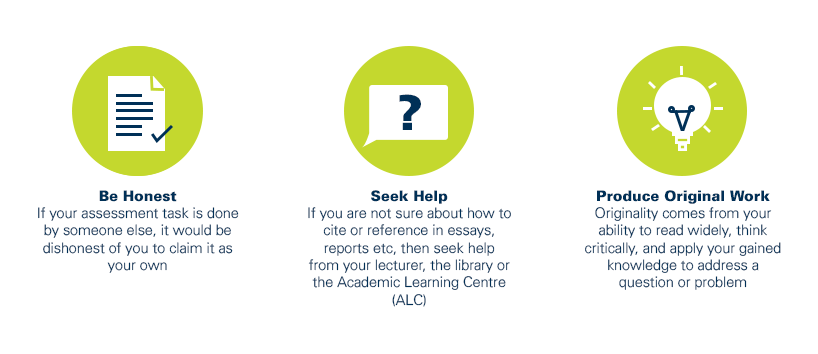
As a CQUniversity student you are expected to act honestly in all aspects of your academic work.
Any assessable work undertaken or submitted for review or assessment must be your own work. Assessable work is any type of work you do to meet the assessment requirements in the unit, including draft work submitted for review and feedback and final work to be assessed.
When you use the ideas, words or data of others in your assessment, you must thoroughly and clearly acknowledge the source of this information by using the correct referencing style for your unit. Using others’ work without proper acknowledgement may be considered a form of intellectual dishonesty.
Participating honestly, respectfully, responsibly, and fairly in your university study ensures the CQUniversity qualification you earn will be valued as a true indication of your individual academic achievement and will continue to receive the respect and recognition it deserves.
As a student, you are responsible for reading and following CQUniversity’s policies, including the Student Academic Integrity Policy and Procedure. This policy sets out CQUniversity’s expectations of you to act with integrity, examples of academic integrity breaches to avoid, the processes used to address alleged breaches of academic integrity, and potential penalties.
What is a breach of academic integrity?
A breach of academic integrity includes but is not limited to plagiarism, self-plagiarism, collusion, cheating, contract cheating, and academic misconduct. The Student Academic Integrity Policy and Procedure defines what these terms mean and gives examples.
Why is academic integrity important?
A breach of academic integrity may result in one or more penalties, including suspension or even expulsion from the University. It can also have negative implications for student visas and future enrolment at CQUniversity or elsewhere. Students who engage in contract cheating also risk being blackmailed by contract cheating services.
Where can I get assistance?
For academic advice and guidance, the Academic Learning Centre (ALC) can support you in becoming confident in completing assessments with integrity and of high standard.
What can you do to act with integrity?