Overview
This unit will provide you with in-depth coverage of the project life cycle and project management processes. Various types of project life cycles are illustrated and compared. Furthermore, this unit offers you the opportunity to further explore the recommended processes that can be tailored to specific project phases or an entire project. You will learn the phases of the project life cycle including initiation, planning, implementation, and project closing phase
Details
Pre-requisites or Co-requisites
There are no requisites for this unit.
Important note: Students enrolled in a subsequent unit who failed their pre-requisite unit, should drop the subsequent unit before the census date or within 10 working days of Fail grade notification. Students who do not drop the unit in this timeframe cannot later drop the unit without academic and financial liability. See details in the Assessment Policy and Procedure (Higher Education Coursework).
Offerings For Term 1 - 2026
Attendance Requirements
All on-campus students are expected to attend scheduled classes - in some units, these classes are identified as a mandatory (pass/fail) component and attendance is compulsory. International students, on a student visa, must maintain a full time study load and meet both attendance and academic progress requirements in each study period (satisfactory attendance for International students is defined as maintaining at least an 80% attendance record).
Recommended Student Time Commitment
Each 6-credit Undergraduate unit at CQUniversity requires an overall time commitment of an average of 12.5 hours of study per week, making a total of 150 hours for the unit.
Class Timetable
Assessment Overview
Assessment Grading
This is a graded unit: your overall grade will be calculated from the marks or grades for each assessment task, based on the relative weightings shown in the table above. You must obtain an overall mark for the unit of at least 50%, or an overall grade of 'pass' in order to pass the unit. If any 'pass/fail' tasks are shown in the table above they must also be completed successfully ('pass' grade). You must also meet any minimum mark requirements specified for a particular assessment task, as detailed in the 'assessment task' section (note that in some instances, the minimum mark for a task may be greater than 50%). Consult the University's Grades and Results Policy for more details of interim results and final grades.
All University policies are available on the CQUniversity Policy site.
You may wish to view these policies:
- Grades and Results Policy
- Assessment Policy and Procedure (Higher Education Coursework)
- Review of Grade Procedure
- Student Academic Integrity Policy and Procedure
- Monitoring Academic Progress (MAP) Policy and Procedure - Domestic Students
- Monitoring Academic Progress (MAP) Policy and Procedure - International Students
- Student Refund and Credit Balance Policy and Procedure
- Student Feedback - Compliments and Complaints Policy and Procedure
- Information and Communications Technology Acceptable Use Policy and Procedure
This list is not an exhaustive list of all University policies. The full list of University policies are available on the CQUniversity Policy site.
- Identify and discuss the processes within the project phases that make up a project lifecycle
- Apply the project management principles and processes in a discipline context
- Develop project deliverables appropriate to a given project phase
- Construct and justify an appropriate project life cycle, for a selected project within a given organisational context, to best meet project objectives
The learning outcomes of the proposed unit are all developed in line with the requirements of the two potential accreditation bodies, Project Management Institute (PMI) and the Australian Institute of Project Management, for this course. Moreover, the learning outcomes are addressing the graduate attributes noted in the Engineers Australia Policy on Accreditation through incorporating the following:
- Ability to undertake problem identification, formulation and solution
- Understanding of professional and ethical responsibilities and commitment to them;
- Understanding of the social, cultural, global and environmental responsibilities of the professional engineer, and the need for sustainable development.
(Engineers Australia policy on accreditation retrieved from https://www.engineersaustralia.org.au/sites/default/files/content-files/2016-12/110214_P02EA_Curr_Engineers_Australia_Policy_on_Accred_REV_0.PDF on 11/05/2021)
Alignment of Assessment Tasks to Learning Outcomes
| Assessment Tasks | Learning Outcomes | |||
|---|---|---|---|---|
| 1 | 2 | 3 | 4 | |
| 1 - Written Assessment - 40% | ||||
| 2 - Practical Assessment - 40% | ||||
| 3 - Online Test - 20% | ||||
Alignment of Graduate Attributes to Learning Outcomes
| Graduate Attributes | Learning Outcomes | |||
|---|---|---|---|---|
| 1 | 2 | 3 | 4 | |
| 1 - Communication | ||||
| 2 - Problem Solving | ||||
| 3 - Critical Thinking | ||||
| 4 - Information Literacy | ||||
| 5 - Team Work | ||||
| 6 - Information Technology Competence | ||||
| 7 - Cross Cultural Competence | ||||
| 8 - Ethical practice | ||||
| 9 - Social Innovation | ||||
| 10 - First Nations Knowledges | ||||
| 11 - Aboriginal and Torres Strait Islander Cultures | ||||
Textbooks
There are no required textbooks.
Additional Textbook Information
All learning resources are available through the unit’s Moodle page.
IT Resources
- CQUniversity Student Email
- Internet
- Unit Website (Moodle)
- Microsoft Teams
All submissions for this unit must use the referencing style: Harvard (author-date)
For further information, see the Assessment Tasks.
a.memari@cqu.edu.au
Week 1
Begin Date: 09 Mar 2026Module/Topic
Introduction:
- A structured approach to project management
- Project Management Principles in PMBOK 8th Ed.
- Project types and different approaches
- Project life cycles: predictive, adaptive and hybrid
Chapter
Reading materials on Moodle
PMBOK 8th Ed.
Events and Submissions/Topic
Online workshop format
- Theory
- Open discussion
Introduction to the assessment tasks
Week 2
Begin Date: 16 Mar 2026Module/Topic
Predictive project approaches:
- Industries predominantly applying this approach
- Project Management Organisations, Standards and Bodies of Knowledge supporting this approach
Chapter
Reading materials on Moodle
PMBOK 8th Ed.
Events and Submissions/Topic
Online workshop format
- Theory
- Open discussion
Introduction to assessment 1
Week 3
Begin Date: 23 Mar 2026Module/Topic
Predictive project approaches:
- Pre-implementation phases
- Examples:
- Construction and engineering
- The Front-End Loading approach
- Petrochemical
- Other
Chapter
Reading materials on Moodle
PMBOK 8th Ed.
Events and Submissions/Topic
Online workshop format
- Theory
- Open discussion
Q&A assessment 1 in workshop
Week 4
Begin Date: 30 Mar 2026Module/Topic
Predictive project approaches:
- Implementation phases
- Examples:
- Construction and engineering
- Petrochemical
- Other
Chapter
Reading materials on Moodle
PMBOK 8th Ed.
Events and Submissions/Topic
Online workshop format
- Theory
- Open discussion
Q&A assessment 1 in workshop
Week 5
Begin Date: 06 Apr 2026Module/Topic
Predictive project approaches:
- Post-Implementation phases
- Examples:
- Construction and engineering
- Petrochemical
- Other
Chapter
Reading materials on Moodle
PMBOK 8th Ed.
Events and Submissions/Topic
Online workshop format
- Theory
- Open discussion
Q&A assessment 1 in workshop
Week 6
Begin Date: 13 Apr 2026Module/Topic
Challenges to predictive project management approaches:
- Organisational challenges
- Structural challenges
- Business and industry-specific challenges
Chapter
Reading materials on Moodle
PMBOK 8th Ed.
Events and Submissions/Topic
Online workshop format
- Theory
- Open discussion
Q&A assessment 1 in workshop
Introduction to assessment 2
Vacation Week
Begin Date: 20 Apr 2026Module/Topic
Chapter
Events and Submissions/Topic
Students finalise assessment 1
Week 7
Begin Date: 27 Apr 2026Module/Topic
Adaptive project approaches:
- Industries predominantly applying this approach
- Project Management Organisations, Standards and Bodies of Knowledge supporting this approach
- Examples of adaptive life cycles
Chapter
Reading materials on Moodle
PMBOK 8th Ed.
Events and Submissions/Topic
Online workshop format
- Theory
- Open discussion
Assessment 1 submission due
Q&A assessment 2 in workshop
Literature review Due: Week 7 Friday (1 May 2026) 11:45 pm AEST
Week 8
Begin Date: 04 May 2026Module/Topic
Adaptive project approaches:
- Agile Project management
- Origin
- The Agile manifesto
- Different Agile methodologies
- Industries applying Agile approaches
Chapter
Reading materials on Moodle
PMBOK 8th Ed.
Events and Submissions/Topic
Online workshop format
- Theory
- Open discussion
Q&A assessment 2 in workshop
Week 9
Begin Date: 11 May 2026Module/Topic
Adaptive project approaches:
- Agile Project management
- A deep dive into SCRUM
- Related Agile methodologies
Chapter
Reading materials on Moodle
PMBOK 8th Ed.
Events and Submissions/Topic
Online workshop format
- Theory
- Open discussion
Q&A assessment 2 in workshop
Week 10
Begin Date: 18 May 2026Module/Topic
Challenges to adaptive project management approaches:
- Organisational challenges
- Structural challenges
- Business and industry-specific challenges
Chapter
Reading materials on Moodle
PMBOK 8th Ed.
Events and Submissions/Topic
Online workshop format
- Theory
- Open discussion
Q&A assessment 2 in workshop
Week 11
Begin Date: 25 May 2026Module/Topic
Hybrid project management approaches:
- Perceived advantages of the hybrid approach
- Industries applying the hybrid approach
Summary and overview of the Unit
Chapter
No new materials
Events and Submissions/Topic
Online workshop format
Theory
Open discussion
Introduction to the assessment tasks
Assessment 2 submission due
Case study based Life cycle selection Due: Week 11 Friday (29 May 2026) 11:45 pm AEST
Week 12
Begin Date: 01 Jun 2026Module/Topic
No new materials
Chapter
No new materials
Events and Submissions/Topic
Assessment 3: Online quiz
Online quiz Due: Week 12 Monday (1 June 2026) 11:45 pm AEST
Exam Week
Begin Date: 08 Jun 2026Module/Topic
Chapter
Events and Submissions/Topic
Vacation/Exam Week
Begin Date: 15 Jun 2026Module/Topic
Chapter
Events and Submissions/Topic
1 Written Assessment
Students will provide a literature review of 1500 words (+-10%) covering the following topics:
- Application of the predictive PM approach in a given industry of their choice
- A clear description of the lifecycle phases used in the approach
- A description of PM processes applied and in which phases they were used
- How PM principles guided the project management effort
AI Use allowed: AI Planning
You may use Al for planning, idea development, and research. Your final submission should show how you have developed and refined these ideas.
Al may be used for pre-task activities such as brainstorming, outlining and initial research. You may use AI-assisted automatic speech recognition to transcribe notes, AI tools to convert notes into outlines, and AI tools to brainstorm or suggest improvements to already created work. Image generation technologies might be used to generate starting points for designs or tools used to explore possibilities for producing software. You must then use the AI-generated ideas as the starting point and apply your skills and knowledge to refine and improve the initial ideas to the final submission. No GenAI-created content without changes should be included in the final submissions.
You do not need to cite the AI-generated content, as it has been substantially changed in the final submission. However, you need to briefly describe how AI tools were used during the planning, research and initial idea-generation stage of the assessment.
Week 7 Friday (1 May 2026) 11:45 pm AEST
This assessment has to provide evidence of your achievement of the following ULO's:
- Identify and discuss the processes within the project phases that make up a project lifecycle
- Apply the project management principles and processes in a discipline context
- Identify and discuss the processes within the project phases that make up a project lifecycle
- Apply the project management principles and processes in a discipline context
- Construct and justify an appropriate project life cycle, for a selected project within a given organisational context, to best meet project objectives
2 Practical Assessment
Based on a given case study, students are required to:
- Construct a suitable life cycle for a project in the given industry
- Justify their choice and proposed solution
- Describe the phase deliverables in the lifecycle and how they govern the project owner's interests.
This assessment may be completed in group or individually.
This assessment is submitted as a PowerPoint presentation and presented in the week 11 workshop.
AI use allowed: Collaboration
You may use Al to assist with specific tasks such as drafting text, refining and evaluating your work. You must critically evaluate and modify any Al-generated content you use.
Al may be used to help complete the task, including idea generation, drafting, feedback, and refinement. You should critically evaluate and modify the Al-suggested outputs, demonstrating your achievement of Learning Outcomes. You may use AI tools to rewrite/edit to clarify or refine your ideas or edit text captured with automatic speech recognition (e.g., verbally recorded drafts). In a multimodal context (for example, presentation video or slides), AI-assisted editing tools could be used alongside documentation of the process. If AI is used to edit/refine your final submission, you must acknowledge the use of AI tools, and the original work must be provided for comparison. While you can use AI to improve the clarity or quality of the work, no new content can be created using AI unless specifically allowed in the assessment.
You may be asked to use specific AI tool(s) to complete a particular task of the assessment. Students must cite the AI content (refer to AI citation guidelines by ALC), including the prompts used to generate the content.
Week 11 Friday (29 May 2026) 11:45 pm AEST
This assessment has to provide evidence of your achievement of the following ULO's:
- Develop project deliverables appropriate to a given project phase
- Construct and justify an appropriate project life cycle, for a selected project within a given organisational context, to best meet project objectives
Marks will be allocated as follows:
- PowerPoint file: 20%
- Recorded presentation (Min 20 minutes): 20%
- Develop project deliverables appropriate to a given project phase
- Construct and justify an appropriate project life cycle, for a selected project within a given organisational context, to best meet project objectives
3 Online Test
Students are required to complete the online quiz consisting of 20 questions. The quiz is held during the workshop time but can be accessed from anywhere.
AI Use allowed: No AI
You must not use Al at any point during the assessment. You must demonstrate your core skills and knowledge.
The assessment should be completed entirely without Al assistance, usually in a controlled environment. However, even if the assessment is not conducted in a controlled environment (such as an online test), you must not use AI to complete any parts of the assessment.
You are allowed to use Grammarly or similar writing improvement tools to improve the quality of your assessment.
Week 12 Monday (1 June 2026) 11:45 pm AEST
The quiz will contain questions that support the achievement of the following ULO's:
- Identify and discuss the processes within the project phases that make up a project lifecycle
- Apply the project management principles and processes in a discipline context
- Develop project deliverables appropriate to a given project phase
- Construct and justify an appropriate project life cycle, for a selected project within a given organisational context, to best meet project objectives
- Identify and discuss the processes within the project phases that make up a project lifecycle
- Apply the project management principles and processes in a discipline context
- Develop project deliverables appropriate to a given project phase
- Construct and justify an appropriate project life cycle, for a selected project within a given organisational context, to best meet project objectives
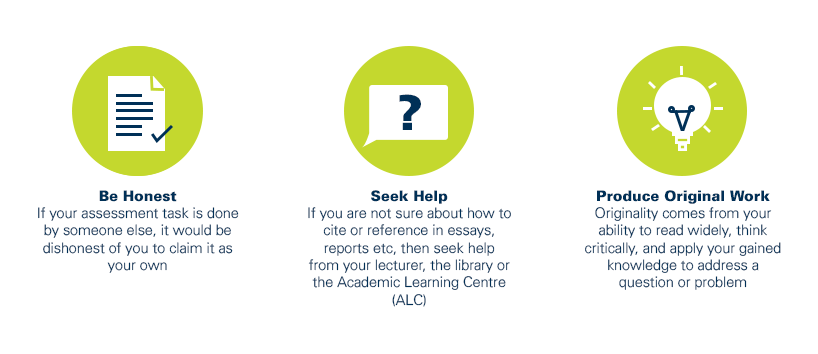
As a CQUniversity student you are expected to act honestly in all aspects of your academic work.
Any assessable work undertaken or submitted for review or assessment must be your own work. Assessable work is any type of work you do to meet the assessment requirements in the unit, including draft work submitted for review and feedback and final work to be assessed.
When you use the ideas, words or data of others in your assessment, you must thoroughly and clearly acknowledge the source of this information by using the correct referencing style for your unit. Using others’ work without proper acknowledgement may be considered a form of intellectual dishonesty.
Participating honestly, respectfully, responsibly, and fairly in your university study ensures the CQUniversity qualification you earn will be valued as a true indication of your individual academic achievement and will continue to receive the respect and recognition it deserves.
As a student, you are responsible for reading and following CQUniversity’s policies, including the Student Academic Integrity Policy and Procedure. This policy sets out CQUniversity’s expectations of you to act with integrity, examples of academic integrity breaches to avoid, the processes used to address alleged breaches of academic integrity, and potential penalties.
What is a breach of academic integrity?
A breach of academic integrity includes but is not limited to plagiarism, self-plagiarism, collusion, cheating, contract cheating, and academic misconduct. The Student Academic Integrity Policy and Procedure defines what these terms mean and gives examples.
Why is academic integrity important?
A breach of academic integrity may result in one or more penalties, including suspension or even expulsion from the University. It can also have negative implications for student visas and future enrolment at CQUniversity or elsewhere. Students who engage in contract cheating also risk being blackmailed by contract cheating services.
Where can I get assistance?
For academic advice and guidance, the Academic Learning Centre (ALC) can support you in becoming confident in completing assessments with integrity and of high standard.
What can you do to act with integrity?