Overview
This unit provides an introduction to project management practices and approaches, with a focus on how projects create sustainable value within diverse client requirements and dynamic implementation environments. In undertaking this unit, you will develop an understanding of the factors required for effective project delivery by examining how project success is shaped by stakeholder value, contextual conditions, and the application of project management knowledge, skills, tools, and techniques. The unit adopts an integrated perspective, incorporating predictive and adaptive approaches, including agile project management, cognitive approaches to artificial intelligence projects management, and green project management practices.
Details
Pre-requisites or Co-requisites
Anti-requisites: COIS20008, MGMT22166, or PPMP20002 then they cannot take this unit.
Important note: Students enrolled in a subsequent unit who failed their pre-requisite unit, should drop the subsequent unit before the census date or within 10 working days of Fail grade notification. Students who do not drop the unit in this timeframe cannot later drop the unit without academic and financial liability. See details in the Assessment Policy and Procedure (Higher Education Coursework).
Offerings For Term 2 - 2026
Attendance Requirements
All on-campus students are expected to attend scheduled classes - in some units, these classes are identified as a mandatory (pass/fail) component and attendance is compulsory. International students, on a student visa, must maintain a full time study load and meet both attendance and academic progress requirements in each study period (satisfactory attendance for International students is defined as maintaining at least an 80% attendance record).
Recommended Student Time Commitment
Each 6-credit Postgraduate unit at CQUniversity requires an overall time commitment of an average of 12.5 hours of study per week, making a total of 150 hours for the unit.
Class Timetable
Assessment Overview
Assessment Grading
This is a graded unit: your overall grade will be calculated from the marks or grades for each assessment task, based on the relative weightings shown in the table above. You must obtain an overall mark for the unit of at least 50%, or an overall grade of 'pass' in order to pass the unit. If any 'pass/fail' tasks are shown in the table above they must also be completed successfully ('pass' grade). You must also meet any minimum mark requirements specified for a particular assessment task, as detailed in the 'assessment task' section (note that in some instances, the minimum mark for a task may be greater than 50%). Consult the University's Grades and Results Policy for more details of interim results and final grades.
All University policies are available on the CQUniversity Policy site.
You may wish to view these policies:
- Grades and Results Policy
- Assessment Policy and Procedure (Higher Education Coursework)
- Review of Grade Procedure
- Student Academic Integrity Policy and Procedure
- Academic Progression Policy and Procedure
- Student Refund and Credit Balance Policy and Procedure
- Complaints Policy and Procedure
- Information and Communications Technology Acceptable Use Policy and Procedure
This list is not an exhaustive list of all University policies. The full list of University policies are available on the CQUniversity Policy site.
Feedback, Recommendations and Responses
Every unit is reviewed for enhancement each year. At the most recent review, the following staff and student feedback items were identified and recommendations were made.
Feedback from QR Code Student Feedback
Students valued the interactive learning approach, noting that activities, practical tasks, worked examples, and using MS Project improved their engagement and understanding.
The teaching team appreciates the positive feedback on class activities, practical tasks, worked examples, and using MS Project. We will keep using these hands-on approaches in future courses to support student engagement and skill development
Feedback from QR Code Student Feedback
Students appreciated the group work, interactive teaching, and engaging lectures, noting these supported collaboration and deepened understanding of the material.
The teaching team values the feedback on group work, interactive teaching, and lectures, and will continue these to support engagement and learning.
Feedback from QR Code Student Feedback
Students suggested improving the unit by adding more exercises, giving extra time for quizzes, and better aligning the timetable with other units.
The teaching team acknowledges the feedback on exercises, quiz timing, and timetables. We will explore adding more practice, adjusting quiz schedules, and coordinating sessions with other units.
- Conceptually map the role of project management in creating sustainable value within diverse and complex environments.
- Analysis how internal and external project settings influence the selection of adaptive, predictive or hybrid project delivery methods.
- Apply key project management practices in the development of project implementation plans.
- Analyze how project management principles and ethics guide people’s behaviour on the project.
The unit contributes to the required number of academic study units for students wishing to undertake professional certification with the Project Management Institute's (PMI) professional qualifications, such as CAPMAI, PMI-ACP, GPM-b or PMP. This unit will satisfy one of the core requirements for the Australian Computer Society (ACS) accreditation in the postgraduate Information and Communication Technology (ICT) courses. This unit is also part of an accreditation package granted by the PMI and ACS.
The Australian Computer Society (ACS) recognises the Skills Framework for the Information Age (SFIA). SFIA is adopted by organisations, governments and individuals in many countries and provides a widely used and consistent definition of ICT skills. SFIA is increasingly being used when developing job descriptions and role profiles. ACS members can use the tool MySFIA to build a skills profile.
This unit contributes to the following workplace skills as defined by SFIA 8 (the SFIA code is included)
- Project Management (PRMG)
- Change Control (CHMG)
- Requirements definition and management (REQM)
- Stakeholder relationship management (RLMT)
- Risk management (BURM)
- Systems development management (DLMG)
Alignment of Assessment Tasks to Learning Outcomes
| Assessment Tasks | Learning Outcomes | |||
|---|---|---|---|---|
| 1 | 2 | 3 | 4 | |
| 1 - Portfolio - 50% | ||||
| 2 - Written Assessment - 30% | ||||
| 3 - Online Quiz(zes) - 20% | ||||
Alignment of Graduate Attributes to Learning Outcomes
| Graduate Attributes | Learning Outcomes | |||
|---|---|---|---|---|
| 1 | 2 | 3 | 4 | |
| 1 - Knowledge | ||||
| 2 - Communication | ||||
| 3 - Cognitive, technical and creative skills | ||||
| 4 - Research | ||||
| 5 - Self-management | ||||
| 6 - Ethical and Professional Responsibility | ||||
| 7 - Leadership | ||||
| 8 - First Nations Knowledges | ||||
| 9 - Aboriginal and Torres Strait Islander Cultures | ||||
Textbooks
There are no required textbooks.
IT Resources
- CQUniversity Student Email
- Internet
- Unit Website (Moodle)
All submissions for this unit must use the referencing style: Harvard (author-date)
For further information, see the Assessment Tasks.
d.samarappulliarachchige@cqu.edu.au
o.dawoud@cqu.edu.au
Week 1
Begin Date: 13 Jul 2026Module/Topic
Foundations of a project
Chapter
PMBOK 8: Introduction & the six Principles (esp. Focus on Value, Integrate Sustainability); (Reading material to be provided)
Events and Submissions/Topic
Unit & assessment overview; A1 brief released
Workshop 1 Activity
Week 2
Begin Date: 20 Jul 2026Module/Topic
Project context and development approach selection
Chapter
PMBOK 8: Adopt a Holistic View; tailoring, development approaches & the value-delivery system; Governance domain
GPM P5 v4.0 §1.1 (evolution of PM focus)
Events and Submissions/Topic
Workshop 2: context-diagnosis activity, stakeholders analysis
Week 3
Begin Date: 27 Jul 2026Module/Topic
Project development approach: predictive
Chapter
PMBOK 8: Scope performance domain (Planning Focus Area), scheduling
Events and Submissions/Topic
Workshop 3: Build a WBS and time schedule for the case project
Week 4
Begin Date: 03 Aug 2026Module/Topic
Predictive planning
Chapter
PMBOK 8: Finance, Resources & Risk domains (Planning + Monitoring & Controlling); (Reading material to be provided)
GPM P5 v4.0 §5.1 (Project Feasibility) + Annex 2 (BCR, PV/NPV, ROI, IRR)
Events and Submissions/Topic
Workshop 4: Stakeholders, resourcing & risk register; Portfolio increment
Week 5
Begin Date: 10 Aug 2026Module/Topic
Project development approach: Agile & Scrum
Chapter
PMBOK 8: development approach & iterative framing of Focus Areas; Build an Empowered Culture. PMI
Agile Practice Guide: An Introduction to Agile (mindset, values, principles); (Reading material to be provided)
Scrum Guide (2020) (Reading material to be provided)
Events and Submissions/Topic
Quiz 1 (Wk 1–4)
Workshop 5: sprint-planning simulation
Week 6
Begin Date: 17 Aug 2026Module/Topic
Project development approach: Agile & Scrum Cont.
Chapter
PMI Agile Practice Guide: Life Cycle Selection; Annex A3 (overview of agile/lean frameworks incl. Scrum, Kanban); (Reading material to be provided)
Scrum Guide (2020); short note on relative estimation & Kanban
Events and Submissions/Topic
Workshop 6: backlog refinement & estimation
Assessment 1A Submission
Vacation Week
Begin Date: 24 Aug 2026Module/Topic
Chapter
Events and Submissions/Topic
Week 7
Begin Date: 31 Aug 2026Module/Topic
Certified Professional in Managing AI (CPMAI) for AI projects
Chapter
PMBOK 8: Appendix X3 (Artificial Intelligence); (Reading material to be provided)
Reading Material will be provided for CPMAI
Events and Submissions/Topic
Workshop 7: frame an AI project through CPMAI phases
Week 8
Begin Date: 07 Sep 2026Module/Topic
Green Project Management
Chapter
PMBOK 8: Integrate Sustainability principle; (Reading material to be provided)
GPM P5 v4.0 §1.3, §2.3–2.7; §7.1–7.1.2, §7.2.
Events and Submissions/Topic
Workshop 8: run a P5 Impact Analysis; Portfolio: sustainability increment
Quiz 2 (Wk 5–7)
Week 9
Begin Date: 14 Sep 2026Module/Topic
Hybrid development approach
Chapter
PMBOK 8: Tailoring across predictive, agile & hybrid environments.
PMI Agile Practice Guide: Life Cycle Selection (hybrid combinations) & Organizational Considerations; (Reading material to be provided)
GPM P5 v4.0 §5.2 (Adaptive Governance)
Events and Submissions/Topic
Workshop 9: Planning Hybrid Projects
Week 10
Begin Date: 21 Sep 2026Module/Topic
People, ethics & behaviour in projects
Chapter
PMBOK 8: Stakeholders domain; Lead Accountably & Build an Empowered Culture; (Reading material to be provided)
Events and Submissions/Topic
Workshop 10: stakeholder & ethics scenario
Assessment 2 Submission
Assessment 2: Written Assessment (30%) Due: Week 10 Friday (25 Sept 2026) 11:45 pm AEST
Week 11
Begin Date: 28 Sep 2026Module/Topic
AI in Project Management
Chapter
PMBOK 8: Appendix X3 applied to PM practice; (Reading material to be provided)
Events and Submissions/Topic
Workshop 11: apply an AI tool to a PM task
Assessment 1B Submission
Assessment 1: Portfolio (50%) Due: Week 11 Friday (2 Oct 2026) 11:59 pm AEST
Week 12
Begin Date: 05 Oct 2026Module/Topic
Integration, monitoring & control, and closure of a project
Chapter
PMBOK 8: Executing, Monitoring & Controlling & Closing Focus Areas; Governance domain
Events and Submissions/Topic
Quiz 3 (Wk 8–11): multi-day window
Assessment 3: Online Quizzes (20%) Due: Week 12 Friday (9 Oct 2026) 11:59 pm AEST
Exam Week
Begin Date: 12 Oct 2026Module/Topic
Chapter
Events and Submissions/Topic
Vacation/Exam Week
Begin Date: 19 Oct 2026Module/Topic
Chapter
Events and Submissions/Topic
1 Portfolio
Throughout the term, students complete a sequence of applied project-management activities in the weekly workshops and assemble the resulting artifacts into a portfolio workbook. The portfolio builds progressively from Week 3 to Week 10, with each workshop producing a self-contained artifact that demonstrates a specific project-management practice across the predictive, adaptive, AI, and sustainability approaches covered in the unit. Together the artifacts trace a project from initial structuring through to delivery planning, stakeholder and ethical considerations.
Some workshop activities are conducted in groups; in all cases, however, each student reports the activity and the work done individually, and is marked on their own submission. Core tools include Microsoft Project for the predictive planning artifact, alongside the templates and worksheets provided for each workshop.
The portfolio is submitted in three parts:
- Sub-assessment 1A (10%) to be submitted on Friday - Week 6. It covers the Week 3–6 artifacts and marked only for completeness of the submitted artifacts
- Sub-assessment 1B (30%) to be submitted on Friday - Week 11. It covers all artifacts generated between Week 1 and 10.
- A self-reflection (10%) to be attached to Assessment 1B submission.
Attached to the Assessment 1B submission, each student writes a short individual reflection (approximately <300 words) on their experience building the portfolio across the term. Rather than summarising what was done, the reflection should consider how the unit's project management practices, principles, and ethics shaped the student's thinking and decisions — including how they worked with others during the group-based workshop activities, how ethical and professional considerations influenced their choices, and what they would do differently on a future project.
The final portfolio (1B) is marked item by item. Each artifact is a separate, self-contained item with its own weight and its own row in the marking rubric.
The portfolio is marked item by item. Each artifact is a separate, self-contained item with its own weight and its own row in the marking rubric, so students can see exactly where each mark comes from — and a weak item is not tangled up with the others.
Week 11 Friday (2 Oct 2026) 11:59 pm AEST
Exam Week Friday (16 Oct 2026)
Marking criteria for 1A is based on the completeness of the artifacts submitted.
Marking criteria for 1B will be based on submission of the following artifacts. Marking rubric will be shared on Moodle:
- Work Breakdown Structure and schedule (Wk 3) (15%)
- Stakeholders register, resourcing & risk register (Wk 4) (15%)
- Sprint-planning artifact (Wk 5) (15%)
- Product backlog & estimation (Wk 6) (15%)
- CPMAI AI-project framing (Wk 7) (10%)
- P5 Impact Analysis (Wk 8) (20%)
- Hybrid project plan (Wk 9) (10%)
Marking criteria for self-reflection (10%) is based on:
- Reflective depth & insight (35%)
- Engagement with principles & ethics (35%)
- Connection to practice (20%)
- Communication (10%)
- Conceptually map the role of project management in creating sustainable value within diverse and complex environments.
- Analysis how internal and external project settings influence the selection of adaptive, predictive or hybrid project delivery methods.
- Apply key project management practices in the development of project implementation plans.
- Analyze how project management principles and ethics guide people’s behaviour on the project.
2 Written Assessment
Overview
Students work in groups through the early phases of a real AI project using the CPMAI methodology, exactly as practitioners do. Each group is assigned a different AI project case study. Using a structured CPMAI workbook, the group completes Phases I–III — Business Understanding, Data Understanding, and Data Preparation — translating a loosely defined business problem into a properly framed, data-ready AI project.
This assessment mirrors how the early phases of CPMAI are applied in practice: before a model is developed, a project team must frame the business problem, define success, and establish that suitable data exists and is ready. The workbook structures exactly that problem-framing and data-readiness work. It develops students' ability to select and apply a context-appropriate delivery approach and to apply project management practice to a real implementation plan, while the business case, success measures, and Trustworthy-AI requirements draw in sustainable value and professional ethics.
Each group completes the workbook sections for the three phases:
- Phase I: Business Understanding. Define the business problem and objectives; specify measurable business and AI success criteria; construct a cost-benefit analysis; identify the relevant AI pattern; outline resource and schedule requirements; and document Trustworthy-AI requirements (data privacy, transparency, fairness, accountability) and the sustainability implications of the proposed solution.
- Phase II: Data Understanding. Identify and describe the data the project would need; explore what is available against what is required; and assess data quality, surfacing gaps, risks, and assumptions.
- Phase III: Data Preparation. Determine which data to select and why; set out the cleaning, enhancement, and labelling the data would require; and justify these choices in light of the Phase I objectives.
Throughout, the group's reasoning must be grounded in their specific case study. Generic, copy-the-example answers will not score well.
Week 10 Friday (25 Sept 2026) 11:45 pm AEST
Week 12 Friday (9 Oct 2026)
| Criterion | Weight | Criteria for High Distinction |
| Phase I: Business Understanding | 30% | Frames the business problem sharply; sets specific, measurable success criteria; presents a credible cost-benefit; correctly identifies the AI pattern; and articulates Trustworthy-AI and sustainability requirements that fit the case |
| Phase II: Data Understanding | 20% | Identifies the data the solution genuinely needs; describes it accurately; and assesses quality, gaps, and risks honestly rather than superficially |
| Phase III: Data Preparation | 20% | Selects data with clear justification; sets out realistic cleaning, enhancement, and labelling steps; and ties preparation choices back to the Phase I objectives |
| CPMAI application & coherence | 15% | Applies the methodology faithfully; the three phases connect into one consistent narrative; uses correct terminology |
| Professional presentation | 15% | Clear, well-organized, complete; suitable as a real project artifact |
- Analysis how internal and external project settings influence the selection of adaptive, predictive or hybrid project delivery methods.
- Apply key project management practices in the development of project implementation plans.
3 Online Quiz(zes)
This assessment comprises three quizzes. Spaced across the term; during Week 5, Week 9, and Weeks 12. Together the three quizzes are worth 20% of the unit: Quiz 1 (5%) and Quiz 2 (5%) involve multiple-choice, true/false, and/or short-answer items, while Quiz 3 (10%) carries 40 marks and adds scenario-based items reflecting its more application-heavy content (CPMAI, professional ethics, and AI in project management).
Each quiz opens for a specific window to accommodate different schedules. Within that window students take a single attempt; the timer starts when they launch and does not pause. Questions are drawn in randomised order from a larger item pool, so attempts differ between students. The quizzes are designed as open-book. Therefore, items test understanding and application, so external notes won't substitute for engaging with the material. Standard academic-integrity rules apply: the work you submit must be your own. Outsourcing any part of a quiz to another person or service (including contract-cheating sites, peers, or tutors completing items on your behalf) constitutes academic misconduct, as does collusion or sharing quiz questions and answers with other students. The single-attempt, timed, randomised-pool design is the integrity control given the flexible window.
Quizzes are completed and submitted in the unit's LMS (Moodle). Auto-marked items are scored on submission; short-answer and scenario items (if appears) are released after the window closes and marking is complete, with brief feedback on the manually marked items.
The design of the quizzes is elaborated below
| Quiz | Content | Time Window | Weight | Focus |
| Quiz 1 | Week 1-4 | Workshop 5 | 5% | Project/value foundations; selecting a delivery approach to context; predictive delivery (scope, WBS, schedule, cost, resources, risk) |
| Quiz 2 | Week 5-7 | Workshop 8 | 5% | Agile & Scrum; CPMAI for AI projects; Green PM & sustainability (P5) |
| Quiz 3 | Week 8-11 | Week 12 | 10% | People, ethics & behaviour; hybrid delivery; AI in project management |
Week 12 Friday (9 Oct 2026) 11:59 pm AEST
Please read description
Week 12 Friday (9 Oct 2026)
Marking is based on correct answers only. Each correct response earns the marks allocated to that item; incorrect or unanswered items receive zero, with no penalty or mark deduction for wrong answers. Your quiz score is the sum of marks earned, so it is always to your advantage to attempt every question.
- Conceptually map the role of project management in creating sustainable value within diverse and complex environments.
- Analyze how project management principles and ethics guide people’s behaviour on the project.
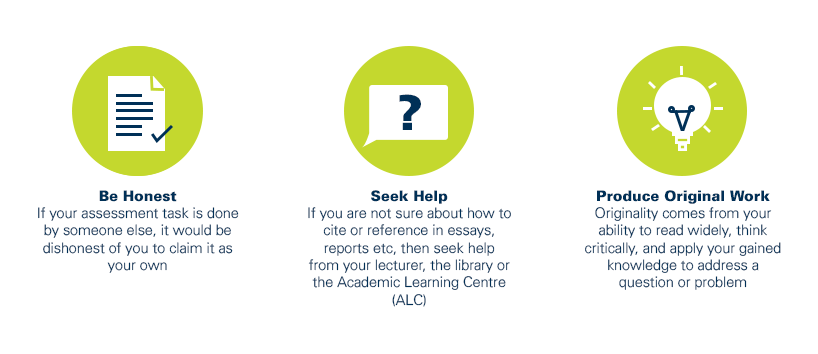
As a CQUniversity student you are expected to act honestly in all aspects of your academic work.
Any assessable work undertaken or submitted for review or assessment must be your own work. Assessable work is any type of work you do to meet the assessment requirements in the unit, including draft work submitted for review and feedback and final work to be assessed.
When you use the ideas, words or data of others in your assessment, you must thoroughly and clearly acknowledge the source of this information by using the correct referencing style for your unit. Using others’ work without proper acknowledgement may be considered a form of intellectual dishonesty.
Participating honestly, respectfully, responsibly, and fairly in your university study ensures the CQUniversity qualification you earn will be valued as a true indication of your individual academic achievement and will continue to receive the respect and recognition it deserves.
As a student, you are responsible for reading and following CQUniversity’s policies, including the Student Academic Integrity Policy and Procedure. This policy sets out CQUniversity’s expectations of you to act with integrity, examples of academic integrity breaches to avoid, the processes used to address alleged breaches of academic integrity, and potential penalties.
What is a breach of academic integrity?
A breach of academic integrity includes but is not limited to plagiarism, self-plagiarism, collusion, cheating, contract cheating, and academic misconduct. The Student Academic Integrity Policy and Procedure defines what these terms mean and gives examples.
Why is academic integrity important?
A breach of academic integrity may result in one or more penalties, including suspension or even expulsion from the University. It can also have negative implications for student visas and future enrolment at CQUniversity or elsewhere. Students who engage in contract cheating also risk being blackmailed by contract cheating services.
Where can I get assistance?
For academic advice and guidance, the Academic Learning Centre (ALC) can support you in becoming confident in completing assessments with integrity and of high standard.
What can you do to act with integrity?