Overview
This unit equips you with the foundation knowledge, skills and techniques for planning and designing a postgraduate research project on a chosen topic relating to your discipline. You will learn how to identify and review credible and relevant literature. You will develop the necessary competencies to identify a research gap and articulate research questions. You will consider qualitative and quantitative approaches, and choose appropriate data collection methods for your project with the final outcome of the unit being the development of a research proposal. The unit is designed to help you develop essential problem-solving and research skills for evaluating or conducting independent research projects including the ethical issues involved.
Details
Pre-requisites or Co-requisites
There are no requisites for this unit.
Important note: Students enrolled in a subsequent unit who failed their pre-requisite unit, should drop the subsequent unit before the census date or within 10 working days of Fail grade notification. Students who do not drop the unit in this timeframe cannot later drop the unit without academic and financial liability. See details in the Assessment Policy and Procedure (Higher Education Coursework).
Offerings For Term 1 - 2026
Attendance Requirements
All on-campus students are expected to attend scheduled classes - in some units, these classes are identified as a mandatory (pass/fail) component and attendance is compulsory. International students, on a student visa, must maintain a full time study load and meet both attendance and academic progress requirements in each study period (satisfactory attendance for International students is defined as maintaining at least an 80% attendance record).
Recommended Student Time Commitment
Each 6-credit Postgraduate unit at CQUniversity requires an overall time commitment of an average of 12.5 hours of study per week, making a total of 150 hours for the unit.
Class Timetable
Assessment Overview
Assessment Grading
This is a graded unit: your overall grade will be calculated from the marks or grades for each assessment task, based on the relative weightings shown in the table above. You must obtain an overall mark for the unit of at least 50%, or an overall grade of 'pass' in order to pass the unit. If any 'pass/fail' tasks are shown in the table above they must also be completed successfully ('pass' grade). You must also meet any minimum mark requirements specified for a particular assessment task, as detailed in the 'assessment task' section (note that in some instances, the minimum mark for a task may be greater than 50%). Consult the University's Grades and Results Policy for more details of interim results and final grades.
All University policies are available on the CQUniversity Policy site.
You may wish to view these policies:
- Grades and Results Policy
- Assessment Policy and Procedure (Higher Education Coursework)
- Review of Grade Procedure
- Student Academic Integrity Policy and Procedure
- Academic Progression Policy and Procedure
- Student Refund and Credit Balance Policy and Procedure
- Complaints Policy and Procedure
- Information and Communications Technology Acceptable Use Policy and Procedure
This list is not an exhaustive list of all University policies. The full list of University policies are available on the CQUniversity Policy site.
Feedback, Recommendations and Responses
Every unit is reviewed for enhancement each year. At the most recent review, the following staff and student feedback items were identified and recommendations were made.
Feedback from Direct feedback from students
Students develop rich knowledge of research terminology and enhance their research skills through the practical activities embedded in Assessment 1.
It is recommended to retain and develop the practical activities embedded in Assessment 1, as they provide students with opportunities to develop a strong understanding of research terminology and enhance their practical research skills. It is also recommended to encourage the responsible use of AI in research, as per the recent developments in the field.
Feedback from Direct Discussion with Tutors
Guided-selection of the topic for research proposal enhances engagement and performance of the students
It is recommended to continue the practice of giving students greater freedom to select their own topics, thereby supporting greater diversity in the disciplines, contexts, and themes explored. At the same time, tutors should be directed to pay closer attention to the authenticity and genuineness of students’ work during presentations and discussions, ensuring that students can demonstrate a genuine understanding of their chosen topic and the research undertaken.
- Identify and review credible literature to inform the articulation of a research question within your discipline
- Select appropriate research approaches, methods and skills for testing the research question
- Employ relevant ethical practices that consider the social, cultural and legal responsibilities of researchers
- Apply relevant project management principles to effectively plan your research project
- Develop a rigorous research proposal with all necessary components.
Alignment of Assessment Tasks to Learning Outcomes
| Assessment Tasks | Learning Outcomes | ||||
|---|---|---|---|---|---|
| 1 | 2 | 3 | 4 | 5 | |
| 1 - Written Assessment - 40% | |||||
| 2 - Online Quiz(zes) - 20% | |||||
| 3 - Research Proposal - 40% | |||||
Alignment of Graduate Attributes to Learning Outcomes
| Graduate Attributes | Learning Outcomes | ||||
|---|---|---|---|---|---|
| 1 | 2 | 3 | 4 | 5 | |
| 1 - Knowledge | |||||
| 2 - Communication | |||||
| 3 - Cognitive, technical and creative skills | |||||
| 4 - Research | |||||
| 5 - Self-management | |||||
| 6 - Ethical and Professional Responsibility | |||||
| 7 - Leadership | |||||
| 8 - First Nations Knowledges | |||||
| 9 - Aboriginal and Torres Strait Islander Cultures | |||||
Textbooks
There are no required textbooks.
IT Resources
- CQUniversity Student Email
- Internet
- Unit Website (Moodle)
- Endnote bibliographic software. This is optional for formatting references.
- Microsoft Planner
- Microsoft Teams
- MS Project (optional)
All submissions for this unit must use the referencing style: Harvard (author-date)
For further information, see the Assessment Tasks.
m.bashir@cqu.edu.au
Week 1 Select research topics
Begin Date: 09 Mar 2026Module/Topic
- Overview of the unit and the assessment tasks
- Introduction to Research
- Selection of research topic
- Search for relevant sources
Chapter
Chapter 1, pp 4-13 (Saunders et al. 2019)
Chapter 2, pp 29-41 (Saunders et al. 2019)
Note: This book is available online under the Moodle e-reading list.
Events and Submissions/Topic
- Select a research topic using a given list.
- Generate keywords.
- Use scientific databases to locate relevant articles.
Week 2 Literature Search & Review
Begin Date: 16 Mar 2026Module/Topic
- Searching for literature
- Writing annotated bibliography
- Developing a literature review
Chapter
Chapter 3, pp 72-103 (Saunders et al. 2019)
Events and Submissions/Topic
- Library search for relevant scholarly resources
- Backward and forward search
- Check the credibility of journals
Week 3 Academic writing
Begin Date: 23 Mar 2026Module/Topic
- Paraphrasing and avoiding plagiarism
- Citing and listing references
Chapter
Chapter 2, pp 104-115 (Saunders et al. 2019)
Events and Submissions/Topic
Activities:
- Assessment 1 (Individual) explained.
- How to review a journal article.
- Paraphrasing exercise.
Week 4 Research Question
Begin Date: 30 Mar 2026Module/Topic
- Industry problem vs research problem
- Identifying a research problem or gap.
- Framing a research question or hypothesis
- Formulating research objectives.
Chapter
Chapter 2, pp 42-53 (Saunders et al. 2019)
Events and Submissions/Topic
Activities:
- Q&A session about Assessment 1.
- How to find a research gap?
Week 5 Research Methodology
Begin Date: 06 Apr 2026Module/Topic
- Research design
- Qualitative vs quantitative approach
- Aligning research questions with the research approach
- Introduction to research methods
Chapter
Chapter 4, pp 128-159 (Saunders et al. 2019)
Chapter 5, pp 172-185 (Saunders et al. 2019)
Events and Submissions/Topic
- Assessment 3 explained.
- Group forming announcement (meet and greet your group peers).
- Group online enrolment in Moodle
- Negotiate, complete & sign off the group charter.
- Assessment 1- Due Monday Week 6
Week 6 Research Methods
Begin Date: 13 Apr 2026Module/Topic
- Decide suitable research methods and tactics to investigate research questions.
Chapter
Chapter 5, pp 186-220 (Saunders et al. 2019)
Events and Submissions/Topic
Vacation Week
Begin Date: 20 Apr 2026Module/Topic
Enjoy your well-deserved break! This may help you come back on track and start afresh.
Chapter
Events and Submissions/Topic
Week 7 Research Proposal
Begin Date: 27 Apr 2026Module/Topic
Topics:
- Develop a detailed research proposal.
Chapter
Chapter 2, pp 53-61 (Saunders et al. 2019)
Events and Submissions/Topic
Activities:
- Group short presentations of outline proposals
- Brainstorming Session: Groups present their ideas and receive feedback
Week 8 Managing research projects
Begin Date: 04 May 2026Module/Topic
- Principles of managing research projects
- Tools and techniques for managing research
Chapter
Refer to unit resources in the Moodle site
Events and Submissions/Topic
Activities:
- Develop stakeholder analysis and risk register for your project.
Week 9 Research Ethics
Begin Date: 11 May 2026Module/Topic
Topics:
- Conduct ethical research
- Responsibilities of researchers
Chapter
Chapter 6, pp 232-280 (Saunders et al. 2019)
Events and Submissions/Topic
Activities:
- Case study analysis: ethical dilemmas in research.
- Q & A session about Assessment 2 and Assessment 3.
Week 10 Planning of Data Collection & Analysis
Begin Date: 18 May 2026Module/Topic
Topics:
- Types of collected data
- Data collection tools and techniques
- Planning data analysis
Chapter
Chapter 7, pp 292-326 (Saunders et al. 2019)
Chapter 8, pp 338-368 (Saunders et al. 2019)
Events and Submissions/Topic
- Appropriate tools and techniques for different types of data collection
- Assessment 3 Part A - Due Friday this week 10
Week 11 Group presentations
Begin Date: 25 May 2026Module/Topic
Topics:
- Group presentations
Chapter
Events and Submissions/Topic
Activities:
- Group presentations (Assessment 3B)
- In-class quiz (Assessment 2).
Week 12 Group presentations (Continued)
Begin Date: 01 Jun 2026Module/Topic
- Group presentations (Continued)
- Introduction to the Research Stream
- Final remarks
Chapter
Refer to unit resources in the Moodle site
Events and Submissions/Topic
Activities:
- Group presentations (Assessment 3B)
- Unit evaluation
Exam Week
Begin Date: 08 Jun 2026Module/Topic
Chapter
Events and Submissions/Topic
Vacation/Exam Week
Begin Date: 15 Jun 2026Module/Topic
Chapter
Events and Submissions/Topic
PPMP20015 – Research Proposal
This unit empowers students to transform project management ideas into a high-quality research proposal. It builds essential skills in defining research problems, conducting critical literature reviews,
formulating research questions, selecting appropriate methodologies, and addressing ethical considerations, preparing students for advanced research and evidence-based practice.
Unit Coordinator:
Dr Mohammed JK Bashir
Email: m.bashir@cqu.edu.au
Students are advised to check Moodle regularly for updates and guidance.
1 Written Assessment
Assessment (1) Individual submission (40 marks)
Overview
This individual assignment tests your essential research competencies needed to identify a knowledge gap or a problem in your discipline that may warrant research. It primarily assesses your understanding and level of engagement with learning resources at an early stage of the inquiry process. The assignment MUST be your own piece of work. You must not plagiarise, collude or get help from others. All submissions must follow CQU Harvard referencing style.
Tasks
Assessment 1 – Review Report and Artefact Submission
Due: Monday, Week 6 | Total Marks: 40
Assessment 1 requires you to prepare a review report of no more than 2500 words using a given template.
This assessment involves submitting a review report and supporting artefacts. The folder must include all relevant materials such as annotated cited articles, earlier Word drafts, and any resources used in developing the report.
Students are also required to use a Generative AI tool to support article annotation and summarisation.
A GenAI-generated summary table must be included, along with a brief reflection on its usefulness and limitations.
Validation of the AI-generated content should also be demonstrated. Your report must be relevant to unit content and Moodle sources,
and must be developed based on your learning in this unit. You must follow the following steps in developing your report:
- Choose and develop an initial research topic using a suitable topic.
- Conduct a literature search to identify one scholarly paper relevant to your chosen topic and provide an explanation of the search process you followed in locating and downloading this paper (Include screenshots).
- Provide a detailed annotated bibliography of the paper using your own words.
- Apply and explain at least three credibility indicators to test the reliability of the main paper (include screenshots).
- Identify two relevant sources/references relevant to the summarised paper using backward and forward technique and explain how you identified both papers.
- Annotate and tag the PDF version of the three papers for developing the summary tables.
- Build a review summary table and a theme matrix table of the three identified papers.
- Use a GenAI tool to assist in creating a summary table and critically evaluate its usefulness and limitations. Include the GenAI-generated output in your report along with a personal reflection that also discusses your Turnitin report and overall learning experience.
- Provide a link to OneDrive Artefact folder, including all relevant annotated PDF articles and earlier Word drafts (include screenshots of the folder content and samples of annotations).
AI ASSESSMENT SCALE - AI COLLABORATION: You may use Al to assist with specific tasks such as drafting text, refining and evaluating your work. You must critically evaluate and modify any Al-generated content you use.
Re-attempt of this assessment will not be allowed.
All artifacts must be submitted via OneDrive only. Submissions via email or any other cloud storage services will not be accepted. Additionally, submissions using accounts other than CQU's will not be allowed. Once you submit your work, no changes can be made to the OneDrive folder. It is your responsibility to ensure that the link you provide is working correctly. If the link does not work, you will lose marks allocated for the verification of your artifacts. Please note that assessors will not access personal links or contact you for further information once the submission is complete.
Assessment 1 - Due on Monday week 6
Assessment 1A: Review Report & Artefact submission (40 marks)
- Selection of credible and relevant articles; use of appropriate search techniques (15%)
- Annotated bibliography is concise, paraphrased, and well-articulated (15%)
- Quality of summary and matrix tables, including GenAI-supported output and its critical evaluation (25%)
- Organisation of OneDrive folder with required documents, including annotated PDFs and drafts (15%)
- Personal reflection is specific to the student’s own experience and includes commentary on the Turnitin similarity report and the GenAI-supported output (15%)
- The report demonstrates strong alignment with unit resources and lecture content, and is presented with clarity, proper formatting, sound language, and accurate referencing (15%)
AI ASSESSMENT SCALE - AI COLLABORATION: You may use Al to assist with specific tasks such as drafting text, refining and evaluating your work. You must critically evaluate and modify any Al-generated content you use.
Re-attempt of this assessment will not be allowed.
- Identify and review credible literature to inform the articulation of a research question within your discipline
- Select appropriate research approaches, methods and skills for testing the research question
2 Online Quiz(zes)
Assessment 2:
Task Description
You will be required to complete one set of quiz questions related to your learning materials.
This assessment is exempted from the 72-hour submission grace period and must be completed during the workshop in Week 11.
Reattempt of this assessment will not be permitted.
Purpose
The primary purpose of this assessment item is to test your understanding of the processes required in initiating and planning a research project. The quiz will be based on the unit learning materials. In order for you to complete the quiz, it is necessary for you to complete all learning activities prescribed in the unit for the respective weeks.
Important Information:
- The quiz will only be conducted in-class during the scheduled tutorial classes for on-campus students. A separate Zoom session will be scheduled for online students.
- It is crucial for all students to be present at the beginning of the session. Late attendance will impact your ability to complete the quiz.
- If a student fails to take the quiz as scheduled during the class, they will receive zero marks.
- Quiz questions will be in the form of 40 graded multiple-choice questions and one compulsory non-graded open-ended question.
- The quiz must be completed within a maximum of 40 minutes.
- The quiz is considered a closed-book quiz, and seeking any form of assistance is prohibited.
- Students must bring their own laptops or devices to complete the quiz and must make sure that they are fully charged. Using phones or accessing any webpage other than the Moodle quiz page is strictly prohibited.
- Different versions of the quiz will be provided to students, ensuring that it is highly unlikely for two students to receive the same set of questions.
- The quiz is password protected, and the password will be communicated at the beginning of the session.
- The quiz will be similar to an invigilated exam, meaning that there will be a CQU staff member present to supervise the quiz.
- Distance and online students must attend a Zoom session to undertake the quiz in real time. Students must share their screens and switch on their cameras and microphones while attempting the quiz.
- Students will be given an opportunity to practice a mock non-graded quiz before attempting the graded quiz.
- Quiz results will be released by the end of week 11.
- No penalty deduction for wrong answers
- Zero marks for students failing to attend the scheduled session for undertaking the in-class quiz.
- Identify and review credible literature to inform the articulation of a research question within your discipline
- Select appropriate research approaches, methods and skills for testing the research question
- Employ relevant ethical practices that consider the social, cultural and legal responsibilities of researchers
- Apply relevant project management principles to effectively plan your research project
3 Research Proposal
Assessment 3 (Research Proposal) (40 marks)
Overview:
This group assessment requires all on-campus students to enrol in groups to complete a project-based assessment. The project is to work as a team to plan and develop a viable research proposal of high academic standards. Your group must demonstrate effective application of project management competence in planning your research project and completing the project proposal. Your group should prioritise projects initiated in the completed outline proposals and eventually agree upon the group research topic for further adoption in this assessment. The proposal must address a research problem or gap that warrants research in your discipline. The proposal must be substantially based on the learning materials of this unit.
The assessment must be developed via a group of 3–5 students formed by the faculty. Each group member must enrol in their group in Moodle by the given deadline. The group must select its group leader and negotiate group rules by completing a group charter template by the given deadline. Along with the research proposal, each group must provide a link to the OneDrive folder where all their submission artefacts and contributions are stored. The folder must include all relevant materials used for developing the final proposal. The folder must include a master folder including group deliverables such as charter, presentation slides, main submission, recorded meetings, group communications, appendices, etc. The One Drive folder must include sub-folders labelled with group member names, which include the member own contributions and exchanged communications throughout the term for scrutiny by the faculty. The group must conduct at least three group meetings and include the evidences in the master folder.
The assessment consists of:
Assessment 3A- 25 marks: Final Research Proposal & Comprehensive Artefact Submission, due by the end of week 10.
Assessment 3B- 15 marks: Group presentations in weeks 11 & 12.
Assessment Tasks:
Assessment 3A: Group Research Proposal & Comprehensive Artefacts Submission (25 marks):
By the end of week 10, each group must submit a copy of the group detailed research proposal in Moodle. You should think of your detailed proposal as a document that should be detailed enough so that anyone else can use your plan to execute the project within a maximum of six months after the submission of the proposals. This duration must be respected when you prepare your project management plan & documentation accordingly. Your ultimate task is to develop a research plan report on a promising topic relating to your discipline. In developing your detailed proposal, you must adopt the supplied research proposal template, which includes sufficient guidelines to complete each section. The sections/components of the proposal should appear in the following order.
- Research topic
- The need and significance of the study
- Research question and objectives
- Summary, and theme tables based on ten annotated PDF sources (annotated PDF files to be included in the shared folder)
- Preliminary literature review with themes subheadings based on the theme matrix.
- Research Methodology, including data collection instrument
- Project management implementation plan including risk register, stakeholder analysis and MS Project Gantt chart.
- Conclusion, limitations and expected outcomes and implications
- Reflective & contribution statement by each group member (300-500 words): explain your contribution to the group work and evaluate group dynamics and summarise experiences, feelings, and reactions in completing this unit and approaches to deal with incurred risks or delays and comment on the resources or feedback you found to be helpful or unhelpful in completing the assessment tasks.
- A hyperlink to the OneDrive shared folder with screenshots of the content of the main folder and group members sub-folders.
- References
For guidance, the proposal should be a minimum of 4,000 words in length, excluding references and appendices.
Along with the research proposal, each group must provide a shared link to the OneDrive folder, where all their research artefacts are stored. The folder must include all relevant materials, such as research data, annotated cited articles, earlier drafts, communications with stakeholders, status reports, minutes of meetings, presentation materials, and any other relevant materials or resources created or used in the development of the research proposal. In addition to the master folder, the One Drive folder must also include sub-folders labelled with group member names, which include the member artefacts, own contributions and exchanged communications throughout the term for scrutiny by the faculty. The group must conduct and record at least three recorded formal meetings and include the recording files in the master folder.
AI ASSESSMENT SCALE - AI COLLABORATION: You may use Al to assist with specific tasks such as drafting text, refining and evaluating your work. You must critically evaluate and modify any Al-generated content you use.
Re-attempt of this assessment will not be allowed.
The Artefact submission must include subfolders labelled with student names and includes all artefacts contributed by each student, including WORD drafts and PDF files. All artifacts must be submitted via OneDrive only. Submissions via email or any other cloud storage services will not be accepted. Additionally, submissions using accounts other than CQU's will not be allowed. Once you submit your work, no changes can be made to the OneDrive folder. It is your responsibility to ensure that the link you provide is working correctly. If the link does not work, you will lose marks allocated for the verification of your artifacts. Please note that assessors will not access personal links or contact you for further information once the submission is complete.
Assessment 3B: Group Presentations (15 marks):
As a group, you will be required to prepare a 15-minute oral presentation of your research proposal and submit accompanying slides in Moodle at the beginning of week 11. During class timing in W11 and W12, each group should plan its presentation such that all group members present a specific part of the presentation. Your presentation should demonstrate a thorough understanding of the research process, and an ability to communicate complex ideas effectively. Any student failing to present or show adequate preparation will receive zero marks for this part. Your presentation should provide a clear and concise overview of your research proposal, including rationale, research questions, the process of developing literature review, summary of literature review, research design, and project management. The presentation must also explain, with the aid of screenshots, the contents of the shared folder where all project artefacts were organised and stored.
Important Note: Although this is a group presentation, the assessment of the presentation (15%) will be conducted on an individual basis. This means each student’s contribution to the presentation will be assessed separately, based on their performance and preparation.
Assessment 3 Part A - Due by Monday week 11
ASSESSMENT CRITERIA
Assessment 3A: Detailed Research Proposal (25 marks)
The following rubric will be used for marking 3A, however, this part will be marked concurrently with 3B and the final marks of 3A will be further moderated based on the results of 3B.
| Criteria | HD (High Distinction) | D (Distinction) | C (Credit) | P (Pass) | F (Fail) |
| Rationale and Significance (10%) | Original, significant, and clearly articulated rationale | Justified and relevant rationale | Relevant rationale with some clarity | Replicates existing understanding with stated significance | Lacks significance or is too simplistic/disorganised |
| Research Questions & Objectives (5%) | Clear, original, and aligned research questions/objectives | Clearly relevant questions/objectives with alignment | Relevant questions/objectives with some clarity | Unclear or irrelevant questions/objectives | Missing or poorly articulated questions/objectives |
| Preliminary Literature Review (15%) | Creative, organised, and critical literature review; fully based on annotated sources & summary tables | Well-argued and logical literature review, substantially based on annotated sources & summary tables | Good range of relevant literature with limited evaluation, partially based on annotated sources & summary tables | Limited scope and evaluation of literature, barely based on annotated sources & summary tables | Questionable quality or irrelevant literature, annotated sources or summary tables not provided or irrelevant |
| Research Methodology and Data Collection (15%) | Exceptionally articulated, justified, and detailed, with robust instrument design | Well-argued, justified, and detailed methodology, robust instrument provided | Explained and appropriate methodology with fair instrument design | Broadly outlined methodology with unclear details with basic instrument design | Inappropriate or poorly articulated methodology, missing instrument. |
| Project Management (15%) | Highly robust and detailed PM documentation using PM tools. | Well-structured and detailed PM documentation using PM tools. | Included with sufficient detail using PM tools. | Broadly outlined with unclear or inaccurate details with inappropriate use of PM tools | Not appropriate or poorly detailed documentation with inadequate use of PM tools. |
| Contribution & Reflective Statement (10%) | Exceptional contribution: leadership, quality work, effective collaboration, comprehensive evaluation, deep insights. | High level of contribution: quality work, effective collaboration, detailed evaluation, thoughtful insights. | Satisfactory contribution: occasional shortcomings, adequate collaboration, evaluation, some insights. | Minimal contribution: fell short in quality, timeliness, collaboration, superficial evaluation, limited insights. | Negligible contribution: ineffective collaboration, minimal reflection, poor evaluation, no insights. |
| Format, Language, and Reference Style (10%) | Proposal adheres to all formatting and referencing requirements | Proposal mostly adheres to formatting and referencing requirements | Proposal has some formatting or referencing errors or inconsistencies | Proposal has significant formatting or referencing errors or inconsistencies | Proposal does not adhere to formatting or referencing requirements |
| Artefact Submission (20%) | Relevant, comprehensive, and well-presented artefact with exceptional evidence of collaboration | Adequate and well-presented artefact with solid evidence of collaboration | Adequate, partially relevant and presented artefact with fair collaboration | Adequate but limited relevance or poorly presented artefact with basic collaboration | Missing, disorganised or incomplete artefact with no evidence of collaboration |
Assessment 3B Group Presentations (15 marks)
- Technical Content (6 marks): Thorough coverage of main components, sound knowledge and understanding of the research process, logical alignment between all aspects of the proposal.
- Delivery of Presentation (5 marks): Confident and clear delivery, excellent speaking skills, well-organised material, logical content ordering, appropriate communication style, effective argument construction, evidence integration, time management, and use of visual aids.
- Handling of Questions and Discussion (4 marks): Ability to provide insightful answers, demonstrate original and sharp thinking, and stimulate discussion.
A group member will receive Zero marks on this part in the case of the following incidents:
- the group member failed to present;
- the group member did not attend the full session(s); or
- the group member failed to demonstrate a basic understanding of the entire group project.
- Employ relevant ethical practices that consider the social, cultural and legal responsibilities of researchers
- Apply relevant project management principles to effectively plan your research project
- Develop a rigorous research proposal with all necessary components.
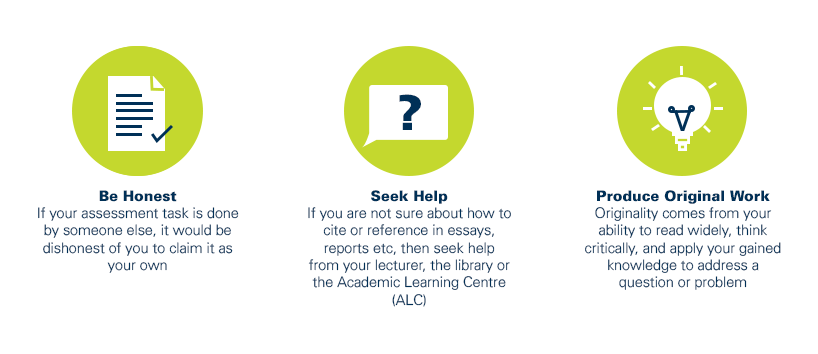
As a CQUniversity student you are expected to act honestly in all aspects of your academic work.
Any assessable work undertaken or submitted for review or assessment must be your own work. Assessable work is any type of work you do to meet the assessment requirements in the unit, including draft work submitted for review and feedback and final work to be assessed.
When you use the ideas, words or data of others in your assessment, you must thoroughly and clearly acknowledge the source of this information by using the correct referencing style for your unit. Using others’ work without proper acknowledgement may be considered a form of intellectual dishonesty.
Participating honestly, respectfully, responsibly, and fairly in your university study ensures the CQUniversity qualification you earn will be valued as a true indication of your individual academic achievement and will continue to receive the respect and recognition it deserves.
As a student, you are responsible for reading and following CQUniversity’s policies, including the Student Academic Integrity Policy and Procedure. This policy sets out CQUniversity’s expectations of you to act with integrity, examples of academic integrity breaches to avoid, the processes used to address alleged breaches of academic integrity, and potential penalties.
What is a breach of academic integrity?
A breach of academic integrity includes but is not limited to plagiarism, self-plagiarism, collusion, cheating, contract cheating, and academic misconduct. The Student Academic Integrity Policy and Procedure defines what these terms mean and gives examples.
Why is academic integrity important?
A breach of academic integrity may result in one or more penalties, including suspension or even expulsion from the University. It can also have negative implications for student visas and future enrolment at CQUniversity or elsewhere. Students who engage in contract cheating also risk being blackmailed by contract cheating services.
Where can I get assistance?
For academic advice and guidance, the Academic Learning Centre (ALC) can support you in becoming confident in completing assessments with integrity and of high standard.
What can you do to act with integrity?