Overview
This unit provides you with the skills necessary to succeed in a rapidly changing contemporary work environment. You will identify, formulate and solve problems while being provided with industry focused learning opportunities during your final year of study. You will actively engage in characteristics of an authentic project management practice. These will include: time and resource constraints, capability gaps, cross-cultural and multi-disciplinary teams addressing complex problems and differing leadership and team member working styles. This unit provides an opportunity for you to demonstrate a deep understanding and practical application of the knowledge and skills gained in the early stages of the Master of Project Management, as well as demonstrating the attributes required of a CQUniversity Graduate. You will undertake a project related to your domain of choice and participate in tasks associated with project management within a contemporary work environment. Assessment includes the opportunity to plan and execute a project, analyse your project performance and self-reflect on your experience and lessons learnt.
Details
Pre-requisites or Co-requisites
Pre-requisites: PPMP20015 Project Management Project Proposal
Important note: Students enrolled in a subsequent unit who failed their pre-requisite unit, should drop the subsequent unit before the census date or within 10 working days of Fail grade notification. Students who do not drop the unit in this timeframe cannot later drop the unit without academic and financial liability. See details in the Assessment Policy and Procedure (Higher Education Coursework).
Offerings For Term 1 - 2026
Attendance Requirements
All on-campus students are expected to attend scheduled classes - in some units, these classes are identified as a mandatory (pass/fail) component and attendance is compulsory. International students, on a student visa, must maintain a full time study load and meet both attendance and academic progress requirements in each study period (satisfactory attendance for International students is defined as maintaining at least an 80% attendance record).
Recommended Student Time Commitment
Each 12-credit Postgraduate unit at CQUniversity requires an overall time commitment of an average of 25 hours of study per week, making a total of 300 hours for the unit.
Class Timetable
Assessment Overview
Assessment Grading
This is a graded unit: your overall grade will be calculated from the marks or grades for each assessment task, based on the relative weightings shown in the table above. You must obtain an overall mark for the unit of at least 50%, or an overall grade of 'pass' in order to pass the unit. If any 'pass/fail' tasks are shown in the table above they must also be completed successfully ('pass' grade). You must also meet any minimum mark requirements specified for a particular assessment task, as detailed in the 'assessment task' section (note that in some instances, the minimum mark for a task may be greater than 50%). Consult the University's Grades and Results Policy for more details of interim results and final grades.
All University policies are available on the CQUniversity Policy site.
You may wish to view these policies:
- Grades and Results Policy
- Assessment Policy and Procedure (Higher Education Coursework)
- Review of Grade Procedure
- Student Academic Integrity Policy and Procedure
- Academic Progression Policy and Procedure
- Student Refund and Credit Balance Policy and Procedure
- Complaints Policy and Procedure
- Information and Communications Technology Acceptable Use Policy and Procedure
This list is not an exhaustive list of all University policies. The full list of University policies are available on the CQUniversity Policy site.
Feedback, Recommendations and Responses
Every unit is reviewed for enhancement each year. At the most recent review, the following staff and student feedback items were identified and recommendations were made.
Feedback from Student feedback via formal SUTE
Improve organization of learning material on Moodle
The unit material on Moodle, resources, links, and other resources need to be organized with a clear structure. At present, workshop documents related to assessments are located in the weekly tiles but not linked in the Assessment block. In addition, some formal slide decks need to be developed to provide a clear outline of the weekly content linking relevant resources.
Feedback from In class
Time limit to complete project is too short
Students commence their projects from Week 4 once group formation is finalised, and they have 4-5 weeks to complete the project with a demo and presentation of their prototypes in Week 9. This is not feasible due to the many challenges students can face (stakeholder engagement, team conflicts, rescoping of projects, etc.). Therefore, it is recommended that the project gallery be pushed back to at least Week 10/11 moving forward. This will mean that the learning material (specifically those topics presented close to the due date of the project gallery) will need to be restructured to suit the new timelines.
Feedback from In and out of class
Project teams require individual one on one sessions with workshop facilitators
Workshop times on Zoom are scheduled for 2 hours at present, which overall is sufficient for a group workshop and delivery of learning material applicable to the entire cohort. Students also work in breakout teams on Zoom during the workshop, and the lecturer roams the breakout rooms to provide assistance and guidance. This partly works to a degree, but further facilitation and supervision are required outside of formal class time. MS Teams will be used to engage with students outside of formal class time on an ad-hoc basis to improve the experience of students who require that assistance.
- Apply project management knowledge and skills
- Plan and execute a project based on a project proposal
- Critically analyse and reflect on strengths and weaknesses in knowledge and skills related to project management
- Apply enabling processes used in certain project contexts.
Alignment of Assessment Tasks to Learning Outcomes
| Assessment Tasks | Learning Outcomes | |||
|---|---|---|---|---|
| 1 | 2 | 3 | 4 | |
| 1 - Report - 15% | ||||
| 2 - Practical Assessment - 35% | ||||
| 3 - Reflective Practice Assignment - 50% | ||||
Alignment of Graduate Attributes to Learning Outcomes
| Graduate Attributes | Learning Outcomes | |||
|---|---|---|---|---|
| 1 | 2 | 3 | 4 | |
| 1 - Knowledge | ||||
| 2 - Communication | ||||
| 3 - Cognitive, technical and creative skills | ||||
| 4 - Research | ||||
| 5 - Self-management | ||||
| 6 - Ethical and Professional Responsibility | ||||
| 7 - Leadership | ||||
| 8 - First Nations Knowledges | ||||
| 9 - Aboriginal and Torres Strait Islander Cultures | ||||
Alignment of Assessment Tasks to Graduate Attributes
| Assessment Tasks | Graduate Attributes | ||||||||
|---|---|---|---|---|---|---|---|---|---|
| 1 | 2 | 3 | 4 | 5 | 6 | 7 | 8 | 9 | |
| 1 - Report - 15% | |||||||||
| 2 - Practical Assessment - 35% | |||||||||
| 3 - Reflective Practice Assignment - 50% | |||||||||
Textbooks
There are no required textbooks.
IT Resources
- CQUniversity Student Email
- Internet
- Unit Website (Moodle)
- Computer / laptop with webcam to allow videoconferencing.
- Microsoft Teams - camera and microphone
- Zoom access for weekly meetings
All submissions for this unit must use the referencing style: Harvard (author-date)
For further information, see the Assessment Tasks.
o.dawoud@cqu.edu.au
Week 1
Begin Date: 09 Mar 2026Module/Topic
Introduction to the unit.
A sustainable world: the UN 17 goals for sustainability (SDG).
Green Project Management (GPM).
Chapter
Slides, discussion, reading materials.
GPM standard v2.0.
UN SDG link.
Events and Submissions/Topic
Interactive session, ice-breaking, students introduce themselves.
Expectations from the Unit and industry involvement.
SDG awareness discussion.
Week 2
Begin Date: 16 Mar 2026Module/Topic
Process analysis, problem definition and ideation towards a solution.
Introduction to the project Front End Loading approach.
Chapter
Slides, discussion, reading materials.
GPM standard v2.0.
UN SDG link.
Events and Submissions/Topic
With consideration of one or more SDG, identify an industry partner. By the end of the week, you should have made contact with this partner.
Business process analysis (virtual or physical GEMBA).
Progress presentation in class.
Week 3
Begin Date: 23 Mar 2026Module/Topic
Project feasibility and initiation, stakeholder analysis.
Chapter
Slides, discussion, reading materials.
GPM standard v2.0.
UN SDG link.
Events and Submissions/Topic
Formulate a draft value proposal and discuss with the industry partner.
Deliverables:
- A record of the discussion.
- A draft project charter including:
- Feasibility
- Benchmarking
- SDG/GPM fit
Progress presentation in class.
Week 4
Begin Date: 30 Mar 2026Module/Topic
Project initiation.
Chapter
Slides, discussion, reading materials.
Events and Submissions/Topic
Finalise project proposal.
Selection of adaptive, predictive or hybrid project delivery methods.
Document reasons for the selection.
Progress presentation in class.
Week 5
Begin Date: 06 Apr 2026Module/Topic
Project stakeholder management.
Chapter
Slides, discussion, reading materials.
Events and Submissions/Topic
Assessment 1 due: Project proposal report.
Deliverables:
- Project proposal report.
- In class presentation to a panel.
Project proposal report (15% team) and presentation (5% individual) Due: Week 5 Friday (10 Apr 2026) 9:00 am AEST
Week 6
Begin Date: 13 Apr 2026Module/Topic
Preparing for FEL stage 2: Proof of Concept (PoC).
Reflective practice.
Chapter
Slides, discussion, reading materials.
Events and Submissions/Topic
Select one or more deliverables from your concept proposal for development of a Proof of Concept (PoC).
Presentation of project scope and initial time and cost estimates.
Start developing project controls.
Ongoing industry partner communication.
Start recording individual learning for the reflective practice assessment (assessment 3).
Vacation Week
Begin Date: 20 Apr 2026Module/Topic
Chapter
Events and Submissions/Topic
Week 7
Begin Date: 27 Apr 2026Module/Topic
Project planning.
Reflective practice.
Chapter
Slides, discussion, reading materials.
Events and Submissions/Topic
Presentation of quality, resourcing and risk plans and updated schedule and cost estimates.
Present project controls.
Ongoing industry partner communication.
Continue recording individual learning for the reflective practice assessment (assessment 3).
Week 8
Begin Date: 04 May 2026Module/Topic
Executing, monitoring and controlling the project.
Reflective practice.
Chapter
Slides, discussion, reading materials.
Events and Submissions/Topic
Provide feedback to the group on proof-of-concept progress using your selected controls.
Troubleshooting and Q&A.
Ongoing industry partner communication.
Continue recording individual learning for the reflective practice assessment (assessment 3).
Week 9
Begin Date: 11 May 2026Module/Topic
Executing, monitoring and controlling the project.
Reflective practice.
Chapter
Slides, discussion, reading materials.
Events and Submissions/Topic
Assessment 2A: progress discussion in breakout rooms:
Provide feedback on proof-of-concept progress using your selected controls.
Troubleshooting and Q&A.
Ongoing industry partner communication.
Continue recording individual learning for the reflective practice assessment (assessment 3).
Week 10
Begin Date: 18 May 2026Module/Topic
Executing, monitoring and controlling the project.
Reflective practice.
Chapter
Slides, discussion, reading materials.
Events and Submissions/Topic
Assessment 2A: progress discussion in breakout rooms (continued)
Provide feedback on proof-of-concept progress using your selected controls.
Troubleshooting and Q&A.
Ongoing industry partner communication.
Continue recording individual learning for the reflective practice assessment (assessment 3).
Week 11
Begin Date: 25 May 2026Module/Topic
Persuasive presentation skills.
Reflective practice.
Chapter
Slides, discussion, reading materials.
Events and Submissions/Topic
Implement feedback from progress discussion.
Continue recording individual learning for the reflective practice assessment (assessment 3).
Week 12
Begin Date: 01 Jun 2026Module/Topic
Persuasive presentation skills.
Reflective practice.
Chapter
Slides, discussion, reading materials.
Events and Submissions/Topic
Assessment 2B: Final panel presentation
Continue recording individual learning for the reflective practice assessment (assessment 3).
Project progress reports (10% team) and final presentation (25% team, 15% individual) Due: Week 12 Friday (5 June 2026) 9:00 am AEST
Exam Week
Begin Date: 08 Jun 2026Module/Topic
Chapter
Events and Submissions/Topic
Assessment 3 due: Reflective practice report.
Reflective Report (30% individual) Due: Exam Week Monday (8 June 2026) 9:00 am AEST
Vacation/Exam Week
Begin Date: 15 Jun 2026Module/Topic
Chapter
Events and Submissions/Topic
1 Report
By week 5 teams must have chosen a project aligned to a chosen SDG, have engaged with an industry stakeholder and formulated a concept proposal containing:
- Project initiation information, including but not limited to:
- The need for the project.
- Industry partner input.
- Stakeholder analysis.
- An overview of each team member's contribution so far.
Deliverables:
- A report describing the concept proposal.
- A brief PowerPoint presentation before an expert panel.
You may use Al for planning, idea development, and research. Your final submission should show how you have developed and refined these ideas.
Week 5 Friday (10 Apr 2026) 9:00 am AEST
Week 7 Friday (1 May 2026)
The submission will be assessed on:
- Quality and authenticity of the report.
- Relevance to the industry partner through feedback.
- Evidence of team involvement.
- Individual team members' understanding of the context and value proposed by the project.
- Apply project management knowledge and skills
- Apply enabling processes used in certain project contexts.
- Knowledge
- Communication
- Cognitive, technical and creative skills
- Research
- Self-management
- Ethical and Professional Responsibility
2 Practical Assessment
From week 6 onwards, teams will hold weekly progress discussions with the UC in their respective team's breakout rooms. These are not marked but may be subject to penalties if not attended.
- Each team will be allocated a weekly time slot to present.
2A: A progress report discussion and submission (10% team):
- Teams submit and present a progress report on their project in weeks 9 and 10.
2B: A final panel presentation (25% team, 15% individual) to a panel of industry experts and potential future employers.
- A proof of concept through a prototype or model accompanied by a poster or presented through an audiovisual medium.
- A final and comprehensive project report demonstrating in-depth understanding of PM concepts and tools in the application of the Front-End Loading (FEL) approach.
You may use Al for planning, idea development, and research. Your final submission should show how you have developed and refined these ideas.
Week 12 Friday (5 June 2026) 9:00 am AEST
Vacation/Exam Week Friday (19 June 2026)
The progress discussion and final presentations will be marked on:
- How well the proof of concept proves the validity and practicality of your concept proposal.
- Relevance to the industry partner through feedback.
- Evidence of team involvement.
- Team members' understanding of the context and value proposed by the project.
- The understanding of the Front-End Loading (FEL) project approach and the proof-of-concept as a phase deliverable.
- Apply project management knowledge and skills
- Plan and execute a project based on a project proposal
- Knowledge
- Communication
- Cognitive, technical and creative skills
- Research
- Self-management
- Ethical and Professional Responsibility
- Leadership
3 Reflective Practice Assignment
This is an individual assessment.
Students are to compile a portfolio of learning over the term, arranged chronologically.
As this unit is a capstone unit, this portfolio must contain reference to learning gained over the full Master's program and demonstrate how this learning was applied in this term's project.
You may use Al to assist with specific tasks such as drafting text, refining and evaluating your work. You must critically evaluate and modify any Al-generated content you use.
Exam Week Monday (8 June 2026) 9:00 am AEST
Vacation/Exam Week Friday (19 June 2026)
A 1500 word (min), authentic reflection of self learning, how it was gained, and how it benefited (or obstructed) the implementation of this term's project.
Topics should include, but not be limited to:
- A reflection of all the knowledge gained over the Master's program.
- New insights that arose during the term from doing the project, such as the FEL project management approach.
- Identification of previously unknown gaps in your knowledge.
- Enhanced understanding of how knowledge relates to practice.
- A plan for your continuous development after you graduate.
- Critically analyse and reflect on strengths and weaknesses in knowledge and skills related to project management
- Knowledge
- Communication
- Cognitive, technical and creative skills
- Research
- Self-management
- Ethical and Professional Responsibility
- Leadership
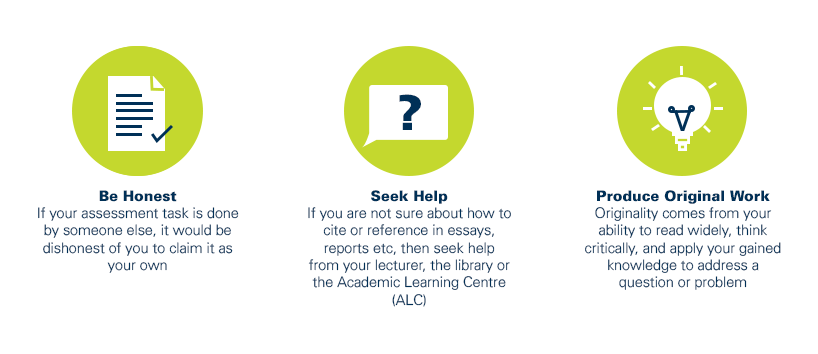
As a CQUniversity student you are expected to act honestly in all aspects of your academic work.
Any assessable work undertaken or submitted for review or assessment must be your own work. Assessable work is any type of work you do to meet the assessment requirements in the unit, including draft work submitted for review and feedback and final work to be assessed.
When you use the ideas, words or data of others in your assessment, you must thoroughly and clearly acknowledge the source of this information by using the correct referencing style for your unit. Using others’ work without proper acknowledgement may be considered a form of intellectual dishonesty.
Participating honestly, respectfully, responsibly, and fairly in your university study ensures the CQUniversity qualification you earn will be valued as a true indication of your individual academic achievement and will continue to receive the respect and recognition it deserves.
As a student, you are responsible for reading and following CQUniversity’s policies, including the Student Academic Integrity Policy and Procedure. This policy sets out CQUniversity’s expectations of you to act with integrity, examples of academic integrity breaches to avoid, the processes used to address alleged breaches of academic integrity, and potential penalties.
What is a breach of academic integrity?
A breach of academic integrity includes but is not limited to plagiarism, self-plagiarism, collusion, cheating, contract cheating, and academic misconduct. The Student Academic Integrity Policy and Procedure defines what these terms mean and gives examples.
Why is academic integrity important?
A breach of academic integrity may result in one or more penalties, including suspension or even expulsion from the University. It can also have negative implications for student visas and future enrolment at CQUniversity or elsewhere. Students who engage in contract cheating also risk being blackmailed by contract cheating services.
Where can I get assistance?
For academic advice and guidance, the Academic Learning Centre (ALC) can support you in becoming confident in completing assessments with integrity and of high standard.
What can you do to act with integrity?