Overview
This unit will enable you to conduct an independent research inquiry into a specific topic relating to your discipline with the guidance of an allocated supervisor. You will complete a comprehensive review of previous scholarly work relating to your research topic and develop well-articulated research questions. Your research approach, methods and instrumentation of data collection will be determined and finalised in this unit. You will also complete the ethics protocols if your intended research involves people. At the end of this unit, you will develop and present a rigorous project plan that you will execute in the subsequent unit: Research Project 2 (PPMP20016).
Details
Pre-requisites or Co-requisites
Pre-requisites: 1) Successful completion of PPMP20015 and subject to Head of Course approval.
Important note: Students enrolled in a subsequent unit who failed their pre-requisite unit, should drop the subsequent unit before the census date or within 10 working days of Fail grade notification. Students who do not drop the unit in this timeframe cannot later drop the unit without academic and financial liability. See details in the Assessment Policy and Procedure (Higher Education Coursework).
Offerings For Term 1 - 2023
Attendance Requirements
All on-campus students are expected to attend scheduled classes - in some units, these classes are identified as a mandatory (pass/fail) component and attendance is compulsory. International students, on a student visa, must maintain a full time study load and meet both attendance and academic progress requirements in each study period (satisfactory attendance for International students is defined as maintaining at least an 80% attendance record).
Recommended Student Time Commitment
Each 12-credit Postgraduate unit at CQUniversity requires an overall time commitment of an average of 25 hours of study per week, making a total of 300 hours for the unit.
Class Timetable
Assessment Overview
Assessment Grading
This is a graded unit: your overall grade will be calculated from the marks or grades for each assessment task, based on the relative weightings shown in the table above. You must obtain an overall mark for the unit of at least 50%, or an overall grade of 'pass' in order to pass the unit. If any 'pass/fail' tasks are shown in the table above they must also be completed successfully ('pass' grade). You must also meet any minimum mark requirements specified for a particular assessment task, as detailed in the 'assessment task' section (note that in some instances, the minimum mark for a task may be greater than 50%). Consult the University's Grades and Results Policy for more details of interim results and final grades.
All University policies are available on the CQUniversity Policy site.
You may wish to view these policies:
- Grades and Results Policy
- Assessment Policy and Procedure (Higher Education Coursework)
- Review of Grade Procedure
- Student Academic Integrity Policy and Procedure
- Monitoring Academic Progress (MAP) Policy and Procedure - Domestic Students
- Monitoring Academic Progress (MAP) Policy and Procedure - International Students
- Student Refund and Credit Balance Policy and Procedure
- Student Feedback - Compliments and Complaints Policy and Procedure
- Information and Communications Technology Acceptable Use Policy and Procedure
This list is not an exhaustive list of all University policies. The full list of University policies are available on the CQUniversity Policy site.
Feedback, Recommendations and Responses
Every unit is reviewed for enhancement each year. At the most recent review, the following staff and student feedback items were identified and recommendations were made.
Feedback from Unit Coordinator
Some students struggled with procrastination in this unit due to the absence of compulsory progressive submissions, which impacted their performance.
Add a few compulsory in-class presentations as part of the summative assessment task, to showcase progress on the summative assignment.
- Conduct a comprehensive literature review to articulate a research question
- Evaluate the most appropriate research design to test your research question
- Employ ethical practices that consider the social, cultural and legal responsibilities of researchers
- Apply project management principles in planning your research project
- Communicate research project plan effectively and clearly in written and oral form.
Alignment of Assessment Tasks to Learning Outcomes
| Assessment Tasks | Learning Outcomes | ||||
|---|---|---|---|---|---|
| 1 | 2 | 3 | 4 | 5 | |
| 1 - Project (research) - 80% | |||||
| 2 - Oral Examination - 20% | |||||
Alignment of Graduate Attributes to Learning Outcomes
| Graduate Attributes | Learning Outcomes | ||||
|---|---|---|---|---|---|
| 1 | 2 | 3 | 4 | 5 | |
| 1 - Knowledge | |||||
| 2 - Communication | |||||
| 3 - Cognitive, technical and creative skills | |||||
| 4 - Research | |||||
| 5 - Self-management | |||||
| 6 - Ethical and Professional Responsibility | |||||
| 7 - Leadership | |||||
| 8 - First Nations Knowledges | |||||
| 9 - Aboriginal and Torres Strait Islander Cultures | |||||
Textbooks
Research methods for business students
- 8th edition (2019)
- Authors: M. N. K. Saunders, Philip Lewis & Adrian Thornhill
- Binding: eBook
Additional Textbook Information
Textbooks can be accessed online at the CQUniversity Library website. If you prefer your own copy, you can purchase either paper or eBook versions at the CQUni Bookshop here: http://bookshop.cqu.edu.au (search on the Unit code)
IT Resources
- CQUniversity Student Email
- Internet
- Unit Website (Moodle)
- EndNote Bibliographical application
- E-reading List of Research Stream
- MS Project (optional)
All submissions for this unit must use the referencing style: Harvard (author-date)
For further information, see the Assessment Tasks.
r.tumpa@cqu.edu.au
Week 1: Develop Outline Proposal
Begin Date: 06 Mar 2023Module/Topic
- Introduction to the research stream
- Select your research topic
- Develop outline proposal
- Download and analyse relevant scholarly articles
Chapter
Reading materials are available in the unit E-reading list and Moodle site.
Events and Submissions/Topic
Lecture 1 (W1 and W2 topics)
Week 2: Develop Summary Tables
Begin Date: 13 Mar 2023Module/Topic
- Develop an outline proposal
- Start reviewing sources and developing summary and theme matrix tables.
Chapter
Reading materials are available in the unit E-reading list and Moodle site.
Events and Submissions/Topic
Submission of outline proposals - compulsory
Week 3: Develop Summary tables
Begin Date: 20 Mar 2023Module/Topic
- Complete development of summary tables.
Chapter
Events and Submissions/Topic
Lecture 2 (W3 and W4 topics)
Student Presentations of Outline Proposals (Compulsory)
Week 4: Literature review
Begin Date: 27 Mar 2023Module/Topic
- Develop literature review
- Synthesise previous research relating to your topic
- Formulate your research question based on the reviewed literature
Chapter
Reading materials are available in the unit E-reading list and Moodle site.
Events and Submissions/Topic
Week 5: Develop Literature review (Cont'd)
Begin Date: 03 Apr 2023Module/Topic
- Finalise your literautre review
- Develop and justify your research methodology.
Chapter
Reading materials are available in the unit E-reading list and Moodle site.
Events and Submissions/Topic
Lecture 3 (W5 and W6 topics)
Student Presentations of work progress and status report (Compulsory)
Vacation Week
Begin Date: 10 Apr 2023Module/Topic
Love yourself and enjoy every moment in your break.
Chapter
Events and Submissions/Topic
Week 6: Select and justify research design
Begin Date: 17 Apr 2023Module/Topic
- Develop and justify your research methodology.
- Select and justify your research method
Chapter
Review the online resources within the relevant section in Moodle site.
Events and Submissions/Topic
Week 7: Develop your data collection instrument
Begin Date: 24 Apr 2023Module/Topic
- Provide detailed steps and instrumentation for data collection.
- Plan for data analysis
- Test your data collection instrument
Chapter
Review the online resources within the relevant section in Moodle site.
Events and Submissions/Topic
Lecture 4 (W7, W8 topics)
Student Presentations of work progress and status report (Compulsory)
Week 8: Develop the sampling plan
Begin Date: 01 May 2023Module/Topic
- Identify the target population for your research.
- Identify the primary or secondary data sources
- Plan your sampling
Chapter
Review the online resources within the relevant section in Moodle site.
Events and Submissions/Topic
Week 9: Consider ethics requirements
Begin Date: 08 May 2023Module/Topic
- Develop the ethics statement for your project
- Prepare ethics application (if applicable to your project).
Chapter
Review the online resources within the relevant section in Moodle site.
Events and Submissions/Topic
Lecture 5 (W9-W12 topics)
Student Presentation of work progress and status report (Compulsory)
Week 10: Complete project management documentation
Begin Date: 15 May 2023Module/Topic
- Decide research scope, exclusions, assumptions and limitations.
- Develop risk register, stakeholder analysis and data management plan.
- Develop a detailed project schedule and budget for the implementation phase.
Chapter
Review the online resources within the relevant section in Moodle site.
Events and Submissions/Topic
Week 11: Submit your plan
Begin Date: 22 May 2023Module/Topic
- Submit your research plan
Chapter
Events and Submissions/Topic
Week 12: Oral presentations
Begin Date: 29 May 2023Module/Topic
- Present your plan
- Submit your ethics application (if applicable)
Chapter
Review the online resources within the relevant section in Moodle site.
Events and Submissions/Topic
Submission of ethics application if applicable - compulsory
Oral Presentation (20%) Due: Week 12 Monday (29 May 2023) 12:00 pm AEST
For any query relating to this unit, contact the unit coordinator Dr Samer Skaik (s.skaik@cqu.edu.au)
1 Project (research)
Overview:
Your ultimate task is to develop a research plan report on a promising topic relating to your discipline. The task requires you to demonstrate that you can conduct a piece of rigorous literature review in your chosen field and involves critical appraisal and review of key arguments. You must include a minimum of 15 journal articles in your literature review. The task then requires you to formulate your research questions or hypotheses and develop your research design including your project management documentation. In addition to the final research report due by the start of week 12, the task requires you to make compulsory non-graded submissions as follows:
- Outline proposals (800 words) - due by the end of week 2.
- Summary and theme matrix tables of 15 relevant journal articles along with annotated papers- due by end of week 4.
- Four short oral presentations of work in progress - due in W3, W5, W7 & W9.
- Submission of full ethics application to ethics office - due by the end of week 12 (only applicable if your research involves collecting data from people).
Important note: Failing to submit a compulsory submission on time will attract a deduction of 5 marks as a penalty. Make sure your supervisor is happy with your progress as they will be consulted before applying any penalty.
Woking with your supervisor:
This assessment requires you to work independently in planning your research project. You will work closely with the allocated supervisor for the entire duration of the research project spanning over the two terms. The onus is upon you to make contact with the supervisor and to arrange and adhere to a programme of regular meetings thereafter. The supervisor is not obliged to chase you in order to check on your work progress. The supervisor will advise on the structure and suitability of the work, guide you through the entire process and warn you if the work is not thought to be of a satisfactory standard. You should maintain contact with your supervisor throughout the preparation of your work. A common pitfall is to go long periods without making any contact with the supervisor. You must attend the compulsory meetings with your supervisor as scheduled in the unit profile and present your 'work in progress' to proffer further discussion and feedback. You must also submit the supervisory meeting records to your supervisor and the unit coordinator via email within 48 hours after each meeting.
The assessment specifications:
Your research project plan must take the format of an academic report. The sections/components of the report should appear in the following order. A template with clear guidelines on how to write key sections is available in Moodle for your use.
- Research topic
- Executive summary
- Introduction
- Research question and objectives.
- The need and significance of the study (1000 words max)
- Summary and theme matrix tables
- Critical literature review based on developed summary and theme tables (4000 words max)
- Research Methodology (2000 words)
- Project management implementation plan (1000 words): addressing core PM areas including scope, schedule, resources & budgeting, risks, data, and stakeholders.
- Limitations and delimitations of the study.
- Conclusion and expected outcomes and implications
- Reflective statement (300-500 words): summarising your experiences, feelings, and reactions in completing this unit and approaches to deal with incurred risks or delays and comment on the resources or feedback you found to be helpful or unhelpful in completing the assessment tasks.
- References
- Appendices (a copy of draft ethics application if applicable, annotated journal articles, data collection instrument, Gantt chart, supplementary information, supervisory meeting records, etc.)
For guidance, the report should be a minimum of 8,000 words in length, excluding references and appendices.
Week 11 Friday (26 May 2023) 5:00 pm AEST
Exam Week Friday (16 June 2023)
The assessment will be done according to the presentation, accuracy, and coverage of the content for each aspect of the submission as per the given specifications. Failing to submit a compulsory submission on time will attract a deduction of 5 marks as a penalty. The following rubric will be used to assess your final report:
| HD | D | C | P | F |
| Project topic, need and significance (10%) Project is original in its approach and will contribute to the chosen discipline. Significance emerges logically from construction of argument in addition to being clearly articulated. | Project is justified and will consolidate understanding. Significance emerges from construction of argument in addition to being articulated. | Project is relevant and will consolidate student’s understanding. Significance does not emerge easily in argument but it is evident in addition to being outlined. | Project replicates well-established understanding. Significance is stated but does not emerge from argument. | Project is too simplistic or disorganised to offer any significance. |
| Research Questions, Hypotheses & Objectives (10%) Original and highly relevant research questions/hypothesis are clearly articulated. The specified RQs are well aligned with the project focus. Objectives are concisely elaborated and aligned with RQs. | Clearly relevant research questions/hypothesis are determined. Objectives are well formulated. | Relevant research questions/ hypothesis outlined, but could be tighter in their focus. Objectives are identified and mostly relevant to project. | Research questions/ hypothesis outlined but lacking in clarity, relevance to project focus. Objectives are described in broad terms only. | Research questions/ hypothesis are missing, unclear or so poorly written and irrelevant to project. Objectives are missing or poorly articulated. |
| Literature Review (25%) Critical and highly organised literature review that outlines the context for the research project. Critical appraisal of the key previous research relevant to the study is clearly evident throughout. The literature review is fully based on the summary and theme matrix tables. | Well-argued and logical literature review that provides a good overview of the background and context of the research project. Evaluation of key previous research is quite evident throughout. The literature review is substantially based on the summary and theme matrix tables. | Good range of literature examined throughout the presentation that is most relevant to the project’s background and context. Key studies contrasted but little evidence of evaluation. The literature review is partially based on the summary and theme matrix tables. | Points are supported with relevant literature, but the scope of the literature review is limited, as is background and context for the project. Some key studies not referred to at all or only inferred. The literature review is barely based on the summary and theme matrix tables. | The quality of the literature referred to is questionable or not relevant to the project’s background or context. Few key studies referred to. The literature review is not based on the summary and theme matrix tables or the tables are not submitted. |
| Research Design and Data Collection Methods (25%) Research design and data collection method are exceptionally articulated, justified and detailed. Details include data collection instruments, diagrams and complete ethics documentation (if applicable). | Research design and data collection method are well argued, justified and detailed. | Research design and data collection method are explained and appropriate for the project. | Research design and data collection method are broadly outlined, but details are not always clear. | Research design and data collection method are either not appropriate for the project or are poorly articulated suggesting deficits in understanding. |
| Project Management (20%) Highly robust, detailed and practical PM documentation with well-thought-off content reflecting an outstanding understanding of the scope and issues relating to the implementation stage of research. | The PM documentation is nicely structured and detailed with excellent consideration of the project issues. | The PM documentation is included with sufficient detail. | The PM documentation is broadly outlined, but details are not clear or accurate enough. | The PM documentation is either not appropriate for the project or is poorly detailed with illogical content suggesting deficits in understanding of the scope and issues relating to the implementation stage of research. |
| Overall content, format, and academic writing (10%) The report is logical in its construction with no spelling, punctuation or grammatical errors. It includes all necessary and applicable sections and appendices. In-text and reference list consistently adhere to a single Author-date system throughout. | The report is mostly logical in its construction with 1 or 2 consistent spelling, punctuation or grammatical errors. It includes most of the necessary and applicable sections and appendices. In-text and reference list adhere to a single Author-date system with 1 or 2 errors. | The report is easy to follow with 3 or 4 consistent spelling, punctuation or grammatical errors. It includes all necessary sections and some of the applicable sections or appendices. In-text and reference list adhere to a single Author-date system with 3 or 4 errors. | The report has all components, but is not logical in its construction or has numerous inconsistent spelling, punctuation or grammatical errors. It includes some necessary and applicable sections or some appendices. In-text and reference list adhere to a single Author-date system with 5 or 6 errors. | The report has most of the components but includes unfamiliar terms or content. Aspects of the report are missing or so poorly written due to numerous spelling, punctuation or grammatical errors so the meaning is unclear. It does not include necessary or applicable sections and appendices. In-text and reference list do not adhere to the same Author-date system or there are more than 7 errors. |
- Conduct a comprehensive literature review to articulate a research question
- Evaluate the most appropriate research design to test your research question
- Employ ethical practices that consider the social, cultural and legal responsibilities of researchers
- Apply project management principles in planning your research project
- Communicate research project plan effectively and clearly in written and oral form.
2 Oral Examination
The task requires you to present and defend your research project plan. You must submit the presentation slides via Moodle by the given deadline. All oral presentations will take place during week 12 via Zoom as scheduled by the unit coordinator. The task aims to test your understanding and knowledge of the developed work and provide you with feedback to improve your plan before proceeding with the final phase of your research. The presentation must essentially provide sufficient details about your research project. Presentations will take place via Zoom only. You will present your intended project to the respective faculty and peers. All students enroled in this unit must attend. You will have a strict 15 minutes of presentation time plus 10 minutes of Q&A and feedback time (15+10=25 mins). Exceeding the time limits for presentation will encounter mark deductions; therefore, you are encouraged to have adequate rehearsal in advance. The proposed flow of the slides is suggested to be as follows:
- Research topic
- Introduction/background
- The need and significance of the study
- Samples of the summary and theme matrix tables
- Discussion of most related studies
- Research questions and objectives
- Research design
- Project management plan
- Limitations and expected outputs and implications.
- Reflection on your learning in this unit
Week 12 Monday (29 May 2023) 12:00 pm AEST
Exam Week Monday (12 June 2023)
| Assessment Criteria | Weight |
Technical Content
|
40% |
Delivery of presentation
|
40% |
Handling of Questions and Discussion
|
20% |
- Conduct a comprehensive literature review to articulate a research question
- Evaluate the most appropriate research design to test your research question
- Employ ethical practices that consider the social, cultural and legal responsibilities of researchers
- Apply project management principles in planning your research project
- Communicate research project plan effectively and clearly in written and oral form.
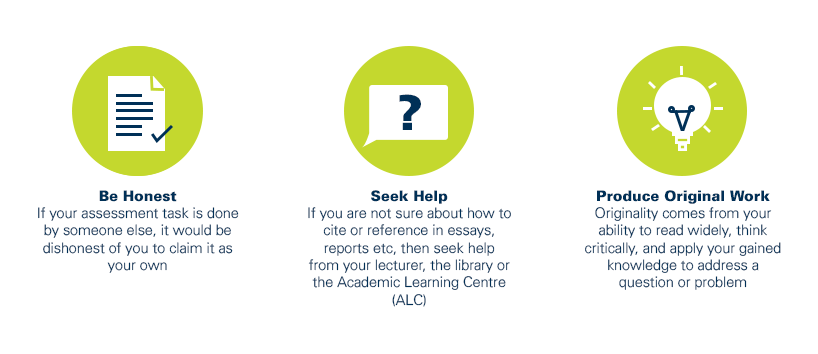
As a CQUniversity student you are expected to act honestly in all aspects of your academic work.
Any assessable work undertaken or submitted for review or assessment must be your own work. Assessable work is any type of work you do to meet the assessment requirements in the unit, including draft work submitted for review and feedback and final work to be assessed.
When you use the ideas, words or data of others in your assessment, you must thoroughly and clearly acknowledge the source of this information by using the correct referencing style for your unit. Using others’ work without proper acknowledgement may be considered a form of intellectual dishonesty.
Participating honestly, respectfully, responsibly, and fairly in your university study ensures the CQUniversity qualification you earn will be valued as a true indication of your individual academic achievement and will continue to receive the respect and recognition it deserves.
As a student, you are responsible for reading and following CQUniversity’s policies, including the Student Academic Integrity Policy and Procedure. This policy sets out CQUniversity’s expectations of you to act with integrity, examples of academic integrity breaches to avoid, the processes used to address alleged breaches of academic integrity, and potential penalties.
What is a breach of academic integrity?
A breach of academic integrity includes but is not limited to plagiarism, self-plagiarism, collusion, cheating, contract cheating, and academic misconduct. The Student Academic Integrity Policy and Procedure defines what these terms mean and gives examples.
Why is academic integrity important?
A breach of academic integrity may result in one or more penalties, including suspension or even expulsion from the University. It can also have negative implications for student visas and future enrolment at CQUniversity or elsewhere. Students who engage in contract cheating also risk being blackmailed by contract cheating services.
Where can I get assistance?
For academic advice and guidance, the Academic Learning Centre (ALC) can support you in becoming confident in completing assessments with integrity and of high standard.
What can you do to act with integrity?