Overview
This is the capstone unit in property valuation. It incorporates the valuation of complex investment, specialised and development property . You will gain insights into current issues in property economics, and social, cultural, environmental and property rights factors that impact on the value of different property types. Advanced valuation approaches for income producing property are analysed, including advanced modelling and risk analysis associated with the expected returns.
Details
Pre-requisites or Co-requisites
Pre-requisites: PROP11001 and FINC19014
Important note: Students enrolled in a subsequent unit who failed their pre-requisite unit, should drop the subsequent unit before the census date or within 10 working days of Fail grade notification. Students who do not drop the unit in this timeframe cannot later drop the unit without academic and financial liability. See details in the Assessment Policy and Procedure (Higher Education Coursework).
Offerings For Term 1 - 2026
Attendance Requirements
All on-campus students are expected to attend scheduled classes - in some units, these classes are identified as a mandatory (pass/fail) component and attendance is compulsory. International students, on a student visa, must maintain a full time study load and meet both attendance and academic progress requirements in each study period (satisfactory attendance for International students is defined as maintaining at least an 80% attendance record).
Recommended Student Time Commitment
Each 6-credit Undergraduate unit at CQUniversity requires an overall time commitment of an average of 12.5 hours of study per week, making a total of 150 hours for the unit.
Class Timetable
Assessment Overview
Assessment Grading
This is a graded unit: your overall grade will be calculated from the marks or grades for each assessment task, based on the relative weightings shown in the table above. You must obtain an overall mark for the unit of at least 50%, or an overall grade of 'pass' in order to pass the unit. If any 'pass/fail' tasks are shown in the table above they must also be completed successfully ('pass' grade). You must also meet any minimum mark requirements specified for a particular assessment task, as detailed in the 'assessment task' section (note that in some instances, the minimum mark for a task may be greater than 50%). Consult the University's Grades and Results Policy for more details of interim results and final grades.
All University policies are available on the CQUniversity Policy site.
You may wish to view these policies:
- Grades and Results Policy
- Assessment Policy and Procedure (Higher Education Coursework)
- Review of Grade Procedure
- Student Academic Integrity Policy and Procedure
- Academic Progression Policy and Procedure
- Student Refund and Credit Balance Policy and Procedure
- Complaints Policy and Procedure
- Information and Communications Technology Acceptable Use Policy and Procedure
This list is not an exhaustive list of all University policies. The full list of University policies are available on the CQUniversity Policy site.
Feedback, Recommendations and Responses
Every unit is reviewed for enhancement each year. At the most recent review, the following staff and student feedback items were identified and recommendations were made.
Feedback from Lecturer reflection
Low enrolments warrant continued attention to course promotion.
Continue to examine and pursue means of course promotion.
- Apply advanced valuation methods to value complex or specialised property types.
- Articulate emerging issues in property economics.
- Critically evaluate the factors that impact on the value of property rights and assets.
- Effectively communicate with diverse stakeholders on complex or specialised property.
This unit is an element in the required content for accreditation for Certified Practicing Valuer with the Australian Property Institute.
Students will have the opportunity to pursue Estate Master professional accreditation as an extension to the core activities in this unit related to development analysis. Estate Master accreditation is a widely recognised industry standard within the Australian and international development industry and can benefit the career prospects of students. Accreditation is independent of the university, however students receive a special student package which includes extended student access to the software and a heavily discounted accreditation. Details of how to pursue accreditation will be found on the Moodle site for this unit.
Alignment of Assessment Tasks to Learning Outcomes
| Assessment Tasks | Learning Outcomes | |||
|---|---|---|---|---|
| 1 | 2 | 3 | 4 | |
| 1 - Written Assessment - 50% | ||||
| 2 - Oral Examination - 40% | ||||
| 3 - Written Assessment - 10% | ||||
Alignment of Graduate Attributes to Learning Outcomes
| Graduate Attributes | Learning Outcomes | |||
|---|---|---|---|---|
| 1 | 2 | 3 | 4 | |
| 1 - Communication | ||||
| 2 - Problem Solving | ||||
| 3 - Critical Thinking | ||||
| 4 - Information Literacy | ||||
| 5 - Team Work | ||||
| 6 - Information Technology Competence | ||||
| 7 - Cross Cultural Competence | ||||
| 8 - Ethical practice | ||||
| 9 - Social Innovation | ||||
| 10 - First Nations Knowledges | ||||
| 11 - Aboriginal and Torres Strait Islander Cultures | ||||
Textbooks
There are no required textbooks.
IT Resources
- CQUniversity Student Email
- Internet
- Unit Website (Moodle)
- Microsft Office (Word, Excel, PowerPoint) or similar software such as Open Office
- CoreLogic RPData
All submissions for this unit must use the referencing style: American Psychological Association 7th Edition (APA 7th edition)
For further information, see the Assessment Tasks.
g.small@cqu.edu.au
Week 1
Begin Date: 09 Mar 2026Module/Topic
Property as investment
Chapter
Events and Submissions/Topic
Week 2
Begin Date: 16 Mar 2026Module/Topic
Property Cash Flow Studies and Rental Valuations
Chapter
Events and Submissions/Topic
Week 3
Begin Date: 23 Mar 2026Module/Topic
Partial interests
Chapter
Events and Submissions/Topic
Week 4
Begin Date: 30 Mar 2026Module/Topic
Ground Rent Determination
Chapter
Events and Submissions/Topic
Week 5
Begin Date: 06 Apr 2026Module/Topic
Development Valuations
Chapter
Events and Submissions/Topic
Week 6
Begin Date: 13 Apr 2026Module/Topic
Specialist valuations
Chapter
Events and Submissions/Topic
Vacation Week
Begin Date: 20 Apr 2026Module/Topic
Chapter
Events and Submissions/Topic
Week 7
Begin Date: 27 Apr 2026Module/Topic
Investment Valuation Reports
Chapter
Events and Submissions/Topic
Week 8
Begin Date: 04 May 2026Module/Topic
Valuation of Land Affected by Customary Rights
Chapter
Relevant literature available in the Unit Moodle site.
Events and Submissions/Topic
Week 9
Begin Date: 11 May 2026Module/Topic
Plant & Machinery Valuation
Chapter
Events and Submissions/Topic
Major Assignment Due
Advanced Valuation Report Due: Week 9 Friday (15 May 2026) 11:59 pm AEST
Week 10
Begin Date: 18 May 2026Module/Topic
Emerging Factors in Property and Valuation
Chapter
Relevant literature available in the Unit Moodle site
Events and Submissions/Topic
Week 11
Begin Date: 25 May 2026Module/Topic
Professional Practice and Market Analysis
Chapter
Relevant literature available in the Unit Moodle site
Events and Submissions/Topic
Major Assignment Return
Week 12
Begin Date: 01 Jun 2026Module/Topic
Property and the Environment
Chapter
Relevant literature available in the Unit Moodle site
Events and Submissions/Topic
Exam Week
Begin Date: 08 Jun 2026Module/Topic
Chapter
Events and Submissions/Topic
Vacation/Exam Week
Begin Date: 15 Jun 2026Module/Topic
Chapter
Events and Submissions/Topic
1 Written Assessment
This assignment consists of an advanced valuation project of the type encountered in property economics practice. It will require valuation skills and the ability to creatively apply property economics theory to a practical problem in the property investment and/or development arena of an actual investment or specialist property. The submission will consist of a consultancy report based on a valuation.
Referencing, academic integrity, AI and originality: This assessment requires students demonstrate their own knowledge and core skills. You are required to adhere to the guidelines on the use of artificial intelligence tools as specified in the Artificial Intelligence Assessment Scale (AIAS). No AI generated text is to be included in your report. All text not written by you is to be placed in quotes with full bibliographical citation. Any misuse or lack of disclosure regarding the use of AI tools will be considered a breach of academic integrity. It will attract a zero mark for the assignment.
Specific details will be found on Moodle.
File to be in a word processor format able to be opened by Microsoft Word (e.g. ".doc" format).
Week 9 Friday (15 May 2026) 11:59 pm AEST
Week 11 Friday (29 May 2026)
The assessment will be marked against the following criteria:
| 1 | Presentation |
| 2 | Property Description |
| 3 | Economic Outlook |
| 4 | Valuation approach |
| 5 | Computations |
| 6 | Ground Rent or DF |
| 7 | Practitioner contact |
| 8 | Insightfulness |
The criteria are not equally weighted and further details of assessment criteria may be found on the Moodle site.
- Apply advanced valuation methods to value complex or specialised property types.
- Articulate emerging issues in property economics.
- Critically evaluate the factors that impact on the value of property rights and assets.
- Effectively communicate with diverse stakeholders on complex or specialised property.
2 Oral Examination
A list of 12-16 questions will be issued no later than the end of week two. They will cover topics spanning the entire unit, but will not include mathematical questions. At the end of term each member of the class will be scheduled to have a 10-15 minute recorded oral discussion using Zoom. Four questions from the list will be randomly selected and given to the student, from which one may be selected to discuss.
The discussions will be scheduled during office hours during the exam period. Scheduling will be arranged in the last two weeks of term.
As an exam, the only feedback will be the final grades which will be released on the grade certification date.
Primary emphasis will be given to mastery of the relevant theory. A pass or credit grade may be achieved by relying only on unit resources and recommended reading, higher grades will expect evidence of familiarity with wider sources or outstanding mastery of unit resources and recommended reading. Oral expression will be included in considering final grades.
No submission method provided.
- Apply advanced valuation methods to value complex or specialised property types.
- Articulate emerging issues in property economics.
- Critically evaluate the factors that impact on the value of property rights and assets.
- Effectively communicate with diverse stakeholders on complex or specialised property.
3 Written Assessment
Students will be given a spreadsheet into which they will enter their student number and will be given a set of data from which numerical questions will be evaluated.
Working and answers are to be entered into the spreadsheet which is to be saved with a file name including the student's name, unit code and year. The spreadsheet is to be uploaded into the Moodle site for the unit.
Questions may be taken from anywhere in the unit.
Exam Week Monday (8 June 2026) 11:45 pm AEST
Date to be released in Week 10. Students will have 24 hours to complete the task, however it should only take less than an hour to complete.
This is part of the final exam hence grade will be released on the grade certification date.
Mathematical precision is the primary criteria. Submission of method outline may be considered in some cases.
- Apply advanced valuation methods to value complex or specialised property types.
- Critically evaluate the factors that impact on the value of property rights and assets.
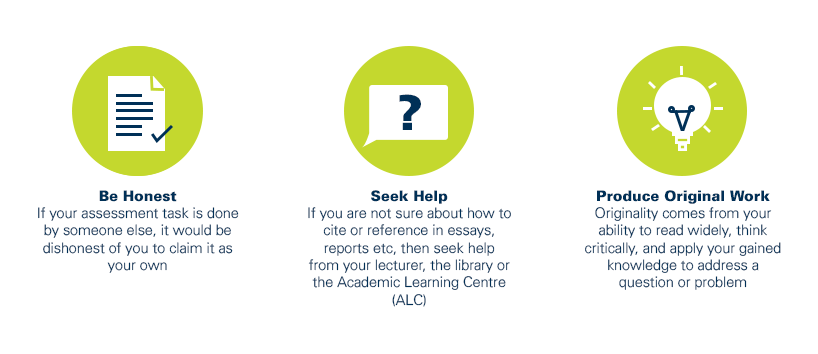
As a CQUniversity student you are expected to act honestly in all aspects of your academic work.
Any assessable work undertaken or submitted for review or assessment must be your own work. Assessable work is any type of work you do to meet the assessment requirements in the unit, including draft work submitted for review and feedback and final work to be assessed.
When you use the ideas, words or data of others in your assessment, you must thoroughly and clearly acknowledge the source of this information by using the correct referencing style for your unit. Using others’ work without proper acknowledgement may be considered a form of intellectual dishonesty.
Participating honestly, respectfully, responsibly, and fairly in your university study ensures the CQUniversity qualification you earn will be valued as a true indication of your individual academic achievement and will continue to receive the respect and recognition it deserves.
As a student, you are responsible for reading and following CQUniversity’s policies, including the Student Academic Integrity Policy and Procedure. This policy sets out CQUniversity’s expectations of you to act with integrity, examples of academic integrity breaches to avoid, the processes used to address alleged breaches of academic integrity, and potential penalties.
What is a breach of academic integrity?
A breach of academic integrity includes but is not limited to plagiarism, self-plagiarism, collusion, cheating, contract cheating, and academic misconduct. The Student Academic Integrity Policy and Procedure defines what these terms mean and gives examples.
Why is academic integrity important?
A breach of academic integrity may result in one or more penalties, including suspension or even expulsion from the University. It can also have negative implications for student visas and future enrolment at CQUniversity or elsewhere. Students who engage in contract cheating also risk being blackmailed by contract cheating services.
Where can I get assistance?
For academic advice and guidance, the Academic Learning Centre (ALC) can support you in becoming confident in completing assessments with integrity and of high standard.
What can you do to act with integrity?