Overview
In this unit you will advance your knowledge and skills in the assessment and management of complex musculoskeletal conditions, with a focus on developing and refining your clinical reasoning and manual therapy skills. The unit will foster an evidence-based and client-centred approach to physiotherapy management of acute sporting injuries, orthopaedic surgery, complex spinal and peripheral conditions, chronic disease and persisting pain, across the lifespan. Complex clinical presentations will be explored in the context of biological, social and psychological factors that influence client recovery and participation.
Details
Pre-requisites or Co-requisites
To enrol in this unit you must be enrolled in the CB85 Course and meet the following pre-requisite: PSIO12005 Musculoskeletal Physiotherapy 2
Important note: Students enrolled in a subsequent unit who failed their pre-requisite unit, should drop the subsequent unit before the census date or within 10 working days of Fail grade notification. Students who do not drop the unit in this timeframe cannot later drop the unit without academic and financial liability. See details in the Assessment Policy and Procedure (Higher Education Coursework).
Offerings For Term 1 - 2026
Attendance Requirements
All on-campus students are expected to attend scheduled classes - in some units, these classes are identified as a mandatory (pass/fail) component and attendance is compulsory. International students, on a student visa, must maintain a full time study load and meet both attendance and academic progress requirements in each study period (satisfactory attendance for International students is defined as maintaining at least an 80% attendance record).
Recommended Student Time Commitment
Each 6-credit Undergraduate unit at CQUniversity requires an overall time commitment of an average of 12.5 hours of study per week, making a total of 150 hours for the unit.
Class Timetable
Assessment Overview
Assessment Grading
This is a graded unit: your overall grade will be calculated from the marks or grades for each assessment task, based on the relative weightings shown in the table above. You must obtain an overall mark for the unit of at least 50%, or an overall grade of 'pass' in order to pass the unit. If any 'pass/fail' tasks are shown in the table above they must also be completed successfully ('pass' grade). You must also meet any minimum mark requirements specified for a particular assessment task, as detailed in the 'assessment task' section (note that in some instances, the minimum mark for a task may be greater than 50%). Consult the University's Grades and Results Policy for more details of interim results and final grades.
All University policies are available on the CQUniversity Policy site.
You may wish to view these policies:
- Grades and Results Policy
- Assessment Policy and Procedure (Higher Education Coursework)
- Review of Grade Procedure
- Student Academic Integrity Policy and Procedure
- Academic Progression Policy and Procedure
- Student Refund and Credit Balance Policy and Procedure
- Complaints Policy and Procedure
- Information and Communications Technology Acceptable Use Policy and Procedure
This list is not an exhaustive list of all University policies. The full list of University policies are available on the CQUniversity Policy site.
Feedback, Recommendations and Responses
Every unit is reviewed for enhancement each year. At the most recent review, the following staff and student feedback items were identified and recommendations were made.
Feedback from Student Unit Evaluation of Teaching (SUTE)
Some students felt the case study session became a bit repetitive and they lost interest.
It is recommended that these sessions be reviewed and revised to increase the practical requirements (e.g., add extra activities) and reduce the downtime spent reading case material.
Feedback from Student Unit Evaluation of Teaching (SUTE)
Students valued the highly practical and hands-on focused sessions and the expertise of the tutors.
It is recommended that all practical sessions include several practical and hands-on based activities to enhance student engagment and learning.
- Demonstrate theoretical and applied knowledge of pathophysiology, symptomatology, clinical course and prognosis for complex musculoskeletal conditions
- Develop, implement and evaluate evidence-based assessment and treatment for clients with complex musculoskeletal conditions
- Explain how biological, social, and psychological factors inform a physiotherapy intervention plan for clients with complex musculoskeletal conditions
- Describe the role of the physiotherapist within an interprofessional team in the management of clients with complex musculoskeletal conditions
- Demonstrate acceptable professional and ethical behaviours consistent with a physiotherapy practitioner.
Alignment of Assessment Tasks to Learning Outcomes
| Assessment Tasks | Learning Outcomes | ||||
|---|---|---|---|---|---|
| 1 | 2 | 3 | 4 | 5 | |
| 1 - In-class Test(s) - 20% | |||||
| 2 - In-class Test(s) - 30% | |||||
| 3 - Objective Structured Clinical Examinations (OSCEs) - 50% | |||||
| 4 - On-campus Activity - 0% | |||||
Alignment of Graduate Attributes to Learning Outcomes
| Graduate Attributes | Learning Outcomes | ||||
|---|---|---|---|---|---|
| 1 | 2 | 3 | 4 | 5 | |
| 1 - Communication | |||||
| 2 - Problem Solving | |||||
| 3 - Critical Thinking | |||||
| 4 - Information Literacy | |||||
| 5 - Team Work | |||||
| 6 - Information Technology Competence | |||||
| 7 - Cross Cultural Competence | |||||
| 8 - Ethical practice | |||||
| 9 - Social Innovation | |||||
| 10 - First Nations Knowledges | |||||
| 11 - Aboriginal and Torres Strait Islander Cultures | |||||
Textbooks
Petty's Principles of Musculoskeletal Treatment and Management
- Edition: 4th (2023)
- Authors: Kieran Barnard and Dionne Ryder
- Elsevier
- Sydney Sydney , NSW , Australia
- ISBN: 9780323872287
This book is a companion to Petty’s Musculoskeletal Examination and Assessment. ISBN:9780323874717. Publication Date: 28-04-2023
- Binding: Paperback
Brukner & Khan's Clinical Sports Medicine - Volume 1 Injuries
- Edition: 5th (2017)
- Authors: rukner, Peter ; Clarsen, Ben ; Cook, Jill ; Cools, Ann ; Crossley, Kay ; Hutchinson, Mark ; McCrory, Paul ; Bahr, Roald ; Khan, Karim
- McGraw-Hill Education
- New York New York , NY , United States of America
- ISBN: 9781760421663
- Binding: Hardcover
IT Resources
- CQUniversity Student Email
- Internet
- Unit Website (Moodle)
All submissions for this unit must use the referencing style: American Psychological Association 7th Edition (APA 7th edition)
For further information, see the Assessment Tasks.
s.obst@cqu.edu.au
Week 1
Begin Date: 09 Mar 2026Module/Topic
Introduction to Musculoskeletal Physiotherapy 3
Revisiting the patient interview and assessment planning for spinal pain
Chapter
Events and Submissions/Topic
Week 2
Begin Date: 16 Mar 2026Module/Topic
Principles and methods of treatment - Spinal mobilisations and management of low back pain
Chapter
Chapter 3 - Petty and Barnard (2024) Principles of musculoskeletal treatment and management (4th Edition)
Chapter 17 - Brukner and Khan (2017) Clinical sports medicine (5th Edition).
Events and Submissions/Topic
Week 3
Begin Date: 23 Mar 2026Module/Topic
Principles and methods of treatment - Neural mobilisations and management of neck pain
Chapter
Chapter 7 - Petty and Barnard (2024) Principles of musculoskeletal treatment and management (4th Edition).
Events and Submissions/Topic
Week 4
Begin Date: 30 Mar 2026Module/Topic
Principles and methods of treatment - High velocity thrust spinal manipulations
Chapter
Chapter 3 - Petty and Barnard (2024) Principles of musculoskeletal treatment and management (4th Edition)
Events and Submissions/Topic
Week 5
Begin Date: 06 Apr 2026Module/Topic
Principles and methods of treatment - Motor control training for spinal pain
Chapter
Chapter 10 - Petty and Barnard (2024) Principles of musculoskeletal treatment and management (4th Edition)
Events and Submissions/Topic
Week 6
Begin Date: 13 Apr 2026Module/Topic
Mid-Term Assessment
Chapter
Events and Submissions/Topic
Vacation Week
Begin Date: 20 Apr 2026Module/Topic
N/A
Chapter
N/A
Events and Submissions/Topic
Week 7
Begin Date: 27 Apr 2026Module/Topic
Complex Musculoskeletal: Peripheral musculoskeletal conditions (Impingement related shoulder pain and Tendinopathy)
Chapter
Chapter 5 - Petty and Barnard (2024) Principles of musculoskeletal treatment and management (4th Edition)
Chapter 4 - Brukner and Khan (2017) Clinical sports medicine (5th Edition), pp 46-50.
Events and Submissions/Topic
Week 8
Begin Date: 04 May 2026Module/Topic
Complex Musculoskeletal: Asessment and management of persisting pain
Chapter
Chapter 9 - Petty and Barnard (2024) Principles of musculoskeletal treatment and management (4th Edition)
Chapter 5 - Brukner and Khan (2017) Clinical sports medicine (5th Edition).
Events and Submissions/Topic
Week 9
Begin Date: 11 May 2026Module/Topic
Complex Musculoskeletal: Sports physiotherapy
Chapter
Chapter 20 - Brukner and Khan (2017) Clinical sports medicine (5th Edition).
Events and Submissions/Topic
Week 10
Begin Date: 18 May 2026Module/Topic
Complex Musculoskeletal: Post-operative rehabilitation
Chapter
Chapter 35 - Brukner and Khan (2017) Clinical sports medicine (5th Edition).
Events and Submissions/Topic
Week 11
Begin Date: 25 May 2026Module/Topic
Complex Musculoskeletal: Occupational and paediatric physiotherapy
Chapter
Chapter 44 - Brukner and Khan (2017) Clinical sports medicine (5th Edition).
Events and Submissions/Topic
Week 12
Begin Date: 01 Jun 2026Module/Topic
End-Term Assessment
Chapter
Events and Submissions/Topic
Exam Week
Begin Date: 08 Jun 2026Module/Topic
Chapter
Events and Submissions/Topic
Vacation/Exam Week
Begin Date: 15 Jun 2026Module/Topic
Chapter
Events and Submissions/Topic
1 In-class Test(s)
The Mid-Term Test is a 1.5 hour (i.e. 90 min) closed book, paper-based, in-class written test that will be held on-campus (Bundaberg, Rockhampton and Cairns campuses only). Access to books, notes and electronic devices are prohibited during the test. The Mid-Term Test will examine all content covered from weeks 1 to 5, inclusive, including all lectures, practicals and required readings. The test will include some, or all, of the following question types: multiple choice, True/False, short answer/essay, and/or case studies.
Level of GenAI use allowed: Level 1: You must not use Al at any point during the assessment.
72-hour grace period: The 72-hour grace period does not apply to this assessment.
Late Arrivals: You should aim to arrive at least 15-minutes prior to the official assessment commencement time. In the extraordinary circumstance that you are late you will be permitted late entry to your assessment of up to 10 minutes after the official assessment commencement time. The period of lateness will be deducted from your overall assessment time. If you are denied access to the assessment due to lateness (i.e. arriving beyond the permitted late entry period), you should make an online application for deferred assessment (which may or may not be granted in line with CQU policy). If your application for deferred assessment is denied, you will receive a score of zero percent (0%) for your assessment item.
Week 6 Friday (17 Apr 2026) 12:00 pm AEST
Results will be accessible on Moodle within two weeks of the submission date.
All questions will be marked numerically and an overall percentage mark will be awarded.
- Demonstrate theoretical and applied knowledge of pathophysiology, symptomatology, clinical course and prognosis for complex musculoskeletal conditions
2 In-class Test(s)
The End-Term Test is a 2 hour (i.e. 120 min) closed book, paper-based, in-class written test that will be held on-campus (Bundaberg, Rockhampton and Cairns campuses only). Access to books, notes and electronic devices are prohibited during the test. The End-Term Test will examine all content covered from weeks 1 to 11, inclusive, including all lectures, practicals and required readings. The test will include some, or all, of the following question types: Multiple choice, True/False, Short answer/essay and/or Case studies.
Level of GenAI use allowed: Level 1: You must not use Al at any point during the assessment.
72-hour grace period: The 72-hour grace period does not apply to this assessment.
Late Arrivals: You should aim to arrive at least 15-minutes prior to the official assessment commencement time. In the extraordinary circumstance that you are late you will be permitted late entry to your assessment of up to 10 minutes after the official assessment commencement time. The period of lateness will be deducted from your overall assessment time. If you are denied access to the assessment due to lateness (i.e. arriving beyond the permitted late entry period), you should make an online application for deferred assessment (which may or may not be granted in line with CQU policy). If your application for deferred assessment is denied, you will receive a score of zero percent (0%) for your assessment item.
Week 12 Friday (5 June 2026) 12:00 pm AEST
Results will be accessible on Moodle within two weeks of the submission date.
All questions will be marked numerically and an overall percentage mark will be awarded.
- Demonstrate theoretical and applied knowledge of pathophysiology, symptomatology, clinical course and prognosis for complex musculoskeletal conditions
- Explain how biological, social, and psychological factors inform a physiotherapy intervention plan for clients with complex musculoskeletal conditions
- Describe the role of the physiotherapist within an interprofessional team in the management of clients with complex musculoskeletal conditions
3 Objective Structured Clinical Examinations (OSCEs)
The Objective Structured Clinical Exam (OSCE) is intended to assess your theoretical and practical application of physiotherapy assessment, treatment, and clinical reasoning. The OSCE will include two (2) brief written clinical scenarios. You will have 40 minutes to read and complete all questions/tasks. There will be NO PREPARATION time for this assessment. For each scenario you will be required to plan, discuss and perform relevant aspects of physiotherapy assessment, treatment and overall management.
You may be requested to:
- Demonstrate knowledge of the presenting condition, including relevant pathophysiology, pathoanatomy, and symptomatology.
- Identify and act upon any precautions and/or contraindications to assessment and/or treatment.
- Demonstrate knowledge and clinical reasoning in the selection of assessment, treatment and/or overall management.
- Demonstrate clear, effective and thorough communication.
- Demonstrate safe and effective application of clinical assessment, treatment and/or overall management.
- Explain and interpret the findings of a clinical assessment and/or treatment, including progression and regression of selected treatment techniques.
- Demonstrate accurate and appropriate documentation of your clinical assessment and/or treatment findings.
All material relevant to musculoskeletal physiotherapy assessment and treatment covered in the following pre-requisite units is also examinable in the OSCE: Foundations of Physiotherapy Practice 1 (PSIO11004), Foundations of Physiotherapy Practice 2 (PSIO11003), Functional Anatomy and Biomechanics (PSIO12006), Musculoskeletal Physiotherapy 1 (PSIO12001) and Musculoskeletal Physiotherapy 2 (PSIO12005).
You need to be appropriately attired in your full clinical uniform for the examination. If you are required to be a 'simulated patient' for another student's examination please bring additional clothes suitable for a clinical assessment.
Level of GenAI use allowed: Level 1: You must not use Al at any point during the assessment.
72-hour grace period: The 72-hour grace period does not apply to this assessment.
Late Arrivals: You should aim to arrive at least 15-minutes prior to the official assessment commencement time. In the extraordinary circumstance that you are late you will be permitted late entry to your assessment of up to 10 minutes after the official assessment commencement time. The period of lateness will be deducted from your overall assessment time. If you are denied access to the assessment due to lateness (i.e. arriving beyond the permitted late entry period), you should make an online application for deferred assessment (which may or may not be granted in line with CQU policy). If your application for deferred assessment is denied, you will receive a score of zero percent (0%) for your assessment item.
Exam Week Thursday (11 June 2026) 8:00 am AEST
A detailed timetable will be released during term.
Results will be accessible on Moodle within two weeks following completion.
The assessment rubric for this assessment task is based on the Australian Standards for Physiotherapy, the Accreditation Standard set by the Australian Physiotherapy Council, and The Assessment of Physiotherapy Practice Instrument. These quality frameworks are mapped against the CQUniversity Graduate Attributes and are intended to give a holistic understanding of standards expected for the assessment task.
Detailed marking criteria sheet will be available on Moodle, and will be based on the following rubric categories:
- Communication (20%)
- Selection, application and interpretation of assessment (40%)
- Selection, application and interpretation of treatment/management (40%)
- Risk Management/Safety and Professional Behaviour (PASS/FAIL)
In order to PASS the OSCE you must:
- Achieve a mark of 50% or higher; AND
- Achieve a PASS result for the PASS/FAIL component of Safety and Risk Management.
If you do not meet the above criteria, you may be offered a Supplementary Assessment in line with CQUniversity Policy.
Assessment Moderation Using Video Recordings: To ensure consistency and fairness in the evaluation of practical assessments, including Objective Structured Clinical Examinations (OSCE), this unit may employ video recordings as a method for assessment moderation. These recordings allow for a thorough review of student performance, providing an objective basis for feedback and grading. Assessors may review the recordings to verify the accuracy of initial assessments and to identify any discrepancies. This process also facilitates the calibration of grading standards among different assessors. By utilising video recordings, we aim to maintain high standards of assessment integrity and support continuous improvement in teaching and learning practices. More details about this process will be provided on the unit Moodle site.
- Develop, implement and evaluate evidence-based assessment and treatment for clients with complex musculoskeletal conditions
- Explain how biological, social, and psychological factors inform a physiotherapy intervention plan for clients with complex musculoskeletal conditions
- Describe the role of the physiotherapist within an interprofessional team in the management of clients with complex musculoskeletal conditions
- Demonstrate acceptable professional and ethical behaviours consistent with a physiotherapy practitioner.
4 On-campus Activity
Attendance rate will be determined at the end of term (i.e. Week 12)
Attendance rate will be determined at the end of term (i.e. Week 12)
Your attendance at each scheduled practical session will be recorded by the tutor using an attendance spreadsheet. The monitoring of attendance will take into consideration legitimate requests for absence, such as those outlined in the CQUniversity Assessment Policy and Procedure (Higher Education Coursework) document, and these will not be counted as absence for the purpose of this attendance requirement.
No submission method provided.
- Demonstrate acceptable professional and ethical behaviours consistent with a physiotherapy practitioner.
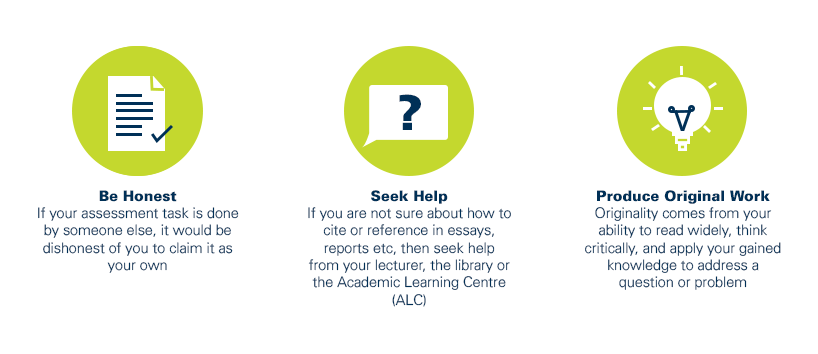
As a CQUniversity student you are expected to act honestly in all aspects of your academic work.
Any assessable work undertaken or submitted for review or assessment must be your own work. Assessable work is any type of work you do to meet the assessment requirements in the unit, including draft work submitted for review and feedback and final work to be assessed.
When you use the ideas, words or data of others in your assessment, you must thoroughly and clearly acknowledge the source of this information by using the correct referencing style for your unit. Using others’ work without proper acknowledgement may be considered a form of intellectual dishonesty.
Participating honestly, respectfully, responsibly, and fairly in your university study ensures the CQUniversity qualification you earn will be valued as a true indication of your individual academic achievement and will continue to receive the respect and recognition it deserves.
As a student, you are responsible for reading and following CQUniversity’s policies, including the Student Academic Integrity Policy and Procedure. This policy sets out CQUniversity’s expectations of you to act with integrity, examples of academic integrity breaches to avoid, the processes used to address alleged breaches of academic integrity, and potential penalties.
What is a breach of academic integrity?
A breach of academic integrity includes but is not limited to plagiarism, self-plagiarism, collusion, cheating, contract cheating, and academic misconduct. The Student Academic Integrity Policy and Procedure defines what these terms mean and gives examples.
Why is academic integrity important?
A breach of academic integrity may result in one or more penalties, including suspension or even expulsion from the University. It can also have negative implications for student visas and future enrolment at CQUniversity or elsewhere. Students who engage in contract cheating also risk being blackmailed by contract cheating services.
Where can I get assistance?
For academic advice and guidance, the Academic Learning Centre (ALC) can support you in becoming confident in completing assessments with integrity and of high standard.
What can you do to act with integrity?