Overview
In this unit you will be introduced to the concept of psychological literacy, which explores the use of psychological science to help solve problems faced by humans in their everyday lives. Psychological literacy encapsulates the graduate attributes that you will acquire through completing an undergraduate degree in psychology, including discipline knowledge, acting ethically, understanding and fostering respect for diversity, problem solving skills, communicating effectively, and being insightful and reflective about one’s own and others’ behaviour. Thus, in this unit, you will develop your psychological literacy by learning how to take the primary principles, theories and knowledge you have learned in PSYC11010 and apply these to a range of real-world contexts at a personal, professional, and societal level.
Details
Pre-requisites or Co-requisites
Corequisite: PSYC11010.
Important note: Students enrolled in a subsequent unit who failed their pre-requisite unit, should drop the subsequent unit before the census date or within 10 working days of Fail grade notification. Students who do not drop the unit in this timeframe cannot later drop the unit without academic and financial liability. See details in the Assessment Policy and Procedure (Higher Education Coursework).
Offerings For Term 2 - 2026
Attendance Requirements
All on-campus students are expected to attend scheduled classes - in some units, these classes are identified as a mandatory (pass/fail) component and attendance is compulsory. International students, on a student visa, must maintain a full time study load and meet both attendance and academic progress requirements in each study period (satisfactory attendance for International students is defined as maintaining at least an 80% attendance record).
Recommended Student Time Commitment
Each 6-credit Undergraduate unit at CQUniversity requires an overall time commitment of an average of 12.5 hours of study per week, making a total of 150 hours for the unit.
Class Timetable
Assessment Overview
Assessment Grading
This is a graded unit: your overall grade will be calculated from the marks or grades for each assessment task, based on the relative weightings shown in the table above. You must obtain an overall mark for the unit of at least 50%, or an overall grade of 'pass' in order to pass the unit. If any 'pass/fail' tasks are shown in the table above they must also be completed successfully ('pass' grade). You must also meet any minimum mark requirements specified for a particular assessment task, as detailed in the 'assessment task' section (note that in some instances, the minimum mark for a task may be greater than 50%). Consult the University's Grades and Results Policy for more details of interim results and final grades.
All University policies are available on the CQUniversity Policy site.
You may wish to view these policies:
- Grades and Results Policy
- Assessment Policy and Procedure (Higher Education Coursework)
- Review of Grade Procedure
- Student Academic Integrity Policy and Procedure
- Academic Progression Policy and Procedure
- Student Refund and Credit Balance Policy and Procedure
- Complaints Policy and Procedure
- Information and Communications Technology Acceptable Use Policy and Procedure
This list is not an exhaustive list of all University policies. The full list of University policies are available on the CQUniversity Policy site.
Feedback, Recommendations and Responses
Every unit is reviewed for enhancement each year. At the most recent review, the following staff and student feedback items were identified and recommendations were made.
Feedback from Student feedback
Some students felt that assessment requirements were not clear enough.
Instructions will be reviewed for clarity and exemplars provided to ensure expectations regarding assessment content is clear.
Feedback from Student feedback
Students were unsure about the direct link between weekly content and the assessments.
Lectures and tutorial content will be reviewed to ensure they highlight the skills being assessed in each assessment item. To do this, the problem - solution - impact focus will be made explicit.
- Explain relevant concepts, theories and principles to specific aspects of human behaviour.
- Apply principles of psychological literacy to personal, professional and social issues in real-world scenarios.
- Communicate ideas effectively in oral and written form.
This unit addresses Foundational Competencies as specified by the Australian Psychology Accreditation Council (APAC). The unit specifically aligns to the following APAC graduate competencies:
1.1 Comprehend and apply a broad and coherent body of knowledge of psychology, with depth of understanding of underlying principles, theories and concepts in the discipline, using a scientific approach, including the following topics: i. the history and philosophy underpinning the science of psychology and the social, cultural, historical and professional influences on the practice of psychology; ii. individual differences in capacity, behaviour and personality; iv. psychological disorders and evidence-based interventions; v. learning and memory; vi. cognition, language and perception; vii. motivation and emotion; viii. neuroscience and the biological bases of behaviour; ix. lifespan developmental psychology; x. social psychology and xii. research methods and statistics.
1.2 Apply knowledge and skills of psychology in a manner that is reflexive, culturally appropriate and sensitive to the diversity of individuals.
1.3 Analyse and critique theory and research in the discipline of psychology and communicate these in written and oral formats.
1.4 Demonstrate an understanding of appropriate values and ethics in psychology.
1.6 Demonstrate self-directed pursuit of scholarly inquiry in psychology.
Alignment of Assessment Tasks to Learning Outcomes
| Assessment Tasks | Learning Outcomes | ||
|---|---|---|---|
| 1 | 2 | 3 | |
| 1 - Online Quiz(zes) - 40% | |||
| 2 - Written Assessment - 30% | |||
| 3 - Presentation - 30% | |||
Alignment of Graduate Attributes to Learning Outcomes
| Graduate Attributes | Learning Outcomes | ||
|---|---|---|---|
| 1 | 2 | 3 | |
| 1 - Communication | |||
| 2 - Problem Solving | |||
| 3 - Critical Thinking | |||
| 4 - Information Literacy | |||
| 5 - Team Work | |||
| 6 - Information Technology Competence | |||
| 7 - Cross Cultural Competence | |||
| 8 - Ethical practice | |||
| 9 - Social Innovation | |||
| 10 - First Nations Knowledges | |||
| 11 - Aboriginal and Torres Strait Islander Cultures | |||
Textbooks
There are no required textbooks.
IT Resources
- CQUniversity Student Email
- Internet
- Unit Website (Moodle)
- Webcam
- Zoom
All submissions for this unit must use the referencing style: American Psychological Association 7th Edition (APA 7th edition)
For further information, see the Assessment Tasks.
m.gossner@cqu.edu.au
Week 1
Begin Date: 13 Jul 2026Module/Topic
Introduction to Psychological Literacy
Chapter
Refer to Moodle website for required reading material and activities
Events and Submissions/Topic
Week 2
Begin Date: 20 Jul 2026Module/Topic
Ethical Foundations
Chapter
Refer to Moodle website for required reading material and activities
Events and Submissions/Topic
Week 3
Begin Date: 27 Jul 2026Module/Topic
Critical Thinking and Research Methods
Chapter
Refer to Moodle website for required reading material and activities
Events and Submissions/Topic
Assessment 1
Quiz 1 of 4
Opens: Wednesday 29th July
9am (AEST)
Week 4
Begin Date: 03 Aug 2026Module/Topic
Positive Psychology
Chapter
Refer to Moodle website for required reading material and activities
Events and Submissions/Topic
Assessment 1
Quiz 1 of 4
Closes: Wednesday 5th August
11:59pm (AEST)
Week 5
Begin Date: 10 Aug 2026Module/Topic
Health Psychology
Chapter
Refer to Moodle website for required reading material and activities
Events and Submissions/Topic
Assessment 1
Quiz 2 of 4
Opens: Wednesday 12th August
9am (AEST)
Week 6
Begin Date: 17 Aug 2026Module/Topic
Marketing and Advertising
Chapter
Refer to Moodle website for required reading material and activities
Events and Submissions/Topic
Assessment 1
Quiz 2 of 4
Closes: Wednesday 19th August
11:59pm (AEST)
Assessment 2
Psychological Problem-Solving Proposal
Due: Friday 21st August
11:59pm (AEST)
Vacation Week
Begin Date: 24 Aug 2026Module/Topic
Chapter
Events and Submissions/Topic
Week 7
Begin Date: 31 Aug 2026Module/Topic
Perfecting Your Pitch
Chapter
Refer to Moodle website for required reading material and activities
Events and Submissions/Topic
Week 8
Begin Date: 07 Sep 2026Module/Topic
Gambling and Addiction
Chapter
Refer to Moodle website for required reading material and activities
Events and Submissions/Topic
Week 9
Begin Date: 14 Sep 2026Module/Topic
The Psychology of Artificial Intelligence
Chapter
Refer to Moodle website for required reading material and activities
Events and Submissions/Topic
Assessment 1
Quiz 3 of 4
Opens: Wednesday 16th September
9am (AEST)
Week 10
Begin Date: 21 Sep 2026Module/Topic
Secular Gurus: Trust, Certainty, and Influence Online
Chapter
Refer to Moodle website for required reading material and activities
Events and Submissions/Topic
Assessment 1
Quiz 3 of 4
Closes: Wednesday 23rd September
11:59pm (AEST)
Week 11
Begin Date: 28 Sep 2026Module/Topic
Global Citizenship
Chapter
Refer to Moodle website for required reading material and activities
Events and Submissions/Topic
Assessment 3
Dragons’ Den Pitch
Due: Friday 2nd October
11:59pm (AEST)
Week 12
Begin Date: 05 Oct 2026Module/Topic
Social Innovation
Chapter
Refer to Moodle website for required reading material and activities
Events and Submissions/Topic
Assessment 1
Quiz 4 of 4
Opens: Wednesday 7th October
9am (AEST)
Exam Week
Begin Date: 12 Oct 2026Module/Topic
Chapter
Events and Submissions/Topic
Assessment 1
Quiz 4 of 4
Closes: Wednesday 14th October
11:59pm (AEST)
1 Online Quiz(zes)
The quizzes provide an opportunity for you to demonstrate your foundational and critical understanding of the unit content. This assessment consists of four online quizzes, each completed and submitted through the PSYC11009 Moodle site. Each quiz contains 20 multiple-choice questions and must be completed within 40 minutes. Students are permitted one attempt per quiz. Quizzes will become available following the final lecture relevant to the assessed content and will remain open for at least one week.
Details of content and opening and closing dates are detailed below:
- Quiz 1 assesses topics covered in Weeks 1 to 3. It opens Wednesday of Week 3 at 9.00am (AEST) and closes Wednesday of Week 4 at 11:59pm (AEST).
- Quiz 2 assesses topics covered in Weeks 4 to 5. It opens Wednesday of Week 5 at 9.00am (AEST) and closes Wednesday of Week 6 at 11:59pm (AEST).
- Quiz 3 assesses topics covered in Weeks 8 to 9. It opens Wednesday of Week 9 at 9.00am (AEST) and closes Wednesday of Week 10 at 11:59pm (AEST).
- Quiz 4 assesses topics covered in Weeks 10 to 12. It opens Wednesday of Week 12 at 9.00am (AEST) and closes Wednesday of Exam Week at 11:59pm (AEST).
The 72-hour grace period does not apply to quizzes, as they are available for completion over a one-week period. Once a quiz closes, no late submissions can be accepted (even with a 5% penalty per day). However, students may complete a quiz after the closing date if they obtain an approved extension through Moodle in accordance with University policy.
Level of GenAI use allowed:
Level 1: You must not use AI at any point during the assessment. You must demonstrate your core skills and knowledge.
Quiz 1 closes Wednesday of Week 4 at 11:59pm (AEST). Quiz 2 closes Wednesday of Week 6 at 11:59pm (AEST). Quiz 3 closes Wednesday of Week 10 at 11:59pm (AEST). Quiz 4 closes Wednesday of Exam Week at 11:59pm (AEST).
Quiz total marks will be returned to students immediately after each quiz is submitted.
No Assessment Criteria.
Each quiz is marked out of 20 and weighted equally. The quiz assessment component is worth 40% of the final unit grade, with each quiz contributing one-quarter of this weighting (10%).
- Explain relevant concepts, theories and principles to specific aspects of human behaviour.
- Apply principles of psychological literacy to personal, professional and social issues in real-world scenarios.
2 Written Assessment
This assessment requires you use psychological evidence to understand a real-world problem and propose a realistic solution. The task helps you develop the knowledge base you will use in Assessment 3: Dragons’ Den Pitch. It also assesses psychological literacy: your ability to apply psychological concepts and evidence to a practical issue and communicate that reasoning clearly.
A list of real-world scenarios will be provided on Moodle. You must select one of these scenarios to focus on for both Assessment 2: Psychology Problem-Solving Proposal and Assessment 3: Dragons' Den Pitch.
You will be required to identify a possible solution to your chosen real-world scenario. The written assessment should comprise the following sections: (1) Title; (2) Problem Framing and Evidence Base; (3) Proposed Solution; (4) Significance and Real-World Impact; and (5) References. The written assessment must be between 750 and 1000 words in length. This word limit includes in-text citations but excludes the reference list and title page.
*NOTE: Further task details will be available in the Assessment 2 tile on Moodle and will be discussed during class lectures.
The 72-hour grace period does apply to this task. Submissions later than 72-hours must obtain an approved extension or be subject to a 5% per day penalty.
Level of GenAI use allowed:
Level 3: You may use AI to assist with specific tasks such as drafting text, refining and evaluating your work. You must critically evaluate and modify any AI-generated content you use.
Please refer to the unit Moodle site for further details on permissible uses of Generative-AI tools for this assessment task.
Week 6 | Friday 21st August 2026 | 11:59pm (AEST)
Feedback and marks for this assessment will be provided within two weeks of submission.
This assessment will be graded out of 30 marks. Marks will be allocated according to each of the following criteria:
- Problem Framing and Evidence Base (8 marks)
- Proposed Solution (8 marks)
- Significance and Real-World Impact (8 marks)
- Academic Writing, Structure and Word Count (3 marks)
- APA7 Referencing (3 marks)
*For a more detailed breakdown of mark allocation, please refer to the detailed rubric on Moodle.
- Explain relevant concepts, theories and principles to specific aspects of human behaviour.
- Communicate ideas effectively in oral and written form.
3 Presentation
This assessment requires you to communicate your Psychology Problem-Solving Proposal through a concise and engaging recorded pitch. Building on Assessment 2, you will translate psychological evidence into an accessible presentation that explains a real-world problem and proposes an evidence-based solution. The task develops your ability to communicate psychological knowledge to a non-specialist audience and demonstrate psychological literacy by applying psychological concepts and evidence to practical issues. You will also reflect on your communication skills, strengths, and areas for future development.
You will deliver a 3–5-minute presentation supported by a single PowerPoint slide containing 6–8 bullet points in a minimum 20-point font. Your face must remain visible throughout the presentation to meet academic integrity requirements.
The oral presentation should be recorded and saved in MP4 format. Zoom is usually the most efficient and compact recording method. As Moodle has a 100 MB file size limit, use CQUniversity's ECHO360 system to upload your video, following the instructions provided on Moodle.
You will also be required to submit a 200-250 word written reflection on your experience completing the pitch.
Your reflection should address:
- the process you used to develop the pitch, including your planning, preparation, and any feedback you sought or received;
- your strengths and aspects of the pitch that you believe were effective;
- any challenges you encountered during the process and how you could address these in future presentations or assessment tasks.
*NOTE: Further task details will be available in the Assessment 3 tile on Moodle and will be discussed during class lectures.
The 72-hour grace period does apply to this task. Submissions later than 72-hours must obtain an approved extension or be subject to a 5% per day penalty.
Level of GenAI use allowed:
Level 3: You may use AI to assist with specific tasks such as drafting text, refining and evaluating your work. You must critically evaluate and modify any AI-generated content you use.
Please refer to the unit Moodle site for further details on permissible uses of Generative-AI tools for this assessment task.
Week 11 | Friday 2nd October 2026 | 11:59pm (AEST)
Feedback and marks for this assessment will be provided within two weeks of submission.
This assessment will be graded out of 30 marks. Marks will be allocated according to each of the following criteria:
- Content: Problem, Solution, and Impact (8 marks)
- Psychological Evidence and Audience Translation (5 marks)
- Persuasiveness and Feasibility (5 marks)
- Structure, Flow, and Take-Home Message (4 marks)
- Oral Delivery and Visual Aid (4 marks)
- Reflection (4 marks)
*For a more detailed breakdown of mark allocation, please refer to the detailed rubric on Moodle.
- Apply principles of psychological literacy to personal, professional and social issues in real-world scenarios.
- Communicate ideas effectively in oral and written form.
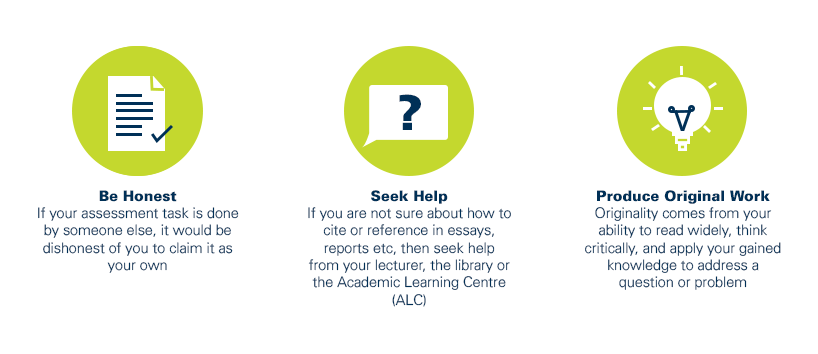
As a CQUniversity student you are expected to act honestly in all aspects of your academic work.
Any assessable work undertaken or submitted for review or assessment must be your own work. Assessable work is any type of work you do to meet the assessment requirements in the unit, including draft work submitted for review and feedback and final work to be assessed.
When you use the ideas, words or data of others in your assessment, you must thoroughly and clearly acknowledge the source of this information by using the correct referencing style for your unit. Using others’ work without proper acknowledgement may be considered a form of intellectual dishonesty.
Participating honestly, respectfully, responsibly, and fairly in your university study ensures the CQUniversity qualification you earn will be valued as a true indication of your individual academic achievement and will continue to receive the respect and recognition it deserves.
As a student, you are responsible for reading and following CQUniversity’s policies, including the Student Academic Integrity Policy and Procedure. This policy sets out CQUniversity’s expectations of you to act with integrity, examples of academic integrity breaches to avoid, the processes used to address alleged breaches of academic integrity, and potential penalties.
What is a breach of academic integrity?
A breach of academic integrity includes but is not limited to plagiarism, self-plagiarism, collusion, cheating, contract cheating, and academic misconduct. The Student Academic Integrity Policy and Procedure defines what these terms mean and gives examples.
Why is academic integrity important?
A breach of academic integrity may result in one or more penalties, including suspension or even expulsion from the University. It can also have negative implications for student visas and future enrolment at CQUniversity or elsewhere. Students who engage in contract cheating also risk being blackmailed by contract cheating services.
Where can I get assistance?
For academic advice and guidance, the Academic Learning Centre (ALC) can support you in becoming confident in completing assessments with integrity and of high standard.
What can you do to act with integrity?