Overview
This unit will introduce you to the various ways in which psychological theory and research can be applied to everyday life. It aims to equip you with the tools needed for your studies in psychology as well as a variety of career pathways. You will hear from guest speakers that cover specific skills from areas such as health psychology, positive psychology, coaching and counselling. The unit focuses on social innovation, exploring how to develop and implement effective solutions to challenging social and environmental issues in our community. There will also be some practical instruction on essay writing skills and critical thinking.
Details
Pre-requisites or Co-requisites
There are no requisites for this unit.
Important note: Students enrolled in a subsequent unit who failed their pre-requisite unit, should drop the subsequent unit before the census date or within 10 working days of Fail grade notification. Students who do not drop the unit in this timeframe cannot later drop the unit without academic and financial liability. See details in the Assessment Policy and Procedure (Higher Education Coursework).
Offerings For Term 2 - 2019
Attendance Requirements
All on-campus students are expected to attend scheduled classes - in some units, these classes are identified as a mandatory (pass/fail) component and attendance is compulsory. International students, on a student visa, must maintain a full time study load and meet both attendance and academic progress requirements in each study period (satisfactory attendance for International students is defined as maintaining at least an 80% attendance record).
Recommended Student Time Commitment
Each 6-credit Undergraduate unit at CQUniversity requires an overall time commitment of an average of 12.5 hours of study per week, making a total of 150 hours for the unit.
Class Timetable
Assessment Overview
Assessment Grading
This is a graded unit: your overall grade will be calculated from the marks or grades for each assessment task, based on the relative weightings shown in the table above. You must obtain an overall mark for the unit of at least 50%, or an overall grade of 'pass' in order to pass the unit. If any 'pass/fail' tasks are shown in the table above they must also be completed successfully ('pass' grade). You must also meet any minimum mark requirements specified for a particular assessment task, as detailed in the 'assessment task' section (note that in some instances, the minimum mark for a task may be greater than 50%). Consult the University's Grades and Results Policy for more details of interim results and final grades.
All University policies are available on the CQUniversity Policy site.
You may wish to view these policies:
- Grades and Results Policy
- Assessment Policy and Procedure (Higher Education Coursework)
- Review of Grade Procedure
- Student Academic Integrity Policy and Procedure
- Monitoring Academic Progress (MAP) Policy and Procedure - Domestic Students
- Monitoring Academic Progress (MAP) Policy and Procedure - International Students
- Student Refund and Credit Balance Policy and Procedure
- Student Feedback - Compliments and Complaints Policy and Procedure
- Information and Communications Technology Acceptable Use Policy and Procedure
This list is not an exhaustive list of all University policies. The full list of University policies are available on the CQUniversity Policy site.
Feedback, Recommendations and Responses
Every unit is reviewed for enhancement each year. At the most recent review, the following staff and student feedback items were identified and recommendations were made.
Feedback from Student evaluations
The format that the Unit Coordinator developed for this unit was very well appreciated by students who reported that the content was extremely interesting and engaging and that it greatly helped them in choosing their future electives. There was very positive feedback for the Unit Coordinators explanation of the course structure and for his encouragement and feedback"
The format of invited speakers, delivering lectures on a diverse range subjects and showcasing the variety of psychology pathways available seems to be greatly appreciated and the Unit Coordinator recommends that this format is retained.
Feedback from Student evaluations
The need for critical thinking and research skills was also acknowledged by the students who expressed their thorough enjoyment.
Critical thinking and literature-search skills are fundamental for proper development of psychological knowledge and understanding. It is clear that this unit should continue to encourage both in order to lay the foundations for higher levels of study.
Feedback from Student evaluations
In spite of the large cohort of around 200 students, the Unit Coordinator managed to maintained a high degree of interaction, giving clear instructions and timely responses.
It is vitally important that the coordinator of a large unit such as this maintains open contact with the students and is organised and prepared to respond quickly, keeping on top of e-mail and forum inquiries.
Feedback from Student evaluations
There was general appreciation for the types of assessments in this unit. For example, students wrote that they enjoyed the opportunity to review each others work and that the Unit Coordinator provided very detailed information sheets to guide them through the process.
The assessments work well and the variety of assessments were chosen to reflect the practical skills commonly employed in research. It is recommended that the unit retain the balance of peer review, reflection, condensing and summarising complex information. The time allowed for assessments to be completed appears to be adequate and should be maintained.
Feedback from Student evaluations and personal observations
A small number of students commented that they could not see the relevance of the lectures to the assessments and there was still confusion among some students about the fact that Assessment 3 is submitted before Assessment 4.
The first two lectures are concerned with the basic skills of critical thinking and essay writing and their relevance is clear, however subsequent lectures delivered by guest speakers are directly related to Assessment 2, the review and peer review. Although the Unit Coordinator believes these are important skills, the Coordinator will investigate the possibility of testing content from the guest lectures which seems to be the anxiety of those who raised the question. There are logical reasons for the ordering of the assessment, but the Unit Coordinator can see that this may lead to some confusion. The Unit Coordinator will investigate ways of either re-ordering or re-naming the assessments so that the logic of the order is clearer.
- Apply psychological theory and research to a range of research and/or everyday problems
- Demonstrate understanding of social innovation and social change
- Communicate ideas effectively in writing and in adherence with APA style.
Alignment of Assessment Tasks to Learning Outcomes
| Assessment Tasks | Learning Outcomes | ||
|---|---|---|---|
| 1 | 2 | 3 | |
| 1 - Online Quiz(zes) - 15% | |||
| 2 - Online discussion forum - 20% | |||
| 3 - Annotated bibliography - 15% | |||
| 4 - Written Assessment - 50% | |||
Alignment of Graduate Attributes to Learning Outcomes
| Graduate Attributes | Learning Outcomes | ||
|---|---|---|---|
| 1 | 2 | 3 | |
| 1 - Communication | |||
| 2 - Problem Solving | |||
| 3 - Critical Thinking | |||
| 4 - Information Literacy | |||
| 5 - Team Work | |||
| 6 - Information Technology Competence | |||
| 7 - Cross Cultural Competence | |||
| 8 - Ethical practice | |||
| 9 - Social Innovation | |||
| 10 - First Nations Knowledges | |||
| 11 - Aboriginal and Torres Strait Islander Cultures | |||
Alignment of Assessment Tasks to Graduate Attributes
| Assessment Tasks | Graduate Attributes | ||||||||||
|---|---|---|---|---|---|---|---|---|---|---|---|
| 1 | 2 | 3 | 4 | 5 | 6 | 7 | 8 | 9 | 10 | 11 | |
| 1 - Online Quiz(zes) - 15% | |||||||||||
| 2 - Online discussion forum - 20% | |||||||||||
| 3 - Annotated bibliography - 15% | |||||||||||
| 4 - Written Assessment - 50% | |||||||||||
Textbooks
The Publication Manual of the American Psychological Association
- Edition: 6 (2012)
- Authors: American Psychological Association
- American Psychological Association
- Online Online , U.S.
- ISBN: 978-1-4338-0704-6
- Binding: Website Link
Additional Textbook Information
The APA manual can be downloaded directly from the APA website https://www.apa.org/pubs/books/4210512 in either PDF form that can be saved and viewed directly on your device with any PDF reader or as a Kindle download by following the link to Amazon Kindle.
IT Resources
- CQUniversity Student Email
- Internet
- Unit Website (Moodle)
All submissions for this unit must use the referencing style: American Psychological Association 6th Edition (APA 6th edition)
For further information, see the Assessment Tasks.
g.stuart@cqu.edu.au
Week 1
Begin Date: 15 Jul 2019Module/Topic
Critical thinking and belief in the paranormal
Chapter
I have included readings for this section in the unit Moodle page.
Events and Submissions/Topic
Week 2
Begin Date: 22 Jul 2019Module/Topic
Social Innovation 1
Chapter
Suggested readings may be supplied by speaker
Events and Submissions/Topic
Week 3
Begin Date: 29 Jul 2019Module/Topic
Social Innovation 2
Chapter
Suggested readings may be supplied by speaker
Events and Submissions/Topic
Make sure you log into and complete the iChange module
Week 4
Begin Date: 05 Aug 2019Module/Topic
Introduction to academic essay writing
Chapter
I have included readings for this section in the unit Moodle page.
Refer also to "The Publication manual of the American Psychological Association". I refer to it extensively both in the lecture and in my marking feedback. It is a book that will be useful throughout your Psychology degree and beyond.
Events and Submissions/Topic
Week 5
Begin Date: 12 Aug 2019Module/Topic
Counselling skills
Chapter
Suggested readings may be supplied by speaker
Events and Submissions/Topic
Vacation Week
Begin Date: 19 Aug 2019Module/Topic
Chapter
Events and Submissions/Topic
Week 6
Begin Date: 26 Aug 2019Module/Topic
Counselling skills 2
Chapter
Suggested readings may be supplied by speaker
Events and Submissions/Topic
Week 7
Begin Date: 02 Sep 2019Module/Topic
Chapter
Suggested readings may be supplied by speaker
Events and Submissions/Topic
Week 8
Begin Date: 09 Sep 2019Module/Topic
Health psychology 2
Chapter
Suggested readings may be supplied by speaker
Events and Submissions/Topic
Week 9
Begin Date: 16 Sep 2019Module/Topic
Coaching skills
Chapter
Suggested readings may be supplied by speaker
Events and Submissions/Topic
Week 10
Begin Date: 23 Sep 2019Module/Topic
Positive psychology 1
Chapter
Suggested readings may be supplied by speaker
Events and Submissions/Topic
Week 11
Begin Date: 30 Sep 2019Module/Topic
Positive psychology 2
Chapter
Suggested readings may be supplied by speaker
Events and Submissions/Topic
Week 12
Begin Date: 07 Oct 2019Module/Topic
Ethics in everyday
life
Chapter
Suggested readings may be supplied by speaker
Events and Submissions/Topic
Review/Exam Week
Begin Date: 14 Oct 2019Module/Topic
No exam
Chapter
Events and Submissions/Topic
Exam Week
Begin Date: 21 Oct 2019Module/Topic
No exam
Chapter
Events and Submissions/Topic
PLEASE READ THESE NOTES CAREFULLY BEFORE THE BEGINNING OF TERM
As part of this unit, you are required to either participate in two studies, run by either staff or students in the Psychology department at CQUniversity, or to take an alternative form of participation, described later in this section (See Assessment 4). Although you won't receive any direct unit credit, participation in studies will form the basis of two of your assessments. These studies take a wide variety of forms, from 'live' experiments to online surveys etc. To find out what's on offer, go to the CQUniversity Psychology web site and look under the section 'Research Projects'. At the end of the survey or experiment, you will be given some information about the study that you can use to help you complete Assessments 3 and 4. Remember that studies are usually available for just the first 3 weeks of Term 2, though you may begin participation before the start of Term 2 if studies are available. Participation is an important part of learning, giving an insight into the design and execution of psychology studies, however you may choose not to participate in any studies (or you may miss the three week window and find there are no studies available) in which case you can instead view two of the assessment videos available on the PSYC11011 Unit Moodle page.
NB 1: In either case, it is important to take notes with regards your opinion about the purpose and nature of the study that you take part in or view on the video. While participating/watching, make some notes about what you are feeling and thinking, what you are asked to do and what was the purpose of the study (or what you think might be the purpose if it has not been made clear to you by the experimenter). How well do you think it has been implemented? Were there any clever or innovative methods used in the design? Are there any areas of the design you think might be improved? Consider also ethics, e.g. was there deception? Was there any misleading information? It may not be practical to take notes at the time, so be sure to make as many notes as you can immediately after your participation/viewing. Remember, you will use these notes as the basis for your Assessments 3 and 4, so don't forget to take them. I don't need verbatim text or lists of stimuli used/questions asked. Just your impression of the kinds of stimuli or the kinds of questions.
NB 2: In order to pass this unit, you must pass assessments 1 and 4
1 Online Quiz(zes)
As part of your University training, you are required to
complete the iChange module looking at Social Innovation which includes a quiz.
To begin the module, click here. You must work through the module and answer
questions before continuing, though you can keep trying until you are
successful. At the end you will receive a certificate that you will need to
upload to the PSYC11011 Unit Moodle page as evidence of successful completion.
1
Other
Week 12 Friday (11 Oct 2019) 11:59 pm AEST
Certificate of successful completion of the iChange module must be loaded up to the PSYC11011 Moodle page
Week 12 Friday (11 Oct 2019)
You will receive your certificate on successful completion of the iChange module
Successful completion of the iChange module
- Demonstrate understanding of social innovation and social change
- Critical Thinking
- Information Literacy
- Information Technology Competence
- Ethical practice
2 Online discussion forum
This is a two part exercise involving review and peer review.
Part 1 (Review): Select at least one of the lectures given in this unit (apart from the two lectures on Social Innovation) and write a 500+/-50 explaining how these ideas might be implemented in a Social Innovation context. Please note, there are no right or wrong ideas here.
Part 2 (Peer Review): Choose a review from a fellow student and comment on the following criteria (100 words+/-50):
- Adherence to the word limit
- Succinctness of description and arguments
- Clarity of arguments
- Level of critical analysis
Exam Week Monday (21 Oct 2019) 11:59 pm AEST
Posts may be marked throughout the term. If your post receives a pass, you will receive a mark in gradebook. If you have completed only half (review or peer review) and you pass this part, your score will show only half marks until you have completed the second part.
Exam Week Friday (25 Oct 2019)
Marks will be visible in Gradebook. See also peer feedback
Each part of the assignment is worth 10% of the total marks for the unit and will be awarded in an all or nothing fashion. Marks will only be awarded to what are considered by the unit coordinator to be 'serious attempts'. The following criteria would constitute non-serious attempts and would receive a zero grade:
- Nonsensical, abusive or irrelevant (non topic related) comments
- Deviance from specified word limits
- Apply psychological theory and research to a range of research and/or everyday problems
- Demonstrate understanding of social innovation and social change
- Communication
- Critical Thinking
- Information Literacy
3 Annotated bibliography
This is a two part exercise in which you will post an annotated bibliography and peer review of a fellow student's annotated bibliography. The purpose of the annotated bibliography is to provide the foundation for the descriptive/reflective essay in Assessment 4.
Part 1 (Annotated bibliography): Select one of the studies/videos from your participation/viewing in Assessment 1 and write a 150+/-50 word annotated-bibliography on the topic that can be used as the basis for your descriptive/reflective essay (Assessment 4). You need to find a minimum of 4 citations (references) for papers/journal articles or book chapters that are relevant to the topic of the study you participated in/video you observed and provide a very brief summary of the contents of each article and how it will be relevant useful for your reflective essay.
Part 2 (Peer Review): Choose a review from a fellow student and comment on the following criteria (150 words+/-50):
- Adherence to the word limit
- Relevance of the citations chosen
- Sufficiency of detail of the evaluations
- Succinctness of the evaluations
In order to maximise the peer review feedback, there should be no more than one review per submission. If a review already exists for one participant, please review another wherever possible!
Week 8 Monday (9 Sept 2019) 11:59 pm AEST
Enter your posts in the Assessment 2 forum post section of the PSYC11011 Unit Moodle page
Week 8 Friday (13 Sept 2019)
Marks will be visible in Gradebook. See also peer feedback
Each part of the assignment is worth 10% of the total marks for the unit and will be awarded in an all or nothing fashion. Marks will only be awarded to what are considered by the unit coordinator to be 'serious attempts'. The following criteria would constitute non-serious attempts and would receive a zero grade:
- Nonsensical, abusive or irrelevant (non topic related) comments
- Deviance from specified word limits
- Communicate ideas effectively in writing and in adherence with APA style.
- Communication
- Critical Thinking
- Information Literacy
- Ethical practice
4 Written Assessment
Having completed the
studies or watched the videos, you must write a 1500 word
descriptive/reflective account of one of those studies/videos. When
writing this assignment, please keep referring back to the learning
outcomes (specific outcomes that you are expected to achieve having
completed this unit) and Graduate Attributes (overarching
generic learning outcomes that refer to transferable, non-discipline
specific skills that you are expected to achieve having completed this
unit) in this Unit Profile, because these are what you’ll be assessed
on. Your essay should involve both description (what took place, what was
the sequence of events, what were the materials, etc.) and reflection (how did
you interpret your experience as a participant/observer, how did you interpret
the aims of the study? Did you feel the study accurately assessed its stated
aims?). This may appear somewhat different to other written assignments but a
great deal of academic writing combines elements of description and reflection.
We pose a question, investigate that question, describe what we did and how we
did it, then reflect on the meaning of what we found. In this assignment,
you’re not posing a research question, though a question was posed by the
researcher. Depending on the extent of the information provided by the experimenter/video,
you may or may not be fully aware of what that question was (and that’s one
thing you can write about) but I’m less interested in knowing the answer
to their research question, more interested in a description
of your personal and subjective experience as a participant, your
reflections on that process and anything you may have learnt from the process.
Parts of this reflection should be supported by your own literature research,
finding studies that support either the topic in general, or the specific
hypothesis that you believe was being tested. NB For the purposes of this
assessment, you do not need to know the outcome of the study. In the case of
participation, this may not be available until long after the assessment
deadline.
I want you to describe
not only the experience as you perceived it, but also your thoughts and
feelings at the time, and any subsequent thoughts. Your experience needs to be
set in context since it is still based on someone else’s investigation of a
research question. For this reason, I do want you to describe something about
that research question (either known or surmised). If you were supplied with
adequate information (and you should have been given some), then you need to
describe this in your own words. The experimenter/owner of the survey should
have at least given enough information at the beginning in order to allow you
to give your informed consent, but was there enough information? Can you give
your ‘informed’ consent if you don’t fully know what the study will be about?
If the researcher didn’t ‘inform’ you, then there is something to write about
straight away (this could be an ethical problem and discussing this could be a
demonstration of critical thinking, c.f. Graduate Attribute 3). Then you
can ask yourself ‘did they, at any point, let me know what they were looking
for?’ If the answer is still no, then you can give your interpretation of what
you thought they were looking for, based on the information available. The
following will help you structure your essay and refers explicitly to each of
the Unit Learning Outcomes.
Introduction
Give some historical
background to the area, setting the scene, c.f. context. Research is not
conducted in a theoretical vacuum and there must have been some theoretical
and/or empirical basis for conducting the study. What was that theoretical
basis? Was it made explicit or was it necessary for you to deduce it for
yourself? If it was the latter, you can include information here that you
believe is relevant. You may use here some or all of the 4 citations
that you researched for Assessment 3. Often with a survey or
an experiment, there is an attempt to disguise the purpose of the questions,
but was the purpose obvious to you? Don’t worry if this doesn't match what the
experimenter had intended, i'm interested in your views. I want to see you
expressing your (critical) thinking and there are no extra marks for for
correctly guessing the ‘true’ hypothesis being investigated by the researcher.
Whether you’ve been told, or had to determine for yourself, what the study was
about, this is an opportunity for you to do some research. I’m hoping that
you will read at least some original journal articles, but book chapters are
acceptable (c.f. Assessment 3). Where possible, try to link
your thoughts about the study to theoretical aspects of psychology that you may
have encountered elsewhere. For example, after taking part in a study on
self-esteem, is there anything you learnt about self esteem elsewhere in the
course, or indeed from any other source? You could go further and ask if there
is anything that you’ve learnt elsewhere that might have an effect on self
esteem, but which wasn't questioned in the study (c.f. Graduate
Attribute 3, critical thinking). Whenever you state a ‘fact’ (e.g.
"90% of adults experience acute anxiety at some point in their
lives") remember to support it with a citation. Someone did this research
and showed this to be the case and you need to acknowledge that source (c.f.
Learning Outcome 3, APA formatting). I’ve set a minimum requirement of
4 with regards the number of citations in order to meet the criteria, but there
won’t be more marks given for 'extra' citations per se. For additional
citations, I would prefer to see journal articles or other primary sources, but
secondary sources are acceptable for this unit. All citations must be properly
formatted and listed in an American Psychological Association (APA) formatted
reference section (see the APA style manual and the resources on the unit
Moodle page, c.f. Learning Outcome 3). Your personal
opinion is different and doesn’t need to be supported in the same way, but you
do still need to make it clear on what basis you formed this opinion or how you
logically came to this opinion.
Main body
When you come to
write about your experience of taking part in the study (or watching the
video), I would like you to give a description of what you took part in (or
saw), with as much procedural information as you can, including a description of
experimental items or materials and an overview of the design, so far as you
were aware of it. But I’m most interested in your interpretation of the study
and your reaction to it. For example, how taking part in this study (or
watching the video) informed your thinking or learning? How has your previous
learning influenced your approach to this study? How might your previous views
and beliefs have influenced your approach to this study? (Graduate
Attribute 3, critical thinking). Like other forms of academic writing,
you should construct this essay logically and systematically. Use sub-headings
if you feel they’re useful, though they’re not a requirement. APA format
must be used throughout. (c.f. Learning Outcome 3), but
remember this is also about your subjective experience, so I would expect you
to describe your thoughts, feelings and concerns. The latter (if you have any)
may extend to ethical concerns or issues about the type of questions and the
effect they may have on a person. For example, does the need for knowledge
justify the questions asked/procedures performed?
Conclusions
Here is a chance to hone your critical thinking skills (c.f. Graduate Attribute 3). In these final paragraphs, you can summarise the preceding section and speculate about how the research might be extended. What other questions might be explored, related to those in the study you took part in (video you watched)? What limitations were there to the study so far as you could see? Finally, like other sections, the reference section must be formatted according to APA format (Learning Outcome 3).
Week 9 Friday (20 Sept 2019) 11:59 pm AEST
Please submit through the PSYC11011 Moodle page. Please submit in MSWord as this makes it easier to give feedback
Review/Exam Week Friday (18 Oct 2019)
Marked essays with feedback will be uploaded into Gradebook and you will be able to download or view a copy.
The essay must be formatted throughout using APA format, including a title page. Sub-headings may be used, but are not necessary. Citations must be used throughout to support all reported findings, theories or quotations, though direct quotations should be avoided where possible. The word count will include all words from and including the first word of the essay (including title page) to the last word of the conclusions, and includes any in-text citations or captions within the text, but does not include references or appendices. An assignment which does not fall within 10% above or below the specified word count will be subject to a word count penalty of 2% for every 50 words above or below, up to 10% of the total possible grade for the assignment. Words in assignments that exceed 10% of the word-count are not assessed/marked and this may also affect the marks given.
Your essay will be assessed according to the following marking scheme which will be used to assess the Unit Learning Outcomes. The total final mark is out of 60 which will be converted to a proportion of the 50% total assignment marks available for this unit. Marks will be awarded from 0 - 15 for each of the following criteria, with the exception of length which is negatively marked.
1. Length: A negative marking scheme will be used to deduct 2 marks for every 50 words over or under the allowable word length.
2. Evidence of critical thinking: Work displays evidence of critical thought by evaluating, analysing and examining the major assumptions surrounding the topic material. (e.g. using research to find contradictory evidence, highlighting confounds, self-reflection and questioning one’s own assumptions).
3. Evidence of Literature search and appropriate use of citations with evidence of synthesis of ideas and knowledge: Essay shows evidence of a literature review that utilises appropriate and relevant resources. The 4 references from Assessment 3 should be included in Assessment 4. Citations are included in-text, indicating to the reader the source of the ideas/material obtained. References are not simply ‘tacked-on’ in order to pad out the paper but rather they support, refute or bolster the main point/s of the paper.
4. Rational/logical development of arguments: Essay is set out according to a logical pattern. There is no single right way to do this, however what is important is that the argument/s must be presented in a fashion whereby the reader can easily follow their progression and development.
5. Effective communication style and structure: The essay must be presented in APA format, including the following elements…
- Title page: Showing author name, affiliation, etc. (see APA manual for details).
- Title: Must have a title that describes well the topic to be discussed.
- Introduction: Not more than one paragraph, giving the reader some historical background and setting the scene.
- Main Body: Develop the main themes of your chosen topic here using citations of research, personal reflection and critical thinking.
- Conclusions: One or two paragraphs summarising the preceding section and, most importantly, giving your assessment of the status and possible future directions of the area in terms of research development.
- Reference section: Must include full references for all citations used in the essay.
No submission method provided.
- Apply psychological theory and research to a range of research and/or everyday problems
- Communicate ideas effectively in writing and in adherence with APA style.
- Communication
- Critical Thinking
- Information Literacy
- Information Technology Competence
- Ethical practice
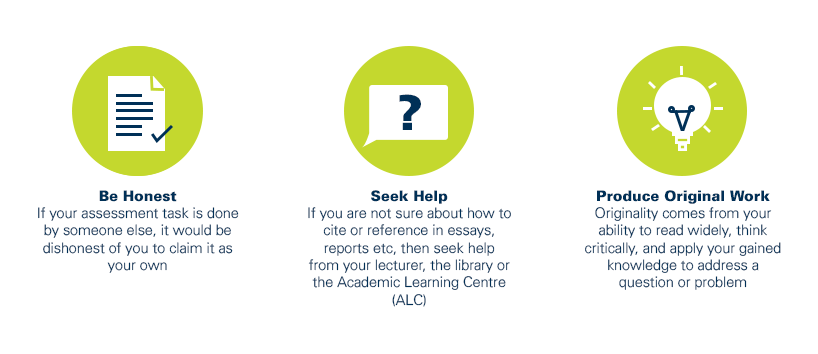
As a CQUniversity student you are expected to act honestly in all aspects of your academic work.
Any assessable work undertaken or submitted for review or assessment must be your own work. Assessable work is any type of work you do to meet the assessment requirements in the unit, including draft work submitted for review and feedback and final work to be assessed.
When you use the ideas, words or data of others in your assessment, you must thoroughly and clearly acknowledge the source of this information by using the correct referencing style for your unit. Using others’ work without proper acknowledgement may be considered a form of intellectual dishonesty.
Participating honestly, respectfully, responsibly, and fairly in your university study ensures the CQUniversity qualification you earn will be valued as a true indication of your individual academic achievement and will continue to receive the respect and recognition it deserves.
As a student, you are responsible for reading and following CQUniversity’s policies, including the Student Academic Integrity Policy and Procedure. This policy sets out CQUniversity’s expectations of you to act with integrity, examples of academic integrity breaches to avoid, the processes used to address alleged breaches of academic integrity, and potential penalties.
What is a breach of academic integrity?
A breach of academic integrity includes but is not limited to plagiarism, self-plagiarism, collusion, cheating, contract cheating, and academic misconduct. The Student Academic Integrity Policy and Procedure defines what these terms mean and gives examples.
Why is academic integrity important?
A breach of academic integrity may result in one or more penalties, including suspension or even expulsion from the University. It can also have negative implications for student visas and future enrolment at CQUniversity or elsewhere. Students who engage in contract cheating also risk being blackmailed by contract cheating services.
Where can I get assistance?
For academic advice and guidance, the Academic Learning Centre (ALC) can support you in becoming confident in completing assessments with integrity and of high standard.
What can you do to act with integrity?