Overview
This unit is designed for first-time researchers. It provides you with an introduction to the research methods and critical thinking approach that will be used throughout your psychology degree. At the end of this unit, you will be able to describe, apply, and evaluate a range of basic qualitative and quantitative research methods used in the social sciences. You will develop critical thinking, problem solving skills and group work skills. You will gain introductory competence in critically evaluating scientific literature, constructing empirical arguments, generating research questions, applying basic statistical concepts, and preparing scientific research reports in American Psychological Association (APA) formatting style. A focus will be placed on conducting research with diverse populations and in an ethically responsible manner. The skills and knowledge gained in this unit will be developed further in Research Methods 2 (PSYC12048) and Research Methods 3 (PSYC13015).
Details
Pre-requisites or Co-requisites
There are no requisites for this unit.
Important note: Students enrolled in a subsequent unit who failed their pre-requisite unit, should drop the subsequent unit before the census date or within 10 working days of Fail grade notification. Students who do not drop the unit in this timeframe cannot later drop the unit without academic and financial liability. See details in the Assessment Policy and Procedure (Higher Education Coursework).
Offerings For Term 2 - 2026
Attendance Requirements
All on-campus students are expected to attend scheduled classes - in some units, these classes are identified as a mandatory (pass/fail) component and attendance is compulsory. International students, on a student visa, must maintain a full time study load and meet both attendance and academic progress requirements in each study period (satisfactory attendance for International students is defined as maintaining at least an 80% attendance record).
Recommended Student Time Commitment
Each 6-credit Undergraduate unit at CQUniversity requires an overall time commitment of an average of 12.5 hours of study per week, making a total of 150 hours for the unit.
Class Timetable
Assessment Overview
Assessment Grading
This is a graded unit: your overall grade will be calculated from the marks or grades for each assessment task, based on the relative weightings shown in the table above. You must obtain an overall mark for the unit of at least 50%, or an overall grade of 'pass' in order to pass the unit. If any 'pass/fail' tasks are shown in the table above they must also be completed successfully ('pass' grade). You must also meet any minimum mark requirements specified for a particular assessment task, as detailed in the 'assessment task' section (note that in some instances, the minimum mark for a task may be greater than 50%). Consult the University's Grades and Results Policy for more details of interim results and final grades.
All University policies are available on the CQUniversity Policy site.
You may wish to view these policies:
- Grades and Results Policy
- Assessment Policy and Procedure (Higher Education Coursework)
- Review of Grade Procedure
- Student Academic Integrity Policy and Procedure
- Academic Progression Policy and Procedure
- Student Refund and Credit Balance Policy and Procedure
- Complaints Policy and Procedure
- Information and Communications Technology Acceptable Use Policy and Procedure
This list is not an exhaustive list of all University policies. The full list of University policies are available on the CQUniversity Policy site.
Feedback, Recommendations and Responses
Every unit is reviewed for enhancement each year. At the most recent review, the following staff and student feedback items were identified and recommendations were made.
Feedback from SUTE feedback
More clarity needed in linking course materials to assessments
Streamline and update course materials with particular focus on assessment requirements
Feedback from SUTE feedback
More examples required to support development of Assessment 3
Provide updated examples for Assessment 3, and provide further explanation of these in live workshops or recorded videos.
Feedback from SUTE feedback
Improve clarity of feedback on assessments
Video feedback will be recorded and made available for all students following each assessment to contextualise and complement the individual feedback students receive.
- Describe and apply foundational quantitative and qualitative research methods in psychology.
- Apply knowledge of research methodology and research ethics to the evaluation of academic and non-academic sources of information.
- Critically reflect on how personal and societal attitudes, experiences and values influence perceptions of ethical research and scientific knowledge.
- Write a scientific report using American Psychological Association (APA) format.
This unit addresses Foundational Competencies as specified by the Australian Psychology Accreditation Council (APAC). The unit specifically aligns to the following APAC graduate competencies:
1.1 Comprehend and apply a broad and coherent body of knowledge of psychology, with depth of understanding of underlying principles, theories and concepts in the discipline, using a scientific approach, including the following topics: i. the history and philosophy underpinning the science of psychology and the social, cultural, historical and professional influences on the practice of psychology; and xii. research methods and statistics.
1.2 Apply knowledge and skills of psychology in a manner that is reflexive, culturally appropriate and sensitive to the diversity of individuals.
1.3 Analyse and critique theory and research in the discipline of psychology and communicate these in written and oral formats.
1.4 Demonstrate an understanding of appropriate values and ethics in psychology.
1.5 Demonstrate interpersonal skills and teamwork.
1.6 Demonstrate self-directed pursuit of scholarly inquiry in psychology.
Alignment of Assessment Tasks to Learning Outcomes
| Assessment Tasks | Learning Outcomes | |||
|---|---|---|---|---|
| 1 | 2 | 3 | 4 | |
| 1 - Written Assessment - 20% | ||||
| 2 - Group Work - 30% | ||||
| 3 - Report - 50% | ||||
Alignment of Graduate Attributes to Learning Outcomes
| Graduate Attributes | Learning Outcomes | |||
|---|---|---|---|---|
| 1 | 2 | 3 | 4 | |
| 1 - Communication | ||||
| 2 - Problem Solving | ||||
| 3 - Critical Thinking | ||||
| 4 - Information Literacy | ||||
| 5 - Team Work | ||||
| 6 - Information Technology Competence | ||||
| 7 - Cross Cultural Competence | ||||
| 8 - Ethical practice | ||||
| 9 - Social Innovation | ||||
| 10 - First Nations Knowledges | ||||
| 11 - Aboriginal and Torres Strait Islander Cultures | ||||
Textbooks
Psychology Research Methods (1st ed.).
- Edition: (1st ed.). (2018)
- Authors: Burton, L.J., Goodwin, C.J., Goodwin, K.A., and Jose, P.E
- Milton, Queensland: John Wiley and Sons.
- ISBN: ISBN-13: 9780730363255 ISBN-10: 0730363252
IT Resources
- CQUniversity Student Email
- Internet
- Unit Website (Moodle)
All submissions for this unit must use the referencing style: American Psychological Association 7th Edition (APA 7th edition)
For further information, see the Assessment Tasks.
m.bornschlegl@cqu.edu.au
Week 1
Begin Date: 13 Jul 2026Module/Topic
Introduction to Psychological Research
Chapter
- Burton et al. (2018). Psychology Research Methods.
- Chapter 1: The scientific method
- Chapter 1: The scientific method
- MacLin, M. K. (2023). The Psychological Literature. In Experimental design in psychology: A case approach (pp. 27–35). Routledge. https://doi.org/10.4324/9781003378044-3
Events and Submissions/Topic
Week 2
Begin Date: 20 Jul 2026Module/Topic
Research Ethics in Psychology
Chapter
- Burton et al. (2018). Psychology Research Methods.
- Chapter 2: Ethics
Events and Submissions/Topic
Week 3
Begin Date: 27 Jul 2026Module/Topic
Introduction to quantitative research
Chapter
- Burton et al. (2018). Psychology Research Methods.
- Chapter 3.1: What to measure - varieties of behaviour
- Chapter 3.3: Scales of measurement
- Chapter 4: Types of observational analysis
Events and Submissions/Topic
Week 4
Begin Date: 03 Aug 2026Module/Topic
Introduction to qualitative research
Chapter
- Burton et al. (2018). Psychology Research Methods.
- Chapter 11.1: Fundamentals of qualitative research
Events and Submissions/Topic
Week 5
Begin Date: 10 Aug 2026Module/Topic
Critiquing quantitative and qualitative research
Chapter
- Burton et al. (2018). Psychology Research Methods.
- Chapter 3.2: Evaluating measures
- Chapter 3.2: Evaluating measures
- Cena, E., Brooks, J., Day, W., Goodman, S., Rousaki, A., Ruby-Granger, V., & Seymour-Smith, S. (2024). Quality criteria: General and specific guidelines for qualitative approaches in psychology research. A concise guide for novice researchers and reviewers. International Journal of Qualitative Methods, 23, https://doi.org/10.1177/16094069241282843
- Creswell, J. W. (2014). Qualitative, quantitative and mixed methods approaches. Sage.
- Chapter 9: Qualitative Methods (pages 201-204)
Events and Submissions/Topic
Week 6
Begin Date: 17 Aug 2026Module/Topic
Quantitative research designs: Experiments
Chapter
- Burton et al. (2018). Psychology Research Methods.
- Chapter 6: Experimental design I
- Chapter 7: Experimental design II: factorial designs
Events and Submissions/Topic
Vacation Week
Begin Date: 24 Aug 2026Module/Topic
Chapter
Events and Submissions/Topic
Week 7
Begin Date: 31 Aug 2026Module/Topic
Quantitative research designs: Correlations and quasi-experimental designs
Chapter
- Burton et al. (2018). Psychology Research Methods.
- Chapter 8: Variations on experimental design
- Chapter 9: Correlational research
Events and Submissions/Topic
Week 8
Begin Date: 07 Sep 2026Module/Topic
Analysing quantitative data: Descriptive statistics
Chapter
- Burton et al. (2018). Psychology Research Methods.
- Chapter 5: Collecting and organising data (descriptive statistics)
Events and Submissions/Topic
Week 9
Begin Date: 14 Sep 2026Module/Topic
Analysing quantitative data: Introduction to inferential statistics
Chapter
- Burton et al. (2018). Psychology Research Methods.
- Chapter 10: Hypothesis testing and inferential statistics
Events and Submissions/Topic
Week 10
Begin Date: 21 Sep 2026Module/Topic
The researcher’s role in qualitative research
Chapter
- Creswell, J. W. (2014). Qualitative, quantitative and mixed methods approaches. Sage.
- Chapter 9: Qualitative Methods (pages 184-189)
Events and Submissions/Topic
Week 11
Begin Date: 28 Sep 2026Module/Topic
Common qualitative methods
Chapter
- Burton et al. (2018). Psychology Research Methods.
- Chapter 11.3: Theoretical approaches and methodologies in qualitative research
Events and Submissions/Topic
Week 12
Begin Date: 05 Oct 2026Module/Topic
Introduction to qualitative data analysis
Chapter
- Burton et al. (2018). Psychology Research Methods.
- Chapter 11.2: Analysing qualitative data
Events and Submissions/Topic
Exam Week
Begin Date: 12 Oct 2026Module/Topic
Chapter
Events and Submissions/Topic
Vacation/Exam Week
Begin Date: 19 Oct 2026Module/Topic
Chapter
Events and Submissions/Topic
1 Written Assessment
This assessment is your opportunity to share your thoughts and analysis about what you have read and experienced about a classical experiment in psychology. This piece of writing is meant to illustrate your understanding of the experiment’s contribution to psychology and the ethical implications of why and how it was done. You also need to reflect on personal experiences and how your understanding of the ethical implications of the experiment may possibly affect your ideas or professional practice in the future.
Specifically, this assessment requires you to (a) select and research ONE of the 10 listed psychological experiments, and (b) provide ONE 450-550 word personal reflection on the experiment, according to the marking criteria (see below).
Please select one of the following psychological experiments to base your reflection on:
- The Little Albert experiment
- Asch Conformity experiment
- The Bystander Effect
- The Milgram experiment
- Harlow's Monkey experiment
- Learned Helplessness
- Robber's Cave experiment
- The Monster Study
- Blue Eyed Versus Brown Eyed Students
- The Stanford Prison experiment
Please note that you are not expected to include any references in this assessment. The content is meant to reflect your thoughts, feelings and reflections. You can of course include a reference if absolutely necessary. The word count includes all words excluding the title and reference list entries (and would include in-text citations if you had them).
This assessment does not require a cover page. Please COPY-and-PASTE your response from your word document into the relevant text box during submission. Do not attempt to upload a word file.
Level of GenAI use allowed:
Level 3: You may use Al to assist with specific tasks such as drafting text, refining and evaluating your work. You must critically evaluate and modify any Al-generated content you use.
The 72-hour grace period applies to this task. Submissions later than 72-hours must obtain an approved extension via documentation such as a medical certificate or statutory declaration or be subject to a 5% per day penalty over the grace period.
Further information can be found on Moodle, including information about the experiments, GenAI permissions and the marking rubric.
Week 4 Wednesday (5 Aug 2026) 5:00 pm AEST
Submission due time is in Australian Eastern Standard Time (AEST)/QLD time
Marks and feedback will be made available in Moodle 2-3 weeks from the due date
This assessment will be graded out of 20 marks. Marks will be allocated according to each of the following criteria:
- A brief overview of the experiment’s contribution to psychology [5 marks]
- An understanding of the ethical issues of the experiment is demonstrated [5 marks]
- Reflection of personal experiences and how understanding of the experiment may affect ideas or professional practice in the future [5 marks]
- The response is of sufficient length (i.e., adheres to the word limit), and is written with good spelling and grammar [5 marks]
The full marking rubric is available on Moodle.
- Apply knowledge of research methodology and research ethics to the evaluation of academic and non-academic sources of information.
- Critically reflect on how personal and societal attitudes, experiences and values influence perceptions of ethical research and scientific knowledge.
2 Group Work
This assessment consists of two components: A group work component (24 marks) and an individual component (6 marks). In total, you can receive up to 30 marks for this assessment. This assessment is worth 30% of your final mark for this unit.
Group component
Evaluating the value of diverse sources of information is an important research skill. Key differences exist in the way we evaluate qualitative and quantitative research and criticisms for one approach are not necessarily applicable to the other. For this assessment, you will be required to work in a group to:
- determine whether common criticisms of research are applicable for qualitative research and/or quantitative research.
- provide a justification for each of your decisions and comment on how each issue could impact research findings. [approx. 50 words per item]
Level of GenAI use allowed (group component): Level 1: You must not use Al at any point during this aspect of the assessment. You must demonstrate your core skills and knowledge.
The 72-hour grace period applies to the group component of the task. However, no submissions (even with a 5% per day late penalty) can be accepted after this period. Please ensure the group submits in a timely manner. Extensions can only be approved in exceptional circumstances and would need a) the support of the majority of group members and b) supply approved documentation.
Individual component
You will also need to complete an individual reflection. Please reflect on the processes, procedures, conflicts, and times your group worked well together during this assessment. What have you learned that could be implemented or improved in research teams that you might be involved with in the future? [250-word limit]
Level of GenAI use allowed (individual reflection): Level 3: You may use Al to assist with specific tasks such as drafting text, refining and evaluating your work. You must critically evaluate and modify any Al-generated content you use.
The 72-hour grace period applies to the individual reflection component of the task. Submissions later than 72-hours must obtain an approved extension via documentation such as a medical certificate or statutory declaration or be subject to a 5% per day penalty over the grace period.
Week 8 Wednesday (9 Sept 2026) 5:00 pm AEST
Submission due time is in Australian Eastern Standard Time (AEST)/QLD time
Marks and feedback will be made available in Moodle 2-3 weeks from the due date
Group component [24 marks]
For this assessment, you will be required to work in a group to assess 12 common criticisms of qualitative research and/or quantitative research. For each common criticism, you can receive 1 mark for each correctly identified paradigm and 1 mark for correctly justifying your decision and identifying how each criticism could impact research findings. The marking criteria are as follows:
1. determine whether common criticisms of research are applicable for qualitative research and/or quantitative research. [1 mark x 12 critiques = 12 marks in total]
2. provide a justification for each of your decisions and comment on how each issue could impact research findings. [1 mark x 12 critiques = 12 marks in total; approx. 50 words per item]
Individual component [6 marks]
Reflect on the processes, procedures, conflicts, and times the group worked well together during this assessment. Comment on what you have learned that could be implemented or improved in research teams that you might be involved with in the future. [6 marks; 250-word limit]
The marking rubric for the individual component is available on Moodle.
In total, you can receive up to 30 marks for this assessment. This assessment is worth 30% of your final mark for this unit.
- Describe and apply foundational quantitative and qualitative research methods in psychology.
- Apply knowledge of research methodology and research ethics to the evaluation of academic and non-academic sources of information.
3 Report
The aim of this assessment is to enable you to develop your research writing skills and to practice preparing a research report. This assessment is worth 50% of your final mark for this unit.
Research reports are used to communicate study details and research outcomes, and are structured in the order that research is conducted in. Typically, a researcher becomes interested in a puzzling psychological phenomenon, designs a study to investigate it, collects and analyses data, then interprets the results. However, this assessment is designed to just give you a 'taste' of the process of a research report.
You will be required to demonstrate that you can critically evaluate the literature on a given topic, communicate a research aim, construct a hypothesis, and discuss research findings. Because this is an introductory unit, you will not be required to calculate any statistics or results for yourselves, but rather, you will be given the results for the study and then follow some basic steps in order to write up the results correctly.
You will be required to write a 1500-2000-word research report. You need to write the report as if you are the researcher (rather than a participant in a class study or study conducted by the unit coordinator). You will be assessed on your ability to put together a scientific report, based on collected data (note you will also be a participant), in American Psychological Association (APA) format with the following sections
- Abstract
- Introduction
- Method
- Results
- Discussion
- References
Five references will be provided to you, but at least five more must be found, and referred to, in your report (so, your reference list should have a minimum of 10 journal articles in it. Non journal articles such as books, government websites etc do not count towards the 10 but can be cited if necessary). You will need to do some independent searching and reading of the literature.
Please refer to the APA publication manual (2020) and utilise the APA template provided for further information on how to appropriately format your report.
Level of GenAI use allowed: Level 3: You may use Al to assist with specific tasks such as drafting text, refining and evaluating your work. You must critically evaluate and modify any Al-generated content you use.
The 72-hour grace period applies to this task. Submissions later than 72-hours must obtain an approved extension via documentation such as a medical certificate or statutory declaration or be subject to a 5% per day penalty over the grace period.
Further information can be found on Moodle, including information about the research topic, formatting requirements, requirements for each section of the report, GenAI permissions and the marking rubric.
Week 12 Monday (5 Oct 2026) 5:00 pm AEST
Submission due time is in Australian Eastern Standard Time (AEST)/QLD time
Marks and feedback will be made available in Moodle 2-3 weeks from the due date
This assessment will be graded out of 50 marks. Marks will be allocated according to each of the following criteria:
1. Title [total: 2 marks]
- Report is appropriately titled (e.g., adequately describes the contents, main ideas or purpose), and presented on title page as well as the beginning of the introduction [2 marks]
2. Abstract [total: 5 marks]
- Summary of key points or details relating to the background, aims, method, findings, and implications of the study [5 marks]
3. Introduction [total: 10 marks]
- Discussion of the research problem, including justification for the research, and definitions of theories and concepts covered (where relevant) [2 marks]
- Coverage of previous literature that is relevant to the study [4 marks]
- Clearly stated research hypothesis. Must be justified by the literature reviewed and arguments posed [2 marks]
- Statement of research aims and question [2 marks]
4. Methods [total: 8 marks]
- Description of participant details [3 marks]
- Explanation of materials used. References included where needed (e.g., for psychometric scales used) [3 marks]
- Description of procedure [2 marks]
5. Results [total: 4 marks]
- Correct write up of statistical findings relevant to the research question and hypothesis [2 marks]
- Figures and tables presented correctly [2 marks]
6. Discussion [total: 10 marks]
- Summary of major findings/fate of research hypothesis [4 marks]
- Discussion of implications of results with reference back to the literature [2 marks]
- Discussion of limitations of study and potential impacts on research findings [2 marks]
- Suggestions for future research [2 marks]
7. Referencing and formatting requirements [6 marks]
- A minimum of 10 journal articles referred to in text (including the 5 articles provided) [2 marks]
- Adheres to APA 7 style (presentation/formatting, in-text citations, and reference list) [4 marks]
8. Writing conventions [5 marks]
- Overall report structure, logical flow, clear and concise writing style, grammar and spelling [4 marks]
- Adherence to work count (1500-2000 words) [1 mark]
- Describe and apply foundational quantitative and qualitative research methods in psychology.
- Apply knowledge of research methodology and research ethics to the evaluation of academic and non-academic sources of information.
- Critically reflect on how personal and societal attitudes, experiences and values influence perceptions of ethical research and scientific knowledge.
- Write a scientific report using American Psychological Association (APA) format.
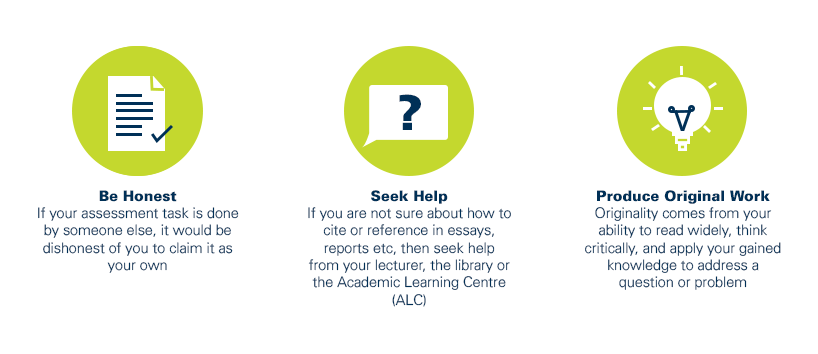
As a CQUniversity student you are expected to act honestly in all aspects of your academic work.
Any assessable work undertaken or submitted for review or assessment must be your own work. Assessable work is any type of work you do to meet the assessment requirements in the unit, including draft work submitted for review and feedback and final work to be assessed.
When you use the ideas, words or data of others in your assessment, you must thoroughly and clearly acknowledge the source of this information by using the correct referencing style for your unit. Using others’ work without proper acknowledgement may be considered a form of intellectual dishonesty.
Participating honestly, respectfully, responsibly, and fairly in your university study ensures the CQUniversity qualification you earn will be valued as a true indication of your individual academic achievement and will continue to receive the respect and recognition it deserves.
As a student, you are responsible for reading and following CQUniversity’s policies, including the Student Academic Integrity Policy and Procedure. This policy sets out CQUniversity’s expectations of you to act with integrity, examples of academic integrity breaches to avoid, the processes used to address alleged breaches of academic integrity, and potential penalties.
What is a breach of academic integrity?
A breach of academic integrity includes but is not limited to plagiarism, self-plagiarism, collusion, cheating, contract cheating, and academic misconduct. The Student Academic Integrity Policy and Procedure defines what these terms mean and gives examples.
Why is academic integrity important?
A breach of academic integrity may result in one or more penalties, including suspension or even expulsion from the University. It can also have negative implications for student visas and future enrolment at CQUniversity or elsewhere. Students who engage in contract cheating also risk being blackmailed by contract cheating services.
Where can I get assistance?
For academic advice and guidance, the Academic Learning Centre (ALC) can support you in becoming confident in completing assessments with integrity and of high standard.
What can you do to act with integrity?