Overview
Both qualitative and quantitative research skills are highly sought after in many career paths. This unit builds upon Research Methods 1 (PSYC11012) to provide you with the knowledge and skills to conduct and appraise both qualitative and quantitative research in your university and/or professional careers in psychology. The unit will continue to build your skills in critiquing, designing, and analysing qualitative research. It will also further advance your skills related to designing quantitative research, including how to perform basic statistical analyses by hand and using industry-standard computer software. Students who are not confident in their mathematical abilities are encouraged to contact the Academic Learning Centre (ALC) to discuss 'refresher' options.
Details
Pre-requisites or Co-requisites
Pre-Requisite Completion of PSYC11012.
Important note: Students enrolled in a subsequent unit who failed their pre-requisite unit, should drop the subsequent unit before the census date or within 10 working days of Fail grade notification. Students who do not drop the unit in this timeframe cannot later drop the unit without academic and financial liability. See details in the Assessment Policy and Procedure (Higher Education Coursework).
Offerings For Term 2 - 2026
Attendance Requirements
All on-campus students are expected to attend scheduled classes - in some units, these classes are identified as a mandatory (pass/fail) component and attendance is compulsory. International students, on a student visa, must maintain a full time study load and meet both attendance and academic progress requirements in each study period (satisfactory attendance for International students is defined as maintaining at least an 80% attendance record).
Recommended Student Time Commitment
Each 6-credit Undergraduate unit at CQUniversity requires an overall time commitment of an average of 12.5 hours of study per week, making a total of 150 hours for the unit.
Class Timetable
Assessment Overview
Assessment Grading
This is a graded unit: your overall grade will be calculated from the marks or grades for each assessment task, based on the relative weightings shown in the table above. You must obtain an overall mark for the unit of at least 50%, or an overall grade of 'pass' in order to pass the unit. If any 'pass/fail' tasks are shown in the table above they must also be completed successfully ('pass' grade). You must also meet any minimum mark requirements specified for a particular assessment task, as detailed in the 'assessment task' section (note that in some instances, the minimum mark for a task may be greater than 50%). Consult the University's Grades and Results Policy for more details of interim results and final grades.
All University policies are available on the CQUniversity Policy site.
You may wish to view these policies:
- Grades and Results Policy
- Assessment Policy and Procedure (Higher Education Coursework)
- Review of Grade Procedure
- Student Academic Integrity Policy and Procedure
- Academic Progression Policy and Procedure
- Student Refund and Credit Balance Policy and Procedure
- Complaints Policy and Procedure
- Information and Communications Technology Acceptable Use Policy and Procedure
This list is not an exhaustive list of all University policies. The full list of University policies are available on the CQUniversity Policy site.
Feedback, Recommendations and Responses
Every unit is reviewed for enhancement each year. At the most recent review, the following staff and student feedback items were identified and recommendations were made.
Feedback from Qualitative SUTE data.
The content, resources, and teaching styles of lecturers were clear, engaging, and informative.
Teaching staff should aim to continue to provide a respectful, supportive, and authentic approach to teaching this unit.
Feedback from Qualitative SUTE data.
Communication about the expectations for, and relevancy of, Assessment 1 could be enhanced for clarity.
Highlight the relevance of the task in understanding the complex nature of qualitative research, and the key differences between qualitative and quantitative data visualisations. Review task instructions and ensuring that students are aware of the marking rubric and what is required from them to demonstrate their understanding of qualitative methodology.
Feedback from Staff reflection.
While students appear to enjoy learning about the conceptual underpinnings of the statistical applications covered in this unit, and demonstrating their understanding of this in Assessment 3, the long-term retention of this content may be limited due to its abstract nature.
Review the nature and requirements of Assessment 3, to encourage more student reflection on the concepts taught and possibly enhance long-term retention of the content.
- Compare and contrast qualitative and quantitative research approaches.
- Map a thematic analysis of qualitative research data.
- Calculate and report quantitative data in a professional format.
This unit addresses Foundational Competencies as specified by the Australian Psychology Accreditation Council (APAC). The unit specifically aligns to the following APAC graduate competencies:
1.1 Comprehend and apply a broad and coherent body of knowledge of psychology, with depth of understanding of underlying principles, theories and concepts in the discipline, using a scientific approach, including the following topics: i. the history and philosophy underpinning the science of psychology and the social, cultural, historical and professional influences on the practice of psychology; and xii. research methods and statistics.
1.2 Apply knowledge and skills of psychology in a manner that is reflexive, culturally appropriate and sensitive to the diversity of individuals.
1.3 Analyse and critique theory and research in the discipline of psychology and communicate these in written and oral formats.
1.4 Demonstrate an understanding of appropriate values and ethics in psychology.
1.6 Demonstrate self-directed pursuit of scholarly inquiry in psychology.
Alignment of Assessment Tasks to Learning Outcomes
| Assessment Tasks | Learning Outcomes | ||
|---|---|---|---|
| 1 | 2 | 3 | |
| 1 - Project (applied) - 10% | |||
| 2 - Poster Sessions - 30% | |||
| 3 - Portfolio - 60% | |||
Alignment of Graduate Attributes to Learning Outcomes
| Graduate Attributes | Learning Outcomes | ||
|---|---|---|---|
| 1 | 2 | 3 | |
| 1 - Communication | |||
| 2 - Problem Solving | |||
| 3 - Critical Thinking | |||
| 4 - Information Literacy | |||
| 5 - Team Work | |||
| 6 - Information Technology Competence | |||
| 7 - Cross Cultural Competence | |||
| 8 - Ethical practice | |||
| 9 - Social Innovation | |||
| 10 - First Nations Knowledges | |||
| 11 - Aboriginal and Torres Strait Islander Cultures | |||
Textbooks
Successful qualitative research: A practical guide for beginners
- Edition: 1 (2013)
- Authors: Braun, V., & Clarke, V.
- Sage Publishing
- ISBN: 9781847875822
You can elect to purchase the softcover, hardcover, or electronic version of this textbook.
Publication Manual of the American Psychological Association
- Edition: 7 (2020)
- Authors: American Psychological Association
- ISBN: 9781433832161
This text may help you with your reporting of statistical information.
You may also use the information provided in the lectures and online APA-style blog (e.g., https://apastyle.apa.org/instructional-aids/numbers-statistics-guide.pdf)
Additional Textbook Information
For the quantitative component of this unit, students will need to access a computer statistical software, capable of
running simple regression and a one-way ANOVA (with follow-up tests) analyses.
To keep costs low, teaching staff will demonstrate these analyses using the freeware, Jamovi, available for download
here: www.jamovi.org/download.html
If you prefer, you may elect to use / purchase an alternative software program that is able to run these analyses, such as
IBM® SPSS® Statistics (IBM SPSS Software).
Please note, the Braun and Clarke (2013) textbook will support your learning of the qualitative component of the unit.
Free readings to support your learning of the quantitative content will be provided via the eReading List on the unit's
Moodle page.
IT Resources
- CQUniversity Student Email
- Internet
- Unit Website (Moodle)
- Jamovi (free statistics analysis program) or other statistics software
All submissions for this unit must use the referencing style: American Psychological Association 7th Edition (APA 7th edition)
For further information, see the Assessment Tasks.
l.lole@cqu.edu.au
Week 1
Begin Date: 13 Jul 2026Module/Topic
Introduction to Qualitative Research A
Chapter
Braun & Clarke (2013)
- Chapter 8: Moving towards analysis
Events and Submissions/Topic
Week 2
Begin Date: 20 Jul 2026Module/Topic
Introduction to Qualitative Research B
Chapter
Braun & Clarke (2013)
- Chapter 12: Quality criteria and techniques for qualitative research
Events and Submissions/Topic
Week 3
Begin Date: 27 Jul 2026Module/Topic
Scale Development and Scales of Measurement
Central Tendency and Variance
Reporting Results
Chapter
Burton et al. (2018)
- Chapter 3: Measurement and Validity
Cote et al. (2021)
- Chapter 3: Measures of Central Tendency and Spread
APA Manual (2020)
- Chapter 6: The Mechanics of Style
Events and Submissions/Topic
Week 4
Begin Date: 03 Aug 2026Module/Topic
z-Scores, Probability, and Percentiles
Hypothesis Testing
Chapter
Cote et al. (2021)
- Chapter 4: z-Scores and the Standard Normal Distribution
- Chapter 5: Probability
- Chapter 6: Sampling Distributions
- Chapter 7: Introduction to Hypothesis Testing
Events and Submissions/Topic
Week 5
Begin Date: 10 Aug 2026Module/Topic
Chi-square
Chapter
Cote et al. (2021)
- Chapter 14: Chi-square
Events and Submissions/Topic
Week 6
Begin Date: 17 Aug 2026Module/Topic
Correlation
Chapter
Cote et al. (2021)
- Chapter 12: Correlations
Events and Submissions/Topic
Vacation Week
Begin Date: 24 Aug 2026Module/Topic
Chapter
Events and Submissions/Topic
Week 7
Begin Date: 31 Aug 2026Module/Topic
Unrelated samples t-test
Chapter
Cote et al. (2021)
- Chapter 8: Introduction to t-tests
- Chapter 10: Independent Samples
Events and Submissions/Topic
Week 8
Begin Date: 07 Sep 2026Module/Topic
Related samples t-test
Chapter
Cote et al. (2021)
- Chapter 9: Repeated Measures
Events and Submissions/Topic
Week 9
Begin Date: 14 Sep 2026Module/Topic
Regression
Chapter
Cote et al. (2021)
- Chapter 13: Linear Regression
Events and Submissions/Topic
Calculation Portfolio #2 Due Week 9 Friday (18 Sept 2026) 11:59 pm AEST
Week 10
Begin Date: 21 Sep 2026Module/Topic
One-way Independent Groups ANOVA
Chapter
Cote et al. (2021)
- Chapter 11: Analysis of Variance
Events and Submissions/Topic
Week 11
Begin Date: 28 Sep 2026Module/Topic
Qualitative Project Design A
Chapter
Braun & Clarke (2013)
- Chapter 4: Interactive data collection 1: interviews
- Chapter 5: Interactive data collection 2: focus groups
- Chapter 6: Textual data collection: surveys, stories, diaries and secondary sources
- Chapter 7: Preparing audio data for analysis: transcription
Events and Submissions/Topic
Calculation Portfolio #3 Due Week 11 Friday (2 Oct 2026) 11:59 pm AEST
Week 12
Begin Date: 05 Oct 2026Module/Topic
Qualitative Project Design B
Chapter
Braun & Clarke (2013)
- Chapter 3: Planning and designing qualitative research
- Chapter 4: Interactive data collection 1: interviews
- Chapter 5: Interactive data collection 2: focus groups
- Chapter 6: Textual data collection: surveys, stories, diaries and secondary sources
Events and Submissions/Topic
Exam Week
Begin Date: 12 Oct 2026Module/Topic
Chapter
Events and Submissions/Topic
Vacation/Exam Week
Begin Date: 19 Oct 2026Module/Topic
Chapter
Events and Submissions/Topic
The qualitative component of the unit will be taught by Dr Paul Duckett in Weeks 1, 2, 11, and 12.
The quantitative component of the unit will be taught by Dr Lisa Lole in Weeks 3-10, inclusive.
Students will be required to purchase a textbook to support their learning of the qualitative content.
Readings to support students' learning of the quantitative content will be provided for free. These will be available on the eReading List that can be accessed via on the unit's Moodle page.
To successfully complete Assessment 3 for this unit, students will be required to have access to a statistical software program. They may elect to use a freeware - teaching staff will demonstrate the use of a program called Jamovi - or purchase a license for an industry-standard software package, such as IBM® SPSS® Statistics (IBM SPSS Software) or similar program.
1 Poster Sessions
You will be given a transcript taken from an interview. The transcript has been thematically analysed by psychology staff. You will see their notes, their coding, and the themes that they have developed from the transcript.
Your task is to present a poster that shows off those themes in a way that provides a useful and novel way of thinking about the topic that was discussed in the interview (i.e., your task is not to analyse or interpret the meaning of the data or results).
You will then write a short commentary on how your representation of the data (the themes) differs from the most common ways of representing quantitative data in a figure.
Level of GenAI use allowed
Level 3: You may use Al to assist with specific tasks such as drafting text, refining and evaluating your work. You must critically evaluate and modify any Al-generated content you use.
Week 4 Friday (7 Aug 2026) 11:59 pm AEST
Please complete your non-linear map assessment using a word processing program (e.g., Microsoft Word). You must upload your submission to Moodle in .doc or .docx format by the specified due date and time. Please note that only Microsoft Word files will be accepted.
Marks and feedback will be made available in Moodle approximately 2-3 weeks from the due date.
*** PLEASE NOTE: You must pass this assessment to pass the unit.***
*** A minimum mark of 15 out of a total 30 possible marks on this assessment is required to pass the unit. ***
MARKS
This task assesses your ability to represent qualitative data and communicate how it differs from quantitative research. You will be given an interview transcript that has already undergone thematic analysis, including coded data and identified themes. Your role is to create a non-linear visual poster that meaningfully maps these themes, showing how they connect to form a conceptual understanding of the topic. You will also provide a brief commentary comparing qualitative and quantitative approaches, particularly in how their findings are presented.
Assessment 1 will each be graded out of 100, then converted to a mark out of 30.
Marks will be allocated according to the following criteria:
- Visualisation of qualitative analysis [20 marks]: Produces a non-linear thematic map that effectively captures the meaning, relationships, and interpretive depth of qualitative research through appropriate imagery and structure.
- Comparison of qualitative and quantitative research [40 marks]: Provides a clear written summary outlining key differences, between qualitative and qualitative research.
- Contextual reflection [40 marks]: Reflects on the creation of the visualisation to show your understanding of how qualitative representation differs from quantitative approaches, particularly in terms of interpretation, complexity, and non-linear thinking.
WORD LIMIT
Your submission should be no more than 300 words (exclusive of any words contained in your illustration/graphic/figure but inclusive of any text used in your headings). Any words over that limit will not be read or assessed by your marker. See the Psychology Word Count Information on Moodle for a rationale for this type of word limit restriction.
USE OF GENERATIVE AI
For this assessment, you may elect to use Generative AI to help you:
- Understand the different ways the concepts are discussed, as well as finding and understanding background literature and resources related to Big Q qualitative analysis, and the differences between Big Q qualitative methods and quantitative methods.
- Create individual images that you can use to represent themes in your thematic map.
- Check the grammar, punctuation, and syntax of your written work.
- Enhance the vocabulary of your writing and submitted assessment.
- Manage the word count of the assessment.
You are not permitted to use Generative AI technology to:
- Generate your final thematic map.
- Generate the final text for the written component.
- Compare and contrast qualitative and quantitative research approaches.
- Map a thematic analysis of qualitative research data.
2 Project (applied)
Qualitative data is often used to guide the development of quantitative research questionnaires. For instance, the generalisability of themes identified from qualitative interviews with a few individuals can be tested using quantitative tools that survey a larger proportion of the population.
For this task, you will be provided with an interview transcript and a research question. You are required to read the transcript and familiarise yourself with the extracted themes, then develop content that is suitable for quantitative data collection. You will also demonstrate your ability to reflect upon the development process and the efficacy of your constructed survey items.
Accordingly, your submission will include the following components:
- The construction of a main survey item that could be used to quantitatively measure participants’ experiences of a transcript theme. The item should be informed by design principles, relevant to the target audience, and comprised of appropriately aligned instructions, question, and response options.
- A reflection that provides insight into: a) The factors you took into consideration when designing the main survey item and why this item is likely to be effective in measuring the construct of interest, b) contextual factors that may impact responses to the main survey item, and an example of a suitable follow-up survey item that may be used to provide such context, reduce misinterpretation, and/or improve the understanding of your main survey item.
Level of GenAI use allowed
Level 3: You may use Al to assist with specific tasks such as drafting text, refining and evaluating your work. You must critically evaluate and modify any Al-generated content you use.
Week 6 Friday (21 Aug 2026) 11:59 pm AEST
Please complete your survey creation assessment using a document processer (e.g., MS Word) then upload your submission to Moodle in .doc or .docx format by the due time/date.
Marks and feedback will be made available in Moodle approximately 2-3 weeks from the due date.
Assessment 2 will be graded out of 100, then converted to a mark out of 10.
Marks for this assessment will be allocated according to the following criteria:
- Creation of a survey item that could be used to measure a relevant construct from the provided transcript. [10 marks]
- The main survey item that is created is clear, in a format that produces easily quantifiable responses, and provides appropriate numerical information that could be entered into a statistical software package. [10 marks]
- The instructions, question wording, and response options of the main survey item are seamlessly aligned. [10 marks]
- The language used for the survey items are very clear, appropriate for the target audience, and neutral (i.e., not leading). [10 marks]
- Construction of a main survey item that is applicable to the entire segment of the target population, including people who have diverse, valenced experiences and those who are unsure or have no/mixed experience/s of the construct being measured. [15 marks]
- Provision of a written reflection that provides a detailed, yet concise, critical, and insightful rationale that describes the design principles that were considered when constructing the main survey item and the features that make it consummate for measuring the construct of interest among the target audience (e.g., language used, the number and nature of response options, etc.). [20 marks]
- Suggestions about how responses to the main survey item may be impacted by one or more contextual factors, and the provision of an effective illustrative example of a follow-up item that could be used to provide such context. [25 marks]
A detailed marking rubric, that breaks down of the requirements and marks allocated to each component of the assessment, is available on the 'Assessment 2' tab of the Moodle page for the unit.
WORD LIMIT
400 words for the reflection component.
USE OF GENERATIVE AI
For this assessment, you may elect to use Generative AI to help you:
- Understand the concepts discussed, as well as finding and understanding background literature and resources related to the topic.
- Brainstorm ideas for your responses.
- Develop the structure of your responses.
- Check the grammar, punctuation, and syntax of your written work.
- Enhance the vocabulary of your writing and submitted assessment.
- Manage the word count of the assessment.
You are not permitted to use Generative AI technology to:
- Generate your final responses.
- Paraphrase the responses of other students.
- Compare and contrast qualitative and quantitative research approaches.
3 Portfolio
You will be provided with a dataset that contains survey data collected from first-year psychology students.
The aim of this assessment is to provide you with an opportunity to work with real-life data and an understanding of how statistical analysis are performed and presented.
You will be required to complete three separate Calculation Portfolio tasks, each worth 20% of your final grade.
For each of the three Calculation Portfolio tasks that comprise this assessment, you will select two variables from the survey dataset that are suitable for performing one of the statistical calculation options for that task:
- Calculation Portfolio Task #1 will require you to choose to perform either a chi-square test or correlation test.
- Calculation Portfolio Task #2 will require you to choose to perform either an unrelated samples t-test or related samples t-test.
- Calculation Portfolio Task #3 will require you to choose to perform either a regression analysis or one-way independent groups ANOVA test.
In each submission, you will:
- describe the nature of your variables,
- create a hypothesis for your analysis,
- correctly import the data from Excel to a statistical analysis computer program (such as Jamovi or similar software),
- perform appropriate assumptions testing and statistical analyses with computer software (and provide evidence of this with screenshots of your output),
- write-up your results in Americal Psychological Association (APA) style,
- provide new data for the selected variables (e.g., your own data) and compare these to the findings of your group analysis, and
- provide suggestions for how findings of the analysis could be extended, or the study design improved, in future research.
WORD LIMIT
The word limit for each Calculation Portfolio Task is 1000 words, not including the information in your Appendix.
Level of GenAI use allowed
Level 2: You may use AI for planning, idea development and research. Your final submission should show how you have developed and refined these ideas.
Week 7 Friday (4 Sept 2026) 11:59 pm AEST
Portfolio Task #1 is due 11:59 pm (AEST) on 04/09/2026; Portfolio Task #2 is due 11:59 pm (AEST) on 18/09/2026; Portfolio Task #3 is due 11:59 pm (AEST) on 02/10/2026.
Week 9 Friday (18 Sept 2026)
Feedback and marks will be returned approximately 2-3 weeks from the due date.
*** PLEASE NOTE: You must pass this assessment to pass the unit. ***
*** A minimum mark of 30 out of a total 60 possible marks, across all calculation portfolio tasks, is required to pass the unit. ***
MARKS
Each Calculation Portfolio Task will each be graded out of 100, then converted to a mark out of 20.
Marks will be allocated, according to the following criteria:
- Formulation of a clear and scientifically-meaningful hypothesis and selection of variables from the dataset that are relevant to the statistical test. [15 marks]
- Conduct of assumption testing and calculation of descriptive and inferential statistics. [10 marks]
- Provision of an appendix that includes a screenshot of the computer software output of your statistical analysis for the group data [25 marks]
- Statistical results interpreted correctly and reported in APA format. [10 marks]
- Comment on how one's own individual data compare and contrast to group-level statistical data. [20 marks]
- Suggest how findings could be extended, or the study design improved, in future research. [20 marks]
Please see example dataset and submissions under the 'Assessment 3' tab of the Moodle page for the unit for further details on what kind of answers are expected on these tasks.
A detailed marking rubric, that breaks down of the requirements and marks allocated to each component of the computer tasks, is available on the 'Assessment 3' tab of the Moodle page for the unit.
WORD LIMIT
The word limit for each Calculation Portfolio Task is 1000 words, not including the information in your Appendix.
USE OF GENERATIVE AI
For this assessment, you may elect to use Generative AI to help you:
- Understand the concepts discussed, as well as finding and understanding background literature and resources related to the topic.
- Develop the structure of your responses.
- Check the grammar, punctuation, and syntax of your written work.
- Manage the word count of your submission.
- Get guidance on paraphrasing your work.
You are not permitted to use Generative AI technology to:
· Perform calculations and report the results of these in your submitted work.
· Double-check the answers of your calculations.
- Calculate and report quantitative data in a professional format.
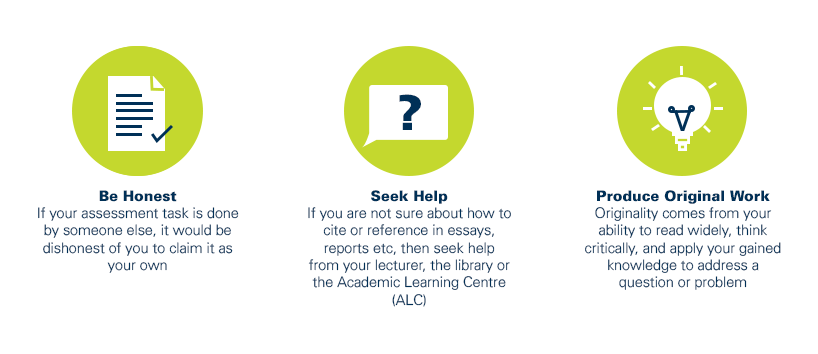
As a CQUniversity student you are expected to act honestly in all aspects of your academic work.
Any assessable work undertaken or submitted for review or assessment must be your own work. Assessable work is any type of work you do to meet the assessment requirements in the unit, including draft work submitted for review and feedback and final work to be assessed.
When you use the ideas, words or data of others in your assessment, you must thoroughly and clearly acknowledge the source of this information by using the correct referencing style for your unit. Using others’ work without proper acknowledgement may be considered a form of intellectual dishonesty.
Participating honestly, respectfully, responsibly, and fairly in your university study ensures the CQUniversity qualification you earn will be valued as a true indication of your individual academic achievement and will continue to receive the respect and recognition it deserves.
As a student, you are responsible for reading and following CQUniversity’s policies, including the Student Academic Integrity Policy and Procedure. This policy sets out CQUniversity’s expectations of you to act with integrity, examples of academic integrity breaches to avoid, the processes used to address alleged breaches of academic integrity, and potential penalties.
What is a breach of academic integrity?
A breach of academic integrity includes but is not limited to plagiarism, self-plagiarism, collusion, cheating, contract cheating, and academic misconduct. The Student Academic Integrity Policy and Procedure defines what these terms mean and gives examples.
Why is academic integrity important?
A breach of academic integrity may result in one or more penalties, including suspension or even expulsion from the University. It can also have negative implications for student visas and future enrolment at CQUniversity or elsewhere. Students who engage in contract cheating also risk being blackmailed by contract cheating services.
Where can I get assistance?
For academic advice and guidance, the Academic Learning Centre (ALC) can support you in becoming confident in completing assessments with integrity and of high standard.
What can you do to act with integrity?