Overview
This capstone unit provides you with the opportunity to reflect upon what you have learned from your undergraduate psychology degree, and to apply your discipline-specific knowledge within a professional context. There will be a focus on the transition into the workforce or further study, including the opportunity to review and finalise your professional ePortfolio, and to reflect on your values and current competencies as a future professional in the field of psychology. You will work in a small team to complete an applied major group project to address a real-world problem faced by an external organisation. Working as scientist-practitioners, your project (such as a research proposal, grant application, literature review, intervention, or evaluation), will be based on contemporary research evidence and consideration of cultural and ethical issues, and will highlight your discipline-specific and professional knowledge and skills.
Details
Pre-requisites or Co-requisites
96 credit points including PSYC13015 in CC43.
Important note: Students enrolled in a subsequent unit who failed their pre-requisite unit, should drop the subsequent unit before the census date or within 10 working days of Fail grade notification. Students who do not drop the unit in this timeframe cannot later drop the unit without academic and financial liability. See details in the Assessment Policy and Procedure (Higher Education Coursework).
Offerings For Term 2 - 2026
Attendance Requirements
All on-campus students are expected to attend scheduled classes - in some units, these classes are identified as a mandatory (pass/fail) component and attendance is compulsory. International students, on a student visa, must maintain a full time study load and meet both attendance and academic progress requirements in each study period (satisfactory attendance for International students is defined as maintaining at least an 80% attendance record).
Recommended Student Time Commitment
Each 6-credit Undergraduate unit at CQUniversity requires an overall time commitment of an average of 12.5 hours of study per week, making a total of 150 hours for the unit.
Class Timetable
Assessment Overview
Assessment Grading
This is a pass/fail (non-graded) unit. To pass the unit, you must pass all of the individual assessment tasks shown in the table above.
All University policies are available on the CQUniversity Policy site.
You may wish to view these policies:
- Grades and Results Policy
- Assessment Policy and Procedure (Higher Education Coursework)
- Review of Grade Procedure
- Student Academic Integrity Policy and Procedure
- Academic Progression Policy and Procedure
- Student Refund and Credit Balance Policy and Procedure
- Complaints Policy and Procedure
- Information and Communications Technology Acceptable Use Policy and Procedure
This list is not an exhaustive list of all University policies. The full list of University policies are available on the CQUniversity Policy site.
Feedback, Recommendations and Responses
Every unit is reviewed for enhancement each year. At the most recent review, the following staff and student feedback items were identified and recommendations were made.
Feedback from Student Emails
Some students reported not wanting their LinkedIn profiles to be public.
Provide students with some alternative options to activate and deactivate LinkedIn such that the Unit Coordinator has a short opening to mark the assessment and communicate with students regarding the marking opportunity.
Feedback from SUTE Unit Comments
Some students suggested they would like more interaction with their group members.
Provide groups with a regular check in time throughout the term, to ensure there is greater interaction within the groups.
Feedback from Student Communication
Some students reported really enjoying working with the industry partners on real world scenarios
It is recommended that the unit continues enable students to engage with industry for future group projects.
- Demonstrate career readiness and insight into the skills, knowledge and personal attributes necessary to meet the standards of performance and practice expected in the workplace.
- Develop creative solutions to issues faced in the workplace.
- Critically reflect on the learning associated with the capstone project and identify further areas of learning and professional development.
- Identify and display interpersonal skills and teamwork to a level commensurate with a professional workplace.
In this unit, students will achieve all of the graduate competencies as outlined by the Australian Psychological Accreditation Council (APAC) (https://www.psychologycouncil.org.au/standards). These include:
- Competency 1.1: Comprehend and apply a broad and coherent body of knowledge of psychology, with a depth of understanding of underlying principles, theories and concepts in the discipline, using a scientific approach.
- Competency 1.2: Apply knowledge and skills of psychology in a manner that is reflexive, culturally appropriate and sensitive to the diversity of individuals.
- Competency 1.3: Analyse and critique theory and research in the discipline of psychology and communicate these in written and oral formats
- Competency 1.4: Demonstrate an understanding of appropriate values and ethics in psychology
- Competency 1.5: Demonstrate interpersonal skills and teamwork
- Competency 1.6: Demonstrate self-directed pursuit of scholarly inquiry in psychology.
Alignment of Assessment Tasks to Learning Outcomes
| Assessment Tasks | Learning Outcomes | |||
|---|---|---|---|---|
| 1 | 2 | 3 | 4 | |
| 1 - Group Work - 0% | ||||
| 2 - Portfolio - 0% | ||||
Alignment of Graduate Attributes to Learning Outcomes
| Graduate Attributes | Learning Outcomes | |||
|---|---|---|---|---|
| 1 | 2 | 3 | 4 | |
| 1 - Communication | ||||
| 2 - Problem Solving | ||||
| 3 - Critical Thinking | ||||
| 4 - Information Literacy | ||||
| 5 - Team Work | ||||
| 6 - Information Technology Competence | ||||
| 7 - Cross Cultural Competence | ||||
| 8 - Ethical practice | ||||
| 9 - Social Innovation | ||||
| 10 - First Nations Knowledges | ||||
| 11 - Aboriginal and Torres Strait Islander Cultures | ||||
Textbooks
There are no required textbooks.
IT Resources
- CQUniversity Student Email
- Internet
- Unit Website (Moodle)
- Zoom account (Free)
All submissions for this unit must use the referencing style: American Psychological Association 7th Edition (APA 7th edition)
For further information, see the Assessment Tasks.
b.p.smith@cqu.edu.au
Week 1
Begin Date: 13 Jul 2026Module/Topic
The capstone unit
(Introduction, the scientist-practitioner model, reflective practice, and research pitches).
Chapter
Refer to Moodle website for required reading material and activities.
Events and Submissions/Topic
Week 2
Begin Date: 20 Jul 2026Module/Topic
Working effectively in groups
Chapter
Refer to Moodle website for required reading material and activities.
Events and Submissions/Topic
Week 3
Begin Date: 27 Jul 2026Module/Topic
No workshop this week. Focus on your capstone group project.
Chapter
Events and Submissions/Topic
Week 4
Begin Date: 03 Aug 2026Module/Topic
Career pathways 1: Preparing for the job market
Chapter
Refer to Moodle website for required reading material and activities.
Events and Submissions/Topic
Week 5
Begin Date: 10 Aug 2026Module/Topic
No workshop this week. Focus on your capstone group project.
Chapter
Events and Submissions/Topic
Capstone Project (Part 1A) Due: Monday (10 August 2026) 09:00 am AEST
Week 6
Begin Date: 17 Aug 2026Module/Topic
Delivering the perfect pitch
Chapter
Refer to Moodle website for required reading material and activities.
Events and Submissions/Topic
Vacation Week
Begin Date: 24 Aug 2026Module/Topic
Chapter
Events and Submissions/Topic
Week 7
Begin Date: 31 Aug 2026Module/Topic
No workshop this week. Focus on your capstone group project.
Chapter
Events and Submissions/Topic
Week 8
Begin Date: 07 Sep 2026Module/Topic
Working with clients
Chapter
Refer to Moodle website for required reading material and activities.
Events and Submissions/Topic
Week 9
Begin Date: 14 Sep 2026Module/Topic
No workshop this week. Focus on your capstone group project.
Chapter
Events and Submissions/Topic
Week 10
Begin Date: 21 Sep 2026Module/Topic
Career pathways 2: Postgraduate pathways (including Q and A with the respective Heads of Courses)
Chapter
Refer to Moodle website for required reading material and activities.
Events and Submissions/Topic
Week 11
Begin Date: 28 Sep 2026Module/Topic
No workshop this week. Focus on your capstone group project.
Chapter
Events and Submissions/Topic
Week 12
Begin Date: 05 Oct 2026Module/Topic
The 'pitch' (live Zoom group presentations to partner organisations).
Chapter
No readings.
Events and Submissions/Topic
Capstone Project (Part 1B) Due: Thursday (8 October 2026) 09.00am- 17:00pm (AEST).
All students need to make themselves available to present their project pitch live. The schedule of presentations will be published on Moodle during the term.
Exam Week
Begin Date: 12 Oct 2026Module/Topic
Chapter
Events and Submissions/Topic
Capstone Project (Parts 1C and 1D) Due: Wednesday (14 October 2026) 09:00 am AEST
Vacation/Exam Week
Begin Date: 19 Oct 2026Module/Topic
Chapter
Events and Submissions/Topic
Be prepared for group work
A major component of this unit involves working in a small group. Active participation in the group task is expected from week 3 to week 12. Your contribution to the group task and your ability to work within the group will be assessed by your peers and the unit coordinator. Please ensure you are prepared for this, and actively communicate and engage with your group members throughout the term.
Workshops are delivered fortnightly. The 'off weeks' are expected to be used for groups to get together and work on the group project. Attending workshops is not compulsory (except week 12), however, participation from all students is greatly encouraged to maximise the learning for all. Workshops will be recorded, and videos will be posted on Moodle.
Please ensure that you are available to attend in week 12. This is when you and your group will present live (via Zoom) to your partner organisation. A schedule with the exact presentation time will be released during the term.
Grade Point Average (GPA)
This is a core unit for students who commenced CC43 on/after Term 1, 2022. For those who commenced before then, this unit will count as a Level 3 psychology elective unit.
Please be aware that this unit is assessed on a Pass/Fail basis. The focus of this unit is on the applied experience rather than a formal grade. As such, this unit does not count towards your GPA. Please note that completing this unit will not negatively impact your GPA calculation used for entry into honours (4th year) courses.
1 Group Work
Please note that this is a 'must pass' assessment item. That is, you must meet the minimum grade for this assessment piece to pass the unit overall.
This task involves a consultancy-based work-integrated learning (WIL) project. As part of a small group, you will collaborate to address a real-world problem presented by an industry partner. Your team will develop a tailored solution and deliver a professional pitch to the industry partner, demonstrating how your solution effectively meets their, or their clients needs. There are four elements to this assessment task (Parts 1A to 1D), as outlined below.
* Parts 1A and 1B are to be submitted as a group. Parts 1C and 1D are to be submitted individually.
PART 1A- Group contract*- Due by Week 5, Monday 10 August, 09.00am AEST
Groups work best when all members understand and agree to expectations. As such, groups will be required to develop and agree to a group contract (often referred to as a Memorandum of Understanding [MoU] or Team Charter) in the early stages of their capstone project. The group contract will need to clearly articulate relevant aspects such as the aim of the project, the role of members, a communication plan, a schedule of meetings, a code of conduct (e.g., plagiarism), and timelines/deadlines for completion. A basic MOU template is provided in Moodle but groups are encouraged to develop one that best reflects their group (there are many exemplars online).
The 72-hour grace period applies to this task. Submissions later than 72 hours must obtain an approved extension or will be subject to a 5% per day penalty (calculated after the grace period).
PART 1B- Group presentation*- To be presented live (via Zoom) in the workshop session in Week 12 (Thursday 8 October, at a scheduled session between 9am and 5pm AEST).
A series of real-world problems will be made available. You must choose one of these as the focus of your capstone project. These problems will be proposed by an external partner (e.g. local or state government department, not-for-profit organisation, research group, community group, mental health provider), and represent a significant issue currently faced in the community. Working in small groups as scientist-practitioners, you will be required to present an evidence-based feasible solution to the problem. This project represents an opportunity to practice your group work skills and apply your theoretical understanding of human behaviour to practical ‘real life’ applications that you will likely face in the workplace.
Groups of approximately 4 will be allocated by the unit coordinator based on the topic selected. Topics will be made available in week 1, and groups will be allocated by the end of week 2. Active participation in the group task is expected from week 3 to week 12. Your contribution to the group task and your ability to work within the group will be assessed by your peers (see Assessment Part 1C). You will be given a chance to reflect on your experience in Assessment Part 1D. Please ensure you are prepared for group work, and actively communicate and engage with your group members throughout the term.
The outcome should resemble a research proposal or pitch, detailing an innovative way to address the problem. For example, to design an evaluation or intervention that the partner organisation might be able to implement. Solutions must be evidenced-based and feasible. The proposal must be presented as if you are either (a) employees of the partner organisation presenting to management who have tasked you with finding a solution to this problem, or (b) as external providers seeking to win a grant or tender to carry out this work that is being offered by the partner organisation.
Your group’s pitch will be presented live (in real-time) via Zoom in week 12. The partner organisation will be present to receive the pitch and provide feedback. Presenting in person and confidently articulating your ideas and responding to questions represent critical skills required for working in many organisations, and this project seeks to emulate this environment.
The format of the presentation is flexible and will largely reflect the nature of the problem and solution. Some suggested parts of the pitch might include a background/literature review on the issue, a project logic, a service model, an evaluation plan, a timeline, and a budget. The process used to arrive at the solution may also form an important part of the pitch. You are encouraged to use visual aids (e.g. Powerpoint slides, video clips) and handouts.
Presentations should be around 10-12 minutes with an additional 8 min for questions from the audience (presenters will be cut off at 13 minutes). Each group member is required to present a component of the presentation. The week 12 workshop will be a conference-style event, so you will need to plan your schedules to be available to attend (a schedule of presentations will be developed later in the term). You will need to seek approval and make arrangements with the Unit Coordinator if one or more of the group is not able to be in attendance. In this instance, available group members should be present for the question time component of the presentation. Formal feedback relating to the presentation will be given by the unit coordinator and informal feedback from the organisational partner.
You will be working closely with the partner organisation throughout the term. Depending on the availability of the partner organisations, there will be at least three available ‘touch points’ across the term. These represent an opportunity for groups to engage with representatives from the organisation to ask questions and obtain feedback before the delivery of the final product. The unit coordinator will also be available to provide feedback to groups on their pitch before they are delivered in week 12.
Level of GenAI use allowed:
Level 4: Full AI: You may use AI extensively throughout your work either as you wish, or as specifically directed in your assessment. Focus on directing AI to achieve your goals while demonstrating your critical thinking.
The 72-hour grace period does not apply to this assessment.
PART 1C- Self and peer evaluation of group work- Due by Week 13, Monday 14 October, 09.00am AEST
Your ability to work in a group setting (communication, collaboration, commitment) will be assessed by yourself and your peers (group members). This will enable your group work skills to be evaluated and help ensure accountability in relation to your role and contribution to the group task. This feedback will be used to evaluate teamwork skills and the eligibility of group members to pass the unit. As such, it is important to be as fair and honest as possible in your assessment.
An evaluation form assessing six criteria will be made available on Moodle for completing this task.
Level of GenAI use allowed:
Level 1: No AI: The use of AI is not applicable for this task. The task involves providing yourself and your group members a rating (score) on multiple criteria.
The 72-hour grace period applies to this task. Submissions later than 72 hours must obtain an approved extension or will be subject to a 5% per day penalty (calculated after the grace period).
PART 1D- Personal reflection- Due by Week 13, Monday 14 October, 09.00am AEST
You will be required to write a brief reflection on your engagement and experience with the major group project, including your engagement with the project, team processes, engagement with industry representatives, broader professional issues, cultural safety, and how this experience has contributed to your own professional identity, values, and future employability goals.
Level of GenAI use allowed:
Level 3: AI Collaboration: You may use AI to assist with specific tasks such as drafting text, refining and evaluating your work. However, as much of this task involves personal reflection relating to the capstone project, ensure that the text retains your own voice, experiences, and insights. While you do not need to specify AI-generated content, you are responsible for ensuring accuracy, originality, and adherence to academic integrity guidelines, including critically evaluating and modifying any AI-generated content you use.
The 72-hour grace period applies to this task. Submissions later than 72 hours must obtain an approved extension or will be subject to a 5% per day penalty (calculated after the grace period).
Group submissions: Part 1A (group contract) is due week 5, Monday August 10, 09.00am AEST. Group presentation (1B) is due during the Week 12 workshop, Thursday October 8 between 09.00am and 17.00pm AEST (The 72-hour grace period does not apply to this assessment). Individual assessment items (parts 1C, and 1D) are due Wednesday October 14, 09.00am AEST
Grade and feedback to be returned to students within 2 weeks of the due date.
*Please note that Parts A and B will be given as a group grade. That is, all contributing members of the group will receive the same mark and feedback for the group contract and the group presentation.
Each part will be graded according to the criteria outlined below:
PART 1A- Group contract (20%)*
This component will be graded out of 20 marks. Groups must submit a group contract (in the form of an MoU or team charter) that addresses the following:
- Project goals and objectives (3 marks)
- The role of all group members (4 marks)
- A communication plan (e.g., mode of communication, a schedule of meetings, how issues and conflicts will be addressed) (4 marks)
- Project timelines/deadlines for completion (4 marks)
- Identification of risks, assumptions, and obstacles that may be encountered by both your group and the project, and how these might be mitigated (4 marks)
- Be agreed upon and signed by all members of the group (1 mark)
PART 1B- Group presentation (40%)*
This component will be graded out of 40 marks. Marks will be allocated according to the criteria outlined below.
- Structure and flow (8 marks)
- Content (20 marks)
- Communication and engagement style (6 marks)
- Collaboration (6 marks)
A more detailed marking rubric will be provided in Moodle. Informal feedback relating to the presentation will also be given to you from the partner organisation.
PART 1C- Self and peer evaluation of group work (15%)
This component will be graded out of 15 marks. Using the six criteria outlined below, you will evaluate each member of your group, as well as yourself, relating to group work and engagement in the group task. The unit coordinator will take the self and peer scores into account, and provide a weighted score. A more detailed evaluation form will be provided in Moodle.
Criteria
- Participation in developing ideas and planning project (2.5 marks).
- Willingness to discuss the ideas of others (2.5 marks).
- Cooperation with other group members (2.5 marks).
- Interest, engagement and enthusiasm in the project (2.5 marks).
- Participation in leading/facilitating discussion (2.5 marks).
- Quality of completed work (2.5 marks).
PART 1D- Personal reflection (25%)
This component will be graded out of 25 marks. Marks will be allocated according to the criteria outlined below. It is important that statements relating to experiences and opinions are supported with specific examples. For example, instead of saying, ‘Our group worked well together’, articulate and give examples showing how the group worked well.
Reflecting on the capstone project (9 marks)
Q1. Summarise the makeup of your group, the topic/issue selected and summarise the final pitch/product (e.g., what was the issue and the nature of your group's solution). (2 marks)
Q2. Do you believe your group delivered a solution that was ultimately useful to them? (provide a rationale to justify your response) (2 marks)
Q3. What were 3 things that contributed to the success of your group's pitch? (3 marks)
Q4. Provide an example where the capstone project showcased a skill you developed in your undergraduate degree. (2 marks)
Reflection on group work (8 marks)
Q5. Personal contribution: Describe your personal role in the group, interest and enthusiasm in the project, participation in leading and facilitating discussion, and opinion about the quality of the final product. Provide specific examples. (4 marks).
Q6. Assessment of team experience: Describe how well your group cooperated, communicated, and made decisions, how the group handled challenges, the benefits of group work, and the challenges of group work. Be sure to use specific examples. (4 marks).
Evidence of personal development (8 marks)
Q7. Articulate (using specific example/s) at least one new understanding or insight you have gained about yourself, and at least one new understanding about group work because of your capstone experience. (4 marks)
Q8. Discuss at least one thing you would do the same, and at least one thing you would do differently to improve your teamwork experience in the workplace (providing specific recommendations). (4 marks)
- Demonstrate career readiness and insight into the skills, knowledge and personal attributes necessary to meet the standards of performance and practice expected in the workplace.
- Develop creative solutions to issues faced in the workplace.
- Critically reflect on the learning associated with the capstone project and identify further areas of learning and professional development.
- Identify and display interpersonal skills and teamwork to a level commensurate with a professional workplace.
2 Portfolio
Please note that this is a 'must pass' assessment item. That is, you must meet the minimum grade for this assessment piece to pass the unit overall.
This assessment task requires you to develop a comprehensive, professional LinkedIn profile that showcases your knowledge, skills, values, and competencies as a psychology graduate. More than a static resume, your profile should reflect your evolving identity as an emerging professional in the field of psychology. It should tell a coherent and authentic story that connects your learning experiences, career aspirations, and core values.
This is also your opportunity to reflect on your journey as a psychology student and to present yourself as a capable, thoughtful, and work-ready graduate.
LinkedIn is the largest professional networking platform in the world. A well-developed, active profile enhances your visibility to employers, communicates your alignment with psychology graduate competencies (such as those defined by APAC), and helps you build a credible professional brand.
To pass this task, you must meet a set of clearly defined minimum requirements across several core areas. However, this should be viewed as more than just an assessment, but as that foundation of a living, career-ready portfolio that you can continue to use and grow after graduation.
Summary of the assessment goals:
- Demonstrate personal reflection and identity as a psychology graduate
- Showcase career aspirations, core values, and alignment with the profession
- Provide evidence of graduate capabilities and APAC competencies
- Create a professional online presence suitable for job-seeking and networking
- Build a visible personal brand and engage with professional networks
Privacy concerns:
There are several legitimate reasons why you may not want to have an online profile. In these cases, LinkedIn has privacy settings that allow you to control who can view your profile, including options that essentially hide your profile from the public or limit visibility to specific users. Alternatives, such as completing the task as a Word document, may be discussed with the unit coordinator.
Level of GenAI use allowed:
Level 3: AI Collaboration: You may use AI to support your work, such as idea generation and refinement, drafting, feedback, improving clarity, and enhancing the quality of your writing. However, as much of this task involves personal reflection, ensure that the text retains your own voice and insights. While you do not need to specify AI-generated content, you are responsible for ensuring accuracy, originality, and adherence to academic integrity guidelines, including critically evaluating and modifying any AI-generated content you use.
The 72-hour grace period applies to this task. Submissions later than 72 hours must obtain an approved extension or will be subject to a 5% per day penalty (calculated after the grace period).
Week 7 Monday (31 Aug 2026) 9:00 am AEST
Grade and feedback returned within 2 weeks of the due date.
Criteria 1: Profile essentials (15 marks)
Update your LinkedIn profile/page to include:
- Name (first, last), pronouns,
- A compelling ‘headline’ (or tagline) (e.g., "Psychology Graduate | Research Assistant | Mental Health Advocate")
- Current position (position and industry) (e.g., Undergraduate psychology student, CQUniversity)
- Education (school) (e.g. CQUniversity)
- Location (country, postcode, city)
- Contact info
- A clear professional profile photo (headshot)
- A relevant background/banner image
- Create a personalised URL (the one you will use when sharing your profile, and submitting)
Criteria 2: About you- Personal brand, career aspirations and core values (30 marks)
Criteria 2.1: Personal brand statement (15 marks)
In the ‘About’ section of your profile, write a biography/statement (total allowance of 2600 characters) that provides appropriate insight into
- who you are
- what you are currently doing
- what you have done or where you have come from
- why you are interested in psychology
- career you wish to pursue after graduation
Criteria 2.2: Values reflection (5 marks)
Do the free online values test https://personalvalu.es/ to find out your core values. Once you have completed the values test, reflect on how your employment aims match your core values. Include the values reflection within your personal brand statement (see Criteria 2.1).
Criteria 2.3: Skills (2 marks)
Still in the ‘About’ section, simply add 5 key skills (as individual items/tags) you want to be known for. These will be prominently displayed on your profile and can help recruiters find you.
Criteria 2.4: Professional experience (8 marks)
Under ‘Experience’ on your profile, add at least one experience by clicking on the + symbol and selecting ‘add position’. Provide details of a relevant experience related to your career goals. Include the profile headline, the title of the position, employment type, company/organisation, dates, and location.
In the ‘description’ of that experience (max 2000 characters/ up to 350 words allowed), detail what the role was/is, such things as skills and knowledge it provided you, with examples of major duties, success, and highlighting specific projects or tasks, and how this experience relates to your chosen area of interest.
Criteria 3: Reflection on skills and knowledge (22 marks)
Criteria 3.1: Details of degree (12 marks)
Under ‘Education’ on your profile, at the details of your current degree (e.g., Bachelor of Psychological Science, or equivalent) by clicking on the + symbol. Complete details for the School, the name of the degree, the field of study, and the start and end dates.
In the description field, write (max 1000 characters/ up to 200 words allowed):
- A short sentence summarising the course aims, and course learning outcomes.
- How successfully you have engaged with the degree, how you have acquired the graduate capabilities, and a description of your strengths and weaknesses.
Criteria 3.2: Course summary document (10 marks)
In the ‘Add education’ window used when entering the above details, there is an option at the end to add ‘Media’ files. You are required to create a Word document (or PDF) that details the degree name, code, links to the course handbook, provides the full course overview, and lists all the units that you completed in the degree. For each unit: list unit name, code, and write a one-paragraph summary of the key skills and learning outcomes (paraphrased).
Criteria 4: Evidence of APAC competencies (25 marks)
Upload at least five (5) pieces of academic work that highlight the skills and knowledge of a psychology graduate, as outlined in the APAC competencies for Level one. Include these in your LinkedIN profile as either a project (in ‘Projects’ section. Add to profile > recommended > Add projects) or in the ‘Featured’ section.
Complete the prompted information including Project name, description, skills, media (documents) outlined below.
5 marks will be allocated to each artefact.
Each project/artefact should include:
- The piece of work (e.g., Word document, video file or link to YouTube, Powerpoint)
- The project task/description
- A brief reflection about what you learned from the experience, and
- Why/how this task and learning is relevant to psychology in the workplace (that is, link the project/artefact to your skills).
Required pieces:
- Demonstration of your written communication skills on a topic related to psychology (e.g., essay)
- Demonstration of your oral communication skills (e.g., oral presentation, group presentation).
- A research report or similar demonstrating your knowledge and application of psychological research methods (e.g., research report)
- An example of when you have applied knowledge and skills of psychology in a manner that is reflexive, culturally appropriate and sensitive to the diversity of individuals
- Demonstrate interpersonal skills and teamwork (e.g., a product from a group task).
Criteria 5: Networking and engagement (8 marks)
In the ‘My Network’ area of your LinkedIn page, develop and demonstrate your ability to network professionally by:
- Connections- Connect with at least 4 people (e.g., classmates, group members, capstone partner, or teaching staff)
- Groups- Join at least 2 psychology-related group (e.g., APS, PsychXchange, CQU Psychology Alumni)
- Pages- follow at least 1 page (e.g., CQUniversity, a psychology industry-related organisation)
- Demonstrate career readiness and insight into the skills, knowledge and personal attributes necessary to meet the standards of performance and practice expected in the workplace.
- Develop creative solutions to issues faced in the workplace.
- Critically reflect on the learning associated with the capstone project and identify further areas of learning and professional development.
- Identify and display interpersonal skills and teamwork to a level commensurate with a professional workplace.
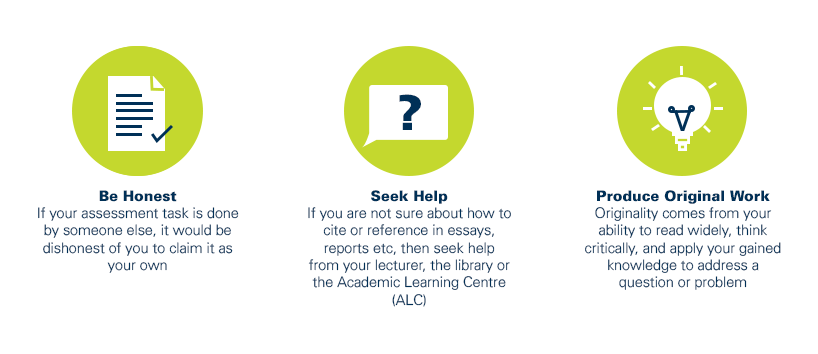
As a CQUniversity student you are expected to act honestly in all aspects of your academic work.
Any assessable work undertaken or submitted for review or assessment must be your own work. Assessable work is any type of work you do to meet the assessment requirements in the unit, including draft work submitted for review and feedback and final work to be assessed.
When you use the ideas, words or data of others in your assessment, you must thoroughly and clearly acknowledge the source of this information by using the correct referencing style for your unit. Using others’ work without proper acknowledgement may be considered a form of intellectual dishonesty.
Participating honestly, respectfully, responsibly, and fairly in your university study ensures the CQUniversity qualification you earn will be valued as a true indication of your individual academic achievement and will continue to receive the respect and recognition it deserves.
As a student, you are responsible for reading and following CQUniversity’s policies, including the Student Academic Integrity Policy and Procedure. This policy sets out CQUniversity’s expectations of you to act with integrity, examples of academic integrity breaches to avoid, the processes used to address alleged breaches of academic integrity, and potential penalties.
What is a breach of academic integrity?
A breach of academic integrity includes but is not limited to plagiarism, self-plagiarism, collusion, cheating, contract cheating, and academic misconduct. The Student Academic Integrity Policy and Procedure defines what these terms mean and gives examples.
Why is academic integrity important?
A breach of academic integrity may result in one or more penalties, including suspension or even expulsion from the University. It can also have negative implications for student visas and future enrolment at CQUniversity or elsewhere. Students who engage in contract cheating also risk being blackmailed by contract cheating services.
Where can I get assistance?
For academic advice and guidance, the Academic Learning Centre (ALC) can support you in becoming confident in completing assessments with integrity and of high standard.
What can you do to act with integrity?