Overview
Psychology Research Project A (PSYC14051) is the first of two units which will introduce you to the process of undertaking research in the discipline of psychology. Over the two units, you will independently undertake a scholarly investigation, under the supervision of a qualified supervisor within the psychology discipline. The purpose of the Psychology Research Project A unit is to provide you with the experience of proposing and planning an independent research project. The research question examined will be developed in consultation with your supervisor and will have either theoretical or applied significance in the psychology discipline. In Psychology Research Project A you will complete a research project proposal and an ethics application for that proposed project. Successful completion of this unit requires that Psychology Research Project A (PSYC14051) and Psychology Research Project B (PSYC14052) are undertaken in two consecutive University terms (e.g., Term 1 and Term 2, or Term 2 and Term 3).
Details
Pre-requisites or Co-requisites
Students must be enrolled in CC42 Bachelor of Psychological Science (Honours) . Pre- or co-requisite unit: PSYC14047 Advanced Data Analysis.
Important note: Students enrolled in a subsequent unit who failed their pre-requisite unit, should drop the subsequent unit before the census date or within 10 working days of Fail grade notification. Students who do not drop the unit in this timeframe cannot later drop the unit without academic and financial liability. See details in the Assessment Policy and Procedure (Higher Education Coursework).
Offerings For Term 1 - 2023
Attendance Requirements
All on-campus students are expected to attend scheduled classes - in some units, these classes are identified as a mandatory (pass/fail) component and attendance is compulsory. International students, on a student visa, must maintain a full time study load and meet both attendance and academic progress requirements in each study period (satisfactory attendance for International students is defined as maintaining at least an 80% attendance record).
Recommended Student Time Commitment
Each 12-credit Undergraduate unit at CQUniversity requires an overall time commitment of an average of 25 hours of study per week, making a total of 300 hours for the unit.
Class Timetable
Assessment Overview
Assessment Grading
This is a pass/fail (non-graded) unit. To pass the unit, you must pass all of the individual assessment tasks shown in the table above.
All University policies are available on the CQUniversity Policy site.
You may wish to view these policies:
- Grades and Results Policy
- Assessment Policy and Procedure (Higher Education Coursework)
- Review of Grade Procedure
- Student Academic Integrity Policy and Procedure
- Monitoring Academic Progress (MAP) Policy and Procedure - Domestic Students
- Monitoring Academic Progress (MAP) Policy and Procedure - International Students
- Student Refund and Credit Balance Policy and Procedure
- Student Feedback - Compliments and Complaints Policy and Procedure
- Information and Communications Technology Acceptable Use Policy and Procedure
This list is not an exhaustive list of all University policies. The full list of University policies are available on the CQUniversity Policy site.
Feedback, Recommendations and Responses
Every unit is reviewed for enhancement each year. At the most recent review, the following staff and student feedback items were identified and recommendations were made.
Feedback from Student feedback in emails and progress reports.
The quality of support from supervisors has remained high.
Continue supporting supervisors to access training which will further enhance their supervision skills.
Feedback from Feedback from a student representative and conversations with students during residential school.
Students requested targeted workshops on aspects of the research project, such as the research proposal and the ethics application.
Present timely and specific workshops on the research proposal and the ethics application throughout the term.
- Develop a research proposal for a psychology-based research project
- Complete a CQUniversity Human Research ethics application (or an Animal Research ethics application where appropriate) for a psychology-based research project.
The purpose of the two-term long Psychology Research Project (A & B) is to provide you with training in developing, conducting, and communicating research across theoretical and applied domains. This requires you to undertake an investigation of a research question in psychology and to report the investigation in written scholarly form. The research question will be of theoretical or applied significance to an area of psychology and the investigation and subsequent dissertation will be carried out under the principal supervision of a member of the psychology staff.
The thesis is an individual research project where the expectation is that you, with advice from your supervisor(s), will be responsible for, and participate in, all steps of the investigation and reporting.
Successful completion of this unit requires that Psychology Research Project A and Psychology Research Project B are undertaken in two consecutive University terms (e.g., Term 1 and Term 2, or Term 2 and Term 3).
Learning outcomes of this unit fulfil the level 2 pre-professional core competencies required by the updated Australian Psychology Accreditation Council (APAC) guidelines, specifically 2.5: Investigate a substantive individual research question relevant to the discipline of psychology. The unit also meets the study criteria as specified by the Psychology Board of Australia (PsyBA) as appropriate for study at level 8 as stated by the Australian Qualifications Framework (AQF).
Alignment of Assessment Tasks to Learning Outcomes
| Assessment Tasks | Learning Outcomes | |
|---|---|---|
| 1 | 2 | |
| 1 - Written Assessment - 0% | ||
| 2 - Practical Assessment - 0% | ||
Alignment of Graduate Attributes to Learning Outcomes
| Graduate Attributes | Learning Outcomes | |
|---|---|---|
| 1 | 2 | |
| 1 - Communication | ||
| 2 - Problem Solving | ||
| 3 - Critical Thinking | ||
| 4 - Information Literacy | ||
| 5 - Team Work | ||
| 6 - Information Technology Competence | ||
| 7 - Cross Cultural Competence | ||
| 8 - Ethical practice | ||
| 9 - Social Innovation | ||
| 10 - First Nations Knowledges | ||
| 11 - Aboriginal and Torres Strait Islander Cultures | ||
Textbooks
There are no required textbooks.
IT Resources
- CQUniversity Student Email
- Internet
- Unit Website (Moodle)
All submissions for this unit must use the referencing style: American Psychological Association 7th Edition (APA 7th edition)
For further information, see the Assessment Tasks.
a.rebar@cqu.edu.au
g.vincent@cqu.edu.au
t.mcadie@cqu.edu.au
Week 1
Begin Date: 06 Mar 2023Module/Topic
Connect with supervisor, literature research, topic refinement, planning research project
Chapter
None
Events and Submissions/Topic
None
Week 2
Begin Date: 13 Mar 2023Module/Topic
Outline/bullet point draft of research proposal, finalise research questions and/or hypotheses, select study design and plan research project
Chapter
None
Events and Submissions/Topic
None
Week 3
Begin Date: 20 Mar 2023Module/Topic
Residential school (mandatory attendance)
Chapter
None
Events and Submissions/Topic
For this unit, residential school will be Wednesday, 22 March (9:00am - 5:00pm) Thursday, 23 March (9:00am - 5:00pm) and Friday, 24 March (9:00am - 3:00pm).
Week 4
Begin Date: 27 Mar 2023Module/Topic
Chapter
None
Events and Submissions/Topic
None
Week 5
Begin Date: 03 Apr 2023Module/Topic
Chapter
None
Events and Submissions/Topic
Send full draft of research proposal to supervisor for feedback
Vacation Week
Begin Date: 10 Apr 2023Module/Topic
Enjoy vacation week! Take care of yourself.
Chapter
None
Events and Submissions/Topic
None
Week 6
Begin Date: 17 Apr 2023Module/Topic
Finalise research proposal
Chapter
None
Events and Submissions/Topic
None
Week 7
Begin Date: 24 Apr 2023Module/Topic
Prepare ethics application and study materials
Chapter
None
Events and Submissions/Topic
Research proposal due Monday, 24 April at 9:00am AEST (Brisbane time)
Research Proposal Due: Week 7 Monday (24 Apr 2023) 9:00 am AEST
Week 8
Begin Date: 01 May 2023Module/Topic
Prepare ethics application and study materials
Chapter
None
Events and Submissions/Topic
None
Week 9
Begin Date: 08 May 2023Module/Topic
Student progress report, revision of research proposal (if necessary), consider revisions to research project based on research proposal feedback, work on ethics application and study materials
Chapter
None
Events and Submissions/Topic
Student progress report due Monday, 8 May at 9:00am AEST (Brisbane time). Feedback and grades for research proposals will be returned.
Week 10
Begin Date: 15 May 2023Module/Topic
Revision of research proposal (if necessary), consider revisions to research project based on research proposal feedback, finalise ethics application and study materials
Chapter
None
Events and Submissions/Topic
Send full draft of ethics application and all study materials to supervisor for feedback
Week 11
Begin Date: 22 May 2023Module/Topic
Chapter
None
Events and Submissions/Topic
Send full draft of ethics application and all study materials to supervisor for final sign-off; Revised research proposal due (if necessary) Monday, 22 May at 9:00am AEST (Brisbane time)
Week 12
Begin Date: 29 May 2023Module/Topic
Chapter
None
Events and Submissions/Topic
None
Ethics Application Due: Week 12 Monday (29 May 2023) 9:00 am AEST
Review/Exam Week
Begin Date: 05 Jun 2023Module/Topic
Chapter
None
Events and Submissions/Topic
Ethics application due Monday, 5 June at 9:00am AEST (Brisbane time)
1 Written Assessment
The submission of the Research Proposal is a compulsory, non-graded task (pass/resubmit/discontinue). It is required to be submitted and passed in order for enrolment to continue in Research Project B in the following term. The proposal ensures that students and supervisors are on track and have a project that is feasible to be completed within the Honours year and meets APAC requirements. Students are expected to submit a well-written workable proposal. All proposals will be assessed by an independent assessor who will provide feedback and recommendations regarding the project.
The proposal should be submitted following discussions, review and feedback of the final draft by the supervisors. The supervisor can review the overall proposal document only once. The Research Proposal must be submitted via Moodle.
If the submitted proposal is marked as 'Pass': Feedback from the assessor may be considered, but no revisions to the proposal are necessary before progressing the thesis project.
If the submitted proposal is marked as 'Resubmit': In this common instance, feedback from the assessor will need to be considered and responded to in a line-by-line fashion and a resubmitted proposal with revisions addressing the assessor's concerns will need to be resubmitted and receive a 'Pass' mark before progressing the thesis project. The resubmitted proposal will be required to be submitted alongside a line-by-line response to assessor comments within 2 weeks of receiving feedback. A student who fails to resubmit will not be permitted to continue their Research Project.
If the submitted proposal is marked as 'Discontinue': In this rare instance where a proposal is not examined as feasible/acceptable or the supervisor does not support the continuation of the proposed project, and the recommendation of the independent assessor is that the student discontinues, the student will be notified that the proposal has failed to be supported and he or she cannot enroll in Research Project B that year. The student will be automatically withdrawn without academic penalty from Part A and automatically dropped from Part B. In the event that the supervisor and the independent assessor do not agree, the head of course for and/or head of college will assess the proposal.
Formatting of the Research Project Proposal will be: A PDF submission with APA formatting, double spaced, 12 point, Times New Roman or Arial font. No more than 2000 words, including tables and to be formatted as follows:
Project title
Background rationale and theory, research aims and significance (recommended: 500 – 800 words): Please provide a brief description of the relevance of your proposed project to current research, a justification as to why your research should proceed and an explanation of its potential to contribute to existing knowledge/literature. Then, state the research objectives, key research questions, and significance of the project. Where relevant, state the specific hypothesis/hypotheses to be tested.
Design and Methods (recommended: 250-400 words): Outline chronologically the proposed method/s, including data collection techniques, tasks participants will be asked to complete, estimated time commitment required of them and measures being used. Do not include appendices, rather make sure that you have outlined broad measures and include in text citations for the measures you will be using in your proposed research.
Description of Participants and recruitment methods (recommend: 100- 500 words): If seeking to recruit students/1st year psychology students, the details for how to do this are on the Moodle site. If recruiting from other disciplines/Schools, contact the Thesis Coordinator, as the student and supervisor must have that School’s Dean’s permission to recruit students.
Potential ethical issues that you are aware of/risks (a response of a sentence or 2 to a paragraph relevant to project context: recommended 50 – 200 words). There is no such thing as a risk-free study.
Proposed data analysis (recommended: 150 – 250 words): Describe the main analysis for research being proposed, include a description of the main analysis in line with the proposed hypothesis and/or exploratory nature of the proposed project.
Reference list (not included in word count).
Week 7 Monday (24 Apr 2023) 9:00 am AEST
Please upload to Moodle as a .doc(x) or .pdf file
Week 9 Monday (8 May 2023)
Feedback and grades (Pass/Resubmit/Fail) will be available on Moodle gradebook.
All aspects of the research proposal will be taken into account and scored by an independent reviewer on aspects including the background/rationale/research questions/hypotheses, the proposed design and methods, participants and recruitment, and data management and analyses. Reviewers will be asked to assess whether the proposal achieved a 'pass'/'resubmit'/''discontinue' and provide comments in written form which will be returned to the student so that the student may improve their thesis project into the next term project.
- Develop a research proposal for a psychology-based research project
2 Practical Assessment
You must complete an ethics application, but the process for this will depend on if you are conducting a new study or using existing data. You are encouraged to utilise your proposal feedback before submitting an ethics application, however you can submit their ethics application, with their supervisors’ approval, at any time.
New Study Ethics Approval Procedures:
1. Use the New Study Ethics Approval Form and relevant templates to prepare your ethics application.
2. Your primary supervisor must be listed as Chief Investigator and you, the student, as Associate Investigator, however, you are expected to take responsibility for the completion and submission of the application.
3. Send all materials to supervisory team for feedback, and once feedback has been integrated, have your supervisory team sign the form. All application materials must be signed and approved by the supervisory team prior to submission.
4. Submit the ethics application and study materials to CQUniversity's Human Research Ethics Committee by sending it via email to ethics@cqu.edu.au
5. Submit your ethics application and a copy of your email showing you've sent it to the ethics committee via Moodle.
6. Receive feedback from ethics committee (~3-5 weeks from submission) and address any issues raised by revision of the application by resubmitting to the ethics committee.
7. You must not start any aspect of the study until you have full approval from the ethics committee to do so.
8. If there are any changes to your study procedures needed following ethical approval, submit a modification form by sending it via email to ethics@cqu.edu.au. Do not deviate from the procedures that you have approval for from
the ethics committee until modifications have been approved.
9. As the ethics committee operates outside and independently of the course, enquiries regarding the status of an application should be directed to the Ethics Committee (ethics@cqu.edu.au) rather than the thesis coordinator or head of course.
Study Using Existing Data or Systematic Review:
1. Complete the Study with Existing Data/ Systematic Review Ethics form
2. Send all materials to supervisory team for feedback, and once feedback has been integrated, have your supervisory team sign the form.
3. Work with the supervisory team to ensure you have received appropriate permissions to access the data.
4. Submit your ethics application and a copy of proof showing you have access to the data to Moodle.
5. You must not start any aspect of the study until you have received appropriate permissions to access the data.
Week 12 Monday (29 May 2023) 9:00 am AEST
Please upload on Moodle
Exam Week Monday (12 June 2023)
Pass/Fail grades will be posted on Moodle gradebook
If students have followed the instructions and there are no ethical concerns for the study raised from the examiners, then the grade will be 'Pass'. Data collection of new studies must not proceed until the ethics application has received full approval through the CQUniversity research ethics committee.
- Complete a CQUniversity Human Research ethics application (or an Animal Research ethics application where appropriate) for a psychology-based research project.
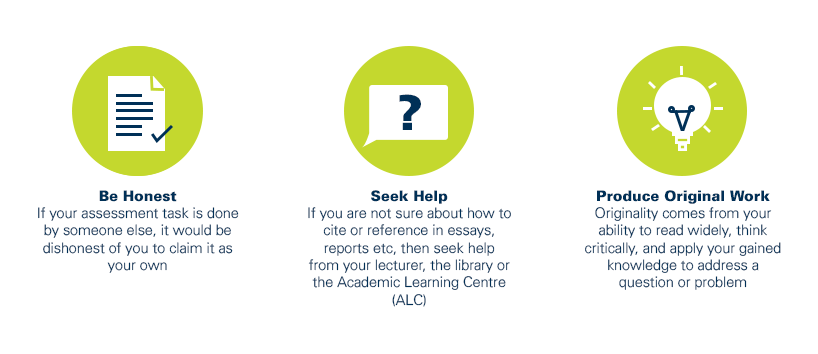
As a CQUniversity student you are expected to act honestly in all aspects of your academic work.
Any assessable work undertaken or submitted for review or assessment must be your own work. Assessable work is any type of work you do to meet the assessment requirements in the unit, including draft work submitted for review and feedback and final work to be assessed.
When you use the ideas, words or data of others in your assessment, you must thoroughly and clearly acknowledge the source of this information by using the correct referencing style for your unit. Using others’ work without proper acknowledgement may be considered a form of intellectual dishonesty.
Participating honestly, respectfully, responsibly, and fairly in your university study ensures the CQUniversity qualification you earn will be valued as a true indication of your individual academic achievement and will continue to receive the respect and recognition it deserves.
As a student, you are responsible for reading and following CQUniversity’s policies, including the Student Academic Integrity Policy and Procedure. This policy sets out CQUniversity’s expectations of you to act with integrity, examples of academic integrity breaches to avoid, the processes used to address alleged breaches of academic integrity, and potential penalties.
What is a breach of academic integrity?
A breach of academic integrity includes but is not limited to plagiarism, self-plagiarism, collusion, cheating, contract cheating, and academic misconduct. The Student Academic Integrity Policy and Procedure defines what these terms mean and gives examples.
Why is academic integrity important?
A breach of academic integrity may result in one or more penalties, including suspension or even expulsion from the University. It can also have negative implications for student visas and future enrolment at CQUniversity or elsewhere. Students who engage in contract cheating also risk being blackmailed by contract cheating services.
Where can I get assistance?
For academic advice and guidance, the Academic Learning Centre (ALC) can support you in becoming confident in completing assessments with integrity and of high standard.
What can you do to act with integrity?