Overview
This unit will introduce you to key research interests in the positive psychology domain, and the various methodological approaches to research as they relate to positive psychology. You will develop a critical understanding of the research process and its application within positive psychology research and assessment. The unit will help you to become familiar with research processes that are robust and ethical, the importance of evidence-based decision making, and the importance of measuring the impact of interventions using positive psychology research methods. You will be encouraged to consider how research evidence contributes to best practice. You will learn skills in interpreting and critically evaluating the quality of published research evidence, and consider the ways research knowledge can be used to guide intervention design and procedures. There will be an overarching focus on becoming a critical consumer and user of this scientific research literature to inform the development of future research questions, intervention strategies, and professional practice.
Details
Pre-requisites or Co-requisites
There are no requisites for this unit.
Important note: Students enrolled in a subsequent unit who failed their pre-requisite unit, should drop the subsequent unit before the census date or within 10 working days of Fail grade notification. Students who do not drop the unit in this timeframe cannot later drop the unit without academic and financial liability. See details in the Assessment Policy and Procedure (Higher Education Coursework).
Offerings For Term 2 - 2026
Attendance Requirements
All on-campus students are expected to attend scheduled classes - in some units, these classes are identified as a mandatory (pass/fail) component and attendance is compulsory. International students, on a student visa, must maintain a full time study load and meet both attendance and academic progress requirements in each study period (satisfactory attendance for International students is defined as maintaining at least an 80% attendance record).
Recommended Student Time Commitment
Each 6-credit Postgraduate unit at CQUniversity requires an overall time commitment of an average of 12.5 hours of study per week, making a total of 150 hours for the unit.
Class Timetable
Assessment Overview
Assessment Grading
This is a graded unit: your overall grade will be calculated from the marks or grades for each assessment task, based on the relative weightings shown in the table above. You must obtain an overall mark for the unit of at least 50%, or an overall grade of 'pass' in order to pass the unit. If any 'pass/fail' tasks are shown in the table above they must also be completed successfully ('pass' grade). You must also meet any minimum mark requirements specified for a particular assessment task, as detailed in the 'assessment task' section (note that in some instances, the minimum mark for a task may be greater than 50%). Consult the University's Grades and Results Policy for more details of interim results and final grades.
All University policies are available on the CQUniversity Policy site.
You may wish to view these policies:
- Grades and Results Policy
- Assessment Policy and Procedure (Higher Education Coursework)
- Review of Grade Procedure
- Student Academic Integrity Policy and Procedure
- Academic Progression Policy and Procedure
- Student Refund and Credit Balance Policy and Procedure
- Complaints Policy and Procedure
- Information and Communications Technology Acceptable Use Policy and Procedure
This list is not an exhaustive list of all University policies. The full list of University policies are available on the CQUniversity Policy site.
Feedback, Recommendations and Responses
Every unit is reviewed for enhancement each year. At the most recent review, the following staff and student feedback items were identified and recommendations were made.
Feedback from Reflections of the Unit Coordinator and the teaching team; student performance.
Students who utilised formative feedback opportunities tended to perform well on written assessments.
The Unit Coordinator will continue to offer formative feedback opportunities and will provide timely reminders to students about utilising these chances for additional support.
Feedback from Student Unit and Teacher Evaluation responses and student emails.
Students appreciated the positive and supportive approach used by the Unit Coordinator.
The Unit Coordinator and teaching team will continue to use a positive and supportive approach in the delivery of this unit.
- Locate, interpret, and synthesise appropriate peer-reviewed empirical research relevant to positive psychology
- Investigate and appraise research paradigms and ethical research requirements relevant to positive psychology
- Analyse research concepts through the critical appraisal of peer-reviewed empirical research relevant to positive psychology
- Develop a research question based on identified research gaps to enhance the body of knowledge in positive psychology
Alignment of Assessment Tasks to Learning Outcomes
| Assessment Tasks | Learning Outcomes | |||
|---|---|---|---|---|
| 1 | 2 | 3 | 4 | |
| 1 - Research Assignment - 25% | ||||
| 2 - Online Quiz(zes) - 20% | ||||
| 3 - Critical Review - 55% | ||||
Alignment of Graduate Attributes to Learning Outcomes
| Graduate Attributes | Learning Outcomes | |||
|---|---|---|---|---|
| 1 | 2 | 3 | 4 | |
| 1 - Knowledge | ||||
| 2 - Communication | ||||
| 3 - Cognitive, technical and creative skills | ||||
| 4 - Research | ||||
| 5 - Self-management | ||||
| 6 - Ethical and Professional Responsibility | ||||
| 7 - Leadership | ||||
| 8 - First Nations Knowledges | ||||
| 9 - Aboriginal and Torres Strait Islander Cultures | ||||
Alignment of Assessment Tasks to Graduate Attributes
| Assessment Tasks | Graduate Attributes | ||||||||
|---|---|---|---|---|---|---|---|---|---|
| 1 | 2 | 3 | 4 | 5 | 6 | 7 | 8 | 9 | |
| 1 - Research Assignment - 25% | |||||||||
| 2 - Online Quiz(zes) - 20% | |||||||||
| 3 - Critical Review - 55% | |||||||||
Textbooks
Research methods and statistics in psychology
- 7th Edition (2019)
- Authors: Coolican, Hugh.
- Routledge
- Milton Park Milton Park , London , UK
- ISBN: 978-1-315-20100-9
The 7th edition of Coolican's textbook (2019) is currently available through the CQUni library as an e-book. See https://cqu.primo.exlibrisgroup.com/permalink/61CQU_INST/117pkb8/alma991001870647603441
- Binding: eBook
Research methods and statistics in psychology
- 8th Edition (2024)
- Authors: Coolican, Hugh.
- Routledge
- Milton Park, Abingdon Milton Park, Abingdon , Oxon , UK
- ISBN: eBook ISBN 9781003215967; Paperback ISBN 9781032105666
The 8th Edition of Coolican's textbook (2024) is not yet available through the CQU library as an e-book. More information about the 8th Edition can be found at https://www.routledge.com/Research-Methods-and-Statistics-in-Psychology/Coolican/p/book/9781032105666
Additional Textbook Information
There are no prescribed textbooks for this unit. However, the supplementary textbook "Research Methods and Statistics in Psychology" by Hugh Coolican (Seventh Edition 2019 or Eighth Edition 2024), is frequently referred to throughout this research methods unit, and will also be useful for students who in future intend to undertake the Master of Applied Positive Psychology thesis. An e-book version of this textbook (currently the 7th Edition) is available through CQUniversity Library.
IT Resources
- CQUniversity Student Email
- Internet
- Unit Website (Moodle)
All submissions for this unit must use the referencing style: American Psychological Association 7th Edition (APA 7th edition)
For further information, see the Assessment Tasks.
l.miller-lewis@cqu.edu.au
a.glazebrook@cqu.edu.au
Week 1
Begin Date: 13 Jul 2026Module/Topic
What is research, and what is a researcher?
Chapter
Please see readings and activities in Week 1 Moodle Workbook.
Events and Submissions/Topic
Week 2
Begin Date: 20 Jul 2026Module/Topic
Ethical considerations in research
Chapter
Please see readings and activities in Week 2 Moodle Workbook.
Events and Submissions/Topic
Tutorial 1: Introduction to the Unit, and Research Ethics - Wednesday 22 July 2026, 6.30pm AEST.
Week 3
Begin Date: 27 Jul 2026Module/Topic
Finding and navigating research articles
Chapter
Please see readings and activities in Week 3 Moodle Workbook.
Events and Submissions/Topic
Week 4
Begin Date: 03 Aug 2026Module/Topic
From research interests to research questions
Chapter
Please see readings and activities in Week 4 Moodle Workbook.
Events and Submissions/Topic
Week 5
Begin Date: 10 Aug 2026Module/Topic
From research questions to research design
Chapter
Please see readings and activities in Week 5 Moodle Workbook.
Events and Submissions/Topic
Tutorial 2: Variables, Research Questions, & Knowledge Gaps - Wednesday 12 August 2026, 6.30pm AEST.
Informal virtual drop-in chat session - Friday 14 August 2026, 11am AEST.
Week 6
Begin Date: 17 Aug 2026Module/Topic
Quantitative and Qualitative research
Chapter
Please see readings and activities in Week 6+7 Moodle Workbook.
Events and Submissions/Topic
Assessment 1: Research Summary
Research Summary Due: Week 6 Monday (17 Aug 2026) 5:00 pm AEST
Vacation Week
Begin Date: 24 Aug 2026Module/Topic
Chapter
Events and Submissions/Topic
Week 7
Begin Date: 31 Aug 2026Module/Topic
Quantitative and Qualitative research
Chapter
Please see readings and activities in Week 6+7 Moodle Workbook.
Events and Submissions/Topic
Week 8
Begin Date: 07 Sep 2026Module/Topic
Critically appraising research
Chapter
Please see readings and activities in Week 8+9 Moodle Workbook.
Events and Submissions/Topic
Week 9
Begin Date: 14 Sep 2026Module/Topic
Critically appraising research
Chapter
Please see readings and activities in Week 8+9 Moodle Workbook.
Events and Submissions/Topic
Tutorial 3: Critically Appraising Research Articles - Wednesday 16 September 2026, 6.30pm AEST.
Week 10
Begin Date: 21 Sep 2026Module/Topic
From critical appraisal to future research recommendations
Chapter
Please see readings and activities in Week 10 Moodle Workbook.
Events and Submissions/Topic
Assessment 2: Quiz on Ethics and Research Principles
Research Quiz Due: Week 10 Monday (21 Sept 2026) 5:00 pm AEST
Week 11
Begin Date: 28 Sep 2026Module/Topic
Disseminating and applying research in 'real-world' settings
Chapter
Please see readings and activities in Week 11 Moodle Workbook.
Events and Submissions/Topic
Informal virtual drop-in chat session - Thursday 1 October 2026, 12pm AEST.
Week 12
Begin Date: 05 Oct 2026Module/Topic
Bringing it all together
Chapter
Please see readings and activities in Week 12 Moodle Workbook.
Events and Submissions/Topic
Assessment 3: Critical Review and Future Research Recommendations
Critical Review Due: Week 12 Wednesday (7 Oct 2026) 5:00 pm AEST
Exam Week
Begin Date: 12 Oct 2026Module/Topic
There are no examinations for this unit.
Chapter
No readings this week.
Events and Submissions/Topic
Vacation/Exam Week
Begin Date: 19 Oct 2026Module/Topic
Chapter
Events and Submissions/Topic
1 Research Assignment
In this assessment task, you will begin the process of engaging with peer-reviewed empirical literature in an area of Positive Psychology and Wellbeing Science that interests you.
You will:
- Identify a research area of strong interest for you in the field of Positive Psychology and Wellbeing Science.
- Conduct a peer-reviewed literature search through the CQUniversity library databases for published empirical research studies relevant to your area of research interest.
- Write a brief (100-word) description of the literature searching methods you used to find the peer-reviewed empirical journal articles.
- Based on the literature found, provide a brief (200-word) description of your chosen topic of research interest, which reflects the importance of the topic to the field of positive psychology.
- From the literature found, choose two peer-reviewed empirical research study articles highly relevant to your area of research interest which have closely-aligned research aims, and write a brief (100-word) justification for why you specifically chose each of the final two articles.
- For each research article, complete the research summary table (template provided on Moodle), by outlining the study aims/research questions, study research methods, ethical considerations, study findings, study strengths/limitations and future directions (maximum of 2 pages per study)
- Write a 300-word synthesis summarising and integrating what knowledge was gained overall from the findings of the studies in relation to your stated area of research interest, and the significance of these findings for contributing to our understanding about the area. This synthesis should lead into a critical appraisal statement outlining what could be the next logical step for future research to take to further build knowledge in the area.
The maximum word count for this assessment task is 700 words. This word limit includes in-text citations but excludes the reference list. The word count excludes the words in the study summary tables, but the study tables must not exceed 2 pages per study. Meeting the word count is included as a part of the marking criteria in your marking rubric on Moodle. See the Psychology Word Count Information document on Moodle for a rationale for using this type of word limit restriction.
*NOTE: Further information about this assessment task is provided in the Unit and Assessment Guide on the unit Moodle site.
Level of GenAI use allowed:
Level 3: You may use AI to assist with specific tasks such as drafting text, refining and evaluating your work. You must critically evaluate and modify any AI-generated content you use.
Please refer to the unit Moodle site for further details on permissible uses of Generative-AI tools for this assessment task.
Week 6 Monday (17 Aug 2026) 5:00 pm AEST
Submit into Moodle portal by 5pm AEST (QLD time).
Week 7 Tuesday (1 Sept 2026)
Feedback and mark for this assessment will be provided within 2 weeks of submission.
This assessment task will be assessed via a marking rubric, which will be available on the unit Moodle site.
You will be assessed on:
- Quality of the rationale for selecting research topic
- Detailing of the methodology used to source appropriate peer-reviewed research articles
- Relevance of the chosen peer-reviewed research articles to the identified area of interest
- Quality and accuracy of the reporting of aims/research questions, research methods and ethical considerations, and key findings of each of the chosen research articles
- Ability to synthesise and integrate the reported research findings, and critically appraise knowledge gaps/areas for further research based on the chosen research articles
- Quality of written communication, including adherence to word-limit
- Accurate use of appropriate references and adherence to APA referencing requirements for in-text citations and the reference list.
Detailed information regarding assessment task requirements, assessment criteria, and the marking rubric can be found in the Unit and Assessment Guide on Moodle.
- Locate, interpret, and synthesise appropriate peer-reviewed empirical research relevant to positive psychology
- Investigate and appraise research paradigms and ethical research requirements relevant to positive psychology
- Analyse research concepts through the critical appraisal of peer-reviewed empirical research relevant to positive psychology
- Knowledge
- Cognitive, technical and creative skills
- Research
- Self-management
- Ethical and Professional Responsibility
2 Online Quiz(zes)
This assessment will require you to complete an online quiz designed to assess your understanding of the unit Moodle workbook content related to fundamental ethical principles and research methods relevant to positive psychology (e.g., identifying research paradigms; research question development etc.). The quiz is designed to help build your engagement with and comprehension of the unit content. The online quiz will be completed via the Assessment portals on the Unit Moodle website. The online quiz will include questions with multiple components and/or requiring a short answer. The online Quiz will contain questions that cover content from week 1 to week 9 of the unit, and must be completed via Moodle by Monday of Week 10. You will only be given one opportunity to complete the quiz, and the quiz must be completed in one sitting.
*NOTE: Further information about this assessment task is provided in the Unit and Assessment Guide on the unit Moodle site.
Level of GenAI use allowed:
Level 1: You must not use AI at any point during the assessment. You must demonstrate your core skills and knowledge.
Week 10 Monday (21 Sept 2026) 5:00 pm AEST
Week 12 Tuesday (6 Oct 2026)
Feedback and mark for this assessment will be provided within 2 weeks of submission.
All information relevant to the quiz will be covered in the unit content. Questions will be drawn from content in the unit Moodle workbooks, set readings, and online tutorials.
The online quiz will test you on:
- Comprehension of Unit Moodle content
- Evaluating and responding to questions using evidence provided in the Unit Moodle
The online quiz will be worth 20% of the overall grade for the unit.
Detailed information regarding quiz requirements and scope can be found in the Unit and Assessment Guide on Moodle.
- Investigate and appraise research paradigms and ethical research requirements relevant to positive psychology
- Develop a research question based on identified research gaps to enhance the body of knowledge in positive psychology
- Knowledge
- Cognitive, technical and creative skills
- Research
- Ethical and Professional Responsibility
3 Critical Review
In this final assessment, you will source and critically evaluate two published empirical research study articles, and determine a future research question based on your critical evaluation of these articles. The two articles included will be your choice, but must be:
- Peer-reviewed primary source journal articles (i.e., articles reporting new research findings from an original study) that are published in reputable journals.
- Relevant to one specific area of interest in the Positive Psychology and Wellbeing Science domain, but this must be a different area of focus than the choice in Assessment 1.
The assessment piece will include consideration of the following:
- What is the predominant area of interest for the researcher/s, and why is the area considered important? (This will be utilised as your introductory paragraph.)
- What are the main research questions in each publication?
- Compare and contrast the methodologies used by the researchers in each publication
- What are the key findings in each of the research publications, and do they appear to be justified?
- What are the strengths and limitations of each of the chosen research publications?
- A critical evaluation of the suggestions made by the publication authors for future research
- Identification of an important ‘gap’ in the research literature (based on the 2 chosen publications) that you propose could be further explored in research, and a justification for why this proposed future research would be worthwhile.
- Formulation of at least one future research question that would meaningfully address the identified ‘gap’ in knowledge (using the guiding principles of the PICO/PEO [Population, Intervention/Exposure, Comparison, Outcomes] framework).
The maximum word count for this assessment task is 2000 words. This word limit includes in-text citations but excludes any reference section. Meeting the word count is included as a part of the marking criteria in your marking rubric on Moodle. See the Psychology Word Count Information document on Moodle for a rationale for using this type of word limit restriction.
*NOTE: Further information about this assessment task is provided in the Unit and Assessment Guide on the unit Moodle site.
Level of GenAI use allowed:
Level 3: You may use AI to assist with specific tasks such as drafting text, refining and evaluating your work. You must critically evaluate and modify any AI-generated content you use.
Please refer to the unit Moodle site for further details on permissible uses of Generative-AI tools for this assessment task.
Week 12 Wednesday (7 Oct 2026) 5:00 pm AEST
Vacation/Exam Week Thursday (22 Oct 2026)
Feedback and mark for this assessment will be provided within 2 weeks of submission.
This assessment task will be assessed via a marking rubric, which will be available on the unit Moodle site.
You will be assessed on:
- Identification of the predominant research area of interest in the empirical studies, and their research questions
- Quality of comparing and contrasting of the research methodologies used in the empirical studies
- Ability to summarise, interpret, and critique the reported research findings
- Quality and comprehensiveness of the identification of the strengths, weaknesses, and future research directions
- Critical analysis of key gaps/areas for further research based on the chosen empirical studies, and rationale as to why the identified gap would be of benefit to address in future research
- Development of a meaningful research question using the principles of the PICO/PEO (Population, Intervention/Exposure, Comparison, and Outcomes) style framework
- Clarity, conciseness and quality of written communication and critical thinking in the assessment, and adherence to the word-limit
- Accurate use of appropriate references and adherence to APA referencing requirements for in-text citations and the reference list.
Detailed information regarding assessment task requirements, assessment criteria, and the marking rubric can be found in the Unit and Assessment Guide on Moodle.
- Locate, interpret, and synthesise appropriate peer-reviewed empirical research relevant to positive psychology
- Analyse research concepts through the critical appraisal of peer-reviewed empirical research relevant to positive psychology
- Develop a research question based on identified research gaps to enhance the body of knowledge in positive psychology
- Knowledge
- Communication
- Cognitive, technical and creative skills
- Research
- Self-management
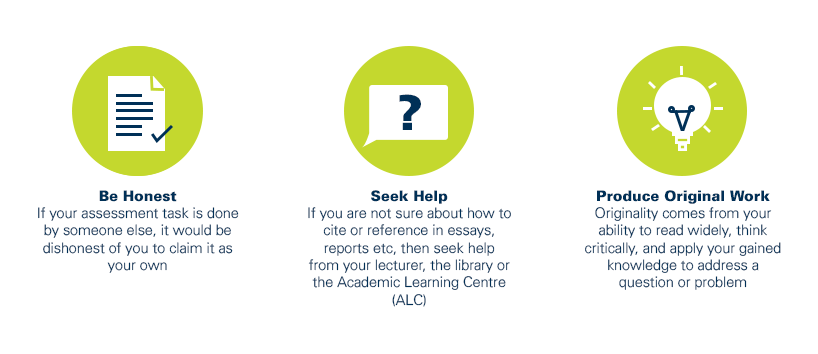
As a CQUniversity student you are expected to act honestly in all aspects of your academic work.
Any assessable work undertaken or submitted for review or assessment must be your own work. Assessable work is any type of work you do to meet the assessment requirements in the unit, including draft work submitted for review and feedback and final work to be assessed.
When you use the ideas, words or data of others in your assessment, you must thoroughly and clearly acknowledge the source of this information by using the correct referencing style for your unit. Using others’ work without proper acknowledgement may be considered a form of intellectual dishonesty.
Participating honestly, respectfully, responsibly, and fairly in your university study ensures the CQUniversity qualification you earn will be valued as a true indication of your individual academic achievement and will continue to receive the respect and recognition it deserves.
As a student, you are responsible for reading and following CQUniversity’s policies, including the Student Academic Integrity Policy and Procedure. This policy sets out CQUniversity’s expectations of you to act with integrity, examples of academic integrity breaches to avoid, the processes used to address alleged breaches of academic integrity, and potential penalties.
What is a breach of academic integrity?
A breach of academic integrity includes but is not limited to plagiarism, self-plagiarism, collusion, cheating, contract cheating, and academic misconduct. The Student Academic Integrity Policy and Procedure defines what these terms mean and gives examples.
Why is academic integrity important?
A breach of academic integrity may result in one or more penalties, including suspension or even expulsion from the University. It can also have negative implications for student visas and future enrolment at CQUniversity or elsewhere. Students who engage in contract cheating also risk being blackmailed by contract cheating services.
Where can I get assistance?
For academic advice and guidance, the Academic Learning Centre (ALC) can support you in becoming confident in completing assessments with integrity and of high standard.
What can you do to act with integrity?