Overview
In this unit, you will examine and critique wellbeing and resilience initiatives in community, national and global settings. Initiatives will include not-for-profit organisations, social innovation enterprises, local and state government projects, intentional communities and cooperatives, and global wellbeing and resilience movements. You will research and evaluate successful and unsuccessful city/urban, and rural-based initiatives, and apply that knowledge to design a wellbeing initiative for a local application.
Details
Pre-requisites or Co-requisites
There are no requisites for this unit.
Important note: Students enrolled in a subsequent unit who failed their pre-requisite unit, should drop the subsequent unit before the census date or within 10 working days of Fail grade notification. Students who do not drop the unit in this timeframe cannot later drop the unit without academic and financial liability. See details in the Assessment Policy and Procedure (Higher Education Coursework).
Offerings For Term 2 - 2026
Attendance Requirements
All on-campus students are expected to attend scheduled classes - in some units, these classes are identified as a mandatory (pass/fail) component and attendance is compulsory. International students, on a student visa, must maintain a full time study load and meet both attendance and academic progress requirements in each study period (satisfactory attendance for International students is defined as maintaining at least an 80% attendance record).
Recommended Student Time Commitment
Each 6-credit Postgraduate unit at CQUniversity requires an overall time commitment of an average of 12.5 hours of study per week, making a total of 150 hours for the unit.
Class Timetable
Assessment Overview
Assessment Grading
This is a graded unit: your overall grade will be calculated from the marks or grades for each assessment task, based on the relative weightings shown in the table above. You must obtain an overall mark for the unit of at least 50%, or an overall grade of 'pass' in order to pass the unit. If any 'pass/fail' tasks are shown in the table above they must also be completed successfully ('pass' grade). You must also meet any minimum mark requirements specified for a particular assessment task, as detailed in the 'assessment task' section (note that in some instances, the minimum mark for a task may be greater than 50%). Consult the University's Grades and Results Policy for more details of interim results and final grades.
All University policies are available on the CQUniversity Policy site.
You may wish to view these policies:
- Grades and Results Policy
- Assessment Policy and Procedure (Higher Education Coursework)
- Review of Grade Procedure
- Student Academic Integrity Policy and Procedure
- Academic Progression Policy and Procedure
- Student Refund and Credit Balance Policy and Procedure
- Complaints Policy and Procedure
- Information and Communications Technology Acceptable Use Policy and Procedure
This list is not an exhaustive list of all University policies. The full list of University policies are available on the CQUniversity Policy site.
Feedback, Recommendations and Responses
Every unit is reviewed for enhancement each year. At the most recent review, the following staff and student feedback items were identified and recommendations were made.
Feedback from Student evaluation.
Students stated that the Unit Coordinator provided additional support and feedback when requested, which they found helpful and were able to apply to other assessments.
Continue to provide responsive, individualised support through consultation times and targeted feedback, and make these opportunities more explicit early in the term to encourage proactive student engagement.
Feedback from Student evaluation.
Students reported that the Unit Coordinator encouraged them to connect course content with their own personal contexts, which enhanced the realism, value, and usefulness of the material.
Maintain and further develop opportunities within tutorials and assessments for students to apply course concepts to their own personal and professional contexts, reinforcing the applied relevance of wellbeing theory.
Feedback from Student evaluation.
Students noted that audiovisual content and interactive tutorials supported engagement, with videos and targeted readings making the material more accessible than text-heavy formats alone.
Maintain and enhance the video content and interactive experiences in tutorials.
Feedback from Student evaluation.
Students expressed some confusion regarding the alignment between task outlines, marking criteria, and rubrics.
Review and refine assessment documentation to ensure clearer alignment between task descriptions, marking criteria, and rubrics, including explicit statements about expected cognitive level and assessment focus.
- Evaluate local, national and international wellbeing and resilience programs.
- Apply evidence-based research, and generic principles of wellbeing and resilience programs, to the design of a small-scale wellbeing project.
- Demonstrate communication skills which convey a compelling and persuasive argument for an innovative small-scale wellbeing program.
Alignment of Assessment Tasks to Learning Outcomes
| Assessment Tasks | Learning Outcomes | ||
|---|---|---|---|
| 1 | 2 | 3 | |
| 1 - Online resource/s - 20% | |||
| 2 - Written Assessment - 30% | |||
| 3 - Practical Assessment - 50% | |||
Alignment of Graduate Attributes to Learning Outcomes
| Graduate Attributes | Learning Outcomes | ||
|---|---|---|---|
| 1 | 2 | 3 | |
| 1 - Knowledge | |||
| 2 - Communication | |||
| 3 - Cognitive, technical and creative skills | |||
| 4 - Research | |||
| 5 - Self-management | |||
| 6 - Ethical and Professional Responsibility | |||
| 7 - Leadership | |||
| 8 - First Nations Knowledges | |||
| 9 - Aboriginal and Torres Strait Islander Cultures | |||
Alignment of Assessment Tasks to Graduate Attributes
| Assessment Tasks | Graduate Attributes | ||||||||
|---|---|---|---|---|---|---|---|---|---|
| 1 | 2 | 3 | 4 | 5 | 6 | 7 | 8 | 9 | |
| 1 - Online resource/s - 20% | |||||||||
| 2 - Written Assessment - 30% | |||||||||
| 3 - Practical Assessment - 50% | |||||||||
Textbooks
There are no required textbooks.
IT Resources
- CQUniversity Student Email
- Internet
- Unit Website (Moodle)
All submissions for this unit must use the referencing style: American Psychological Association 7th Edition (APA 7th edition)
For further information, see the Assessment Tasks.
d.j.miller@cqu.edu.au
Week 1
Begin Date: 13 Jul 2026Module/Topic
Key concepts and unit overview
Chapter
Resources supplied on Moodle
Events and Submissions/Topic
Workshop 1: Thursday 16 July 2026, 18:30–20:00 AEST
Week 2
Begin Date: 20 Jul 2026Module/Topic
Analysing the problem: From individual to systems explanations
Chapter
Resources supplied on Moodle
Events and Submissions/Topic
Week 3
Begin Date: 27 Jul 2026Module/Topic
The original systems thinkers: First Nations systems thinking
Chapter
Resources supplied on Moodle
Events and Submissions/Topic
Week 4
Begin Date: 03 Aug 2026Module/Topic
Levels of change: Community-led change
Chapter
Resources supplied on Moodle
Events and Submissions/Topic
ALC-facilitated workshop: Thursday 6 August 2026, 17:00–18:00 AEST
Week 5
Begin Date: 10 Aug 2026Module/Topic
Community-led housing and food sovereignty
Chapter
Resources supplied on Moodle
Events and Submissions/Topic
Workshop 2: Thursday 13 August 2026, 18:30–20:00 AEST
Assessment 1: Curating Wellbeing Initiatives Due: Week 5 Monday (10 Aug 2026) 5:00 pm AEST
Week 6
Begin Date: 17 Aug 2026Module/Topic
Types of change: Transformative change
Chapter
Resources supplied on Moodle
Events and Submissions/Topic
ALC-facilitated workshop: Thursday 20 August 2026, 17:00–18:00 AEST
Vacation Week
Begin Date: 24 Aug 2026Module/Topic
No topics this week.
Chapter
Events and Submissions/Topic
Week 7
Begin Date: 31 Aug 2026Module/Topic
Transformative change models: Asset-Based Community Development
Chapter
Resources supplied on Moodle
Events and Submissions/Topic
Week 8
Begin Date: 07 Sep 2026Module/Topic
Transformative change models: Strengths, Prevention, Empowerment, Collective
Chapter
Resources supplied on Moodle
Events and Submissions/Topic
Workshop 3: Thursday 10 September 2026, 18:30–20:00 AEST
Week 9
Begin Date: 14 Sep 2026Module/Topic
Transformative change: Social enterprises
Chapter
Resources supplied on Moodle
Events and Submissions/Topic
Week 10
Begin Date: 21 Sep 2026Module/Topic
Transformative change: Using placemaking
Chapter
Resources supplied on Moodle
Events and Submissions/Topic
Week 11
Begin Date: 28 Sep 2026Module/Topic
Transformative change: Using art and culture
Chapter
Resources supplied on Moodle
Events and Submissions/Topic
Week 12
Begin Date: 05 Oct 2026Module/Topic
Summary/review
Chapter
Resources on Moodle
Events and Submissions/Topic
Exam Week
Begin Date: 12 Oct 2026Module/Topic
No exam for this unit.
Chapter
Events and Submissions/Topic
Vacation/Exam Week
Begin Date: 19 Oct 2026Module/Topic
Chapter
Events and Submissions/Topic
1 Online resource/s
In this assessment, you will map the causes of a social/environmental issue using a systems perspective, i.e., you will identify key economic, political, social, cultural and technological factors which interact to create this issue. This systemic exploration is the basis for the second part of the assessment: finding community-led initiatives which use transformative principles.
Part 1
Choose an issue that impacts a disenfranchised group or an environmental issue (a list of topics is provided in your assessment guide) and summarise the systemic causes of this issue.
The summary will:
- Define the issue, i.e., what is the problem, who and/or what does it effect and what are its impacts. This summary will draw on reputable research and statistics to support your definition.
- Identify the key systemic causes of this problem. This is not a full systems analysis, which is beyond the scope of this unit. Rather, you will demonstrate knowledge of systemic causes, including tangible and intangible systemic factors, but you do not need to include an analysis of how these causes interact with each other.
- Accurately reference all statements using peer-reviewed academic research and high-quality reports using APA formatting throughout. Include accurate references both in the body of your summary and in a reference list.
Word length for Part 1: 500 words. The word limit for this section excludes your reference list.
Part 2
Identify two existing initiatives that respond to your issue.
The initiatives must meet two criteria:
- Use community-led principles.
- Use transformative principles.
For each initiative please include:
- Name of initiative
- A link to a website/social media page or, if they’re not online, their information brochure
- A summary of:
- What systemic causes does the initiative seek to change?
- How does the initiative attempt to intervene in the systemic causes (i.e., what practical actions do they implement: e.g., workshops; employment training; advocacy)
- To what extent is the initiative community-led?
- Which transformative change principles does the initiative employ?
Word length for Part 2: 250 words for each initiative
Level of GenAI use allowed:
Level 3: You may use AI to assist with specific tasks such as drafting text, refining and evaluating your work. You must critically evaluate and modify any AI-generated content you use. Please refer to the unit Moodle site for further details on permissible uses of Generative-AI tools for this assessment task.
Week 5 Monday (10 Aug 2026) 5:00 pm AEST
Vacation Week Monday (24 Aug 2026)
Assessment feedback will be provided within 2 weeks of submission.
This assessment will be evaluated on:
- Identification and understanding of a relevant social/environmental issue
- Understanding of systems theory in the analysis of the social/environmental issues
- Identification of systemic causes that initiatives seek to address.
- Identification and understanding of transformative principles in chosen initiatives.
- Identification and understanding of community-led principles in chosen initiatives.
- Written communication skills through a logical structure, clear prose, spelling and grammar, and adherence to APA formatting and word limit.
Detailed information regarding assessment requirements and criteria can be found in the Unit Assessment Guide on Moodle.
The word count for this assessment (both parts) is 1,000 words. Meeting the word count is included as a part of the marking criteria in your marking rubric on Moodle. See the Psychology Word Count Information document on Moodle for a rationale for using this type of word limit restriction.
- Evaluate local, national and international wellbeing and resilience programs.
- Knowledge
- Communication
- Research
2 Written Assessment
For Assessment 2, you will use the one of the initiatives collated in Assessment 1 to critically evaluate. There are six parts to your evaluation.
- Framing/understanding of the causes of the issue (you will write about systems here).
- The types and extent of changes the initiative is aiming for (you will write about transformative approaches here).
- How do they create change? Is the initiative taking an ameliorative approach in some places that could be shifted to a transformative approach?
- Could the initiative draw on transformative principles in new ways to ensure that the initiative makes these deeper changes in the system?
- Does the literature support the initiative?
- What does the research say are the most efficacious ways to improve wellbeing in relation to this issue?
- Does the initiative implement these?
- Could the initiative draw on other elements which have a sounder, or new research-base?
- How the initiative and intervention is designed and led.
- Is this initiative accessible, respectful and open to everyone in the relevant community? (e.g. DEAI, people who experience a disability, First Nations, LGBTQIA+)
- What are the roles of insiders and outsiders?
- Are there elements in the initiative which are not fully community-led?
- How the initiative impacts the environment. Consider in this section ‘environment’ in its non-Indigenous sense (e.g., eco-systems) and in Indigenous systems thinking, i.e., in terms of the intertwined relationality between people, plants, animals and future generations.
- Could Indigenous systems thinking be applied to deepen the initiative’s systemic impacts?
- Are there ways that the initiative impacts negatively on the local environment, e.g., through generation of non-recyclable waste; uses techniques which contribute to carbon emissions?
- Suggest practical improvements based on your critique so that the initiatives better meet their proposed outcomes and improve their inclusivity and environmental impact. Your suggestions should be:
- Coherent with the critique you have made (i.e., there is a clear connection between points made in the critical evaluation and the recommendations you are making).
- Within the scope of the initiative (i.e., the suggestions improve how the initiative meets their existing aims – it doesn’t create new aims/focus).
- Practical (i.e., the suggestions could reasonably be undertaken by the initiative – they don’t suggest things outside the control of the initiative like a new bus route).
Level of GenAI use allowed:
Level 3: You may use AI to assist with specific tasks such as drafting text, refining and evaluating your work. You must critically evaluate and modify any AI-generated content you use. Please refer to the unit Moodle site for further details on permissible uses of Generative-AI tools for this assessment task.
Week 7 Monday (31 Aug 2026) 5:00 pm AEST
Week 9 Monday (14 Sept 2026)
Assessment feedback will be returned 2 weeks from the date of assessment submission.
The assessment will be evaluated on:
- Identification and understanding of the issue and expected outcomes of chosen initiative.
- Application of research evidence to evaluate the efficacy of the initiatives
- Discussion of initiative stakeholders through the lens of either (1) insiders/outsiders, (2) DEAI principles, or (3) disenfranchised groups.
- Consideration and application of sustainability and Indigenous perspectives specific to the initiative.
- Identification and quality of suggested changes that are practical and within the scope of the initiative.
- Written communication skills and referencing, including quality of sources, accuracy and comprehensiveness of referencing, and referencing formatting in APA style.
Detailed information regarding assessment requirements and criteria can be found in the Unit Assessment Guide on Moodle.
The total word count for this assessment is 1,400 words. Meeting the word count is included as a part of the marking criteria in your marking rubric on Moodle. See the Psychology Word Count Information document on Moodle for a rationale for using this type of word limit restriction.
- Evaluate local, national and international wellbeing and resilience programs.
- Apply evidence-based research, and generic principles of wellbeing and resilience programs, to the design of a small-scale wellbeing project.
- Demonstrate communication skills which convey a compelling and persuasive argument for an innovative small-scale wellbeing program.
- Knowledge
- Communication
- Research
- Self-management
3 Practical Assessment
In Assessment 3, you will design a small-scale, community-led initiative using transformative change principles.
You will present your initiative in a recorded audio-visual talk.
The presentation will include:
1. The name of your initiative
2. A brief analysis of the issue from a systemic perspective and its impacts on wellbeing (what is it, what and who is impacted, in what ways).
3. A brief outline of existing initiatives and their limitations.
4. Describe your initiative. You should:
- Use research evidence to highlight the efficacy of the program elements
- Use community-led principles and outline how the program embodies these principles
- Use transformative change principles and outline how the program fits with these
- Outline the ways it incorporates environmental sustainability into the design
- Outline how it responds to the wider concepts of relationality in Indigenous systems thinking
- Outline the ways it addresses diversity, equity, inclusion and accessibility
5. Describe the desired outcomes in terms of the systemic changes you think this initiative will create and why you think it will be effective in creating these changes.
6. Describe how the initiative addresses gaps in existing initiatives.
7. Provide a reference list of all research, image, and sound sources as the final slide in your film and in a separate word document.
Please use compelling, persuasive ways to present your initiative (e.g., animation, images, music). The communication aim is to persuade and convince people of the usefulness, feasibility, and potential of your initiative.
LENGTH: Your presentation will be a maximum of 15 minutes in length. Meeting the time limit for the presentation is included as a marking criterion in your marking rubric on Moodle. See the Psychology Word Count Information document for a rationale for using this type of restriction.
Level of GenAI use allowed
Level 3: You may use AI to assist with specific tasks such as drafting text, refining and evaluating your work. You must critically evaluate and modify any AI-generated content you use. Please refer to the unit Moodle site for further details on permissible uses of Generative-AI tools for this assessment task.
Week 11 Monday (28 Sept 2026) 5:00 pm AEST
Exam Week Monday (12 Oct 2026)
Assessment feedback will be returned 2 weeks from the date of assessment submission.
This assessment will be evaluated on the student's demonstration of:
- Consideration of systemic causes and wellbeing impacts of proposed initiative
- Initiative is community-led, demonstrating sensitivity to empowering communities.
- Initiative is transformative in its understanding of the problem, program elements and desired outcomes.
- Clear consideration of sustainability principles.
- Clear consideration of Indigenous perspectives.
- Inclusive, effectively and thoughtfully addressing existing barriers to access for relevant groups.
- Identification of expected outcomes.
- Written communication skills and referencing, including quality of sources, accuracy and comprehensiveness of referencing, and referencing formatting in APA style.
Detailed information regarding assessment requirements and criteria can be found in the Unit Assessment Guide on Moodle.
The time limit for this assessment is 15 minutes. Meeting the time limit is included as a part of the marking criteria in your marking rubric on Moodle. See the Psychology Word Count Information document on Moodle for a rationale for using this type of restriction.
- Apply evidence-based research, and generic principles of wellbeing and resilience programs, to the design of a small-scale wellbeing project.
- Demonstrate communication skills which convey a compelling and persuasive argument for an innovative small-scale wellbeing program.
- Knowledge
- Communication
- Cognitive, technical and creative skills
- Research
- Ethical and Professional Responsibility
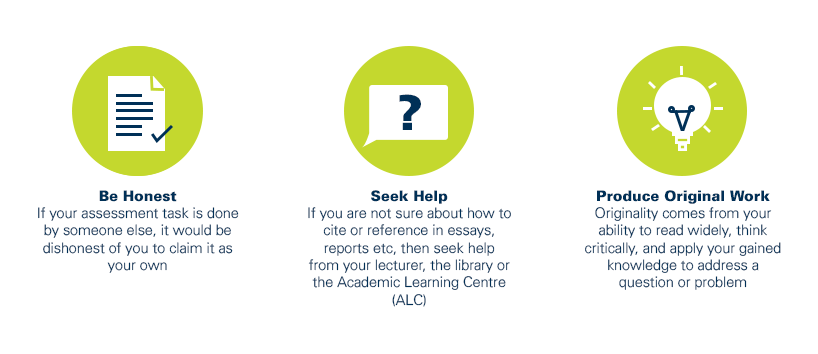
As a CQUniversity student you are expected to act honestly in all aspects of your academic work.
Any assessable work undertaken or submitted for review or assessment must be your own work. Assessable work is any type of work you do to meet the assessment requirements in the unit, including draft work submitted for review and feedback and final work to be assessed.
When you use the ideas, words or data of others in your assessment, you must thoroughly and clearly acknowledge the source of this information by using the correct referencing style for your unit. Using others’ work without proper acknowledgement may be considered a form of intellectual dishonesty.
Participating honestly, respectfully, responsibly, and fairly in your university study ensures the CQUniversity qualification you earn will be valued as a true indication of your individual academic achievement and will continue to receive the respect and recognition it deserves.
As a student, you are responsible for reading and following CQUniversity’s policies, including the Student Academic Integrity Policy and Procedure. This policy sets out CQUniversity’s expectations of you to act with integrity, examples of academic integrity breaches to avoid, the processes used to address alleged breaches of academic integrity, and potential penalties.
What is a breach of academic integrity?
A breach of academic integrity includes but is not limited to plagiarism, self-plagiarism, collusion, cheating, contract cheating, and academic misconduct. The Student Academic Integrity Policy and Procedure defines what these terms mean and gives examples.
Why is academic integrity important?
A breach of academic integrity may result in one or more penalties, including suspension or even expulsion from the University. It can also have negative implications for student visas and future enrolment at CQUniversity or elsewhere. Students who engage in contract cheating also risk being blackmailed by contract cheating services.
Where can I get assistance?
For academic advice and guidance, the Academic Learning Centre (ALC) can support you in becoming confident in completing assessments with integrity and of high standard.
What can you do to act with integrity?