Overview
In this unit, you will examine interconnected factors and complex systems that impact wellbeing and resilience at an individual and societal level. At the individual level, you will examine the interplay between mental processes, emotions, and physiology, and assess how to positively influence these areas. You will also evaluate the importance of factors such as sleep, nutrition and diet, exercise, social support, fun, play, and creativity. At a societal level, you will evaluate the impact on wellbeing and resilience of factors such as education, health systems, societal norms and values, and the impact of built and natural environments. Within this interconnected factors framework, you will draw on evidence-based research, tools, approaches, and models, to promote wellbeing and resilience interventions.
Details
Pre-requisites or Co-requisites
There are no requisites for this unit.
Important note: Students enrolled in a subsequent unit who failed their pre-requisite unit, should drop the subsequent unit before the census date or within 10 working days of Fail grade notification. Students who do not drop the unit in this timeframe cannot later drop the unit without academic and financial liability. See details in the Assessment Policy and Procedure (Higher Education Coursework).
Offerings For Term 1 - 2026
Attendance Requirements
All on-campus students are expected to attend scheduled classes - in some units, these classes are identified as a mandatory (pass/fail) component and attendance is compulsory. International students, on a student visa, must maintain a full time study load and meet both attendance and academic progress requirements in each study period (satisfactory attendance for International students is defined as maintaining at least an 80% attendance record).
Recommended Student Time Commitment
Each 6-credit Postgraduate unit at CQUniversity requires an overall time commitment of an average of 12.5 hours of study per week, making a total of 150 hours for the unit.
Class Timetable
Assessment Overview
Assessment Grading
This is a graded unit: your overall grade will be calculated from the marks or grades for each assessment task, based on the relative weightings shown in the table above. You must obtain an overall mark for the unit of at least 50%, or an overall grade of 'pass' in order to pass the unit. If any 'pass/fail' tasks are shown in the table above they must also be completed successfully ('pass' grade). You must also meet any minimum mark requirements specified for a particular assessment task, as detailed in the 'assessment task' section (note that in some instances, the minimum mark for a task may be greater than 50%). Consult the University's Grades and Results Policy for more details of interim results and final grades.
All University policies are available on the CQUniversity Policy site.
You may wish to view these policies:
- Grades and Results Policy
- Assessment Policy and Procedure (Higher Education Coursework)
- Review of Grade Procedure
- Student Academic Integrity Policy and Procedure
- Academic Progression Policy and Procedure
- Student Refund and Credit Balance Policy and Procedure
- Complaints Policy and Procedure
- Information and Communications Technology Acceptable Use Policy and Procedure
This list is not an exhaustive list of all University policies. The full list of University policies are available on the CQUniversity Policy site.
Feedback, Recommendations and Responses
Every unit is reviewed for enhancement each year. At the most recent review, the following staff and student feedback items were identified and recommendations were made.
Feedback from SUTE
While students valued assessment variety, some felt overwhelmed by multiple unfamiliar writing styles in the same unit.
Provide additional exemplars and guidance to support students learning new formats.
Feedback from SUTE
Some students felt the weekly content was too heavy in volume, and questioned the recency of some resources. They suggested use of more efficient formats such as images, flowcharts, and mind maps to show interconnectedness of ideas.
The teaching team will revisit the unit content to investigate avenues for contemporary updates, streamlining and incorporating visual summaries.
Feedback from SUTE
Some students raised discrepancies around scheduled tutorials and the online planner, which created some confusion.
Check for alignment with University scheduling systems, and ensure up-to-date details are communicated with students at the start of term.
- Critically analyse wellbeing and resilience resources, including contemporary discipline research, programs and interventions
- Discuss and evaluate the integration of psychosocial, physiological and environmental approaches to understanding wellbeing and resilience
- Apply reflective practice to chronicle insights and awareness of interconnected wellbeing factors
Alignment of Assessment Tasks to Learning Outcomes
| Assessment Tasks | Learning Outcomes | ||
|---|---|---|---|
| 1 | 2 | 3 | |
| 1 - Written Assessment - 35% | |||
| 2 - Written Assessment - 45% | |||
| 3 - Reflective Practice Assignment - 20% | |||
Alignment of Graduate Attributes to Learning Outcomes
| Graduate Attributes | Learning Outcomes | ||
|---|---|---|---|
| 1 | 2 | 3 | |
| 1 - Knowledge | |||
| 2 - Communication | |||
| 3 - Cognitive, technical and creative skills | |||
| 4 - Research | |||
| 5 - Self-management | |||
| 6 - Ethical and Professional Responsibility | |||
| 7 - Leadership | |||
| 8 - First Nations Knowledges | |||
| 9 - Aboriginal and Torres Strait Islander Cultures | |||
Textbooks
There are no required textbooks.
IT Resources
- CQUniversity Student Email
- Internet
- Unit Website (Moodle)
All submissions for this unit must use the referencing style: American Psychological Association 7th Edition (APA 7th edition)
For further information, see the Assessment Tasks.
m.gossner@cqu.edu.au
l.miller-lewis@cqu.edu.au
Week 1
Begin Date: 09 Mar 2026Module/Topic
Understanding wellbeing and resilience
Chapter
Please see selected readings and activities on Moodle
Events and Submissions/Topic
Zoom Tutorial: Week 1 Tuesday (10 March 2026) 5:30pm-7:00 pm AEST
Week 2
Begin Date: 16 Mar 2026Module/Topic
Positive emotions and wellbeing
Chapter
Please see selected readings and activities on Moodle
Events and Submissions/Topic
Week 3
Begin Date: 23 Mar 2026Module/Topic
Mindsets
Chapter
Please see selected readings and activities on Moodle
Events and Submissions/Topic
Zoom Tutorial: Week 3 Tuesday (24 March 2026) 5:30pm-7:00pm AEST
Week 4
Begin Date: 30 Mar 2026Module/Topic
Health and wellbeing (Part 1)
Chapter
Please see selected readings and activities on Moodle
Events and Submissions/Topic
Week 5
Begin Date: 06 Apr 2026Module/Topic
Health and wellbeing (Part 2)
Chapter
Please see selected readings and activities on Moodle
Events and Submissions/Topic
Zoom Drop-in Session: Week 5 Tuesday (7 April 2026) 6:30pm-8pm AEST
Week 6
Begin Date: 13 Apr 2026Module/Topic
Resilience
Chapter
Please see selected readings and activities on Moodle
Events and Submissions/Topic
Assessment 1:
Curate and evaluate wellbeing articles, videos, and websites Due: Week 6 Monday (13 Apr 2026) 5:00 pm AEST
Vacation Week
Begin Date: 20 Apr 2026Module/Topic
No module/topics this week
Chapter
Events and Submissions/Topic
Week 7
Begin Date: 27 Apr 2026Module/Topic
The search for meaning: Strengths, values, and goals
Chapter
Please see selected readings and activities on Moodle
Events and Submissions/Topic
Zoom Tutorial: Week 7 Tuesday (28 April 2026) 6:30pm-8:00pm AEST
Week 8
Begin Date: 04 May 2026Module/Topic
Young people and wellbeing
Chapter
Please see selected readings and activities on Moodle
Events and Submissions/Topic
Week 9
Begin Date: 11 May 2026Module/Topic
Environment and wellbeing
Chapter
Please see selected readings and activities on Moodle
Events and Submissions/Topic
Zoom Drop-in Session: Week 9 Tuesday (12 May 2026) 1:00pm-2:00pm AEST
Week 10
Begin Date: 18 May 2026Module/Topic
Wellbeing at work
Chapter
Please see selected readings and activities on Moodle
Events and Submissions/Topic
Zoom Tutorial: Week 10 Tuesday (19 May 2026) 6:30pm-8:00pm AEST
Assessment 2:
Wellbeing and resilience blog posts Due: Week 10 Monday (18 May 2026) 5:00 pm AEST
Week 11
Begin Date: 25 May 2026Module/Topic
Aging and wellbeing
Chapter
Please see selected readings and activities on Moodle
Events and Submissions/Topic
Zoom Drop-in Session: Week 11 Tuesday (26 May 2026) 1:00pm-2:00pm AEST
Week 12
Begin Date: 01 Jun 2026Module/Topic
Bringing it all together: Individual and societal contributors to wellbeing and resilience
Chapter
Please see selected readings and activities on Moodle
Events and Submissions/Topic
Assessment 3:
Reflective practice journal Due: Week 12 Wednesday (3 June 2026) 5:00 pm AEST
Exam Week
Begin Date: 08 Jun 2026Module/Topic
There are no examinations for this unit
Chapter
Events and Submissions/Topic
Vacation/Exam Week
Begin Date: 15 Jun 2026Module/Topic
Chapter
Events and Submissions/Topic
1 Written Assessment
In Assessment 1, students are required to collect and analyse a series of resources pertaining to wellbeing in different areas. The areas (topics) chosen will also be used in Assessment 2.
- Choose three topics from a list of wellbeing topics provided on Moodle.
- Source and collate a collection of peer-reviewed research articles, high-quality and relevant websites, research-based summary media articles, and expert-led videos. Reference each resource using APA7 style.
- For each of the three chosen topic areas, synthesise and analyse the collected sources using APA7 style throughout (including in-text citations and a reference list for each topic).
It is expected that for each topic area, students collect a minimum of 4 resources. This means a minimum of 12 curated items in total. All collected resources (e.g. websites, videos) should be underpinned by peer-reviewed research. For each of the topics, the resources collected should include at least one review article (e.g., systematic review, narrative review) from a peer-reviewed journal. Topic area resources collected must have a primary focus on wellbeing and resilience. For each topic area, your chosen resources should cover psychological, physiological/physical, and environmental approaches to wellbeing/resilience. Each topic area must include at least one wellbeing intervention/practice.
Word Count: The maximum word count for this assessment task is 1,800 words (approximately 600 words per topic). This word limit includes in-text citations but excludes the reference lists. Meeting the word count is included as part of the marking criteria in your marking rubric on Moodle. See the Psychology Word Count Information document on Moodle for a rationale for using this type of word limit restriction.
*NOTE: Further information about this assessment task is provided in the Unit and Assessment Guide on the unit Moodle site.
Level of GenAI use allowed:
Level 3: You may use AI to assist with specific tasks such as drafting text, refining and evaluating your work. You must critically evaluate and modify any AI-generated content you use.
Please refer to the unit Moodle site for further details on permissible uses of Generative-AI tools for this assessment task.
Week 6 Monday (13 Apr 2026) 5:00 pm AEST
Submit into Moodle portal by 5pm AEST (QLD time).
Week 7 Monday (27 Apr 2026)
Feedback and mark for this assessment will be provided within 2 weeks of submission.
Student work will be assessed on:
- Quality and appropriateness of the resource collection
- Integration of psychological, physiological, and environmental dimensions across resources
- Rationale for selected wellbeing intervention or practice
- Synthesise and critically analyse resources
- Written communication, APA7 referencing, and word count
Detailed information regarding assessment task requirements, assessment criteria, and the marking rubric can be found in the Unit and Assessment Guide on Moodle.
- Critically analyse wellbeing and resilience resources, including contemporary discipline research, programs and interventions
- Discuss and evaluate the integration of psychosocial, physiological and environmental approaches to understanding wellbeing and resilience
2 Written Assessment
In Assessment 2, students will design and produce a Positive Wellbeing and Resilience website blog consisting of three individual blog posts, and an ‘About Me’ page.
- Research and choose an appropriate free web blog platform to use
- Prepare a series of three blog posts, one post per chosen topic area from Assessment 1 (that is, a blog post on each of your topic areas from Assessment 1), summarising evidence-based information (using a minimum of 5 peer-reviewed references) pertaining to the area. You may use references from Assessment 1, but will need to source additional references for each blog post
- Detail at least one suitable, evidence-based wellbeing intervention/practice area per topic area
- Prepare an 'About Me' reflection that includes a personal introduction and your motivation for exploring your chosen topics
- Publish your blog.
Blog posts should be prepared for a non-academic audience. This may be a general lay audience, or a particular audience (e.g., particular profession; particular group such as people experiencing a particular life event).
Your evaluation of resources from Assessment 1 (e.g., strengths and weaknesses of particular studies or gaps in the literature) will inform your development of your blog posts, such as choosing which resources to use and directing you to sourcing further resources. However, you will not be using any of your written text from Assessment 1 in your blog posts.
Word Count: The maximum word count for this assessment task is 2,300 words (approximately 700 words per blog post + 200 words for About Me reflection). This word limit includes in-text citations but excludes the reference lists. Meeting the word count is included as part of the marking criteria in your marking rubric on Moodle. See the Psychology Word Count Information document on Moodle for a rationale for using this type of word limit restriction.
*NOTE: Further information about this assessment task is provided in the Unit and Assessment Guide on the unit Moodle site.
Level of GenAI use allowed:
Level 3: You may use AI to assist with specific tasks such as drafting text, refining and evaluating your work. You must critically evaluate and modify any AI-generated content you use.
Please refer to the unit Moodle site for further details on permissible uses of Generative-AI tools for this assessment task.
Week 10 Monday (18 May 2026) 5:00 pm AEST
Submit into Moodle portal by 5pm AEST (QLD time).
Week 12 Monday (1 June 2026)
Feedback and mark for this assessment will be provided within 2 weeks of submission.
Student work will be assessed on:
- Examination of wellbeing/resilience issues relevant to topic areas
- Evaluation of specific evidence-based interventions/practices
- Presentation of blog posts and written communication skills
- Personal introduction and reflection on motivation for topic choices
- Effective use of credible evidence
- APA7 referencing and word count
Detailed information regarding assessment task requirements, assessment criteria, and the marking rubric can be found in the Unit and Assessment Guide on Moodle.
- Critically analyse wellbeing and resilience resources, including contemporary discipline research, programs and interventions
- Discuss and evaluate the integration of psychosocial, physiological and environmental approaches to understanding wellbeing and resilience
- Apply reflective practice to chronicle insights and awareness of interconnected wellbeing factors
3 Reflective Practice Assignment
In Assessment 3, students will use a reflective practice journal to chronicle their reflections and insights of interconnected wellbeing and resilience factors.
Students will produce two reflective practice journal entries documenting:
- Reflections on unit content and the interconnected nature of wellbeing, including self-reflection of your own understanding of content and mastery of concepts
- Connections made between unit content and previous life experiences and observations
- Evaluation of changes in prior perceptions and beliefs regarding wellbeing and resilience
- Plans for future action using unit learning, or actual experimentation undertaken with unit concepts, in home and/or work life
The first journal entry should focus on any content from the first half (Weeks 1-6) of the unit, with the second entry focusing on any content from the second half (Weeks 7-12) of the unit.
While the two entries are submitted together, it is recommended that you write your first entry within the first half of the unit, and your second towards the end of the unit.
Word Count: The maximum word count for this assessment task is 1,200 words (approximately 600 words per journal entry). This word limit includes in-text citations but excludes the reference lists. Meeting the word count is included as part of the marking criteria in your marking rubric on Moodle. See the Psychology Word Count Information document on Moodle for a rationale for using this type of word limit restriction.
*NOTE: Further information about this assessment task is provided in the Unit and Assessment Guide on the unit Moodle site.
Level of GenAI use allowed:
Level 3: You may use AI to assist with specific tasks such as drafting text, refining and evaluating your work. You must critically evaluate and modify any AI-generated content you use.
Please refer to the unit Moodle site for further details on permissible uses of Generative-AI tools for this assessment task.
Week 12 Wednesday (3 June 2026) 5:00 pm AEST
Submit into Moodle portal by 5pm AEST (QLD time).
Vacation/Exam Week Wednesday (17 June 2026)
Feedback and mark for this assessment will be provided within 2 weeks of submission.
Student work will be assessed on:
- Demonstrated understanding of unit content and self-reflection on mastery of wellbeing and resilience concepts
- Meaningful connections made between unit content and previous life experiences, thoughts, feelings, and behaviours
- Application of unit learning to develop plans for future behaviour or evaluation of attempts to apply learning to life or work
- Accurate application of APA 7th edition referencing conventions and adherence to specified word limits
Detailed information regarding assessment task requirements, assessment criteria, and the marking rubric can be found in the Unit and Assessment Guide on Moodle.
- Apply reflective practice to chronicle insights and awareness of interconnected wellbeing factors
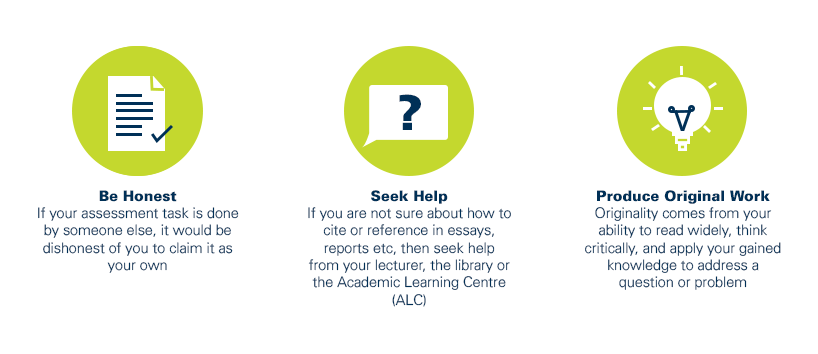
As a CQUniversity student you are expected to act honestly in all aspects of your academic work.
Any assessable work undertaken or submitted for review or assessment must be your own work. Assessable work is any type of work you do to meet the assessment requirements in the unit, including draft work submitted for review and feedback and final work to be assessed.
When you use the ideas, words or data of others in your assessment, you must thoroughly and clearly acknowledge the source of this information by using the correct referencing style for your unit. Using others’ work without proper acknowledgement may be considered a form of intellectual dishonesty.
Participating honestly, respectfully, responsibly, and fairly in your university study ensures the CQUniversity qualification you earn will be valued as a true indication of your individual academic achievement and will continue to receive the respect and recognition it deserves.
As a student, you are responsible for reading and following CQUniversity’s policies, including the Student Academic Integrity Policy and Procedure. This policy sets out CQUniversity’s expectations of you to act with integrity, examples of academic integrity breaches to avoid, the processes used to address alleged breaches of academic integrity, and potential penalties.
What is a breach of academic integrity?
A breach of academic integrity includes but is not limited to plagiarism, self-plagiarism, collusion, cheating, contract cheating, and academic misconduct. The Student Academic Integrity Policy and Procedure defines what these terms mean and gives examples.
Why is academic integrity important?
A breach of academic integrity may result in one or more penalties, including suspension or even expulsion from the University. It can also have negative implications for student visas and future enrolment at CQUniversity or elsewhere. Students who engage in contract cheating also risk being blackmailed by contract cheating services.
Where can I get assistance?
For academic advice and guidance, the Academic Learning Centre (ALC) can support you in becoming confident in completing assessments with integrity and of high standard.
What can you do to act with integrity?