Overview
This unit is the second of two units which focus on mental disorders across the lifespan and case formulation. In this unit you will explore mental disorders most prevalent in adulthood. A problem-based learning approach will be used, providing you with the opportunity to engage in self-reflective practice and synthesise your knowledge and application of mental disorder classification (using the Diagnostic and Statistical Manual (DSM) and International Classification of Diseases (ICD), diagnosis, and case formulation. The study of mental disorders will involve exploration of genetic, biological, psychological, and social factors. The role of these factors will be considered in the development of mental disorders and possible intervention pathways. You will employ professional communication skills in a socially and culturally responsive manner to develop and present your case formulations.
Details
Pre-requisites or Co-requisites
Students must be enrolled in CL68 Master of Professional Psychology
Important note: Students enrolled in a subsequent unit who failed their pre-requisite unit, should drop the subsequent unit before the census date or within 10 working days of Fail grade notification. Students who do not drop the unit in this timeframe cannot later drop the unit without academic and financial liability. See details in the Assessment Policy and Procedure (Higher Education Coursework).
Offerings For Term 2 - 2022
Attendance Requirements
All on-campus students are expected to attend scheduled classes - in some units, these classes are identified as a mandatory (pass/fail) component and attendance is compulsory. International students, on a student visa, must maintain a full time study load and meet both attendance and academic progress requirements in each study period (satisfactory attendance for International students is defined as maintaining at least an 80% attendance record).
Recommended Student Time Commitment
Each 6-credit Postgraduate unit at CQUniversity requires an overall time commitment of an average of 12.5 hours of study per week, making a total of 150 hours for the unit.
Class Timetable
Assessment Overview
Assessment Grading
This is a pass/fail (non-graded) unit. To pass the unit, you must pass all of the individual assessment tasks shown in the table above.
All University policies are available on the CQUniversity Policy site.
You may wish to view these policies:
- Grades and Results Policy
- Assessment Policy and Procedure (Higher Education Coursework)
- Review of Grade Procedure
- Student Academic Integrity Policy and Procedure
- Monitoring Academic Progress (MAP) Policy and Procedure - Domestic Students
- Monitoring Academic Progress (MAP) Policy and Procedure - International Students
- Student Refund and Credit Balance Policy and Procedure
- Student Feedback - Compliments and Complaints Policy and Procedure
- Information and Communications Technology Acceptable Use Policy and Procedure
This list is not an exhaustive list of all University policies. The full list of University policies are available on the CQUniversity Policy site.
Feedback, Recommendations and Responses
Every unit is reviewed for enhancement each year. At the most recent review, the following staff and student feedback items were identified and recommendations were made.
Feedback from Student feedback
Students reported that it was useful to adapt the lecture content to their interests, and to leave a couple of weeks of lectures open to the choice of the students and teaching staff.
Keep the final two lectures of the unit as open choice for students and teaching staff to collaboratively decide what content should be covered. This may include revisiting a topic already completed during the term, or a new topic that has not been covered.
Feedback from Student feedback
There are too many assessment items, and the requirement for each student to provide feedback to every other student for the psychoeducation video is unnecessarily onerous.
Teaching staff to review assessment items and consider reducing the number of assessment and/or feedback tasks.
Feedback from Student feedback
The Interprofessional Education (IPE) component was a valuable learning experience but was not well organised or explained to students.
Dedicate more time to explaining and discussing the IPE components of the unit to students, and checking in weekly with the students about their experience with the IPE component.
- Demonstrate advanced knowledge of mental disorder diagnostic criteria related to mental health issues experienced in adulthood.
- Apply relevant theoretical frameworks to case formulation for mental health disorders experienced during adulthood.
- Employ professional communication skills in a socially and culturally responsive manner.
Learning outcomes are drawn from specifications for study at level 9 as indicated by the Australian Qualifications Framework (AQF), program of study criteria as stated by the Psychology Board of Australia (PsychBA), and the following core competencies stated by the Australian Psychology Accreditation Council (APAC):
- 3.2 Apply evidence-based and scientific methods to professional practice across the lifespan in empirically valid and culturally responsive ways,
- 3.3 Employ professional communication skills, in a culturally responsive manner, with a range of socially and culturally diverse clients,
- 3.5 Identify psychological disorders using a recognised taxonomy,
- 3.6 Conduct professional interviews and assessments and synthesise information from multiple sources, including assessment of risk, to formulate a conceptualisation of the presenting issues to determine the most appropriate interventions, including management of risk, and
- 3.14 Engage in self-reflective professional practice, taking account of the impact of their own values and beliefs, and taking appropriate actions as a result (APAC, 2019, p.13-14).
Alignment of Assessment Tasks to Learning Outcomes
| Assessment Tasks | Learning Outcomes | ||
|---|---|---|---|
| 1 | 2 | 3 | |
| 1 - Presentation - 0% | |||
| 2 - Reflective Practice Assignment - 0% | |||
| 3 - Online Test - 0% | |||
Alignment of Graduate Attributes to Learning Outcomes
| Graduate Attributes | Learning Outcomes | ||
|---|---|---|---|
| 1 | 2 | 3 | |
| 1 - Knowledge | |||
| 2 - Communication | |||
| 3 - Cognitive, technical and creative skills | |||
| 4 - Research | |||
| 5 - Self-management | |||
| 6 - Ethical and Professional Responsibility | |||
| 7 - Leadership | |||
| 8 - First Nations Knowledges | |||
| 9 - Aboriginal and Torres Strait Islander Cultures | |||
Textbooks
Diagnostic and statistical manual of mental disorders
- Fifth Edition (2013)
- Authors: American Psychiatric Association
- American Psychiatric Association
- Arlington Arlington , Virginia , United States
- ISBN: 978-0-89042-555-8
- Binding: Paperback
Publication Manual of the American Psychological Association
- Seventh edition (2019)
- Authors: American Psychological Association
- American Psychological Association
- Washington Washington , District of Columbia , United States
- ISBN: 978-1-4338-3216-1
- Binding: Paperback
IT Resources
- CQUniversity Student Email
- Internet
- Unit Website (Moodle)
All submissions for this unit must use the referencing style: American Psychological Association 7th Edition (APA 7th edition)
For further information, see the Assessment Tasks.
m.m.attwood@cqu.edu.au
h.g.mason@cqu.edu.au
Week 1
Begin Date: 11 Jul 2022Module/Topic
Introduction and Term Overview
Mood Disorders and Case Formulation
Chapter
Check weekly schedule on Moodle for required additional readings.
Events and Submissions/Topic
Week 2
Begin Date: 18 Jul 2022Module/Topic
Anxiety Disorders and Somatic Symptom Disorders
Chapter
Check weekly schedule on Moodle for required additional readings.
Events and Submissions/Topic
Week 3
Begin Date: 25 Jul 2022Module/Topic
Substance-Related and Addictive Disorders
Chapter
Check weekly schedule on Moodle for required additional readings.
Events and Submissions/Topic
Reflective Practice Assignment
Due: Week 3 Friday (29th July 2022) 11.59PM AEST
Reflective Practice Assignment Due: Week 3 Friday (29 July 2022) 11:59 pm AEST
Week 4
Begin Date: 01 Aug 2022Module/Topic
Trauma- and Stressor-Related Disorders
Chapter
Check weekly schedule on Moodle for required additional readings.
Events and Submissions/Topic
Case Presentations (in class) and Diagnostic Handouts as organised in week 1
Note: Students enrolled full-time will be in Cairns for a residential school this week
Week 5
Begin Date: 08 Aug 2022Module/Topic
Personality Disorders
Chapter
Check weekly schedule on Moodle for required additional readings.
Events and Submissions/Topic
Case Presentations (in class) and Diagnostic Handouts as organised in week 1
Vacation Week
Begin Date: 15 Aug 2022Module/Topic
Chapter
Events and Submissions/Topic
Week 6
Begin Date: 22 Aug 2022Module/Topic
Feeding and Eating Disorders
Chapter
Check weekly schedule on Moodle for required additional readings.
Events and Submissions/Topic
Case Presentations (in class) and Diagnostic Handouts as organised in week 1
Week 7
Begin Date: 29 Aug 2022Module/Topic
Schizophrenia Spectrum and Other Disorders
Chapter
Check weekly schedule on Moodle for required additional readings.
Events and Submissions/Topic
Case Presentations (in class) and Diagnostic Handouts as organised in week 1
Week 8
Begin Date: 05 Sep 2022Module/Topic
Sexual and Gender Disorders
Chapter
Check weekly schedule on Moodle for required additional readings.
Events and Submissions/Topic
Case Presentations (in class) and Diagnostic Handouts as organised in week 1
Week 9
Begin Date: 12 Sep 2022Module/Topic
Neurocognitive Disorders
Chapter
Check weekly schedule on Moodle for required additional readings.
Events and Submissions/Topic
Case Presentations (in class) and Diagnostic Handouts as organised in week 1
Week 10
Begin Date: 19 Sep 2022Module/Topic
Chapter
Check weekly schedule on Moodle for required additional readings.
Events and Submissions/Topic
Case Presentations (in class) and Diagnostic Handouts as organised in week 1
Week 11
Begin Date: 26 Sep 2022Module/Topic
Case Presentations and Review of Content
Chapter
Check weekly schedule on Moodle for required additional readings.
Events and Submissions/Topic
Case Presentations (in class) and Diagnostic Handouts as organised in week 1
Week 12
Begin Date: 03 Oct 2022Module/Topic
Online Test
Chapter
No readings this week
Events and Submissions/Topic
Online test to be completed in class time.
Presentation and Psychoeducation Handouts Due: Week 12 Friday (7 October 2022) 11:59 pm AEST
Online Test Due: Week 12 Wednesday (5 October 2022) 3:15 pm AEST
Case Presentation and Psychoeducation Handouts Due: Week 12 Friday (7 Oct 2022) 11:59 pm AEST
Online Test Due: Week 12 Wednesday (5 Oct 2022) 3:15 pm AEST
Review/Exam Week
Begin Date: 10 Oct 2022Module/Topic
Chapter
Events and Submissions/Topic
Exam Week
Begin Date: 17 Oct 2022Module/Topic
Chapter
Events and Submissions/Topic
As this is a competency-based unit, a pass grade is 70% or greater. If a student fails an assessment item, they will be offered a re-submission attempt, as per the CQUniversity Assessment Policy and Procedure (Higher Education Coursework).
1 Presentation
You will be required to conduct one 15min Case Presentation and develop two Psychoeducation Handouts. Individual student topics will be chosen from the disorders covered in this unit this term and allocated by the Unit Coordinator in week 1.
Case Presentation
You will work in groups throughout the term to examine case scenarios in detail. Each student will be required to deliver one Case Presentation (maximum of 15mins) for their group and facilitate a discussion about the case in class. Groups and topics will allocated by the Unit Coordinator in week 1. Further detail about this task will be provided in class and on Moodle in week 1.
Psychoeducation Handouts
You will be required to develop two diagnostic handouts - one for your colleagues, and another that would be helpful to provide to a client. Handouts are to be one A4 page (can be double-sided). A list of references must be included (whilst in APA 7 format, the reference list does not need to be double line spacing or size 12 font). The aim of this task is to facilitate the learning of both you and your fellow students, in conjunction with developing some practical and helpful resources for your professional practice.
Week 12 Friday (7 Oct 2022) 11:59 pm AEST
Presentations to be completed in class and Psychoeducation Handouts to be uploaded to Moodle as organised in week 1.
Exam Week Friday (21 Oct 2022)
Feedback will be uploaded through assessment portal on Moodle
Assessment criteria for both tasks will be based on the following:
Quality and usefulness for target audience
Clarity of information
Evidence of critical thinking and synthesis of information
References
Assessment within stated limits
- Apply relevant theoretical frameworks to case formulation for mental health disorders experienced during adulthood.
- Employ professional communication skills in a socially and culturally responsive manner.
2 Reflective Practice Assignment
You will be required to engage in reflective practice in relation to your learning and consider how it relates to components of your practice framework. You will be required to write one reflection (800 to 1,000 words in length). This assignment should include clear and critical consideration of each stage of reflective practice, and tie your reflections to practice framework.
An Information Sheet and Marking rubric will be provided on Moodle in Week 1.
Week 3 Friday (29 July 2022) 11:59 pm AEST
Upload through Assessment portal on Moodle.
Week 5 Friday (12 Aug 2022)
Feedback will be uploaded through assessment portal on Moodle.
Assessment criteria will be based on the following:
Demonstrated clear consideration of each stage of reflective practice
Tied reflection to components of practice framework
Demonstrated critical reflection, including reflexivity (critical reflection of self)
High quality academic writing
Adherence to APA 7 standards
- Demonstrate advanced knowledge of mental disorder diagnostic criteria related to mental health issues experienced in adulthood.
- Employ professional communication skills in a socially and culturally responsive manner.
3 Online Test
You will be required to complete an online test during normal class time in week 12. All content covered up to and including week 11 in this unit is to be considered when reviewing for this test.
The question format may be a vignette/scenario, direct question, or multiple-choice format.
Week 12 Wednesday (5 Oct 2022) 3:15 pm AEST
To be completed via Moodle in class time.
Exam Week Wednesday (19 Oct 2022)
Feedback will be provided through Moodle.
No Assessment Criteria
- Demonstrate advanced knowledge of mental disorder diagnostic criteria related to mental health issues experienced in adulthood.
- Apply relevant theoretical frameworks to case formulation for mental health disorders experienced during adulthood.
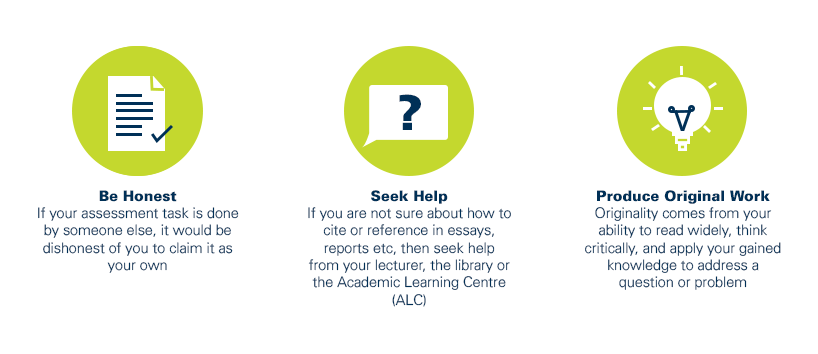
As a CQUniversity student you are expected to act honestly in all aspects of your academic work.
Any assessable work undertaken or submitted for review or assessment must be your own work. Assessable work is any type of work you do to meet the assessment requirements in the unit, including draft work submitted for review and feedback and final work to be assessed.
When you use the ideas, words or data of others in your assessment, you must thoroughly and clearly acknowledge the source of this information by using the correct referencing style for your unit. Using others’ work without proper acknowledgement may be considered a form of intellectual dishonesty.
Participating honestly, respectfully, responsibly, and fairly in your university study ensures the CQUniversity qualification you earn will be valued as a true indication of your individual academic achievement and will continue to receive the respect and recognition it deserves.
As a student, you are responsible for reading and following CQUniversity’s policies, including the Student Academic Integrity Policy and Procedure. This policy sets out CQUniversity’s expectations of you to act with integrity, examples of academic integrity breaches to avoid, the processes used to address alleged breaches of academic integrity, and potential penalties.
What is a breach of academic integrity?
A breach of academic integrity includes but is not limited to plagiarism, self-plagiarism, collusion, cheating, contract cheating, and academic misconduct. The Student Academic Integrity Policy and Procedure defines what these terms mean and gives examples.
Why is academic integrity important?
A breach of academic integrity may result in one or more penalties, including suspension or even expulsion from the University. It can also have negative implications for student visas and future enrolment at CQUniversity or elsewhere. Students who engage in contract cheating also risk being blackmailed by contract cheating services.
Where can I get assistance?
For academic advice and guidance, the Academic Learning Centre (ALC) can support you in becoming confident in completing assessments with integrity and of high standard.
What can you do to act with integrity?