Overview
Evidence-based practice is an integral component of practicing as a psychologist, and aligns with the scientist-practitioner model. It is essential that you establish and evaluate your professional practice work based on scientific research. This unit will equip you with knowledge and skills related to the conduct of research evaluation in a professional practice context.
Details
Pre-requisites or Co-requisites
There are no requisites for this unit.
Important note: Students enrolled in a subsequent unit who failed their pre-requisite unit, should drop the subsequent unit before the census date or within 10 working days of Fail grade notification. Students who do not drop the unit in this timeframe cannot later drop the unit without academic and financial liability. See details in the Assessment Policy and Procedure (Higher Education Coursework).
Offerings For Term 2 - 2026
Attendance Requirements
All on-campus students are expected to attend scheduled classes - in some units, these classes are identified as a mandatory (pass/fail) component and attendance is compulsory. International students, on a student visa, must maintain a full time study load and meet both attendance and academic progress requirements in each study period (satisfactory attendance for International students is defined as maintaining at least an 80% attendance record).
Recommended Student Time Commitment
Each 6-credit Postgraduate unit at CQUniversity requires an overall time commitment of an average of 12.5 hours of study per week, making a total of 150 hours for the unit.
Class Timetable
Assessment Overview
Assessment Grading
This is a graded unit: your overall grade will be calculated from the marks or grades for each assessment task, based on the relative weightings shown in the table above. You must obtain an overall mark for the unit of at least 50%, or an overall grade of 'pass' in order to pass the unit. If any 'pass/fail' tasks are shown in the table above they must also be completed successfully ('pass' grade). You must also meet any minimum mark requirements specified for a particular assessment task, as detailed in the 'assessment task' section (note that in some instances, the minimum mark for a task may be greater than 50%). Consult the University's Grades and Results Policy for more details of interim results and final grades.
All University policies are available on the CQUniversity Policy site.
You may wish to view these policies:
- Grades and Results Policy
- Assessment Policy and Procedure (Higher Education Coursework)
- Review of Grade Procedure
- Student Academic Integrity Policy and Procedure
- Academic Progression Policy and Procedure
- Student Refund and Credit Balance Policy and Procedure
- Complaints Policy and Procedure
- Information and Communications Technology Acceptable Use Policy and Procedure
This list is not an exhaustive list of all University policies. The full list of University policies are available on the CQUniversity Policy site.
Feedback, Recommendations and Responses
Every unit is reviewed for enhancement each year. At the most recent review, the following staff and student feedback items were identified and recommendations were made.
Feedback from In class and Student Unit Evaluation.
Some students indicated that they would prefer an alternative assessment, to the current systematic or scoping review.
Consider changing the assessment to an evidence-based practice guide, drawing on current research and practice-based evidence.
Feedback from In class and Student Unit Evaluation.
Some students requested less readings and clearer guidance on using the available teaching materials.
Consider refining teaching materials to focus on more specific content while providing clearer guidance on how to navigate these resources.
- Communicate research in a manner that is professional, ethical, and culturally appropriate, and critically considers prior literature relevant to the professional practice of psychology.
- Plan and produce a substantive individual research evaluation report relevant to the practice of psychology.
Learning outcomes are related to core competencies specified by the Psychology Board of Australia (PsyBA), program of study criteria as stated by the Australian Psychology Accreditation Council (APAC), and specifications for study at level 9 as indicated by the Australian Qualifications Framework (AQF).
This unit addresses Professional Competencies as specified by the Australian Psychology Accrediation Council (APAC). This unit specifically aligns to the following APAC competencies:
3.2 Apply evidence-based and scientific methods to professional practice across the lifespan in empirically valid and culturally responsive ways.
3.3 Employ professional communication skills, in a culturally responsive manner, with a range of socially and culturally diverse clients.
3.8 Interpret and communicate findings in oral and written formats, including formal psychological reports, using culturally appropriate language.
3.10 Demonstrate respect for the skills and contribution of other professionals.
3.15 Evaluate the effectiveness of their professional practice, identifying areas for improvement and implementing changes where needed.
3.16 Critically evaluate contemporary scientific literature to inform practice.
3.17 Investigate a substantive individual research question relevant to the discipline of psychology.
Alignment of Assessment Tasks to Learning Outcomes
| Assessment Tasks | Learning Outcomes | |
|---|---|---|
| 1 | 2 | |
| 1 - Research Proposal - 0% | ||
| 2 - Self assessment - 0% | ||
| 3 - Report - 100% | ||
Alignment of Graduate Attributes to Learning Outcomes
| Graduate Attributes | Learning Outcomes | |
|---|---|---|
| 1 | 2 | |
| 1 - Knowledge | ||
| 2 - Communication | ||
| 3 - Cognitive, technical and creative skills | ||
| 4 - Research | ||
| 5 - Self-management | ||
| 6 - Ethical and Professional Responsibility | ||
| 7 - Leadership | ||
| 8 - First Nations Knowledges | ||
| 9 - Aboriginal and Torres Strait Islander Cultures | ||
Textbooks
There are no required textbooks.
IT Resources
- CQUniversity Student Email
- Internet
- Unit Website (Moodle)
All submissions for this unit must use the referencing style: American Psychological Association 7th Edition (APA 7th edition)
For further information, see the Assessment Tasks.
a.filgueirasgoncalves@cqu.edu.au
Week 1
Begin Date: 13 Jul 2026Module/Topic
Research evaluation
- Getting started in evaluation research
- Types of evaluation
- Evaluation approaches and evaluation questions
- Developing guidelines for practice
Chapter
National Health and Medical Research Council. (2025). Guidelines for Guidelines: Developing your Guidelines. Link on Moddle site.
National Health and Medical Research Council. (2025). Procedures and requirements for meeting the NHMRC standards for clinical practice guidelines. Available at: Link on Moddle site.
Additional required and recommended readings, and additional resources will be available through the Unit e-reading list and the Unit Moodle site.
Events and Submissions/Topic
Week 2
Begin Date: 20 Jul 2026Module/Topic
Forming the questions
- Methods in evaluation research
- Question formulation approaches
- Writing your project plan
- Tools for evaluating evidence
Chapter
National Health and Medical Research Council. (2025). Guidelines for Guidelines: Developing your Guidelines. Link on Moddle site.
National Health and Medical Research Council. (2025). Procedures and requirements for meeting the NHMRC standards for clinical practice guidelines. Link on Moddle site.
Montessori Australia Foundation. (2015). Evidence-based practice in autism schools. 2nd Edition: National Autism Center. Link on Moddle site.
Additional required and recommended readings, and additional resources will be available through the Unit e-reading list and the Unit Moodle site.
Events and Submissions/Topic
Week 3
Begin Date: 27 Jul 2026Module/Topic
Developing the project plan
- Finalising your question and project plan
- Gold-standard framework for identifying and selecting evidence -- PRISMA
- Tools for literature search -- Covidence and other library organisers
Chapter
Osaji, J., Ojimba, C., & Ahmed, S. (2020). The use of acceptance and commitment therapy in substance use disorders: a review of literature. Journal of clinical medicine research, 12(10), 629. Link on Moddle site.
Page, M. J., Moher, D., Bossuyt, P. M., Boutron, I., Hoffmann, T. C., Mulrow, C. D., Shamseer, L., Tetzlaff, J. M., Akl, E. A., Brennan, S. E., Chou, R., Glanville, J., Grimshaw, J. M., Hróbjartsson, A., Lalu, M. M., Li, T., Loder, E. W., Mayo-Wilson, E., McDonald, S., … McKenzie, J. E. (2021). PRISMA 2020 explanation and elaboration: Updated guidance and exemplars for reporting systematic reviews. BMJ, 372, 160.
Link on Moddle site.
Tricco, A. C., Lillie, E., Zarin, W., O’Brien, K. K., Colquhoun, H., Levac, D., Moher, D., Peters, M. D. J., Horsley, T., Weeks, L., Hempel, S., Akl, E. A., Chang, C., McGowan, J., Stewart, L., Hartling, L., Aldcroft, A., Wilson, M. G., Garritty, C., … Straus, S. E. (2018). PRISMA extension for scoping reviews (PRISMA-ScR): Checklist and explanation. Annals of Internal Medicine, 169(7), 467–473. Link on Moddle site.
Additional required and recommended readings, and additional resources will be available through the Unit e-reading list and the Unit Moodle site.
Events and Submissions/Topic
Week 4
Begin Date: 03 Aug 2026Module/Topic
Data analysis in developing guidelines
- Different types of data
- Data presentation and analysis
- Data extraction in qualitative and quantitative methods
- Data interpretations and discussing your data
Chapter
Higgins, J. P. T., Thomas, J., Chandler, J., Cumpston, M., Li, T., Page, M. J., & Welch, V. A. (Eds.). (2024). Cochrane handbook for systematic reviews of interventions (Version 6.5). Cochrane. Link on Moddle site.
Ryder, H., & Filgueiras, A. (2026). Differences between the therapeutic use of art appreciation and production in depression, anxiety, and quality of life: a systematic review and meta-analysis. The Arts in Psychotherapy, 102475. Link on Moddle site.
Additional required and recommended readings, and additional resources will be available through the Unit e-reading list and the Unit Moodle site.
Events and Submissions/Topic
Week 5
Begin Date: 10 Aug 2026Module/Topic
Organising guidelines for practice
- Research questions
- Reviewing evidence
- Developing guidelines
- Writing the final report
Chapter
National Health and Medical Research Council. (2025). Guidelines for Guidelines: Developing your Guidelines. Link on Moddle site.
National Health and Medical Research Council. (2025). Procedures and requirements for meeting the NHMRC standards for clinical practice guidelines. Link on Moddle site.
Higgins, J. P. T., Thomas, J., Chandler, J., Cumpston, M., Li, T., Page, M. J., & Welch, V. A. (Eds.). (2024). Cochrane handbook for systematic reviews of interventions (Version 6.5). Cochrane. Link on Moddle site.
Additional required and recommended readings, and additional resources will be available through the Unit e-reading list and the Unit Moodle site.
Events and Submissions/Topic
Week 6
Begin Date: 17 Aug 2026Module/Topic
Workshop: Interpreting and synthesising findings.
- Workshop
- Group catch up and Q&A
- Individual sessions (see Moodle for availabilities)
Chapter
Required and recommended readings, and additional resources will be available through the Unit e-reading list and the Unit Moodle site.
Events and Submissions/Topic
Vacation Week
Begin Date: 24 Aug 2026Module/Topic
Chapter
Events and Submissions/Topic
Week 7
Begin Date: 31 Aug 2026Module/Topic
Workshop: Translating evidence into practice.
- Workshop
- Group catch up and Q&A
- Individual sessions (see Moodle for availabilities)
Chapter
Required and recommended readings, and additional resources will be available through the Unit e-reading list and the Unit Moodle site.
Events and Submissions/Topic
Week 8
Begin Date: 07 Sep 2026Module/Topic
Workshop: Writing guidelines for professional audiences.
- Workshop
- Group catch up and Q&A
- Individual sessions (see Moodle for availabilities)
Chapter
Required and recommended readings, and additional resources will be available through the Unit e-reading list and the Unit Moodle site.
Events and Submissions/Topic
Week 9
Begin Date: 14 Sep 2026Module/Topic
Workshop: Cross-Cultural and Indigenous psychology considerations for practice in diversity and inclusion.
- Workshop
- Group catch up and Q&A
- Individual sessions (see Moodle for availabilities)
Chapter
Required and recommended readings, and additional resources will be available through the Unit e-reading list and the Unit Moodle site.
Events and Submissions/Topic
Week 10
Begin Date: 21 Sep 2026Module/Topic
Individual Sessions (see Moodle for availabilities)
Chapter
Events and Submissions/Topic
Week 11
Begin Date: 28 Sep 2026Module/Topic
Individual Sessions (see Moodle for availabilities)
Chapter
Events and Submissions/Topic
Week 12
Begin Date: 05 Oct 2026Module/Topic
Individual Sessions (see Moodle for availabilities)
Chapter
Events and Submissions/Topic
Exam Week
Begin Date: 12 Oct 2026Module/Topic
Chapter
Events and Submissions/Topic
Vacation/Exam Week
Begin Date: 19 Oct 2026Module/Topic
Chapter
Events and Submissions/Topic
1 Research Proposal
A project plan is a concise and adaptable document that defines the scope, purpose, methods and timeline for developing evidence-informed guidelines for psychological practice. This includes a clear plan for how research evidence will be identified, evaluated, extracted and synthesised to inform practice, as well as how the proposed guidelines will consider ethical and cultural factors, including diverse populations such as First Nations People and other groups.
You will develop your own area of focus. Examples of possible topics include: investigating the effectiveness of psychological interventions for improving sleep in individuals with anxiety, or examining the effectiveness of a therapeutic approach, outlining how you will identify, evaluate, and synthesise relevant literature to inform practice.
Requirements:
You will submit a project plan for a set of practice guidelines, which will include:
- A proposed clearly formulated question
- An outline of the proposed method including how you intend to conduct literature search, selection, data extraction and analysis, and critical appraisal
- Consideration of ethical and cultural factor in the proposed area
- A justification for this approach and a summary of the planned project
Generative AI use - Level 3 (AI Collaboration)
Al may be used to help complete the task, including idea generation, drafting, feedback, and refinement. Students should critically evaluate and modify the Al suggested outputs, demonstrating their understanding.
You may use Al to assist with specific tasks such as drafting text, refining and evaluating your work. You must critically evaluate and modify any Al-generated content you use.
Week 5 Friday (14 Aug 2026) 11:59 pm AEST
Week 7 Friday (4 Sept 2026)
A marking rubric and example template for the evaluation plan will be made available on Moodle.
You will be given a mark of pass, fail or amendments required.
The project plan will be assessed according to the following elements:
- Inclusion of a clear and appropriately formulated research question relevant to psychological practice.
- Understanding of current knowledge in the topic area, including identification of key themes and gaps in the literature, with consideration of diverse populations.
- Development of a clear and appropriate literature search strategy, consistent with recognised approaches to evidence identification.
- A coherent plan for data extraction, analysis, and critical appraisal of the literature.
- Alignment between the research question, proposed methods, and intended application to psychology practice.
- Consideration of ethical and cultural factors, including implications for diverse populations and contexts of practice.
If a fail grade is received, you will be given one (1) opportunity to re-submit to receive a passing grade. This must be resubmitted within 7 days of the notification of a failing grade.
- Communicate research in a manner that is professional, ethical, and culturally appropriate, and critically considers prior literature relevant to the professional practice of psychology.
- Plan and produce a substantive individual research evaluation report relevant to the practice of psychology.
2 Self assessment
This task requires you to reflect on your progress in executing your project plan and preparing your final report. With support of an online form and the Unit Coordinator, you will review how your original project plan is implementing, identify any challenges encountered, and outline any changes made to your research question, methodology, or approach based on your engagement with the literature.
This task is also an opportunity to identify any concerns regarding your progress and seek guidance where required.
Requirements:
You are required to complete a self-assessment of your progress towards your final evaluation report.
A structured online form (Qualtrics) will be provided via Moodle to support this process.
This should be used as an opportunity to flag any concerns regarding progress with the Unit Coordinator.
Generative AI use - Level 3 (AI Collaboration)
Al may be used to help complete the task, including idea generation, drafting, feedback, and refinement. Students should critically evaluate and modify the Al suggested outputs, demonstrating their understanding.
You may use Al to assist with specific tasks such as drafting text, refining and evaluating your work. You must critically evaluate and modify any Al-generated content you use.
Week 8 Friday (11 Sept 2026) 11:59 pm AEST
Week 10 Friday (25 Sept 2026)
The progress report will be assessed according to the following criteria:
-
Demonstrates critical reflection on progress against the original project plan
-
Identifies key challenges and appropriate adjustments made to the research process
-
Demonstrates engagement with relevant literature, demonstrating emerging understanding of the topic area
-
Communicates ideas clearly and professionally
Completion and Submission of the progress report is compulsory, insufficient completion or non-submission will result in a Fail grade being awarded.
If a fail grade is received, you will be given one (1) opportunity to re-submit to receive a passing grade. This must be resubmitted within 7 days of the notification of a failing grade.
- Communicate research in a manner that is professional, ethical, and culturally appropriate, and critically considers prior literature relevant to the professional practice of psychology.
3 Report
Your final report should draw on established approaches to evaluation research and the and the NHMRC guidelines for guideline development, demonstrating how evidence has been critically evaluated and applied to inform real-world psychological practice.
Requirements:
Building on your Project Plan, you are required to develop, conduct, and write an Evaluation Report focused on guidelines to practice within your chosen topic area.
Your Research Evaluation Report should be 4000–6000 words and include sections typical of evaluation reports or practice guidelines (e.g., Introduction, Methods, Results, Discussion/Recommendations). You may choose to follow the author guidelines of a reputable journal; if so, these must be clearly identified and included as an appendix.
Generative AI use - Level 3 (AI Collaboration)
Al may be used to help complete the task, including idea generation, drafting, feedback, and refinement. Students should critically evaluate and modify the Al suggested outputs, demonstrating their understanding.
You may use Al to assist with specific tasks such as drafting text, refining and evaluating your work. You must critically evaluate and modify any Al-generated content you use.
Week 12 Friday (9 Oct 2026) 11:59 pm AEST
Vacation/Exam Week Friday (23 Oct 2026)
A detailed rubric will be available on Moodle.
Students will be assessed on the following:
- Understanding of the selected issue and its relevance to psychological practice
- Application of an appropriate research evaluation approach, including alignment between the research question, methodology, and intended outcomes
- Critical analysis and integration of relevant literature to inform evaluation and recommendations
- Quality and appropriateness of evidence-based recommendations for practice
- Consideration of culturally responsive practice, including relevance to Indigenous and other culturally diverse populations
- Recognition of limitations, ethical considerations, and implications for practice and future research
- Professional communication, including clarity, structure, coherence, and use of APA referencing
- Communicate research in a manner that is professional, ethical, and culturally appropriate, and critically considers prior literature relevant to the professional practice of psychology.
- Plan and produce a substantive individual research evaluation report relevant to the practice of psychology.
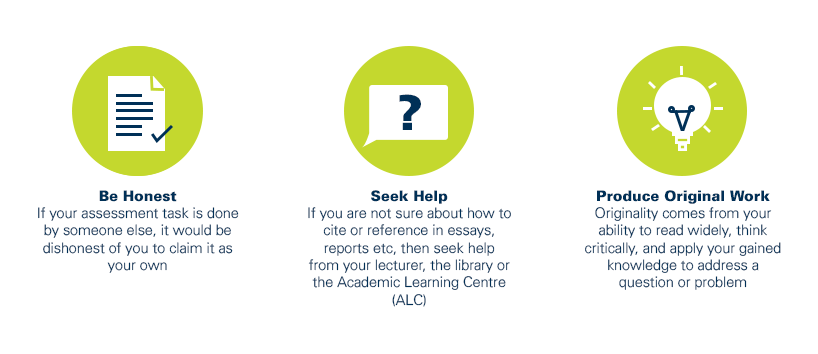
As a CQUniversity student you are expected to act honestly in all aspects of your academic work.
Any assessable work undertaken or submitted for review or assessment must be your own work. Assessable work is any type of work you do to meet the assessment requirements in the unit, including draft work submitted for review and feedback and final work to be assessed.
When you use the ideas, words or data of others in your assessment, you must thoroughly and clearly acknowledge the source of this information by using the correct referencing style for your unit. Using others’ work without proper acknowledgement may be considered a form of intellectual dishonesty.
Participating honestly, respectfully, responsibly, and fairly in your university study ensures the CQUniversity qualification you earn will be valued as a true indication of your individual academic achievement and will continue to receive the respect and recognition it deserves.
As a student, you are responsible for reading and following CQUniversity’s policies, including the Student Academic Integrity Policy and Procedure. This policy sets out CQUniversity’s expectations of you to act with integrity, examples of academic integrity breaches to avoid, the processes used to address alleged breaches of academic integrity, and potential penalties.
What is a breach of academic integrity?
A breach of academic integrity includes but is not limited to plagiarism, self-plagiarism, collusion, cheating, contract cheating, and academic misconduct. The Student Academic Integrity Policy and Procedure defines what these terms mean and gives examples.
Why is academic integrity important?
A breach of academic integrity may result in one or more penalties, including suspension or even expulsion from the University. It can also have negative implications for student visas and future enrolment at CQUniversity or elsewhere. Students who engage in contract cheating also risk being blackmailed by contract cheating services.
Where can I get assistance?
For academic advice and guidance, the Academic Learning Centre (ALC) can support you in becoming confident in completing assessments with integrity and of high standard.
What can you do to act with integrity?