Overview
Clinical Practice 4 builds on Clinical Practice 3 (PSYC22005) to provide you with advanced practice skills required for the professional competencies in clinical psychology specified by the Australian Psychology Accreditation Council (APAC) and to prepare you for the Registrar Program to gain an Area of Practice Endorsement in Clinical Psychology with the Psychology Board of Australia. This includes the culturally-sensitive, evidence-based practice of clinical psychology, both autonomously and as a member of a multidisciplinary team. During your clinical practicum in a community-based setting, you will continue to develop your knowledge and skills to formulate and share case conceptualisations and intervention plans.
Details
Pre-requisites or Co-requisites
Prerequisite: PSYC22005 Clinical Practice 3.
Important note: Students enrolled in a subsequent unit who failed their pre-requisite unit, should drop the subsequent unit before the census date or within 10 working days of Fail grade notification. Students who do not drop the unit in this timeframe cannot later drop the unit without academic and financial liability. See details in the Assessment Policy and Procedure (Higher Education Coursework).
Offerings For Term 2 - 2026
Attendance Requirements
All on-campus students are expected to attend scheduled classes - in some units, these classes are identified as a mandatory (pass/fail) component and attendance is compulsory. International students, on a student visa, must maintain a full time study load and meet both attendance and academic progress requirements in each study period (satisfactory attendance for International students is defined as maintaining at least an 80% attendance record).
Recommended Student Time Commitment
Each 6-credit Postgraduate unit at CQUniversity requires an overall time commitment of an average of 12.5 hours of study per week, making a total of 150 hours for the unit.
Class Timetable
Assessment Overview
Assessment Grading
This is a pass/fail (non-graded) unit. To pass the unit, you must pass all of the individual assessment tasks shown in the table above.
All University policies are available on the CQUniversity Policy site.
You may wish to view these policies:
- Grades and Results Policy
- Assessment Policy and Procedure (Higher Education Coursework)
- Review of Grade Procedure
- Student Academic Integrity Policy and Procedure
- Academic Progression Policy and Procedure
- Student Refund and Credit Balance Policy and Procedure
- Complaints Policy and Procedure
- Information and Communications Technology Acceptable Use Policy and Procedure
This list is not an exhaustive list of all University policies. The full list of University policies are available on the CQUniversity Policy site.
Feedback, Recommendations and Responses
Every unit is reviewed for enhancement each year. At the most recent review, the following staff and student feedback items were identified and recommendations were made.
Feedback from Direct student feedback
Students indicated that the Log of Hours template presented barriers to accurate record keeping for placement activities, resulting in additional workload.
The log of hours template to be updated to streamline processes, increase recording accuracy and reduce student workload for future cohorts. Including completion instructions for the log of hours with an exemplar record would support students in completing their logbooks accurately.
Feedback from In-class feedback
Students indicated that they found the discussion in group supervision extended their understanding of how to apply evidence-based knowledge to practice.
Continue to have discussions about the application of evidence-based knowledge to practice in group supervision.
- Perform clinical psychology assessment, diagnosis, intervention, and associated activities in a community-based clinical setting
- Apply ethical decision making in clinical psychological practice
- Communicate effectively and professionally with clients, specialist and nonspecialist audiences
- Critically reflect on knowledge, skills, and ability to independently provide professional clinical psychology services in a community-based setting.
The Learning Outcomes link with the Master of Clinical Psychology course Learning Outcomes: 1 ( Apply culturally-sensitive advanced knowledge of psychological theories of the aetiology, presentation, and progression of psychological disorders across the lifespan and relevant international taxonomies of classification of psychological disorders), 2 (Apply advanced knowledge of psychological developmental and biopsychosocial models of health), 3 (Conduct culturally responsive assessment of psychological disorders), and 4 (Implement culturally-responsive, evidence-based, clinical psychology interventions). The Learning Outcomes are designed to meet the Australian Psychology Accreditation Council (APAC) standards for Clinical Psychology courses, in particular, Clinical Psychology guidelines 4.2.1, 4.2.2, and 4.2.3.
Alignment of Assessment Tasks to Learning Outcomes
| Assessment Tasks | Learning Outcomes | |||
|---|---|---|---|---|
| 1 | 2 | 3 | 4 | |
| 1 - Professional Practice Placement - 0% | ||||
| 2 - Reflective Practice Assignment - 0% | ||||
| 3 - Presentation - 0% | ||||
| 4 - Case Study - 0% | ||||
| 5 - Practical Assessment - 0% | ||||
Alignment of Graduate Attributes to Learning Outcomes
| Graduate Attributes | Learning Outcomes | |||
|---|---|---|---|---|
| 1 | 2 | 3 | 4 | |
| 1 - Knowledge | ||||
| 2 - Communication | ||||
| 3 - Cognitive, technical and creative skills | ||||
| 4 - Research | ||||
| 5 - Self-management | ||||
| 6 - Ethical and Professional Responsibility | ||||
| 7 - Leadership | ||||
| 8 - First Nations Knowledges | ||||
| 9 - Aboriginal and Torres Strait Islander Cultures | ||||
Textbooks
Handbook of Clinical Psychopharmacology for Therapists
- 10th edition (2025)
- Authors: Preston, John D.; Moore, Bret A.; O'Neal, John H.; Talaga, Mary C.
- New Harbinger Publications
- Oakland Oakland , CA , USA
- ISBN: 9781648483684
IT Resources
- CQUniversity Student Email
- Internet
- Unit Website (Moodle)
All submissions for this unit must use the referencing style: American Psychological Association 7th Edition (APA 7th edition)
For further information, see the Assessment Tasks.
j.a.martin@cqu.edu.au
Week 1
Begin Date: 13 Jul 2026Module/Topic
Introduction to Clinical Practice 4
Expectations
Lectures and assessments
Placement discussion and supervision
Chapter
Events and Submissions/Topic
Week 2
Begin Date: 20 Jul 2026Module/Topic
Student case presentations
Group supervision sharing and discussing experiences on external WIL placement
Lecture: Psychopharmacology - Part 1
Chapter
Text: Handbook of Clinical Psychopharmacology for Therapists. Preston, John D.; Moore, Bret A,; O'Neal, John H.; Talaga, Mary C. 10th ed.; 2025
Relevant chapters, readings and resources will be added to Moodle as required.
Events and Submissions/Topic
Week 3
Begin Date: 27 Jul 2026Module/Topic
Student case presentations
Group supervision sharing and discussing experiences on external WIL placement
Lecture: Cultural Responsiveness - Part 1
Chapter
Relevant readings and resources will be added to Moodle as required.
Events and Submissions/Topic
Week 4
Begin Date: 03 Aug 2026Module/Topic
Student case presentations
Group supervision sharing and discussing experiences on external WIL placement
Lecture: eHealth and Digital Practice
Chapter
Relevant readings and resources will be added to Moodle as required.
Events and Submissions/Topic
Week 5
Begin Date: 10 Aug 2026Module/Topic
Student case presentations
Group supervision sharing and discussing experiences on external WIL placement
Lecture: Psychopharmacology - Part 2
Chapter
Relevant chapters, readings and resources will be added to Moodle as required.
Events and Submissions/Topic
Week 6
Begin Date: 17 Aug 2026Module/Topic
Student case presentations
Group supervision sharing and discussing experiences on external WIL placement
Lecture: Cultural Responsiveness - Part 2
Chapter
Relevant readings and resources will be added to Moodle as required.
Events and Submissions/Topic
Vacation Week
Begin Date: 24 Aug 2026Module/Topic
Chapter
Events and Submissions/Topic
Week 7
Begin Date: 31 Aug 2026Module/Topic
Student case presentations
Group supervision sharing and discussing experiences on external WIL placement
Viva practice
Chapter
Relevant readings and resources will be added to Moodle as required.
Events and Submissions/Topic
Week 8
Begin Date: 07 Sep 2026Module/Topic
Student case presentations
Group supervision sharing and discussing experiences on external WIL placement
Viva practice
Chapter
Relevant readings and resources will be added to Moodle as required.
Events and Submissions/Topic
Week 9
Begin Date: 14 Sep 2026Module/Topic
Student case presentations
Group supervision sharing and discussing experiences on external WIL placement
Viva practice
Chapter
Relevant readings and resources will be added to Moodle as required.
Events and Submissions/Topic
Week 10
Begin Date: 21 Sep 2026Module/Topic
Student case presentations
Group supervision sharing and discussing experiences on external WIL placement
Chapter
Relevant readings and resources will be added to Moodle as required.
Events and Submissions/Topic
Week 11
Begin Date: 28 Sep 2026Module/Topic
Student case presentations
Group supervision sharing and discussing experiences on external WIL placement
Chapter
Events and Submissions/Topic
Week 12
Begin Date: 05 Oct 2026Module/Topic
Student case presentations
Group supervision sharing and discussing experiences on external WIL placement
Preparation for the Registrar Program
Chapter
Events and Submissions/Topic
Exam Week
Begin Date: 12 Oct 2026Module/Topic
Chapter
Events and Submissions/Topic
Reflective Practice Due: Exam Week Monday (12 Oct 2026) 12:00 am AEST
Presentation Due: Exam Week Monday (12 Oct 2026) 12:00 am AEST
Vacation/Exam Week
Begin Date: 19 Oct 2026Module/Topic
Chapter
Events and Submissions/Topic
1 Professional Practice Placement
You will submit a portfolio of placement documentation for Clinical Practice 4, your final placement in your course. The portfolio records your placement arrangements, clinical practice, supervision, informed consent processes, and participation in mid- and end-placement reviews.
As this is your final placement, you are expected to demonstrate practice consistent with readiness for supervised independent practice. This includes safe, ethical and professional practice within your scope; increasing independence with appropriate use of supervision; and integration of psychological knowledge, clinical skills, professional judgement, cultural responsiveness, accessibility considerations, documentation requirements, and reflective practice.
You must submit:
1. Placement Agreement
A completed and signed agreement outlining placement setting, supervision arrangements, and requirements.
2. Mid- and End-of-Placement Reviews
Completed and signed documentation from both placement reviews. The mid-placement review provides feedback on your progress. The end-placement review determines whether you have met the expected final-placement standard.
3. Log of Clinical Practice and Weekly Supervision Records
A complete, accurate and supervisor-verified logbook recording clinical practice hours, supervision hours, critical self-reflection, and placement activities. Supervision records must be completed for each session.
4. Supervisor-Verified Informed Consent Log
A supervisor-verified, de-identified record confirming informed consent for client-related placement and coursework activities.
The 72-hour grace period applies to submission of this assessment. You must not use AI at any point during this assessment. You must demonstrate your skills and knowledge.
Exam Week Friday (16 Oct 2026) 5:00 pm AEST
Submit all forms on Moodle to the appropriate dropbox by the relevant due date.
To pass this assessment, all components must be complete, accurate, submitted on time, de-identified where required, and signed or supervisor-verified where required.
1. Placement Agreement:
Completed and signed by all required parties.
2. Psychologist Competencies:
Mid- and End-of-Placement Reviews: Completed and signed by all required parties, with evidence of progress at Mid-Placement Review and achievement of the final-placement standard at End-Placement Review.
At the Mid-Placement Review, your progress toward the required final-placement standard across the eight Psychology Board of Australia (PsyBA) competencies will be reviewed. If concerns are identified, a Placement Support Plan may be developed to support your progress. At the End-Placement Review, you must demonstrate the required final-placement standard across all eight competencies and receive an overall rating of Placement Passed. This assessment provides the primary evidence of clinical competence across the PsyBA professional competencies for psychologists.
The eight competencies are:
- Applies and builds scientific knowledge of psychology
- Practises ethically and professionally
- Exercises professional reflexivity, deliberate practice and self-care
- Conducts psychological assessments
- Conducts psychological interventions
- Communicates and relates effectively
- Demonstrates a health equity and human rights approach with diverse groups
- Demonstrates culturally safe and equity-informed practice with Aboriginal and Torres Strait Islander Peoples
Across all domains, you are assessed on ethical and professional practice, scientific reasoning, cultural responsiveness, accessibility awareness, digital competence, effective use of supervision, and attention to client safety, risk, strengths, preferences, context, and goals.
3. Log of Clinical Practice and Weekly Supervision Records:
Complete, accurate, and verified.
4. Supervisor-Verified Informed Consent Log:
De-identified, complete, and supervisor-verified.
Resubmission may be permitted where documentation is incomplete or inaccurate.
The 72-hour grace period applies to submission of this assessment. You must not use AI at any point during this assessment. You must demonstrate your skills and knowledge.
- Perform clinical psychology assessment, diagnosis, intervention, and associated activities in a community-based clinical setting
2 Reflective Practice Assignment
You will submit a 1000-word reflective journal based on your learning during placement. The journal should demonstrate how your experiences have informed your development toward independent practice under supervision.
You will draw on de-identified examples from your placement.
Your reflection must:
- Address ethical decision-making in a complex clinical situation
- Demonstrate critical reflection on your developing practice, including strengths, limits of competence, and use of supervision
- Include cultural responsiveness and cultural safety, including consideration of Aboriginal and Torres Strait Islander Peoples where relevant
- Integrate relevant psychopharmacological considerations
- Consider relevant eHealth or digital practice issues
Your reflection should link your learning to your future practice as an early career psychologist.
Informed Consent and Confidentiality:
You must only use de-identified placement material where informed consent has been obtained and all placement requirements are met.
The 72-hour grace period applies to submission of this assessment. You must not use AI at any point during this assessment. You must demonstrate your own skills and knowledge.
Exam Week Monday (12 Oct 2026) 12:00 am AEST
Upload articles to Moodle prior to presentation in class. Present in class on your assigned week, then upload presentation to Moodle before Monday of the following week.
You will be assessed on your ability to demonstrate the following:
1. Critical Reflection and Professional Development
Demonstrates depth of reflection, self-awareness, and links to future practice.
2. Ethical Decision-Making
Demonstrates understanding of ethical complexity, professional standards, use of supervision, and developing professional judgement.
3. Cultural Responsiveness and Applied Contextual Insight
Demonstrates culturally responsive and equity-informed thinking, including integration of relevant contextual and clinical considerations.
4. Psychopharmacology and Biopsychosocial Reasoning
Demonstrates awareness of psychopharmacological considerations relevant to clinical practice.
5. eHealth and Digital Practice
Demonstrates awareness of safe, ethical and contextually appropriate digital practice.
6. Professional Communication
Clear, concise, and well-structured writing that maintains confidentiality.
The 72-hour grace period applies to submission of this assessment. You must not use AI at any point during this assessment. You must demonstrate your skills and knowledge.
- Apply ethical decision making in clinical psychological practice
- Critically reflect on knowledge, skills, and ability to independently provide professional clinical psychology services in a community-based setting.
3 Presentation
You will deliver a 30-minute clinical case presentation based on a client from your placement, using de-identified information with informed consent.
The presentation should be structured as a clinical consultation and include:
- Case summary, referral question, presenting concerns, goals, and context
- Assessment information and risk considerations
- A 5P formulation integrating relevant biopsychosocial and contextual factors
- Diagnostic considerations
- Psychopharmacological considerations relevant to the case
- An evidence-informed assessment/intervention plan
- Consideration of service delivery mode (e.g., face-to-face, telehealth)
You will facilitate a brief discussion by responding to questions, considering alternative perspectives, and identifying areas of uncertainty or supervision needs.
Before presenting, you must submit a summary and formulation to the Moodle Assessment Portal, and provide link to 1–2 relevant academic sources to the Moodle Discussion Forum.
Informed Consent and Confidentiality:
You must comply with all placement requirements and only use de-identified client information where informed consent has been obtained.
The 72-hour grace period does not apply to submission of this assessment. You must present your case in the week you have been scheduled. You must not use AI at any point during this assessment. You must demonstrate your own skills and knowledge.
Exam Week Monday (12 Oct 2026) 12:00 am AEST
Upload research article link/s to Moodle before your presentation and a copy of your presentation before the Monday of the week following your presentation.
You will be assessed on your ability to demonstrate the following:
1. Professional Communication
Clear, structured, and appropriate presentation of clinical material.
2. Clinical Reasoning and Formulation
Coherent integration of assessment, diagnosis, and formulation.
3. Intervention/Assessment Planning
Evidence-informed and contextually appropriate clinical planning, including consideration of service delivery mode.
4. Integration of Psychopharmacological, Ethical, and Contextual Factors
Appropriate consideration of medication, ethical issues, and relevant contextual influences.
5. Professional Discussion and Responsiveness
Effective engagement in discussion and response to questions.
The 72-hour grace period does not apply to submission of this assessment. You must present your case in the week you have been scheduled. You must not use AI at any point during this assessment. You must demonstrate your own skills and knowledge.
- Communicate effectively and professionally with clients, specialist and nonspecialist audiences
4 Case Study
You are required to submit a 750-word written case study based on a client from your placement using de-identified information. This must be a different client from the one used for your case presentation.
The case study should demonstrate your ability to communicate clinical reasoning in a concise, professional written format.
Your case study should include:
- A brief case summary
- A case conceptualisation
- An assessment or intervention plan
- Consideration of relevant ethical and professional matters
- Consideration of relevant psychopharmacological factors
- Consideration of service delivery, including digital/eHealth practice
- A brief critical reflection on your learning and developing practice
Your work should integrate relevant biopsychosocial and contextual factors within your clinical reasoning.
Supervisor verification is required prior to submission.
Informed Consent and Confidentiality:
You must only use de-identified client information where informed consent has been obtained, and all placement requirements are met.
The 72-hour grace period applies to submission of this assessment. You must not use AI at any point during this assessment. You must demonstrate your skills and knowledge.
Week 12 Wednesday (7 Oct 2026) 5:00 pm AEST
Submit to dropbox in Moodle by the due date.
You will be assessed on your ability to demonstrate the following:
- Professional Written Communication
Clear, concise, and appropriate clinical writing. - Case Conceptualisation and Clinical Reasoning
Coherent integration of case material, formulation, and relevant biopsychosocial, cultural and contextual factors. - Intervention or Assessment Planning
Appropriate and evidence-informed planning. - Ethical, Professional and Culturally Responsive Practice
Appropriate consideration of ethical, professional, cultural, accessibility and scope-of-practice issues. - Psychopharmacological Considerations
Appropriate consideration of relevant medication-related factors. - Digital/eHealth Considerations
Appropriate consideration of service delivery, including digital practice. - Critical Reflection
Insight into learning, professional development, and use of supervision.
The 72-hour grace period applies to submission of this assessment. You must not use AI at any point during this assessment. You must demonstrate your skills and knowledge.
- Communicate effectively and professionally with clients, specialist and nonspecialist audiences
- Critically reflect on knowledge, skills, and ability to independently provide professional clinical psychology services in a community-based setting.
5 Practical Assessment
You will complete an individual Viva based on a provided clinical case study. During the Viva, you will respond to questions from a panel and demonstrate clinical reasoning appropriate to a student preparing for independent practice under supervision.
The Viva will include:
- Approximately 20 minutes responding to panel questions
- Panel deliberation, followed by feedback and outcome
Questions may address any of the PsyBA competency domains, including:
- assessment and diagnosis
- formulation and intervention
- ethical and professional decision-making
- cultural responsiveness, cultural safety, accessibility and health equity
- psychopharmacology
- eHealth/digital practice
- supervision, consultation and collaboration
You are expected to respond in a way that is safe, ethical, evidence-informed, culturally responsive, and professionally appropriate to the case.
The 72-hour grace period does not apply to this assessment, you must complete your Viva on the date and time scheduled. You must not use AI at any point during this assessment. You must demonstrate your skills and knowledge.
Week 11 Thursday (1 Oct 2026) 5:00 pm AEST
You will complete your Viva assessment in Week 10 or 11.
You will be assessed on your ability to demonstrate the following:
- Clinical Knowledge and Assessment Reasoning
Relevant clinical knowledge, diagnostic reasoning, assessment planning and risk awareness. - Case Formulation and Clinical Planning
Coherent formulation and appropriate assessment, intervention, monitoring, referral or discharge planning. - Evidence-Informed Decision-Making
Use of evidence-informed reasoning, client goals, feedback, strengths, preferences and context. - Ethical and Professional Practice
Safe and appropriate consideration of ethical, legal, professional, risk and scope-of-practice issues. - Cultural Responsiveness and Accessibility
Culturally responsive, culturally safe and equity-informed reasoning, including accessibility and Aboriginal and Torres Strait Islander considerations where relevant. - Psychopharmacological Reasoning
Relevant consideration of medication-related factors, biopsychosocial formulation, collaboration and limits of the psychologist’s role. - Digital/eHealth Reasoning
Appropriate consideration of digital practice, including suitability, consent, privacy, safety, accessibility and boundaries. - Professional Communication and Reflexivity
Clear professional communication, acknowledgement of uncertainty, use of supervision, and awareness of limits of competence.
If you do not pass the Viva on your first attempt, you may be offered one opportunity to complete a full or partial resit at a later date. You must pass the Viva to pass Clinical Practice 4.
The 72-hour grace period does not apply to this assessment. You must not use AI at any point during this assessment. You must demonstrate your skills and knowledge.
- Perform clinical psychology assessment, diagnosis, intervention, and associated activities in a community-based clinical setting
- Apply ethical decision making in clinical psychological practice
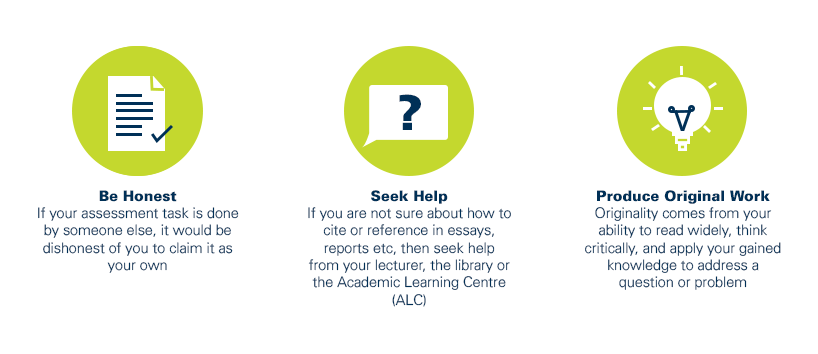
As a CQUniversity student you are expected to act honestly in all aspects of your academic work.
Any assessable work undertaken or submitted for review or assessment must be your own work. Assessable work is any type of work you do to meet the assessment requirements in the unit, including draft work submitted for review and feedback and final work to be assessed.
When you use the ideas, words or data of others in your assessment, you must thoroughly and clearly acknowledge the source of this information by using the correct referencing style for your unit. Using others’ work without proper acknowledgement may be considered a form of intellectual dishonesty.
Participating honestly, respectfully, responsibly, and fairly in your university study ensures the CQUniversity qualification you earn will be valued as a true indication of your individual academic achievement and will continue to receive the respect and recognition it deserves.
As a student, you are responsible for reading and following CQUniversity’s policies, including the Student Academic Integrity Policy and Procedure. This policy sets out CQUniversity’s expectations of you to act with integrity, examples of academic integrity breaches to avoid, the processes used to address alleged breaches of academic integrity, and potential penalties.
What is a breach of academic integrity?
A breach of academic integrity includes but is not limited to plagiarism, self-plagiarism, collusion, cheating, contract cheating, and academic misconduct. The Student Academic Integrity Policy and Procedure defines what these terms mean and gives examples.
Why is academic integrity important?
A breach of academic integrity may result in one or more penalties, including suspension or even expulsion from the University. It can also have negative implications for student visas and future enrolment at CQUniversity or elsewhere. Students who engage in contract cheating also risk being blackmailed by contract cheating services.
Where can I get assistance?
For academic advice and guidance, the Academic Learning Centre (ALC) can support you in becoming confident in completing assessments with integrity and of high standard.
What can you do to act with integrity?