Overview
This unit will equip you with strategies, skills and knowledge for promoting mental health and wellbeing in the workplace. On completion of this unit you will be able to implement practical evidence-based workplace initiatives designed to enhance individual, team and organisational mental health and performance capabilities. You will have the skills to assist in the development of resilience capabilities in other individuals. You will learn how to identify individuals who may not be coping well and how to interact with them to assist. The unit provides you with the opportunity to learn more about your own resilience capabilities in addition to gaining increased capability to intervene early and manage situations where the emotional wellbeing/resilience of others may be becoming compromised. The unit explores topics such as social engagement, problem-solving, signature strengths, emotional self-management, risk assessment and action planning within a work context.
Details
Pre-requisites or Co-requisites
There are no requisites for this unit.
Important note: Students enrolled in a subsequent unit who failed their pre-requisite unit, should drop the subsequent unit before the census date or within 10 working days of Fail grade notification. Students who do not drop the unit in this timeframe cannot later drop the unit without academic and financial liability. See details in the Assessment Policy and Procedure (Higher Education Coursework).
Offerings For Term 2 - 2026
Attendance Requirements
All on-campus students are expected to attend scheduled classes - in some units, these classes are identified as a mandatory (pass/fail) component and attendance is compulsory. International students, on a student visa, must maintain a full time study load and meet both attendance and academic progress requirements in each study period (satisfactory attendance for International students is defined as maintaining at least an 80% attendance record).
Recommended Student Time Commitment
Each 6-credit Postgraduate unit at CQUniversity requires an overall time commitment of an average of 12.5 hours of study per week, making a total of 150 hours for the unit.
Class Timetable
Assessment Overview
Assessment Grading
This is a graded unit: your overall grade will be calculated from the marks or grades for each assessment task, based on the relative weightings shown in the table above. You must obtain an overall mark for the unit of at least 50%, or an overall grade of 'pass' in order to pass the unit. If any 'pass/fail' tasks are shown in the table above they must also be completed successfully ('pass' grade). You must also meet any minimum mark requirements specified for a particular assessment task, as detailed in the 'assessment task' section (note that in some instances, the minimum mark for a task may be greater than 50%). Consult the University's Grades and Results Policy for more details of interim results and final grades.
All University policies are available on the CQUniversity Policy site.
You may wish to view these policies:
- Grades and Results Policy
- Assessment Policy and Procedure (Higher Education Coursework)
- Review of Grade Procedure
- Student Academic Integrity Policy and Procedure
- Academic Progression Policy and Procedure
- Student Refund and Credit Balance Policy and Procedure
- Complaints Policy and Procedure
- Information and Communications Technology Acceptable Use Policy and Procedure
This list is not an exhaustive list of all University policies. The full list of University policies are available on the CQUniversity Policy site.
Feedback, Recommendations and Responses
Every unit is reviewed for enhancement each year. At the most recent review, the following staff and student feedback items were identified and recommendations were made.
Feedback from Direct student feedback.
Students found weekly modules very helpful, and reported gaining knowledge and new skills relevant to real-world workplaces.
Maintain content style, with continued emphasis on real-world application of science.
Feedback from Direct student feedback.
Students acknowledged that while it may be challenging in an online course, they would like to learn more from their classmates about their workplace wellbeing experiences.
The unit coordinator will investigate options for incorporating a ‘learning from peers’ style activity for one of the scheduled tutorials.
- Analyse the interplay between personal and workplace factors in promoting and maintaining psychological health in the workplace
- Analyse and apply key behavioural, social and cognitive theories to promote and enhance psychological health in the workplace
- Review and assess mechanisms to change counterproductive mental habits and detect resilience resource deficits
- Design and develop an action plan to promote resilience and psychological wellbeing in the workplace.
Alignment of Assessment Tasks to Learning Outcomes
| Assessment Tasks | Learning Outcomes | |||
|---|---|---|---|---|
| 1 | 2 | 3 | 4 | |
| 1 - Case Study - 25% | ||||
| 2 - Reflective Practice Assignment - 15% | ||||
| 3 - Workplace Project - 60% | ||||
Alignment of Graduate Attributes to Learning Outcomes
| Graduate Attributes | Learning Outcomes | |||
|---|---|---|---|---|
| 1 | 2 | 3 | 4 | |
| 1 - Knowledge | ||||
| 2 - Communication | ||||
| 3 - Cognitive, technical and creative skills | ||||
| 4 - Research | ||||
| 5 - Self-management | ||||
| 6 - Ethical and Professional Responsibility | ||||
| 7 - Leadership | ||||
| 8 - First Nations Knowledges | ||||
| 9 - Aboriginal and Torres Strait Islander Cultures | ||||
Textbooks
There are no required textbooks.
IT Resources
- CQUniversity Student Email
- Internet
- Unit Website (Moodle)
All submissions for this unit must use the referencing style: American Psychological Association 7th Edition (APA 7th edition)
For further information, see the Assessment Tasks.
d.j.miller@cqu.edu.au
Week 1
Begin Date: 13 Jul 2026Module/Topic
Introduction to Workplace Mental Health.
Chapter
See resources supplied on Moodle.
Events and Submissions/Topic
Week 2
Begin Date: 20 Jul 2026Module/Topic
Theoretical Models for Workplace Wellbeing.
Chapter
See resources supplied on Moodle.
Events and Submissions/Topic
Tutorial 1: Wednesday 22 July 2026, 18:30–20:00 AEST
Week 3
Begin Date: 27 Jul 2026Module/Topic
Behavioural, Social, and Cognitive Approaches in Psychology.
Chapter
See resources supplied on Moodle.
Events and Submissions/Topic
Week 4
Begin Date: 03 Aug 2026Module/Topic
Physiology of Stress.
Chapter
See resources supplied on Moodle.
Events and Submissions/Topic
Assessment 1:
Workplace Case Study Due: Week 4 Monday (3 Aug 2026) 5:00 pm AEST
Week 5
Begin Date: 10 Aug 2026Module/Topic
Psychological Skills for Managing Stress.
Chapter
See resources supplied on Moodle.
Events and Submissions/Topic
Tutorial 2: Wednesday 12 August 2026, 18:30–20:00 AEST
Week 6
Begin Date: 17 Aug 2026Module/Topic
Optimising the Workplace for Wellbeing: Employer and Employee.
Chapter
See resources supplied on Moodle.
Events and Submissions/Topic
Vacation Week
Begin Date: 24 Aug 2026Module/Topic
No topic.
Chapter
See resources supplied on Moodle.
Events and Submissions/Topic
Week 7
Begin Date: 31 Aug 2026Module/Topic
Maintaining Wellbeing in Challenging Work Environments.
Chapter
See resources supplied on Moodle.
Events and Submissions/Topic
Week 8
Begin Date: 07 Sep 2026Module/Topic
Physical Health and Wellbeing.
Chapter
See resources supplied on Moodle.
Events and Submissions/Topic
Assessment 2:
Reflective Practice Due: Week 8 Monday (7 Sept 2026) 5:00 pm AEST
Week 9
Begin Date: 14 Sep 2026Module/Topic
Leadership and Organisational Culture.
Chapter
See resources supplied on Moodle.
Events and Submissions/Topic
Tutorial 3: Wednesday 16 September 2026, 18:30–20:00 AEST
Week 10
Begin Date: 21 Sep 2026Module/Topic
Translating Research into Action.
Chapter
See resources supplied on Moodle.
Events and Submissions/Topic
Week 11
Begin Date: 28 Sep 2026Module/Topic
Happiness in the Workplace and Beyond.
Chapter
See resources supplied on Moodle.
Events and Submissions/Topic
Assessment 3:
Workplace Project Due: Week 11 Friday (2 Oct 2026) 5:00 pm AEST
Week 12
Begin Date: 05 Oct 2026Module/Topic
Synthesis and Future Directions.
Chapter
See resources supplied on Moodle.
Events and Submissions/Topic
Exam Week
Begin Date: 12 Oct 2026Module/Topic
Chapter
See resources supplied on Moodle.
Events and Submissions/Topic
Vacation/Exam Week
Begin Date: 19 Oct 2026Module/Topic
Chapter
See resources supplied on Moodle.
Events and Submissions/Topic
1 Case Study
For assessment 1 you will be provided with a Workplace Case Study.
You will analyse the interplay between personal and workplace factors relating to the case study in two parts:
Part A - Annotated Bibliography (~800 words):
You will complete an annotated bibliography of three peer-reviewed articles provided by the unit coordinator. Discuss the aims, methodologies, findings, and limitations of each article. Follow APA guidelines for formatting, in-text referencing, and reference list.
Part B – Applying Evidence to a Case Study (~1000 words):
Building on from Part A, apply your understanding of concepts and evidence discussed in the peer-reviewed articles to the workplace case study.
This section should be written in a style that caters for readers that do not have knowledge on your topic (i.e., laypersons).
Follow APA guidelines for formatting, in-text referencing, and reference list.
Level of GenAI use allowed:
Level 3: You may use AI to assist with specific tasks such as drafting text, refining and evaluating your work. You must critically evaluate and modify any AI-generated content you use. Please refer to the unit Moodle site for further details on permissible uses of Generative-AI tools for this assessment task.
Week 4 Monday (3 Aug 2026) 5:00 pm AEST
Week 6 Monday (17 Aug 2026)
Assessment feedback will be provided within 2 weeks of submission.
Students will be assessed on:
- Discussion of the aims, methodologies, outcomes, and limitations of the articles.
- Application of evidence to case study, including analysis of the interplay between personal and workplace factors in promoting psychological health.
- Quality of written communication, including correct APA referencing and adherence to word count.
- Analyse the interplay between personal and workplace factors in promoting and maintaining psychological health in the workplace
- Analyse and apply key behavioural, social and cognitive theories to promote and enhance psychological health in the workplace
2 Reflective Practice Assignment
For assessment 2 you will complete the following steps:
- Reflect on an experience from your own workplace or study and relate it to one topic discussed in Assessment 1 (i.e., Burnout; Psychological Safety; or Physical Health & Wellbeing).
- Curate and record a 5-minute audio-visual recording that:
- Describes your experience and which topic it applies to.
- Identify and discuss a resilience resource-deficit (personal or organisational) in the context of your experience.
- Identify and discuss a mechanism to change this resource deficit in the context of your experience.
Level of GenAI use allowed
Level 3: You may use AI to assist with specific tasks such as drafting text, refining and evaluating your work. You must critically evaluate and modify any AI-generated content you use. Please refer to the unit Moodle site for further details on permissible uses of Generative-AI tools for this assessment task.
Week 8 Monday (7 Sept 2026) 5:00 pm AEST
Week 10 Monday (21 Sept 2026)
Assessment feedback will be provided within 2 weeks of submission.
Students will be assessed on:
- Integration of topic to personal experience.
- Identification and discussion of a resilience resource deficit.
- Identification and discussion of a mechanism for change.
- Clarity, tone, and professionalism of verbal communication.
- Review and assess mechanisms to change counterproductive mental habits and detect resilience resource deficits
3 Workplace Project
For assessment 3 you will complete the following steps:
- Identify a workplace with a large workforce (i.e., > 50 employees). Your chosen workplace can be a real organisation, or it can be hypothetical.
- Imagine that this organisation has requested a review of their workplace mental health practices. You have been tasked with:
- Conducting a review of current workplace mental health approaches
- Developing an action plan to improve workplace mental health of all employees
- Presenting your action plan to the entire organisation
- Creating a one-page information sheet that summarises your action plan
- In your presentation you must address:
-
The interplay between personal and workplace factors in promoting and maintaining psychological health
-
Behavioural, social, and cognitive theories to enhance workplace mental health
-
Mechanisms to change counterproductive mental habits and detect resilience resource-deficits
-
Practical strategies for fostering resilience and well-being in the workplace.
-
- Curate and present your action plan in a recorded PowerPoint presentation (15 minutes) and a one-page information sheet summarising the action plan.
Level of GenAI use allowed:
Level 3: You may use AI to assist with specific tasks such as drafting text, refining and evaluating your work. You must critically evaluate and modify any AI-generated content you use. Please refer to the unit Moodle site for further details on permissible uses of Generative-AI tools for this assessment task.
Week 11 Friday (2 Oct 2026) 5:00 pm AEST
Exam Week Friday (16 Oct 2026)
Assessment feedback will be provided within 2 weeks of submission.
Students will be assessed on:
- Discussion of the interplay between personal and workplace factors in promoting and maintaining psychological health in the workplace.
- Application of key behavioural, social, and cognitive theories to promote and enhance psychological health in the workplace.
- Application of strategies to (1) change counterproductive mental habits, (2) detect resilience resource deficits, and (3) foster resilience and psychological well-being.
- Communicate ideas clearly and professionally through a well-structured and engaging presentation and information sheet.
- Accurate use of appropriate references and visual aids, adherence to APA referencing requirements.
- Analyse the interplay between personal and workplace factors in promoting and maintaining psychological health in the workplace
- Analyse and apply key behavioural, social and cognitive theories to promote and enhance psychological health in the workplace
- Review and assess mechanisms to change counterproductive mental habits and detect resilience resource deficits
- Design and develop an action plan to promote resilience and psychological wellbeing in the workplace.
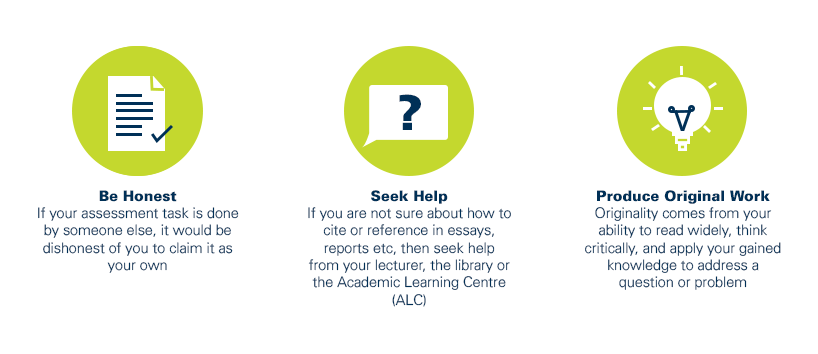
As a CQUniversity student you are expected to act honestly in all aspects of your academic work.
Any assessable work undertaken or submitted for review or assessment must be your own work. Assessable work is any type of work you do to meet the assessment requirements in the unit, including draft work submitted for review and feedback and final work to be assessed.
When you use the ideas, words or data of others in your assessment, you must thoroughly and clearly acknowledge the source of this information by using the correct referencing style for your unit. Using others’ work without proper acknowledgement may be considered a form of intellectual dishonesty.
Participating honestly, respectfully, responsibly, and fairly in your university study ensures the CQUniversity qualification you earn will be valued as a true indication of your individual academic achievement and will continue to receive the respect and recognition it deserves.
As a student, you are responsible for reading and following CQUniversity’s policies, including the Student Academic Integrity Policy and Procedure. This policy sets out CQUniversity’s expectations of you to act with integrity, examples of academic integrity breaches to avoid, the processes used to address alleged breaches of academic integrity, and potential penalties.
What is a breach of academic integrity?
A breach of academic integrity includes but is not limited to plagiarism, self-plagiarism, collusion, cheating, contract cheating, and academic misconduct. The Student Academic Integrity Policy and Procedure defines what these terms mean and gives examples.
Why is academic integrity important?
A breach of academic integrity may result in one or more penalties, including suspension or even expulsion from the University. It can also have negative implications for student visas and future enrolment at CQUniversity or elsewhere. Students who engage in contract cheating also risk being blackmailed by contract cheating services.
Where can I get assistance?
For academic advice and guidance, the Academic Learning Centre (ALC) can support you in becoming confident in completing assessments with integrity and of high standard.
What can you do to act with integrity?