Overview
This unit covers topics related to occupational health and wellbeing in organisations, emphasising the principles of good work design and the integration of occupational health and safety, health promotion, wellness, work design and productivity. Topics include common occupational health hazards such as manual tasks and sedentary work behaviours, as well as psychosocial hazards such as workplace bullying, occupational violence, shift work and fatigue, which lead to occupational stress.
Details
Pre-requisites or Co-requisites
There are no requisites for this unit.
Important note: Students enrolled in a subsequent unit who failed their pre-requisite unit, should drop the subsequent unit before the census date or within 10 working days of Fail grade notification. Students who do not drop the unit in this timeframe cannot later drop the unit without academic and financial liability. See details in the Assessment Policy and Procedure (Higher Education Coursework).
Offerings For Term 1 - 2026
Attendance Requirements
All on-campus students are expected to attend scheduled classes - in some units, these classes are identified as a mandatory (pass/fail) component and attendance is compulsory. International students, on a student visa, must maintain a full time study load and meet both attendance and academic progress requirements in each study period (satisfactory attendance for International students is defined as maintaining at least an 80% attendance record).
Recommended Student Time Commitment
Each 6-credit Postgraduate unit at CQUniversity requires an overall time commitment of an average of 12.5 hours of study per week, making a total of 150 hours for the unit.
Class Timetable
Assessment Overview
Assessment Grading
This is a graded unit: your overall grade will be calculated from the marks or grades for each assessment task, based on the relative weightings shown in the table above. You must obtain an overall mark for the unit of at least 50%, or an overall grade of 'pass' in order to pass the unit. If any 'pass/fail' tasks are shown in the table above they must also be completed successfully ('pass' grade). You must also meet any minimum mark requirements specified for a particular assessment task, as detailed in the 'assessment task' section (note that in some instances, the minimum mark for a task may be greater than 50%). Consult the University's Grades and Results Policy for more details of interim results and final grades.
All University policies are available on the CQUniversity Policy site.
You may wish to view these policies:
- Grades and Results Policy
- Assessment Policy and Procedure (Higher Education Coursework)
- Review of Grade Procedure
- Student Academic Integrity Policy and Procedure
- Academic Progression Policy and Procedure
- Student Refund and Credit Balance Policy and Procedure
- Complaints Policy and Procedure
- Information and Communications Technology Acceptable Use Policy and Procedure
This list is not an exhaustive list of all University policies. The full list of University policies are available on the CQUniversity Policy site.
Feedback, Recommendations and Responses
Every unit is reviewed for enhancement each year. At the most recent review, the following staff and student feedback items were identified and recommendations were made.
Feedback from SUTE Unit Comments
Students in the Graduate Certificate of Fatigue Management wanted a stronger focus on fatigue in this unit.
Students in the Certificate of Fatigue Management course make up about 28% of the students in this unit. Fatigue is only one of the psychosocial hazards covered in the unit and students are expected to learn about a wide range of psychosocial hazards across the unit. It is recommended that this might need to be made clearer to these students, as well as the fact that they can do their three assessments on fatigue if they would like to. They can therefore do a deep dive into fatigue if they choose. However, it is recommended to also consider if the fatigue as a psychosocial hazard content can be expanded in this unit.
Feedback from SUTE Unit Comments
One student found that this unit had no relevance to their Graduate Certificate of Fatigue Management course.
The Graduate Certificate of Fatigue Management is made up of 4 units, with only one being fully designated to fatigue management. Students should understand that the other units in this course are not solely focussed on fatigue when they enrol in the course. They should also understand that students from other courses take this unit as an elective. It is therefore recommended that students are made aware at the beginning of term that students other than those taking fatigue management enrol in this unit and therefore the unit will be much broader than just focusing on fatigue.
Feedback from SUTE Unit Comments
Students reported that they found the lectures enjoyable and that they appreciated and got value out of being able to tailor their assignment tasks to their own workplace.
It is recommended to keep the teaching style and workplace focussed assessment tasks the same for the next offering.
- Evaluate the inter-relationships between the workplace, work systems, work environment and people and their impact on the health and wellbeing of individuals
- Apply knowledge of occupational health and wellbeing and psychosocial hazards to the analysis of the design of work and work systems and effectively interpret and communicate findings to organisational stakeholders
- Assess the risk of injury and/or illness from work-related psychosocial hazards and examine factors that impede workplace performance and sustainability
- Evaluate and recommend appropriate changes in work design to optimise occupational health and wellbeing, improve organisational performance and sustainability, and demonstrate respect for human dignity and diversity through an understanding of the impact of health and psychosocial factors at the workplace.
Alignment of Assessment Tasks to Learning Outcomes
| Assessment Tasks | Learning Outcomes | |||
|---|---|---|---|---|
| 1 | 2 | 3 | 4 | |
| 1 - Group Discussion - 20% | ||||
| 2 - Case Study - 30% | ||||
| 3 - Written Assessment - 50% | ||||
Alignment of Graduate Attributes to Learning Outcomes
| Graduate Attributes | Learning Outcomes | |||
|---|---|---|---|---|
| 1 | 2 | 3 | 4 | |
| 1 - Knowledge | ||||
| 2 - Communication | ||||
| 3 - Cognitive, technical and creative skills | ||||
| 4 - Research | ||||
| 5 - Self-management | ||||
| 6 - Ethical and Professional Responsibility | ||||
| 7 - Leadership | ||||
| 8 - First Nations Knowledges | ||||
| 9 - Aboriginal and Torres Strait Islander Cultures | ||||
Textbooks
There are no required textbooks.
IT Resources
- CQUniversity Student Email
- Internet
- Unit Website (Moodle)
All submissions for this unit must use the referencing styles below:
For further information, see the Assessment Tasks.
k.klockner@cqu.edu.au
Week 1
Begin Date: 09 Mar 2026Module/Topic
Psychosocial Hazard Identification
Introduction to the unit, Moodle site and assessments
Psychosocial risk and workplace health, safety and wellbeing
Chapter
NB: All readings will be provided via the Moodle site however some key readings are listed here.
OHS Body of Knowledge (OHS BoK) - Chapter 8.1 The Human: Basic Psychological Principles
Safe Work Australia (2015). Work Related Mental Disorders Profile
Events and Submissions/Topic
Lecture
Week 2
Begin Date: 16 Mar 2026Module/Topic
Psychosocial Hazard Identification
Childhood Adverse Life Events
Neuroscience
Chapter
Centers for Disease Control and Prevention (CDC) - Adverse Childhood Experiences Study (ACE)
Events and Submissions/Topic
Lecture
Week 3
Begin Date: 23 Mar 2026Module/Topic
Psychosocial Hazard Identification
Occupational Stress
Social Context of Work
Bullying, Aggression and Violence
Chapter
OHS Bok - Chapter 19 - Psychosocial Hazards and Occupational Stress
OHS BoK - Chapter 8 - The Human: Basic Principles of Social Interaction
OHS BoK - Chapter 21 - Bullying & Violence
Events and Submissions/Topic
Lecture
Psychosocial Hazard Identification Due: Week 3 Friday (27 Mar 2026) 11:45 pm AEST
Week 4
Begin Date: 30 Mar 2026Module/Topic
Psychosocial Hazard Identification
Physical Work Environments
Cognitive Demands
Chapter
WorkSafe Queensland (2022). Psychosocial Risk Assessment Tool
Events and Submissions/Topic
Lecture
Week 5
Begin Date: 06 Apr 2026Module/Topic
Psychosocial Hazard Identification
The Organisation of Work
Chapter
OHS BoK - Chapter 20 Fatigue
OHS Bok - Chapter 10.2.1 Organisational Culture: A Search for Meaning
OHS BoK - Chapter 10.2.2 Organisational Culture: Reviewed and Repositioned
Events and Submissions/Topic
Lecture
Week 6
Begin Date: 13 Apr 2026Module/Topic
Psychosocial Hazard Management
OHS Law & Regulations
Codes of Practice
Chapter
WorkSafe Queensland (2022). Managing the Risk of Psychosocial Hazards at Work
Safe Work Australia (2022). Model Code of Practice: Managing Psychosocial Hazards at Work
Events and Submissions/Topic
Lecture
Vacation Week
Begin Date: 20 Apr 2026Module/Topic
Chapter
Events and Submissions/Topic
Week 7
Begin Date: 27 Apr 2026Module/Topic
Psychosocial Hazard Management
Assessing Psychosocial Risk
Risk Prevention
Chapter
AS/NZS ISO 45003:2021 OHS Management of Psychosocial Health and Safety at Work: Guidelines for Managing Psychosocial Risks
Events and Submissions/Topic
Lecture
Psychosocial Risk Assessment Due: Week 7 Friday (1 May 2026) 11:45 pm AEST
Week 8
Begin Date: 04 May 2026Module/Topic
Psychosocial Hazard Management
Work by Design
Chapter
OHS BoK Chapter 34.2 User Centred Design Approach to Control
OHS BoK Chapter 34.3 Health and Safety in Design
OHS BoK Chapter 34.4 Design of Work
Safe Work Australia (2020) Principles of Good Work Design
Events and Submissions/Topic
Lecture - (Guest Lecturer - Good Work Design)
Week 9
Begin Date: 11 May 2026Module/Topic
Psychosocial Hazard Management
Health Promotion and Wellness Programs
Chapter
Comcare Australia (2010) Effective Health and Wellness Programs
Events and Submissions/Topic
Lecture
Week 10
Begin Date: 18 May 2026Module/Topic
Psychosocial Hazard Management
Psychosocial Claims Management
Return to Work
Chapter
Safe Work Australia (2021). Taking Action: A Best Practice Framework for the Management of Psychological Claims in the Australian Workers' Compensation Sector
Events and Submissions/Topic
Lecture
Week 11
Begin Date: 25 May 2026Module/Topic
Psychosocial Hazard Management
Psychosocial Futures
Chapter
Events and Submissions/Topic
Lecture
Week 12
Begin Date: 01 Jun 2026Module/Topic
Psychosocial Hazard Management
Chapter
Events and Submissions/Topic
Exam Week
Begin Date: 08 Jun 2026Module/Topic
Chapter
Events and Submissions/Topic
Permission to use Generative AI is given for limited purposes, please see the 'Permission to Use AI' sheet on the Moodle site.
Please refer to the CQUniversity guideline on AI Awareness for Academic Integrity as it relates to plagiarism.
1 Group Discussion
Assessment 1 is used as a starting point for your next two assessments and allows you to reflect on and investigate an area of interest related to Psychosocial Hazards in your workplace.
This first assessment will be completed in the Moodle site in the Assessment Tile - Assessment 1 Discussion Forum section or you can access the assessment discussion forum from the Assessment area pull down menu at the top of the Moodle site. It does not require you to upload anything for marking. Marking will be completed from your discussion in the Moodle site.
You are required to undertake the following: -
(a) Read and reflect on the Safe Work Australia Report on Work-Related Mental Health Disorders Profile 2015 (provided via the Moodle site) as it might relate to your workplace.
(b) Then share your reflection and present a hypothesis (a supposition made on the basis of limited evidence (reading and experience) as a starting point for further investigation) to your class cohort, about how one of these hazards may manifest in your workplace and what the associated risks are to workers and the impact this hazard may have on workplace health, safety and wellbeing. The hazard you discuss should be the one that you focus on for assessment 2 and 3 and should be one you are keenly interested in i.e. (fatigue, bullying, harassment, workplace violence etc.)
Format: Your online discussion should be no more than 300 words.
Level of GenAI use allowed:
Level 2: You may use Al for planning, idea development, and research. Your final submission should show how you have developed and refined these ideas.
Week 3 Friday (27 Mar 2026) 11:45 pm AEST
Week 5 Friday (10 Apr 2026)
The following marking criteria will be used, and a marking matrix will be provided in the Moodle site: -
(a) In reference to the Safe Work Australia Report on Work-Related Mental Health Disorders Profile (provided via the Moodle site), you are to hypothesise and discuss one psychosocial hazard/s which you think may be present at your workplace (6 Marks),
(b) Discuss about how this hazard/s may manifest and what the associated risks are to workers, and the impact this may have on workplace health, safety and wellbeing (14 Marks).
- Evaluate the inter-relationships between the workplace, work systems, work environment and people and their impact on the health and wellbeing of individuals
- Apply knowledge of occupational health and wellbeing and psychosocial hazards to the analysis of the design of work and work systems and effectively interpret and communicate findings to organisational stakeholders
2 Case Study
This assessment builds on your assessment 1 hazard and will see you formally assessing this psychosocial risk within a workplace. You are therefore going to use your [deidentified] workplace for the following case study: -
Step 1. Review the Safe Work Australia (SWA) Psychosocial Risk Assessment Tool (2022) within your workplace in respect of your chosen hazard,
Step 2. Outline and discuss your one chosen psychosocial hazard and the associated risk/s you identified using the SWA tool and what impact this may have on workplace health, safety and wellbeing at your workplace,
Step 3. Review and discuss what existing policies and procedures and/or other systems your workplace currently has in place to prevent and/or manage the psychosocial hazard you have chosen, noting any gaps you perceive in the organisational wide prevention or management systems for your chosen psychosocial hazard.
Format: Word document - Word limit - no more than 1200 words.
Level of GenAI use allowed:
Level 2: You may use Al for planning, idea development, and research. Your final submission should show how you have developed and refined these ideas.
Week 7 Friday (1 May 2026) 11:45 pm AEST
Week 9 Friday (15 May 2026)
The following assessment criteria will be used, and a detailed marking matrix will be provided in the Moodle site.
(a) Discuss your one chosen psychosocial hazard and associated risk/s you identified (from assessment 1) using the Safe Work Australia Psychosocial (SWA) Risk Assessment Tool (2022) and the impact it may have on workplace health, safety and wellbeing at your workplace (10 Marks);
(b) Review and discuss what existing policies and procedures and/or other systems the workplace currently has in place to prevent and/or manage your chosen psychosocial hazard, noting any perceived gaps in the organisational wide prevention or management systems for your psychosocial hazard (20 Marks).
- Evaluate the inter-relationships between the workplace, work systems, work environment and people and their impact on the health and wellbeing of individuals
- Apply knowledge of occupational health and wellbeing and psychosocial hazards to the analysis of the design of work and work systems and effectively interpret and communicate findings to organisational stakeholders
- Assess the risk of injury and/or illness from work-related psychosocial hazards and examine factors that impede workplace performance and sustainability
- Evaluate and recommend appropriate changes in work design to optimise occupational health and wellbeing, improve organisational performance and sustainability, and demonstrate respect for human dignity and diversity through an understanding of the impact of health and psychosocial factors at the workplace.
3 Written Assessment
Your assessment 3 builds from the work you did in assessment 2 (i.e. risk assessment, evidence and gap analysis) and now looks more deeply at Psychosocial Hazard Management.
As a result of having identified one psychosocial hazard in your workplace and any gaps in its psychosocial hazard management, you are required to prepare a report to your workplace on how to better manage any risks you identified by presenting a report to your workplace which covers: -
(a) Psychosocial Hazard Identification - Discuss and present to management, your evidence informed findings (data/research) from the application of the Safe Work Australia Psychosocial Risk Assessment Tool and other information by outlining your chosen psychosocial hazard and associated risks you identified which may impede workplace health, safety and wellness in your workplace.
(b) Psychosocial Hazard Management - Make recommendations for the implementation of further workplace changes and/or further management strategies based on your findings aimed at reducing the psychosocial hazard and enhancing the management of any associated risks in your workplace. You must discuss how your management recommendations are linked to the new Hierarchy of Control for Psychosocial Hazards and the notion of Good Work Design.
Your report and recommendations need to be persuasive and 'evidence informed' by supporting your writing with at least 10 in-text references including peer reviewed journal articles or other valid references.
Submission - A word document written report of no more than 1500 words with a minimum of 10 references and a full reference list in either Harvard or APA style.
Level of GenAI use allowed:
Level 2: You may use Al for planning, idea development, and research. Your final submission should show how you have developed and refined these ideas.
Week 12 Friday (5 June 2026) 11:45 pm AEST
Exam Week Friday (12 June 2026)
The following assessment criteria will be used, and a detailed marking matrix will be provided in the Moodle site.
(a) Psychosocial Hazard Identification - Discuss and present to management, your evidence informed findings (data/research) from the application of the Safe Work Australia Psychosocial Risk Assessment Tool and other information by outlining any psychosocial hazards and associated risks you identified which may impede workplace health, safety and wellness in your workplace. Part A Total = 15 Marks.
(b) Psychosocial Hazard Management - Make recommendations for the implementation of further workplace changes and/or further management strategies based on your findings, which are aimed at reducing the psychosocial hazard/s and enhancing the management of these risks in your workplace - (15 Marks). You must discuss the Hierarchy of Control for Psychosocial Hazards - (7 Marks) and discuss the notion of Good Work Design (7 marks). Your findings and recommendations need to be persuasive and 'evidence informed' by supporting your writing with in-text references including peer reviewed journal articles or other valid references - (6 Marks). Part B Total = 35 Marks
- Assess the risk of injury and/or illness from work-related psychosocial hazards and examine factors that impede workplace performance and sustainability
- Evaluate and recommend appropriate changes in work design to optimise occupational health and wellbeing, improve organisational performance and sustainability, and demonstrate respect for human dignity and diversity through an understanding of the impact of health and psychosocial factors at the workplace.
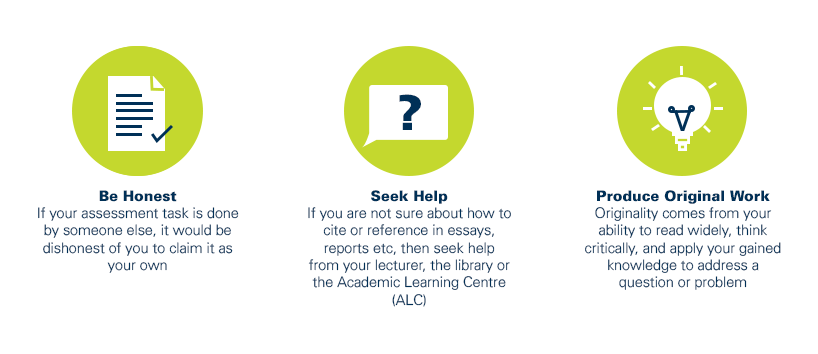
As a CQUniversity student you are expected to act honestly in all aspects of your academic work.
Any assessable work undertaken or submitted for review or assessment must be your own work. Assessable work is any type of work you do to meet the assessment requirements in the unit, including draft work submitted for review and feedback and final work to be assessed.
When you use the ideas, words or data of others in your assessment, you must thoroughly and clearly acknowledge the source of this information by using the correct referencing style for your unit. Using others’ work without proper acknowledgement may be considered a form of intellectual dishonesty.
Participating honestly, respectfully, responsibly, and fairly in your university study ensures the CQUniversity qualification you earn will be valued as a true indication of your individual academic achievement and will continue to receive the respect and recognition it deserves.
As a student, you are responsible for reading and following CQUniversity’s policies, including the Student Academic Integrity Policy and Procedure. This policy sets out CQUniversity’s expectations of you to act with integrity, examples of academic integrity breaches to avoid, the processes used to address alleged breaches of academic integrity, and potential penalties.
What is a breach of academic integrity?
A breach of academic integrity includes but is not limited to plagiarism, self-plagiarism, collusion, cheating, contract cheating, and academic misconduct. The Student Academic Integrity Policy and Procedure defines what these terms mean and gives examples.
Why is academic integrity important?
A breach of academic integrity may result in one or more penalties, including suspension or even expulsion from the University. It can also have negative implications for student visas and future enrolment at CQUniversity or elsewhere. Students who engage in contract cheating also risk being blackmailed by contract cheating services.
Where can I get assistance?
For academic advice and guidance, the Academic Learning Centre (ALC) can support you in becoming confident in completing assessments with integrity and of high standard.
What can you do to act with integrity?