Overview
This unit makes the connection between science and safety to promote evidence-based hazard management and risk control. You will consider major workplace, work-related and occupational hazards and use science theories, such as energy conversion, to explain how hazards occur, behave and lead to harm. Situational complexity, hazard management and health and safety risk control are discussed from both systems thinking and evidence-informed perspectives. Case studies will assist you in developing an appreciation of how fundamental theories of physics, chemistry, physiology, and social sciences can inform the management and control of harm from hazards.
Details
Pre-requisites or Co-requisites
There are no requisites for this unit.
Important note: Students enrolled in a subsequent unit who failed their pre-requisite unit, should drop the subsequent unit before the census date or within 10 working days of Fail grade notification. Students who do not drop the unit in this timeframe cannot later drop the unit without academic and financial liability. See details in the Assessment Policy and Procedure (Higher Education Coursework).
Offerings For Term 2 - 2026
Attendance Requirements
All on-campus students are expected to attend scheduled classes - in some units, these classes are identified as a mandatory (pass/fail) component and attendance is compulsory. International students, on a student visa, must maintain a full time study load and meet both attendance and academic progress requirements in each study period (satisfactory attendance for International students is defined as maintaining at least an 80% attendance record).
Recommended Student Time Commitment
Each 6-credit Postgraduate unit at CQUniversity requires an overall time commitment of an average of 12.5 hours of study per week, making a total of 150 hours for the unit.
Class Timetable
Assessment Overview
Assessment Grading
This is a graded unit: your overall grade will be calculated from the marks or grades for each assessment task, based on the relative weightings shown in the table above. You must obtain an overall mark for the unit of at least 50%, or an overall grade of 'pass' in order to pass the unit. If any 'pass/fail' tasks are shown in the table above they must also be completed successfully ('pass' grade). You must also meet any minimum mark requirements specified for a particular assessment task, as detailed in the 'assessment task' section (note that in some instances, the minimum mark for a task may be greater than 50%). Consult the University's Grades and Results Policy for more details of interim results and final grades.
All University policies are available on the CQUniversity Policy site.
You may wish to view these policies:
- Grades and Results Policy
- Assessment Policy and Procedure (Higher Education Coursework)
- Review of Grade Procedure
- Student Academic Integrity Policy and Procedure
- Academic Progression Policy and Procedure
- Student Refund and Credit Balance Policy and Procedure
- Complaints Policy and Procedure
- Information and Communications Technology Acceptable Use Policy and Procedure
This list is not an exhaustive list of all University policies. The full list of University policies are available on the CQUniversity Policy site.
Feedback, Recommendations and Responses
Every unit is reviewed for enhancement each year. At the most recent review, the following staff and student feedback items were identified and recommendations were made.
Feedback from SUTE
The lecturer was very knowledgeable and engaging.
Ensure that the lecturer delivering this unit has a broad knowledge and engages with the students.
- Explain the principles of energy conversion as it applies to health and safety risk
- Evaluate major hazards encountered in occupational environments and assess how these hazards lead to adverse effects
- Apply risk analysis to determine risks posed by hazards and their potential magnitude
- Critique basic interventions and strategies to control the risks associated with specific hazards using OHS information, data and communication skills with reference to OHS legislation, standards and literature
Alignment of Assessment Tasks to Learning Outcomes
| Assessment Tasks | Learning Outcomes | |||
|---|---|---|---|---|
| 1 | 2 | 3 | 4 | |
| 1 - Case Study - 30% | ||||
| 2 - Written Assessment - 30% | ||||
| 3 - Written Assessment - 40% | ||||
Alignment of Graduate Attributes to Learning Outcomes
| Graduate Attributes | Learning Outcomes | |||
|---|---|---|---|---|
| 1 | 2 | 3 | 4 | |
| 1 - Knowledge | ||||
| 2 - Communication | ||||
| 3 - Cognitive, technical and creative skills | ||||
| 4 - Research | ||||
| 5 - Self-management | ||||
| 6 - Ethical and Professional Responsibility | ||||
| 7 - Leadership | ||||
| 8 - First Nations Knowledges | ||||
| 9 - Aboriginal and Torres Strait Islander Cultures | ||||
Textbooks
There are no required textbooks.
IT Resources
- CQUniversity Student Email
- Internet
- Unit Website (Moodle)
All submissions for this unit must use the referencing style: Harvard (author-date)
For further information, see the Assessment Tasks.
p.j.meredith@cqu.edu.au
Week 1
Begin Date: 13 Jul 2026Module/Topic
Introduction
Hazard concepts (especially energy damage)
Chapter
OHS BoK Chapter 15 Hazard as a concept
Viner, D., 2015 Occupational Risk Control: Predicting and Preventing the Unwanted, Routledge, Chapter 1
Standards Australia 2018, Risk management – Guidelines (AS ISO 31000: 2018), Standards Australia, Sydney, Terms and definitions
Events and Submissions/Topic
Week 2
Begin Date: 20 Jul 2026Module/Topic
Mechanical hazards, thermal environment
Chapter
OHS BoK Chapter 28 Mechanical plant
OHS BoK Chapter 29 Mobile plant
OHS BoK Chapter 30 Vehicles and occupational road use
Events and Submissions/Topic
Week 3
Begin Date: 27 Jul 2026Module/Topic
Biomechanical hazards – MSDs, noise, vibration
Chapter
WHSQ: Hazardous manual tasks code of practice
WHSQ: Manual tasks involving the handling of people code of practice 2021
OHS BoK Chapter 22.1 Occupational Noise
OHS BoK Chapter 22.2 Vibration
Events and Submissions/Topic
Week 4
Begin Date: 03 Aug 2026Module/Topic
Gravitational hazards – working at heights, slips, trips & falls
Chapter
OHS BoK Chapter 27 Gravitational hazards
WHSQ: Managing the risk of falls at workplace code of practice 2021
Events and Submissions/Topic
Week 5
Begin Date: 10 Aug 2026Module/Topic
Electrical hazards, radiation
Chapter
OHS BoK Chapter 23.1 Electricity
OHS BoK Chapter 23.2 Electricity Appendix – Arc Flash
OHS BoK Chapter 24 Ionising Radiation
OHS BoK Chapter 25 Non-Ionising Radiation - Electromagnetic
Events and Submissions/Topic
Week 6
Begin Date: 17 Aug 2026Module/Topic
Biological hazards (including dust, fibres and gases), Psychosocial hazards
Chapter
Reed, S, Pisaniello, D & Benke, G (Eds) 2019, Principles of Occupational Health & Hygiene: An introduction (3rd edn), Australian Institute of Occupational Hygienists, Allen & Unwin, Sydney.
OHS BoK Chapter 19 Psychosocial hazards.
Events and Submissions/Topic
Vacation Week
Begin Date: 24 Aug 2026Module/Topic
Chapter
Events and Submissions/Topic
Week 7
Begin Date: 31 Aug 2026Module/Topic
Working in a confined space
Chapter
WHSQ: Confined spaces code of practice 2021
Events and Submissions/Topic
Week 8
Begin Date: 07 Sep 2026Module/Topic
Managing hazard related risks - the Risk Management Process
Chapter
OHS BoK Chapter 31.1 Risk
OHS BoK Chapter 31.2 OHS risk and Decision Making
Events and Submissions/Topic
Week 9
Begin Date: 14 Sep 2026Module/Topic
Hazard Identification and Risk Assessment
Chapter
Standards Australia 2018, Risk management – Guidelines (AS ISO 31000: 2018), Standards Australia, Sydney,
Events and Submissions/Topic
Week 10
Begin Date: 21 Sep 2026Module/Topic
Risk Analysis and Control
Chapter
OHS BoK Chapter 31.2 Risk and Decision Making
OHS BoK Chapter 34 Control: Prevention and Intervention
Events and Submissions/Topic
Week 11
Begin Date: 28 Sep 2026Module/Topic
Risk Management Tools 1:
- Informal risk assessment (eg. SLAM, Take 5)
- Hazard reporting
- Tabular risk assessment
- Job Task Analysis
- Plant Risk Assessment
- Hazardous Chemicals Risk Assessment
- Bowtie Analysis
- Ishikawa Analysis (Fishbone diagram)
Chapter
AS/NZS IEC 2020, Risk Management – Risk Assessment Techniques (AS/NZS IEC 31010:2020), Standards Australia, Sydney.
Popov, G, Lyon B, Hollcroft B (Eds) 2016, Risk Assessment: A Practical Guide to Assessing Operational Risks, Wiley, New Jersey. Chapter 5 – Fundamental Techniques
Events and Submissions/Topic
Week 12
Begin Date: 05 Oct 2026Module/Topic
Risk Management Tools 2:
- Fault Tree Analysis
- Process Mapping
- Hazard Analysis at Critical Control Points (HACCP)
- Failure Modes & Effects Analysis (FMEA)
- Hazard & Operability Study (HAZOP)
Chapter
AS/NZS IEC 2020, Risk Management – Risk Assessment Techniques (AS/NZS IEC 31010:2020), Standards Australia, Sydney.
Events and Submissions/Topic
Exam Week
Begin Date: 12 Oct 2026Module/Topic
Chapter
Events and Submissions/Topic
Vacation/Exam Week
Begin Date: 19 Oct 2026Module/Topic
Chapter
Events and Submissions/Topic
1 Case Study
The purpose of this assessment is to demonstrate your ability to apply scientific reasoning and systems‑based thinking to explain how harmful outcomes arise from uncontrolled energy transfer. You are required to select three (3) case studies from the list provided below. Each case study must involve a different predominant form of energy.
Your task is to conduct a detailed analytical examination of each case using the energy–damage model as the conceptual framework.
Assessment Requirements
For each of your three selected case studies, you must produce a structured analysis that addresses the following elements:
- Case Study Identification
Clearly identify the selected incident, including sufficient contextual detail to establish relevance. - Predominant Energy Form
Identify the form of energy present immediately prior to the loss of control. - Preconditions Enabling the Event
Analyse the environmental, organisational, technical, or behavioural conditions that made the harmful event possible. - Hazard Control Failure Mechanism
Describe how the relevant control(s) failed, degraded, or were absent, enabling the energy to escape containment. - Temporal Point of Damage
Identify the precise moment at which the harmful energy transfer occurred. - Energy Transference Leading to Damage
Describe the nature, magnitude, and dynamics of the energy transfer that resulted in harm. - Space Transfer Mechanism
Explain the pathway through which the energy moved from its source to the recipient (e.g., conduction, convection, collision, radiation, pressure wave). - Damaged Assets (Recipients)
Identify the people, equipment, structures, or systems that absorbed the energy. - Damage Threshold of Recipients
Explain the tolerance or threshold of the recipients and how the transferred energy exceeded this limit.
Referencing Requirements
Formal referencing is not required for this assessment. However, if you choose to draw on external academic or technical sources, they must be cited using the CQUni Harvard Referencing Style as outlined in the Unit Profile.
Length and Structure
- Each case study analysis should be no more than 1,000 words.
- Total word count: approximately 3,000 words (3 × 1,000 words).
- You should use headings and subheadings to structure your analysis clearly and logically.
Level of GenAI use allowed:
Level 2: You may use Al for planning, idea development, and research. Your final submission should show how you have developed and refined these ideas.

The full AI Assessment Scale table is available in the Assessment block on the Moodle site.
Case Studies
Bread Factory UK, 2021
https://www.dailymail.co.uk/news/article-60734/Workers-baked-alive-bread-factory-horror.html
Bus-Truck Collision, India, 2021
Indonesian Village, 2021
Sitakunda Depot Fire (Bangladesh, 2022)
https://www.abc.net.au/news/2022-06-06/bangladesh-container-depot-explosion-causes-anger/101130472
Chopper Pilot, WA, 2020
WA pilot who died in Broome chopper crash identified as local Troy Thomas (news.com.au)
Bendel Farm, QLD, 2019
Faiveley Transport, UK, 2019
https://www.shponline.co.uk/in-court/firm-exposed-workers-to-uncontrolled-havs-for-10-years/
ANSTO, NSW, 2019
Oil Rig Explosion, Gulf of Mexico 2015
Rana Plaza, Bangladesh, 2013
https://www.theguardian.com/world/2016/jul/18/rana-plaza-collapse-murder-charges-garment-factory
Week 6 Monday (17 Aug 2026) 9:00 am AEST
Within 1 weeks of due date
Preliminary identification 5%
- Identify the selected case study
- Identify the form of energy immediately before control was lost
- Identify preconditions that make the event possible
Descriptions 15%
- Describe the hazard control failure mechanism
- Describe the point in time that relates to the damage event
- Describe the energy transference that led to damage
Post identifications 5%
- Identify the space transfer mechanism
- Identify the assets damaged (recipients)
- Identify the damage threshold of the recipients
Presentation, grammar and spelling 5%
- Explain the principles of energy conversion as it applies to health and safety risk
- Evaluate major hazards encountered in occupational environments and assess how these hazards lead to adverse effects
2 Written Assessment
Part A – Development of a Confined Space Safety Procedure (20%)
You are required to develop a draft organisational procedure for the safe management of confined space work. This is to be written as a formal WHS procedure for a specific organisation (real or fictitious) for inclusion in their WHS Management System. The procedure must reflect a high standard of analysis, demonstrate alignment with contemporary WHS legislation and Codes of Practice, and show evidence of systems thinking, risk‑based reasoning, and operational clarity.
Your procedure must be based on three (3) distinct types of confined spaces, each representing a different risk profile, for example, a confined space with potential for:
- mechanical entrapment
- oxygen deficiency
- fire or explosion
These three spaces must be explicitly identified and integrated throughout the procedure to demonstrate how the organisation’s system adapts to different hazard mechanisms. You may utilise one (1) of the above examples within your assessment; the other two (2) must not be from this list.
Your draft procedure must include the following sections, written in a professional organisational format:
- Purpose
- Scope
- Responsibilities for Confined Space Work
- Definition of a Confined Space
- Methods for Identifying, Classifying, and Labelling Confined Spaces
- Confined Space Process: Workflow (This must align with, but not duplicate, the workflow diagram you will produce in Part B.)
- Confined Space Risk Assessment
- Confined Space Isolation Requirements
- Confined Space Atmospheric Testing and Monitoring
- Confined Space Emergency Management
- Confined Space Work and Equipment Requirements
- Confined Space Permits and Control of Confined Space Work
- Training, Competency, and Authorisation Requirements
- Confined Space Records and Documentation
- Relevant Legislation, Standards, and Codes of Practice
Referencing Requirements
- CQUni Harvard Referencing Style as outlined in the Unit Profile.
Length and Structure
- Professional organisational procedure suitable for inclusion in a WHS management system. Headings and subheadings are required. Ensure the language and writing are appropriate for the workers who must read and understand the procedure.
- Approximately 1,500 words.(±10%).
Appendices (e.g., sample permits, risk assessment templates, diagrams) are not included in the word count.
Part B – Confined Space Entry Workflow Diagram (10%)
Develop a Confined Space Entry: Workflow diagram that visually represents the key steps, decision points, and control requirements for one (1) specific confined space task identified in Part A.
Workflow Requirements:
- Identify all major steps from task initiation to task close‑out.
- Include key checkpoints, approvals, and verification steps.
- Show the relationship between the required sections of the procedure.
- Be presented as a clear, logical, and professional workflow diagram suitable for operational use.
Submission Requirements
- Format: Workflow diagram (e.g., flowchart, swim lane diagram, or process map).
- Length: One page (maximum).
- Integration: Must be consistent with the narrative process described in Part A.
Level of GenAI use allowed:
Level 2: You may use Al for planning, idea development, and research. Your final submission should show how you have developed and refined these ideas.

The full AI Assessment Scale table is available in the Assessment block on the Moodle site.
Week 9 Monday (14 Sept 2026) 9:00 am AEST
Within 1 weeks of due date
Part A: Confined Space Draft Entry Procedure 20%
Introduction fields 4%
- Purpose
- Scope
- Responsibilities for work in a Confined Space
- Definition for a Confined Space
Methods 8%
- Methods to identify and allocate/label Confined Spaces
- Confined Space Risk Assessment
- Confined Space Isolation
- Confined Space Testing
- Confined Space Emergency Management
- Confined Space work and equipment used
Documentation/training 5%
- Confined Space Permits and control of Confined Space Work
- Confined Space training, competency and authorisations
- Confined space records
Presentation 3%
- Presentation
- Grammar
- Spelling
- Referencing
Part B: Confined Space Entry: Work Flow chart (10%)
- Content 7%
- Presentation, ease of reading/flow, spelling 3%
- Evaluate major hazards encountered in occupational environments and assess how these hazards lead to adverse effects
- Apply risk analysis to determine risks posed by hazards and their potential magnitude
- Critique basic interventions and strategies to control the risks associated with specific hazards using OHS information, data and communication skills with reference to OHS legislation, standards and literature
3 Written Assessment
This assessment comprises three interrelated components that require students to demonstrate advanced competency in selecting, justifying, applying, and communicating formal WHS risk management methods. Students must use only those risk assessment tools explicitly approved and provided on Moodle. Tools not included on the approved list (including, but not limited to, informal risk assessments, hazard reports, and JSAs) are not permitted for this task.
Part A: Adoption and Justification of a Risk Management Tool (15%)
Word count: 1000 words
Select one approved risk management tool from the resources provided in Moodle. Your response must demonstrate a scholarly and evidence‑based justification for the tool’s use within contemporary WHS practice.
A1. Authenticity, Validity, and Theoretical Foundations of the Tool (10%)
Provide a critical discussion of the tool’s legitimacy and provenance, including:
- Its origins and development (e.g., research foundations, industry bodies, standards committees, or regulatory agencies involved in its creation).
- How the tool aligns with, or is derived from, recognised WHS standards, guidelines, or peer‑reviewed literature.
- Evidence of its application across relevant industry sectors, including examples of where and why it is commonly used.
- Explicit links to applicable WHS legislation, regulations, and codes of practice that prescribe or support its use.
Example: The PerForm Manual Tasks Assessment Tool is used to manage risks associated with hazardous manual tasks as required under Part 4.2 of the Work Health and Safety Regulation 2011.
A2. Application to Physical or Psychosocial Risks (5%)
Explain how the selected tool is used in practice, including:
- How the tool is applied (process steps, data requirements, assessment logic).
- When the tool is appropriately used (trigger events, hazard types, organisational contexts).
- Why the tool is suitable for assessing specific physical or psychosocial hazards, supported by evidence from standards, guidance material, or research.
Part B: Training and Instruction in the Use of the Tool (5%)
Word count: 300 words (excluding samples)
Certain personnel within a workplace will be required to competently use the selected risk management tool. This section focuses on the training and capability‑building required to ensure correct and consistent application.
B1. Training and Instruction Requirements (2%)
Describe how training and instruction for relevant individuals and organisational parties can be delivered, including:
- Training methods (e.g., face‑to‑face instruction, toolbox talks, e‑learning modules, supervised practice).
- Competency requirements and assessment of learning.
- Record‑keeping obligations and alignment with WHS legislative duties for information, training, and instruction.
B2. Training Artefacts (3%)
Provide two sample training artefacts, such as:
- PowerPoint slides
- A training register
- A training plan or session outline
(These artefacts are not included in the word count.)
Part C: Conduct a Risk Assessment Using the Selected Tool (20%)
Using the tool selected in Part A, conduct a detailed and fully completed risk assessment. The assessment must be based on a specific, clearly defined hazard scenario. General topics (e.g., “noise”, “heat stress”) are insufficient. Instead, use a precise title such as:
- Noise Exposure Assessment in a Sheet Metal Fabrication Workshop
- Heat Stress Risks for Maintenance Personnel Working on Roof Structures
Permitted Hazard Classes
Your scenario may relate to any of the following hazard groups:
Chemical, Noise, Light, Radiation, Dusts and Fibres, Gases, Gravity, Mechanical, Thermal Environment, Psychosocial Hazards, Work Organisation, Ergonomic, Radiological, Biological, Plant, Electrical.
Your completed risk assessment tool must address the following:
C1. Issue Definition (1%)
- Clearly articulate why the risk assessment is required, including triggers, organisational context, and potential consequences.
C2. Hazard Identification Sources (1%)
- Identify and reference the sources used to inform hazard identification (e.g., guidance material, databases, incident reports, Safety Data Sheets).
C3. Organisation of Hazard Characteristics (2%)
- Present the hazard characteristics and associated risks in a structured format appropriate to the selected tool.
C4. Consultation Requirements (2%)
- Describe the consultation processes required with workers, HSRs, technical specialists, or other stakeholders.
C5. Application of the Risk Management Process (14%)
Demonstrate that the risk management process has been followed by addressing:
-
- Identification, discussion, and recording of hazards and their potential for harm (2%)
- Identification of risk factors associated with each hazard (2%)
- Documentation of existing controls (2%)
- Analysis and evaluation of risks (qualitative and/or quantitative) (2%)
- Determination of whether additional controls are required (1%)
- Evidence of seeking information on control options (1%)
- Development of a risk control action plan including actions, timeframes, responsible persons, and authorisations (2%)
- Proposed review schedule for implemented controls (1%)
- Communication of results and findings to managers or stakeholders (e.g., reports, emails) (1%)
Referencing Requirements
CQUni Harvard Referencing Style as outlined in the Unit Profile. Provide adequate references to ensure your discussion/details/arguments, etc., are supported by evidence (Relevant in Part A and Part B)
Length and Structure
- Professional organisational procedure suitable for inclusion in a WHS management system. Headings and subheadings are required. Ensure the language and writing are appropriate for the workers who must read and understand the procedure.
- Part A - Approximately 1,000 words. (±10%).
- Part B - Approximately 300 words. (±10%).
- Part C - Dependent on the Risk Assessment tool utilised
Level of GenAI use allowed:
Level 2: You may use Al for planning, idea development, and research. Your final submission should show how you have developed and refined these ideas.
The full AI Assessment Scale table is available in the Assessment block on the Moodle site.
Exam Week Monday (12 Oct 2026) 9:00 am AEST
Within 1 weeks of due date
Part A (15%)
Authenticity, Validity, and Theoretical Foundations of the Tool (10%)
Application to Physical or Psychosocial Risks (5%)
Part B (5%)
Training and Instruction Requirements (2%)
Training Artefacts (3%)
Part C (20%)
Issue Definition (1%)
Hazard Identification Sources (1%)
Organisation of Hazard Characteristics (2%)
Consultation Requirements (2%)
Application of the Risk Management Process (14%)
- Explain the principles of energy conversion as it applies to health and safety risk
- Apply risk analysis to determine risks posed by hazards and their potential magnitude
- Critique basic interventions and strategies to control the risks associated with specific hazards using OHS information, data and communication skills with reference to OHS legislation, standards and literature
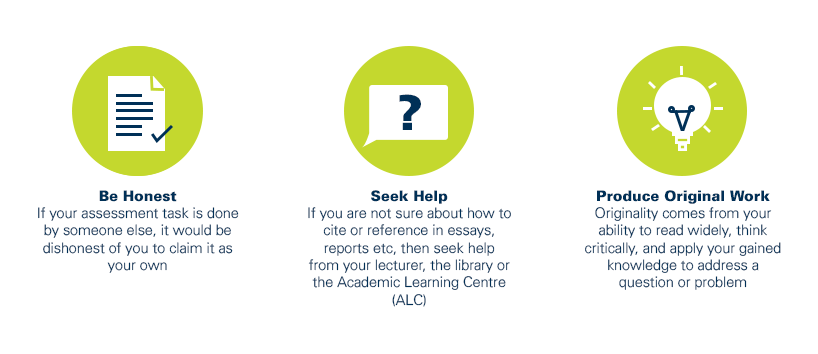
As a CQUniversity student you are expected to act honestly in all aspects of your academic work.
Any assessable work undertaken or submitted for review or assessment must be your own work. Assessable work is any type of work you do to meet the assessment requirements in the unit, including draft work submitted for review and feedback and final work to be assessed.
When you use the ideas, words or data of others in your assessment, you must thoroughly and clearly acknowledge the source of this information by using the correct referencing style for your unit. Using others’ work without proper acknowledgement may be considered a form of intellectual dishonesty.
Participating honestly, respectfully, responsibly, and fairly in your university study ensures the CQUniversity qualification you earn will be valued as a true indication of your individual academic achievement and will continue to receive the respect and recognition it deserves.
As a student, you are responsible for reading and following CQUniversity’s policies, including the Student Academic Integrity Policy and Procedure. This policy sets out CQUniversity’s expectations of you to act with integrity, examples of academic integrity breaches to avoid, the processes used to address alleged breaches of academic integrity, and potential penalties.
What is a breach of academic integrity?
A breach of academic integrity includes but is not limited to plagiarism, self-plagiarism, collusion, cheating, contract cheating, and academic misconduct. The Student Academic Integrity Policy and Procedure defines what these terms mean and gives examples.
Why is academic integrity important?
A breach of academic integrity may result in one or more penalties, including suspension or even expulsion from the University. It can also have negative implications for student visas and future enrolment at CQUniversity or elsewhere. Students who engage in contract cheating also risk being blackmailed by contract cheating services.
Where can I get assistance?
For academic advice and guidance, the Academic Learning Centre (ALC) can support you in becoming confident in completing assessments with integrity and of high standard.
What can you do to act with integrity?