Overview
In this unit, you will immerse yourself in real-world sustainability challenges, applying the theoretical knowledge you've gained to hands-on experiences. This unit includes a mandatory residential school where you will engage directly with sustainable practices in various environments. During the residential school, you will participate in a range of practical activities that build your skills in sustainability. You will work on projects such as sustainable agriculture, renewable energy systems, water management, waste reduction, and eco-friendly construction techniques. By collaborating with experts in the field, you will learn to implement sustainable solutions, assess their effectiveness, and understand the complexities of integrating sustainability into different contexts. This double credit point capstone unit will help you develop a comprehensive understanding of sustainability principles and their applications. You will enhance your problem-solving abilities, teamwork, and project management skills, all of which are critical for successful careers in sustainability-related fields. This unit is your opportunity to make a tangible difference in sustainability, gaining the hands-on experience necessary to drive change in your community and profession.
Details
Pre-requisites or Co-requisites
Prerequisite: Completion of 48 postgraduate credit points.
Important note: Students enrolled in a subsequent unit who failed their pre-requisite unit, should drop the subsequent unit before the census date or within 10 working days of Fail grade notification. Students who do not drop the unit in this timeframe cannot later drop the unit without academic and financial liability. See details in the Assessment Policy and Procedure (Higher Education Coursework).
Offerings For Term 2 - 2026
Attendance Requirements
All on-campus students are expected to attend scheduled classes - in some units, these classes are identified as a mandatory (pass/fail) component and attendance is compulsory. International students, on a student visa, must maintain a full time study load and meet both attendance and academic progress requirements in each study period (satisfactory attendance for International students is defined as maintaining at least an 80% attendance record).
Recommended Student Time Commitment
Each 12-credit Postgraduate unit at CQUniversity requires an overall time commitment of an average of 25 hours of study per week, making a total of 300 hours for the unit.
Class Timetable
Assessment Overview
Assessment Grading
This is a graded unit: your overall grade will be calculated from the marks or grades for each assessment task, based on the relative weightings shown in the table above. You must obtain an overall mark for the unit of at least 50%, or an overall grade of 'pass' in order to pass the unit. If any 'pass/fail' tasks are shown in the table above they must also be completed successfully ('pass' grade). You must also meet any minimum mark requirements specified for a particular assessment task, as detailed in the 'assessment task' section (note that in some instances, the minimum mark for a task may be greater than 50%). Consult the University's Grades and Results Policy for more details of interim results and final grades.
All University policies are available on the CQUniversity Policy site.
You may wish to view these policies:
- Grades and Results Policy
- Assessment Policy and Procedure (Higher Education Coursework)
- Review of Grade Procedure
- Student Academic Integrity Policy and Procedure
- Academic Progression Policy and Procedure
- Student Refund and Credit Balance Policy and Procedure
- Complaints Policy and Procedure
- Information and Communications Technology Acceptable Use Policy and Procedure
This list is not an exhaustive list of all University policies. The full list of University policies are available on the CQUniversity Policy site.
- Apply practical sustainability solutions in areas such as agriculture, renewable energy, water management, and waste reduction
- Critically assess the effectiveness and impact of sustainability practices and technologies in various environmental and social contexts
- Integrate advanced sustainability theories with practical experiences to design innovative, context-specific solutions to contemporary environmental and societal challenges
- Collaborate effectively in multidisciplinary teams to identify and solve sustainability issues.
Alignment of Assessment Tasks to Learning Outcomes
| Assessment Tasks | Learning Outcomes | |||
|---|---|---|---|---|
| 1 | 2 | 3 | 4 | |
| 1 - Practical Assessment - 40% | ||||
| 2 - Reflective Practice Assignment - 20% | ||||
| 3 - Group Work - 20% | ||||
| 4 - Written Assessment - 20% | ||||
Alignment of Graduate Attributes to Learning Outcomes
| Graduate Attributes | Learning Outcomes | |||
|---|---|---|---|---|
| 1 | 2 | 3 | 4 | |
| 1 - Knowledge | ||||
| 2 - Communication | ||||
| 3 - Cognitive, technical and creative skills | ||||
| 4 - Research | ||||
| 5 - Self-management | ||||
| 6 - Ethical and Professional Responsibility | ||||
| 7 - Leadership | ||||
| 8 - First Nations Knowledges | ||||
| 9 - Aboriginal and Torres Strait Islander Cultures | ||||
Textbooks
There are no required textbooks.
IT Resources
- CQUniversity Student Email
- Internet
- Unit Website (Moodle)
All submissions for this unit must use the referencing style: American Psychological Association 7th Edition (APA 7th edition)
For further information, see the Assessment Tasks.
s.hawkins@cqu.edu.au
Week 1
Begin Date: 13 Jul 2026Module/Topic
Unit overview
Chapter
See unit Moodle for reading assignments.
Events and Submissions/Topic
Week 2
Begin Date: 20 Jul 2026Module/Topic
Setting project objectives
Chapter
See unit Moodle for reading assignments.
Events and Submissions/Topic
Week 3
Begin Date: 27 Jul 2026Module/Topic
Fieldwork planning and methodologies
Chapter
See unit Moodle for reading assignments.
Events and Submissions/Topic
Week 4
Begin Date: 03 Aug 2026Module/Topic
Research ethics
Chapter
See unit Moodle for reading assignments.
Events and Submissions/Topic
Week 5
Begin Date: 10 Aug 2026Module/Topic
Fieldwork risk assessments
Chapter
See unit Moodle for reading assignments.
Events and Submissions/Topic
Week 6
Begin Date: 17 Aug 2026Module/Topic
Finalising fieldwork activities
Chapter
See unit Moodle for reading assignments.
Events and Submissions/Topic
Vacation Week
Begin Date: 24 Aug 2026Module/Topic
Chapter
Events and Submissions/Topic
Week 7
Begin Date: 31 Aug 2026Module/Topic
Residential school on Great Keppel Island - Environmental Monitoring techniques
Chapter
See unit Moodle for reading assignments.
Events and Submissions/Topic
Week 8
Begin Date: 07 Sep 2026Module/Topic
Residential school on Great Keppel Island - fieldwork and data collection
Chapter
See unit Moodle for reading assignments.
Events and Submissions/Topic
Week 9
Begin Date: 14 Sep 2026Module/Topic
Data analysis
Chapter
See unit Moodle for reading assignments.
Events and Submissions/Topic
Week 10
Begin Date: 21 Sep 2026Module/Topic
Data analysis (self-study, no class this week)
Chapter
See unit Moodle for reading assignments.
Events and Submissions/Topic
Week 11
Begin Date: 28 Sep 2026Module/Topic
Report writing
Chapter
See unit Moodle for reading assignments.
Events and Submissions/Topic
Week 12
Begin Date: 05 Oct 2026Module/Topic
Report writing (self-study, no class this week)
Chapter
See unit Moodle for reading assignments.
Events and Submissions/Topic
Exam Week
Begin Date: 12 Oct 2026Module/Topic
Chapter
Events and Submissions/Topic
Vacation/Exam Week
Begin Date: 19 Oct 2026Module/Topic
Chapter
Events and Submissions/Topic
This unit contains a compulsory residential school unit. A detailed itinerary will be provided but note the dates of travel:
Sunday, 30 August - fly from Melbourne to Rockhampton. Stay overnight Rockhampton.
Monday, 31 August - bus from Rockhampton to Yeppoon and ferry from Yeppoon to Great Keppel Island.
31 August to 11 September - activities and fieldwork on Great Keppel Island.
Friday, 11 September - Ferry to Yeppoon and bus to Rockhampton, say overnight in Rockhampton.
Saturday, 12 September - flight from Rockhampton to Melbourne.
1 Group Work
This assessment combines preparatory activities and field-based learning. In Weeks 1–6 tutorials/lectures, you will complete a series of group tasks designed to build relevant skills, knowledge, and frameworks for fieldwork. During the residential school, you will complete group tasks designed around qualitative and/or quantitative data collection and field based inquiry. A portfolio of preparatory and fieldwork outputs will be submitted by your group on the final day of your residential school.
This assessment also includes individual evaluation of students’ preparation for and participation in fieldwork activities, including professional conduct, organisation, and collaboration during the residential school.
Level of GenAI use allowed: Level 2: You may use AI for planning, idea development and research. Your final submission should show how you have developed and refined these ideas.
Please note that the 72-hour grace period does not apply to this assessment.
This assessment is due during your residential school and you will be allocated time to collate and submit your portfolio.
Week 10 Friday (25 Sept 2026)
Group assessment:
- Preparation for fieldwork and effective completion of preparatory and field-based tasks, including application of relevant methods and frameworks (30)
- Quality, accuracy, and rigour of data collection and storage (qualitative and/or quantitative) (30)
- Presentation and organisation of the portfolio (10)
Individual assessment
- Professional conduct in the field, including organisation, initiative, adaptability, and effective collaboration where required (30)
- Critically assess the effectiveness and impact of sustainability practices and technologies in various environmental and social contexts
- Collaborate effectively in multidisciplinary teams to identify and solve sustainability issues.
2 Reflective Practice Assignment
Following the residential school, you will submit a written reflection (1500 to 2000 words) that critically frames your fieldwork experience. You will reflect on the sustainability theories and frameworks encountered in this unit and across the Masters program, considering their usefulness, limitations, and relevance in practice.
Level of GenAI use allowed:
Level 3: You may use AI to assist with specific tasks such as drafting text, refining and evaluating your work. You must critically evaluate and modify any AI-generated content you use.
Week 9 Friday (18 Sept 2026) 11:00 pm AEST
Week 11 Friday (2 Oct 2026)
- Depth of reflection on fieldwork experience and personal learning (25)
- Critical engagement with sustainability theories and frameworks (30)
- Ability to evaluate the usefulness and limitations of theory in practice (25)
- Structure, clarity, and integration of course concepts and literature (20)
- Critically assess the effectiveness and impact of sustainability practices and technologies in various environmental and social contexts
3 Practical Assessment
This assessment focuses on the preparation and analysis of data collected during the residential school. You will submit a written assignment (approximately 1500 words plus diagrams, tables and appendices) that documents the methods used and presents the results of qualitative and/or quantitative data analysis. You will apply appropriate analytical techniques to clean, organise, and analyse the dataset. This may include activities such as data cleaning, coding or categorisation of qualitative data, and the creation of tables, figures, or summaries for quantitative data, as appropriate.
The written submission should clearly describe the analytical methods used and present the resulting outputs. The emphasis is on methodology and results only; interpretation, discussion, and evaluation of findings will be addressed separately in Assessment 4. The format of the submission will depend on the nature of the data collected but should include clearly labelled tables and figures, supporting methodological notes, and any relevant coding frameworks or analytical outputs.
Level of GenAI use allowed: Level 3: You may use AI to assist with specific tasks such as drafting text, refining and evaluating your work. You must critically evaluate and modify any AI-generated content you use.
Week 10 Friday (25 Sept 2026) 11:00 pm AEST
Week 12 Friday (9 Oct 2026)
- Appropriate preparation and organisation of data, including cleaning and management of qualitative and/or quantitative datasets (30)
- Application of suitable analytical techniques, such as coding of qualitative data or construction of tables and summaries for quantitative data (30)
- Accuracy and clarity of analytical outputs, including coded data, tables, figures, or other results (20)
- Clear documentation of analytical processes and methods used, with reference to methods literature (20)
- Apply practical sustainability solutions in areas such as agriculture, renewable energy, water management, and waste reduction
- Integrate advanced sustainability theories with practical experiences to design innovative, context-specific solutions to contemporary environmental and societal challenges
- Collaborate effectively in multidisciplinary teams to identify and solve sustainability issues.
4 Written Assessment
In this assessment, you will write a structured report (2000 to 2500 words) that interprets and discusses the findings generated through the fieldwork and data analysis completed in Assessments 1 and 3. Drawing on sustainability theories, frameworks, and concepts from this unit and across the Masters program, you will critically analyse what the results reveal about the sustainability issue investigated.
The report should situate the findings within their environmental and social context, evaluate the effectiveness and implications of the sustainability practices examined, and reflect on limitations and future directions. This assessment focuses on interpretation, discussion, and synthesis, rather than data collection or analytical methods.
Level of GenAI use allowed:
Level 3: You may use AI to assist with specific tasks such as drafting text, refining and evaluating your work. You must critically evaluate and modify any AI-generated content you use.
Exam Week Friday (16 Oct 2026) 11:00 pm AEST
Vacation/Exam Week Friday (23 Oct 2026)
- Explanation of results, clearly describing key patterns, trends, or themes identified in the data and linking these to relevant sustainability concepts (30)
- Evaluation of sustainability practices or actions, using the results to assess what worked, what did not, and why, in the specific fieldwork context (30)
- Drawing conclusions and implications, including clear conclusions and, where appropriate, practical recommendations based on theory and findings (20)
- Structure, clarity of writing, and use of sources, including logical organisation, clear expression, and appropriate referencing (20)
- Apply practical sustainability solutions in areas such as agriculture, renewable energy, water management, and waste reduction
- Integrate advanced sustainability theories with practical experiences to design innovative, context-specific solutions to contemporary environmental and societal challenges
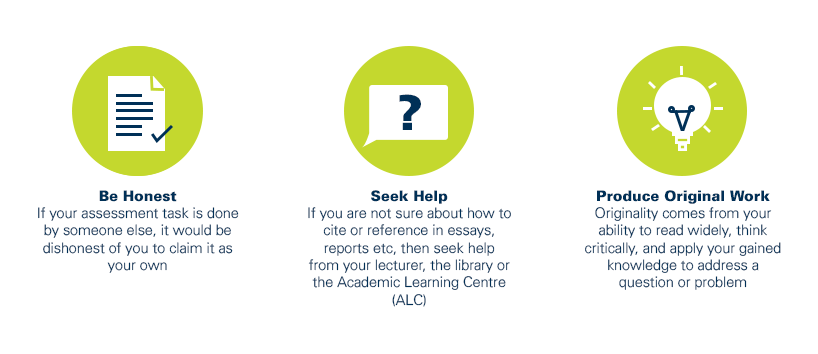
As a CQUniversity student you are expected to act honestly in all aspects of your academic work.
Any assessable work undertaken or submitted for review or assessment must be your own work. Assessable work is any type of work you do to meet the assessment requirements in the unit, including draft work submitted for review and feedback and final work to be assessed.
When you use the ideas, words or data of others in your assessment, you must thoroughly and clearly acknowledge the source of this information by using the correct referencing style for your unit. Using others’ work without proper acknowledgement may be considered a form of intellectual dishonesty.
Participating honestly, respectfully, responsibly, and fairly in your university study ensures the CQUniversity qualification you earn will be valued as a true indication of your individual academic achievement and will continue to receive the respect and recognition it deserves.
As a student, you are responsible for reading and following CQUniversity’s policies, including the Student Academic Integrity Policy and Procedure. This policy sets out CQUniversity’s expectations of you to act with integrity, examples of academic integrity breaches to avoid, the processes used to address alleged breaches of academic integrity, and potential penalties.
What is a breach of academic integrity?
A breach of academic integrity includes but is not limited to plagiarism, self-plagiarism, collusion, cheating, contract cheating, and academic misconduct. The Student Academic Integrity Policy and Procedure defines what these terms mean and gives examples.
Why is academic integrity important?
A breach of academic integrity may result in one or more penalties, including suspension or even expulsion from the University. It can also have negative implications for student visas and future enrolment at CQUniversity or elsewhere. Students who engage in contract cheating also risk being blackmailed by contract cheating services.
Where can I get assistance?
For academic advice and guidance, the Academic Learning Centre (ALC) can support you in becoming confident in completing assessments with integrity and of high standard.
What can you do to act with integrity?