Overview
In this unit you will examine key processes of social change and power that are needed to address the challenges facing people and the planet. By drawing on the work of a range of social change leaders and new paradigms from a range of social sectors - production, consumption, distribution, exchange and finance - you will begin developing skills in leading social change. You will explore processes of self change and social change as well as the social innovations that will be part of developing a new economy, society and sustainable environment into the 21st Century.
Details
Pre-requisites or Co-requisites
There are no requisites for this unit.
Important note: Students enrolled in a subsequent unit who failed their pre-requisite unit, should drop the subsequent unit before the census date or within 10 working days of Fail grade notification. Students who do not drop the unit in this timeframe cannot later drop the unit without academic and financial liability. See details in the Assessment Policy and Procedure (Higher Education Coursework).
Offerings For Term 1 - 2026
Attendance Requirements
All on-campus students are expected to attend scheduled classes - in some units, these classes are identified as a mandatory (pass/fail) component and attendance is compulsory. International students, on a student visa, must maintain a full time study load and meet both attendance and academic progress requirements in each study period (satisfactory attendance for International students is defined as maintaining at least an 80% attendance record).
Recommended Student Time Commitment
Each 6-credit Undergraduate unit at CQUniversity requires an overall time commitment of an average of 12.5 hours of study per week, making a total of 150 hours for the unit.
Class Timetable
Assessment Overview
Assessment Grading
This is a graded unit: your overall grade will be calculated from the marks or grades for each assessment task, based on the relative weightings shown in the table above. You must obtain an overall mark for the unit of at least 50%, or an overall grade of 'pass' in order to pass the unit. If any 'pass/fail' tasks are shown in the table above they must also be completed successfully ('pass' grade). You must also meet any minimum mark requirements specified for a particular assessment task, as detailed in the 'assessment task' section (note that in some instances, the minimum mark for a task may be greater than 50%). Consult the University's Grades and Results Policy for more details of interim results and final grades.
All University policies are available on the CQUniversity Policy site.
You may wish to view these policies:
- Grades and Results Policy
- Assessment Policy and Procedure (Higher Education Coursework)
- Review of Grade Procedure
- Student Academic Integrity Policy and Procedure
- Academic Progression Policy and Procedure
- Student Refund and Credit Balance Policy and Procedure
- Complaints Policy and Procedure
- Information and Communications Technology Acceptable Use Policy and Procedure
This list is not an exhaustive list of all University policies. The full list of University policies are available on the CQUniversity Policy site.
Feedback, Recommendations and Responses
Every unit is reviewed for enhancement each year. At the most recent review, the following staff and student feedback items were identified and recommendations were made.
Feedback from Through Moodle site.
Difficulty finding the assessment information on the Moodle site.
At the commencement of the term, provide clear and specific guidance to students on where to locate assessment information in the Assessment tile within the Moodle site. Students will also be encouraged to attend the Student Consultation Drop-in Zoom sessions to discuss assessment requirements and seek clarification from the Unit Coordinator.
Feedback from Moodle reports, Zoom attendance, and discussion forums.
Low student engagement on the discussion forums and tutorials.
Several engagement options were provided to students to enhance their learning and assist with their assignment preparation during term, such as weekly Zoom tutorials and two discussion forums (general and assessment). In the future, stronger promotion of these opportunities is recommended to encourage greater student participation and peer learning.
- Explain how social innovation can address wicked social problems
- Discuss case studies addressing social change across a range of sectors
- Apply human centred design principles and re-framing to a social change problem
- Explain your role in generating positive social and environmental change.
Nil
Alignment of Assessment Tasks to Learning Outcomes
| Assessment Tasks | Learning Outcomes | |||
|---|---|---|---|---|
| 1 | 2 | 3 | 4 | |
| 1 - Portfolio - 50% | ||||
| 2 - Written Assessment - 50% | ||||
Alignment of Graduate Attributes to Learning Outcomes
| Graduate Attributes | Learning Outcomes | |||
|---|---|---|---|---|
| 1 | 2 | 3 | 4 | |
| 1 - Communication | ||||
| 2 - Problem Solving | ||||
| 3 - Critical Thinking | ||||
| 4 - Information Literacy | ||||
| 5 - Team Work | ||||
| 6 - Information Technology Competence | ||||
| 7 - Cross Cultural Competence | ||||
| 8 - Ethical practice | ||||
| 9 - Social Innovation | ||||
| 10 - First Nations Knowledges | ||||
| 11 - Aboriginal and Torres Strait Islander Cultures | ||||
Alignment of Assessment Tasks to Graduate Attributes
| Assessment Tasks | Graduate Attributes | ||||||||||
|---|---|---|---|---|---|---|---|---|---|---|---|
| 1 | 2 | 3 | 4 | 5 | 6 | 7 | 8 | 9 | 10 | 11 | |
| 1 - Portfolio - 50% | |||||||||||
| 2 - Written Assessment - 50% | |||||||||||
Textbooks
There are no required textbooks.
IT Resources
- CQUniversity Student Email
- Internet
- Unit Website (Moodle)
- Academic Learning Centre services
- CQUniversity library literature search tools
- Microsoft Word 2010 or 2013
- Zoom account (Free)
- Zoom (both microphone and webcam capability)
- Endnote bibliographic software. This is optional for formatting references
- Zoom app on your smart phone or access to Zoom on your laptop Zoom (both microphone and webcam capability)
- CQU Library search engines for research articles
- CQU Library Resources
All submissions for this unit must use the referencing style: American Psychological Association 7th Edition (APA 7th edition)
For further information, see the Assessment Tasks.
s.rockloff@cqu.edu.au
Week 1
Begin Date: 09 Mar 2026Module/Topic
PART ONE: MICRO PERSPECTIVE
Introducing Sociology and changemaking: Private troubles to public issues
Exploring key concepts - social change, social innovation, changemaker
Chapter
Review the unit Moodle site and click on all the links.
Find out what is in the Student Support.
Find out how to find the library.
Click on the link and learn what is in the Academic Learning Centre.
Please locate this week's reading via the e-Reading List.
Reading each week's e-Reading is required to successfully complete the assessments and the unit.
Complete iChange Module 1&2: Historical Social Innovation (see Week 1. for the link)
Events and Submissions/Topic
Recorded Presentations:
Welcome and Unit Introduction
Activity: Access the General Discussion page and introduce yourself to your peers by providing your name and one point you want to share about why you are studying your degree.
Watch the Week 1 lecture recording
Read the Week 1 lecture notes
Complete the Required Readings
Virtual Weekly Student Consultation Time:
Monday, 3.00-4.00 pm (AEST)
A weekly Zoom drop-in session to ask questions about the unit content and assessment tasks. (sessions are not recorded)
Live Zoom Tutorial:
Wednesday 4.00-5.00 pm (AEST)
In this interactive, activity-based Zoom session, we start developing the skills and knowledge needed to complete your assessment tasks. We will explore key concepts, discuss private troubles and public issues, identify what makes a social issue 'wicked' and practice re-framing problems to identify where to intervene (the leverage points of change)(sessions are recorded for students unable to attend).
Assessment: Watch the Assessment Overview recording. Review the assessment tasks and make a one page study plan. Set completion dates for the compulsory question and the three chosen questions.
Foundations of Academic Integrity Program: Complete your annual program.
Announcements and Discussion Forums: Check for posts and updates.
Week 2
Begin Date: 16 Mar 2026Module/Topic
From direct service delivery to human-centred design
Chapter
Please locate this week's reading via the e-Reading List.
Complete iChange Module 2: Types of Social Impact
Events and Submissions/Topic
Activity: Access the General Discussion page and join in the discussion covering this week's topic.
Watch this week’s lecture recording
Read the Week 2 lecture notes
Complete the Required Readings and the iChange Module 2.
Virtual Weekly Student Consultation Time:
Monday, 3.00-4.00 pm (AEST)
Live Zoom Tutorial:
Wednesday 4.00-5.00 pm (AEST)
In this session, we focus on: 1) defining a changemaker and identifying changemakers - finding the 'heros'; and 2) debating two real examples of a human-centred design process to compare them and argue for which is best and why.
Assessment: For each portfolio question, produce draft points for the task(s), example(s), and key concept(s), using the assessment criteria as your guide. Use the CQU Library databases, Google Scholar, and reputable websites to source contemporary literature for all four responses.
Announcements and Discussion Forums: Check for posts and updates.
Student email: Check your student email at least two twice per week for important communications.
Week 3
Begin Date: 23 Mar 2026Module/Topic
Wicked social problems AND
Complex problems & change processes
Chapter
Please locate this week's reading via the e-Reading List.
Complete iChange Module 3: Megatrends & Wicked Problems
Events and Submissions/Topic
Census Date is next week. If you are struggling, please contact your Unit Coordinator for help.
Activity: Access the General Discussion page and join in the discussion covering this week's topic.
Watch this week’s lecture recording
Read the Week 3 lecture notes
Complete the Required Readings and the iChange Module 3.
Virtual Weekly Student Consultation Time:
Monday, 3.00-4.00 pm (AEST)
Live Zoom Tutorial:
Wednesday 4.00-5.00 pm (AEST)
In this session, we examine two contemporary issues and complete a two-stage change pathway exercise, classifying proposed actions for each issue as self-change (attitudes/behaviours) or social change (policies, institutions, norms).
Assessment: Continue reading the literature you’ve saved for each portfolio question. Use a structured note-taking method (see the Academic Learning Centre resources) to capture key ideas and quotes, then start drafting a brief outline for each response.
You might wish to seek help with assessment preparation from the Academic Learning Centre and/or Studiosity.
Announcements and Discussion Forums: Check for posts and updates.
Student email: Check your student email at least two twice per week for important communications.
Week 4
Begin Date: 30 Mar 2026Module/Topic
Leadership and social change AND
Social movements and social change
Chapter
Please locate this week's reading via the e-Reading List.
Complete iChange Module 4: Exploring Opportunities
Complete iChange Module 5 & 6: Who Does Social Innovation? Why Me?
Events and Submissions/Topic
Census Date - Tuesday, Week 4
Activity: Access the General Discussion page and join in the discussion covering this week's topic.
Watch this week’s lecture recording
Read the Week 4 lecture notes
Complete the Required Readings and the iChange Modules 4, 5 and 6.
Virtual Weekly Student Consultation Time:
Monday, 3.00-4.00 pm (AEST)
Live Zoom Tutorial:
Wednesday 4.00-5.00 pm (AEST)
In this session, we build on last week’s two problems, exploring how change moves across two sectors (e.g., production → consumption, or distribution → finance) and identifying the flow-on effects, trade-offs, and unintended consequences for society.
Assessment: Draft the four full responses. Include in-text citations. Ensure each answer addresses a distinct issue/context to avoid duplication across the portfolio.
Announcements and Discussion Forums: Check for posts and updates.
Student email: Check your student email at least two twice per week for important communications.
Week 5
Begin Date: 06 Apr 2026Module/Topic
PART TWO: MACRO PERSPECTIVE
Global megatrend # 1. Adapting to a changing climate
Chapter
Please locate this week's reading via the e-Reading List.
Naughtin et al. (2022) Our future world
Events and Submissions/Topic
Activity: Access the General Discussion page and join in the discussion covering this week's topic.
Watch this week’s lecture recording
Read the Week 5 lecture notes
Complete the Required Readings
Virtual Weekly Student Consultation Time:
Monday, 3.00-4.00 pm (AEST)
Live Zoom Tutorial:
Wednesday 4.00-5.00 pm (AEST)
In this session, we focus on unpacking Assessment 2, where you identify one wicked social problem from the list and at least three academic, peer-reviewed sources. An example from the Global Megatrend #1 will be used. We examine how 'wicked' our problem is against the checklist.
Assessment: Compile your reference list in alphabetical order using APA 7th edition (use the guide to check formatting). Proofread and refine each portfolio response, ensuring it directly answers the question and meets the criteria and requirements. Check the originality of your assignment through Turnitin and make relevant changes to your assignment after reviewing your originality report. Submit Assessment 1 with the completed cover sheet.
Announcements and Discussion Forums: Check for posts and updates.
Student email: Check your student email at least two twice per week for important communications.
Portfolio (1600 words +/-10%) Due: Week 5 Wednesday (8 Apr 2026) 4:00 pm AEST
Week 6
Begin Date: 13 Apr 2026Module/Topic
Global megatrend # 2. Leaner, cleaner and greener
Chapter
Please locate this week's reading via the e-Reading List.
Naughtin et al. (2022) Our future world
Events and Submissions/Topic
Activity: Access the General Discussion page and join in the discussion covering this week's topic.
Watch this week’s lecture recording
Read the Week 6 lecture notes
Complete the Required Readings
Virtual Weekly Student Consultation Time:
Monday, 3.00-4.00 pm (AEST)
Live Zoom Tutorial:
Wednesday 4.00-5.00 pm (AEST)
In this session, we use an example from Global Megatrends #2 to practise writing two problem statements for the same issue (common/media framing vs structural framing) and discuss how they differ.
Assessment: Draft a short introduction (~100 words). Using contemporary literature from the CQU library, prepare an outline confirming your chosen problem is 'wicked', what makes it persist and/or cause conflict. Check the assessment criteria for the assignment requirements. Source contemporary peer-reviewed journal articles for the other sections of the assignment.
Announcements and Discussion Forums: Check for posts and updates.
Student email: Check your student email at least two twice per week for important communications.
Vacation Week
Begin Date: 20 Apr 2026Module/Topic
Chapter
Please use this mid-term break as an opportunity to rest and recover. Enjoy your break!
Events and Submissions/Topic
No timetabled learning activities. Please use this week to progress your assessments.
Week 7
Begin Date: 27 Apr 2026Module/Topic
Global megatrend # 3. The escalating health imperative
Chapter
Please locate this week's reading via the e-Reading List.
Naughtin et al. (2022) Our future world
Events and Submissions/Topic
Activity: Access the General Discussion page and join in the discussion covering this week's topic.
Watch this week’s lecture recording
Read the Week 7 lecture notes
Complete the Required Readings
Virtual Weekly Student Consultation Time:
Monday, 3.00-4.00 pm (AEST)
Live Zoom Tutorial:
Wednesday 4.00-5.00 pm (AEST)
In this session, we use an example from Global Megatrends #3 to practise writing two problem statements for the same wicked social problem (common/media framing vs structural framing) and compare them.
Assessment: Write the wicked social problem framing section by drawing on contemporary peer-reviewed literature and credible published examples.
Announcements and Discussion Forums: Check for posts and updates.
Student email: Check your student email at least two twice per week for important communications.
Week 8
Begin Date: 04 May 2026Module/Topic
Global megatrend # 4. Geopolitical shifts
Chapter
Please locate this week's reading via the e-Reading List.
Naughtin et al. (2022) Our future world
Events and Submissions/Topic
Activity: Access the General Discussion page and join in the discussion covering this week's topic.
Watch this week’s lecture recording
Read the Week 8 lecture notes
Complete the Required Readings
Virtual Weekly Student Consultation Time:
Monday, 3.00-4.00 pm (AEST)
Live Zoom Tutorial:
Wednesday 4.00-5.00 pm (AEST)
In this session, students will pair up into breakrooms to analyse a Global Megatrend #4 scenario and three interventions, developing an argument about the ethical considerations (equity, respect) and trade-offs (process, outcome) in using various design processes to produce a solution.
Assessment: Draft this section (~400 words) on how human-centred design (use and limitations) applies to your chosen wicked problem and use supporting contemporary literature.
Announcements and Discussion Forums: Check for posts and updates.
Student email: Check your student email at least two twice per week for important communications.
Week 9
Begin Date: 11 May 2026Module/Topic
Global megatrend # 5 Diving into digital
Chapter
Please locate this week's reading via the e-Reading List.
Naughtin et al. (2022) Our future world
Events and Submissions/Topic
Activity: Access the General Discussion page and join in the discussion covering this week's topic.
Watch this week’s lecture recording
Read the Week 9 lecture notes
Complete the Required Readings
Virtual Weekly Student Consultation Time:
Monday, 3.00-4.00 pm (AEST)
Live Zoom Tutorial:
Wednesday 4.00-5.00 pm (AEST)
In this session, students bring one social innovation relevant to Global Megatrend #5 and complete a “what it does + why it works + evidence” sheet, including where outcomes are contested among stakeholders.
Assessment: Draft the social innovation section (~300 words), and include lived experience (first-person/community account/interview) evidence, plus contemporary peer-reviewed literature.
Announcements and Discussion Forums: Check for posts and updates.
Student email: Check your student email at least two twice per week for important communications.
Week 10
Begin Date: 18 May 2026Module/Topic
Global megatrend # 6. Increasingly autonomous
Chapter
Events and Submissions/Topic
Activity: Access the General Discussion page and join in the discussion covering this week's topic.
Watch this week’s lecture recording
Read the Week 10 lecture notes
Complete the Required Readings
Virtual Weekly Student Consultation Time:
Monday, 3.00-4.00 pm (AEST)
Live Zoom Tutorial:
Wednesday 4.00-5.00 pm (AEST)
In this session, you will learn how to write an academic reflection that links personal insights to evidence by connecting lived experience and practical constraints to relevant contemporary literature. A Reflect-Link-Apply activity, based on Global Megatrend #6, a wicked social problem and a lived-experience insight, will help you develop this skill.
Assessment: Draft your reflection (about 400 words), focusing on one action you can take now as a student and one you can take later as a professional, with both grounded in lived experience and real world constraints.
Announcements and Discussion Forums: Check for posts and updates.
Student email: Check your student email at least two twice per week for important communications.
Week 11
Begin Date: 25 May 2026Module/Topic
Global megatrend #7 Unlocking the human dimension
Chapter
Please locate this week's reading via the e-Reading List.
Naughtin et al. (2022) Our future world
Events and Submissions/Topic
Activity: Access the General Discussion page and join in the discussion covering this week's topic.
Watch this week’s lecture recording
Read the Week 11 lecture notes
Complete the Required Readings
Virtual Weekly Student Consultation Time:
Monday, 3.00-4.00 pm (AEST)
Live Zoom Tutorial:
Wednesday 4.00 - 5.00 pm (AEST)
In this session, a Megatrend Mash-up Challenge will use the seven Global Megatrends to connect wicked social problems, social innovation and social change. Time will be allocated for questions about Assessment 2.
Assessment: Draft your conclusion (about 100 words) and begin revising your report and finalising your reference list. Compile your reference list in alphabetical order using APA 7th edition (use the guide to check formatting).
Announcements and Discussion Forums: Check for posts and updates.
Student email: Check your student email at least twice per week for important communications.
Student Unit and Teaching Evaluation Survey - Please complete the unit evaluation survey.
Week 12
Begin Date: 01 Jun 2026Module/Topic
Micro-Macro synthesis & overview
Chapter
No readings for this week.
Events and Submissions/Topic
Activity: Access the General Discussion page and join in the discussion covering this week's topic.
Watch this week’s lecture recording
Read the Week 12 lecture notes
Virtual Weekly Student Consultation Time:
Monday, 3.00-4.00 pm (AEST)
Live Zoom Tutorial:
Wednesday 4.00 - 5.00 pm (AEST)
The final session will provide an opportunity to address any outstanding questions about Assessment 3.
Assessment: Proofread and refine each part, ensuring it directly answers the question and tasks, and meets the criteria and requirements for each section. Check the originality of your assignment through Turnitin and make relevant changes to your assignment after reviewing your originality report. Submit Assessment 2 with the completed cover sheet.
Announcements and Discussion Forums: Check for posts and updates.
Student email: Check your student email at least twice per week for important communications.
Student Unit and Teaching Evaluation Survey - Please complete the unit evaluation survey.
End of Term: Congratulations on completing this unit. Don't forget to check your unit enrolments for next term.
Written Assessment (1600 words +/-10%) Due: Week 12 Wednesday (3 June 2026) 4:00 pm AEST
Exam Week
Begin Date: 08 Jun 2026Module/Topic
Chapter
Events and Submissions/Topic
Vacation/Exam Week
Begin Date: 15 Jun 2026Module/Topic
Chapter
Events and Submissions/Topic
Return of marked assignments for Assessment 2 on Wednesday, 17 June 2026.
As this unit is offered online, students are asked to prepare their own individual study plan to undertake self-led and self-directed study throughout the term. A key to your success is a strategic self-directed approach to learning and regular contact with your Unit Coordinator. Please check the Announcements and Discussion forums at least twice a week – there will be regular announcements about assessments and unit resources throughout the term and reviewing this information is essential to unit knowledge and your success. CQUniversity communicates with students through the CQUniversity email. We recommend that you access your CQUniversity email at least twice a week so that you do not miss vital information about your studies.
1 Portfolio
This assessment asks you to demonstrate how social change happens by analysing contemporary wicked social problems using concepts from social innovation and human-centred design. Across four short portfolio responses, you will use examples from the literature to analyse real world cases, applying human-centred design principles and problem re-framing to show how different approaches to change can reshape how resources are produced, used, and allocated to promote equity, sustainability, and inclusion.
Instructions
Please refer to the assessment task instructions on the unit Moodle site.
Academic Integrity
1. You must abide by the principles of academic integrity (see Student Academic Integrity Policy and Procedure). Completion of this assessment with another party or sharing of responses is not permitted at any time. This assessment requires students to adhere to the guidelines on the use of artificial intelligence tools as specified in the Artificial Intelligence Assessment Scale (AIAS). Any misuse or lack of disclosure regarding the use of AI tools will be considered a breach of academic integrity.
2. The use of any generative artificial intelligence is permitted as per Level 2 (AI planning) AI Assessment scale tool indicators:
a. Gen AI content editing and proofreading.
b. Checking spelling and grammar.
c. CQUniversity’s Gen AI tools approved for use in this assessment are Microsoft Copilot (protected version), Studiosity and Grammarly.
3. Any use of Gen AI software:
a. Must be cited in the relevant sections.
b. Must be referenced as per APA 7th guidelines.
You must complete the declaration of Gen AI use on the title page of your assessment.
Extensions
Extensions to this assessment are available as per policy. The 72-hour grace period may apply to this assessment.
Minimum Pass Criteria
You must achieve a minimum grade of 49.5% to pass this assessment.
AND
You must achieve a cumulative grade of at least 49.5% across all assessments to pass this unit.
AND
In the event you are eligible for a supplementary assessment, all assessment tasks must be reasonably attempted in this unit.
In accordance with policy, any marks and/or grades for assessments released to students prior to Certification of Grades are provisional and are subject to moderation and confirmation through the relevant Program and Divisional Assessment Committees.
Week 5 Wednesday (8 Apr 2026) 4:00 pm AEST
Submit your assessment as a single file via the Assessment tile on the unit Moodle site in Microsoft Word format only.
Vacation Week Wednesday (22 Apr 2026)
Students will be advised of the release of marked assignments via email notification.
Assessment criteria will be available on the unit Moodle site.
- Explain how social innovation can address wicked social problems
- Discuss case studies addressing social change across a range of sectors
- Apply human centred design principles and re-framing to a social change problem
- Critical Thinking
- Ethical practice
- Social Innovation
2 Written Assessment
This assessment asks you to analyse a contemporary wicked social problem, examine how it is framed in society, and examine an existing social innovation that addresses it. Using human-centred design principles and relevant literature, you will explain its impact on everyday life and outline how students and professionals in your profession can contribute to positive change.
Instructions
Please refer to the assessment task instructions on the unit Moodle site.
Academic Integrity
1. You must abide by the principles of academic integrity (see Student Academic Integrity Policy and Procedure). Completion of this assessment with another party or sharing of responses is not permitted at any time. This assessment requires students to adhere to the guidelines on the use of artificial intelligence tools as specified in the Artificial Intelligence Assessment Scale (AIAS). Any misuse or lack of disclosure regarding the use of AI tools will be considered a breach of academic integrity.
2. The use of any generative artificial intelligence is permitted as per Level 2 (AI planning) AI Assessment scale tool indicators:
a. Gen AI content editing and proofreading.
b. Checking spelling and grammar.
c. CQUniversity’s Gen AI tools approved for use in this assessment are Microsoft Copilot (protected version), Studiosity and Grammarly.
3. Any use of Gen AI software:
a. Must be cited in the relevant sections.
b. Must be referenced as per APA 7th guidelines.
You must complete the declaration of Gen AI use on the title page of your assessment.
Extensions
Extensions to this assessment are available as per policy. The 72-hour grace period may apply to this assessment.
Minimum Pass Criteria
You must achieve a minimum grade of 49.5% to pass this assessment.
AND
You must achieve a cumulative grade of at least 49.5% across all assessments to pass this unit.
AND
In the event you are eligible for a supplementary assessment, all assessment tasks must be reasonably attempted in this unit.
In accordance with policy, any marks and/or grades for assessments released to students prior to Certification of Grades are provisional and are subject to moderation and confirmation through the relevant Program and Divisional Assessment Committees.
Week 12 Wednesday (3 June 2026) 4:00 pm AEST
Submit your assignment via the unit Moodle site as a single file in Microsoft Word format only.
17 June 2026 Students will be advised of the release of marked assignments via email notification.
Assessment criteria will be available on the unit Moodle site.
- Explain how social innovation can address wicked social problems
- Apply human centred design principles and re-framing to a social change problem
- Explain your role in generating positive social and environmental change.
- Critical Thinking
- Ethical practice
- Social Innovation
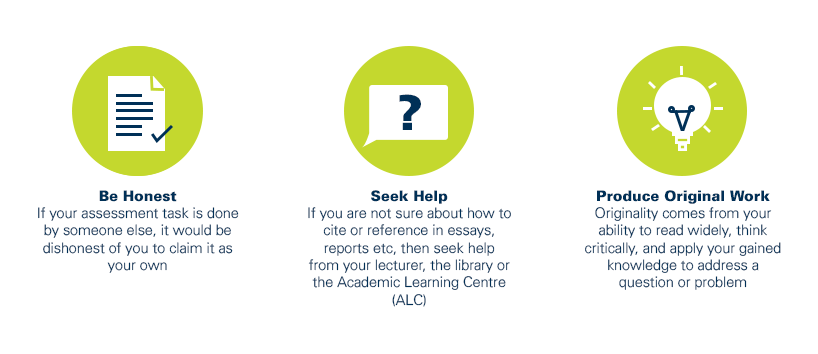
As a CQUniversity student you are expected to act honestly in all aspects of your academic work.
Any assessable work undertaken or submitted for review or assessment must be your own work. Assessable work is any type of work you do to meet the assessment requirements in the unit, including draft work submitted for review and feedback and final work to be assessed.
When you use the ideas, words or data of others in your assessment, you must thoroughly and clearly acknowledge the source of this information by using the correct referencing style for your unit. Using others’ work without proper acknowledgement may be considered a form of intellectual dishonesty.
Participating honestly, respectfully, responsibly, and fairly in your university study ensures the CQUniversity qualification you earn will be valued as a true indication of your individual academic achievement and will continue to receive the respect and recognition it deserves.
As a student, you are responsible for reading and following CQUniversity’s policies, including the Student Academic Integrity Policy and Procedure. This policy sets out CQUniversity’s expectations of you to act with integrity, examples of academic integrity breaches to avoid, the processes used to address alleged breaches of academic integrity, and potential penalties.
What is a breach of academic integrity?
A breach of academic integrity includes but is not limited to plagiarism, self-plagiarism, collusion, cheating, contract cheating, and academic misconduct. The Student Academic Integrity Policy and Procedure defines what these terms mean and gives examples.
Why is academic integrity important?
A breach of academic integrity may result in one or more penalties, including suspension or even expulsion from the University. It can also have negative implications for student visas and future enrolment at CQUniversity or elsewhere. Students who engage in contract cheating also risk being blackmailed by contract cheating services.
Where can I get assistance?
For academic advice and guidance, the Academic Learning Centre (ALC) can support you in becoming confident in completing assessments with integrity and of high standard.
What can you do to act with integrity?