Overview
Social work operates at the critical interface between social concerns and individual problems. Social workers must navigate this complex landscape by analysing and evaluating the policy context in which they work, guided by the AASW Code of Ethics (2020). This unit explores the historical, political and structural dimensions of social policy and policy-making in Australia and internationally. A significant focus will be examining the impact of historical and contemporary social policies on First Nations communities. You will critically examine key concepts and debates in contemporary social policy and alternative ideologies underpinning the allocation and distribution of resources, such as the welfare state and neoliberalism. Additionally, you will analyse the role of social workers in interpreting and implementing social policy decisions and develop skills essential for advocating for those adversely affected by policies and influencing the broader social policy environment.
Details
Pre-requisites or Co-requisites
Pre-requisites: SOWK29001 Ethical and Legal Issues in Practice SOWK28005 Social Work Field Education 1
Important note: Students enrolled in a subsequent unit who failed their pre-requisite unit, should drop the subsequent unit before the census date or within 10 working days of Fail grade notification. Students who do not drop the unit in this timeframe cannot later drop the unit without academic and financial liability. See details in the Assessment Policy and Procedure (Higher Education Coursework).
Offerings For Term 1 - 2026
Attendance Requirements
All on-campus students are expected to attend scheduled classes - in some units, these classes are identified as a mandatory (pass/fail) component and attendance is compulsory. International students, on a student visa, must maintain a full time study load and meet both attendance and academic progress requirements in each study period (satisfactory attendance for International students is defined as maintaining at least an 80% attendance record).
Recommended Student Time Commitment
Each 6-credit Postgraduate unit at CQUniversity requires an overall time commitment of an average of 12.5 hours of study per week, making a total of 150 hours for the unit.
Class Timetable
Assessment Overview
Assessment Grading
This is a graded unit: your overall grade will be calculated from the marks or grades for each assessment task, based on the relative weightings shown in the table above. You must obtain an overall mark for the unit of at least 50%, or an overall grade of 'pass' in order to pass the unit. If any 'pass/fail' tasks are shown in the table above they must also be completed successfully ('pass' grade). You must also meet any minimum mark requirements specified for a particular assessment task, as detailed in the 'assessment task' section (note that in some instances, the minimum mark for a task may be greater than 50%). Consult the University's Grades and Results Policy for more details of interim results and final grades.
All University policies are available on the CQUniversity Policy site.
You may wish to view these policies:
- Grades and Results Policy
- Assessment Policy and Procedure (Higher Education Coursework)
- Review of Grade Procedure
- Student Academic Integrity Policy and Procedure
- Academic Progression Policy and Procedure
- Student Refund and Credit Balance Policy and Procedure
- Complaints Policy and Procedure
- Information and Communications Technology Acceptable Use Policy and Procedure
This list is not an exhaustive list of all University policies. The full list of University policies are available on the CQUniversity Policy site.
- Critically appraise the key concepts and processes influencing social policy and policy-making, including historical, political and structural factors and contemporary policy debates.
- Critically analyse contemporary social policies within various practice contexts, focusing on the impact of social policies on First Nations communities and evaluating their congruence with social work values, ethics and practice.
- Critically examine the role of social workers in interpreting and implementing social policy decisions and develop effective advocacy skills and methods to support those adversely affected by policy changes and influence the broader social policy landscape.
Alignment of Assessment Tasks to Learning Outcomes
| Assessment Tasks | Learning Outcomes | ||
|---|---|---|---|
| 1 | 2 | 3 | |
| 1 - Online discussion forum - 20% | |||
| 2 - Written Assessment - 40% | |||
| 3 - Project (applied) - 40% | |||
Alignment of Graduate Attributes to Learning Outcomes
| Graduate Attributes | Learning Outcomes | ||
|---|---|---|---|
| 1 | 2 | 3 | |
| 1 - Knowledge | |||
| 2 - Communication | |||
| 3 - Cognitive, technical and creative skills | |||
| 4 - Research | |||
| 5 - Self-management | |||
| 6 - Ethical and Professional Responsibility | |||
| 7 - Leadership | |||
| 8 - First Nations Knowledges | |||
| 9 - Aboriginal and Torres Strait Islander Cultures | |||
Textbooks
Social Policy in Australia: Understanding for Action
- Edition: 4 (2021)
- Authors: McClelland, Alison ; Smyth, Paul
- ISBN: 9780195597134
IT Resources
- CQUniversity Student Email
- Internet
- Unit Website (Moodle)
- Academic Learning Centre services
- Microsoft Word
- CQUniversity Library Resources
- Microsoft Teams
All submissions for this unit must use the referencing style: American Psychological Association 7th Edition (APA 7th edition)
For further information, see the Assessment Tasks.
n.melander@cqu.edu.au
Week 1
Begin Date: 09 Mar 2026Module/Topic
Introduction to Social Policy and Social Work
Chapter
Readings and activities as outlined in module.
Read Chapter One in McClelland, A., Smyth, P., & Marston, G. (Eds.). (2021). Social policy in Australia : understanding for action (Fourth edition.). Oxford University Press.: What is Social Policy
Events and Submissions/Topic
Review the Moodle site and click on all the links.
Find out what is in Student Support?
Find out how to find the Library.
Click on the link and learn what is in the Academic Learning Centre.
Readings and activities as outlined in module.
Assessments: Review the assessment tasks and make a study plan.
Foundations of Academic Integrity Program: Complete your annual program.
Announcements and Discussion Forums: Check for posts and updates.
Week 2
Begin Date: 16 Mar 2026Module/Topic
The Welfare State, Social Inclusion and Exclusion
Chapter
Readings and activities as outlined in module.
Read: Spicker, P. (2025). What Is a Welfare State? In What Is the Welfare State For? Bristol University Press. https://doi.org/10.56687/9781529250770-001
Events and Submissions/Topic
Announcement and Discussion Forums – Check for posts and updates.
Student email – Check your student email at least twice per week for important communications.
Week 3
Begin Date: 23 Mar 2026Module/Topic
Neoliberalism, New Public Management, and Marketisation
Chapter
Readings and activities as outlined in module.
Read Chapter Two in McClelland, A., Smyth, P., & Marston, G. (Eds.). (2021). Social policy in Australia : understanding for action (Fourth edition.). Oxford University Press.: What is Social Policy
Events and Submissions/Topic
Assessment One: Prepare First Discussion Post
Announcement and Discussion Forums – Check for posts and updates.
Student email – Check your student email at least twice per week for important communications.
Census Date is next week. If you are struggling, please contact your Unit Coordinator for help.
Week 4
Begin Date: 30 Mar 2026Module/Topic
The Concept of the Deserving and Undeserving
Chapter
Readings and activities as outlined in module.
Read Chapter Ten in McClelland, A., Smyth, P., & Marston, G. (Eds.). (2021). Social policy in Australia : understanding for action (Fourth edition.). Oxford University Press.: What is Social Policy
Events and Submissions/Topic
Announcement and Discussion Forums – Check for posts and updates.
Student email – Check your student email at least twice per week for important communications.
Census Date – Tuesday Week 4
Week 5
Begin Date: 06 Apr 2026Module/Topic
Australian Social Policy History
Chapter
Readings and activities as outlined in module.
Read Chapter Five in: McClelland, A., Smyth, P., & Marston, G. (Eds.). (2021). Social policy in Australia : understanding for action (Fourth edition.). Oxford University Press.: What is Social Policy
Events and Submissions/Topic
Assessment One: Prepare Discussion Post Two
Assessment Two: Prepare Critical Analysis Essay
Announcement and Discussion Forums – Check for posts and updates.
Student email – Check your student email at least twice per week for important communications.
Critical Policy Analysis Due: Week 5 Wednesday (8 Apr 2026) 4:00 pm AEST
Week 6
Begin Date: 13 Apr 2026Module/Topic
Contemporary Australian Social Policy Systems
Chapter
Readings and activities as outlined in module.
Read Chapter Four in McClelland, A., Smyth, P., & Marston, G. (Eds.). (2021). Social policy in Australia : understanding for action (Fourth edition.). Oxford University Press.: What is Social Policy
Events and Submissions/Topic
Announcement and Discussion Forums – Check for posts and updates.
Student email – Check your student email at least twice per week for important communications.
Vacation Week
Begin Date: 20 Apr 2026Module/Topic
Vacation Week!
Chapter
Please use this mid-term break as an opportunity to rest and recover. Enjoy your break!
Events and Submissions/Topic
No timetabled learning activities. Please use this week to progress your assessments.
Week 7
Begin Date: 27 Apr 2026Module/Topic
Health Policy, Medicare, and Social Work
Chapter
Readings and activities as outlined in module.
Read Chapter Twelve in: McClelland, A., Smyth, P., & Marston, G. (Eds.). (2021). Social policy in Australia : understanding for action (Fourth edition.). Oxford University Press.: What is Social Policy
Events and Submissions/Topic
Announcement and Discussion Forums – Check for posts and updates.
Student email – Check your student email at least twice per week for important communications.
Week 8
Begin Date: 04 May 2026Module/Topic
Policy in Practice and Social Work
Chapter
Readings and activities as outlined in module.
Read Day, A., McLeod, B., Hawkins, R. L., & Mogro-Wilson, C. (2023). The Importance of Policy Advocacy in Social Work. Families in Society, 104(3), 243–244. https://doi.org/10.1177/10443894231187908
Events and Submissions/Topic
Announcement and Discussion Forums – Check for posts and updates.
Student email – Check your student email at least twice per week for important communications.
Week 9
Begin Date: 11 May 2026Module/Topic
Inequality, Intersectionality, and Social Exclusion
Chapter
Readings and activities as outlined in module.
Read Chapter Eight in McClelland, A., Smyth, P., & Marston, G. (Eds.). (2021). Social policy in Australia : understanding for action (Fourth edition.). Oxford University Press.: What is Social Policy
Events and Submissions/Topic
Announcement and Discussion Forums – Check for posts and updates.
Student email – Check your student email at least twice per week for important communications.
Week 10
Begin Date: 18 May 2026Module/Topic
Social Citizenship, Rights, and Conditional Welfare
Chapter
Readings and activities as outlined in module.
Read Chapter Nine in McClelland, A., Smyth, P., & Marston, G. (Eds.). (2021). Social policy in Australia : understanding for action (Fourth edition.). Oxford University Press.: What is Social Policy
Events and Submissions/Topic
Announcement and Discussion Forums – Check for posts and updates.
Student email – Check your student email at least twice per week for important communications.
Week 11
Begin Date: 25 May 2026Module/Topic
Advocacy and Policy Change
Chapter
Readings and activities as outlined in module.
Read Chapter Three in McClelland, A., Smyth, P., & Marston, G. (Eds.). (2021). Social policy in Australia : understanding for action (Fourth edition.). Oxford University Press.: What is Social Policy
Events and Submissions/Topic
Assessment Three: Finalise a topic for your policy briefing project.
Announcement and Discussion Forums – Check for posts and updates.
Student email – Check your student email at least twice per week for important communications.
Student Unit and Teaching Evaluation survey – We encourage you to provide feedback about your unit and teaching experiences in this unit. The survey opens Week 11 and closes one week before release of grades.
Week 12
Begin Date: 01 Jun 2026Module/Topic
Policy Briefing Workshop
Chapter
Readings and activities as outlined in module.
Events and Submissions/Topic
Assessment 3 – Prepare to submit your final assessment.
Announcement and Discussion Forums – Check for posts and updates.
Student email – Check your student email at least twice per week for important communications.
Student Unit and Teaching Evaluation survey – Please complete the unit evaluation survey.
Congratulations on completing this unit. Don’t forget to check your unit enrolments for next term.
Policy Briefing Project Due: Week 12 Wednesday (3 June 2026) 4:00 pm AEST
Exam Week
Begin Date: 08 Jun 2026Module/Topic
Chapter
Events and Submissions/Topic
Vacation/Exam Week
Begin Date: 15 Jun 2026Module/Topic
Chapter
Events and Submissions/Topic
As this unit is offered online students are to engage with weekly online lectures as pre timetable. This unit has an 80% attendance rate. In addition, students are expected to prepare their own individual study plan to undertake self-led and self-directed study throughout the term. A key to your success is a strategic self-directed approach to learning and regular contact with your Unit Coordinator/s. Please check the Announcements and Discussion forums at least twice a week – there will be regular announcements about assessments and unit resources throughout the term and reviewing this information is essential to unit knowledge and your success. CQUniversity communicates with students through CQUniversity email. We recommend that you access your CQUniversity email at least twice a week so that you do not miss vital information about your studies.
1 Online discussion forum
Task Description
Through online discussion, you will examine how historical, political and structural forces shape policy-making, and critically consider the impacts of social policies on different community groups.
Instructions
Please refer to the assessment task instructions on the unit Moodle site.
Academic Integrity
You must abide by the principles of academic integrity (see Student Academic Integrity Policy and Procedure). Completion of this assessment with another party or sharing of responses is not permitted at any time. This assessment requires students to adhere to the guidelines on the use of artificial intelligence tools as specified in the Artificial Intelligence Assessment Scale (AIAS). Any misuse or lack of disclosure regarding the use of AI tools will be considered a breach of academic integrity. No Generative AI use is permitted in the completion of this assignment. You must not use AI tools or technology to produce substantive content. You are permitted to use technology or tools that assist with spelling, grammar or formatting.
Level of GenAI Use Allowed: Level 1: You must not use AI at any point during the assessment. You must demonstrate your core skills and knowledge.
Extensions
Extensions to this assessment are not available as per policy. The 72-hour grace period does not apply to this assessment.
Minimum Pass Criteria
· You must achieve a cumulative grade of at least 49.5% across all assessments to pass this unit.
· In order for a supplementary assessment to be considered, all assessment tasks must be reasonably attempted in this unit.
Discussion A Due via Moodle: 17:00 hours (AEST) Wednesday, 1st April 2026 (Week 4). Discussion B Due via Moodle: 17:00 hours (AEST) Wednesday, 15th April 2025 (Week 6)
Week 7 Friday (1 May 2026)
Assessment criteria will be available on the Moodle site.
- Critically appraise the key concepts and processes influencing social policy and policy-making, including historical, political and structural factors and contemporary policy debates.
- Critically analyse contemporary social policies within various practice contexts, focusing on the impact of social policies on First Nations communities and evaluating their congruence with social work values, ethics and practice.
2 Written Assessment
Task Description
The aim of this assessment is for you to demonstrate your ability to critically analyse a significant Australian social policy, current or historical, that has had an egregious impact on Aboriginal and Torres Strait Islander peoples. You will evaluate this policy’s intent, implementation, outcomes and impacts, and analyse its alignment with social work values, and ethics. You will also examine the role of social workers in responding to the policy and propose advocacy strategies to influence policy and support affected communities.
Instructions
Please refer to the assessment task instructions on the unit Moodle site.
Academic Integrity
You must abide by the principles of academic integrity (see Student Academic Integrity Policy and Procedure). Completion of this assessment with another party or sharing of responses is not permitted at any time. This assessment requires students to adhere to the guidelines on the use of artificial intelligence tools as specified in the Artificial Intelligence Assessment Scale (AIAS). Any misuse or lack of disclosure regarding the use of AI tools will be considered a breach of academic integrity. No Generative AI use is permitted in the completion of this assignment. You must not use AI tools or technology to produce substantive content. You are permitted to use technology or tools that assist with spelling, grammar or formatting.
Level of GenAI Use Allowed: Level 1: You must not use AI at any point during the assessment. You must demonstrate your core skills and knowledge.
Extensions
Extensions to this assessment are available as per policy. The 72-hour grace period does apply to this assessment.
Minimum Pass Criteria
· You must achieve a cumulative grade of at least 49.5% across all assessments to pass this unit.
· In order for a supplementary assessment to be considered, all assessment tasks must be reasonably attempted in this unit.
Week 5 Wednesday (8 Apr 2026) 4:00 pm AEST
Submit online via the unit Moodle site
Week 8 Wednesday (6 May 2026)
Assessment criteria will be available on the Moodle site.
- Critically appraise the key concepts and processes influencing social policy and policy-making, including historical, political and structural factors and contemporary policy debates.
- Critically analyse contemporary social policies within various practice contexts, focusing on the impact of social policies on First Nations communities and evaluating their congruence with social work values, ethics and practice.
- Critically examine the role of social workers in interpreting and implementing social policy decisions and develop effective advocacy skills and methods to support those adversely affected by policy changes and influence the broader social policy landscape.
3 Project (applied)
Task Description
The aim of this project is for students to apply advanced policy analysis, research, and advocacy skills. This will be achieved by producing a professional policy brief that examines a current social policy problem affecting a marginalised group. Students will critically analyse the issue, articulate its social justice implications, and develop actionable policy recommendations consistent with social work values, ethics, and professional responsibilities.
Instructions
Please refer to the assessment task instructions on the unit Moodle site.
Academic Integrity
You must abide by the principles of academic integrity (see Student Academic Integrity Policy and Procedure). Completion of this assessment with another party or sharing of responses is not permitted at any time. This assessment requires students to adhere to the guidelines on the use of artificial intelligence tools as specified in the Artificial Intelligence Assessment Scale (AIAS). Any misuse or lack of disclosure regarding the use of AI tools will be considered a breach of academic integrity. No Generative AI use is permitted in the completion of this assignment. You must not use AI tools or technology to produce substantive content. You are permitted to use technology or tools that assist with spelling, grammar or formatting.
Level of GenAI Use Allowed: Level 1: You must not use AI at any point during the assessment. You must demonstrate your core skills and knowledge.
Extensions
Extensions to this assessment are available as per policy. The 72-hour grace period does apply to this assessment.
Minimum Pass Criteria
You must achieve a minimum grade of 49.5% to pass this assessment.
You must achieve a cumulative grade of at least 49.5% across all assessments to pass this unit.
In order for a supplementary assessment to be considered, all assessment tasks must be reasonably attempted in this unit.
Week 12 Wednesday (3 June 2026) 4:00 pm AEST
Submit online via the unit Moodle site
Vacation/Exam Week Wednesday (17 June 2026)
Assessment criteria will be available on the Moodle site.
- Critically examine the role of social workers in interpreting and implementing social policy decisions and develop effective advocacy skills and methods to support those adversely affected by policy changes and influence the broader social policy landscape.
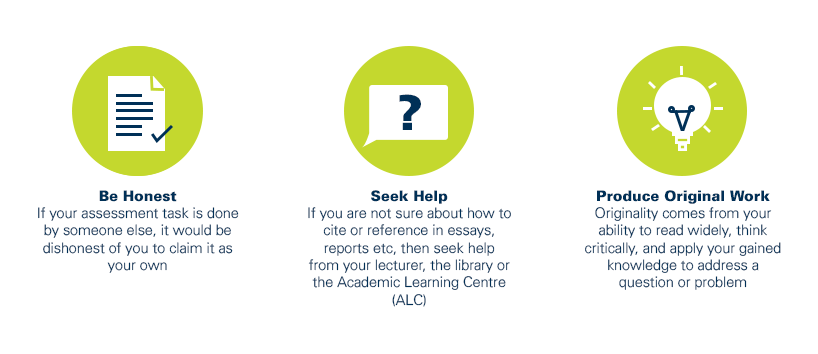
As a CQUniversity student you are expected to act honestly in all aspects of your academic work.
Any assessable work undertaken or submitted for review or assessment must be your own work. Assessable work is any type of work you do to meet the assessment requirements in the unit, including draft work submitted for review and feedback and final work to be assessed.
When you use the ideas, words or data of others in your assessment, you must thoroughly and clearly acknowledge the source of this information by using the correct referencing style for your unit. Using others’ work without proper acknowledgement may be considered a form of intellectual dishonesty.
Participating honestly, respectfully, responsibly, and fairly in your university study ensures the CQUniversity qualification you earn will be valued as a true indication of your individual academic achievement and will continue to receive the respect and recognition it deserves.
As a student, you are responsible for reading and following CQUniversity’s policies, including the Student Academic Integrity Policy and Procedure. This policy sets out CQUniversity’s expectations of you to act with integrity, examples of academic integrity breaches to avoid, the processes used to address alleged breaches of academic integrity, and potential penalties.
What is a breach of academic integrity?
A breach of academic integrity includes but is not limited to plagiarism, self-plagiarism, collusion, cheating, contract cheating, and academic misconduct. The Student Academic Integrity Policy and Procedure defines what these terms mean and gives examples.
Why is academic integrity important?
A breach of academic integrity may result in one or more penalties, including suspension or even expulsion from the University. It can also have negative implications for student visas and future enrolment at CQUniversity or elsewhere. Students who engage in contract cheating also risk being blackmailed by contract cheating services.
Where can I get assistance?
For academic advice and guidance, the Academic Learning Centre (ALC) can support you in becoming confident in completing assessments with integrity and of high standard.
What can you do to act with integrity?