Overview
In this unit, you will expand your knowledge of family and structural theories of violence, with a focus on family and gender-based violence against women. Gender-based and family violence is pervasive in Australia, with 1 in 3 women experiencing violence by a partner, known person or a stranger since the age of 15, and 1 in 5 women experiencing sexual violence since the age of 15. These statistics underscore the urgent need for targeted social work interventions. You will design social work assessments and interventions informed by evidence-based practice, social work values and ethics, and sound theoretical underpinnings, specifically addressing the needs, safety resources and strengths of victim-survivors and their children. You will employ critical thinking and reflection skills to analyse societal power imbalances that sustain family violence and navigate ethical dilemmas involving care and control, such as autonomy and protection, as well as confidentiality and safety. This analysis includes understanding how intersecting identities such as gender, ethnicity, age, culture, class, and religion shape nuanced experiences of oppression and injustice. You will develop strategies and skills to collaborate with others to address systemic power structures that sustain violence and advocate for more positive outcomes for those impacted by violence and inequality. The unit also covers self-care, safety, and supervision strategies, recognising the specific challenges that family and gender-based violence can introduce into social work. This unit aims to equip you with the skills and knowledge to address family violence, promoting a more equitable and just society.
Details
Pre-requisites or Co-requisites
Pre-requisites: SOWK29001 Ethical and Legal Issues in Practice SOWK28005 Social Work Field Education 1
Important note: Students enrolled in a subsequent unit who failed their pre-requisite unit, should drop the subsequent unit before the census date or within 10 working days of Fail grade notification. Students who do not drop the unit in this timeframe cannot later drop the unit without academic and financial liability. See details in the Assessment Policy and Procedure (Higher Education Coursework).
Offerings For Term 1 - 2026
Attendance Requirements
All on-campus students are expected to attend scheduled classes - in some units, these classes are identified as a mandatory (pass/fail) component and attendance is compulsory. International students, on a student visa, must maintain a full time study load and meet both attendance and academic progress requirements in each study period (satisfactory attendance for International students is defined as maintaining at least an 80% attendance record).
Recommended Student Time Commitment
Each 6-credit Postgraduate unit at CQUniversity requires an overall time commitment of an average of 12.5 hours of study per week, making a total of 150 hours for the unit.
Class Timetable
Assessment Overview
Assessment Grading
This is a graded unit: your overall grade will be calculated from the marks or grades for each assessment task, based on the relative weightings shown in the table above. You must obtain an overall mark for the unit of at least 50%, or an overall grade of 'pass' in order to pass the unit. If any 'pass/fail' tasks are shown in the table above they must also be completed successfully ('pass' grade). You must also meet any minimum mark requirements specified for a particular assessment task, as detailed in the 'assessment task' section (note that in some instances, the minimum mark for a task may be greater than 50%). Consult the University's Grades and Results Policy for more details of interim results and final grades.
All University policies are available on the CQUniversity Policy site.
You may wish to view these policies:
- Grades and Results Policy
- Assessment Policy and Procedure (Higher Education Coursework)
- Review of Grade Procedure
- Student Academic Integrity Policy and Procedure
- Academic Progression Policy and Procedure
- Student Refund and Credit Balance Policy and Procedure
- Complaints Policy and Procedure
- Information and Communications Technology Acceptable Use Policy and Procedure
This list is not an exhaustive list of all University policies. The full list of University policies are available on the CQUniversity Policy site.
- Critically appraise the theoretical and empirical base for working with people experiencing family and structural violence
- Develop assessments and interventions grounded in evidence-informed practice and professional ethics to address the diverse needs of victim-survivors of violence and trauma.
- Apply collaborative and advocacy strategies, incorporating trauma-informed practices, to case studies to address systemic power structures and achieve better outcomes for people affected by violence and a more equitable society.
- Engage in critical reflection to Identify and challenge biases and assumptions, assess power imbalances, and cultivate ethical practice, cultural sensitivity, self-awareness, professional growth, supervision and self-care, which are essential for working in this field of practice.
Alignment of Assessment Tasks to Learning Outcomes
| Assessment Tasks | Learning Outcomes | |||
|---|---|---|---|---|
| 1 | 2 | 3 | 4 | |
| 1 - Written Assessment - 30% | ||||
| 2 - Written Assessment - 30% | ||||
| 3 - Case Study - 40% | ||||
Alignment of Graduate Attributes to Learning Outcomes
| Graduate Attributes | Learning Outcomes | |||
|---|---|---|---|---|
| 1 | 2 | 3 | 4 | |
| 1 - Knowledge | ||||
| 2 - Communication | ||||
| 3 - Cognitive, technical and creative skills | ||||
| 4 - Research | ||||
| 5 - Self-management | ||||
| 6 - Ethical and Professional Responsibility | ||||
| 7 - Leadership | ||||
| 8 - First Nations Knowledges | ||||
| 9 - Aboriginal and Torres Strait Islander Cultures | ||||
Textbooks
Domestic and Family Violence: A Critical Introduction to Knowledge and Practice
- Edition: 1 (2019)
- Authors: Meyer & Frost
- London: Routledge
- London London , United Kingdom
- ISBN: ISBN: 9781138552739
IT Resources
- CQUniversity Student Email
- Internet
- Unit Website (Moodle)
- Academic Learning Centre services
- Microsoft Office
- Microsoft Teams
All submissions for this unit must use the referencing style: American Psychological Association 7th Edition (APA 7th edition)
For further information, see the Assessment Tasks.
n.melander@cqu.edu.au
Week 1
Begin Date: 09 Mar 2026Module/Topic
Introduction to Family and Structural Violence
Chapter
Review the Moodle site and click on all the links.
Find out what is in Student Support?
Find out how to find the Library?
Click on the link and learn what is in the Academic Learning Centre.
Readings and activities as outlined in module.
Events and Submissions/Topic
Readings and activities as outlined in module.
Assessments: Review the assessment tasks and make a study plan.
Foundations of Academic Integrity Program: Complete your annual program.
Announcements and Discussion Forums: Check for posts and updates.
Week 2
Begin Date: 16 Mar 2026Module/Topic
Theoretical Perspectives and Human Rights
Chapter
Readings and activities as outlined in module.
Events and Submissions/Topic
Assessment 1 – Start your literature searching and preparing assessment.
Announcement and Discussion Forums – Check for posts and updates.
Student email – Check your student email at least twice per week for important communications.
Week 3
Begin Date: 23 Mar 2026Module/Topic
Domestic and Family Violence
Chapter
Readings and activities as outlined in module.
Events and Submissions/Topic
Census Date is next week. If you are struggling, please contact your Unit Coordinator for help.
Assessment 1 – Read the literature to identify the credibility of the evidence and continue preparing your assessment.
Announcement and Discussion Forums – Check for posts and updates.
Student email – Check your student email at least twice per week for important communications.
Week 4
Begin Date: 30 Mar 2026Module/Topic
Power and Coercive Control
Chapter
Readings and activities as outlined in module.
Events and Submissions/Topic
Census Date – Tuesday Week 4
Assessment 1 – Read the literature to identify the credibility of the evidence and continue preparing your assessment. You might wish to seek assessment preparation help from the Academic Learning Centre and/or Studiosity.
Announcement and Discussion Forums – Check for posts and updates.
Student email – Check your student email at least twice per week for important communications.
Week 5
Begin Date: 06 Apr 2026Module/Topic
Child Abuse and Neglect
Chapter
Readings and activities as outlined in module.
Events and Submissions/Topic
Assessment 1 – Check the originality of your assessment through Turnitin and make relevant changes to your assessment after reviewing your originality report.
Announcement and Discussion Forums – Check for posts and updates.
Student email – Check your student email at least twice per week for important communications.
Assessment One-Reflective Essay Due: Week 5 Wednesday (8 Apr 2026) 4:00 pm AEST
Week 6
Begin Date: 13 Apr 2026Module/Topic
Child Sexual Abuse
Chapter
Readings and activities as outlined in module.
Events and Submissions/Topic
Assessment 2 – Begin preparing for assessment two. Check in with your Unit of Study Coordinator.
Announcement and Discussion Forums – Check for posts and updates.
Student email – Check your student email at least twice per week for important communications.
Vacation Week
Begin Date: 20 Apr 2026Module/Topic
Vacation Week!
Chapter
Please use this mid-term break as an opportunity to rest and recover. Enjoy your break!
Events and Submissions/Topic
No timetabled learning activities. Please use this week to progress your assessments.
Week 7
Begin Date: 27 Apr 2026Module/Topic
Child Sexual Exploitation
Chapter
Readings and activities as outlined in module.
Events and Submissions/Topic
Assessment 2 – Check the originality of your assessment through Turnitin and make relevant changes to your assessment after reviewing your originality report.
Announcement and Discussion Forums – Check for posts and updates.
Student email – Check your student email at least twice per week for important communications.
Assessment Two- Written Assessment Due: Week 7 Wednesday (29 Apr 2026) 4:00 pm AEST
Week 8
Begin Date: 04 May 2026Module/Topic
Institutional Forms of Violence
Chapter
Readings and activities as outlined in module.
Events and Submissions/Topic
Announcement and Discussion Forums – Check for posts and updates.
Student email – Check your student email at least twice per week for important communications.
Week 9
Begin Date: 11 May 2026Module/Topic
Partnering with Victim-Survivors
Chapter
Readings and activities as outlined in module.
Events and Submissions/Topic
Assessment: Review case-study for final assessment.
Announcement and Discussion Forums – Check for posts and updates.
Student email – Check your student email at least twice per week for important communications.
Week 10
Begin Date: 18 May 2026Module/Topic
Safety Planning in Practice
Chapter
Readings and activities as outlined in module.
Events and Submissions/Topic
Assessment: Gather and review literature to support final assessment.
Announcement and Discussion Forums – Check for posts and updates.
Student email – Check your student email at least twice per week for important communications.
Week 11
Begin Date: 25 May 2026Module/Topic
Social Work Practice in Child Protection
Chapter
Readings and activities as outlined in module.
Events and Submissions/Topic
Assessment: Work on final assessment. This is an important time to raise any questions with your unit of study coordinator.
Announcement and Discussion Forums – Check for posts and updates.
Student email – Check your student email at least twice per week for important communications.
Student Unit and Teaching Evaluation survey – We encourage you to provide feedback about your unit and teaching experiences in this unit. The survey opens Week 11 and closes one week before release of grades.
Week 12
Begin Date: 01 Jun 2026Module/Topic
Responding to Disclosures and Mandatory Reporting
Chapter
Readings and activities as outlined in module.
Events and Submissions/Topic
Announcement and Discussion Forums – Check for posts and updates.
Student email – Check your student email at least twice per week for important communications.
Student Unit and Teaching Evaluation survey – Please complete the unit evaluation survey.
Congratulations on completing this unit. Don’t forget to check your unit enrolments for next term.
Assessment Three- Case Study and Safety Planning Due: Week 12 Wednesday (3 June 2026) 4:00 pm AEST
Exam Week
Begin Date: 08 Jun 2026Module/Topic
Chapter
Events and Submissions/Topic
Vacation/Exam Week
Begin Date: 15 Jun 2026Module/Topic
Chapter
Events and Submissions/Topic
As this unit is offered face to face students are to attend campus as per their timetable. This unit has an 80% attendance rate. In addition, students are expected to prepare their own individual study plan to undertake self-led and self-directed study throughout the term. A key to your success is a strategic self-directed approach to learning and regular contact with your Unit Coordinator/s. Please check the Announcements and Discussion forums at least twice a week – there will be regular announcements about assessments and unit resources throughout the term and reviewing this information is essential to unit knowledge and your success. CQUniversity communicates with students through CQUniversity email. We recommend that you access your CQUniversity email at least twice a week so that you do not miss vital information about your studies.
1 Written Assessment
The aim of this assessment is to develop students’ capacity to critically reflect on their values, assumptions and professional responsibilities, and to apply evidence-informed, ethical and trauma-informed social work practice when working with children and families where there are concerns about violence, abuse or neglect. The assessment emphasises power, cultural sensitivity, supervision and self-care, and the development of appropriate assessments and interventions to support safety, wellbeing and justice.
Instructions
Please refer to the assessment task instructions on the unit Moodle site.
Academic Integrity
You must abide by the principles of academic integrity (see Student Academic Integrity Policy and Procedure). Completion of this assessment with another party or sharing of responses is not permitted at any time. This assessment requires students to adhere to the guidelines on the use of artificial intelligence tools as specified in the Artificial Intelligence Assessment Scale (AIAS). Any misuse or lack of disclosure regarding the use of AI tools will be considered a breach of academic integrity. No Generative AI use is permitted in the completion of this assignment. You must not use AI tools or technology to produce substantive content. You are permitted to use technology or tools that assist with spelling, grammar or formatting.
Level of GenAI Use Allowed: Level 1: You must not use AI at any point during the assessment. You must demonstrate your core skills and knowledge.
Extensions
Extensions to this assessment are available as per policy. The 72-hour grace period does apply to this assessment.
Minimum Pass Criteria
You must achieve a cumulative grade of at least 49.5% across all assessments to pass this unit.
In order for a supplementary assessment to be considered, all assessment tasks must be reasonably attempted in this unit.
Week 5 Wednesday (8 Apr 2026) 4:00 pm AEST
Submit online via the unit Moodle site
Week 8 Wednesday (6 May 2026)
Returned via Moodle
Assessment criteria will be available on the Moodle site.
- Critically appraise the theoretical and empirical base for working with people experiencing family and structural violence
- Develop assessments and interventions grounded in evidence-informed practice and professional ethics to address the diverse needs of victim-survivors of violence and trauma.
- Apply collaborative and advocacy strategies, incorporating trauma-informed practices, to case studies to address systemic power structures and achieve better outcomes for people affected by violence and a more equitable society.
2 Written Assessment
Task Description
The aim of this assessment is to develop your ability to critically analyse the theoretical and conceptual foundations for working with people experiencing family and structural violence, and to demonstrate how these frameworks strengthen social work practice through trauma-informed, collaborative and advocacy-focused approaches that address systemic power and inequality.
Instructions
Please refer to the assessment task instructions on the unit Moodle site.
Academic Integrity
You must abide by the principles of academic integrity (see Student Academic Integrity Policy and Procedure). Completion of this assessment with another party or sharing of responses is not permitted at any time. This assessment requires students to adhere to the guidelines on the use of artificial intelligence tools as specified in the Artificial Intelligence Assessment Scale (AIAS). Any misuse or lack of disclosure regarding the use of AI tools will be considered a breach of academic integrity. No Generative AI use is permitted in the completion of this assignment. You must not use AI tools or technology to produce substantive content. You are permitted to use technology or tools that assist with spelling, grammar or formatting.
Level of GenAI Use Allowed: Level 1: You must not use AI at any point during the assessment. You must demonstrate your core skills and knowledge.
Extensions
Extensions to this assessment are available as per policy. The 72-hour grace period does apply to this assessment.
Minimum Pass Criteria
You must achieve a cumulative grade of at least 49.5% across all assessments to pass this unit.
In order for a supplementary assessment to be considered, all assessment tasks must be reasonably attempted in this unit.
Week 7 Wednesday (29 Apr 2026) 4:00 pm AEST
Submit online via the unit Moodle site
Week 10 Wednesday (20 May 2026)
Via Moodle
Assessment criteria will be available on the Moodle site.
- Critically appraise the theoretical and empirical base for working with people experiencing family and structural violence
- Develop assessments and interventions grounded in evidence-informed practice and professional ethics to address the diverse needs of victim-survivors of violence and trauma.
- Engage in critical reflection to Identify and challenge biases and assumptions, assess power imbalances, and cultivate ethical practice, cultural sensitivity, self-awareness, professional growth, supervision and self-care, which are essential for working in this field of practice.
3 Case Study
The aim of this assessment is to develop students’ capacity to apply evidence-informed, ethical and trauma-informed social work practice when working with women and children experiencing domestic and family violence. Through analysis of a case study, students will conduct a safety assessment, develop appropriate interventions, and demonstrate critical reflection on power, culture, ethics, advocacy, supervision and self-care in order to promote safety, justice and equitable outcomes.
Instructions
Please refer to the assessment task instructions on the unit Moodle site.
Academic Integrity
You must abide by the principles of academic integrity (see Student Academic Integrity Policy and Procedure). Completion of this assessment with another party or sharing of responses is not permitted at any time. This assessment requires students to adhere to the guidelines on the use of artificial intelligence tools as specified in the Artificial Intelligence Assessment Scale (AIAS). Any misuse or lack of disclosure regarding the use of AI tools will be considered a breach of academic integrity. No Generative AI use is permitted in the completion of this assignment. You must not use AI tools or technology to produce substantive content. You are permitted to use technology or tools that assist with spelling, grammar or formatting.
Level of GenAI Use Allowed: Level 1: You must not use AI at any point during the assessment. You must demonstrate your core skills and knowledge.
Extensions
Extensions to this assessment are available as per policy. The 72-hour grace period does apply to this assessment.
Minimum Pass Criteria
You must achieve a cumulative grade of at least 49.5% across all assessments to pass this unit.
In order for a supplementary assessment to be considered, all assessment tasks must be reasonably attempted in this unit.
Week 12 Wednesday (3 June 2026) 4:00 pm AEST
Submit online via the unit Moodle site
Vacation/Exam Week Wednesday (17 June 2026)
Returned via Moodle.
Assessment criteria will be available on the Moodle site.
- Develop assessments and interventions grounded in evidence-informed practice and professional ethics to address the diverse needs of victim-survivors of violence and trauma.
- Apply collaborative and advocacy strategies, incorporating trauma-informed practices, to case studies to address systemic power structures and achieve better outcomes for people affected by violence and a more equitable society.
- Engage in critical reflection to Identify and challenge biases and assumptions, assess power imbalances, and cultivate ethical practice, cultural sensitivity, self-awareness, professional growth, supervision and self-care, which are essential for working in this field of practice.
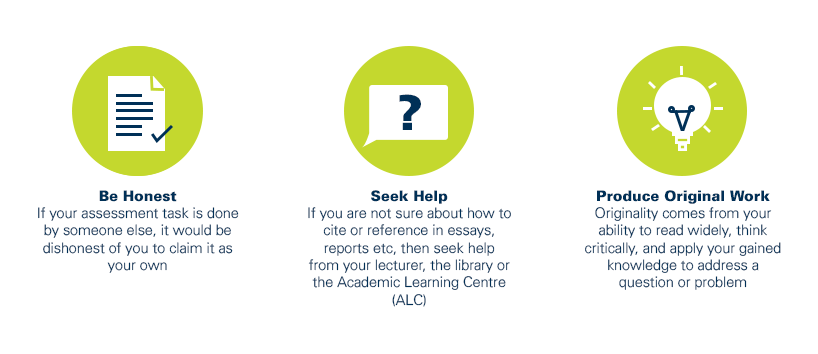
As a CQUniversity student you are expected to act honestly in all aspects of your academic work.
Any assessable work undertaken or submitted for review or assessment must be your own work. Assessable work is any type of work you do to meet the assessment requirements in the unit, including draft work submitted for review and feedback and final work to be assessed.
When you use the ideas, words or data of others in your assessment, you must thoroughly and clearly acknowledge the source of this information by using the correct referencing style for your unit. Using others’ work without proper acknowledgement may be considered a form of intellectual dishonesty.
Participating honestly, respectfully, responsibly, and fairly in your university study ensures the CQUniversity qualification you earn will be valued as a true indication of your individual academic achievement and will continue to receive the respect and recognition it deserves.
As a student, you are responsible for reading and following CQUniversity’s policies, including the Student Academic Integrity Policy and Procedure. This policy sets out CQUniversity’s expectations of you to act with integrity, examples of academic integrity breaches to avoid, the processes used to address alleged breaches of academic integrity, and potential penalties.
What is a breach of academic integrity?
A breach of academic integrity includes but is not limited to plagiarism, self-plagiarism, collusion, cheating, contract cheating, and academic misconduct. The Student Academic Integrity Policy and Procedure defines what these terms mean and gives examples.
Why is academic integrity important?
A breach of academic integrity may result in one or more penalties, including suspension or even expulsion from the University. It can also have negative implications for student visas and future enrolment at CQUniversity or elsewhere. Students who engage in contract cheating also risk being blackmailed by contract cheating services.
Where can I get assistance?
For academic advice and guidance, the Academic Learning Centre (ALC) can support you in becoming confident in completing assessments with integrity and of high standard.
What can you do to act with integrity?