Overview
In this unit you will continue your study of neurogenic communication conditions in children and adults. You will apply and integrate the concepts learned in SPCH13003 Assessment of Neurogenic Communication Conditions to the holistic management of neurogenic communication conditions, including the principles of the International Classification of Functioning, Disability and Health framework throughout the unit. You will learn current evidence-based management approaches for neurogenic speech, language, and cognitive communication conditions throughout this unit.
Details
Pre-requisites or Co-requisites
Pre-requisites: SPCH13003 - Assessment of Neurogenic Communication Conditions
Important note: Students enrolled in a subsequent unit who failed their pre-requisite unit, should drop the subsequent unit before the census date or within 10 working days of Fail grade notification. Students who do not drop the unit in this timeframe cannot later drop the unit without academic and financial liability. See details in the Assessment Policy and Procedure (Higher Education Coursework).
Offerings For Term 2 - 2026
Attendance Requirements
All on-campus students are expected to attend scheduled classes - in some units, these classes are identified as a mandatory (pass/fail) component and attendance is compulsory. International students, on a student visa, must maintain a full time study load and meet both attendance and academic progress requirements in each study period (satisfactory attendance for International students is defined as maintaining at least an 80% attendance record).
Recommended Student Time Commitment
Each 6-credit Undergraduate unit at CQUniversity requires an overall time commitment of an average of 12.5 hours of study per week, making a total of 150 hours for the unit.
Class Timetable
Assessment Overview
Assessment Grading
This is a graded unit: your overall grade will be calculated from the marks or grades for each assessment task, based on the relative weightings shown in the table above. You must obtain an overall mark for the unit of at least 50%, or an overall grade of 'pass' in order to pass the unit. If any 'pass/fail' tasks are shown in the table above they must also be completed successfully ('pass' grade). You must also meet any minimum mark requirements specified for a particular assessment task, as detailed in the 'assessment task' section (note that in some instances, the minimum mark for a task may be greater than 50%). Consult the University's Grades and Results Policy for more details of interim results and final grades.
All University policies are available on the CQUniversity Policy site.
You may wish to view these policies:
- Grades and Results Policy
- Assessment Policy and Procedure (Higher Education Coursework)
- Review of Grade Procedure
- Student Academic Integrity Policy and Procedure
- Academic Progression Policy and Procedure
- Student Refund and Credit Balance Policy and Procedure
- Complaints Policy and Procedure
- Information and Communications Technology Acceptable Use Policy and Procedure
This list is not an exhaustive list of all University policies. The full list of University policies are available on the CQUniversity Policy site.
Feedback, Recommendations and Responses
Every unit is reviewed for enhancement each year. At the most recent review, the following staff and student feedback items were identified and recommendations were made.
Feedback from Informal discussion with students, personal reflection, discussion with other neurological content lecturers
Upon reflection, the cognitive load of this unit is heavy as it requires application of diverse intervention theories and practical strategies across motor speech, language, and cognitive conditions.
It is recommended that the distribution of content across neurological communication units be reviewed by the speech pathology academic team to find opportunities to reduce cognitive load.
Feedback from Informal discussions with students
Students commented that the practical nature of the tutorial activities supported their learning and their application of neuro interventions on placement.
It is recommended that the emphasis on practical activities in tutorials be retained.
- Analyse and interpret case information in a holistic manner
- Plan management for neurogenic communication conditions using evidence-based practice principles
- Critically appraise a range of management approaches and outcome measures designed for the management of neurogenic communication conditions
- Integrate the International Classification of Functioning, Disability and Health framework, in the management of neurogenic communication conditions
Alignment of Assessment Tasks to Learning Outcomes
| Assessment Tasks | Learning Outcomes | |||
|---|---|---|---|---|
| 1 | 2 | 3 | 4 | |
| 1 - Case Study - 20% | ||||
| 2 - Case Study - 30% | ||||
| 3 - Practical Assessment - 50% | ||||
Alignment of Graduate Attributes to Learning Outcomes
| Graduate Attributes | Learning Outcomes | |||
|---|---|---|---|---|
| 1 | 2 | 3 | 4 | |
| 1 - Communication | ||||
| 2 - Problem Solving | ||||
| 3 - Critical Thinking | ||||
| 4 - Information Literacy | ||||
| 5 - Team Work | ||||
| 6 - Information Technology Competence | ||||
| 7 - Cross Cultural Competence | ||||
| 8 - Ethical practice | ||||
| 9 - Social Innovation | ||||
| 10 - First Nations Knowledges | ||||
| 11 - Aboriginal and Torres Strait Islander Cultures | ||||
Textbooks
Transforming Cognitive Rehabilitation: Effective Instructional Methods
- (2023)
- Authors: Sohlberg, Hamilton, Turkstra
- Guilford
- New York New York , New York , USA
- ISBN: 9781462550876
Additional Textbook Information
Students may purchase this text in hard copy or digital form either direct from the publisher (https://www.guilford.com/books/Transforming-Cognitive-Rehabilitation/Sohlberg-Hamilton-Turkstra/9781462550876) or from Amazon (https://www.amazon.com.au/Transforming-Cognitive-Rehabilitation-Effective-Instructional/dp/1462550878).
This book is available in digital format at the CQU library. CQU copyright permits students unlimited access to read the entire book online and to download up to 10% of the book.
Please note that the unit coordinator for SPCH13008 is an author of this textbook and receives approximately $1 from each textbook sale. This conflict of interest has been declared to CQU and the resolution is that a) we do not stock the book in the book shop and b) students who do not wish to buy the text may instead access it online via our library's copyright license. Alternatives have been reviewed but there is currently no other single text that provides a) a clear explanation of cognitive functions, b) precise instructions for carrying out all the evidence-based interventions typically used for brain injury, right hemisphere disorder, and dementia, and c) additional resources for managing cognition and communication in acute care, for supporting clients diagnosed with Functional Neurologic Disorder, and for ensuring a psychological mindedness approach is carried out for all clients.
IT Resources
- CQUniversity Student Email
- Internet
- Unit Website (Moodle)
All submissions for this unit must use the referencing style: American Psychological Association 7th Edition (APA 7th edition)
For further information, see the Assessment Tasks.
j.l.hamilton@cqu.edu.au
Week 1
Begin Date: 13 Jul 2026Module/Topic
- Review of assessment analysis templates to identify areas for intervention
- Application of EBP (evidence-based practice) principles to intervention planning
- Special considerations for neurodegenerative and paediatric conditions
- Using the TACSI Framework (target, aspect & measure, context hierarchy, success criterion, ingredients) to write measurable, unambiguous goals and hierarchies
Chapter
Readings will be posted on the eReading List in Moodle.
Events and Submissions/Topic
Week 2
Begin Date: 20 Jul 2026Module/Topic
- Principles of motor learning, including treatment dosage
- Management of motor speech disorders, part 1
Chapter
Readings will be posted on the eReading List in Moodle.
Events and Submissions/Topic
Week 3
Begin Date: 27 Jul 2026Module/Topic
- Management of motor speech disorders, part 2
- NOTE: Tutorial runs from 1pm to 3:30pm today
Chapter
Readings will be posted on the eReading List in Moodle.
Events and Submissions/Topic
Week 4
Begin Date: 03 Aug 2026Module/Topic
- Management of acquired brain injury in the acute stage
- Management of aphasia, part 1
Chapter
Readings will be posted on the eReading List in Moodle.
Events and Submissions/Topic
Week 5
Begin Date: 10 Aug 2026Module/Topic
- Management of aphasia, part 2
- Communication partner training for aphasia (SCA, Supported Conversation for Aphasia)
- NOTE: Tutorial runs from 1pm to 3:30pm today
Chapter
Readings will be posted on the eReading List in Moodle.
Events and Submissions/Topic
Week 6
Begin Date: 19 Aug 2026Module/Topic
- Management of mild traumatic brain injury (mTBI, concussion), including Return to Work and Return to School
- Tutorial will be on Zoom from 9-11am on Wednesday to accommodate our guest lecturer's schedule (no Monday tutorial this week)
Chapter
Readings will be posted on the eReading List in Moodle.
Events and Submissions/Topic
Vacation Week
Begin Date: 24 Aug 2026Module/Topic
Chapter
Events and Submissions/Topic
Week 7
Begin Date: 31 Aug 2026Module/Topic
- Management of moderate-severe traumatic brain injury, part 1
- NOTE: Tutorial runs from 1pm to 3:30pm today
Chapter
Readings will be posted on the eReading List in Moodle.
Events and Submissions/Topic
Week 8
Begin Date: 07 Sep 2026Module/Topic
- Management of moderate-severe traumatic brain injury, part 2
Chapter
Readings will be posted on the eReading List in Moodle.
Events and Submissions/Topic
Week 9
Begin Date: 14 Sep 2026Module/Topic
- Management of Right Hemisphere Disorder (RHD) and social-pragmatic skills
- Communication partner training for TBI and RHD
Chapter
Readings will be posted on the eReading List in Moodle.
Events and Submissions/Topic
Week 10
Begin Date: 21 Sep 2026Module/Topic
- Project-based therapy
Chapter
Readings will be posted on the eReading List in Moodle.
Events and Submissions/Topic
Week 11
Begin Date: 28 Sep 2026Module/Topic
- Direct training interventions for dementia
- Communication partner training and environmental interventions for dementia
- NOTE: Tutorial runs from 1pm to 3:30pm today
Chapter
Readings will be posted on the eReading List in Moodle.
Events and Submissions/Topic
Week 12
Begin Date: 05 Oct 2026Module/Topic
NO CLASS DUE TO PUBLIC HOLIDAY
Chapter
Events and Submissions/Topic
Exam Week
Begin Date: 12 Oct 2026Module/Topic
Chapter
Events and Submissions/Topic
Vacation/Exam Week
Begin Date: 19 Oct 2026Module/Topic
Chapter
Events and Submissions/Topic
1 Case Study
For this assessment task, you will be required to integrate neurogenic communication case information to identify one aim for a client and two associated targets and context hierarchies. The two targets will be addressed at the same time in therapy. The first target will use a support context hierarchy and will not have a corrective feedback hierarchy. The second target will use either an input/output hierarchy or a partner/setting hierarchy (your choice) and will additionally have a corrective feedback hierarchy. You will follow the TACSI Framework (Target, Aspect & measure, Context hierarchy, Success criterion), which will be taught in class, to fully develop the two intervention targets. You will be provided with a form to complete the specified TACSI sections and additionally justify your choices. As this is a pure clinical reasoning task, references are not mandatory. However, if you make a statement that requires a reference, you must cite the reference and include it in your reference list, using APA-7 formatting.
There are 6 cases from which you may choose:
- Post-stroke nonfluent aphasia (2 cases)
- Post-stroke fluent aphasia
- Post-stroke dysarthria
- Post-stroke apraxia
- Dysarthria due to Parkinson’s Disease
Each case includes a brief case history, clinical interview results, a summary of formal and informal assessment results, and information about the services available at the client’s service delivery setting.
NOTE: The same cases will be used for Assessment 2, but you will complete a different case for Assessment 2.
The cases will be posted for review in Moodle by the start of term. Case selection sign up will open in Moodle on Wednesday 15th July 2026 at 8:00am and close on Friday 17th July 2026 at 8:00am. You will sign up for a combination of two cases, one for Assessment 1 and a different one for Assessment 2 (e.g., a nonfluent aphasia case for Assessment 1 and a post-stroke dysarthria case for Assessment 2). The combinations are pre-determined and cannot be altered. A maximum of 3 students may select any given case study combination. Any students who do not sign up will be assigned an available case study combination.
Level of AI use allowed:
Level 3: You may use Al to assist with specific tasks such as drafting text, refining, and evaluating your work. You must critically evaluate and modify any Al-generated content you use.
The full Task Description, including marking rubric, will be provided in Moodle.
Week 5 Thursday (13 Aug 2026) 9:00 am AEST
This assessment must be uploaded to Moodle by the due date/time.
Week 8 Monday (7 Sept 2026)
Feedback will be uploaded to Moodle.
There are 4 marking criteria that will be used to assess Assessment 1 for SPCH13008:
- The first criterion focuses on your generation and justification of one aim and two associated general target areas for intervention, which all clearly reflect a holistic, person-centred, and integrated analysis of the client’s condition, needs, and general circumstances. This criterion is worth 25% of this assessment grade.
- The second criterion focuses on the accuracy and justification of the A-C-S elements of the TACSI Framework for your first target. This criterion is worth 30% of this assessment grade.
- The third criterion focuses on the accuracy and justification of the A-C-S elements of the TACSI Framework for your second target, along with the accuracy of your explanation of the corrective feedback hierarchy for this target. This criterion is worth 35% of this assessment grade.
- The fourth criterion focuses on the accuracy and quality of your referencing (if required), writing, and formatting This criterion is worth 10% of this assessment grade. Note that violation of academic integrity requirements for referencing will additionally impact marks for criteria #1-3.
Detailed marking benchmarks will be included in the rubric accompanying the Task Description in Moodle.
- Analyse and interpret case information in a holistic manner
- Integrate the International Classification of Functioning, Disability and Health framework, in the management of neurogenic communication conditions
2 Case Study
For this assessment task, you will be required to identify a communication intervention approach to meet an area of need for a client. There are 3 steps involved in this assessment task:
- You will identify and appraise the research evidence behind two possible communication intervention approaches that could meet the area of need for the client. The approaches may come from those discussed in the unit or from your own independent research. You must then compare the strengths and limitations of the research evidence behind each approach. This step focuses on completing an evidence-based appraisal of the quality of the two interventions.
- You will then compare how characteristics/ requirements of each intervention approach match the client preferences and circumstances.
- Finally, you will identify your choice of intervention for the client’s specified need, explaining how you balanced the information from the research literature with the information from the client preferences and circumstances. You must ensure your final choice flows logically and is justified from your analyses in the two steps above. You must choose one of the intervention options; you may not choose both.
The maximum word count across all 3 steps is 1,000 words.
There are 6 cases for this assessment:
- Post-stroke nonfluent aphasia (2 cases)
- Post-stroke fluent aphasia
- Post-stroke dysarthria
- Post-stroke apraxia of speech
- Dysarthria due to Parkinson’s Disease
Each case includes a brief case history, clinical interview results, a summary of formal and informal assessment results, and information about the services available at the client’s service delivery setting.
You will have been assigned a case for this assessment at the same time you were assigned the case for Assessment 1.
Level of AI use allowed:
Level 3: You may use Al to assist with specific tasks such as drafting text, refining, and evaluating your work. You must critically evaluate and modify any Al-generated content you use.
The full Task Description, including marking rubric, will be provided in Moodle.
Week 8 Thursday (10 Sept 2026) 9:00 am AEST
This assessment task must be uploaded to Moodle by the due date/time.
Week 11 Monday (28 Sept 2026)
Feedback will be uploaded to Moodle.
There are 4 marking criteria that will be used to assess Assessment 2 for SPCH13008:
- The first criterion focuses on your selection of reasonable intervention approaches for the target area you identified for the client and your appraisal of strengths and weaknesses in the research evidence for each approach. This criterion is worth 40% of this assessment grade.
- The second criterion focuses on your mapping of the two interventions to the client’s characteristics and circumstances, taking a holistic, person-centred approach to your analysis. This criterion is worth 20% of this assessment grade.
- The third criterion focuses on your analysis and justification of your final choice of intervention to address the target area of need you identified. This criterion is worth 30% of this assessment grade.
- The fourth criterion focuses on the accuracy and quality of your referencing, writing, and formatting. This criterion is worth 10% of this assessment grade. Note that violation of academic integrity requirements for referencing will additionally impact marks for criteria #1 and #3.
Detailed marking benchmarks will be included in the rubric accompanying the Task Description in Moodle.
- Plan management for neurogenic communication conditions using evidence-based practice principles
- Critically appraise a range of management approaches and outcome measures designed for the management of neurogenic communication conditions
3 Practical Assessment
For this assessment task, you will be required to prepare and deliver a live presentation that explains and demonstrates an intervention to support a client with a traumatic brain injury (TBI). You will have 8 cases from which to choose:
- Case A (Shannon, returning to work after mild TBI): Using a cognitive strategy to address reading comprehension needs
- Case A (Shannon, returning to work after mild TBI): Using a cognitive strategy to address prospective memory needs
- Case A (Shannon, returning to work after mild TBI): Using an external aid to address reading comprehension needs
- Case A (Shannon, returning to work after mild TBI): Using an external aid to address prospective memory needs
- Case B (Samuel, returning to school/leisure after moderate TBI): Using a cognitive strategy to address social communication needs
- Case B (Samuel, returning to school/leisure after moderate TBI): Using a cognitive strategy to address self regulation needs
- Case B (Samuel, returning to school/leisure after moderate TBI): Using an external aid to address social communication needs
- Case B (Samuel, returning to school/leisure after moderate TBI): Using an external aid to address self regulation needs
Each case includes a summary of the client’s characteristics and needs as well as a recommended resource to help you initiate your research and planning for this assessment. The Samuel case information is provided in written form while the Shannon case information includes a short video segment as well as written notes. The cases will be posted for review in Moodle at 9:00am on Tuesday 11th August 2026. Case selection sign up will open in Moodle on Wednesday 12th August 2026 at 8:00am and close on Friday 14th August 2026 at 8:00am. A maximum of 2 students may select any given case. Any students who do not sign up will be assigned an available case.
Your presentation must include:
- A brief introduction to your client and an aim they might hope to address via therapy.
- A Goal Attainment Scale you will use to measure outcome on the aim.
- A brief overview of your chosen strategy/ aid.
- The rationale for choosing this strategy/ aid as a therapy target. Your rationale must include reference to external evidence as well as client circumstances and their aim. External evidence may relate broadly to the nature of the strategy or aid and/or specifically to the exact strategy or aid you’re choosing (see chapter 7/ 8 in the prescribed text for examples of evidence to get you started).
- A description of the ingredients (steps and materials) involved in teaching the strategy/ aid.
- A maximum 5-minute video role-play of the first session training your client to use the strategy/ aid. Assume you and the client collaboratively selected the strategy/ aid in the prior session. However, the client will need a reminder of what’s involved in carrying out the strategy/ aid and why they’re learning it before you embark on the practice trials. Proceed to demonstrating the practice trials of the steps involved in using the strategy/ aid. With the time restrictions for this role-play, you will likely only be able to demonstrate 1-2 practice trials. If your strategy/ aid training includes a step that requires several minutes, you may instead speak to the camera to explain that the client spent X minutes on this step and indicate what happened by the end of that step.
- A completed data tracking form that accurately documents the client’s performance during the video role-play.
- A plan to ensure your client will eventually be able to generalise the strategy/ aid into independent use in the required functional setting, including selection of a context hierarchy (input/output, partner/setting, or support) that matches the nature of the target and your client’s needs, description of three levels in your chosen context hierarchy (the starting level, a level to scaffold down, and a level to scaffold up), and an explanation of how you will involve important others in the client’s rehabilitation.
- A reference list.
Presentations must be no longer than 20 minutes, including the video role-play. You will be alerted when there are 10 minutes remaining. If applicable, you will additionally be alerted when there are 2 minutes remaining. Following your presentation, you will be required to answer two questions, one from a classmate and one from the lecturer. All presentations and question/answer periods will be recorded for marking purposes.
Level of AI use allowed:
Level 3: You may use Al to assist with specific tasks such as drafting text, refining, and evaluating your work. You must critically evaluate and modify any Al-generated content you use.
As this assessment involves a live presentation and addressing questions from peers, the 72-hour grace period does not apply.
The full Task Description, including marking rubric, will be provided in Moodle.
Exam Week Monday (12 Oct 2026) 8:00 am AEST
Presentation slides and role-play video must be uploaded to Moodle by the due date/time. Presentations will occur between 9:00am and 4:15pm on Monday 12th October 2026.
Vacation/Exam Week Friday (23 Oct 2026)
Feedback will be uploaded to Moodle.
There are 4 marking criteria that will be used to assess Assessment 3 for SPCH13008:
- The first criterion focuses on the client-centredness of your identified aim, the client-centredness and specificity of the Goal Attainment Scale to measure outcome on the aim, the description of the strategy/ aid, and the rationale for choosing this strategy/ aid. This criterion is worth 30% of this assessment grade.
- The second criterion focuses on the clarity of your explanation and demonstration of the steps in training the strategy/ aid and the accuracy of your documentation of the role-play training results. This criterion is worth 40% of this assessment grade.
- The third criterion focuses on your generalisation planning, including the specificity of the context hierarchy to systematically advance your client toward independent use of the strategy/ aid in a functional context, and the clarity of your partner training plan. This criterion is worth 15% of this assessment grade.
- The fourth criterion focuses on your presentation and referencing skills and the clarity of your responses to questions about the presentation. This criterion is worth 15% of this assessment grade. Note that violation of academic integrity requirements for referencing will additionally impact marks for criteria #1-3.
Detailed marking benchmarks will be included in the rubric accompanying the Task Description in Moodle.
- Analyse and interpret case information in a holistic manner
- Plan management for neurogenic communication conditions using evidence-based practice principles
- Critically appraise a range of management approaches and outcome measures designed for the management of neurogenic communication conditions
- Integrate the International Classification of Functioning, Disability and Health framework, in the management of neurogenic communication conditions
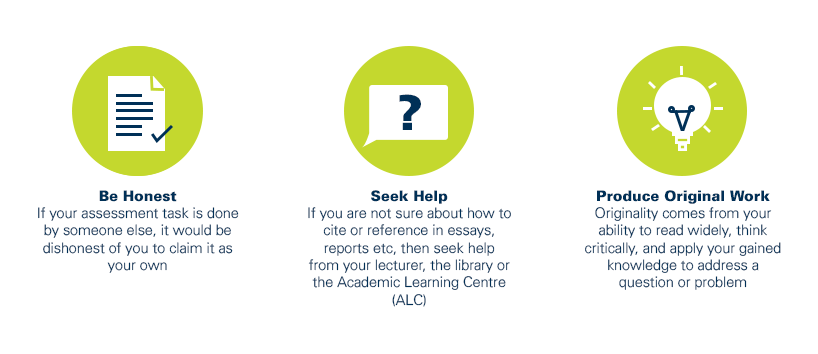
As a CQUniversity student you are expected to act honestly in all aspects of your academic work.
Any assessable work undertaken or submitted for review or assessment must be your own work. Assessable work is any type of work you do to meet the assessment requirements in the unit, including draft work submitted for review and feedback and final work to be assessed.
When you use the ideas, words or data of others in your assessment, you must thoroughly and clearly acknowledge the source of this information by using the correct referencing style for your unit. Using others’ work without proper acknowledgement may be considered a form of intellectual dishonesty.
Participating honestly, respectfully, responsibly, and fairly in your university study ensures the CQUniversity qualification you earn will be valued as a true indication of your individual academic achievement and will continue to receive the respect and recognition it deserves.
As a student, you are responsible for reading and following CQUniversity’s policies, including the Student Academic Integrity Policy and Procedure. This policy sets out CQUniversity’s expectations of you to act with integrity, examples of academic integrity breaches to avoid, the processes used to address alleged breaches of academic integrity, and potential penalties.
What is a breach of academic integrity?
A breach of academic integrity includes but is not limited to plagiarism, self-plagiarism, collusion, cheating, contract cheating, and academic misconduct. The Student Academic Integrity Policy and Procedure defines what these terms mean and gives examples.
Why is academic integrity important?
A breach of academic integrity may result in one or more penalties, including suspension or even expulsion from the University. It can also have negative implications for student visas and future enrolment at CQUniversity or elsewhere. Students who engage in contract cheating also risk being blackmailed by contract cheating services.
Where can I get assistance?
For academic advice and guidance, the Academic Learning Centre (ALC) can support you in becoming confident in completing assessments with integrity and of high standard.
What can you do to act with integrity?