Overview
In this unit, you will explore issues that impact on professional practice, and apply prior learning of paediatric and adult clinical practice to complex and contemporary contexts. You will integrate theoretical and empirical research in the field of speech pathology and debate ethical dilemmas. Professional and interprofessional competencies will be investigated in the context of speech pathology practice.
Details
Pre-requisites or Co-requisites
Pre-Requisites: SPCH13008 Management of Neurogenic Communication Conditions SPCH13009 Multimodal Communication SPCH13006 Speech Pathology Work Integrated Learning 4
Important note: Students enrolled in a subsequent unit who failed their pre-requisite unit, should drop the subsequent unit before the census date or within 10 working days of Fail grade notification. Students who do not drop the unit in this timeframe cannot later drop the unit without academic and financial liability. See details in the Assessment Policy and Procedure (Higher Education Coursework).
Offerings For Term 1 - 2026
Attendance Requirements
All on-campus students are expected to attend scheduled classes - in some units, these classes are identified as a mandatory (pass/fail) component and attendance is compulsory. International students, on a student visa, must maintain a full time study load and meet both attendance and academic progress requirements in each study period (satisfactory attendance for International students is defined as maintaining at least an 80% attendance record).
Recommended Student Time Commitment
Each 6-credit Undergraduate unit at CQUniversity requires an overall time commitment of an average of 12.5 hours of study per week, making a total of 150 hours for the unit.
Class Timetable
Assessment Overview
Assessment Grading
This is a pass/fail (non-graded) unit. To pass the unit, you must pass all of the individual assessment tasks shown in the table above.
All University policies are available on the CQUniversity Policy site.
You may wish to view these policies:
- Grades and Results Policy
- Assessment Policy and Procedure (Higher Education Coursework)
- Review of Grade Procedure
- Student Academic Integrity Policy and Procedure
- Academic Progression Policy and Procedure
- Student Refund and Credit Balance Policy and Procedure
- Complaints Policy and Procedure
- Information and Communications Technology Acceptable Use Policy and Procedure
This list is not an exhaustive list of all University policies. The full list of University policies are available on the CQUniversity Policy site.
Feedback, Recommendations and Responses
Every unit is reviewed for enhancement each year. At the most recent review, the following staff and student feedback items were identified and recommendations were made.
Feedback from Instructor reflection, formal and informal student feedback
Enhance the clarity and detail of the Assessment 1 and 2 rubrics to better communicate expectations to students
It is recommended that additional detail be incorporated into the Assessment 1 and 2 rubrics to improve understanding of expectations around task requirements and help students better understand how their work will be evaluated.
Feedback from Formal student SUTE feedback
Increase the explicit connection between clinical topics and their real-world application to help students better understand their relevance to professional practice
It is recommended that the real-world relevance of clinical topics be made more explicit within the unit content and assessment tasks to strengthen the connection between theory and professional practice.
- Integrate ethical principles into clinical decision making
- Analyse and interpret assessment data for children and adults with communication and/or swallowing goals and needs
- Create and implement holistic management plans to optimise communication
- Evaluate the role and scope of practice of speech pathologists and other professionals involved in the interprofessional care of people with diverse needs
- Justify decisions using clinical reasoning and evidence-based practice within the context of paediatric and adult speech pathology practice
The learning outcomes in this unit contribute to the development of clinical and professional competencies as outlined by Speech Pathology Australia's Professional standards.
Alignment of Assessment Tasks to Learning Outcomes
| Assessment Tasks | Learning Outcomes | ||||
|---|---|---|---|---|---|
| 1 | 2 | 3 | 4 | 5 | |
| 1 - Oral Examination - 0% | |||||
| 2 - Objective Structured Clinical Examinations (OSCEs) - 0% | |||||
Alignment of Graduate Attributes to Learning Outcomes
| Graduate Attributes | Learning Outcomes | ||||
|---|---|---|---|---|---|
| 1 | 2 | 3 | 4 | 5 | |
| 1 - Communication | |||||
| 2 - Problem Solving | |||||
| 3 - Critical Thinking | |||||
| 4 - Information Literacy | |||||
| 5 - Team Work | |||||
| 6 - Information Technology Competence | |||||
| 7 - Cross Cultural Competence | |||||
| 8 - Ethical practice | |||||
| 9 - Social Innovation | |||||
| 10 - First Nations Knowledges | |||||
| 11 - Aboriginal and Torres Strait Islander Cultures | |||||
Textbooks
There are no required textbooks.
IT Resources
- CQUniversity Student Email
- Internet
- Unit Website (Moodle)
All submissions for this unit must use the referencing style: American Psychological Association 7th Edition (APA 7th edition)
For further information, see the Assessment Tasks.
s.walker3@cqu.edu.au
Week 1
Begin Date: 09 Mar 2026Module/Topic
This week the online lectures/activities
and face-to-face tutorial will cover:
- Ethics in speech pathology: application of ethical principles.
Chapter
Readings to be outlined on Moodle.
Events and Submissions/Topic
Week 2
Begin Date: 16 Mar 2026Module/Topic
This week the online lectures/activities
and face-to-face tutorial will cover:
- Youth justice in speech pathology.
Chapter
Readings to be outlined on Moodle.
Events and Submissions/Topic
Week 3
Begin Date: 23 Mar 2026Module/Topic
This week the online lectures/activities
and face-to-face tutorial will cover:
- Working with children with complex needs.
Chapter
Readings to be outlined on Moodle.
Events and Submissions/Topic
Week 4
Begin Date: 30 Mar 2026Module/Topic
This week the online lectures/activities
and face-to-face tutorial will cover:
- Assessment and intervention in childhood apraxia of speech.
Chapter
Readings to be outlined on Moodle.
Events and Submissions/Topic
Week 5
Begin Date: 06 Apr 2026Module/Topic
This week the online lectures/activities
and face-to-face tutorial will cover:
- The role of the speech pathologist in dyslexia management.
Chapter
Readings to be outlined on Moodle.
Events and Submissions/Topic
Week 6
Begin Date: 13 Apr 2026Module/Topic
There are no lectures this week.
During this week, you will be scheduled to complete Assessment 1 (Paediatric Viva) via Zoom.
Chapter
Events and Submissions/Topic
Vacation Week
Begin Date: 20 Apr 2026Module/Topic
Chapter
Events and Submissions/Topic
Week 7
Begin Date: 27 Apr 2026Module/Topic
This week the online lectures/activities
and face-to-face tutorial will cover:
- Aphasia in the community and reading and writing intervention in aphasia.
Chapter
Readings to be outlined on Moodle.
Events and Submissions/Topic
Week 8
Begin Date: 04 May 2026Module/Topic
This week the online lectures/activities
and face-to-face tutorial will cover:
- Working with people with mental health challenges.
Chapter
Readings to be outlined on Moodle.
Events and Submissions/Topic
Week 9
Begin Date: 11 May 2026Module/Topic
This week the online lectures/activities
and face-to-face tutorial will cover:
- Acquired communication difficulties in Culturally and Linguistically Diverse (CALD) communities.
Chapter
Readings to be outlined on Moodle.
Events and Submissions/Topic
Week 10
Begin Date: 18 May 2026Module/Topic
This week the online lectures/activities
and face-to-face tutorial will cover:
- Positive behaviour support.
Chapter
Readings to be outlined on Moodle.
Events and Submissions/Topic
Week 11
Begin Date: 25 May 2026Module/Topic
This week the online lectures/activities
and face-to-face tutorial will cover:
- Palliative care in speech pathology.
Chapter
Readings to be outlined on Moodle.
Events and Submissions/Topic
Week 12
Begin Date: 01 Jun 2026Module/Topic
No classes this week. Exam preparation
Chapter
Events and Submissions/Topic
Exam Week
Begin Date: 08 Jun 2026Module/Topic
Chapter
Events and Submissions/Topic
Vacation/Exam Week
Begin Date: 15 Jun 2026Module/Topic
Chapter
Events and Submissions/Topic
Students may wish to access to the Speech Pathology Assessment Cupboard on the Rockhampton North Campus to complete assessments 1 and 2. An assessment cupboard schedule outlining the dates and times that the assessment cupboard is accessible will be posted on Moodle.
Students should visit the CB87 Speech Pathology Course Site in Moodle for information that is relevant across all units, including information that will support completion of assessments. The assessment cupboard schedule is also available on this Moodle page.
1 Oral Examination
For this assessment task, which will be conducted via Zoom, you will be required to complete a viva (an oral assessment in the form of a dynamic interview) based on a paediatric clinical scenario.
At the start of your viva, you will be provided with basic written case information about a child who is presenting with communication needs, as well as other social/psychosocial issues. Throughout this viva, you will be asked questions about the case and decision-making by your examiner. You will be required to respond to these questions and justify your decision-making.
Each section of your viva is timed, but not all sections are assessed. A brief outline is provided below with additional details provided on Moodle.
Section 1A (Not assessed). Review referral information and develop an assessment plan.
Section 1B (Assessed). You will be asked questions regarding your assessment planning.
Section 2A (Not assessed). Review and interpret assessment results.
Section 2B (Assessed). You will be asked questions regarding your interpretation of the assessment results and diagnosis/description of the child's needs.
Section 3A (Not assessed). Review diagnosis and service delivery information and plan intervention.
Section 3B (Assessed). You will be asked questions regarding your plan for speech pathology intervention in relation to the diagnosis and service delivery setting.
Section 4A (Not assessed). Ethical practice and decision making, and professional conduct
Section 4B (Assessed). You will be asked questions regarding the ethical issues presented in the case and your decision making.
During the viva, you must independently demonstrate your skills, knowledge, and competence in the areas of paediatric clinical practice across Speech Pathology Australia’s Professional Standards. This viva requires you to independently integrate information, problem-solve in real-time, identify and explain ethical issues, and to make decisions regarding assessment and intervention and the overall management of an individual, with reference to the ICF and within the ethical guidelines of the speech pathology profession. You must also demonstrate your use of effective thinking, and reasoning and to provide clear and appropriate rationales for decisions. Your oral viva will be video-recorded for assessment purposes.
As the viva will be conducted via Zoom, it is your responsibility to ensure you have a stable internet connection and a functioning device with adequate audio and video capabilities. Your webcam must remain on with your face visible throughout the entire viva, and virtual backgrounds must be turned off. Please ensure that your physical environment is free from audio and visual distractions. If this is not possible in your private residence, students are required to book a room at their closest CQU campus through the library booking system https://cqu.libcal.com/spaces. Students are also expected to dress in professional attire (e.g., the speech pathology clinic uniform).
Your scheduled time allocation and secure Zoom link will be provided, via Moodle, at least four weeks prior to the viva occurring. Your viva promptly commences at the time listed on Moodle. Please ensure that you have logged into the Zoom session at least 5 minutes prior to your scheduled time.
If you experience technical issues on the day, contact TASAC and email the unit coordinator to advise of your actions. The unit coordinator cannot provide any technical assistance prior to, or during the vivas.
Level of GenAI use allowed:
Level 3: You may use GenAI to assist with specific tasks such as drafting text, refining and evaluating your work. You must critically evaluate and modify and AI-generated content that you use.
As this assessment involves a viva the 72-hour grace period does not apply.
Week 6 Wednesday (15 Apr 2026) 8:00 am AEST
This viva will be scheduled on Wednesday or Thursday between 8:00am and 6:00pm. Students must attend and complete their viva at the day and time outlined on Moodle
Week 8 Wednesday (6 May 2026)
Feedback will be provided to you via Moodle
You will be assessed using criteria informed by Speech Pathology Australia's Professional Standards. To pass this task, you need to demonstrate "Approaching Proficiency" level of competence in paediatric clinical practice. Therefore, you need to achieve the requisite number of “Yes” marks in each section of the rubric. A mark below the requisite number of “Yes” marks indicates that you have not met the required level for that area of competency, which equates to a fail grade on the assessment task.
Each criterion on the rubric is graded as follows:
“Yes” - "Approaching Proficiency"
"No” – Not "Approaching Proficiency"
There are four sections in the rubric, each with a minimum required mark. Full details of the requirements for each section and requisite marks are outlined on Moodle.
There are four marking criteria that will be used to assess your performance in Assessment 1.
- The first criterion focuses on your ability to identify and justify speech pathology needs and describe and justify an appropriate assessment plan.
- The second criterion focuses on your ability to effectively interpret and integrate assessment results, make an appropriate diagnosis or description of the individual's needs, and describe gaps in the information and make predictions about the expected impacts of the communication needs over time and factors supporting positive outcomes.
- The third criterion focuses on your ability to describe and justify an appropriate intervention plan.
- The fourth criterion focuses on your ability to identify and justify ethical issues present in the case, decision making, and your professional conduct throughout the viva.
Note:
Since this is a pass/fail assessment task, it does not qualify for a supplementary assessment. However, if you do not meet the pass criteria for the viva task, you will be provided with one opportunity to re-sit the entire oral examination assessment. The re-sit will be of an equivalent format and use the same assessment criteria as the original assessment task but you will be given a different case. If you do not meet the pass criteria for the re-sit, you will receive a fail grade on the assessment task.
Late arrivals:
Please note that per section 5.52-5.53 in the Higher Education Assessment Policy, late penalties do not apply to this assessment task. If you do not attend or complete this assessment task at the specified date/time, you will receive a mark of zero. In the event that you are unable to attend or complete the assessment task for reasons outlined in the Higher Education Assessment Policy, you must submit an extension request through Moodle.
You should aim to check Zoom settings before the scheduled time, and log in at least 5 minutes prior to your assessment commencement time. In the extraordinary circumstance that you are late, you will be permitted late entry to your assessment up to 10 minutes after the assessment commencement time. If you are denied access to the assessment due to lateness (i.e., arriving beyond the permitted late entry period), you should make an online application for a deferred assessment (which may or may not be granted in line with CQU policy). If your application for deferred assessment is denied, you will receive a fail grade.
- Integrate ethical principles into clinical decision making
- Analyse and interpret assessment data for children and adults with communication and/or swallowing goals and needs
- Create and implement holistic management plans to optimise communication
- Evaluate the role and scope of practice of speech pathologists and other professionals involved in the interprofessional care of people with diverse needs
- Justify decisions using clinical reasoning and evidence-based practice within the context of paediatric and adult speech pathology practice
2 Objective Structured Clinical Examinations (OSCEs)
For this assessment task, you will be required to complete an objective structured clinical examination (OSCE) based on an adult clinical scenario. The OSCE includes 7 stations in total, 5 of which will be assessed. Of the 5 stations that are assessed, 2 will include working with a simulated individual with speech pathology needs- the "individual". This assessment task requires you to complete the OSCE in the role of a speech pathology clinician, and also to act in the role of individual for one of your peers, or an actor playing the client. You will be assessed on your participation and reflection on your role as a simulated individual. Each station of your OSCE is timed. A brief outline is provided below with additional details provided on Moodle.
Outline of OSCE
Station 1 (Not assessed). Review case history, assessment, and diagnosis results.
Station 2 (Assessed). Report on the assessment results to the individual and respond appropriately to their questions.
Station 3 (Not assessed). Plan speech pathology intervention.
Station 4 (Assessed). Report on the intervention plan to the assessor and respond appropriately to their questions.
Station 5 (Assessed). Implementation of speech pathology intervention with the individual.
Station 6 (Assessed). Identification and discussion of ethical issues in the case.
Station 7 (Assessed). Reflective practice and lifelong learning.
During the OSCE, you are required to independently demonstrate your skills, knowledge, and competence in adult clinical practice. You must integrate information, problem-solve in real time, and make informed decisions about intervention and overall client management, with reference to the ICF and in accordance with the ethical guidelines of the speech pathology profession. You must be able to respond appropriately, in real time, to the individual. You are also expected to demonstrate effective thinking, reasoning, and reflective skills, and to provide clear, appropriate rationales for your decisions that are grounded in evidence-based practice.
Parts of your OSCE will be video-recorded for assessment purposes.
Level of GenAI use allowed:
Level 3: You may use GenAI to assist with specific tasks such as drafting text, refining and evaluating your work. You must critically evaluate and modify and AI-generated content that you use.
As this assessment involves a Viva the 72-hour grace period does not apply.
Week 12 Thursday (4 June 2026) 8:00 am AEST
This OSCE will be scheduled on Thursday 8:00am and 6:00pm. Students must attend and complete their OSCE at the day and time outlined on Moodle
Vacation/Exam Week Monday (15 June 2026)
Results will be returned via Moodle
This is a penultimate assessment task of CB87 course which requires you to demonstrate "Approaching Proficiency" in adult clinical practice. To demonstrate Approaching Proficiency competency across adult clinical practice, you will be assessed against Speech Pathology Australia’s Professional Standards. It is recommended that you review these documents closely as part of your preparation for this assessment task. You will be assessed using criteria informed by Speech Pathology Australia's Professional Standards.
You will need to achieve the requisite number of “Yes” marks in each section of the rubric, this is outlined on the task description on Moodle. A mark below the requisite number of “Yes” marks indicates that you have not met the required level for that area of competency, which equates to a fail grade on the assessment task.
• Yes = “Approaching Proficiency”
• No = not “Approaching Proficiency”
There are 5 marking criteria that will be used to assess your performance in this assessment:
1. The first criterion focuses on your ability to accurately interpret and explain speech pathology information in a manner that is appropriate for the individual's communication needs.
2. The second criterion focuses on your ability to effectively identify, describe and justify intervention that is relevant to the individual's needs.
3. The third criterion focuses on your ability to implement appropriate speech pathology intervention and respond to the individual’s need/questions and response to the intervention.
4. The fourth criterion focuses on your ability to identify and justify ethical issues present in the case as well as demonstrate professional conduct throughout the OSCE.
5. The fifth criterion assesses your ability to reflect on your own role and contribute meaningfully to the learning of your student colleagues.
Please see the CB87 Academic Integrity handout: https://moodle.cqu.edu.au/mod/resource/view.php?id=3805644,
located on the Speech Pathology Course Wide Moodle page for information on paraphrasing, source quality, and artificial
intelligence use across units in the speech pathology course.
Note:
Since this is a pass/fail assessment task, it does not qualify for a supplementary assessment. However, if you do not meet the pass criteria for the OSCE task, you will be provided with one opportunity to re-sit the entire OSCE task. The re-sit will be of an equivalent format and use the same assessment criteria as the original assessment task but you will be given a different case. If you do not meet the pass criteria for the re-sit, you will receive a fail grade on the assessment task.
Late arrivals:
Please note that per section 5.52-5.53 in the Higher Education Assessment Policy, late penalties do not apply to this assessment task. If you do not attend or complete this assessment task at the specified date/time, you will receive a mark of zero. In the event that you are unable to attend or complete the assessment task for reasons outlined in the Higher Education Assessment Policy, you must submit an extension request through Moodle.
You should aim to arrive at least 15 minutes prior to the assessment commencement time. In the extraordinary circumstance that you are late, you will be permitted late entry to your assessment of up to 10 minutes after the assessment commencement time. The period of lateness will be deducted from your overall assessment time. If you are denied access to the assessment due to lateness (i.e., arriving beyond the permitted late entry period), you should make an online application for a deferred assessment (which may or may not be granted in line with CQU policy). If your application for deferred assessment is denied, you will receive a fail grade for your assessment item and you may be eligible for a supplementary assessment in line with CQU policy.
- Integrate ethical principles into clinical decision making
- Analyse and interpret assessment data for children and adults with communication and/or swallowing goals and needs
- Create and implement holistic management plans to optimise communication
- Evaluate the role and scope of practice of speech pathologists and other professionals involved in the interprofessional care of people with diverse needs
- Justify decisions using clinical reasoning and evidence-based practice within the context of paediatric and adult speech pathology practice
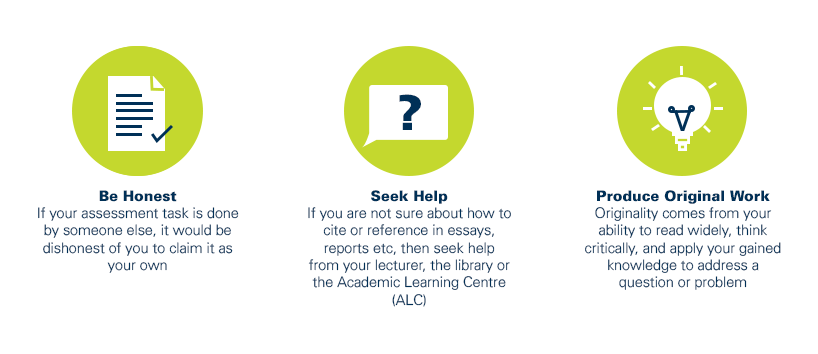
As a CQUniversity student you are expected to act honestly in all aspects of your academic work.
Any assessable work undertaken or submitted for review or assessment must be your own work. Assessable work is any type of work you do to meet the assessment requirements in the unit, including draft work submitted for review and feedback and final work to be assessed.
When you use the ideas, words or data of others in your assessment, you must thoroughly and clearly acknowledge the source of this information by using the correct referencing style for your unit. Using others’ work without proper acknowledgement may be considered a form of intellectual dishonesty.
Participating honestly, respectfully, responsibly, and fairly in your university study ensures the CQUniversity qualification you earn will be valued as a true indication of your individual academic achievement and will continue to receive the respect and recognition it deserves.
As a student, you are responsible for reading and following CQUniversity’s policies, including the Student Academic Integrity Policy and Procedure. This policy sets out CQUniversity’s expectations of you to act with integrity, examples of academic integrity breaches to avoid, the processes used to address alleged breaches of academic integrity, and potential penalties.
What is a breach of academic integrity?
A breach of academic integrity includes but is not limited to plagiarism, self-plagiarism, collusion, cheating, contract cheating, and academic misconduct. The Student Academic Integrity Policy and Procedure defines what these terms mean and gives examples.
Why is academic integrity important?
A breach of academic integrity may result in one or more penalties, including suspension or even expulsion from the University. It can also have negative implications for student visas and future enrolment at CQUniversity or elsewhere. Students who engage in contract cheating also risk being blackmailed by contract cheating services.
Where can I get assistance?
For academic advice and guidance, the Academic Learning Centre (ALC) can support you in becoming confident in completing assessments with integrity and of high standard.
What can you do to act with integrity?