Overview
This unit provides students with an introduction to the practice and craft of creative nonfiction writing, a genre that combines factual accuracy with creative expression. Students will explore how writers transform lived experience, research, and observation into compelling narratives that engage readers while maintaining ethical integrity. Through analysis of diverse voices in the genre—from established Australian writers like Helen Garner, Raimond Gaita and Alice Pung to international innovators and emerging digital storytellers—students will develop critical frameworks for understanding how creative nonfiction responds to and shapes cultural conversations. The unit emphasises practical skill development through guided experimentation across subgenres (including memoir, personal essay, portrait, essays of place and travel writing). Students will engage with contemporary issues in nonfiction writing, including representation ethics, the boundaries between fact and memory, and the possibilities of hybrid forms and digital platforms.
Details
Pre-requisites or Co-requisites
There are no requisites for this unit.
Important note: Students enrolled in a subsequent unit who failed their pre-requisite unit, should drop the subsequent unit before the census date or within 10 working days of Fail grade notification. Students who do not drop the unit in this timeframe cannot later drop the unit without academic and financial liability. See details in the Assessment Policy and Procedure (Higher Education Coursework).
Offerings For Term 2 - 2026
Attendance Requirements
All on-campus students are expected to attend scheduled classes - in some units, these classes are identified as a mandatory (pass/fail) component and attendance is compulsory. International students, on a student visa, must maintain a full time study load and meet both attendance and academic progress requirements in each study period (satisfactory attendance for International students is defined as maintaining at least an 80% attendance record).
Recommended Student Time Commitment
Each 6-credit Undergraduate unit at CQUniversity requires an overall time commitment of an average of 12.5 hours of study per week, making a total of 150 hours for the unit.
Class Timetable
Assessment Overview
Assessment Grading
This is a graded unit: your overall grade will be calculated from the marks or grades for each assessment task, based on the relative weightings shown in the table above. You must obtain an overall mark for the unit of at least 50%, or an overall grade of 'pass' in order to pass the unit. If any 'pass/fail' tasks are shown in the table above they must also be completed successfully ('pass' grade). You must also meet any minimum mark requirements specified for a particular assessment task, as detailed in the 'assessment task' section (note that in some instances, the minimum mark for a task may be greater than 50%). Consult the University's Grades and Results Policy for more details of interim results and final grades.
All University policies are available on the CQUniversity Policy site.
You may wish to view these policies:
- Grades and Results Policy
- Assessment Policy and Procedure (Higher Education Coursework)
- Review of Grade Procedure
- Student Academic Integrity Policy and Procedure
- Academic Progression Policy and Procedure
- Student Refund and Credit Balance Policy and Procedure
- Complaints Policy and Procedure
- Information and Communications Technology Acceptable Use Policy and Procedure
This list is not an exhaustive list of all University policies. The full list of University policies are available on the CQUniversity Policy site.
Feedback, Recommendations and Responses
Every unit is reviewed for enhancement each year. At the most recent review, the following staff and student feedback items were identified and recommendations were made.
Feedback from Student evaluations
Improve assessment aims and learnings
Assessment descriptions will be reviewed to make sure students clearly understand how each task helps them learn.
Feedback from Student evaluations
Enhance opportunities for clarification
The unit will continue to encourage active participation and will introduce more opportunities for students to check their understanding throughout the term. This may involve adding interactive “knowledge checks” within the course materials (e.g., using H5P or similar tools) to help students identify areas of uncertainty. Students will also be encouraged to flag these areas with the Unit Coordinator for additional support, ensuring timely clarification and stronger engagement.
- Critically analyse and apply constructive feedback techniques on peers' work and refine their own writing through collaborative discussions
- Evaluate and develop self-reflective practices to assess and critique personal creative development
- Create and revise creative nonfiction pieces that apply narrative techniques, structure, and style specific to creative nonfiction while demonstrating ethical consideration
- Design and implement research strategies using diverse methods (archival materials, interviews, digital resources) and seamlessly integrate findings into narrative writing that maintains both factual integrity and creative vision
- Construct and critically redraft a sustained piece of creative nonfiction, demonstrating judgement in revision choices and ethical practice throughout the creative process.
Alignment of Assessment Tasks to Learning Outcomes
| Assessment Tasks | Learning Outcomes | ||||
|---|---|---|---|---|---|
| 1 | 2 | 3 | 4 | 5 | |
| 1 - Group Discussion - 20% | |||||
| 2 - Written Assessment - 35% | |||||
| 3 - Written Assessment - 45% | |||||
Alignment of Graduate Attributes to Learning Outcomes
| Graduate Attributes | Learning Outcomes | ||||
|---|---|---|---|---|---|
| 1 | 2 | 3 | 4 | 5 | |
| 1 - Communication | |||||
| 2 - Problem Solving | |||||
| 3 - Critical Thinking | |||||
| 4 - Information Literacy | |||||
| 5 - Team Work | |||||
| 6 - Information Technology Competence | |||||
| 7 - Cross Cultural Competence | |||||
| 8 - Ethical practice | |||||
| 9 - Social Innovation | |||||
| 10 - First Nations Knowledges | |||||
| 11 - Aboriginal and Torres Strait Islander Cultures | |||||
Textbooks
There are no required textbooks.
IT Resources
- CQUniversity Student Email
- Internet
- Unit Website (Moodle)
- Micorsoft Office or equivalent (wordprocessing) software for preparation of assessment items in the appropriate format
- E-reading List
- Zoom access: microphone and webcam required
All submissions for this unit must use the referencing style: Harvard (author-date)
For further information, see the Assessment Tasks.
r.zhou@cqu.edu.au
a.hickling@cqu.edu.au
Week 1
Begin Date: 13 Jul 2026Module/Topic
Introduction to Creative Nonfiction + Genres
Chapter
Details of weekly readings will be available in the e-reading list and within each weekly tile.
Each week will contain a study guide for students to work through, alongside the readings.
Week 1 Study Guide: Defining creative nonfiction and Genre overview
Events and Submissions/Topic
- Work through the Week 1 tile and study guide (in the tile)
- Attend the in-person or online-tutorials, or watch them after the recordings are uploaded. These sessions occur weekly from weeks 1 - 11 (guided by attendance).
- Become familiar with the assessments via the Assessments Tile.
- Add the assessment due dates to personal calendars or schedules and make note of the "Assessment Extension Request" form in the Support Menu.
Week 2
Begin Date: 20 Jul 2026Module/Topic
Research as Foundation
+ the basics of giving and receiving peer feedback (covered in detail in week 10).
Chapter
Study Guide: Research methods for Creative Nonfiction writers
Events and Submissions/Topic
Assessment 1: Discussion Participation Begins (week 2-9) (8 weeks).
Assessment 2: This week's content is crucial for success in assessment 2.
Week 3
Begin Date: 27 Jul 2026Module/Topic
Memoir and Personal Narrative
Chapter
Study Guide: Writing the Self - Techniques and Ethical Considerations
Events and Submissions/Topic
Assessment 1: Participate in Discussion (in tutorials or via Moodle Forums)
Week 4
Begin Date: 03 Aug 2026Module/Topic
Memoir Part 2 and the Writer's Journey-
Understanding publishing industry expectations, including formatting
Chapter
Study Guide: Writing the Self...and then pitching it: Writing a Proposal
Events and Submissions/Topic
Assessment 1: Participate in Discussion (in tutorials or via Moodle Forums)
Week 5
Begin Date: 10 Aug 2026Module/Topic
The Personal Essay
Chapter
Study Guide: Voice, Perspective, and Argument in Personal Essays
Events and Submissions/Topic
Assessment 1: Participate in Discussion (in tutorials or via Moodle Forums)
Week 6
Begin Date: 17 Aug 2026Module/Topic
Portrait Writing, Critical Reflections, and integrating research.
Chapter
Study Guide (Genre): Capturing Others: Techniques and Representation
Study Guide (Craft Skill): Critical Reflections--The techniques and benefits of writing reflexively about craft.
Events and Submissions/Topic
Assessment 1: Participate in Discussion (in tutorials or via Moodle Forums)
Assessment 2 & 3: This week's study guide on writing critical reflections will be important for assessments 2 & 3.
Assessment 2: Due in week 7 after the break; ensure you are working towards this deadline.
Vacation Week
Begin Date: 24 Aug 2026Module/Topic
Chapter
Events and Submissions/Topic
Catch up on discussion forum submissions for assessment 1.
Week 7
Begin Date: 31 Aug 2026Module/Topic
Essays of Place
Reminder/tips for Integrating Research (follow up from week 6).
Chapter
Study Guide: Location as Character - Research and Description
Events and Submissions/Topic
Assessment 1: Participate in Discussion (in tutorials or via Moodle Forums).
Assessment 2: DUE THIS FRIDAY!
Research and Critical Reflection with Draft Excerpt Due: Week 7 Friday (4 Sept 2026) 11:59 pm AEST
Week 8
Begin Date: 07 Sep 2026Module/Topic
Narrative Journalism
Chapter
Study Guide: Fact-Based Storytelling and Verification
Events and Submissions/Topic
Assessment 1: Participate in Discussion (in tutorials or via Moodle Forums). SECOND-LAST WEEK!
Weeks 8 & 9 are worth double marks (4 marks each).
Week 9
Begin Date: 14 Sep 2026Module/Topic
Return to Ethics of Creative Nonfiction
Chapter
Study Guide: Navigating Truth, Privacy, and Representation
Events and Submissions/Topic
Assessment 1: FINAL WEEK! Participate in Discussion (in tutorials or via Moodle Forums). Weeks 8 & 9 are worth double-points (4 marks). Forums will be closed FRIDAY 11:59 pm. NO 72-HOUR GRACE PERIOD.
Peer Engagement and Participation Due: Week 9 Friday (18 Sept 2026) 11:59 pm AEST
Week 10
Begin Date: 21 Sep 2026Module/Topic
Swapping our stories for Peer Feedback
Chapter
Study Guide: Giving and Receiving Constructive Feedback -- and what to do with the feedback you get (integration strategies).
Events and Submissions/Topic
Assessment 3: Submit Drafts for Peer Feedback by Wednesday (FEEDBACK FRUITS IN MOODLE)
Week 11
Begin Date: 28 Sep 2026Module/Topic
Revision and Editing
Chapter
Study Guide: Professional Editing
Events and Submissions/Topic
Week 12
Begin Date: 05 Oct 2026Module/Topic
Final Reflections on Creative Nonfiction
Chapter
Unit Reflection and Evaluation
Events and Submissions/Topic
Assessment 3 DUE: submit your completed piece of creative nonfiction by FRIDAY.
No tutorial.
Creative Nonfiction Piece with Critical Reflection Due: Week 12 Friday (9 Oct 2026) 11:59 pm AEST
Exam Week
Begin Date: 12 Oct 2026Module/Topic
Chapter
Events and Submissions/Topic
Vacation/Exam Week
Begin Date: 19 Oct 2026Module/Topic
Chapter
Events and Submissions/Topic
1 Group Discussion
Weighting: 20%
Task Description
This assessment evaluates your ability to engage in meaningful discussions about creative nonfiction concepts through active participation in weekly class discussions or online forum engagement. The assessment fosters collaborative learning and develops critical analysis skills essential for creative writers.
You will participate in weekly discussions about creative nonfiction between Weeks 2-9, engaging with key concepts from weekly materials, sharing insights, and interacting thoughtfully with peers' ideas. This flexible assessment allows you to earn marks through regular participation, with each week offering up to 2 marks for meaningful contribution, with weeks 8 & 9 offering a double-mark bonus (up to 4 marks each week)
Total possible marks: 20 marks (6 weeks × 2 marks per week + 2 weeks x 4 marks [weeks 8 & 9])
Participation Options
Option 1: In-Class Participation (online or in-person)
Attend and actively participate in weekly class discussions
Earn up to 2 marks per week (Week 2-7) and up to 4 marks in weeks 8 & 9.
Participation includes:
- Contributing to group discussions
- Engaging in class activities
- Responding to peer contributions
- Asking relevant questions
Option 2: Online Discussion Forum
Respond to weekly discussion prompts on Moodle
Earn up to 2 marks per week (Week 2-7) and up to 4 marks in weeks 8 & 9.
Each post should:
- Address the weekly discussion question
- Demonstrate engagement with unit materials
- Include interaction with peers' posts
- Be completed by Week 9 (no extensions permitted)
The marks are not awarded for "attendance". Joining a zoom with camera and mic off, and no engagement in the chat, will not consititute participation and will not be awarded marks.
Mixed Participation: You may combine tutorial-based and forum-based participation across different weeks. It is not all way one or the other; it's designed to be flexible to suit your needs week-to-week.
Important:
- Regular participation is encouraged over last-minute contributions
- Perfect answers are not expected; focus is on engagement and learning (no AI-written responses; just be yourself)
- Basic familiarity with weekly readings will enhance discussion quality
- This assessment emphasises process over product, supporting your creative development throughout the term
- There are no extensions to this assessment as the emphasis is on timely week-to-week engagement. 72-hour grace period DOES NOT APPLY.
- For Forum Users: Don't use AI to generate your responses to make your writing "sound better". Just be yourself! Be genuine. Write how you write, think how you think, been authentic and genuine. Read the prompt and write a simple response.
Use of GenAI Tools
Level 2 - You may use Al for planning, idea development, and research. Your final submission should show how you have developed and refined these ideas. Any misuse or lack of disclosure regarding the use of AI tools will be considered a breach of academic integrity.
HOWEVER!
In-class participation naturally will not have any AI use. All Forum Users are reminded of this and encouraged to respond genuinely without consulting AI. The prompts are simply to get you thinking about that week's content and expressing your own thoughts in response. If you do consult AI before of during the writing of your response, please acknowledge this for transparency with your peers. It may even spark interesting conversations if we critical analyse responses from AI! So, please be honest, ethical, and genuine.
Week 9 Friday (18 Sept 2026) 11:59 pm AEST
See unit moodle site for details.
Week 11 Friday (2 Oct 2026)
Marks will be awarded based on the level to which you demonstrate:
1. Engagement with Creative Nonfiction Concepts
2. Collaborative Discussion Skills
3. Critical Analysis and Reflection
- Critically analyse and apply constructive feedback techniques on peers' work and refine their own writing through collaborative discussions
- Evaluate and develop self-reflective practices to assess and critique personal creative development
2 Written Assessment
Assessment weighting: 35%
Task Description
Length: 1500 words total
- Part A: Critical Research Reflection (1000 words)
- Part B: Draft Excerpt (500 words)
Due: Week 7 Friday 11:59 pm
As creative writers, it is often easy focus on the 'creative' part of writing, and to overlook the essential element of 'research'.
This assessment requires you to demonstrate your understanding of research as a fundamental component of creative nonfiction writing, regardless of whether your subject matter is personal, historical, biographical, or focused on place. You will critically reflect on your research process and present a 500-word excerpt from your developing creative work.
Part A: Critical Research Reflection (1000 words)
Provide a detailed analysis and reflection of your research journey for your creative nonfiction piece. This reflection should demonstrate your understanding that creative nonfiction requires rigorous research, even when drawing from personal experience.
Your reflection must address:
1. Your research strategy and the methods used.
2. Your integration of this research with your creative vision.
3. Your synthesis of this as a creative practice process.
More information on these elements of the assessment will be provided on Moodle.
You must include a minimum of four (4) scholarly/discipline-specific sources in your reflection. A minimum of two (2) must be from the unit readings/e-reading list.
Part B: Draft Excerpt (500 words)
Present a substantial excerpt from your developing creative nonfiction piece.
Note: This excerpt should showcase your developing craft rather than represent a complete narrative. It may be from any part of your planned piece—opening, middle, or a pivotal scene.
You may refer to lines/sections of your draft in the Part A Reflection as a way to show examples and demonstrate the integration of research within the creative piece.
IMPORTANT:
- Must include a GenAI statement on the cover page (including those who are declaring non-use of AI tools)
- Critical Reflection should be formatted in 12pt Times New Roman, double-line spacing (except ref list, which adheres to Harvard Guide), left-aligned.
- Reference List follows Harvard Style Guide for formatting.
- All references sourced online must provide URLs (or DOIs for journal articles). Including any sourced via the unit or e-reading list.
- Creative Draft must be formatted to Publishing Industry Standards.
- 72-hour grace period applies.
Use of GenAI Tools
Level 2 - You may use Al for planning, idea development, and research. Your final submission should show how you have developed and refined these ideas. Any misuse or lack of disclosure regarding the use of AI tools will be considered a breach of academic integrity.
- This level of AI does NOT cover allowing AI to write for you in any capacity. It cannot write or edit your work.
- You are expected to reference how and where it has been used using the ALC reference guide as they have defined a mechanism for this.
Week 7 Friday (4 Sept 2026) 11:59 pm AEST
See unit moodle site for details.
Week 9 Friday (18 Sept 2026)
- Research Depth and Application: Comprehensive research using appropriate methods (as per those discussed in the unit learning materials), clear integration of research findings with creative vision, and understanding of research as essential to creative nonfiction.
- Critical Self-Reflection: Thoughtful analysis of research process and creative development, awareness of strengths and areas for development, and demonstration of developing understanding of creative nonfiction craft.
- Creative Craft and Technique: Command of creative nonfiction techniques in the draft excerpt including: writing skill, demonstrated understanding of chosen nonfiction genre conventions, and evidence of ethical consideration in creative choices.
- Presentation and Referencing: Clear, scholarly writing in reflection with correct Harvard referencing, inclusion of minimum of four (4) scholarly/discipline-specific sources (min. 2 from the unit), adherence to word limits and formatting requirements. Inclusion of GenAI statement and correct referencing of any use of AI.
- Evaluate and develop self-reflective practices to assess and critique personal creative development
- Create and revise creative nonfiction pieces that apply narrative techniques, structure, and style specific to creative nonfiction while demonstrating ethical consideration
- Design and implement research strategies using diverse methods (archival materials, interviews, digital resources) and seamlessly integrate findings into narrative writing that maintains both factual integrity and creative vision
- Construct and critically redraft a sustained piece of creative nonfiction, demonstrating judgement in revision choices and ethical practice throughout the creative process.
3 Written Assessment
Weighting: 45%
Task Description
Length: 2500 words total
- Part A: Polished Creative Nonfiction Piece (2000 words)
- Part B: Critical Reflection (500 words)
Due: Week 12 Friday 11:59 pm
This final assessment requires you to submit a complete, polished piece of creative nonfiction that demonstrates your command of the genre's techniques, research integration, and ethical considerations.
Part A: Creative Nonfiction Piece (2000 words)
Submit a complete, carefully crafted piece of creative nonfiction in your chosen genre (memoir, personal essay, portrait, essay of place, narrative journalism, etc.). Your piece should:
- Demonstrate technical proficiency in your chosen creative nonfiction genre
- Show seamless integration of research with creative narrative
- Exhibit ethical consideration in your treatment of subjects, sources, and material
- Reflect your unique authorial voice and perspective
- Show evidence of careful revision and editing
Part B: Critical Reflection (500 words)
Provide a concise reflection that addresses:
- Revision Decisions: Key changes made during the drafting process and the rationale behind these choices.
- Additional Research: If applicable, any additional research you conducted to aid your final creative nonfiction writing, whether that was research on your topic/about your piece, or if this was research about creative nonfiction practice (for example, research about memoir, or narrative devices used in creative nonfiction writing).
- Ethical Considerations: How you navigated ethical considerations specific to your piece and subject matter.
Minimum of three (3) references (min. 1 from the unit readings/e-reading list).
IMPORTANT:
- Must include a GenAI statement on the cover page (including those who are declaring non-use of AI tools)
- Critical Reflection should be formatted in 12pt Times New Roman, double-line spacing (except ref list, which adheres to Harvard Guide), left-aligned.
- Reference List follows Harvard Style Guide for formatting.
- All references sourced online must provide URLs (or DOIs for journal articles). Including any sourced via the unit or e-reading list.
- Creative Nonfiction Piece must be formatted to Publishing Industry Standards.
- 72-hour grace period applies.
Use of GenAI Tools
Level 2 - You may use Al for planning, idea development, and research. Your final submission should show how you have developed and refined these ideas. Any misuse or lack of disclosure regarding the use of AI tools will be considered a breach of academic integrity.
- This level of AI does NOT cover allowing AI to write for you in any capacity. It cannot write or edit your work.
- You are expected to reference how and where it has been used using the ALC reference guide as they have defined a mechanism for this.
Late assignments submitted after the due date without an approved extension will receive a grade but no feedback.
Week 12 Friday (9 Oct 2026) 11:59 pm AEST
See unit moodle site for details.
Vacation/Exam Week Friday (23 Oct 2026)
The submission will be marked on the extent to which it demonstrates:
- Writing craft and command of genre (Creative): understanding of chosen creative nonfiction genre, effective use of narrative techniques, structure, and style, and exhibition of distinctive authorial voice and engaging prose.
- Research Integration and Factual Integrity (Both): Seamless integration of research into creative narrative, maintenance of balance between factual accuracy and creative interpretation, and evidence of thorough, appropriate research.
- Ethical Practice and Consideration (Both): Thoughtful approach to ethical issues in creative nonfiction, respect for subjects and sources, and appropriate addressing of potential ethical concerns.
- Revision and Professional Presentation (Both): Evidence of thoughtful revision, demonstration of judgement in editorial choices, and adherence to publishing industry formatting.
- Presentation and Referencing (Critical): Clear, scholarly writing with correct Harvard referencing, inclusion of minimum of three (3) scholarly/discipline-specific sources (min. 1 from unit), and adherence to word limits and academic formatting requirements. Inclusion of GenAI statement and correct referencing of any use of AI.
- Critically analyse and apply constructive feedback techniques on peers' work and refine their own writing through collaborative discussions
- Evaluate and develop self-reflective practices to assess and critique personal creative development
- Create and revise creative nonfiction pieces that apply narrative techniques, structure, and style specific to creative nonfiction while demonstrating ethical consideration
- Design and implement research strategies using diverse methods (archival materials, interviews, digital resources) and seamlessly integrate findings into narrative writing that maintains both factual integrity and creative vision
- Construct and critically redraft a sustained piece of creative nonfiction, demonstrating judgement in revision choices and ethical practice throughout the creative process.
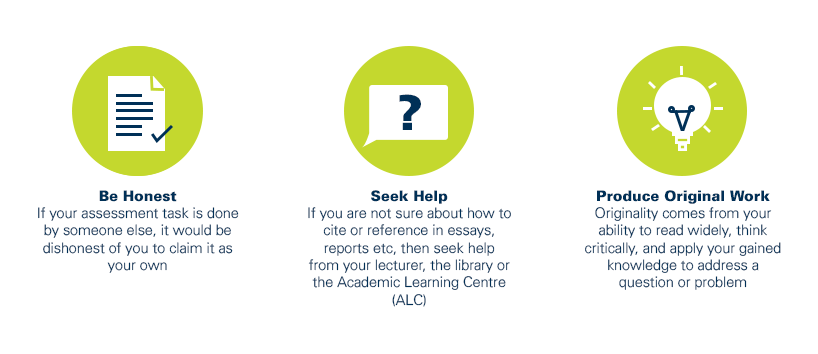
As a CQUniversity student you are expected to act honestly in all aspects of your academic work.
Any assessable work undertaken or submitted for review or assessment must be your own work. Assessable work is any type of work you do to meet the assessment requirements in the unit, including draft work submitted for review and feedback and final work to be assessed.
When you use the ideas, words or data of others in your assessment, you must thoroughly and clearly acknowledge the source of this information by using the correct referencing style for your unit. Using others’ work without proper acknowledgement may be considered a form of intellectual dishonesty.
Participating honestly, respectfully, responsibly, and fairly in your university study ensures the CQUniversity qualification you earn will be valued as a true indication of your individual academic achievement and will continue to receive the respect and recognition it deserves.
As a student, you are responsible for reading and following CQUniversity’s policies, including the Student Academic Integrity Policy and Procedure. This policy sets out CQUniversity’s expectations of you to act with integrity, examples of academic integrity breaches to avoid, the processes used to address alleged breaches of academic integrity, and potential penalties.
What is a breach of academic integrity?
A breach of academic integrity includes but is not limited to plagiarism, self-plagiarism, collusion, cheating, contract cheating, and academic misconduct. The Student Academic Integrity Policy and Procedure defines what these terms mean and gives examples.
Why is academic integrity important?
A breach of academic integrity may result in one or more penalties, including suspension or even expulsion from the University. It can also have negative implications for student visas and future enrolment at CQUniversity or elsewhere. Students who engage in contract cheating also risk being blackmailed by contract cheating services.
Where can I get assistance?
For academic advice and guidance, the Academic Learning Centre (ALC) can support you in becoming confident in completing assessments with integrity and of high standard.
What can you do to act with integrity?