Overview
Australia is renowned for its unique and diverse vertebrate animals. This unit will provide you with an introduction to Australian vertebrate diversity and to the necessary tools to understand the evolutionary, morphological, behavioural and ecological diversity of Australian vertebrate fauna against the backdrop of global vertebrate diversity and evolution. You will learn to use a wide variety of ‘tools’ (taxonomy, phylogeny, fossils, ecophysiology, comparative anatomy, behavioural ecology) as methods for understanding the past, current, and future vertebrate fauna of Australia. You will also learn and practice the applied skill-sets and techniques required for fauna survey and wildlife research in Australia, proficiency in identification of Australian vertebrates and technical report writing for wildlife monitoring and surveying.
Details
Pre-requisites or Co-requisites
Prerequisites: (BIOL11099 Living Systems OR BIOL11102 Life Sciences Laboratory)
Important note: Students enrolled in a subsequent unit who failed their pre-requisite unit, should drop the subsequent unit before the census date or within 10 working days of Fail grade notification. Students who do not drop the unit in this timeframe cannot later drop the unit without academic and financial liability. See details in the Assessment Policy and Procedure (Higher Education Coursework).
Offerings For Term 2 - 2026
Attendance Requirements
All on-campus students are expected to attend scheduled classes - in some units, these classes are identified as a mandatory (pass/fail) component and attendance is compulsory. International students, on a student visa, must maintain a full time study load and meet both attendance and academic progress requirements in each study period (satisfactory attendance for International students is defined as maintaining at least an 80% attendance record).
Recommended Student Time Commitment
Each 6-credit Undergraduate unit at CQUniversity requires an overall time commitment of an average of 12.5 hours of study per week, making a total of 150 hours for the unit.
Class Timetable
Assessment Overview
Assessment Grading
This is a graded unit: your overall grade will be calculated from the marks or grades for each assessment task, based on the relative weightings shown in the table above. You must obtain an overall mark for the unit of at least 50%, or an overall grade of 'pass' in order to pass the unit. If any 'pass/fail' tasks are shown in the table above they must also be completed successfully ('pass' grade). You must also meet any minimum mark requirements specified for a particular assessment task, as detailed in the 'assessment task' section (note that in some instances, the minimum mark for a task may be greater than 50%). Consult the University's Grades and Results Policy for more details of interim results and final grades.
All University policies are available on the CQUniversity Policy site.
You may wish to view these policies:
- Grades and Results Policy
- Assessment Policy and Procedure (Higher Education Coursework)
- Review of Grade Procedure
- Student Academic Integrity Policy and Procedure
- Academic Progression Policy and Procedure
- Student Refund and Credit Balance Policy and Procedure
- Complaints Policy and Procedure
- Information and Communications Technology Acceptable Use Policy and Procedure
This list is not an exhaustive list of all University policies. The full list of University policies are available on the CQUniversity Policy site.
Feedback, Recommendations and Responses
Every unit is reviewed for enhancement each year. At the most recent review, the following staff and student feedback items were identified and recommendations were made.
Feedback from 2025 SUTE teacher evaluations
The weekly face-to-face and live tutorial is very good.
Retain the weekly tutorial as dual face-to-face and live online delivery.
Feedback from 2025 SUTE teacher evaluations
Assessment in Science, Agriculture, and Environment (SAE) units most often consist of quizzes and a report.
Explore alternative forms of assessment.
- Describe the evolution, diversity and distribution of major vertebrate fauna in Australia
- Explain the significance of behavioural, reproductive, physiological, and nutritional adaptations in Australian vertebrates
- Apply knowledge about the biology of a species to their applied conservation and management to explain why invasive species pose a threat to Australian vertebrate fauna
- Practice industry and ethical standards and techniques in monitoring, surveying Australian vertebrate fauna
- Communicate knowledge and study findings in verbal and written scientific reports.
Alignment of Assessment Tasks to Learning Outcomes
| Assessment Tasks | Learning Outcomes | ||||
|---|---|---|---|---|---|
| 1 | 2 | 3 | 4 | 5 | |
| 1 - Online Quiz(zes) - 50% | |||||
| 2 - Laboratory/Practical - 0% | |||||
| 3 - Written Assessment - 50% | |||||
Alignment of Graduate Attributes to Learning Outcomes
| Graduate Attributes | Learning Outcomes | ||||
|---|---|---|---|---|---|
| 1 | 2 | 3 | 4 | 5 | |
| 1 - Communication | |||||
| 2 - Problem Solving | |||||
| 3 - Critical Thinking | |||||
| 4 - Information Literacy | |||||
| 5 - Team Work | |||||
| 6 - Information Technology Competence | |||||
| 7 - Cross Cultural Competence | |||||
| 8 - Ethical practice | |||||
| 9 - Social Innovation | |||||
| 10 - First Nations Knowledges | |||||
| 11 - Aboriginal and Torres Strait Islander Cultures | |||||
Textbooks
There are no required textbooks.
IT Resources
- CQUniversity Student Email
- Internet
- Unit Website (Moodle)
All submissions for this unit must use the referencing style: Harvard (author-date)
For further information, see the Assessment Tasks.
a.carton@cqu.edu.au
Week 1
Begin Date: 13 Jul 2026Module/Topic
Subject overview: understanding and explaining vertebrate diversity in Australia
An overview of Australian vertebrate biogeography and evolution
Chapter
Events and Submissions/Topic
Week 2
Begin Date: 20 Jul 2026Module/Topic
Fish and Amphibians
Chapter
Events and Submissions/Topic
Theory Quiz 1 will open 7:00am Wednesday of Week 2 (AEST).
Week 3
Begin Date: 27 Jul 2026Module/Topic
Reptiles
Chapter
Events and Submissions/Topic
Theory Quiz 1 will close 11:55pm Wednesday of Week 3 (AEST).
Week 4
Begin Date: 03 Aug 2026Module/Topic
Birds
Chapter
Events and Submissions/Topic
Theory Quiz 2 will open 7:00am Wednesday of Week 4 (AEST).
Week 5
Begin Date: 10 Aug 2026Module/Topic
Monotremes and Marsupials
Chapter
Events and Submissions/Topic
Theory Quiz 2 will close 11:55pm Wednesday of Week 5 (AEST).
Week 6
Begin Date: 17 Aug 2026Module/Topic
Eutheria 'True' Mammals
Chapter
Events and Submissions/Topic
Vacation Week
Begin Date: 24 Aug 2026Module/Topic
Chapter
Events and Submissions/Topic
Week 7
Begin Date: 31 Aug 2026Module/Topic
Flying Mammals (Bats)
Chapter
Events and Submissions/Topic
Theory Quiz 3 will open 7:00am Wednesday of Week 7 (AEST).
Week 8
Begin Date: 07 Sep 2026Module/Topic
Deep Time Australian Fauna
Australia's Age of Dinosaurs
Chapter
Events and Submissions/Topic
Theory Quiz 3 will close 11:55pm Wednesday of Week 8 (AEST).
Week 9
Begin Date: 14 Sep 2026Module/Topic
Australia's Age of Megafauna
Forensic Fauna Primer
Chapter
Events and Submissions/Topic
Week 10
Begin Date: 21 Sep 2026Module/Topic
Residential School
Chapter
Events and Submissions/Topic
21st-25th September, Capricorn Caves / Mt Etna.
Assessment 2 - Residential School (P/F) Due: Week 10 Monday (21 Sept 2026) 11:45 pm AEST
Week 11
Begin Date: 28 Sep 2026Module/Topic
Communication and subterfuge
Sexual selection and optimising mating decisions
Chapter
Events and Submissions/Topic
Week 12
Begin Date: 05 Oct 2026Module/Topic
Parental care, conflict and mating systems
Where to from here? The future for Australian vertebrates
Chapter
Events and Submissions/Topic
1 Online Quiz(zes)
A series of online quizzes featuring short-answer, multiple-choice, and other question formats will evaluate your understanding of core concepts across the term.
The quizzes are structured around three key taxonomic groups:
- Quiz 1: Fish and Amphibians (Ichthyology and Herpetology I)
- Quiz 2: Reptiles and Birds (Herpetology II and Ornithology)
- Quiz 3: Monotremes, Marsupials, and Eutherian/Placental Mammals (Mammalogy)
The 72-hour grace period does not apply to this assessment.
Level of GenAI use allowed:
Level 1: You must not use Al at any point during the assessment. You must demonstrate your core skills and knowledge.
Quiz 1 due 11:55pm Wednesday of Week 3; Quiz 2 due 11:55pm Wednesday of Week 5; Quiz 3 due 11:55pm Wednesday of Week 8.
Each online quiz allows for a single attempt and comprises a variety of question formats, including multiple-choice, matching, and short-answer items. Marks are awarded based on the objective correctness and completeness of the submitted answers.
Please note that collaboration or the sharing of quiz content is a breach of CQUniversity’s Academic Integrity Policy. Disclosing questions or answers to other students compromises the assessment process and will be investigated.
- Describe the evolution, diversity and distribution of major vertebrate fauna in Australia
- Explain the significance of behavioural, reproductive, physiological, and nutritional adaptations in Australian vertebrates
- Apply knowledge about the biology of a species to their applied conservation and management to explain why invasive species pose a threat to Australian vertebrate fauna
2 Laboratory/Practical
In this practical assessment, students will work collaboratively in small teams to design and execute a series of field-based sampling activities. The focus of these exercises is to apply non-invasive surveying and monitoring techniques tailored to Australian vertebrate fauna.
Throughout the field exercises, you will develop and demonstrate essential professional skills, including:
- Survey Design & Logistics: Planning effective, ethical, and non-invasive fauna studies.
- Technical Field Skills: Navigating and mapping locations using GPS technology.
- Data Integrity: Collecting, recording, interpreting, and managing field data accurately.
- Specimen Identification: Correctly identifying local vertebrate species (and traces).
At the conclusion of each field activity, students will individually or in teams, present their methodology, data, and ecological findings. These brief on-site presentations will serve as the basis for your summative assessment and provide an opportunity for immediate, constructive feedback.
The 72-hour grace period does not apply to this assessment.
Level of GenAI use allowed:
Level 1: You must not use Al at any point during the assessment. You must demonstrate your core skills and knowledge.
Week 10 Monday (21 Sept 2026) 11:45 pm AEST
Present face-to-face during the four day residential school
Present face-to-face during the four day residential school
This task emphasizes progressive learning and teamwork.
Students will be assessed on their ability to:
- Design and Plan: Demonstrate completeness, accuracy, and scientific rigor in survey and sampling design.
- Technical Competence: Safely, accurately, and independently set up and operate non-invasive fauna sampling equipment in a field setting.
- Teamwork and Collaboration: Contribute actively, cooperatively, and professionally within a team environment to achieve shared field goals.
- Communication of Findings: Clearly and concisely explain preliminary data, field observations, and ecological conclusions during individual debriefs.
- Apply knowledge about the biology of a species to their applied conservation and management to explain why invasive species pose a threat to Australian vertebrate fauna
- Practice industry and ethical standards and techniques in monitoring, surveying Australian vertebrate fauna
- Communicate knowledge and study findings in verbal and written scientific reports.
3 Written Assessment
This assessment bridges the gap between field-based data collection and professional scientific reporting. During the residential school, you will deploy industry-standard methodologies and technologies to survey diverse Australian vertebrate communities, focusing primarily on microbats and both diurnal and nocturnal ground and arboreal fauna.
This task has two distinct sections:
Section 1: Fieldwork and Data Analysis Support (During Residential School)
You will gain hands-on experience with industry-standard wildlife monitoring technologies. At the conclusion of each field session, field review sessions and data debriefs will be held to guide you through data interpretation and analysis, ensuring you have a firm understanding of your findings before leaving the residential school.
Section 2: The Formal Scientific Report (Post-Residential School)
Using the consolidated field data gained from Section 1, you will independently author a formal technical report. This submission must synthesize your results in accordance with professional scientific and industry reporting standards, the specific guidelines for which will be provided and discussed on the final day of the residential school.
Level of GenAI use allowed:
Level 2: You may use Al for planning, idea development, and research. Your final submission should show how you have developed and refined these ideas.
Week 12 Friday (9 Oct 2026) 11:55 pm AEST
Submit online through Moodle as a Word document.
Vacation/Exam Week Monday (19 Oct 2026)
Returned to students through Moodle.
The Practical Report will be assessed on the following criteria:
- Completeness & Methodology: Comprehensive documentation of field observations, methodologies, and results relating to the fauna surveying and monitoring techniques deployed.
- Critical Discussion: Insightful analysis of results situated within the context of current, relevant surveying and monitoring methodologies for Australian vertebrate fauna.
- Conservation Application: Appropriate evaluation of wildlife assessment techniques, including a critical discussion of their practical applications and limitations in conservation management.
- Academic Literacy: Clarity of expression, precise grammar, correct punctuation, and logical structural organization.
- Data Presentation: Technical presentation of figures, tables, and diagrams curated to a professional, publication-ready standard.
- Referencing: Correct in-text referencing and integration of all figures, tables, and diagrams within the body of the report.
- Referencing Integrity: Accurate, consistent use of the Harvard (author-date) referencing style for all in-text citations and the final reference list.
- Scope and Word Count: Adherence to the specified word limit of 2000 words (+/- 10%).
Further details regarding the assessment criteria and marking rubric will be available on the unit Moodle and explained to students on the final day of the residential school.
- Describe the evolution, diversity and distribution of major vertebrate fauna in Australia
- Explain the significance of behavioural, reproductive, physiological, and nutritional adaptations in Australian vertebrates
- Communicate knowledge and study findings in verbal and written scientific reports.
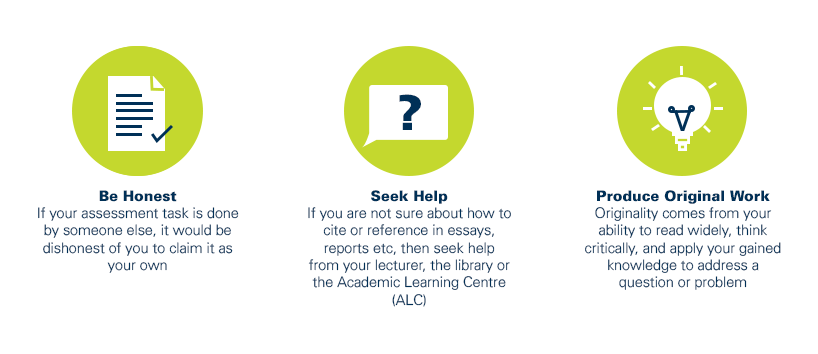
As a CQUniversity student you are expected to act honestly in all aspects of your academic work.
Any assessable work undertaken or submitted for review or assessment must be your own work. Assessable work is any type of work you do to meet the assessment requirements in the unit, including draft work submitted for review and feedback and final work to be assessed.
When you use the ideas, words or data of others in your assessment, you must thoroughly and clearly acknowledge the source of this information by using the correct referencing style for your unit. Using others’ work without proper acknowledgement may be considered a form of intellectual dishonesty.
Participating honestly, respectfully, responsibly, and fairly in your university study ensures the CQUniversity qualification you earn will be valued as a true indication of your individual academic achievement and will continue to receive the respect and recognition it deserves.
As a student, you are responsible for reading and following CQUniversity’s policies, including the Student Academic Integrity Policy and Procedure. This policy sets out CQUniversity’s expectations of you to act with integrity, examples of academic integrity breaches to avoid, the processes used to address alleged breaches of academic integrity, and potential penalties.
What is a breach of academic integrity?
A breach of academic integrity includes but is not limited to plagiarism, self-plagiarism, collusion, cheating, contract cheating, and academic misconduct. The Student Academic Integrity Policy and Procedure defines what these terms mean and gives examples.
Why is academic integrity important?
A breach of academic integrity may result in one or more penalties, including suspension or even expulsion from the University. It can also have negative implications for student visas and future enrolment at CQUniversity or elsewhere. Students who engage in contract cheating also risk being blackmailed by contract cheating services.
Where can I get assistance?
For academic advice and guidance, the Academic Learning Centre (ALC) can support you in becoming confident in completing assessments with integrity and of high standard.
What can you do to act with integrity?