Overview
This unit is an introduction to the impacts of the building design and construction sectors on the environment viz: Natural ecosystems including climate, hydrological cycle, basic thermodynamics, consequences of modification; ecosystem interdependency, capacity of the environment to assimilate changes; background to greenhouse concerns from the Rio Summit through to current global negotiations: social, legislative and political issues associated with modification of the natural and developed environments including environmental impact assessments; and environmental impact of development-mining and mineral processing, materials and manufacturing industries as related to the building and construction sector. This unit then provides an introduction to current activity to minimise impacts through shift to service rather than consumption based economy in the building and construction sector. This unit also requires the student to develop an understanding of requirements for regional and urban development including the legislative framework for planning control, feasibility studies, consultation and communication processes.
Details
Pre-requisites or Co-requisites
There are no requisites for this unit.
Important note: Students enrolled in a subsequent unit who failed their pre-requisite unit, should drop the subsequent unit before the census date or within 10 working days of Fail grade notification. Students who do not drop the unit in this timeframe cannot later drop the unit without academic and financial liability. See details in the Assessment Policy and Procedure (Higher Education Coursework).
Offerings For Term 2 - 2026
Attendance Requirements
All on-campus students are expected to attend scheduled classes - in some units, these classes are identified as a mandatory (pass/fail) component and attendance is compulsory. International students, on a student visa, must maintain a full time study load and meet both attendance and academic progress requirements in each study period (satisfactory attendance for International students is defined as maintaining at least an 80% attendance record).
Recommended Student Time Commitment
Each 6-credit Undergraduate unit at CQUniversity requires an overall time commitment of an average of 12.5 hours of study per week, making a total of 150 hours for the unit.
Class Timetable
Assessment Overview
Assessment Grading
This is a graded unit: your overall grade will be calculated from the marks or grades for each assessment task, based on the relative weightings shown in the table above. You must obtain an overall mark for the unit of at least 50%, or an overall grade of 'pass' in order to pass the unit. If any 'pass/fail' tasks are shown in the table above they must also be completed successfully ('pass' grade). You must also meet any minimum mark requirements specified for a particular assessment task, as detailed in the 'assessment task' section (note that in some instances, the minimum mark for a task may be greater than 50%). Consult the University's Grades and Results Policy for more details of interim results and final grades.
All University policies are available on the CQUniversity Policy site.
You may wish to view these policies:
- Grades and Results Policy
- Assessment Policy and Procedure (Higher Education Coursework)
- Review of Grade Procedure
- Student Academic Integrity Policy and Procedure
- Academic Progression Policy and Procedure
- Student Refund and Credit Balance Policy and Procedure
- Complaints Policy and Procedure
- Information and Communications Technology Acceptable Use Policy and Procedure
This list is not an exhaustive list of all University policies. The full list of University policies are available on the CQUniversity Policy site.
Feedback, Recommendations and Responses
Every unit is reviewed for enhancement each year. At the most recent review, the following staff and student feedback items were identified and recommendations were made.
Feedback from SUTE UNIT COMMENTS REPORT - T2, 2025
Assessment brief refinements can ensure students' expectations.
Assessment documentation needs to be further refined and aligned to ensure complete consistency with verbal guidance and expectations, enhancing clarity and transparency for students.
Feedback from SUTE UNIT COMMENTS REPORT - T2, 2025
The workload increases toward the end of the term.
Workload distribution needs to be reviewed to ensure the sequencing and assessments remain academically ideal. It will be evenly scaffolded across the term, supporting students in managing their commitments effectively.
- Propose methods for improving the environmental and social sustainability of the built environment.
- Explain the basic theoretical and practical concepts used in urban planning.
- Choose appropriate design responses for particular Australian climate zones.
- Select building materials on an environmentally preferred basis with particular reference to embodied energy, usage and waste.
- Solve routine and unfamiliar problems using information, technology, logic and ethical decision making.
- Practice personal and interpersonal skills.
- Use effectively appropriate modes of communication.
Alignment of Assessment Tasks to Learning Outcomes
| Assessment Tasks | Learning Outcomes | ||||||
|---|---|---|---|---|---|---|---|
| 1 | 2 | 3 | 4 | 5 | 6 | 7 | |
| 1 - Written Assessment - 30% | |||||||
| 2 - Written Assessment - 35% | |||||||
| 3 - Presentation and Written Assessment - 35% | |||||||
Alignment of Graduate Attributes to Learning Outcomes
| Graduate Attributes | Learning Outcomes | ||||||
|---|---|---|---|---|---|---|---|
| 1 | 2 | 3 | 4 | 5 | 6 | 7 | |
| 1 - Communication | |||||||
| 2 - Problem Solving | |||||||
| 3 - Critical Thinking | |||||||
| 4 - Information Literacy | |||||||
| 5 - Team Work | |||||||
| 6 - Information Technology Competence | |||||||
| 7 - Cross Cultural Competence | |||||||
| 8 - Ethical practice | |||||||
| 9 - Social Innovation | |||||||
| 10 - First Nations Knowledges | |||||||
| 11 - Aboriginal and Torres Strait Islander Cultures | |||||||
Alignment of Assessment Tasks to Graduate Attributes
| Assessment Tasks | Graduate Attributes | ||||||||||
|---|---|---|---|---|---|---|---|---|---|---|---|
| 1 | 2 | 3 | 4 | 5 | 6 | 7 | 8 | 9 | 10 | 11 | |
| 1 - Written Assessment - 30% | |||||||||||
| 2 - Written Assessment - 35% | |||||||||||
| 3 - Presentation and Written Assessment - 35% | |||||||||||
Textbooks
The Whole Building Handbook
- Authors: Bokalders , Varis
- Taylor and Francis
- London London , UK
- ISBN: 9781844075232
If you are having issues accessing the eBook at the Library website, both paper and eBook copies can be purchased at the CQUni Bookshop here: http://bookshop.cqu.edu.au (search on the Unit code)
- Binding: Paperback
IT Resources
- CQUniversity Student Email
- Internet
- Unit Website (Moodle)
- MS Office
- Web camera, headphones and mic
- MS Teams
- Zoom access for weekly meetings
All submissions for this unit must use the referencing style: Harvard (author-date)
For further information, see the Assessment Tasks.
p.kalutara@cqu.edu.au
Week 1
Begin Date: 13 Jul 2026Module/Topic
1.The sustainable global ecosystem
Chapter
Events and Submissions/Topic
Start working on Assignment 1
Week 2
Begin Date: 20 Jul 2026Module/Topic
2.Human activities and environmental impacts
Chapter
Events and Submissions/Topic
Week 3
Begin Date: 27 Jul 2026Module/Topic
3.Accelerated development; accelerated impacts
Chapter
Events and Submissions/Topic
Week 4
Begin Date: 03 Aug 2026Module/Topic
4. Traditional town planning - history
Chapter
Events and Submissions/Topic
Start working on Assignment 2.
Week 5
Begin Date: 10 Aug 2026Module/Topic
5.Planning theories - analysis and debate
Chapter
Events and Submissions/Topic
Week 6
Begin Date: 17 Aug 2026Module/Topic
6.Urban and regional development and eco-sustainability
Chapter
Events and Submissions/Topic
Vacation Week
Begin Date: 24 Aug 2026Module/Topic
No lecture or Tutorial this week- this is your vacation week- Enjoy!
Chapter
Events and Submissions/Topic
Week 7
Begin Date: 31 Aug 2026Module/Topic
7.Eco-sustainable urban planning including services and systems
Chapter
Events and Submissions/Topic
Choose a plan for your site for Assignment 3
Week 8
Begin Date: 07 Sep 2026Module/Topic
8.The construction site and eco-sustainability
Chapter
Events and Submissions/Topic
Week 9
Begin Date: 14 Sep 2026Module/Topic
9.Passive 'design for climate' and energy use
Chapter
Events and Submissions/Topic
Week 10
Begin Date: 21 Sep 2026Module/Topic
10.Eco-sustainable materials and systems
Chapter
Events and Submissions/Topic
Week 11
Begin Date: 28 Sep 2026Module/Topic
11.Review of values, reforms, limitations
Chapter
Events and Submissions/Topic
Week 12
Begin Date: 05 Oct 2026Module/Topic
12.Regulatory tools towards eco-sustainability in planning, design and construction
Chapter
Events and Submissions/Topic
Exam Week
Begin Date: 12 Oct 2026Module/Topic
No exams for this unit.
Chapter
Events and Submissions/Topic
Vacation/Exam Week
Begin Date: 19 Oct 2026Module/Topic
No exams for this unit.
Chapter
Events and Submissions/Topic
1 Written Assessment
Assessment item 1 - Written Assignment. This assessment item will address the unit Learning Outcome 1 and will provide an opportunity for students to demonstrate the transferable skills in learning outcomes 5, 6 and 7.
Your submission will be a report containing your responses to three questions of varying complexity, the focus of which will relate directly to Topics 1, 2 and 3. Full and detailed briefing for this assignment and the assignment rubric will be available from the Assessment Block in Moodle.
AI Assessment Scale: You may use AI to gain some basic concepts in learning outcomes. However, when drafting text, refining, and evaluating your work, you must critically evaluate and modify any AI-generated content you use.
Week 5 Monday (10 Aug 2026) 11:55 pm AEST
Please submit via the assessment portal on the Moodle home page.
Vacation Week Monday (24 Aug 2026)
Students will be advised of any adverse circumstances that might delay return of feedback; otherwise, marks and feedback will be returned within two weeks of the submission due date.
Assessment criteria will be relevant to the learning outcomes and topics of focus for this assignment that are listed above in the task description. However, the more detailed enabling objectives in the Study Guide that are variously related to Topics 1, 2 and 3 will give you a more comprehensive understanding of what you may be needing to demonstrate. This assessment item is worth 30% (ie; 30/100, approximately 20% of which (ie; 6/30) is relevant to the presentation quality of your submission and your referencing.
The following criteria will be used to evaluate the submissions:
- Clarity of expression and comprehensive coverage of issues
- Use of quality supporting documentation as appropriate
- Use of original thought and content
- Overall presentation and ability to communicate using correct spelling, grammar and punctuation and the use of appropriate diagrams and other visual communication
- Demonstration of core knowledge and demonstration of appropriate application of knowledge.
- Propose methods for improving the environmental and social sustainability of the built environment.
- Solve routine and unfamiliar problems using information, technology, logic and ethical decision making.
- Practice personal and interpersonal skills.
- Use effectively appropriate modes of communication.
- Communication
- Problem Solving
- Information Literacy
- Information Technology Competence
2 Written Assessment
Assessment item 2 - Written Assignment. This assessment item will primarily address Learning Outcome 2 with associated implications for learning outcome 1 and will provide an opportunity for students to demonstrate the transferrable skills in learning outcomes 5, 6 and 7.
Your submission will be a report containing your responses to several questions, the focus of which will relate directly to Topics 4, 5, 6 and 7. Full and detailed briefing for this assignment and the assignment rubric will be available from the Assessment Block in Moodle.
AI Assessment Scale: You may use AI to have some ideas about the relevant concepts regarding answering the questions. However, the detailed response should be significantly modified and evaluated using your own thoughts, not by AI-generated content.
Week 8 Monday (7 Sept 2026) 11:55 pm AEST
Please submit via the assessment portal on the Moodle home page.
Week 10 Monday (21 Sept 2026)
Students will be advised of any adverse circumstances that might delay return of feedback; otherwise, marks and feedback will be returned within two weeks of the submission due date.
Assessment criteria will be relevant to the learning outcomes and topics that are listed above in the task description. However the more detailed 'enabling objectives' in the Study Guide that are directly related to Topics 4, 5, 6 and 7 will give you a more comprehensive understanding of what you may be expected to demonstrate. This assessment item is worth 35% (ie; 35/100). Approximately 20% of this (ie; 7/35) is relevant to the presentation quality of your submission and your referencing.
The following criteria will be used to evaluate the submissions:
- Clarity of expression and comprehensive coverage of issues
- Use of quality supporting documentation as appropriate
- Use of original thought and content
- Overall presentation and ability to communicate using correct spelling, grammar and punctuation and the use of appropriate diagrams and other visual communication
- Demonstration of core knowledge and demonstration of appropriate application of knowledge.
- Propose methods for improving the environmental and social sustainability of the built environment.
- Explain the basic theoretical and practical concepts used in urban planning.
- Solve routine and unfamiliar problems using information, technology, logic and ethical decision making.
- Practice personal and interpersonal skills.
- Use effectively appropriate modes of communication.
- Communication
- Problem Solving
- Critical Thinking
- Information Literacy
- Information Technology Competence
3 Presentation and Written Assessment
Assessment item 3 will address learning outcomes 1, 2, 3 and 4, and will provide an opportunity for students to demonstrate the transferrable skills in learning outcomes 5, 6 and 7.
For this assessment item you will need to address the requirements of a multi-faceted task that will include drawings and written content as required.
Your submission will be a report, the focus of which will relate directly to the environmentally sustainable design focus of Topics 8, 9, 10, 11 and 12. Full and detailed briefing for this assignment and the assignment rubric will be available from the Assessment Block in Moodle.
You must attain a minimum 40% for this assessment task to pass this unit (as individual hurdle).
AI Assessment Scale: You must not use AI at this stage to address the requirements, such as drawing content, explanation, and referencing of the articles. Environmentally sustainable design should reflect your own ideas and thoughts in this assignment.
Exam Week Monday (12 Oct 2026) 11:55 pm AEST
Please submit via the assessment portal on the Moodle home page.
Within two weeks of the submission due date but before the certification of grades.
Assessment criteria will be relevant to the learning outcomes and topics of focus for this assignment that are listed above in the task description. However the more detailed 'enabling objectives' in the Study Guide that are directly related to Topics 8, 9, 10, 11 and 12, will give you a more comprehensive understanding of what you may be expected to demonstrate. This assessment item is worth 35% (ie; 35/100, approximately 20% of which (ie; 7/35) is relevant to the presentation quality of your submission and your referencing.
The following criteria will be used to evaluate the submissions:
- Clarity of expression and comprehensive coverage of issues
- Use of quality supporting documentation as appropriate
- Use of original thought and content
- Overall presentation and ability to communicate using correct spelling, grammar and punctuation and the use of appropriate diagrams and other visual communication
- Demonstration of core knowledge and demonstration of appropriate application of knowledge.
- Propose methods for improving the environmental and social sustainability of the built environment.
- Explain the basic theoretical and practical concepts used in urban planning.
- Choose appropriate design responses for particular Australian climate zones.
- Select building materials on an environmentally preferred basis with particular reference to embodied energy, usage and waste.
- Solve routine and unfamiliar problems using information, technology, logic and ethical decision making.
- Practice personal and interpersonal skills.
- Use effectively appropriate modes of communication.
- Communication
- Problem Solving
- Critical Thinking
- Information Literacy
- Information Technology Competence
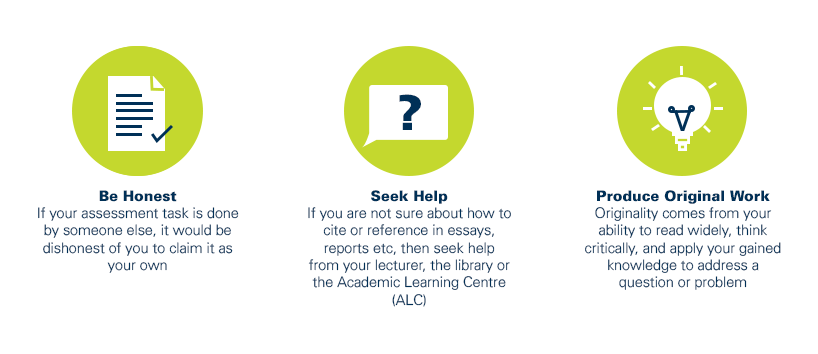
As a CQUniversity student you are expected to act honestly in all aspects of your academic work.
Any assessable work undertaken or submitted for review or assessment must be your own work. Assessable work is any type of work you do to meet the assessment requirements in the unit, including draft work submitted for review and feedback and final work to be assessed.
When you use the ideas, words or data of others in your assessment, you must thoroughly and clearly acknowledge the source of this information by using the correct referencing style for your unit. Using others’ work without proper acknowledgement may be considered a form of intellectual dishonesty.
Participating honestly, respectfully, responsibly, and fairly in your university study ensures the CQUniversity qualification you earn will be valued as a true indication of your individual academic achievement and will continue to receive the respect and recognition it deserves.
As a student, you are responsible for reading and following CQUniversity’s policies, including the Student Academic Integrity Policy and Procedure. This policy sets out CQUniversity’s expectations of you to act with integrity, examples of academic integrity breaches to avoid, the processes used to address alleged breaches of academic integrity, and potential penalties.
What is a breach of academic integrity?
A breach of academic integrity includes but is not limited to plagiarism, self-plagiarism, collusion, cheating, contract cheating, and academic misconduct. The Student Academic Integrity Policy and Procedure defines what these terms mean and gives examples.
Why is academic integrity important?
A breach of academic integrity may result in one or more penalties, including suspension or even expulsion from the University. It can also have negative implications for student visas and future enrolment at CQUniversity or elsewhere. Students who engage in contract cheating also risk being blackmailed by contract cheating services.
Where can I get assistance?
For academic advice and guidance, the Academic Learning Centre (ALC) can support you in becoming confident in completing assessments with integrity and of high standard.
What can you do to act with integrity?