Overview
In this unit you will apply your foundation knowledge of haematology to the study of how haematological disorders manifest and are diagnosed through changes in number, cytogenetics and morphology of cells. Diseases of haemostasis including therapeutic management with anticoagulants will also be discussed. This advanced unit builds on the knowledge and skills taught in previous units and will prepare you for work as a Medical Laboratory Scientist in Haematology. You will be required to attend a compulsory residential school in Rockhampton and an assessment task will be completed on campus during this residential school.
Details
Pre-requisites or Co-requisites
Prerequisites: BMSC12003 Haematology and Transfusion Science
Important note: Students enrolled in a subsequent unit who failed their pre-requisite unit, should drop the subsequent unit before the census date or within 10 working days of Fail grade notification. Students who do not drop the unit in this timeframe cannot later drop the unit without academic and financial liability. See details in the Assessment Policy and Procedure (Higher Education Coursework).
Offerings For Term 1 - 2026
Attendance Requirements
All on-campus students are expected to attend scheduled classes - in some units, these classes are identified as a mandatory (pass/fail) component and attendance is compulsory. International students, on a student visa, must maintain a full time study load and meet both attendance and academic progress requirements in each study period (satisfactory attendance for International students is defined as maintaining at least an 80% attendance record).
Recommended Student Time Commitment
Each 6-credit Undergraduate unit at CQUniversity requires an overall time commitment of an average of 12.5 hours of study per week, making a total of 150 hours for the unit.
Class Timetable
Assessment Overview
Assessment Grading
This is a graded unit: your overall grade will be calculated from the marks or grades for each assessment task, based on the relative weightings shown in the table above. You must obtain an overall mark for the unit of at least 50%, or an overall grade of 'pass' in order to pass the unit. If any 'pass/fail' tasks are shown in the table above they must also be completed successfully ('pass' grade). You must also meet any minimum mark requirements specified for a particular assessment task, as detailed in the 'assessment task' section (note that in some instances, the minimum mark for a task may be greater than 50%). Consult the University's Grades and Results Policy for more details of interim results and final grades.
All University policies are available on the CQUniversity Policy site.
You may wish to view these policies:
- Grades and Results Policy
- Assessment Policy and Procedure (Higher Education Coursework)
- Review of Grade Procedure
- Student Academic Integrity Policy and Procedure
- Academic Progression Policy and Procedure
- Student Refund and Credit Balance Policy and Procedure
- Complaints Policy and Procedure
- Information and Communications Technology Acceptable Use Policy and Procedure
This list is not an exhaustive list of all University policies. The full list of University policies are available on the CQUniversity Policy site.
Feedback, Recommendations and Responses
Every unit is reviewed for enhancement each year. At the most recent review, the following staff and student feedback items were identified and recommendations were made.
Feedback from Student feedback in person.
Students enjoyed the enhancements to interaction from the projector screens and blood film morphology at Residential school.
Maintain this form of teaching to continue to engage students.
Feedback from SUTE, Student feedback in person and self reflection.
Some students found the number of case studies discussed were too many as they took longer than expected to discuss.
Promote the significance of preparation for Residential school and pre-lab learning to ensure the Case studies process is understood before residential school commences, and they can be completed more efficiently. A pre- residential school tutorial will ensure all students have this knowledge of case study structure prior to attending residential school. The residential school will also be increased to run for an extra day.
Feedback from SUTE
Students enjoyed the way that tutorials were interactive and presented case studies.
Continue to run the tutorial session in this manner.
- Distinguish benign from malignant haematological disorders based on numerical, cytogenetic and morphological changes in the cells.
- Discuss the detection and monitoring of blood diseases using laboratory tests appropriate to the patient's clinical condition.
- Discuss disorders of haemostasis and the use of anticoagulant therapies.
- Analyse results of hematological tests and provide provisional and differential diagnoses with suggested further testing to support and confirm the diagnosis.
- Perform morphological analysis of peripheral blood smears to make a differential diagnosis.
Competency Based Standards for Medical Scientists, December 2009.
Unit 1: Collection, preparation and analysis of clinical material - Elements 1.1.1 - 1.1.3; 1.1.6 - 1.1.8; 1.2.4; 1.3.1 - 1.3.5; 1.5.1 - 1.5.5 & 1.6.1 - 1.6.8;
Unit 2: Correlation and validation of results of investigations using knowledge of method(s) including analytical principles and clinical information - Elements 2.1.1 - 2.1.2; 2.2.1; 2.3.1 & 2.3.2
Unit 3: Interpretation, reporting and issuing of laboratory results - Elements 3.1.1; 3.2.1 - 3.2.3; 3.2.6 - 3.2.7 & 3.3.1 - 3.3.2
Unit 4: Maintenance of documentation, equipment, resources and stock - Elements 4.2.1 - 4.2.6
Unit 5: Maintenance and promotion of safe working practices - Elements 5.1.3; 5.2.1; 5.3.4; 5.3.9; 5.4.1 - 5.4.5
Unit 6: Professional accountability and participation in continuing professional development - Elements 6.5.6 & 6.5.7
Alignment of Assessment Tasks to Learning Outcomes
| Assessment Tasks | Learning Outcomes | ||||
|---|---|---|---|---|---|
| 1 | 2 | 3 | 4 | 5 | |
| 1 - Presentation - 20% | |||||
| 2 - Laboratory/Practical - 0% | |||||
| 3 - Practical Assessment - 30% | |||||
| 4 - Examination - 50% | |||||
Alignment of Graduate Attributes to Learning Outcomes
| Graduate Attributes | Learning Outcomes | ||||
|---|---|---|---|---|---|
| 1 | 2 | 3 | 4 | 5 | |
| 1 - Communication | |||||
| 2 - Problem Solving | |||||
| 3 - Critical Thinking | |||||
| 4 - Information Literacy | |||||
| 5 - Team Work | |||||
| 6 - Information Technology Competence | |||||
| 7 - Cross Cultural Competence | |||||
| 8 - Ethical practice | |||||
| 9 - Social Innovation | |||||
| 10 - First Nations Knowledges | |||||
| 11 - Aboriginal and Torres Strait Islander Cultures | |||||
Textbooks
Clinical Haematology Atlas
- Edition: 6th (2021)
- Authors: Jacqueline H. Carr
- Elsevier
- St Louis St Louis , Missouri , United States of America
- ISBN: 9780323711920
- Binding: Spiral
Rodak's Haematology, Clinical Principles and Applications
- Edition: 6th (2019)
- Authors: Elaine Keohane, Catherine Otto, Jeanine Walenga
- Elsevier
- St Louis St Louis , Missouri , United States of America
- ISBN: 9780323530453
- Binding: Hardcover
Blood cells
- 6th Edition (2022)
- Authors: Bain, Barbara
- John Wiley & Sons, Inc
- New Jersey New Jersey , USA
- ISBN: 1-119-82029-4
- Binding: Hardcover
IT Resources
- CQUniversity Student Email
- Internet
- Unit Website (Moodle)
- Zoom (both microphone and webcam capability)
- WBC Counter App on mobile device
- BM Counter App on mobile device
All submissions for this unit must use the referencing styles below:
For further information, see the Assessment Tasks.
j.dennis@cqu.edu.au
Week 1
Begin Date: 09 Mar 2026Module/Topic
- Introduction to Advanced Haematology
- FBE Analysis and Automation
Chapter
Rodak : Ch 1, 11, 12 &13
Clinical Hematology Atlas: Ch 1-4
Events and Submissions/Topic
Tutorial:
Blood Film morphology revision
Week 2
Begin Date: 16 Mar 2026Module/Topic
Haemolytic Anaemia
- Increased RBC Destruction
- Intrinsic Defects
- Extrinsic Defects - Immune and Non-Immune Cause.
Chapter
Rodak : Ch 5, 20-23
Clinical Hematology Atlas: Ch 10, 11, 12, 13
Events and Submissions/Topic
Tutorial:
Red cell morphology overview and revision
Week 3
Begin Date: 23 Mar 2026Module/Topic
1. Paediatric and Geriatric Haematology
2. Bone Marrow
Chapter
Rodak : Ch 43, 14, 19
Clinical Hematology Atlas: Ch 23
Events and Submissions/Topic
Tutorial:
Diagnostics and interpretation of Laboratory Haematology.
Week 4
Begin Date: 30 Mar 2026Module/Topic
1. Haemostasis: Revision and Overview
1. Acquired Coagulopathies
2.Laboratory Diagnostics
Chapter
Rodak : Ch 35, 36, 39,40
Diagnostic Haemostasis:
Rodak: Ch 41, 42
Events and Submissions/Topic
Tutorial:
Diagnostic Haemostasis
Week 5
Begin Date: 06 Apr 2026Module/Topic
1. Non-malignant Leucocyte disorders.
2. Haematological malignancy; development, genetics and nomenclature Part 1
Chapter
Rodak : Ch 26, 27
Clinical Hematology Atlas: Ch 5-9, 14
Events and Submissions/Topic
Tutorial:
White cell morphology overview and revision
Week 6
Begin Date: 13 Apr 2026Module/Topic
1. Haematological malignancy; development, genetics and nomenclature Part 2
2. Myeloid Leukaemia
Chapter
Rodak : Ch 29, 30, 31
Clinical Hematology Atlas: Ch 15
Events and Submissions/Topic
Tutorial:
Myeloid Leukaemia morphology and diagnostics.
Written Assessment - Case Study Report Due
The written assessment - Case Study Report comprises 20% of the overall unit mark.
Case Study Presentation Due: Week 6 Wednesday (15 Apr 2026) 5:00 pm AEST
Vacation Week
Begin Date: 20 Apr 2026Module/Topic
Break week - an opportunity for self-directed learning, mid-unit revision and catch up.
Chapter
Events and Submissions/Topic
No lectures
Week 7
Begin Date: 27 Apr 2026Module/Topic
Residential School:
30/04/26- 03/5/26
1. Quality in Haematology Laboratory
Chapter
Laboratory Manual
Laboratory Workbook
Practical Assessment
Rodak: Ch 2
Events and Submissions/Topic
Compulsory Residential School
During the Residential School, you will be assessed on your ability to perform a number of morphological analyses as presented in your practical manual.
The practical assessment comprises.
30% of the overall unit mark.
Tutorial:
Diagnostics Tutorial
Practical Assessment Due: Week 7 Friday (1 May 2026) 5:00 pm AEST
Week 8
Begin Date: 04 May 2026Module/Topic
1. Lymphoid Leukaemia
2. Flow Cytometry
Chapter
Rodak : Ch 28, 31
Clinical Hematology Atlas: Ch 16,19
Events and Submissions/Topic
Tutorial:
Lymphoma morphology and diagnostics.
Laboratory Workbook Due: Week 8 Thursday (7 May 2026) 5:00 pm AEST
Week 9
Begin Date: 11 May 2026Module/Topic
1. Lymphomas and Myeloma
2. Myelodysplastic Syndromes
Chapter
Rodak : Ch 34
Clinical Hematology Atlas: Ch 16,19
Events and Submissions/Topic
Tutorial:
Related topic
Week 10
Begin Date: 18 May 2026Module/Topic
1. Myeloproliferative Neoplasms
2. Stem cells and cellular therapy
Chapter
Rodak : Ch 32-33
Clinical Hematology Atlas: Ch 17-18
Events and Submissions/Topic
Tutorial:
Related topic
Week 11
Begin Date: 25 May 2026Module/Topic
- Malaria
Chapter
Rodak : Ch 2, 22
Clinical Hematology Atlas: Ch 12, 21
Events and Submissions/Topic
Tutorial:
Malaria morphology and laboratory diagnosis.
Week 12
Begin Date: 01 Jun 2026Module/Topic
Revision week
Chapter
Events and Submissions/Topic
Tutorial:
Revision
Exam Week
Begin Date: 08 Jun 2026Module/Topic
End-of-Term Exam
Chapter
Events and Submissions/Topic
The End-of-Term Exam will be scheduled in the CQUniversity examination period. The exact date will be advised on the unit Moodle page.
Vacation/Exam Week
Begin Date: 15 Jun 2026Module/Topic
Chapter
Events and Submissions/Topic
Your unit coordinator for BMSC13001 Advanced Haematology, is Ms Jacqui Dennis. Your primary contact point is Jacqui and you can contact her using the following means:
- Via the Discussion forum on the unit's Moodle site. The Discussion forum for this unit is continuously monitored and you can expect a response within one-two (1-2) business day/s of posting your question.
- Through email (j.dennis@cqu.edu.au) or
- Via Microsoft Teams
Tutorials will be delivered each week on Zoom. These tutorials will also be recorded for the benefit of those students who are unable to attend the live classes. During the sessions, you will have the opportunity to ask questions or discuss uncertainties in relation to the lecture materials and recordings for each week. There will be some active learning exercises undertaken to assess your understating of the weekly lecture material including short answer questions, Kahoot quizzes, blood film morphology and cases studies.
These active learning activities will help you apply the knowledge learned during the weekly lectures and other pre-class learning material and prepare you for the assessments. You will gain the most benefit from the tutorials/lectorial if you watch the weekly lectures beforehand and read the peer-reviewed article and/or other pre-class learning material. You are also strongly encouraged to participate in tutorials, as studies have shown that students who attend the tutorials and participate in discussions have higher rates of success (Karnik et al., 2020*).
As per Australian educational standards, you are expected to commit 150 hours of engagement to your study of this unit. This is broken down as:
2 - 3 hours per week watching recorded lectures and revising the content through study notes
2 - 3 hours per week reviewing the peer-reviewed article provided in Moodle and other relevant resources
available for each week
1.5 - 2.5 hours per week attending the weekly tutorial/lectorial classes and reflecting on your answers to the
activities undertaken during class, identifying areas of uncertainly that still remain and discussing this/these with
other fellow students or the teaching staff.
3 - 4 hours per week preparing your assessments or studying for your exams
*Karnik, A., Kishore, P., & Meraj, M. (2020). Examining the linkage between class attendance at university and academic performance in an International Branch Campus setting. Research in Comparative and International Education, 15(4),
371-390. https://doi.org/10.1177/1745499920958855
1 Presentation
You will be provided with several examples of authentic clinical case studies on the Moodle site.
You will be required to select the case study of interest to you and you must post in the Moodle Discussion board indicating which case has been selected.
The case studies will be available for selection on a 'first come, first serve' basis. Each person must have their own case to work on (and present) and two people cannot select the same case.
Please check carefully the Moodle Discussion board before selecting your case study to ensure this has not already been chosen by another student previously.
The following information regarding the case will be available to you: clinical presentation, patient history, key laboratory information and/or other relevant case details.
You are then required to develop a PowerPoint presentation, using a case study approach. This will include: A detailed description of the specific clinical history and pathophysiology and interpretation, A focus on the laboratory results and a discussion of further testing and their interpretation. What are the techniques of analysis and their principle? Analysis of the provisional and differential diagnoses is required which should be discussed whilst showing critical thinking in your analysis. Presentation of a new insight into the diagnosis will also be required, this needs to be within the last 5 years. Guidelines to complete the presentation and a marking rubric will be available on the Moodle site.
Level of GenAI use allowed:
Level 3: You may use AI to assist with specific tasks such as drafting text, refining and evaluating your work. You must critically evaluate and modify any AI-generated content you use.
Note: Cutting and pasting of GenAI/LLM material into assessments may be considered contract cheating and/or plagiarism. If you have questions about the appropriate use of GenAI/LLM material, please speak with your lecturer and/or contact an ALC advisor.
Week 6 Wednesday (15 Apr 2026) 5:00 pm AEST
Presentations will be assessed in Week 6 via Zoom.
Week 8 Wednesday (6 May 2026)
Results will be available on Moodle.
This assessment task will assess your ability to interpret and discuss a clinical case whilst demonstrating critical thinking processes. You will also be assessed on the significance and novelty of your insight. A detailed marking rubric will be provided in the unit Moodle site of the assessment criteria used.
- Distinguish benign from malignant haematological disorders based on numerical, cytogenetic and morphological changes in the cells.
- Analyse results of hematological tests and provide provisional and differential diagnoses with suggested further testing to support and confirm the diagnosis.
2 Laboratory/Practical
For medical laboratory scientists within the area of Haematology in a pathology laboratory, it is essential that analysis of a wide range of benign and malignant disorders of different types of blood cells in adult and children are performed and interpreted correctly. Individual activities will provide hands-on experience of haematological techniques in analysis of a wide range of clinical conditions. Completion of the Laboratory Workbook will evidence student's engagement and understanding of the principles behind the haematological tests.
During the residential school you are required to complete:
Laboratory workbook (Pass/Fail): You will be provided with the laboratory workbook on the Moodle site prior to residential school. This will contain a set of blood films with authentic cases to be reviewed and results interpreted based on the data provided.
Level of Gen AI use allowed:
Level 1: You must not use AI at any point during the assessment. You must demonstrate your core skills and knowledge.
The 72 hour grace period does not apply to this Assessment.
Week 8 Thursday (7 May 2026) 5:00 pm AEST
Please upload your Laboratory Workbook to the Turnitin Assessment 2 link in Moodle
Week 10 Thursday (21 May 2026)
Results will be released on Moodle.
Laboratory workbook (Pass/Fail): The laboratory workbook will contain a detailed assessment scheme associated with the tasks and questions/reports to be completed. You are required to submit the completed version of the laboratory workbook on the Moodle site. You must achieve a pass grade in order to pass this assessment. Students who do not achieve the required 50% on the 1st attempt may be granted an opportunity to reattempt the assessment. The re-attempt must be submitted within seven consecutive days after receiving a mark for the initial assessment.
- Discuss the detection and monitoring of blood diseases using laboratory tests appropriate to the patient's clinical condition.
- Analyse results of hematological tests and provide provisional and differential diagnoses with suggested further testing to support and confirm the diagnosis.
- Perform morphological analysis of peripheral blood smears to make a differential diagnosis.
3 Practical Assessment
Practical Assessment (30%): This will be conducted on the final day of the residential school. It will encompass skills practiced on the days leading up to this assessment. You will be provided a set of blood films with authentic cases to be reviewed and results interpreted based on the data provided.
Level of Gen AI use allowed:
Level 1: You must not use AI at any point during the assessment. You must demonstrate your core skills and knowledge.
The 72 hour grace period does not apply to this Assessment.
Week 7 Friday (1 May 2026) 5:00 pm AEST
This Assessment will be run on the final day of Residential school.
Week 10 Tuesday (19 May 2026)
Results will be posted on Moodle
Practical Assessment (30%): You must achieve a minimum of 50% marks in order to pass this examination. Students who pass the first attempt will be awarded the achieved grade, up to 100% of the total marks. Students who fail the 1st attempt will be granted a second attempt. The second attempt will be conducted in the second half of the final day. The repeat attempt will be a pass/fail, with the maximum marks being 50% of the total achievable marks.
- Discuss the detection and monitoring of blood diseases using laboratory tests appropriate to the patient's clinical condition.
- Discuss disorders of haemostasis and the use of anticoagulant therapies.
- Analyse results of hematological tests and provide provisional and differential diagnoses with suggested further testing to support and confirm the diagnosis.
- Perform morphological analysis of peripheral blood smears to make a differential diagnosis.
Examination
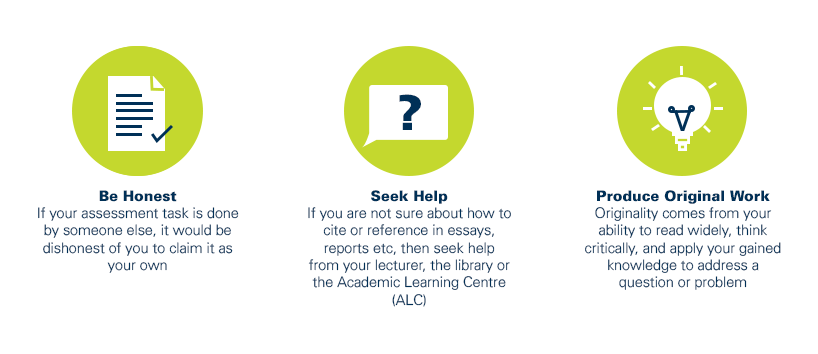
As a CQUniversity student you are expected to act honestly in all aspects of your academic work.
Any assessable work undertaken or submitted for review or assessment must be your own work. Assessable work is any type of work you do to meet the assessment requirements in the unit, including draft work submitted for review and feedback and final work to be assessed.
When you use the ideas, words or data of others in your assessment, you must thoroughly and clearly acknowledge the source of this information by using the correct referencing style for your unit. Using others’ work without proper acknowledgement may be considered a form of intellectual dishonesty.
Participating honestly, respectfully, responsibly, and fairly in your university study ensures the CQUniversity qualification you earn will be valued as a true indication of your individual academic achievement and will continue to receive the respect and recognition it deserves.
As a student, you are responsible for reading and following CQUniversity’s policies, including the Student Academic Integrity Policy and Procedure. This policy sets out CQUniversity’s expectations of you to act with integrity, examples of academic integrity breaches to avoid, the processes used to address alleged breaches of academic integrity, and potential penalties.
What is a breach of academic integrity?
A breach of academic integrity includes but is not limited to plagiarism, self-plagiarism, collusion, cheating, contract cheating, and academic misconduct. The Student Academic Integrity Policy and Procedure defines what these terms mean and gives examples.
Why is academic integrity important?
A breach of academic integrity may result in one or more penalties, including suspension or even expulsion from the University. It can also have negative implications for student visas and future enrolment at CQUniversity or elsewhere. Students who engage in contract cheating also risk being blackmailed by contract cheating services.
Where can I get assistance?
For academic advice and guidance, the Academic Learning Centre (ALC) can support you in becoming confident in completing assessments with integrity and of high standard.
What can you do to act with integrity?