Overview
The Australian employment legal relationship is complex and varied. This unit is structured under three themes and modules. They are (1) entering the employment relationship, (2) regulating the employment relationship, and (3) ending the employment relationship. The main focus of the unit is the federal Fair Work Act 2009 (Cth) (the FWA) and the common law contract of employment. This FWA dominates Australian employment law and is increasingly encroaching upon other areas such as sexual harassment and discrimination, which were traditionally the domain of other statutes. Understanding the FWA is crucial to practising in this area in Australia. Students from international jurisdictions may see some similarities if they come from Common Law countries. However, by and large, Australia has a unique system that is not replicated elsewhere in the world.
Details
Pre-requisites or Co-requisites
Pre-requisite: 24 credit points of law units including LAWS11057.
Important note: Students enrolled in a subsequent unit who failed their pre-requisite unit, should drop the subsequent unit before the census date or within 10 working days of Fail grade notification. Students who do not drop the unit in this timeframe cannot later drop the unit without academic and financial liability. See details in the Assessment Policy and Procedure (Higher Education Coursework).
Offerings For Term 1 - 2026
Attendance Requirements
All on-campus students are expected to attend scheduled classes - in some units, these classes are identified as a mandatory (pass/fail) component and attendance is compulsory. International students, on a student visa, must maintain a full time study load and meet both attendance and academic progress requirements in each study period (satisfactory attendance for International students is defined as maintaining at least an 80% attendance record).
Recommended Student Time Commitment
Each 6-credit Undergraduate unit at CQUniversity requires an overall time commitment of an average of 12.5 hours of study per week, making a total of 150 hours for the unit.
Class Timetable
Assessment Overview
Assessment Grading
This is a graded unit: your overall grade will be calculated from the marks or grades for each assessment task, based on the relative weightings shown in the table above. You must obtain an overall mark for the unit of at least 50%, or an overall grade of 'pass' in order to pass the unit. If any 'pass/fail' tasks are shown in the table above they must also be completed successfully ('pass' grade). You must also meet any minimum mark requirements specified for a particular assessment task, as detailed in the 'assessment task' section (note that in some instances, the minimum mark for a task may be greater than 50%). Consult the University's Grades and Results Policy for more details of interim results and final grades.
All University policies are available on the CQUniversity Policy site.
You may wish to view these policies:
- Grades and Results Policy
- Assessment Policy and Procedure (Higher Education Coursework)
- Review of Grade Procedure
- Student Academic Integrity Policy and Procedure
- Academic Progression Policy and Procedure
- Student Refund and Credit Balance Policy and Procedure
- Complaints Policy and Procedure
- Information and Communications Technology Acceptable Use Policy and Procedure
This list is not an exhaustive list of all University policies. The full list of University policies are available on the CQUniversity Policy site.
Feedback, Recommendations and Responses
Every unit is reviewed for enhancement each year. At the most recent review, the following staff and student feedback items were identified and recommendations were made.
Feedback from Student surveys
100% of surveyed students agreed this unit provided clear unit requirements, useful knowledge/skills, learning assessments, and was directly relevant to their degree.
Continue to apply the multi-faceted teaching and learning model.
Feedback from Student surveys
Some students would like a more recent prescribed textbook and guidance on workplace investigations, employment ADR, and settlement agreements.
A newer prescribed textbook should be selected, and additional materials and assessments concerning workplace investigations, employment ADR, and settlement agreements should be provided.
- Interpret and apply Australian employment law principles to fact scenarios to develop professional, problem-solving, legal reasoning, written and oral skills
- Critically examine themes and trends in Australian employment law
- Demonstrate cross-cultural competency skills.
Alignment of Assessment Tasks to Learning Outcomes
| Assessment Tasks | Learning Outcomes | ||
|---|---|---|---|
| 1 | 2 | 3 | |
| 1 - Practical Assessment - 40% | |||
| 2 - Practical Assessment - 60% | |||
Alignment of Graduate Attributes to Learning Outcomes
| Graduate Attributes | Learning Outcomes | ||
|---|---|---|---|
| 1 | 2 | 3 | |
| 1 - Communication | |||
| 2 - Problem Solving | |||
| 3 - Critical Thinking | |||
| 4 - Information Literacy | |||
| 5 - Team Work | |||
| 6 - Information Technology Competence | |||
| 7 - Cross Cultural Competence | |||
| 8 - Ethical practice | |||
| 9 - Social Innovation | |||
| 10 - First Nations Knowledges | |||
| 11 - Aboriginal and Torres Strait Islander Cultures | |||
Textbooks
Creighton & Stewart's Labour Law
- 7th edition (2025)
- Authors: Andrew Stewart, Anthony Forsyth, Mark Irving, Richard Johnstone, and Shae McCrystal
- The Federation Press
- Alexandria Alexandria , NSW , Australia
- ISBN: 978 1 76002 392 8 (e-book)
ISBN: 978 1 76002 391 1 (Paperback)
IT Resources
- CQUniversity Student Email
- Internet
- Unit Website (Moodle)
- Zoom access: microphone and webcam required
All submissions for this unit must use the referencing style: Australian Guide to Legal Citation, 4th ed
For further information, see the Assessment Tasks.
d.lococo2@cqu.edu.au
Week 1
Begin Date: 09 Mar 2026Module/Topic
Coverage and Institutions –
The Constitutional framework, the Federal System, Institutions, and Participants
Chapter
Stewart, Andrew, et al, Creighton’s & Stewart’s Labour Law (Federation Press, 7th ed, Alexandra) 2025 – Chapters 5, 6, and 7.
Events and Submissions/Topic
Week 2
Begin Date: 16 Mar 2026Module/Topic
Topic 2: Work Relationships - Categorising Work Relationships, Special Types of Work, and creating an employment contract
Chapter
Stewart, Andrew, et al, Creighton’s & Stewart’s Labour Law (Federation Press, 7th ed, Alexandra) 2025 – Chapters 8, 9, and 10.
Events and Submissions/Topic
Week 3
Begin Date: 23 Mar 2026Module/Topic
Topic 3: Employment Conditions 1 - Duties, Standards, Awards, Agreements, Remuneration, and Leave
Chapter
Stewart, Andrew, et al, Creighton’s & Stewart’s Labour Law (Federation Press, 7th ed, Alexandra) 2025 – Chapters 11, 12, 13, 14, 15, 16 and 17.1-17.2.
Events and Submissions/Topic
Week 4
Begin Date: 30 Mar 2026Module/Topic
Topic 4: Employment Conditions 2: Work, Health and Safety; Discrimination, Sexual Harassment and General Protections; and Unfair Work Practices
Chapter
Stewart, Andrew, et al, Creighton’s & Stewart’s Labour Law (Federation Press, 7th ed, Alexandra) 2025 – Chapters 18, 20, and 21.
Events and Submissions/Topic
Week 5
Begin Date: 06 Apr 2026Module/Topic
Topic 5: Termination of Employment - Legal termination, and Wrongful, Unlawful, and Unfair Termination
Chapter
Stewart, Andrew, et al, Creighton’s & Stewart’s Labour Law (Federation Press, 7th ed, Alexandra) 2025 – Chapters 22 and 23.
Events and Submissions/Topic
Week 6
Begin Date: 13 Apr 2026Module/Topic
Topic 6: Performance Management, Discipline, Regulation, and Enforcement
Chapter
Stewart, Andrew, et al, Creighton’s & Stewart’s Labour Law (Federation Press, 7th ed, Alexandra) 2025 – Chapters 17.3, 2, and 19.
Events and Submissions/Topic
Vacation Week
Begin Date: 20 Apr 2026Module/Topic
Chapter
Events and Submissions/Topic
Week 7
Begin Date: 27 Apr 2026Module/Topic
Chapter
Events and Submissions/Topic
Week 8
Begin Date: 04 May 2026Module/Topic
Chapter
Events and Submissions/Topic
Week 9
Begin Date: 11 May 2026Module/Topic
Chapter
Events and Submissions/Topic
Week 10
Begin Date: 18 May 2026Module/Topic
Chapter
Events and Submissions/Topic
Week 11
Begin Date: 25 May 2026Module/Topic
Chapter
Events and Submissions/Topic
Week 12
Begin Date: 01 Jun 2026Module/Topic
Chapter
Events and Submissions/Topic
Exam Week
Begin Date: 08 Jun 2026Module/Topic
Chapter
Events and Submissions/Topic
Vacation/Exam Week
Begin Date: 15 Jun 2026Module/Topic
Chapter
Events and Submissions/Topic
This unit will be taught intensively, and the assessments will be due after the unit is taught.
1 Practical Assessment
Assessment 1: Australian Employment Law Negotiation Practicum
Assessment 1 is a comprehensive, multi-phase task that requires students to prepare for, execute, and evaluate a live Australian Employment law negotiation.
Students are required to submit the following suite of professional documents and media:
Negotiation Preparation Checklist
Negotiation Run Sheet
Recorded Live Negotiation
Settlement Agreement (Agreed or proposed)
Post-Negotiation Debrief Form
Students will negotiate in pairs but will complete and submit their work independently.
This assessment requires students to adhere to the guidelines on the use of artificial intelligence tools as specified in the Artificial Intelligence Assessment Scale (AIAS). Any misuse or lack of disclosure regarding the use of AI tools will be
considered a breach of academic integrity. Al may be used to help complete the task, including idea generation, drafting, feedback, and refinement. Students should critically evaluate and modify the Al suggested outputs, demonstrating their understanding (level 3).
Extensions of more than 14 days are not available for this assessment. Due to the need to provide prompt feedback to students and the content of feedback provided, submissions received after the assessment has been returned to students cannot be accepted for academic integrity reasons. Students seeking extensions beyond this timeframe will be required to undertake a different version of the assessment task.
Full details of the assessment task will be provided on the Moodle site for this unit after the commencement of the term.
Week 7 Friday (1 May 2026) 11:45 pm AEST
Week 9 Friday (15 May 2026)
Marks and feedback will be provided via Moodle.
This assessment evaluates your capacity to:
· Identify & Reframe Issues;
· Analyse Statutory Frameworks;
· Formulate Supportable Conclusions;
· Demonstrate Professional Communication;
· Conduct Strategic Critical Thinking;
· Maintain Technical & Ethical Rigour; and
· Reflect on Procedural Choices.
The rubric and marking criteria will be provided on Moodle after the commencement of the term.
- Interpret and apply Australian employment law principles to fact scenarios to develop professional, problem-solving, legal reasoning, written and oral skills
- Critically examine themes and trends in Australian employment law
- Demonstrate cross-cultural competency skills.
2 Practical Assessment
Assessment 2: The Community of Practice Quest
This assessment adopts a "Community of Practice Quest" framework to explore Australian employment conditions.
Working in teams of 3–4, students will navigate the industrial relations landscape by completing a series of practical legal tasks.
Upon completion of the quest, students will individually submit their written task responses and reflections.
This assessment requires students to adhere to the guidelines on the use of artificial intelligence tools as specified in the Artificial Intelligence Assessment Scale (AIAS). Any misuse or lack of disclosure regarding the use of AI tools will be
considered a breach of academic integrity. Al may be used to help complete the task, including idea generation, drafting, feedback, and refinement. Students should critically evaluate and modify the Al suggested outputs, demonstrating their understanding (level 3).
Extensions of more than 14 days are not available for this assessment. Due to the need to provide prompt feedback to students and the content of feedback provided, submissions received after the assessment has been returned to students cannot be accepted for academic integrity reasons. Students seeking extensions beyond this timeframe will be required to undertake a different version of the assessment task.
Full details of the assessment task will be provided on the Moodle site for this unit after the commencement of the term.
The rubric and marking criteria will be provided on Moodle after the commencement of the term.
Week 10 Friday (22 May 2026) 11:45 pm AEST
Marks and feedback will be provided via Moodle after the release of grades.
This assessment evaluates your capacity to:
· Identify & Reframe Issues;
· Analyse Statutory Frameworks;
· Formulate Supportable Conclusions;
· Demonstrate Professional Communication;
· Conduct Strategic Critical Thinking;
· Maintain Technical & Ethical Rigour; and
· Reflect on Procedural Choices.
The rubric and marking criteria will be provided on Moodle after the commencement of the term.
- Interpret and apply Australian employment law principles to fact scenarios to develop professional, problem-solving, legal reasoning, written and oral skills
- Critically examine themes and trends in Australian employment law
- Demonstrate cross-cultural competency skills.
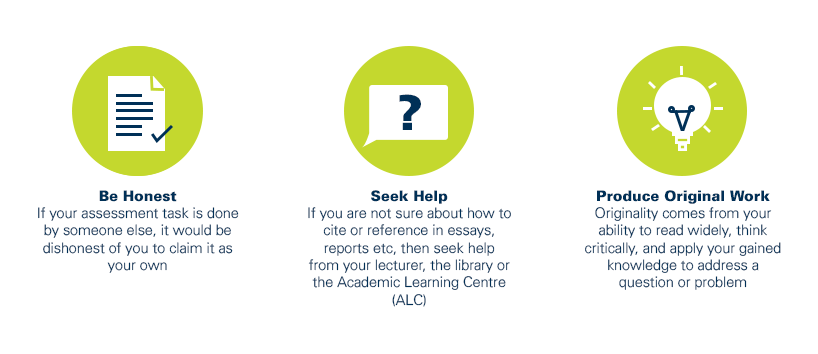
As a CQUniversity student you are expected to act honestly in all aspects of your academic work.
Any assessable work undertaken or submitted for review or assessment must be your own work. Assessable work is any type of work you do to meet the assessment requirements in the unit, including draft work submitted for review and feedback and final work to be assessed.
When you use the ideas, words or data of others in your assessment, you must thoroughly and clearly acknowledge the source of this information by using the correct referencing style for your unit. Using others’ work without proper acknowledgement may be considered a form of intellectual dishonesty.
Participating honestly, respectfully, responsibly, and fairly in your university study ensures the CQUniversity qualification you earn will be valued as a true indication of your individual academic achievement and will continue to receive the respect and recognition it deserves.
As a student, you are responsible for reading and following CQUniversity’s policies, including the Student Academic Integrity Policy and Procedure. This policy sets out CQUniversity’s expectations of you to act with integrity, examples of academic integrity breaches to avoid, the processes used to address alleged breaches of academic integrity, and potential penalties.
What is a breach of academic integrity?
A breach of academic integrity includes but is not limited to plagiarism, self-plagiarism, collusion, cheating, contract cheating, and academic misconduct. The Student Academic Integrity Policy and Procedure defines what these terms mean and gives examples.
Why is academic integrity important?
A breach of academic integrity may result in one or more penalties, including suspension or even expulsion from the University. It can also have negative implications for student visas and future enrolment at CQUniversity or elsewhere. Students who engage in contract cheating also risk being blackmailed by contract cheating services.
Where can I get assistance?
For academic advice and guidance, the Academic Learning Centre (ALC) can support you in becoming confident in completing assessments with integrity and of high standard.
What can you do to act with integrity?