Current information in the unit profile is below.
Additional Textbook Information
Both of the above books are eBooks. If you prefer to study with a paper copy, the Wound Care Practical Guide only can be purchased at the CQUni Bookshop here: http://booskhop.cqu.edu.au
Proposed Change
Both textbooks for this unit are paperback and are available to purchase through the CQUniversity Bookshop here http://booskhop.cqu.edu.au
|
Key Criteria |
High Distinction 84.5 – 100% |
Distinction 74.50 – 84.49% |
Credit 64.50 – 74.49% |
Pass 49.50 – 64.49% |
Fail <49.5% |
TOTAL |
|
Structure 10% |
||||||
|
Ability to write and present effectively (10%) |
Exemplary writing standard. Correct grammar,
spelling, and punctuation. Uses appropriate writing and referencing styles.
No mistakes evident. (10.00-8.45) |
Quality of writing is of a high standard with only
minor grammar, spelling, punctuation and referencing mistakes evident. (8.44-7.45) |
Quality of writing is of a good standard with a few
grammar, spelling punctuation and referencing mistakes evident. (7.44-6.45) |
Quality of writing and presentation is of a
satisfactory standard with quite a few grammar, punctuation, spelling and
referencing mistakes evident. (6.44-4.95) |
Quality of writing and presentation is at a poor
standard with many mistakes and lack of clarity evident. (4.94-0.0) |
|
|
Workbook Content 40% |
||||||
|
Discussion. (20%) |
Comprehensive discussion for each question (20.00-16.90) |
Detailed discussion for each question (16.89-14.90) |
Clear discussion for each question (14.89-12.90) |
Discussion presented for each question (12.89-9.90) |
Minimal discussion for each question (9.89-0.0) |
|
|
All questions answered. (20%) |
All questions answered as instructed (20.00-16.90) |
80% of questions answered as instructed (16.89-14.90) |
60% of questions answered as instructed (14.89-12.90) |
40% of questions answered as instructed (12.89-9.90) |
20% of questions answered as instructed (9.89-0.00) |
|
|
Video Presentation 10% |
||||||
|
The use of technology. (10%) |
The video presentation
demonstrated a comprehensive consideration of how to make the
most of available technology. All
timings, transitions, sounds and music contributed to the impact of the
video. (10.00-8.45) |
The video presentation
demonstrated a strong and appropriate consideration of how to
make the most of available technology.
All timings, transitions, sounds and music contributed to the impact
of the video. (8.44-7.45) |
Content provides an adequate
consideration of how to make the most of available
technology. All timings, transitions,
sounds and music contributed to the impact of the video. (7.44-6.45) |
Content provides some
relevant consideration of how to make the most of available
technology. All timings, transitions,
sounds and music contributed to the impact of the video. (6.44-4.95) |
Content provides an inadequate
or inappropriate consideration of how to make the most of
available technology. All timings,
transitions, sounds and music contributed to the impact of the video. (4.94-0.0) |
|
|
Video Presentation Approach and Discussion 30% |
||||||
|
Discussion of primary dressing and wound review
timing. (7.5%) |
Content provides a comprehensive
discussion that demonstrates an understanding of the chosen primary
dressing and timing. 7.50 - 6.34
|
Content provides a strong
and appropriate discussion that demonstrates an understanding of the
chosen primary dressing and timing. 6.34 - 5.59 |
Content provides an adequate
discussion that demonstrates an understanding of the chosen primary
dressing and timing. 5.59 - 4.84 |
Content provides some
relevant discussion that demonstrates an understanding of the chosen
primary dressing and timing. 4.84 - 3.71 |
Content provides an inadequate
or inappropriate discussion that demonstrates an understanding of
the chosen primary dressing and timing. 3.70 - 0.00 |
|
|
Discussion of secondary dressing. (7.5%) |
Content provides a comprehensive
discussion that demonstrates an understanding of the chosen
secondary dressing. 7.50 - 6.34 |
Content provides a strong
and appropriate discussion that demonstrates an understanding of the
chosen secondary dressing. 6.34 - 5.59 |
Content provides an adequate
discussion that demonstrates an understanding of the chosen
secondary dressing. 5.59 - 4.84 |
Content provides some
relevant discussion that demonstrates an understanding of the chosen
secondary dressing. 4.84 - 3.71 |
Content provides an inadequate
or inappropriate discussion that demonstrates an understanding of
the chosen secondary dressing. 3.70 - 0.00 |
|
|
Discussion of cleansing solution. (7.5%) |
Content provides a comprehensive
discussion that demonstrates the use of the chosen cleansing
solution. 7.50 - 6.34 |
Content provides a strong
and appropriate discussion that demonstrates the use of the chosen
cleansing solution. 6.34 - 5.59 |
Content provides an adequate
discussion that demonstrates the use of the chosen cleansing
solution. 5.59 - 4.84 |
Content provides some
relevant discussion that demonstrates the use of the chosen
cleansing solution. 4.84 - 3.71 |
Content provides an inadequate
or inappropriate discussion that demonstrates the use of the chosen
cleansing solution. 3.70 - 0.00 |
|
|
Discussion of compression therapy. (7.5%) |
Content provides a comprehensive
discussion that demonstrates an understanding of compression therapy. 7.50 - 6.34 |
Content provides a strong
and appropriate discussion that demonstrates an understanding of
compression therapy. 6.34 - 5.59 |
Content provides an adequate
discussion that demonstrates an understanding of compression therapy. 5.59 - 4.84 |
Content provides some
relevant discussion that demonstrates an understanding of
compression therapy. 4.84 - 3.71 |
Content provides an inadequate
or inappropriate discussion that demonstrates an understanding of
compression therapy. 3.70 - 0.00 |
|
|
Reference List and In-text Citations (10%) |
||||||
|
Reference list (5%) |
A minimum of 20 recent, reliable, and relevant (5yrs) references used. 5.00 - 4.23 |
A minimum of 15 recent, reliable, and relevant (5yrs) references used. 4.22 - 3.73 |
A minimum of 10 recent, reliable, and relevant (5yrs) references used. 3.72 - 3.23 |
A minimum of 5 recent, reliable, and relevant (5yrs) references used. 3.22 - 2.48 |
Less than 5 recent, reliable, and relevant (5yrs) references used. 2.47 - 0.00 |
|
|
Citations (5%) |
Consistently accurate with in-text referencing to
support and reflect all ideas, factual information and quotations. No errors 5.00 - 4.23 |
Generally, integrates up to date references to
support and reflect ideas, factual information and quotations, with 1 or 2
exceptions 4.22 - 3.73 |
Frequently integrates up to date references to
support and reflect ideas, factual information and quotations, with 3 to 5
exceptions 3.72 - 3.23 |
Occasionally integrates up to date references to
support and reflect ideas, factual information and quotations (6-10
exceptions) 3.22 - 2.48 |
Fails to or infrequent attempts to integrate up to
date references to support and reflect ideas, factual information and
quotations 2.47 - 0.00 |
|
|
TOTAL GRADE - |
||||||
Overview
The integument is the body’s mirror. When alterations occur in skin integrity there is the potential that this will impact on every aspect of the person. Wound management is a complex area with new information being continually generated. You will apply an evidence based approach in exploring the principles and practice of contemporary wound management.
Details
Pre-requisites or Co-requisites
Pre-requisites Students must have completed 96 credit points and NURS12158 Clinical Nursing Practice 3 or NURS13126 Critical Care Nursing
Important note: Students enrolled in a subsequent unit who failed their pre-requisite unit, should drop the subsequent unit before the census date or within 10 working days of Fail grade notification. Students who do not drop the unit in this timeframe cannot later drop the unit without academic and financial liability. See details in the Assessment Policy and Procedure (Higher Education Coursework).
Offerings For Term 1 - 2021
Attendance Requirements
All on-campus students are expected to attend scheduled classes - in some units, these classes are identified as a mandatory (pass/fail) component and attendance is compulsory. International students, on a student visa, must maintain a full time study load and meet both attendance and academic progress requirements in each study period (satisfactory attendance for International students is defined as maintaining at least an 80% attendance record).
Recommended Student Time Commitment
Each 6-credit Undergraduate unit at CQUniversity requires an overall time commitment of an average of 12.5 hours of study per week, making a total of 150 hours for the unit.
Class Timetable
Assessment Overview
Assessment Grading
This is a graded unit: your overall grade will be calculated from the marks or grades for each assessment task, based on the relative weightings shown in the table above. You must obtain an overall mark for the unit of at least 50%, or an overall grade of 'pass' in order to pass the unit. If any 'pass/fail' tasks are shown in the table above they must also be completed successfully ('pass' grade). You must also meet any minimum mark requirements specified for a particular assessment task, as detailed in the 'assessment task' section (note that in some instances, the minimum mark for a task may be greater than 50%). Consult the University's Grades and Results Policy for more details of interim results and final grades.
All University policies are available on the CQUniversity Policy site.
You may wish to view these policies:
- Grades and Results Policy
- Assessment Policy and Procedure (Higher Education Coursework)
- Review of Grade Procedure
- Student Academic Integrity Policy and Procedure
- Monitoring Academic Progress (MAP) Policy and Procedure - Domestic Students
- Monitoring Academic Progress (MAP) Policy and Procedure - International Students
- Student Refund and Credit Balance Policy and Procedure
- Student Feedback - Compliments and Complaints Policy and Procedure
- Information and Communications Technology Acceptable Use Policy and Procedure
This list is not an exhaustive list of all University policies. The full list of University policies are available on the CQUniversity Policy site.
- Evaluate the principles of cultural awareness and communication to enable effective collaboration with individuals, families and other members of the multidisciplinary health care team to facilitate positive outcomes for wound healing.
- Apply best practice principles and wound management guidelines to the assessment and management of individuals with either acute or chronic wounds.
- Evaluate the use of alternative wound management strategies to faciliate wound healing.
- Examine safe and effective person centred nursing care for individuals undergoing diagnostic and therapeutic procedures related to wound healing.
Relate the significance of the Nursing and Midwifery Board of Australia (NMBA) registered nurse standards for practice and specific National Safety and Quality Health Service Standards to nursing practice.
Alignment of Assessment Tasks to Learning Outcomes
| Assessment Tasks | Learning Outcomes | |||
|---|---|---|---|---|
| 1 | 2 | 3 | 4 | |
| 1 - Written Assessment - 40% | ||||
| 2 - Presentation and Written Assessment - 60% | ||||
Alignment of Graduate Attributes to Learning Outcomes
| Graduate Attributes | Learning Outcomes | |||
|---|---|---|---|---|
| 1 | 2 | 3 | 4 | |
| 1 - Communication | ||||
| 2 - Problem Solving | ||||
| 3 - Critical Thinking | ||||
| 4 - Information Literacy | ||||
| 5 - Team Work | ||||
| 6 - Information Technology Competence | ||||
| 7 - Cross Cultural Competence | ||||
| 8 - Ethical practice | ||||
| 9 - Social Innovation | ||||
| 10 - First Nations Knowledges | ||||
| 11 - Aboriginal and Torres Strait Islander Cultures | ||||
Alignment of Assessment Tasks to Graduate Attributes
| Assessment Tasks | Graduate Attributes | ||||||||||
|---|---|---|---|---|---|---|---|---|---|---|---|
| 1 | 2 | 3 | 4 | 5 | 6 | 7 | 8 | 9 | 10 | 11 | |
| 1 - Written Assessment - 40% | |||||||||||
| 2 - Presentation and Written Assessment - 60% | |||||||||||
Textbooks
Wound care: a practical guide to maintaining skin integrity
- (2020)
- Authors: Coleman, K. & Neilsen, G.
- Elsevier
- Chatswood Chatswood , Australia
- Binding: Paperback
Wound Care Manual
- Edition: 7th
- Authors: Carville, K.
- Silverchain
- WA , Australia
- ISBN: 978-0-9587369-5-4
- Binding: Paperback
Additional Textbook Information
Both of the above books are eBooks. If you prefer to study with a paper copy, the Wound Care Practical Guide only can be purchased at the CQUni Bookshop here: http://booskhop.cqu.edu.au
IT Resources
- CQUniversity Student Email
- Internet
- Unit Website (Moodle)
- Microsoft Teams
All submissions for this unit must use the referencing style: American Psychological Association 7th Edition (APA 7th edition)
For further information, see the Assessment Tasks.
b.jensen@cqu.edu.au
Week 1 The integumentary system and stages of healing
Begin Date: 08 Mar 2021Module/Topic
Principles of Wound Healing including a review of the integumentary system, the stages of healing, dressing selection and the role of infection control in wound healing. Begin covering wound assessment documentation.
Chapter
Read chapter one of the recommended text Coleman & Neilsen and literature on the Moodle site related to the stages of wound healing and infection control
Events and Submissions/Topic
The zoom session will discuss the principles of wound healing reviewing the layers of the skin, clotting cascade and healing phases.
Commence answering the questions within the workbook. This workbook is an assessment item and is compulsory to complete and submit in Assessment two submission link.
Week 2 Wound assessment and management principles
Begin Date: 15 Mar 2021Module/Topic
Wound assessment and wound management principles - a holistic approach combined with wound management guidelines.
Chapter
Read the literature on the Moodle site related to wound assessment, wound management and wound management guidelines.
Events and Submissions/Topic
The zoom session will guide students to critically reflect on effective wound assessment.
Continue answering the questions within the workbook. This workbook is an assessment item and is compulsory to complete and submit in Assessment two submission link.
Week 3 Chronic Wounds Part 1
Begin Date: 22 Mar 2021Module/Topic
Chronic Wounds Part 1
- Arterial lower limb ulceration
- Venous lower limb ulceration
- Mixed lower limb ulceration
Chapter
Read literature on Moodle site related to lower limb ulceration
Events and Submissions/Topic
The zoom session discusses aetiology, assessment, diagnosis and management of chronic wounds.
Continue answering the questions within the workbook. This workbook is an assessment item and is compulsory to complete and submit in Assessment two submission link.
Week 4 Chronic Wounds Part 2
Begin Date: 29 Mar 2021Module/Topic
Chronic Wounds Part 2
- Diabetic foot ulcers (DFU)
- Pressure Injuries (PI)
Chapter
Read the literature on the Moodle site related to the topics.
Events and Submissions/Topic
The zoom session will continue to discuss chronic wounds focusing on DFU's and PI's.
Continue answering the questions within the workbook. This workbook is an assessment item and is compulsory to complete and submit in Assessment two submission link.
Week 5 Acute Wounds Part 1
Begin Date: 05 Apr 2021Module/Topic
Acute Wounds Part 1
- Surgical Wounds
- Traumatic Wounds
Chapter
Read the literature on the Moodle site related to topics.
Events and Submissions/Topic
The zoom session discusses the aetiology behind acute wounds following on with assessment, diagnosis, management.
Continue answering the questions within the workbook. This workbook is an assessment item and is compulsory to complete and submit in Assessment two submission link.
Vacation Week
Begin Date: 12 Apr 2021Module/Topic
Chapter
Events and Submissions/Topic
Week 6 Acute Wounds Part 2
Begin Date: 19 Apr 2021Module/Topic
Acute Wounds Part 2
- Skin Tears
- Burns
Chapter
Read the literature on the Moodle site related to the topics
Events and Submissions/Topic
The zoom session will discuss the stages of skin tears and degrees of burns. Aetiology, assessment and management will be covered.
Continue answering the questions within the workbook. This workbook is an assessment item and is compulsory to complete and submit in Assessment two submission link.
Week 7 Wound Infection and Identifying Exudate
Begin Date: 26 Apr 2021Module/Topic
Wound Infection and Identifying Exudate
Chapter
Read the literature on the Moodle site related to wound infections and wound exudate
Events and Submissions/Topic
Assessment 1 is due this week.
The zoom session will describe and discuss wound infections and wound exudate and build upon acquired knowledge from year 1 and 2 clinical placements and tacit knowledge.
Continue answering the questions within the workbook. This workbook is an assessment item and is compulsory to complete and submit in Assessment two submission link.
Chronic Wounds (WRITTEN ASSESSMENT 40%) Due: Week 7 Tuesday (27 Apr 2021) 11:59 pm AEST
Week 8 Tropical and Exotic Dermatoses and Ulcers
Begin Date: 03 May 2021Module/Topic
Tropical and Exotic Dermatoses and Ulcers Vasculitis
Chapter
Read the literature on the Moodle site related topic
Events and Submissions/Topic
The zoom session will identify and discuss tropical ulcers relevant to the Australian context.
Continue answering the questions within the workbook. This workbook is an assessment item and is compulsory to complete and submit in Assessment two submission link.
Week 9 Unusual Causes of Cutaneous Ulceration
Begin Date: 10 May 2021Module/Topic
Unusual Causes of Cutaneous Ulceration
- Cholesterol embolism
- Calciphylaxis
- Cryofibrinogenemia and Cryoglobulinemia
- Necrobiosis Lipoidica Diabeticorum
- Warfarin Induced Skin Necrosis
Chapter
Read the literature on the Moodle site related to the topic.
Events and Submissions/Topic
The zoom session will focus on evidence-based management and the student's ability to apply critical thinking in choosing an appropriate product.
Continue answering the questions within the workbook. This workbook is an assessment item and is compulsory to complete and submit in Assessment two submission link.
Week 10 Wound Dressings Part 1
Begin Date: 17 May 2021Module/Topic
Wound dressings part 1
An introduction to the wound dressing groups.
Chapter
Read the literature on the Moodle site related to wound dressings part 1
Events and Submissions/Topic
Week 11 Wound Dressings Part 2
Begin Date: 24 May 2021Module/Topic
Wound Dressing Selection Part 2
Complex wound management dressing products.
Chapter
Read the literature on the Moodle site related to the topic
Events and Submissions/Topic
Assessment 2 due this week.
The zoom session will complete the discussion on wound dressings applying case studies to assess the clinical reasoning of participating students in group work.
Complete workbook and submit as instructed on Moodle.
Wound Care Weekly Workbook and Video Presentation (WRITTEN ASSESSMENT & Presentation 60%) Due: Week 11 Tuesday (25 May 2021) 11:59 pm AEST
Week 12 Wound Care - Principles & Practice Review with Case Studies
Begin Date: 31 May 2021Module/Topic
This week will cover what you have learnt over the 11 weeks and apply the principles and best practice to a variety of case studies covering acute and chronic wounds.
Chapter
Read the case studies provided on the Moodle site for instructions and further details.
Events and Submissions/Topic
The zoom session will focus on best practice principles and guidelines when working through case studies.
Term teaching hours for Belinda Jensen are:
Monday to Thursday 0800 - 1600
Friday 0800 - 1200
Except for public holidays.
All messages and phone calls will be answered the following business day.
1 Written Assessment
Aim
The aim of this assessment is to give you the opportunity to discuss chronic wounds, their management, and their impact on the patient and the broader health care system.
Instructions
This assessment requires you to write an essay focusing on a person and their chronic wounds within the acute and/or community setting. You will be required to apply contemporary research, best practice and wound care guidelines to complete your assessment. Please not that this assessment has two (2) parts, A and B.
Please follow the steps below to complete your assessment task:
Part A
-
Provide a definition of chronic wounds
-
Provide a brief overview of the effect of chronic wounds on the Australian health care system
-
Provide a brief overview of the effect on the patient who has a chronic wound
Part B
Choose one (1) of the chronic wound photos provided below.
-
Discuss the aetiology and pathophysiology of the chronic wound you have chosen.
-
Choose a wound care assessment tool (TIME, HEIDI, BATES-JENSEN) and complete the assessment tool using the chronic wound you have chosen.
-
Describe the diagnostic and therapeutic techniques you could apply to assess the chronic wound you have chosen and explain why these are appropriate diagnostic and therapeutic techniques. For example, you may suggest referring to a physiotherapist. Remember to explain WHY you are suggesting this referral.
-
Examine treatment options you could utilise to dress the wound and evaluate available alternative strategies that may facilitate wound healing
As wound care is not just about the wound but the patient, your discussion must be patient centred utilising a holistic nursing approach including the multidisciplinary team.
Your assessment must include an introduction and conclusion.
Week 7 Tuesday (27 Apr 2021) 11:59 pm AEST
Please submit via Turnitin in the NURS13127 Moodle site
Week 9 Tuesday (11 May 2021)
Students will be able to access their returned files via the Moodle site
|
Key Criteria |
High Distinction 84.5 – 100% |
Distinction 74.50 – 84.49% |
Credit 64.50 – 74.49% |
Pass 49.50 – 64.49% |
Fail <49.5% |
Fail (content absent) 0% |
|
Structure 15% |
||||||
|
Introduction (5%) |
Clear and succinct introduction that introduces the topic and outlines the paper (5 – 4.23) |
Clear and appropriate introduction that introduces the topic and outlines the paper (4.22 – 3.73) |
Appropriate introduction that introduces the topic and outlines the paper (3.72 – 3.23) |
Introduction is included introducing the topic but does not clearly outline the paper (3.22 – 2.48)
|
Introduction is apparent but does not introduce the topic or outlines the paper (2.47 – 0.00) |
No introduction apparent (0)
|
|
Ability to write and present effectively (5%) |
Exemplary writing standard. Correct grammar, spelling, and punctuation. Uses appropriate writing and referencing styles. No mistakes evident. (5 – 4.23) |
Quality of writing is of a high standard with only minor grammar, spelling, punctuation and referencing mistakes evident. (4.22 – 3.73) |
Quality of writing is of a good standard with a few grammar, spelling punctuation and referencing mistakes evident. (3.72 – 3.23) |
Quality of writing and presentation is of a satisfactory standard with quite a few grammar, punctuation, spelling and referencing mistakes evident. (3.22 – 2.48) |
Quality of writing and presentation is at a poor standard with many mistakes and lack of clarity evident. (2.47 – 0.00) |
Little to no meaningful writing. (0) |
|
Conclusion (5%) |
Clear and succinct conclusion that logically summarises all main points within the paper (5 – 4.23) |
Clear and appropriate conclusion that logically summarises the paper (4.22 – 3.73) |
Appropriate conclusion outlining most main points and summarises the paper (3.72 – 3.23) |
Conclusion apparent and outlines one point but does not logically summarise the paper (3.22 – 2.48) |
Conclusion apparent but does not outline the main points summarising the paper (2.47 – 0.00) |
No conclusion apparent (0) |
|
Content 70% |
||||||
|
PART A Definition of chronic wounds and four categories outlined (10%) |
Comprehensive definition of chronic wounds and the four categories concisely defined and outlined (10 – 8.45) |
Detailed definition of chronic wounds and the four categories are clearly defined and outlined (8.44 – 7.45) |
Clear definition of chronic wounds and the four categories clearly outlined (7.43 – 6.45) |
Definition of chronic wounds explained, and the four categories outlined (6.43 – 4.95) |
Minimal definition of chronic wounds and the four categories (4.94 – 0.00) |
No definition of chronic wounds or four categories outlined (0) |
|
PART A Explanation of the impact of chronic wounds (20%) |
Comprehensive explanation of the impacts of chronic wounds. (20.00 – 16.90) |
Detailed explanation of the impacts of chronic wounds. (16.89 – 14.90) |
Clear explanation of the impacts of chronic wounds. (14.89 – 12.90) |
Explanation of the impacts of chronic wounds. (12.89 – 9.90) |
Minimal explanation of the impacts of chronic wounds. (9.89 – 0.00) |
No explanation of the impacts of chronic wounds. (0) |
|
PART B Comprehensive of aetiology and pathophysiology (20%) |
Comprehensive description of the chosen chronic wound’s aetiology and pathophysiology (20.00 – 16.90) |
Detailed description of the chosen chronic wound’s aetiology and pathophysiology (16.89 – 14.90) |
Clear description of the chosen chronic wound’s aetiology and pathophysiology (14.89 – 12.90) |
Description of the chosen chronic wound’s aetiology and pathophysiology explained (12.89 – 9.90) |
Minimal description of the chosen chronic wound’s aetiology and pathophysiology (9.89 – 0.00) |
No description of the chosen chronic wound’s aetiology and pathophysiology (0) |
|
PART B Succinct and concise discussion of assessment techniques and treatment options (20%) |
Succinct and concise discussion of assessment techniques and treatment options using a patient-centered, holistic, multidisciplinary approach (20.00 – 16.90) |
Detailed discussion of assessment techniques and treatment options using a patient-centered, holistic, multidisciplinary approach (16.89 – 14.90)
|
Clear discussion of assessment techniques and treatment options using a patient-centered, holistic, multidisciplinary approach (14.89 – 12.90) |
Discussion of assessment techniques and treatment options using a patient-centered, holistic, multidisciplinary approach (12.89 – 9.90) |
Minimal discussion of assessment techniques and treatment options using a patient-centered, holistic, multidisciplinary approach (9.89 – 0.00)
|
No discussion of assessment techniques and treatment options using a patient-centered, holistic, multidisciplinary approach (0) |
|
Referencing and Citations 15% |
||||||
|
Reference list (7.5%) |
A minimum of 20 recent, reliable, and relevant references used. (7.5 – 6.34) |
A minimum of 15 recent, reliable, and relevant references used. (6.33 – 5.59) |
A minimum of 10 recent, reliable, and relevant references used. (5.58 – 4.84) |
A minimum of 5 recent, reliable, and relevant references used. (4.83 – 3.71) |
Less than 5 recent, reliable, and relevant references used. (3.70 – 0.00) |
No recent, reliable, and relevant references used. (0) |
|
Citations (7.5%) |
Consistently accurate with in-text referencing to support and reflect all ideas, factual information and quotations. No errors. (7.5 – 6.34) |
Generally integrates up to date references to support and reflect ideas, factual information and quotations, with 1 or 2 exceptions. (6.33 – 5.59) |
Frequently integrates up to date references to support and reflect ideas, factual information and quotations, with 3 to 5 exceptions. (5.58 – 4.84) |
Occasionally integrates up to date references to support and reflect ideas, factual information and quotations (6-10 exceptions). (4.83 – 3.71) |
Fails to or infrequent attempts to integrate up to date references to support and reflect ideas, factual information and quotations. (3.70 – 0.00) |
No attempt to integrate up to date references to support and reflect ideas, factual information and quotations. (0) |
- Evaluate the principles of cultural awareness and communication to enable effective collaboration with individuals, families and other members of the multidisciplinary health care team to facilitate positive outcomes for wound healing.
- Apply best practice principles and wound management guidelines to the assessment and management of individuals with either acute or chronic wounds.
- Evaluate the use of alternative wound management strategies to faciliate wound healing.
- Examine safe and effective person centred nursing care for individuals undergoing diagnostic and therapeutic procedures related to wound healing.
- Communication
- Problem Solving
- Critical Thinking
- Information Literacy
- Team Work
- Information Technology Competence
- Cross Cultural Competence
- Ethical practice
2 Presentation and Written Assessment
Part B.
You are a nurse for a large HHS who assists outlying remote hospitals with wound management. You have received an email and a photo of a lower leg ulcer (venous) and they are requesting that you provide advice on choosing an appropriate dressing product and wound management. The email contains the below message.
“Good morning,
Mrs Jones has presented to the clinic for change of dressing. She has been self-managing at home but states the ulcer is not healing. Cause of ulcer was a car accident 2 years ago. She has seen a vascular surgeon who has confirmed a venous ulcer. She has a regular GP. She has presented because she states it has become smelly and the amount of exudate has increased. We have conducted a wound assessment. Please see the photo below and the assessment.
Location – Right lateral malleolus
Size – L6.4cm x W4.8cm x D0.8cm
Exudate – Yellow, moderate, malodorous
Pain – 4/10 increases to 6/10 with activity – managed with paracetamol and brufen
Peri wound – dry, red, flaky skin
Wound bed – firm stringy slough with two mounds of friable granulation tissue
Edges – rolled
Patient history – Mrs. Jones is 80. Lives at home by herself. Widowed last year. Three adult children who live away but is close to her children and their families. Non-smoker for the last 30 years. Active within the community. Uses a wheely walker for mobility. Has home care to assist with showering and cleaning her house. Her weight is 112kg, height 167cm. BMI 40.2. Her lower limbs are swollen but not pitting. She currently has no compression.
Diet – no alcohol, receives meals on wheels.
Medical conditions – Type 2 DM, hypertension, blood clot 13 years ago.
Medication – Coumadin, Metoprolol, Frusemide, Paracetamol, Brufen, Vitamin D, Nova rapid, Lantus, gliclazide.
We currently have Iodosorb, Mepilex Ag foam, Biatain, Xeroform and Aquacel. We also have combine, gauze, and Zetuvit. What cleaning solution should we use? We have sterile water, normal saline, chlorhexidine, and betadine. How often should we review the wound? Can you please provide a primary and secondary dressing product and dressing regime for us to implement for Mrs. Jones. Should we also apply compression to her leg? We await your reply”.
Please follow the steps below to complete your assessment task:
1. Using a Vimeo or YouTube platform, create a video (no more than 5 minutes long) responding to the nurses email.
2. Choose your cleaning solution.
3. How often should they review the wound?
4. Choose your choice of primary and secondary dressing.
5. Should they apply compression?
6. The link to the video is to be provided at the start of Part B which will be uploaded onto Moodle.
7. Please include your list of references.
Week 11 Tuesday (25 May 2021) 11:59 pm AEST
Assessment to be submitted via NURS13127 Turnitin
Review/Exam Week Tuesday (8 June 2021)
This assessment will be returned three weeks after the due date. Any marks, grades or comments are provisional upon certification
|
Key Criteria |
High Distinction 84.5 – 100% |
Distinction 74.50 – 84.49% |
Credit 64.50 – 74.49% |
Pass 49.50 – 64.49% |
Fail <49.5% |
Fail (content absent) 0% |
|
Structure 10% |
||||||
|
Ability to write and present effectively (10%) |
Exemplary writing standard. Correct grammar, spelling, and punctuation. Uses appropriate writing and referencing styles. No mistakes evident. (10.00-8.45) |
Quality of writing is of a high standard with only minor grammar, spelling, punctuation and referencing mistakes evident. (8.44-7.45) |
Quality of writing is of a good standard with a few grammar, spelling punctuation and referencing mistakes evident. (7.44-6.45) |
Quality of writing and presentation is of a satisfactory standard with quite a few grammar, punctuation, spelling and referencing mistakes evident. (6.44-4.95) |
Quality of writing and presentation is at a poor standard with many mistakes and lack of clarity evident. (4.94-0.0) |
Little to no meaningful writing. (0) |
|
Content 70% |
||||||
|
(40%) |
Comprehensive discussion for each question (40.00-33.80) |
Detailed discussion for each question (33.79-29.80) |
Clear discussion for each question (29.79-25.80) |
Discussion presented for each question (25.79-19.80) |
Minimal discussion for each question (19.79-0.0) |
No discussion for each question (0) |
|
(30%) |
All questions answered as instructed (30.00-25.35) |
80% of questions answered as instructed (25.34-22.35) |
60% of questions answered as instructed (22.34-19.35) |
40% of questions answered as instructed (19.34-14.85) |
20% of questions answered as instructed (14.84-0.00) |
0% of questions answered as instructed (0) |
|
Referencing and Citations 20% |
||||||
|
Reference list (10%) |
A minimum of 20 recent, reliable, and relevant references used (10.00-8.45)
|
A minimum of 15 recent, reliable, and relevant references used (8.44-7.45) |
A minimum of 10 recent, reliable, and relevant references used (7.44-6.45) |
A minimum of 5 recent, reliable, and relevant references used (6.44-4.95) |
Less than 5 recent, reliable, and relevant references used (4.94-0.00) |
No recent, reliable, and relevant references used (0) |
|
Citations (10%) |
Consistently accurate with in-text referencing to support and reflect all ideas, factual information and quotations. No errors (10.00-8.45) |
Generally, integrates up to date references to support and reflect ideas, factual information and quotations, with 1 or 2 exceptions (8.44-7.45) |
Frequently integrates up to date references to support and reflect ideas, factual information and quotations, with 3 to 5 exceptions (7.44-6.45) |
Occasionally integrates up to date references to support and reflect ideas, factual information and quotations (6-10 exceptions) (6.44-4.95) |
Fails to or infrequent attempts to integrate up to date references to support and reflect ideas, factual information and quotations (4.94-0.00) |
No attempt to integrate up to date references to support and reflect ideas, factual information and quotations (0) |
- Evaluate the principles of cultural awareness and communication to enable effective collaboration with individuals, families and other members of the multidisciplinary health care team to facilitate positive outcomes for wound healing.
- Apply best practice principles and wound management guidelines to the assessment and management of individuals with either acute or chronic wounds.
- Evaluate the use of alternative wound management strategies to faciliate wound healing.
- Examine safe and effective person centred nursing care for individuals undergoing diagnostic and therapeutic procedures related to wound healing.
- Communication
- Problem Solving
- Critical Thinking
- Information Literacy
- Team Work
- Information Technology Competence
- Cross Cultural Competence
- Ethical practice
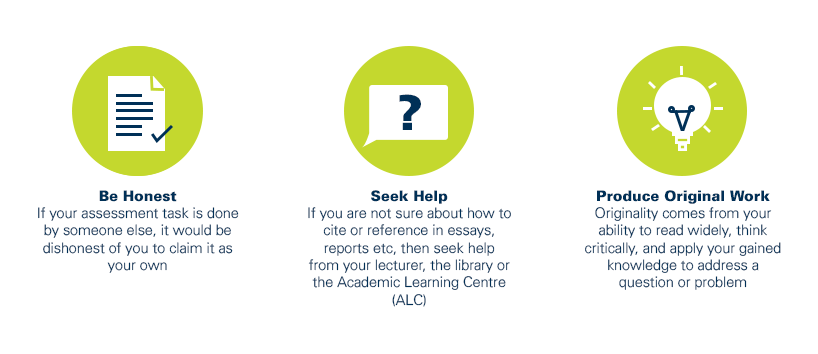
As a CQUniversity student you are expected to act honestly in all aspects of your academic work.
Any assessable work undertaken or submitted for review or assessment must be your own work. Assessable work is any type of work you do to meet the assessment requirements in the unit, including draft work submitted for review and feedback and final work to be assessed.
When you use the ideas, words or data of others in your assessment, you must thoroughly and clearly acknowledge the source of this information by using the correct referencing style for your unit. Using others’ work without proper acknowledgement may be considered a form of intellectual dishonesty.
Participating honestly, respectfully, responsibly, and fairly in your university study ensures the CQUniversity qualification you earn will be valued as a true indication of your individual academic achievement and will continue to receive the respect and recognition it deserves.
As a student, you are responsible for reading and following CQUniversity’s policies, including the Student Academic Integrity Policy and Procedure. This policy sets out CQUniversity’s expectations of you to act with integrity, examples of academic integrity breaches to avoid, the processes used to address alleged breaches of academic integrity, and potential penalties.
What is a breach of academic integrity?
A breach of academic integrity includes but is not limited to plagiarism, self-plagiarism, collusion, cheating, contract cheating, and academic misconduct. The Student Academic Integrity Policy and Procedure defines what these terms mean and gives examples.
Why is academic integrity important?
A breach of academic integrity may result in one or more penalties, including suspension or even expulsion from the University. It can also have negative implications for student visas and future enrolment at CQUniversity or elsewhere. Students who engage in contract cheating also risk being blackmailed by contract cheating services.
Where can I get assistance?
For academic advice and guidance, the Academic Learning Centre (ALC) can support you in becoming confident in completing assessments with integrity and of high standard.
What can you do to act with integrity?