The Marking Criteria for the Portfolio assessment contains an error. The Child Evaluation (Video) marking criteria should be valued at 10 marks, instead of 5 marks. This increase will more accurately reflect the effort required by students for this part of the Portfolio task. In addition, it will allow correct calculation of the total Portfolio marks to 120, which will be divided by 2 to obtain the final Portfolio grade out of 60, as mentioned in the Unit Profile.
Overview
In this unit you will be introduced to professional reasoning, evidence based and culturally sensitive practice for occupational therapy in the paediatric context from birth to middle childhood. You will learn to plan occupational therapy evaluations, measurable goals and interventions for children, applying an occupational therapy practice process, evidence based frames of reference and occupational therapy practice models. You will explore key elements of realistic occupational therapy service delivery, using case studies of children with a range of impairments and occupational profiles. You will be coached to take part in interprofessional case discussions that simulate collaboration in a paediatric allied health team. Specific paediatric skills and knowledge will be enhanced through work integrated learning within the term, during which you will gain practical experience working with children.
Details
Pre-requisites or Co-requisites
Students must have successfully completed the following Essential Prerequisites:OCCT11002OCCT11001PSYC11010ALLH11001ALLH11004 or BMSC11008ALLH11005 or BMSC11007ALLH11006ALLH12007 or ALLH11009
Important note: Students enrolled in a subsequent unit who failed their pre-requisite unit, should drop the subsequent unit before the census date or within 10 working days of Fail grade notification. Students who do not drop the unit in this timeframe cannot later drop the unit without academic and financial liability. See details in the Assessment Policy and Procedure (Higher Education Coursework).
Offerings For Term 1 - 2023
Attendance Requirements
All on-campus students are expected to attend scheduled classes - in some units, these classes are identified as a mandatory (pass/fail) component and attendance is compulsory. International students, on a student visa, must maintain a full time study load and meet both attendance and academic progress requirements in each study period (satisfactory attendance for International students is defined as maintaining at least an 80% attendance record).
Recommended Student Time Commitment
Each 6-credit Undergraduate unit at CQUniversity requires an overall time commitment of an average of 12.5 hours of study per week, making a total of 150 hours for the unit.
Class Timetable
Assessment Overview
Assessment Grading
This is a graded unit: your overall grade will be calculated from the marks or grades for each assessment task, based on the relative weightings shown in the table above. You must obtain an overall mark for the unit of at least 50%, or an overall grade of 'pass' in order to pass the unit. If any 'pass/fail' tasks are shown in the table above they must also be completed successfully ('pass' grade). You must also meet any minimum mark requirements specified for a particular assessment task, as detailed in the 'assessment task' section (note that in some instances, the minimum mark for a task may be greater than 50%). Consult the University's Grades and Results Policy for more details of interim results and final grades.
All University policies are available on the CQUniversity Policy site.
You may wish to view these policies:
- Grades and Results Policy
- Assessment Policy and Procedure (Higher Education Coursework)
- Review of Grade Procedure
- Student Academic Integrity Policy and Procedure
- Monitoring Academic Progress (MAP) Policy and Procedure - Domestic Students
- Monitoring Academic Progress (MAP) Policy and Procedure - International Students
- Student Refund and Credit Balance Policy and Procedure
- Student Feedback - Compliments and Complaints Policy and Procedure
- Information and Communications Technology Acceptable Use Policy and Procedure
This list is not an exhaustive list of all University policies. The full list of University policies are available on the CQUniversity Policy site.
Feedback, Recommendations and Responses
Every unit is reviewed for enhancement each year. At the most recent review, the following staff and student feedback items were identified and recommendations were made.
Feedback from Feedback comments
It was costly to purchase the prescribed textbook, especially to access the video case resources for assessments.
It is recommended that the library be requested to provide the e-book version of the prescribed textbook for students along with the other supplementary text e-books. It is also recommended that a different method of providing access to the video resources for assessment tasks will be trialled in 2023.
Feedback from Feedback comments
Students had difficulty locating some Unit resources on Moodle.
It is recommended that streamlining of document locations on Moodle is done to reduce student confusion.
Feedback from Feedback comments Academic staff reflections
Students at Bundaberg campus wanted more academic support to ask questions and enhance their learning.
It is recommended that timetabling of the regular class tutorials is organised to allow for existing staff to provide in person academic support in the practical learning components of the unit, including the intensives. It is recommended that workshops are organised so they do not require the same level of oncampus support for students.
Feedback from Feedback comments
Some students found the use of Microsoft Teams confusing, and preferred all document files to be located on Moodle.
It is recommended that continued use of Teams in this unit is limited to communication between students and teaching staff. It is further recommended that all documents relevant to students will be uploaded to Moodle, with instructions for the document location and a document link posted in Teams rather than the file itself.
Feedback from Student comments in class
Student workload was perceived as being too high.
It is recommended that the assessment suite for this unit be reviewed with regard to decreasing the student workload and to ensure key learning outcomes are still addressed.
- Identify key cultural, developmental and environmental factors influencing the occupational performance of infants and children
- Demonstrate professional and ethical behaviours consistent with a paediatric occupational therapy practiitioner.
- Explain and demonstrate the use of allocated evaluation tools for children with specific impairments
- Create occupation-focused goals and recommendations for assigned paediatric contexts.
- Apply professional reasoning to present evidence-based occupational therapy interventions for paediatric cases.
The unit overview, unit learning outcomes, and assessment pieces are aligned with requirements in the Australian Occupational Therapy Competency Standards (AOTCS, 2018). These competency standards acknowledge the diversity of roles and contexts that currently exist in occupational therapy practice.
Alignment of Assessment Tasks to Learning Outcomes
| Assessment Tasks | Learning Outcomes | ||||
|---|---|---|---|---|---|
| 1 | 2 | 3 | 4 | 5 | |
| 1 - Online resource/s - 0% | |||||
| 2 - Online Quiz(zes) - 40% | |||||
| 3 - Portfolio - 60% | |||||
Alignment of Graduate Attributes to Learning Outcomes
| Graduate Attributes | Learning Outcomes | ||||
|---|---|---|---|---|---|
| 1 | 2 | 3 | 4 | 5 | |
| 1 - Communication | |||||
| 2 - Problem Solving | |||||
| 3 - Critical Thinking | |||||
| 4 - Information Literacy | |||||
| 5 - Team Work | |||||
| 6 - Information Technology Competence | |||||
| 7 - Cross Cultural Competence | |||||
| 8 - Ethical practice | |||||
| 9 - Social Innovation | |||||
| 10 - First Nations Knowledges | |||||
| 11 - Aboriginal and Torres Strait Islander Cultures | |||||
Textbooks
Case Smith's Occupational Therapy for Children and Adolescents.
- Edition: 8th (2020)
- Authors: O'Brien, J. C. & Kuhaneck, H.
- Elsevier Mosby
- St. Louis St. Louis , MO , USA
- ISBN: eBook ISBN: 9780323512626
- Binding: eBook
Occupation Centred Practice with Children : A Practical Guide for Occupational Therapists
- Edition: 2nd (2017)
- Authors: Rodger, S. & Kennedy-Behr, A.
- Wiley-Blackwell
- Chichester Chichester , West Sussex , United Kingdom
- ISBN: ISBN: 978-1-119-05776-5
- Binding: eBook
Play in Occupational Therapy for Children
- Edition: 2nd (2008)
- Authors: Parham, L. D., & Fazio, L.S.
- Mosby Elsevier
- St. Louis St. Louis , MO , USA
- ISBN: 9780323062565
- Binding: eBook
Additional Textbook Information
Textbooks can be accessed online at the CQUniversity Library website. There is a concurrent user limit on library e-books, so you will need to download prescribed readings before each class in order to have access. If you prefer your own copy, you can purchase either paper or eBook versions at the CQUni Bookshop here: http://bookshop.cqu.edu.au (search on the Unit code)
You will frequently need to refer to the prescribed readings from all texts, but especially Case Smith's Occupational Therapy for Children and Adolescents, in order to successfully complete your assessments. If you plan on working with children in future placements or practice after you graduate, it is strongly recommended that you purchase your own copy of Case Smith's Occupational Therapy for Children and Adolescents as it is a terrific general text for paediatric occupational therapy.
IT Resources
- CQUniversity Student Email
- Internet
- Unit Website (Moodle)
- Microsoft Office
- Video and audio equipment to join online tutorials
- Microsoft Teams
- Google Docs
- SONIA (Online)
- Video and Audio Recording Device (Camcorder, Digital Camera, Smartphone, etc.)
All submissions for this unit must use the referencing style: American Psychological Association 7th Edition (APA 7th edition)
For further information, see the Assessment Tasks.
n.henwood@cqu.edu.au
m.oreilly@cqu.edu.au
Week 1 Introduction to paediatric occupational therapy
Begin Date: 06 Mar 2023Module/Topic
Module 1.1
Chapter
AOTA (2020). Occupational therapy practice framework: Domain and process (4th ed.). American Journal of Occupational Therapy, 74(Sup2), 1–87. https://doi.org/10.5014/ajot.2020.74S2001
O'Brien, J. & Kuhaneck, H. (2020). Occupational therapy with children and adolescents (8th ed.)., Elsevier. What is a Frame of Reference (FoR)? pp.19-23; FoR concepts in detail pp. 33-42, examples of OT models applied to paediatric practice pp. 25-30.
Case scenarios for Gavin, Matt and Janella (available on Moodle)
Events and Submissions/Topic
Monday 1-3pm
- 1A Conditions of early childhood
Tuesday 11am-1pm
- 1B Models for practice in paediatric OT, Evaluation purposes, Participation- what is it?
Week 2 Occupational therapy specific evaluation
Begin Date: 13 Mar 2023Module/Topic
Module 1.2
Chapter
Imms, C., Froude, E., Adair, B. & Shields, N. (2016). A descriptive study of the participation of children and adolescents in activities outside school. BMC Pediatrics, 16. https://doi.org/10.1186/s12887-016-0623-9
O'Brien, J. & Kuhaneck, H. (2020). Occupational therapy with children and adolescents (8th ed.)., Elsevier. Top down and bottom up p.5, Standardised tests pp. 165-168, Motor performance, pp397-402, Motor learning pp.404-410
Case scenarios of Adam and Luke (available on Moodle)
Events and Submissions/Topic
Monday 1-3pm
- 2A Participation evaluation tools- PEGS-2, CAPE PAC
Tuesday 11am-1pm
- 2B Introducing motor performance
Hurdle Task Due: Week 2 Friday (17 Mar 2023) 11:45 pm AEST
Week 3 Childhood motor skills and occupations
Begin Date: 20 Mar 2023Module/Topic
Module 1.3
Chapter
AOTA (2020). Occupational therapy practice framework: Domain and process (4th ed.). American Journal of Occupational Therapy, 74(Sup2), 1–87. https://doi.org/10.5014/ajot.2020.74S2001
AOTA (2020). Occupational Profile template
O'Brien, J. & Kuhaneck, H. (2020). Occupational therapy with children and adolescents (8th ed.)., Elsevier. Occupational profiling, p.186; Occupational trajectories, pp.114-121
Events and Submissions/Topic
Monday 1-3pm
- 3A Motor evaluation tools MABC 2, BOT 2
Tuesday 11am-1pm
- 3B Occupational profiles and occupational trajectories
Week 4 General evaluation and child management
Begin Date: 27 Mar 2023Module/Topic
Module 1.4
Chapter
Hemmingsson, H., Egilson, S., Hoffman, O., & Kielhofner, G. (2005). School setting interview, version 3.0. Swedish Association of Occupational Therapists. Case of Lilja (Available from classroom resources)
O'Brien, J. & Kuhaneck, H. (2020). Occupational therapy with children and adolescents (8th ed.)., Elsevier. Functions of challenging behaviours pp. 550-560, Social stories pp. 352-353, Cueing and prompting Table 12.4 pp. 279-280
Events and Submissions/Topic
Monday 1-3pm
- 4A General evaluation tools, Child occupational profile, SSI, ASQ3
Tuesday 11am-1pm
- 4B Managing children’s behaviour, prompts and cues., planning for intensive and Module 1 Quiz
Week 5 Intensive and Module 1 Quiz
Begin Date: 03 Apr 2023Module/Topic
Evaluation intensive
Chapter
Gateley, C. & Borcherding, S. (2017). Documentation manual for occupational therapy : writing SOAP notes, (4th ed.). SLACK Incorporated. Focus on pp. 73-76 Writing the "S" subjective, pp. 81-88 Writing the "O" objective.
Events and Submissions/Topic
Monday 9am-3pm
- Evaluation intensive with children (9am-12pm)
- 5A Scoring & interpreting evaluations. Writing SOAP style progress notes (1-3pm)
Tuesday 11am-1pm
Module 1 Quiz Due: Week 5 Tuesday (4 April 2023) 11.00am AEST
Week 6 Goal setting
Begin Date: 17 Apr 2023Module/Topic
Module 2.1
Chapter
O'Brien, J. & Kuhaneck, H. (2020). Occupational therapy with children and adolescents (8th ed.)., Elsevier. Ethnic background, pp. 47-48, Family subsystems, pp. 54-55. Goal writing and components pp.194-196, goal examples pp. 200, 205, Table 12.4 on pp. 279-280, Case of Sarah p. 443, steps to use CO-OP pp. 438-442
Rodger, S., & Kennedy-Behr, A. (Eds.). (2017). Occupation-centred practice with children: A practical guide for occupational therapists. John Wiley & Sons, Incorporated. Case of Charlie, pp.85-87, Making Connections framework, p. 77, Introducing the Cognitive Orientation to Occupational Performance (CO-OP approach), pp. 165-167, CO-OP features, pp. 168-169
Events and Submissions/Topic
Monday 9am-3pm
- 6A Goal setting, IPE case evaluation preparation (9am-12.30pm)
- 6B CO-OP approach & DPA (1-3pm)
Week 7 Session plans
Begin Date: 24 Apr 2023Module/Topic
Module 2.2
Chapter
O'Brien, J., & Kuhaneck, H. (2020). Case Smith's Occupational Therapy for Children and Adolescents. (8th ed.). Elsevier. Modifying activities and environments pp.7-9; Ani’s occupational analysis pp. 141-143; Self dressing trajectory pp. 119, Dressing interventions 292-293; Cue and prompt hierarchy p.279; Zones of regulation pp. 748-751
Events and Submissions/Topic
IPE Team meeting #1: Day and Time to be confirmed
Monday 1-3pm
7A Session plan construction and scaffolding children's learning
Week 8 IPE case preparation
Begin Date: 01 May 2023Module/Topic
Module 2.3
Chapter
Assessment results for IPE case (available on Moodle)
Watling R. (2011). Occupational therapy practice guidelines for children and adolescents with challenges in sensory processing and sensory integration. In P. L. Davies, K. P. Koenig, & R.C. Schaaf (Eds.), Occupational therapy practice guidelines for children and adolescents with challenges in sensory processing and sensory integration (1st edition.). American Occupational Therapy Association. (Available as CRO)
Events and Submissions/Topic
Tuesday 11am-1pm
- 8B IPE case interventions preparation
Week 9 Play
Begin Date: 08 May 2023Module/Topic
Module 2.4
Chapter
O'Brien, J., & Kuhaneck, H. (2020). Case Smith's Occupational Therapy for Children and Adolescents. (8th ed.). Elsevier. Play as an occupation, pp. 242-243; Assessment of play, pp. 253-254; Play in intervention, pp. 255-259; children with ASD and play, pp.789-790.
Events and Submissions/Topic
IPE Team meeting #2: Day and Time to be confirmed
Monday 1-3pm
- 9A Play features. Play evaluation using PPE-DC
Week 10 Intensive and Module 2 Quiz
Begin Date: 15 May 2023Module/Topic
Infant simulation intensive
Chapter
Gateley, C. & Borcherding, S. (2017). Documentation manual for occupational therapy: writing SOAP notes, (4th ed.). SLACK Incorporated. Focus on pp. 99-104, Writing the "A" assessment, pp. 115-119 Writing the "P" plan.
O'Brien, J. & Kuhaneck, H. (2020). Occupational therapy with children and adolescents (8th ed.)., Elsevier. Supportive handling, p. 587.
Case of Kiano and ASK-TRAK 25 months (available on Moodle)
Events and Submissions/Topic
Monday Infant Simulation intensive- (9am-3pm)
- 10A Kiano & Baby handling (9am-12pm)
- 10B Writing SOAPIE style progress notes, health literacy and writing style for Portfolio report (1-3pm)
Tuesday 11am-1pm
Module 2 Quiz Due: Week 10 Tuesday (16 May 2023) 11.00am AEST
Week 11 Threshold concepts and reflection
Begin Date: 22 May 2023Module/Topic
Chapter
Nicola-Richmond, K., Pépin, G., Larkin, H. & Mohebbi, M. (2019). Threshold concept acquisition in occupational therapy: A mixed methods study of students and clinicians. Australian Occupational Therapy Journal, 66: 568-580.
O'Brien, J. & Kuhaneck, H. (2020). Occupational therapy with children and adolescents (8th ed.)., Elsevier. Therapeutic use of self, p. 4, Reflective practice p. 596.
Events and Submissions/Topic
Tuesday 11am-1pm
- 11B Understanding threshold concepts and a framework for deeper reflective practice
Week 12 Handwriting
Begin Date: 29 May 2023Module/Topic
Chapter
Cahill, S. M., & Beisbier, S. (2020). Occupational therapy practice guidelines for children and youth ages 5–21 years. American Journal of Occupational Therapy, 74(4), 1–48. https://doi.org/10.5014/ajot.2020.744001
O'Brien, J. & Kuhaneck, H. (2020). Occupational therapy with children and adolescents (8th ed.)., Elsevier. Handwriting pp. 384-388, Intervention strategies Table 15.8, p. 386.
Events and Submissions/Topic
Tuesday 11am-1pm
- 12B Common occupational therapy handwriting evaluations and interventions for children
Hurdle Task Part 2 Due: Week 12 Friday (2 June 2023) 11.59 pm AEST
Learning Artefacts Due: Week 12 Friday (2 June 2023) 11:59 pm AEST
Prescribed text: The library has been unable to supply the prescribed text O'Brien & Kuhaneck (2020, 8th ed.) as an E-Book. Instead, the selected readings from this text will be digitised into a Course Resource Online (CRO) available in the library E-reading list.
Campus support: The Tutorial has been scheduled for Mondays to facilitate on campus teaching support at both Rockhamption and Bundaberg.
Evaluation Intensive: Plans for the Week 5 intensive may be subject to change depending on the COVID situation. There may remain a level of uncertainty regarding students having direct and close interactions with children, therefore completion of your mandated immunisations is ESSENTIAL before you take part in this valuable learning activity. Previous occupational therapy students have commented how useful this experience is, to be able to put theory and concepts learned in class into practice with real kids.
WIL Hours: If the Week 5 intensive cannot include real children due to situations beyond our control, the minimum of 25 hours of WIL for this unit can still be obtained via a range of simulated paediatric clinical learning experiences embedded in your Portfolio assessment and the class schedule.
Student workload: As for all 6 credit point units, you are expected to devote up to 150 hours of study to this unit. Assessment tasks and weekly readings have been revised in 2023 to ensure your study committment fits within this timeframe. It is strongly recommended that you commence parts of the 60% Learning Artefacts Portfolio from Week 6 onwards so that you do not leave yourself a large amount of work to do at the end of term.
1 Online resource/s
Overview and Purpose
This Hurdle task has two parts.
In Part 1, as a health professional in training, you must meet the mandated education, infection control and immunisation requirements to protect yourself and your clients. You were advised to start working on these in Year 1 so that you can upload all evidence to SONIA by the deadline. You must follow the instructions in the “Mandatory Checks Guide- Occupational Therapy (Honours)” document. These requirements are essential prior to the OCCT12003 Week 5 evaluation intensive.
In Part 2, you will complete a Moodle Wiki to specify the hours you have completed of Work Integrated Learning across the term. All students must complete a minimum of 25 WIL hours. Your hours must be signed off by the Unit coordinator by the due date for Hurdle Task Part 2.
Instructions for Part 1, the Mandatory Checks
By the end of Week 2, you must upload all evidence to SONIA online as per the “Mandatory Checks Guide- Occupational Therapy (Honours)” document.
- Immunisations and Vaccines
- Student Declaration & Confidentiality pledge
- Working with Children Check (QLD Blue Card)
- National Criminal Record check
- First Aid and CPR
- CQUniversity Compliance
Due to the need for students to have all mandatory checks before the Week 5 evaluation intensive, there will be NO EXTENSIONS for Part 1 of the Hurdle Task. If you have incomplete SONIA checks you will be unenrolled from the OCCT12003 unit before Census date in Week 4, which may impact your progression in the CB84 course.
Important: For Year 2, you do not need to complete the Queensland Health Requirements and Compliance checks as these must be completed in Term 1 Year 3 before you start professional practice placements in OCCT13009.
I will be notified by wil-hmas@cqu.edu.au the Work Integrated Learning team in Week 3 stating whether your mandatory checks are up to date and complete.
Instructions for Part 2, the WIL hours log
WIL hours:
In Part 2, at the same time as you submit your Portfolio you will complete the OCCT12003 Moodle Wiki (located in the Assessment Tile) detailing your individual hours of Work Integrated Learning (WIL) associated with your simulation learning for sign off by the Unit Coordinator. You must document and have signed by the Unit coordinator a minimum of 25 WIL hours for this unit. The WIL hours do not form part of your summative grade however the 25 WIL hours minimum requirement ensures that you meet the total 1000 hours of professional practice required to graduate.
Minimum 25 WIL hours:
Important: If you have recorded less than the 25 minimum WIL hours you may need to perform additional simulated learning tasks to meet the minimum hours requirement. It is important that you regularly attend classes, the intensives and IPE meetings to ensure that you will meet the minimum hours requirement.
What can I include in my WIL Hours log Moodle Wiki?
You can include:
- The Week 5 and 10 intensives- up to 12 hours
- The IPE case meetings and preparation- up to 6 hours
- Portfolio tasks- up to 7 hours
- Anything else that you have checked with Narelle is eligible to be counted as WIL.
How do I record my WIL hours in the Moodle Wiki?
Please include the actual dates, time spent, using a minimum increment of 0.25 hours, and a brief description of the type of WIL activity undertaken.
Here is an example WIL hours log Wiki entry:
| Week | Date | Activities | Time spent | UC signature |
| 5 | 4/4/23 |
|
TOTAL= 5.25hrs |
leave blank |
- Please include the actual dates, time spent, using a minimum increment of 0.25 hours, and a brief description of the type of WIL activity undertaken. Please leave the UC signature column blank for checking. If you change the log once a row has been signed by the UC, please delete the signature to indicate that it needs to be rechecked.
- Please ensure that the total hours for each week are calculated and shown- do not include a total that represents cumulative hours as this makes it harder to check your calculation.
- Detailed instructions for editing your individual WIL hours Wiki page are available on Moodle.
- I will check your Wiki during the term, usually around Week 6, to troubleshoot any issues you may have with entering your details, and again at the end of the term for final marking.
Week 2 Friday (17 Mar 2023) 11:45 pm AEST
This is the due date for Part 1. Part 2 is due at the same time as your Portfolio.
Week 3 Friday (24 Mar 2023)
There are four possible outcomes from this Pass/Fail task:
1. Pass:
- Part 1: When all required checks are completed by the Friday Week 2 deadline and I have been advised by the WIL team, your Hurdle Task Part 1 will be marked as a Pass in Moodle Gradebook.
- Part 2: When I have checked your WIL hours Wiki and signed off that you have completed the required 25 hours minimum, your Hurdle Task Part 2 will be marked as a Pass in Moodle Gradebook.
2. Unenrolment:
- Part 1: Students who have not completed all Mandatory Checks in SONIA by the Friday Week 2 Deadline will be manually unenrolled from the OCCT12003 unit before Census date.
- There will be NO extensions and NO exceptions for Part 1.
3. Interim PO Grade:
- Offered for a limited time for incomplete Part 2 only: Students will receive a message via email advising them to follow up their WIL hours log Wiki that shows less than 25 WIL hours and complete it by a strict deadline (to be advised).
4. Fail:
- If you do not complete all SONIA checks but have remained enrolled in the unit, OR do not have an approved extension and do not complete your Wiki to show evidence of completing a minimum of 25 WIL hours within 2 weeks of the Hurdle Task Part 2 due date, at Certification of Grades you will receive a Fail for this Hurdle task and the OCCT12003 unit.
There is no marking rubric associated with this Pass/Fail task.
- Demonstrate professional and ethical behaviours consistent with a paediatric occupational therapy practiitioner.
2 Online Quiz(zes)
Overview and Purpose:
This assessment will measure your knowledge of essential content for novice level paediatric occupational therapy. To ensure academic integrity, all students will be supervised to complete two 90-minute Quizzes. Students will be permitted to bring relevant class handouts and one hard copy textbook into the quizzes. No online browsing or searching will be permitted for the Quizzes.
The Module 1 Quiz will cover topics from Weeks 1-4 of the unit. The Module 2 Quiz will cover topics from Weeks 6-9 of the unit. Each quiz is worth 20% with the overall assessment worth 40%. There is a must pass mark of 50% for the whole task. This means that you must obtain at least 20/40 marks for both quizzes to pass the task.
Academic Integrity:
It is common knowledge among academic staff that frequently students get together in groups to perform online quizzes that are intended to be individual assessment tasks. Although some students have admitted doing quizzes in groups, it is a blatant breach of academic integrity that needs to be addressed.
- To ensure fairness and authenticity of assessment for all students, both the Module 1 and Module 2 Quizzes for OCCT12003 will be supervised in the classroom from 11am-1pm, on Tuesday in Week 5 and Week 10.
- There will be a 15-minute arrival and set up time from 11.00am- 11.15am.
- Only students attending in person on campus with their student ID card will have access to the Quiz.
- You will be supervised and be given from 11.15am-12.45pm to complete each Module Quiz.
- Latecomers after 11.10am will not be admitted. You will need to apply for an extension and arrange another time to be supervised by staff to do the Quiz. If you are visibly unwell you will be asked to leave the Quiz room. You will also need to apply for an extension if you are sick on the day (please provide a medical certificate to the Assessment Extension System).
- If any student is caught browsing online during either Quiz, they will be reported to the Deputy Dean of Learning and Teaching for academic misconduct.
Essential content:
Class handouts will have essential content that is part of the quiz tagged with an Asterix *. This means that the topic on the slide and its associated readings will form at least one question within the quiz for that Module. Not all information needed for the quiz questions will be on the slide- you will need to take notes from the oral content delivered as well. The system of highlighting topics for quiz content will help you to focus your revision and to select material to bring into each quiz.
Limited open book:
As there is a concurrent user limit for the e-books in the library, it is not equitable for students to access any online readings to complete the quiz. However, students will be permitted to bring the prescribed textbook as a hard copy into the quiz. Students will also be permitted to bring class handouts or paper copies of journal articles to refer to in order to respond to the Quiz questions.
Types of Quiz questions included:
There are only a few traditional multiple-choice questions in the online quizzes as it is statistically highly likely that a student can guess the correct answer without really understanding it. Therefore, to better evaluate how well you have been able to take in and apply the knowledge you have been taught, there are a variety of other question types that have been included. Partially correct responses will be given a portion of the total mark. The question types include:
- Drag and drop text onto an image
- Drag and drop words into text
- Matching items from a list to a description or statement
- True and False matrices
- Short answers (only correct spelling will be marked correct)
- Multiple selection of correct responses from a list
- Select all correct missing words from a list
- Read a short case scenario and choose the best response from a list
- Combined question types
Tip: Students who have done the self-directed learning tasks on Moodle for goal setting will find they are well prepared for this topic in the Module 2 quiz.
2
Other
Module 1 Quiz will be held on Tuesday of Week 5, Module 2 Quiz will be held on Tuesday of Week 10.
To be fair to all students, results will be released once ALL students (including any with extensions) have completed each quiz. This may be anywhere from two days to two weeks after each scheduled quiz.
Module 1 Quiz topics, number of questions and distribution of marks available:
- Diagnostic information (2 x 1-mark Questions, 3 X 0.5-mark questions)
- Evaluation tools (2 X 1.5-mark Questions, 1.5 marks; 3 X 1-mark questions)
- Models for practice (3 X 2-mark Questions)
- Prompts, cues and managing children’s behaviour (4 X 1-mark Questions, 1 x 0.5-mark Question)
Module 2 Quiz topics, number of questions and distribution of marks available:
- The CO-OP approach (3 x 1-mark Questions, 2 X 0.5-mark Questions)
- Goal setting (2 X 2-mark Questions, 3 x 1-mark Questions, 1 X 0.5-mark Question)
- Session plans (1 x 1-mark Question, 6 X 0.5 marks Questions)
- Play (1 X 2-mark Question, 2 x 1-mark Questions, 1 X 0.5-mark Question)
There is no marking rubric for this Assessment task.
- Identify key cultural, developmental and environmental factors influencing the occupational performance of infants and children
- Explain and demonstrate the use of allocated evaluation tools for children with specific impairments
- Create occupation-focused goals and recommendations for assigned paediatric contexts.
- Apply professional reasoning to present evidence-based occupational therapy interventions for paediatric cases.
3 Portfolio
Overview and Purpose:
You will prepare, create and submit a collection of artefacts that represent your learning and application of the Occupational Therapy Process Framework (4th ed.) (OTPF-4) to paediatric occupational therapy cases across the term. The learning artefacts represent the process that a paediatric occupational therapist would typically follow when planning and carrying out therapy.
The collection of learning artefacts will include a video of yourself carrying out an evaluation with a real child, along with copies of your completed evaluation records. In addition, you will construct a written report using information about one of the hypothetical case scenarios used during the term, and an example clinical session plan for the case scenario child. You will submit documents from the interprofessional education team meetings, and a written reflection on your own performance and learning achievements that inspires your future knowledge goals for paediatric occupational therapy.
The activities that generate your learning artefacts are all simulated clinical practice tasks and can be counted in your Work Integrated Learning (WIL) hours Wiki for OCCT12003.
Please note:
- Detailed instructions for preparing the required content of each artefact are available in Moodle in the A3 Portfolio Instructions 2023.
- Templates and examples are available in the Assessment Resources folder.
- Required filename structures in the A3 Portfolio Instructions 2023 must be used so your work will download automatically from Moodle for marking.
List of eight (8) required Learning Artefacts
- Occupational Therapy Coversheet
- Child evaluation (Video URL)
- Evaluation records (no word limit)
- Occupational profile report (800 words ± 10%)
- Clinical session plan (2000 words ± 10%)
- IPE documents: Meeting #1 and #2 action plans and Meeting #1 and #2 observations (Action plans no word limit, Meeting observations suggest around 500 words each)
- Written reflection (800 words ± 10%)
- Paediatric learning goals and strategies (no word limit- suggest around 600 words total)
Week 12 Friday (2 June 2023) 11:59 pm AEST
Submit all files with required filename structure to Moodle by due date.
Exam Week Friday (16 June 2023)
Feedback returned via Moodle Gradebook
Grade calculation
The total of 120 marks will be divided by 2 to obtain your final Portfolio Assessment grade out of 60.
| 1. Child Evaluation (Video) 5 marks |
|
5 marks |
| 2. Evaluation records. 10 marks |
|
10 marks |
| 3. Occupational Profile report. 15 marks |
|
5 marks |
|
5 marks | |
|
5 marks | |
| 4. Clinical session plan. 35 marks |
|
5 marks |
|
2.5 marks | |
|
2.5 marks | |
|
5 marks | |
|
5 marks | |
|
10 marks | |
| 5. IPE records 15 marks |
|
5 marks |
|
10 marks | |
| 6. Written reflection 15 marks |
|
5 marks |
|
10 marks | |
| 7. Paediatric learning goals and strategies. 15 marks |
|
5 marks |
|
10 marks | |
| 8. References 10 marks |
|
10 marks |
|
TOTAL |
|
120 marks |
- Identify key cultural, developmental and environmental factors influencing the occupational performance of infants and children
- Explain and demonstrate the use of allocated evaluation tools for children with specific impairments
- Create occupation-focused goals and recommendations for assigned paediatric contexts.
- Apply professional reasoning to present evidence-based occupational therapy interventions for paediatric cases.
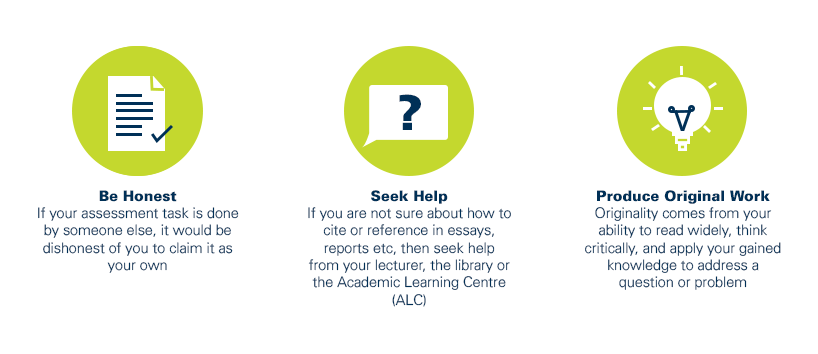
As a CQUniversity student you are expected to act honestly in all aspects of your academic work.
Any assessable work undertaken or submitted for review or assessment must be your own work. Assessable work is any type of work you do to meet the assessment requirements in the unit, including draft work submitted for review and feedback and final work to be assessed.
When you use the ideas, words or data of others in your assessment, you must thoroughly and clearly acknowledge the source of this information by using the correct referencing style for your unit. Using others’ work without proper acknowledgement may be considered a form of intellectual dishonesty.
Participating honestly, respectfully, responsibly, and fairly in your university study ensures the CQUniversity qualification you earn will be valued as a true indication of your individual academic achievement and will continue to receive the respect and recognition it deserves.
As a student, you are responsible for reading and following CQUniversity’s policies, including the Student Academic Integrity Policy and Procedure. This policy sets out CQUniversity’s expectations of you to act with integrity, examples of academic integrity breaches to avoid, the processes used to address alleged breaches of academic integrity, and potential penalties.
What is a breach of academic integrity?
A breach of academic integrity includes but is not limited to plagiarism, self-plagiarism, collusion, cheating, contract cheating, and academic misconduct. The Student Academic Integrity Policy and Procedure defines what these terms mean and gives examples.
Why is academic integrity important?
A breach of academic integrity may result in one or more penalties, including suspension or even expulsion from the University. It can also have negative implications for student visas and future enrolment at CQUniversity or elsewhere. Students who engage in contract cheating also risk being blackmailed by contract cheating services.
Where can I get assistance?
For academic advice and guidance, the Academic Learning Centre (ALC) can support you in becoming confident in completing assessments with integrity and of high standard.
What can you do to act with integrity?