Overview
This unit expands your paramedic skills by enabling you to evaluate and integrate advanced clinical assessment findings to provide evidence-based care tailored to diverse populations. You will consider complex clinical findings with an understanding of individual patient needs, including social, cultural, and personal factors, to deliver comprehensive, patient-centred care. Core to this unit is a thorough appraisal of patient safety and quality improvement as it applies to paramedicine, highlighting the critical importance of continuous improvement in professional practice. You will build your ability to perform comprehensive risk assessments in the pre- and out-of-hospital environment to identify potential hazards and implement appropriate strategies to mitigate risks to patient safety. Finally, you will reflect on primary health care and the paramedic's role in facilitating referral pathways.
Details
Pre-requisites or Co-requisites
Pre-requisites: PMSC13002 Clinical Paramedic Practice 2 PMSC13014 Paramedic Trauma and Emergency Management Co-requisite: PMSC13013 Transition to Paramedic Practice and Professionalism
Important note: Students enrolled in a subsequent unit who failed their pre-requisite unit, should drop the subsequent unit before the census date or within 10 working days of Fail grade notification. Students who do not drop the unit in this timeframe cannot later drop the unit without academic and financial liability. See details in the Assessment Policy and Procedure (Higher Education Coursework).
Offerings For Term 2 - 2026
Attendance Requirements
All on-campus students are expected to attend scheduled classes - in some units, these classes are identified as a mandatory (pass/fail) component and attendance is compulsory. International students, on a student visa, must maintain a full time study load and meet both attendance and academic progress requirements in each study period (satisfactory attendance for International students is defined as maintaining at least an 80% attendance record).
Recommended Student Time Commitment
Each 6-credit Undergraduate unit at CQUniversity requires an overall time commitment of an average of 12.5 hours of study per week, making a total of 150 hours for the unit.
Class Timetable
Assessment Overview
Assessment Grading
This is a graded unit: your overall grade will be calculated from the marks or grades for each assessment task, based on the relative weightings shown in the table above. You must obtain an overall mark for the unit of at least 50%, or an overall grade of 'pass' in order to pass the unit. If any 'pass/fail' tasks are shown in the table above they must also be completed successfully ('pass' grade). You must also meet any minimum mark requirements specified for a particular assessment task, as detailed in the 'assessment task' section (note that in some instances, the minimum mark for a task may be greater than 50%). Consult the University's Grades and Results Policy for more details of interim results and final grades.
All University policies are available on the CQUniversity Policy site.
You may wish to view these policies:
- Grades and Results Policy
- Assessment Policy and Procedure (Higher Education Coursework)
- Review of Grade Procedure
- Student Academic Integrity Policy and Procedure
- Academic Progression Policy and Procedure
- Student Refund and Credit Balance Policy and Procedure
- Complaints Policy and Procedure
- Information and Communications Technology Acceptable Use Policy and Procedure
This list is not an exhaustive list of all University policies. The full list of University policies are available on the CQUniversity Policy site.
Feedback, Recommendations and Responses
Every unit is reviewed for enhancement each year. At the most recent review, the following staff and student feedback items were identified and recommendations were made.
Feedback from SUTE Unit comments
Students thought the unit was informative and well delivered. They suggested enhancements such as including more videos of specific interventions and ensuring a more balanced distribution of content across weeks, particularly with additional focus on patient cohorts in the later weeks of the term.
Review and enhance multimedia resources by incorporating additional videos of specific interventions and patient cohort scenarios, particularly those referenced in the later weeks of the term. Ensure content distribution across weeks is balanced to support progressive learning and engagement.
Feedback from SUTE Unit comments & direct student feedback
Students found the revision questions, case studies, and formative quiz useful. They suggested adding more quizzes and revision materials specific to paramedic practice to further support learning.
Expand formative assessment opportunities by incorporating additional quizzes, targeted revision resources, and interactive H5P activities focused on paramedic-specific content. These enhancements will reinforce key concepts, improve engagement, and support student preparedness for summative tasks.
Feedback from SUTE Unit comments
Students indicated that the marking criteria could be clearer, and that Assessment 2 was challenging to relate to and understand.
Enhance clarity of marking criteria and assessment guidelines, and provide additional resources to better support students in completing the assessment tasks.
- Evaluate and integrate advanced clinical assessment findings to provide evidence-based care while accommodating a patient’s needs and preferences, including social, cultural and personal factors
- Appraise patient safety and quality improvement as it applies to paramedicine
- Perform comprehensive risk assessments in the pre-and out-of-hospital environment to identify potential hazards and implement appropriate strategies to mitigate risks to patient safety
- Reflect on primary health care and the paramedic's role in facilitating referral pathways.
The Paramedicine Board of Australia requires that units align with the Professional Capabilities for Registered Paramedics, which consist of five (5) domains. The below section aligns the proposed learning outcomes with these domains. In addition, the learning outcomes have been aligned with the National Safety and Quality Health Service (NSQHS) Standards.
Professional Capabilities for Registered Paramedics
| Standard/Attribute/Criteria | Learning Outcomes |
| Domain 1: The Professional and Ethical Practitioner 1.1.4, 1.1.6, 1.1.8, 1.1.9, 1.1.10, 1.1.11, 1.2.1, 1.2.2, 1.2.3, 1.2.4, 1.2.5, 1.2.6, 1.2.7, 1.2.8, 1.2.9, 1.2.10, 1.3.1, 1.3.2, 1.3.3, 1.4.1, 1.4.2 | LO1, LO2, LO3, LO4 |
| Domain 2: The communicator and the collaborator 2.1.1, 2.1.2, 2.1.3, 2.1.4, 2.1.5, 2.1.6, 2.1.7, 2.1.8, 2.2.1, 2.2.2, 2.2.3, 2.2.5, 2.2.6 | LO1, LO2, LO3, LO4 |
| Domain 3: The evidence-based practitioner 3.1.1, 3.1.2, 3.2.1, 3.2.2, 3.2.3, 3.2.4, 3.2.5, 3.2.6, 3.3.1, 3.3.2, 3.3.3, 3.3.4 | LO1, LO2, LO3, LO4 |
| Domain 4: The safety and risk management practitioner 4.1.1, 4.1.2, 4.1.3, 4.1.5, 4.2.1, 4.2.3, 4.3.1, 4.3.1, 4.3.2, 4.3.3, 4.5.1, 4.5.2, 4.5.3, 4.6.1, 4.6.2, 4.6.3, 4.6.5 | LO1, LO2, LO3, LO4 |
| Domain 5: The Paramedicine Practitioner 5.1.1, 5.2.1, 5.2.2, 5.2.3, 5.2.4, 5.2.5, 5.3.3, 5.3.4, 5.3.5, 5.3.6, 5.4.1, 5.4.2, 5.4.3, 5.4.4, 5.4.5, 5.4.6, 5.6.1, 5.6.2, 5.6.3, 5.6.4 | LO1, LO2, LO3, LO4 |
| Standard | Learning Outcomes |
| Clinical Governance | LO1, LO2, LO3 |
| Partnering with Consumers | LO1, LO2, LO3, LO4 |
| Preventing and Controlling Infections | LO1, LO2, LO3 |
| Medication Safety | LO1, LO2, LO3 |
| Comprehensive Care | LO1, LO2, LO3, LO4 |
| Communicating for Safety | LO1, LO2, LO3, LO4 |
| Recognising and Responding to Acute Deterioration | LO1, LO2, LO3, LO4 |
Alignment of Assessment Tasks to Learning Outcomes
| Assessment Tasks | Learning Outcomes | |||
|---|---|---|---|---|
| 1 | 2 | 3 | 4 | |
| 1 - Written Assessment - 40% | ||||
| 2 - Written Assessment - 60% | ||||
Alignment of Graduate Attributes to Learning Outcomes
| Graduate Attributes | Learning Outcomes | |||
|---|---|---|---|---|
| 1 | 2 | 3 | 4 | |
| 1 - Communication | ||||
| 2 - Problem Solving | ||||
| 3 - Critical Thinking | ||||
| 4 - Information Literacy | ||||
| 5 - Team Work | ||||
| 6 - Information Technology Competence | ||||
| 7 - Cross Cultural Competence | ||||
| 8 - Ethical practice | ||||
| 9 - Social Innovation | ||||
| 10 - First Nations Knowledges | ||||
| 11 - Aboriginal and Torres Strait Islander Cultures | ||||
Textbooks
There are no required textbooks.
IT Resources
- CQUniversity Student Email
- Internet
- Unit Website (Moodle)
All submissions for this unit must use the referencing style: American Psychological Association 7th Edition (APA 7th edition)
For further information, see the Assessment Tasks.
k.myers@cqu.edu.au
Week 1
Begin Date: 13 Jul 2026Module/Topic
Introduction to Primary Health Care.
- Explore paramedics in the primary health systems.
- Review the key regulatory & quality frameworks that guide paramedic practice:
- The NSQHS Standards Guide for Ambulance Services.
- The Professional Capabilities for Paramedics as defined by the Paramedicine Board of Australia.
- The Shared Code of Conduct for AHPRA-registered health practitioners.
Chapter
See eReading list and Moodle page.
Events and Submissions/Topic
Week 2
Begin Date: 20 Jul 2026Module/Topic
Introduction to Advanced Point of Care Equipment.
- Introduction to I-STAT
- Introduction to FAST SCAN
- Other points of care equipment (Peak flow, spirometry, ketone monitors and introduction to INR devices)
Chapter
See eReading list and Moodle page.
Events and Submissions/Topic
Week 3
Begin Date: 27 Jul 2026Module/Topic
Patient Safety and Quality Improvement.
- Patient Safety:
-
- The importance of patient safety.
-
- Key Concepts in patient safety - error prevention, adverse effects, human factors and ergonomics and safety culture.
- Strategies for enhancement of patient safety.
- Quality Improvement
- Critical aspects
Chapter
See eReading list and Moodle page.
Events and Submissions/Topic
Week 4
Begin Date: 03 Aug 2026Module/Topic
Future Trends in Paramedic Care
- Integrating paramedics into broader healthcare systems:
- Urgent Care Clinics
- Virtual Emergency Care / Department
- Clinical Hub / Secondary Triage
- Advice / Consultation Line
Chapter
See eReading list and Moodle page.
Events and Submissions/Topic
Week 5
Begin Date: 10 Aug 2026Module/Topic
Advanced Patient Assessment – Respiratory.
- Respiratory Assessment
- Focused History Taking for Respiratory patients
- Revise common emergency respiratory conditions (APO, COPD, asthma etc.)
Chapter
See eReading list and Moodle page.
Events and Submissions/Topic
Week 6
Begin Date: 17 Aug 2026Module/Topic
Advanced Patient Assessment – Cardiovascular.
- Cardiovascular Assessment
- Perfusion Assessment
- Focused History Taking for Cardiac Patients
- Revise common cardiac emergencies (ACS, PE, etc.)
- Decision Supported Fibrinolysis Refresher
Chapter
See eReading list and Moodle page.
Events and Submissions/Topic
Vacation Week
Begin Date: 24 Aug 2026Module/Topic
No New Content This Week.
Chapter
Events and Submissions/Topic
Week 7
Begin Date: 31 Aug 2026Module/Topic
Advanced Patient Assessment – Neurological.
- Neurological Assessment
- Focused History Taking for Neurological Patients
- Revise common neurological emergencies (Stroke, Vertigo, Seizures etc.)
- Cranial Nerve Assessment
- Dermatomes
Chapter
See eReading list and Moodle page.
Events and Submissions/Topic
Week 8
Begin Date: 07 Sep 2026Module/Topic
Advanced Patient Assessment – Trauma.
- Principles of wound care
- Pressure Injury
- Fractures
- Nerve Block for digits and fascia iliaca
Chapter
See eReading list and Moodle page.
Events and Submissions/Topic
Week 9
Begin Date: 14 Sep 2026Module/Topic
Advanced Patient Assessment – Paediatric.
- Advanced Assessment of a paediatric (PAT etc.)
- Anatomical & Physiological changes through development
- Techniques for building rapport with paediatric patients and their caregivers (ONE VOICE etc.)
- Common patterns of injury for paediatrics
- Non-accidental Injuries & Mandatory Reporting
Chapter
See eReading list and Moodle page.
Events and Submissions/Topic
Week 10
Begin Date: 21 Sep 2026Module/Topic
Advanced Patient Assessment – Geriatric.
- Advanced Assessment of a Geriatric
- Anatomical & Physiological changes with age
- Signs of deterioration
- Communication with the non-verbal
Chapter
See eReading list and Moodle page.
Events and Submissions/Topic
Week 11
Begin Date: 28 Sep 2026Module/Topic
Advanced Patient Assessment – Obstetric.
- Advanced Assessment of the obstetric patient
- Complications in pregnancy & birth
- Management of the obstetric patient and neonate
- Focused history taking in the obstetric patient
Chapter
See eReading list and Moodle page.
Events and Submissions/Topic
Week 12
Begin Date: 05 Oct 2026Module/Topic
Difficult Situations.
- Interacting with other health professionals
- Non-transport & Involuntary transport
- Palliative Care, End of Life and Voluntary Assisted Dying
Chapter
See eReading list and Moodle page.
Events and Submissions/Topic
Exam Week
Begin Date: 12 Oct 2026Module/Topic
Chapter
Events and Submissions/Topic
Vacation/Exam Week
Begin Date: 19 Oct 2026Module/Topic
Chapter
Events and Submissions/Topic
1 Written Assessment
Assessment Title
Case Study
Preamble
You will be presented with a detailed case designed to assess your ability to evaluate and manage a complex patient scenario characterised by clinical challenges, social factors, and environmental risks. The case will provide observations of the patient’s environment, relevant social and medical history, as well as clinical assessment findings. You are required to apply advanced clinical assessment skills, prioritise patient safety, incorporate quality improvement principles, and undertake a comprehensive risk assessment.
Task Description
You are to address the following questions in an essay format with reference to the literature.
1. Develop an evidence-based care plan for the patient, considering the broader context of the patient's presentation.
2. a. Evaluate how social, cultural and environmental factors influence the patient's condition.
b. Discuss how these factors might impact your approach to care for this patient.
c. Propose strategies to address any barriers to effective communication and care delivery.
3. Conduct a thorough evaluation to identify potential hazards in this case and discuss appropriate controls or interventions that could be implemented to mitigate the identified risks to improve patient outcomes.
The details of the case are provided in the Moodle Assessment tile.
Vacation Week Friday (28 Aug 2026) 9:00 am AEST
Week 9 Friday (18 Sept 2026)
Level of Gen AI use allowed
Level 2 AI PLANNING
You may use Al for planning, idea development, and research. Your final submission should show how you have developed and refined these ideas.
Assessment Criteria
The expected word count for your case study is 1500 words, excluding references. You will be assessed in accordance with the rubric provided on the unit Moodle page. Criteria include:
Content
· Evaluation of social, cultural, and personal factors affecting care.
· Evidence-based care and patient safety considerations.
· Risk assessment and mitigation strategies.
Overall presentation
· Organisation of paper.
· Writing mechanics.
· Appropriate word count of 1500 words (+/-10 %).
References
· Use of APA 7th edition style of in-text referencing.
· Inclusion of a reference list.
· Utilises and appropriate amount (minimum 10) of high-quality sources of evidence, from journal articles published in the last 10 years. Other additional references may include legislation.
Formatting requirements
Presentation:
Your assessment should be formatted on A4 International Standard paper with margins of 2.54cm. Arial font (or similar) and size set to 12 point, and line spacing should be set to 1.5.
Format:
A cover page must include the following:
· Assessment name
· Unit number and name (PMSC13010 Consolidated Paramedic Practice)
· Your Name
· Student Number
· Word count (not including cover page, headings, intext citations or reference list)
· Assessment due date (If you have an approved extension, this needs to be noted here)
Penalties
In the absence of an approved extension, a penalty of 5% of the total assessment mark will be deducted for each part or whole day the assessment is overdue, in accordance with the Assessment Policy and Procedure.
Please save and upload your file in a PDF format.
- Evaluate and integrate advanced clinical assessment findings to provide evidence-based care while accommodating a patient’s needs and preferences, including social, cultural and personal factors
- Appraise patient safety and quality improvement as it applies to paramedicine
- Perform comprehensive risk assessments in the pre-and out-of-hospital environment to identify potential hazards and implement appropriate strategies to mitigate risks to patient safety
2 Written Assessment
Assessment Title
Reflective Case Study: Missed Opportunity for Referral in Paramedic Practice
Preamble
In this assessment, you are required to reflect on a case where an opportunity for referral to primary health care or community services was missed or inadequately addressed during a paramedic response.
Task Description
You are to analyse a case where an opportunity for referral was missed or inadequately addressed during paramedic care. Your response should demonstrate your understanding of primary health care, referral pathways, and your role as a future paramedic. The case can be drawn from a simulation, but ideally from clinical placement. For example, something you have seen or heard about while on placement with paramedics. You will critically examine the events that occurred, identify how an appropriate referral could have improved patient outcomes, and reflect on how this experience will influence your future practice.
Structure
The Role of Paramedics in Primary Health Care
· Explain the evolving role of paramedics in primary health care delivery.
· Discuss the importance of early identification and referral of patients.
Importance of Referral Pathways
· Critically evaluate how well-designed referral pathways enhance patient outcomes.
· Include examples relevant to paramedic practice.
Case Overview and Analysis of the Missed Opportunity
· Present the clinical situation: patient demographics, setting, presentation, key findings, and missed referral.
· Analysis of the missed opportunity.
· Identify appropriate referral options.
· Analyse how timely referral could have improved continuity, safety, or outcomes.
· Reference best practice guidelines or pathways.
Patient-Centred Considerations
· Reflect on how social, cultural, or psychological factors contributed to the missed opportunity.
· Discuss how a more holistic, patient-centred approach might have helped.
Risk Assessment and Patient Safety
· Identify risks related to missed/delayed referrals.
· Discuss how paramedics can mitigate these risks through improved practice and quality improvement strategies.
Personal Reflection and Future Practice
· Reflect on your learning from this case.
· Identify how you will apply this in future practice.
· Link to professional standards or future goals as a paramedic.
Week 11 Friday (2 Oct 2026) 9:00 am AEST
Vacation/Exam Week Friday (23 Oct 2026)
Level of Gen Ai use allowed
Level 2 AI PLANNING
You may use Al for planning, idea development, and research. Your final submission should show how you have developed and refined these ideas.
Assessment Criteria
The expected word count for your case study is 2000 words, excluding references. You will be assessed in accordance with the rubric provided on the unit Moodle page. Criteria include:
Content
· Role of paramedics in 'Primary Health Care'.
· Importance of referral pathways.
· Case overview and analysis of the missed opportunity.
· Patient-centred considerations.
· Risk assessment and patient safety.
· Personal reflection and future practice.
Overall presentation
· Organisation of paper.
· Writing mechanics.
· Appropriate word count of 2000 words (+/-10 %)
References
· Use of APA 7th edition style of in-text referencing.
· Inclusion of a reference list.
· Utilises an appropriate amount (minimum 10) of high-quality sources of evidence, from journal articles published in the last 10 years. Other additional references may include legislation.
Formatting requirements
Presentation:
Your assessment should be formatted on A4 International Standard paper with margins of 2.54cm. Arial font (or similar) and size set to 12 point, and line spacing should be set to 1.5.
Format:
A cover page must include the following:
· Assessment name
· Unit number and name (PMSC13010 Consolidated Paramedic Practice)
· Your Name
· Student Number
· Word count (not including cover page, headings, intext citations or reference list)
· Assessment due date (If you have an approved extension, this needs to be noted here)
Penalties
In the absence of an approved extension, a penalty of 5% of the total assessment mark will be deducted for each part or whole day the assessment is overdue, in accordance with the Assessment Policy and Procedure.
Please save and upload your file in a PDF format.
- Appraise patient safety and quality improvement as it applies to paramedicine
- Perform comprehensive risk assessments in the pre-and out-of-hospital environment to identify potential hazards and implement appropriate strategies to mitigate risks to patient safety
- Reflect on primary health care and the paramedic's role in facilitating referral pathways.
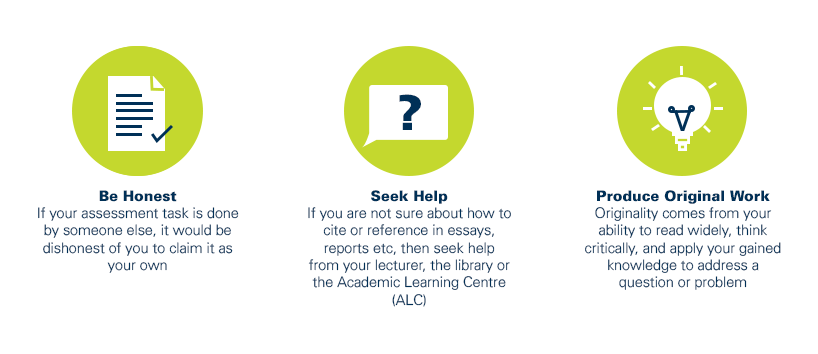
As a CQUniversity student you are expected to act honestly in all aspects of your academic work.
Any assessable work undertaken or submitted for review or assessment must be your own work. Assessable work is any type of work you do to meet the assessment requirements in the unit, including draft work submitted for review and feedback and final work to be assessed.
When you use the ideas, words or data of others in your assessment, you must thoroughly and clearly acknowledge the source of this information by using the correct referencing style for your unit. Using others’ work without proper acknowledgement may be considered a form of intellectual dishonesty.
Participating honestly, respectfully, responsibly, and fairly in your university study ensures the CQUniversity qualification you earn will be valued as a true indication of your individual academic achievement and will continue to receive the respect and recognition it deserves.
As a student, you are responsible for reading and following CQUniversity’s policies, including the Student Academic Integrity Policy and Procedure. This policy sets out CQUniversity’s expectations of you to act with integrity, examples of academic integrity breaches to avoid, the processes used to address alleged breaches of academic integrity, and potential penalties.
What is a breach of academic integrity?
A breach of academic integrity includes but is not limited to plagiarism, self-plagiarism, collusion, cheating, contract cheating, and academic misconduct. The Student Academic Integrity Policy and Procedure defines what these terms mean and gives examples.
Why is academic integrity important?
A breach of academic integrity may result in one or more penalties, including suspension or even expulsion from the University. It can also have negative implications for student visas and future enrolment at CQUniversity or elsewhere. Students who engage in contract cheating also risk being blackmailed by contract cheating services.
Where can I get assistance?
For academic advice and guidance, the Academic Learning Centre (ALC) can support you in becoming confident in completing assessments with integrity and of high standard.
What can you do to act with integrity?