Overview
This unit will provide you with the foundational components of neurological physiotherapy to prepare you for the clinical management of patients with neurological conditions. You will develop an understanding of neuroanatomy, neuroscience, and neurodevelopment and realise how health theories and frameworks (e.g., motor learning, International Classification of Functioning, Disability and Health (ICF)) guide neurological rehabilitation. You will learn to conduct assessments that define impairments and limitations in the context of the International Classification of Functioning, Disability and Health (ICF), select and apply outcome measures that monitor functional limitations and impairments, and use clinical reasoning for the basis of treatment planning. The interventions you implement will be effective, evidence-based, and directed at the re-education of functional movement.
Details
Pre-requisites or Co-requisites
To enrol in this unit you must be enrolled in the CB85 Course and meet the following pre-requisites: BMSC11007 Medical Anatomy and Physiology 1 BMSC11008 Medical Anatomy and Physiology 2 PSIO11003 Foundations of Physiotherapy Practice 2 ALLH11006 Life Course Development for Health Professionals
Important note: Students enrolled in a subsequent unit who failed their pre-requisite unit, should drop the subsequent unit before the census date or within 10 working days of Fail grade notification. Students who do not drop the unit in this timeframe cannot later drop the unit without academic and financial liability. See details in the Assessment Policy and Procedure (Higher Education Coursework).
Offerings For Term 2 - 2026
Attendance Requirements
All on-campus students are expected to attend scheduled classes - in some units, these classes are identified as a mandatory (pass/fail) component and attendance is compulsory. International students, on a student visa, must maintain a full time study load and meet both attendance and academic progress requirements in each study period (satisfactory attendance for International students is defined as maintaining at least an 80% attendance record).
Recommended Student Time Commitment
Each 6-credit Undergraduate unit at CQUniversity requires an overall time commitment of an average of 12.5 hours of study per week, making a total of 150 hours for the unit.
Class Timetable
Assessment Overview
Assessment Grading
This is a graded unit: your overall grade will be calculated from the marks or grades for each assessment task, based on the relative weightings shown in the table above. You must obtain an overall mark for the unit of at least 50%, or an overall grade of 'pass' in order to pass the unit. If any 'pass/fail' tasks are shown in the table above they must also be completed successfully ('pass' grade). You must also meet any minimum mark requirements specified for a particular assessment task, as detailed in the 'assessment task' section (note that in some instances, the minimum mark for a task may be greater than 50%). Consult the University's Grades and Results Policy for more details of interim results and final grades.
All University policies are available on the CQUniversity Policy site.
You may wish to view these policies:
- Grades and Results Policy
- Assessment Policy and Procedure (Higher Education Coursework)
- Review of Grade Procedure
- Student Academic Integrity Policy and Procedure
- Academic Progression Policy and Procedure
- Student Refund and Credit Balance Policy and Procedure
- Complaints Policy and Procedure
- Information and Communications Technology Acceptable Use Policy and Procedure
This list is not an exhaustive list of all University policies. The full list of University policies are available on the CQUniversity Policy site.
Feedback, Recommendations and Responses
Every unit is reviewed for enhancement each year. At the most recent review, the following staff and student feedback items were identified and recommendations were made.
Feedback from Unit evaluation data, direct student feedback, self reflection, broader feedback.
Students reported the newly developed neurological assessment video resources supported their learning and assessment preparation.
It is recommended to review opportunities to expand the use of multimedia resources, such as video demonstrations, for other key neurological content areas to further support student learning and assessment preparation.
Feedback from Unit evaluation data, direct student feedback, self reflection, broader feedback.
Students valued the interactive sessions, hands-on learning experiences, and revision resources. Students suggested incorporating more case studies to enhance application of knowledge.
It is recommended to explore opportunities to integrate additional case-based learning activities to further support clinical reasoning and engagement.
- Describe basic concepts of neurosciences, including organisation and function of the nervous system, neurodevelopment and signs and symptoms in neurologic lesions
- Select and apply appropriate assessment tools, including observational analysis and outcome measures, to identify functional limitations and impairments in the context of the International Classification of Functioning, Disability and Health (ICF) and contemporary healthcare practice
- Demonstrate competency in the selection (rationale) and execution of evidence-based neurological rehabilitation techniques to address sensorimotor dysfunction and promote the re-education of functional movement
- Demonstrate acceptable professional and ethical behaviours consistent with a physiotherapy practitioner.
Learning outcomes and assessment tasks have been mapped against and aligned with the Physiotherapy Practice Thresholds in Australia and Aotearoa New Zealand.
Alignment of Assessment Tasks to Learning Outcomes
| Assessment Tasks | Learning Outcomes | |||
|---|---|---|---|---|
| 1 | 2 | 3 | 4 | |
| 1 - In-class Test(s) - 20% | ||||
| 2 - In-class Test(s) - 40% | ||||
| 3 - On-campus Activity - 0% | ||||
| 4 - Practical Assessment - 40% | ||||
Alignment of Graduate Attributes to Learning Outcomes
| Graduate Attributes | Learning Outcomes | |||
|---|---|---|---|---|
| 1 | 2 | 3 | 4 | |
| 1 - Communication | ||||
| 2 - Problem Solving | ||||
| 3 - Critical Thinking | ||||
| 4 - Information Literacy | ||||
| 5 - Team Work | ||||
| 6 - Information Technology Competence | ||||
| 7 - Cross Cultural Competence | ||||
| 8 - Ethical practice | ||||
| 9 - Social Innovation | ||||
| 10 - First Nations Knowledges | ||||
| 11 - Aboriginal and Torres Strait Islander Cultures | ||||
Textbooks
Neuroanatomy: An illustrated colour text
- Seventh edition (2025)
- Authors: Crossman, A.
- Elsevier
- Edinburgh Edinburgh , UK
- ISBN: Hardcopy: 9780443113666, Ebook: 9780443114854
Physical management for neurological conditions
- Fifth edition (2025)
- Authors: Lennon, Sheila., Ramdharry, Gita., Verheyden, Geert
- Elsevier
- Edinburgh Edinburgh , UK
- ISBN: Harcopy: 9780323881326, Ebook: 9780323882644
Additional Textbook Information
Please select either ebook or print versions of each prescribed textbook based on your needs, learning style, and study habits.
Not sure how to decide? Ebooks are often preferred due to affordability, convenience of access and navigation, and ease of purchasing. However, they do have physical limitations (e.g., require access to laptop, power, and internet), more distractions, and cannot be resold. Students using print textbooks often report increased engagement (easier to focus and study for longer periods), reliable access, and offset of some costs by purchasing and reselling of used books.
Before purchasing, check the library for full text availability (online and physical locations).
IT Resources
- CQUniversity Student Email
- Internet
- Unit Website (Moodle)
All submissions for this unit must use the referencing style: American Psychological Association 7th Edition (APA 7th edition)
For further information, see the Assessment Tasks.
s.randall@cqu.edu.au
Week 1
Begin Date: 13 Jul 2026Module/Topic
Unit introduction
Nervous system development and overview
Chapter
Refer to Moodle for readings and additional resources
Events and Submissions/Topic
Week 2
Begin Date: 20 Jul 2026Module/Topic
Cerebral cortex
Spinal cord, somatosensory, and motor systems
Chapter
Refer to Moodle for readings and additional resources
Events and Submissions/Topic
Week 3
Begin Date: 27 Jul 2026Module/Topic
Basal ganglia and cerebellum
Brainstem and cranial nerves
Chapter
Refer to Moodle for readings and additional resources
Events and Submissions/Topic
Week 4
Begin Date: 03 Aug 2026Module/Topic
Visual and vestibular systems
Neuroscience of pain
Chapter
Refer to Moodle for readings and additional resources
Events and Submissions/Topic
Week 5
Begin Date: 10 Aug 2026Module/Topic
Foundations of motor control
Chapter
Refer to Moodle for readings and additional resources
Events and Submissions/Topic
Week 6
Begin Date: 17 Aug 2026Module/Topic
Assessment
Chapter
Refer to Moodle for readings and additional resources
Events and Submissions/Topic
Hurdle 1 (TRAIN module) Due: Week 6 Thursday (20 Aug 2026) 4:00pm AEST
In-class Test 1 Due: Week 6 Thursday (20 Aug 2026) 9:00 am AEST
Vacation Week
Begin Date: 24 Aug 2026Module/Topic
Chapter
Events and Submissions/Topic
Week 7
Begin Date: 31 Aug 2026Module/Topic
Balance and gait
Chapter
Refer to Moodle for readings and additional resources
Events and Submissions/Topic
Week 8
Begin Date: 07 Sep 2026Module/Topic
Falls
Physical activity and exercise
Chapter
Refer to Moodle for readings and additional resources
Events and Submissions/Topic
Week 9
Begin Date: 14 Sep 2026Module/Topic
Vestibular rehabilitation
OSCE preparation
Chapter
Refer to Moodle for readings and additional resources
Events and Submissions/Topic
Week 10
Begin Date: 21 Sep 2026Module/Topic
Neuromuscular techniques for movement facilitation and pain management
Chapter
Refer to Moodle for readings and additional resources
Events and Submissions/Topic
Week 11
Begin Date: 28 Sep 2026Module/Topic
Assistive Technology
Chapter
Refer to Moodle for readings and additional resources
Events and Submissions/Topic
Week 12
Begin Date: 05 Oct 2026Module/Topic
Assessment
Revision
Chapter
Refer to Moodle for readings and additional resources
Events and Submissions/Topic
Hurdle 2 (Attendance) Due: Week 12 Thursday (8 Oct 2026) 4:00pm AEST
In-class Test 2 Due: Week 12 Thursday (8 Oct 2026) 9:00 am AEST
Exam Week
Begin Date: 12 Oct 2026Module/Topic
Assessment
Chapter
Events and Submissions/Topic
Practical Assessment Due: this assessment will be scheduled in the university examination period.
Vacation/Exam Week
Begin Date: 19 Oct 2026Module/Topic
Assessment
Chapter
Events and Submissions/Topic
Practical Assessment Due: this assessment will be scheduled in the university examination period.
Pre-clinical Requirements
This unit has a practical session that includes attendance at a physiotherapy falls and balance class and a practical session that includes visiting an assistive technology showroom. For the falls and balance class you will be required to attend a one to two hour class that is scheduled outside of regular timetabled sessions that is held in any physiotherapy setting (e.g., hospital, private practice, community rehabilitation). For the assistive technology showroom visit you may be required to attend a two-hour session that is scheduled within regular timetabled sessions at a local mobility supplier. All pre-clinical requirements must be completed prior to attending these sessions.
1 In-class Test(s)
Task Overview and Structure
In-class Test 1 (mid-term) constitutes 20% of the overall grade. It will assess content (i.e., lectures, tutorials, and required readings) from weeks 1-4 inclusive. This online supervised test will consist of up to 45 questions worth a total of 60 marks, and students will have a time limit of 90 minutes to complete the test. Question formats may include multiple choice, true/false, drag and drop, select missing words, matching, ordering, calculations, and short answer responses.
Questions are identical for all students but are randomly generated from a question bank, meaning the sequence or appearance of questions may vary.
Conditions of Assessment
This test is a closed book assessment supervised by CQUniversity staff and must be completed at the scheduled time on either the Rockhampton, Bundaberg or Cairns campus. Access to any resource other than the test itself is prohibited (e.g. AI, books, notes, electronic devices or websites other than the test itself). It is recommended that a laptop be used for this assessment, however a tablet is permitted. The use of a mobile phone is not permitted.
General Conditions
Level of GenAI Use Allowed
Level 1: You must not use AI at any point during the assessment. You must demonstrate your core skills and knowledge.
Grace Period
The 72-hour grace period does not apply for this assessment.
Late Arrival to Assessment
You should aim to arrive at least 15 minutes prior to the official assessment commencement time. In the extraordinary circumstance that you are late, you will be permitted late entry to your assessment of up to 10 minutes after the official commencement time. The period of lateness will be deducted from your overall assessment time. If you are denied access to the assessment due to lateness (i.e. arriving beyond the permitted late entry period), you should make an application for an assessment extension, which may or may not be approved in line with CQU policy. If the application for an assessment extension is denied, you will receive a grade of zero percent (0%) for the assessment item.
Additional Information
Further details and preparatory resources are available on Moodle.
Week 6 Thursday (20 Aug 2026) 9:00 am AEST
Results will be accessible on Moodle within two weeks of the due date.
Grading of Assessment
All questions will be marked numerically and an overall percentage mark awarded.
- Describe basic concepts of neurosciences, including organisation and function of the nervous system, neurodevelopment and signs and symptoms in neurologic lesions
2 In-class Test(s)
Task Overview and Structure
In-class Test 2 (end-term) constitutes 40% of the overall grade. It will assess content (i.e., lectures, tutorials, and required readings) from weeks 5-11 inclusive. This online supervised test will consist of up to 45 questions worth a total of 80 marks, and students will have a time limit of 120 minutes to complete. This test consists of two sections.
- Section 1: Knowledge and understanding (30 marks)
- 30 questions
- Multiple formats including multiple choice, true/false, drag and drop, select missing words, matching, ordering, calculations, and short answer.
- Section 2: Application and analysis (50 Marks)
- 15 questions
- Multiple long-answer questions with formats including lists, explanations, and structured paragraphs that relate to clinical presentations, case studies, and video analysis.
Questions are identical for all students but are randomly generated from a question bank, meaning the sequence or appearance of questions may vary.
Conditions of Assessment
This test is a closed book assessment supervised by CQUniversity staff and must be completed at the scheduled time on either the Rockhampton, Bundaberg or Cairns campus. Access to any resource other than the test itself is prohibited (e.g., AI, books, notes, electronic devices or websites other than the test itself). It is recommended that a laptop be used for this assessment, however a tablet is permitted. The use of a mobile phone is not permitted.
General Conditions
Level of GenAI Use Allowed
Level 1: You must not use AI at any point during the assessment. You must demonstrate your core skills and knowledge.
Grace Period
The 72-hour grace period does not apply for this assessment.
Late Arrival to Assessment
You should aim to arrive at least 15 minutes prior to the official assessment commencement time. In the extraordinary circumstance that you are late, you will be permitted late entry to your assessment of up to 10 minutes after the official commencement time. The period of lateness will be deducted from your overall assessment time. If you are denied access to the assessment due to lateness (i.e. arriving beyond the permitted late entry period), you should make an application for an assessment extension, which may or may not be approved in line with CQU policy. If the application for an assessment extension is denied, you will receive a grade of zero percent (0%) for the assessment item.
Additional Information
Further details and preparatory resources are available on Moodle.
Week 12 Thursday (8 Oct 2026) 9:00 am AEST
Results will be accessible on Moodle within two weeks of the due date.
Grading of Assessment
All questions will be marked numerically and an overall percentage mark awarded.
- Select and apply appropriate assessment tools, including observational analysis and outcome measures, to identify functional limitations and impairments in the context of the International Classification of Functioning, Disability and Health (ICF) and contemporary healthcare practice
- Demonstrate competency in the selection (rationale) and execution of evidence-based neurological rehabilitation techniques to address sensorimotor dysfunction and promote the re-education of functional movement
3 On-campus Activity
This unit includes two hurdle assessments. Both must be completed satisfactorily to PASS the unit.
Hurdle 1 (TRAIN e-learning Module)
Task Overview
The TRAIN e-learning Module, 'A Clinician's Guide to Effective Task-Specific Training', outlines how to design and deliver goal-directed, repetitive, and meaningful practice to improve functional outcomes. It emphasises motor learning principles, patient engagement, progression, and tailoring tasks to real-world activities.
Task Structure
This hurdle requires the completion of the TRAIN e-learning module and the corresponding TRAIN knowledge quiz as outlined below:
- Complete the TRAIN e-learning Module (Link: TRAIN Program: A Clinician’s Guide to Effective Task Specific Training).
- Complete the TRAIN knowledge quiz that is external to the module (Link: TRAIN knowledge quiz). You must complete and achieve a quiz result of at least 80% to successfully meet this assessment requirement. Multiple (3) quiz attempts are permitted. If re-taking the quiz, please clearly indicate the response number next to your name.
- The are no other submission requirements for this module - your completed TRAIN knowledge quiz is the submission.
Due: Week 6 (Thursday 20th August) 4:00pm AEST.
Hurdle 2 (Attendance)
Task Overview
Active participation in practical and tutorial sessions is essential for safe and effective physiotherapy practice. In accordance with Australian Physiotherapy Council recommendations and CB85 course requirements, students must attend a minimum of 85% of practical and tutorial sessions. Attendance is recorded weekly and supports competency development in assessment, treatment, clinical reasoning, and safe practice.
Task Structure
To meet the requirements for Hurdle 2, students must:
- Attend at least 85% of practical and tutorial sessions.
- Notify the tutor and unit coordinator as soon as possible if absent.
- Submit a medical certificate or appropriate supporting documentation within five days for legitimate absences (e.g., medical, compassionate, or exceptional circumstances in accordance with the Assessment Policy and Procedure (5.21 and 5.22)).
- Attend a meeting with the unit coordinator and Head of Course if absences exceed three sessions or progression concerns arise.
- Attendance rates will be calculated in week 12.
General Conditions (applies to both hurdles)
Level of GenAI Use Allowed
Level 1: You must not use AI at any point during the assessment. You must demonstrate your core skills and knowledge.
Grace Period
The 72-hour grace period does not apply for this assessment.
Additional Information
Further details and preparatory resources available on Moodle.
Hurdle 1 due: Week 6 Thursday 4:00pm AEST. Hurdle 2 due: Week 12 Thursday 4:00pm AEST.
Results will be accessible on Moodle within two weeks of the due date.
Hurdle 1 (TRAIN e-learning Module)
- Completion of the TRAIN e-learning Module and submission of the TRAIN knowledge quiz with a result of 80% or more is required to PASS this hurdle.
- You must PASS this hurdle in order to be eligible to PASS this unit.
Hurdle 2 (Attendance)
- An attendance rate of at least 85% at practical and tutorial sessions is required to PASS this hurdle.
- Failure to meet the attendance requirement, or failure to submit supporting documentation for legitimate absences within the required timeframe, will result in not meeting the conditions of this hurdle.
- You must PASS this hurdle in order to be eligible to PASS the unit.
- Demonstrate acceptable professional and ethical behaviours consistent with a physiotherapy practitioner.
4 Practical Assessment
Task Overview
The Practical Assessment is designed to evaluate your theoretical knowledge and practical application of neurological physiotherapy assessment and treatment skills. It will assesses all content from this unit as well as relevant material from pre-requisite units (BMSC11007, BMSC11008, ALLH11006, and PSIO11003). The practical assessment is worth 40% of the overall unit grade and will be held during the university examination period, with the timetable published on Moodle by Week 12.
Task Structure
The practical assessment will include eight (8) equally weighted stations:
- Somatosensation
- Muscle strength
- Cranial nerves
- Coordination, muscle tone and reflexes
- Vestibular
- Bed mobility, sitting balance, sit-to-stand (STS), and stand to sit (SIT)
- Reach, grasp, and manipulation
- Standing balance and gait
Your practical assessment will have a total time limit of 30 minutes. For each station, you are expected to:
- Answer all knowledge questions correctly using appropriate terminology
- Position the patient optimally for a safe, effective and efficient intervention
- Position yourself as the therapist optimally for a safe, effective and efficient intervention
- Perform intervention (i.e., assessment and/or treatment) safely, effectively and efficiently
You must present in full clinical uniform. If you are then required to act as a simulated patient for another student's examination, please bring additional suitable clothing.
General Conditions
Level of GenAI use allowed:
Level 1: You must not use AI at any point during the assessment. You must demonstrate your core skills and knowledge.
Grace Period
The 72-hour grace period does not apply for this assessment.
Late Arrival to Assessment
You should aim to arrive at least 15 minutes prior to the official assessment commencement time. In the extraordinary circumstance that you are late, you will be permitted late entry to your assessment of up to 10 minutes after the official commencement time. The period of lateness will be deducted from your overall assessment time. If you are denied access to the assessment due to lateness (i.e. arriving beyond the permitted late entry period), you should make an application for an assessment extension, which may or may not be approved in line with CQU policy. If the application for an assessment extension is denied, you will receive a grade of zero percent (0%) for the assessment item.
Additional Information
Further details and preparatory resources are available on Moodle
This assessment will be scheduled during the university examination period.
Results will be accessible on Moodle within two weeks of the due date.
The assessment rubric for this assessment task is based on the Physiotherapy Practice Thresholds in Australia and Aotearoa New Zealand. This quality framework is mapped against the CQUniversity Graduate Attributes and is intended to give a holistic understanding of standards expected for the assessment task.
A detailed marking criteria sheet will be available on the unit Moodle site, and will include the following rubric categories and weightings:
- Safety, risk management, and professional behaviour (P/F)
- Communication (20%)
- Knowledge and practical application of techniques (80%)
Assessment Moderation Using Video Recordings
To ensure consistency and fairness in the evaluation of practical assessments, including Objective Structured Clinical Examinations (OSCE), this unit may employ video recordings as a method for assessment moderation. These recordings allow for a thorough review of student performance, providing an objective basis for feedback and grading. Assessors may review the recordings to verify the accuracy of initial assessments and to identify any discrepancies. This process also facilitates the calibration of grading standards among different assessors. By utilising video recordings, we aim to maintain high standards of assessment integrity and support continuous improvement in teaching and learning practices. More details about this process will be provided on the unit Moodle site.
- Describe basic concepts of neurosciences, including organisation and function of the nervous system, neurodevelopment and signs and symptoms in neurologic lesions
- Select and apply appropriate assessment tools, including observational analysis and outcome measures, to identify functional limitations and impairments in the context of the International Classification of Functioning, Disability and Health (ICF) and contemporary healthcare practice
- Demonstrate competency in the selection (rationale) and execution of evidence-based neurological rehabilitation techniques to address sensorimotor dysfunction and promote the re-education of functional movement
- Demonstrate acceptable professional and ethical behaviours consistent with a physiotherapy practitioner.
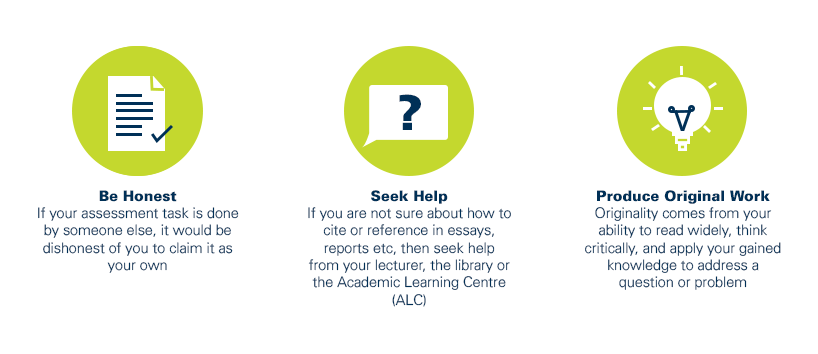
As a CQUniversity student you are expected to act honestly in all aspects of your academic work.
Any assessable work undertaken or submitted for review or assessment must be your own work. Assessable work is any type of work you do to meet the assessment requirements in the unit, including draft work submitted for review and feedback and final work to be assessed.
When you use the ideas, words or data of others in your assessment, you must thoroughly and clearly acknowledge the source of this information by using the correct referencing style for your unit. Using others’ work without proper acknowledgement may be considered a form of intellectual dishonesty.
Participating honestly, respectfully, responsibly, and fairly in your university study ensures the CQUniversity qualification you earn will be valued as a true indication of your individual academic achievement and will continue to receive the respect and recognition it deserves.
As a student, you are responsible for reading and following CQUniversity’s policies, including the Student Academic Integrity Policy and Procedure. This policy sets out CQUniversity’s expectations of you to act with integrity, examples of academic integrity breaches to avoid, the processes used to address alleged breaches of academic integrity, and potential penalties.
What is a breach of academic integrity?
A breach of academic integrity includes but is not limited to plagiarism, self-plagiarism, collusion, cheating, contract cheating, and academic misconduct. The Student Academic Integrity Policy and Procedure defines what these terms mean and gives examples.
Why is academic integrity important?
A breach of academic integrity may result in one or more penalties, including suspension or even expulsion from the University. It can also have negative implications for student visas and future enrolment at CQUniversity or elsewhere. Students who engage in contract cheating also risk being blackmailed by contract cheating services.
Where can I get assistance?
For academic advice and guidance, the Academic Learning Centre (ALC) can support you in becoming confident in completing assessments with integrity and of high standard.
What can you do to act with integrity?