Overview
Effective and ethical communication is an essential skill for professionals such as psychologists, whose work involves engaging with diverse groups and potentially vulnerable communities. In this unit, you will explore and practise culturally responsive communication skills. You will develop practical capabilities in interviewing, active listening, and adapting communication styles to suit different audiences, including professional, academic, peer, community, and general‑population contexts. You will examine the importance of ethical conduct and communication across research, social, and clinical settings, including the use of technology, as well as the role of self‑care in maintaining ethical and effective practice. You will also reflect on your ongoing development as a communicator and consider how these skills apply to future work or study.
Details
Pre-requisites or Co-requisites
Students must be enrolled in CC42 Bachelor of Psychological Science (Honours)
Important note: Students enrolled in a subsequent unit who failed their pre-requisite unit, should drop the subsequent unit before the census date or within 10 working days of Fail grade notification. Students who do not drop the unit in this timeframe cannot later drop the unit without academic and financial liability. See details in the Assessment Policy and Procedure (Higher Education Coursework).
Offerings For Term 2 - 2026
Attendance Requirements
All on-campus students are expected to attend scheduled classes - in some units, these classes are identified as a mandatory (pass/fail) component and attendance is compulsory. International students, on a student visa, must maintain a full time study load and meet both attendance and academic progress requirements in each study period (satisfactory attendance for International students is defined as maintaining at least an 80% attendance record).
Recommended Student Time Commitment
Each 6-credit Undergraduate unit at CQUniversity requires an overall time commitment of an average of 12.5 hours of study per week, making a total of 150 hours for the unit.
Class Timetable
Assessment Overview
Assessment Grading
This is a graded unit: your overall grade will be calculated from the marks or grades for each assessment task, based on the relative weightings shown in the table above. You must obtain an overall mark for the unit of at least 50%, or an overall grade of 'pass' in order to pass the unit. If any 'pass/fail' tasks are shown in the table above they must also be completed successfully ('pass' grade). You must also meet any minimum mark requirements specified for a particular assessment task, as detailed in the 'assessment task' section (note that in some instances, the minimum mark for a task may be greater than 50%). Consult the University's Grades and Results Policy for more details of interim results and final grades.
All University policies are available on the CQUniversity Policy site.
You may wish to view these policies:
- Grades and Results Policy
- Assessment Policy and Procedure (Higher Education Coursework)
- Review of Grade Procedure
- Student Academic Integrity Policy and Procedure
- Academic Progression Policy and Procedure
- Student Refund and Credit Balance Policy and Procedure
- Complaints Policy and Procedure
- Information and Communications Technology Acceptable Use Policy and Procedure
This list is not an exhaustive list of all University policies. The full list of University policies are available on the CQUniversity Policy site.
Feedback, Recommendations and Responses
Every unit is reviewed for enhancement each year. At the most recent review, the following staff and student feedback items were identified and recommendations were made.
Feedback from SUTE
A safe platform to present and receive feedback was appreciated.
Continue to use the tutorials to encourage students to practice the skills that are being taught. This could possibly be expanded to include scenario-based challenges for weeks covering communication with diverse communities.
Feedback from SUTE
Feedback on assignments were some of the most useful that had been received.
Continue to ensure feedback is clear, personalised, and actionable.
Feedback from SUTE
Tutorials were engaging although not necessarily enjoyed by all.
Continue the current level of engaging interaction within the tutorials. To address the reported variability in student enjoyment, consider investing in a greater range of practical, structured scenarios to broaden the appeal and application of the learning content.
Feedback from SUTE
It was not always clear what the relevance of this unit is to students (especially those who are aiming to become registered psychologists).
In tutorials, specifically draw students' attention to how the skills taught and assessed in this unit are relevant to both professional and research roles.
- Critically analyse the theory, research and practice underlying effective communication skills, and evaluate your ongoing development of communication skills in relation to future professional or study contexts
- Reflect on effective communication skills when engaging in interprofessional practice
- Critically evaluate digital technologies and self-care principles to ensure safe and ethical psychological practice
- Apply culturally responsive principles to analyse and address communication‑related issues across diverse populations and contexts
The learning outcomes of this unit fulfil the level 2 pre-professional core competencies required by the updated Australian Psychology Accreditation Council (APAC) guidelines. The learning outcomes also meet the study criteria as specified by the Psychology Board of Australia (PsyBA) and as appropriate for study at level 8 as stated by the Australian Qualifications Framework (AQF). The additional material taught in this unit will allow us to meet our reaccreditation requirements and address the conditions imposed by APAC. The specific APAC competencies which will be demonstrated by students in completing this unit are:
2.1 Demonstrate appropriate interpersonal communication, interview skills and cultural responsiveness in situations appropriate to psychological practice and research.
2.4. Understand the principles of interprofessional collaborative practice and respectful and culturally responsive working relationships with others.
2.6 Explain the principles of self-care and their importance in psychology for safe and sustainable practice.
2.7 Critically evaluate the use of digital technologies in psychology.
Alignment of Assessment Tasks to Learning Outcomes
| Assessment Tasks | Learning Outcomes | |||
|---|---|---|---|---|
| 1 | 2 | 3 | 4 | |
| 1 - Written Assessment - 35% | ||||
| 2 - Presentation - 30% | ||||
| 3 - Written Assessment - 35% | ||||
Alignment of Graduate Attributes to Learning Outcomes
| Graduate Attributes | Learning Outcomes | |||
|---|---|---|---|---|
| 1 | 2 | 3 | 4 | |
| 1 - Communication | ||||
| 2 - Problem Solving | ||||
| 3 - Critical Thinking | ||||
| 4 - Information Literacy | ||||
| 5 - Team Work | ||||
| 6 - Information Technology Competence | ||||
| 7 - Cross Cultural Competence | ||||
| 8 - Ethical practice | ||||
| 9 - Social Innovation | ||||
| 10 - First Nations Knowledges | ||||
| 11 - Aboriginal and Torres Strait Islander Cultures | ||||
Textbooks
There are no required textbooks.
IT Resources
- CQUniversity Student Email
- Internet
- Unit Website (Moodle)
All submissions for this unit must use the referencing style: American Psychological Association 7th Edition (APA 7th edition)
For further information, see the Assessment Tasks.
b.williams@cqu.edu.au
Week 1
Begin Date: 13 Jul 2026Module/Topic
Ethical Decision Making
Chapter
Psychology Board Ahpra. (2024) Code of conduct for psychologists. Code of Conduct
Ogloff, J., Kåmpf, A., Rothschild, A., McSherry, B., & K Mpf, A. (2009). Ethical Decision-Making in Confidentiality Dilemmas. In Confidentiality for Mental Health Professional. Australian Academic Press.
Mcdonald-sardi, J., Mathews, R., Reece, J., & Pratt, C. (2020). The effect of experience in psychological practice on making ethical judgements. Australian Psychologist, 55(6), 634–644. https://doi.org/10.1111/ap.12463
Events and Submissions/Topic
Week 2
Begin Date: 20 Jul 2026Module/Topic
The Use of Generative AI in Clinical Practice
Chapter
Hutnyan, M., & Gottlieb, M. C. (2025). Artificial Intelligence in Psychological Practice: Applications, Ethical Considerations, and Recommendations. Professional Psychology, Research and Practice, 56(5), 343–352. https://doi.org/10.1037/pro0000631
Events and Submissions/Topic
Week 3
Begin Date: 27 Jul 2026Module/Topic
Self-Care and Ethics
Chapter
Events and Submissions/Topic
Week 4
Begin Date: 03 Aug 2026Module/Topic
Interdisciplinary Teams and Collaborative Practice
Chapter
Viberg Johansson, J., Bentzen, H. B., & Mascalzoni, D. (2022). What ethical approaches are used by scientists when sharing health data? An interview study. BMC Medical Ethics, 23(1), Article 41. https://doi.org/10.1186/s12910-022-00779-8
Events and Submissions/Topic
Week 5
Begin Date: 10 Aug 2026Module/Topic
Conflict Resolution
Chapter
Wachsmuth, S., Jowett, S., & Harwood, C. G. (2022). Third party interventions in coach-athlete conflict: Can sport psychology practitioners offer the necessary support? Journal of Applied Sport Psychology, 34(1), 178–203. https://doi.org/10.1080/10413200.2020.1723737
Events and Submissions/Topic
Week 6
Begin Date: 17 Aug 2026Module/Topic
Presenting and Interviewing
Chapter
Bodie, G. D. (2010). A Racing Heart, Rattling Knees, and Ruminative Thoughts: Defining, Explaining, and Treating Public Speaking Anxiety. Communication Education, 59(1), 70–105. https://doi.org/10.1080/03634520903443849
Events and Submissions/Topic
Vacation Week
Begin Date: 24 Aug 2026Module/Topic
Chapter
Events and Submissions/Topic
Week 7
Begin Date: 31 Aug 2026Module/Topic
LGBTQI+ Communities
Chapter
Events and Submissions/Topic
Week 8
Begin Date: 07 Sep 2026Module/Topic
Indigenous and CALD Communities
Chapter
Events and Submissions/Topic
Week 9
Begin Date: 14 Sep 2026Module/Topic
The research Ecosystem: Publications
Chapter
Events and Submissions/Topic
Week 10
Begin Date: 21 Sep 2026Module/Topic
Ethical Messages: Framing, Bias, and Unintended Consequences
Chapter
Events and Submissions/Topic
Week 11
Begin Date: 28 Sep 2026Module/Topic
Ethics and your public identity
Chapter
Wu, K. S., & Sonne, J. L. (2021). Therapist Boundary Crossings in the Digital Age: Psychologists’ Practice Frequencies and Perceptions of Ethicality. Professional Psychology, Research and Practice, 52(5), 419–428. https://doi.org/10.1037/pro0000406
Events and Submissions/Topic
Week 12
Begin Date: 05 Oct 2026Module/Topic
Reflection: How far have you come and what lies ahead?
Chapter
Events and Submissions/Topic
Exam Week
Begin Date: 12 Oct 2026Module/Topic
Chapter
Events and Submissions/Topic
Vacation/Exam Week
Begin Date: 19 Oct 2026Module/Topic
Chapter
Events and Submissions/Topic
1 Written Assessment
In Week 1 you will complete a range of communication skill self-assessment measures and record your measure-derived strengths and weaknesses. These measures will be downloadable from Moodle (under the Assessments tab and the Week 1 tab) and form the basis for Assessment 1.
This task invites you to reflect on your communication skills, identify areas for improvement using the provided self-assessment measures, and apply these insights to your future work or study. You will be asked not only to select a specific skill to strengthen, but also to reflect on how these competencies enhance your ability to practice ethically and maintain self-care. Ultimately, this assessment aims to build your capacity to evaluate and manage your own strengths and deficits.
Word count: 1500 words +/- 10% (not including reference list)
Level of GenAI use allowed:
Level 3: You may use AI to assist with specific tasks such as drafting text, refining and evaluating your work. You must critically evaluate and modify any AI-generated content you use.
The 72-hr grace period applies to this assessment.
More details on this assessment are provided in the Assessment tab of Moodle.
Week 5 Monday (10 Aug 2026) 9:00 am AEST
Please submit to Moodle
Vacation Week Monday (24 Aug 2026)
Marks and individual feedback will be able to be accessed on Moodle.
Your assignment should address the following to meet the assignments learning outcomes:
- Description and Context (30%)
- Define the skill, addressing future context and engagement with diverse individuals or groups.
- Research, Technology, and Teams (30%)
- Critically evaluate the research and theory underlying the identified skill.
- Discuss how or if the identified skill impacts your ability to communicate effectively when engaging in interprofessional proactice.
- Evaluate how digital technologies impact, assist, or hinder the chosen communication skill.
- Ethics, Self-Care, and Enhancement (30%)
- Discuss ethical implications and safety principles relevant to this skill.
- Explain how self-care principles relate to managing this skill.
- Propose and justify evidence-based, practical solutions for personal enhancement in this communication area.
- Writing Style and Referencing (10%)
- Your report should use an academic writing style with accurate spelling, concise grammar, and appropriate use of references.
A much more detailed marking rubric is available on Moodle.
- Critically analyse the theory, research and practice underlying effective communication skills, and evaluate your ongoing development of communication skills in relation to future professional or study contexts
- Reflect on effective communication skills when engaging in interprofessional practice
- Critically evaluate digital technologies and self-care principles to ensure safe and ethical psychological practice
2 Presentation
This assessment will ask you to apply your oral communication and active listening skills, as well as your ability to work in a team and provide constructive feedback. You will also demonstrate your learnings from Assessment 1 on the theory, research, and practice of effective communication skills and critically evaluate your own and others’ performances. It will also give you the opportunity to consider cultural responsiveness and skills required in the contemporary workplace.
There are two parts to this assessment: i) practice sessions and obtaining written feedback from all group members, ii) recording an interview as an Interviewer - based on feedback from group members and self-reflection.
Interview length: 15 minutes
Overall weighting: 30%
Level of GenAI use allowed:
Level 1: No AI permitted. You must not use Al at any point during the assessment. You must demonstrate your core skills and knowledge.
The 72-hour grace period applies to this assessment.
More details on this assessment are available in the Assessment tab on Moodle.
Week 8 Monday (7 Sept 2026) 9:00 am AEST
Please upload to Moodle, making sure that it is an Echo360 recording
Week 10 Monday (21 Sept 2026)
Marks and individual feedback will be able to be accessed in Moodle.
Below are the assessment criteria and corresponding weighting of each section.
- First impressions (10%)
- Introduction (10%)
- Developed rapport (10%)
- Communication (20%)
- Interpersonal skills (15%)
- Appropriate Questions (10%)
- Preparation, timing & wind-up (10%)
- Demeanor (5%)
- Group & self-feedback rubrics (5%)
- Written Response (5%)
A much more detailed marking rubric is available on Moodle.
- Critically analyse the theory, research and practice underlying effective communication skills, and evaluate your ongoing development of communication skills in relation to future professional or study contexts
- Reflect on effective communication skills when engaging in interprofessional practice
- Apply culturally responsive principles to analyse and address communication‑related issues across diverse populations and contexts
3 Written Assessment
This assessment provides you with the opportunity to engage with a case study to demonstrate your capacity to identify ethical issues, reason through competing obligations, and propose a considered course of action using a structured ethical decision-making framework. In doing so, you will demonstrate skills that are fundamental to ethical professional practice: critical analysis, reflective thinking, and the application of ethical principles to nuanced and culturally situated contexts.
Assessment word count: 1500 words +/- 10% (not including reference list)
Overall Weighting: 35%
Level of GenAI use allowed:
AI Level 3: You may use AI to assist with specific tasks such as drafting text, refining and evaluating your work. You must critically evaluate and modify any AI-generated content you use.
The 72-hour grace period applies to this assessment.
More detailed instructions are available in the Assessments tab in Moodle.
Week 12 Friday (9 Oct 2026) 5:00 pm AEST
Please note the FRIDAY 5pm (QLD time) due date
You will be able to access your mark and feedback on Moodle, these will be returned as soon as possible, aiming for 2 weeks after submission.
The assessment criteria and weighting are:
- Identification and Analysis of Ethical Issues (20%)
- Critical Discussion and Code of Ethics Alignment (35%)
- Application of Structured Decision-Making Model (35%)
- Professional Communication, Formatting, & Referencing (10%)
- Critically evaluate digital technologies and self-care principles to ensure safe and ethical psychological practice
- Apply culturally responsive principles to analyse and address communication‑related issues across diverse populations and contexts
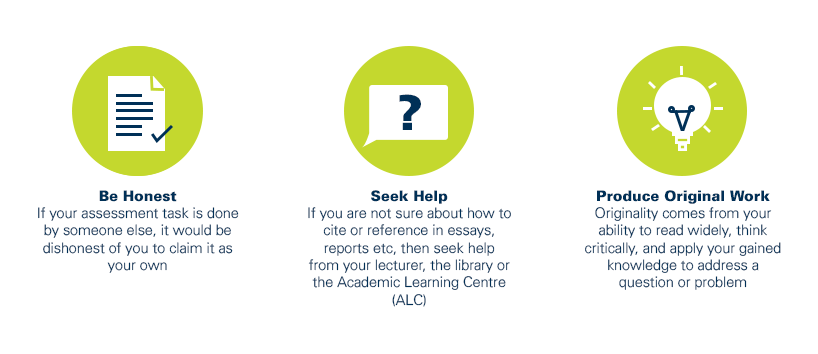
As a CQUniversity student you are expected to act honestly in all aspects of your academic work.
Any assessable work undertaken or submitted for review or assessment must be your own work. Assessable work is any type of work you do to meet the assessment requirements in the unit, including draft work submitted for review and feedback and final work to be assessed.
When you use the ideas, words or data of others in your assessment, you must thoroughly and clearly acknowledge the source of this information by using the correct referencing style for your unit. Using others’ work without proper acknowledgement may be considered a form of intellectual dishonesty.
Participating honestly, respectfully, responsibly, and fairly in your university study ensures the CQUniversity qualification you earn will be valued as a true indication of your individual academic achievement and will continue to receive the respect and recognition it deserves.
As a student, you are responsible for reading and following CQUniversity’s policies, including the Student Academic Integrity Policy and Procedure. This policy sets out CQUniversity’s expectations of you to act with integrity, examples of academic integrity breaches to avoid, the processes used to address alleged breaches of academic integrity, and potential penalties.
What is a breach of academic integrity?
A breach of academic integrity includes but is not limited to plagiarism, self-plagiarism, collusion, cheating, contract cheating, and academic misconduct. The Student Academic Integrity Policy and Procedure defines what these terms mean and gives examples.
Why is academic integrity important?
A breach of academic integrity may result in one or more penalties, including suspension or even expulsion from the University. It can also have negative implications for student visas and future enrolment at CQUniversity or elsewhere. Students who engage in contract cheating also risk being blackmailed by contract cheating services.
Where can I get assistance?
For academic advice and guidance, the Academic Learning Centre (ALC) can support you in becoming confident in completing assessments with integrity and of high standard.
What can you do to act with integrity?