Overview
This unit requires you to write a substantial creative piece called a 'creative artefact.' This piece might be a novella, a group of short stories, a screenplay, a script, or group of plays, a suite of poems, a portfolio of works of various genres, a flash fiction series, or some other genre, or any other approved mix. You will negotiate your creative artefact with a supervisor and produce a 'proposal' stating the literary intentions for your creative writing project, including a rationale. Your creative artefact will be expected to reflect a high-level synthesis and stylistic application of the writing skills you have acquired through the earlier units in the major. This will require writing a weekly critical reflection in parallel to track the development and progress of your creative artefact over time. You will produce a substantial body of work in creating your creative artefact.
Details
Pre-requisites or Co-requisites
Prerequisites: WRIT11023 WRIT11025 WRIT12010 WRIT13013
Important note: Students enrolled in a subsequent unit who failed their pre-requisite unit, should drop the subsequent unit before the census date or within 10 working days of Fail grade notification. Students who do not drop the unit in this timeframe cannot later drop the unit without academic and financial liability. See details in the Assessment Policy and Procedure (Higher Education Coursework).
Offerings For Term 1 - 2026
Attendance Requirements
All on-campus students are expected to attend scheduled classes - in some units, these classes are identified as a mandatory (pass/fail) component and attendance is compulsory. International students, on a student visa, must maintain a full time study load and meet both attendance and academic progress requirements in each study period (satisfactory attendance for International students is defined as maintaining at least an 80% attendance record).
Recommended Student Time Commitment
Each 12-credit Undergraduate unit at CQUniversity requires an overall time commitment of an average of 25 hours of study per week, making a total of 300 hours for the unit.
Class Timetable
Assessment Overview
Assessment Grading
This is a graded unit: your overall grade will be calculated from the marks or grades for each assessment task, based on the relative weightings shown in the table above. You must obtain an overall mark for the unit of at least 50%, or an overall grade of 'pass' in order to pass the unit. If any 'pass/fail' tasks are shown in the table above they must also be completed successfully ('pass' grade). You must also meet any minimum mark requirements specified for a particular assessment task, as detailed in the 'assessment task' section (note that in some instances, the minimum mark for a task may be greater than 50%). Consult the University's Grades and Results Policy for more details of interim results and final grades.
All University policies are available on the CQUniversity Policy site.
You may wish to view these policies:
- Grades and Results Policy
- Assessment Policy and Procedure (Higher Education Coursework)
- Review of Grade Procedure
- Student Academic Integrity Policy and Procedure
- Academic Progression Policy and Procedure
- Student Refund and Credit Balance Policy and Procedure
- Complaints Policy and Procedure
- Information and Communications Technology Acceptable Use Policy and Procedure
This list is not an exhaustive list of all University policies. The full list of University policies are available on the CQUniversity Policy site.
Feedback, Recommendations and Responses
Every unit is reviewed for enhancement each year. At the most recent review, the following staff and student feedback items were identified and recommendations were made.
Feedback from Head of Course self reflection.
Provide commentary podcasts to complement the examples of various creative artefacts and published stories that reached the 10000-word count provided as exemplars for student reference.
Consider developing additional audio resources to support student understanding of exemplar creative works.
- Demonstrate a systematic and coherent knowledge of creative writing stylistic principles in one or more genres
- Incorporate advanced stylistic and technical concepts to produce a creative writing artefact that reflects a high-level synthesis and application of various writing skills
- Apply critical reflective practice in objectively tracking the development of the creative artefact over time.
N/A
Alignment of Assessment Tasks to Learning Outcomes
| Assessment Tasks | Learning Outcomes | ||
|---|---|---|---|
| 1 | 2 | 3 | |
| 1 - Research Proposal - 10% | |||
| 2 - Critical Review - 40% | |||
| 3 - Creative work - 50% | |||
Alignment of Graduate Attributes to Learning Outcomes
| Graduate Attributes | Learning Outcomes | ||
|---|---|---|---|
| 1 | 2 | 3 | |
| 1 - Communication | |||
| 2 - Problem Solving | |||
| 3 - Critical Thinking | |||
| 4 - Information Literacy | |||
| 5 - Team Work | |||
| 6 - Information Technology Competence | |||
| 7 - Cross Cultural Competence | |||
| 8 - Ethical practice | |||
| 9 - Social Innovation | |||
| 10 - First Nations Knowledges | |||
| 11 - Aboriginal and Torres Strait Islander Cultures | |||
Textbooks
There are no required textbooks.
IT Resources
- CQUniversity Student Email
- Internet
- Unit Website (Moodle)
- ZOOM
- Microsoft Teams
All submissions for this unit must use the referencing style: Harvard (author-date)
For further information, see the Assessment Tasks.
n.anae@cqu.edu.au
Week 1: Introduction - Creative Writing Artefact
Begin Date: 09 Mar 2026Module/Topic
Week 1: Introduction - Creative Writing Artefact
Week 1 Meet & Greet Zoom (Wednesday 11 March 12noon): This session will offer an introduction to the unit including details for assessments. It will also give students a chance to ask specific questions about Assessment Item 1. Date and time (AEST) and Zoom link are listed on the unit moodle site. A recording of the session will be posted for those who are unable to attend as soon as practicable after the session. See the 'Virtual Classes' tile on the unit moodle site for details.
Chapter
Week 1 unit Moodle site
Events and Submissions/Topic
a) Ensure you have read each assessment item carefully and accessed the assessment matrix for each item to ensure you understand the requirements.
b) Choose the form and genre your creative writing project will take and begin conducting research into the advanced writing techniques you will use/apply.
Week 2: Creative Artefact - Conceptualisations - What?
Begin Date: 16 Mar 2026Module/Topic
Week 2: Creative Artefact - Conceptualisations - What?
Chapter
Week 2 unit Moodle site
Events and Submissions/Topic
a) Commence drafting Assessment Item 1: Research Proposal (due Week 4). Please refer to the guidelines to help you in creating your Research Proposal (see assessment item description on the unit Moodle site).
(b) Start your 'Critical Review' (Assessment Item 2 - this item will prove a valuable source of reflection over this term). Check the assessment item criteria to ensure your submission will meet the item requirements.
Week 3: Creative Artefact - Forms - How?
Begin Date: 23 Mar 2026Module/Topic
Week 3: Creative Artefact - Forms - How?
Chapter
Week 3 unit Moodle site
Events and Submissions/Topic
a) Continue drafting Assessment Item 1: Research Proposal (due Week 4). Please refer to the guidelines to help you in creating your submission (see assessment item description on the unit Moodle site).
b) Complete a contribution for Assessment Item 2: Critical Review (due Week 12). Please refer to the guidelines to help you in creating your submission (see assessment item description on the unit Moodle site).
Week 4: Creative Artefact - Beginnings - Who? When? Where?
Begin Date: 30 Mar 2026Module/Topic
Week 4: Creative Artefact - Beginnings - Who? When? Where?
Chapter
Week 4 unit Moodle site
Events and Submissions/Topic
a) Contribute an entry for Assessment Item 2: Critical Review. Check the assessment item criteria to ensure your submission will meet the item requirements.
b) Finalise and submit Assessment Item 1: Research Proposal. Double check the assessment item criteria to ensure your submission meets the item requirements.
Assessment Item 1: Research Proposal Due: Week 4 Wednesday (1 Apr 2026) 11:45 pm AEST
Week 5: Creative Artefact - Development - Why?
Begin Date: 06 Apr 2026Module/Topic
Week 5: Creative Artefact - Development - Why?
Chapter
Week 5 unit Moodle site
Events and Submissions/Topic
a) Follow your week-by-week plan to work on your writing project (Assessment Item 3) using the critical and scholarly sources discovered through your research as references and points of support.
b) Contribute an entry for Assessment Item 2: Critical Review.
Week 6: Creative Artefact - Later Beginnings
Begin Date: 13 Apr 2026Module/Topic
Week 6: Creative Artefact - Later Beginnings
Week 6 Voluntary Creative Writing Workshop may be scheduled depending on interest (e.g., Wednesday 15 April 12noon):
If proceeding, this session will offer an opportunity to receive peers feedback on a draft section of work. It will also give students a chance to ask specific questions about Assessment Item 2. Date and time (AEST) and Zoom link are listed on the unit moodle site. A recording of the session will be posted for those who are unable to attend as soon as practicable after the session. Students unable to attend the session will have an opportunity to receive peer feedback in absentia. See the 'Virtual Classes' tile on the unit moodle site for details.
Chapter
Week 6 unit Moodle site
Events and Submissions/Topic
a) Continue to work on your writing project.
b) Contribute an entry for Assessment Item 2: Critical Review.
Vacation Week
Begin Date: 20 Apr 2026Module/Topic
Chapter
Events and Submissions/Topic
Week 7: Creative Artefact - Tentative Revisions
Begin Date: 27 Apr 2026Module/Topic
Week 7: Creative Artefact - Tentative Revisions
Chapter
Week 7 unit Moodle site
Events and Submissions/Topic
a) Continue to work on your writing project (Assessment Item 3).
b) Contribute an entry for Assessment Item 2: Critical Review.
c) Consider participating in The Writers Room to obtain peer feedback on your work.
Week 8: Creative Artefact - Promising Fruits
Begin Date: 04 May 2026Module/Topic
Week 8: Creative Artefact - Promising Fruits
Week 8 Voluntary Drop-In Session may be scheduled depending on interest (e.g., Wednesday 6 May 12noon): If proceeding, this session will offer students an opportunity to drop in for a chat to clarify or discuss work in progress as well as a chance to ask specific questions about Assessment Item 2. Date and time (AEST) and Zoom link are listed on the unit moodle site. A recording of the session will be posted for those who are unable to attend as soon as practicable after the session. Students unable to attend can post their questions on the Q&A forum and they will be answered during the session. See the 'Virtual Classes' tile on the unit moodle site for details.
Chapter
Week 8 unit Moodle site
Events and Submissions/Topic
a) Continue to work on your writing project.
b) Contribute an entry for Assessment Item 2: Critical Review.
c) Consider participating in the Voluntary Creative Writing Workshop to discuss/obtain feedback on your work.
Week 9: Creative Artefact - Writing Adventures
Begin Date: 11 May 2026Module/Topic
Week 9: Creative Artefact - Writing Adventures
Chapter
Week 9 unit Moodle site
Events and Submissions/Topic
a) Continue to work on your writing project.
b) Contribute an entry for Assessment Item 2: Critical Review.
c) Consider participating in The Writers Room to obtain feedback on your work.
Week 10: Creative Artefact - Critical Revisions
Begin Date: 18 May 2026Module/Topic
Week 10: Creative Artefact - Critical Revisions
Week 10 Voluntary Creative Writing Workshop may be scheduled depending on interest (e.g., Wednesday 20 May 12noon): If proceeding, this session will offer an opportunity to receive peers feedback on a draft section of work. Preference will be given to news students. It will also give students a chance to ask specific questions about Assessment 2/3. Date and time (AEST) and Zoom link are listed on the unit moodle site. A recording of the session will be posted for those who are unable to attend as soon as practicable after the session. Students unable to attend the session will have an opportunity to receive peer feedback in absentia. See the 'Virtual Classes' tile on the unit moodle site for details.
Chapter
Week 10 unit Moodle site
Events and Submissions/Topic
a) Continue to work on your writing project.
b) Contribute an entry for Assessment Item 2: Critical Review.
c) Consider participating in The Writers Room and/or the Voluntary Creative Writing Workshop to obtain feedback on your work.
Assessment Item 2: Critical Review Due: Week 10 Wednesday (20 May 2026) 11:45 pm AEST
Week 11: Creative Artefact - The End in Sight
Begin Date: 25 May 2026Module/Topic
Week 11: Creative Artefact - The End in Sight
Chapter
Week 11 unit Moodle site
Events and Submissions/Topic
a) Continue to work on your writing project focusing on editing and fine-tuning. Remember to consult the assessment criteria to ensure your work meets the requirements for the assessment item.
b) Contribute an entry for Assessment Item 2: Critical Review. Remember to match your entries against the assessment criteria to ensure your work meets the requirements for the assessment item.
c) Double and triple check that your referencing accords accurately with Harvard (in-text) conventions.
Week 12
Begin Date: 01 Jun 2026Module/Topic
Week 12: Creative Artefact - Closing Chapter
Chapter
Week 12 unit Moodle site
Events and Submissions/Topic
a) Finalise and Submit Assessment Item 2: Critical Review. Remember to ensure your work meets the requirements for the assessment item.
b) Finalise and Submit Assessment Item 3: Final Creative Work. Remember to ensure your work meets the requirements for the assessment item.
c) Double and triple check that your referencing accords accurately with Harvard (in-text) conventions.
Assessment Item 3: Final Creative Work Due: Week 12 Wednesday (3 June 2026) 11:45 pm AEST
Exam Week
Begin Date: 08 Jun 2026Module/Topic
Chapter
Events and Submissions/Topic
Students must receive a PASS grade for ASSESSMENT ITEM 1: Pitch/Proposal, no exceptions.
The Pitch/Proposal is graded and it is a condition of the unit that the item must be submitted and approved.
Late assignments submitted after the due date without an approved extension will receive a grade (with late penalty applied) but no feedback. This proviso applies for Assessment Item 1, Assessment Item 2, and Assessment Item 3.
1 Research Proposal
A proposal should be prepared and submitted for approval, and there are a number of factors that should be included.
The Proposal
The proposal is a statement of intention, typically 1000-1570 words of what you intend to work on in producing a 'creative artefact'.
The word count is considered from the first word of the introduction to the last word of the conclusion. It excludes the cover page, abstract, contents page, reference page and appendices. It includes in-text references and direct quotations. A -/+ 10% allowance (below/over) the specified word limit is acceptable.
The envisioned work should be a stand alone, 'volume length' piece of sustained creative writing ('volume length' means the natural length of a short story, novelette, series of poems, children's story, dramatic script, etc., depending on genre), rather than, for instance, the first chapter of a novel or some other linked work. The type of detail included in the proposal depends on the type of Creative Work (artefact) intended. The proposal must specify what you intend to achieve (based on evident research) within the duration of this unit - WRIT13014 Creative Writing Artefact.
You must research and understand the elements of literary style characterising your intended genre if you intend to produce creative work within that genre.
There are a number of possible foci for the proposal (these may become key points):
- A clear conceptualisation of the project including a rationale
- A description of the 'standard' to which the work aspires based on research (e.g., if you intend on writing a 'children's story' then state the indicators for this genre and the literary qualities that make your creative artefact a children's story and not some other genre);
- Characteristics of the chosen genre and how the Creative Work (artefact) contributes, reworks, experiments with and/or affirms these and why;
- Some idea of the method to be used in producing the Creative Work (i.e. beyond just sitting and writing - what research is needed, how will this influence what is written, etc.) and a provisional step-by-step timeline accounting for your intended progress over the duration of the unit (Weeks 1 to 12). It is strongly recommended that students adopt the 'practice-based' method in producing the Creative Work.
- Where appropriate, a brief review of relevant subject matter (e.g. if your Creative Work focuses on a historical figure or event, some research on this figure/event and the context in which the figure lived and the event took place would be appropriate).
- Flawless presentation including grammatical correctness and Harvard style formatting and referencing.
The project proposal will be assessed according to the extent to which the proposal:
A. Knowledge and Creativity
- aims to explore, affirm and/or experiment with characteristics of the chosen genre
B. Innovation
• the intentions for the artefact:
- as a unique and realised adventure into the creative process
- to potentially contribute to original and new applications within the genre discipline/s)
- to offer a proficient treatment of the chosen medium and/or genre, and the extent to which it affords evidence of originality in conception, innovation, and/or execution
- for potential publication
C. Research
- A realistic step-by-step timeline accounting for what is to be done, and when
- Evidence of sound scholarly and authoritative sources in presenting an overview of the intended creative project
- Knowledge of generic conventions based on scholarly and authoritative sources
- Evidence of 'critical' creative writing research in the development of conceptual ideas
- Evidence of 'creative' writing research in the application of conceptual ideas
D. Presentation
- Quality of the creative project's presentation
- Quality of imaginative perspectives, and/or insights intended for the creative enterprise as regards genre/s and literary style
- Quality of the expression in describing the project within the field of the creative writing discipline
- Clarity, cohesion and integration into the writing and argumentation (your intentions defended and justified)
- Quality of documentation including formatting and adherence to Harvard (author-date) style conventions
NOTE: Late assignments submitted after the due date without an approved extension will receive a grade (with late penalty applied) but no feedback.
NOTE: Within this assessment, the use of Microsoft Copilot, Chat GPT or other Gen AI agents is as follows:
• Level 1: You must not use Al at any point during the assessment. You must demonstrate your core skills and knowledge. Any misuse or lack of disclosure regarding the use of AI tools will be considered a breach of academic integrity.
Week 4 Wednesday (1 Apr 2026) 11:45 pm AEST
Week 4 (Wednesday)
Week 6 Wednesday (15 Apr 2026)
There are a number of possible foci for the proposal (these may become key points):
- A clear conceptualisation of the project including a rationale (i.e. the exegesis, while it does include a number of components, should focus on the artefact in question - it is not a separate essay that focuses on other things)
- A description of the 'standard' to which the work aspires based on research (e.g., if you intend on writing a 'children's story' then state the indicators for this genre and the literary qualities that make your creative artefact a children's story and not some other genre);
- Characteristics of the chosen genre and how the artefact contributes, reworks, experiments with and/or affirms these and why;
- Some idea of the method to be used in producing the artefact (i.e. beyond just sitting and writing - what research is needed, how will this influence what is written, etc.) and a provisional step-by-step timeline accounting for the duration of the unit (Weeks 1 to 12). It is strongly recommended that students adopt the 'practice-based' method in producing the artefact.
- Where appropriate, a brief review of relevant subject matter (e.g. many artefacts focus on historical figures, and so some research on this figure and the context in which they lived might be appropriate)
- Flawless presentation including grammatical correctness and Harvard style formatting and referencing.
The project proposal will be assessed according to the extent to which the proposal:
A. Knowledge and Creativity
- aims to explore, affirm and/or experiment with characteristics of the chosen genre
B. Innovation
• the intentions for the artefact:
- as a unique and realised adventure into the creative process
- to potentially contribute to original and new applications within the genre discipline/s)
- to offer a proficient treatment of the chosen medium and/or genre, and the extent to which it affords evidence of originality in conception, innovation, and/or execution
- for potential publication
C. Research
- A step-by-step timeline accounting for what is to be done, and when
- Evidence of sound scholarly and authoritative sources in presenting an overview of the intended creative project
- Knowledge of generic conventions based on scholarly and authoritative sources
- Evidence of 'critical' creative writing research in the development of conceptual ideas
- Evidence of 'creative' writing research in the application of conceptual ideas
D. Presentation
- Quality of the creative project's presentation
- Quality of imaginative perspectives, and/or insights intended for the creative enterprise as regards genre/s and literary style
- Quality of the expression in describing the project within the field of the creative writing discipline
- Clarity, cohesion and integration into the writing and argumentation (your intentions defended and justified)
- Quality of documentation including formatting and adherence to Harvard (author-date) style conventions
- Demonstrate a systematic and coherent knowledge of creative writing stylistic principles in one or more genres
- Communication
- Critical Thinking
- Ethical practice
2 Critical Review
Students will create a Critical Review in the form of a critical reflection for the purposes of this unit. This is a piece of 'critical' writing (to distinguish this from the 'creative' writing work). It is expected that this piece will help to inform your exegesis (completed in WRIT28001 Creative Writing: Exegesis).
At this stage, this item is a work-in-progress only. The word count for the item can be up to 3 500 words.
The word count is considered from the first word of the introduction to the last word of the conclusion. It excludes the cover page, abstract, contents page, reference page and appendices. It includes in-text references and direct quotations. A -/+ 10% allowance (below/over) the specified word limit is acceptable.
The aim of the Critical Review is to develop a number of recording methods to help you track your creative process and progress.
It is only when the creative process is actually tentatively finished (typically by the end of this unit), that you should start analysing the process you used, the decisions you made and the context in which you made them (this phase commences in WRIT28001).
Recording methods might include:
- Keeping a visual diary of your work, showing its progress and transformations
- Keeping written notes alongside the visuals
- Keeping a list of relevant scholarly and authoritative sources and readings
- Keeping a blog or informal journal to reflect on such things as your intentions, ideas, methods, problems, reading.
As part of this work-in-progress process, you may also start to develop a brief literature review of relevant subject matter.
While the Critical Review is a work-in-progress only, it is worth 40% of your final grade for this unit. Therefore, supervisor feedback will be given on this piece as well as a grade.
The Critical Review will be assessed on the extent to which it:
- Presents an informed approach to critically recording and analysing the creative writing processes in progress, including some possible topic areas of research (to be developed in WRIT28001)
- Presents an informed approach to critically recording and considering the context that has engendered or informed the creative writing work in progress
- Presents an informed approach to recognising and ensuring a critically balance between creative writing theory and practice (utilising the 'practice-based' research approach)
- Presents an informed approach to critical research using (no less than 10) scholarly and authoritative sources
- Presents superior quality referencing and formatting using the Harvard (author-date) style conventions.
NOTE: Late assignments submitted after the due date without an approved extension will receive a grade (with late penalty applied) but no feedback.
NOTE: Within this assessment, the use of Microsoft Copilot, Chat GPT or other Gen AI agents is as follows:
• Level 1: You must not use Al at any point during the assessment. You must demonstrate your core skills and knowledge. Any misuse or lack of disclosure regarding the use of AI tools will be considered a breach of academic integrity.
Week 10 Wednesday (20 May 2026) 11:45 pm AEST
Week 12 Wednesday (3 June 2026)
The Critical Review will be assessed on the extent to which it:
- Presents an informed approach to critically recording and analysing the creative writing processes in progress, including some possible topic areas of research (to be developed in WRIT28001)
- Presents an informed approach to critically recording and considering the context that has engendered or informed the creative writing work in progress
- Presents an informed approach to recognising and ensuring a critically balance between creative writing theory and practice (utilising the 'practice-based' research approach)
- Presents an informed approach to critical (practice-based) research using (no less than 10) scholarly and authoritative sources
- Presents superior quality referencing and formatting using the Harvard (author-date) style conventions.
NOTE: Late assignments submitted after the due date without an approved extension will receive a grade (with late penalty applied) but no feedback.
NOTE: Within this assessment, the use of Microsoft Copilot, Chat GPT or other Gen AI agents is as follows:
• Level 1: You must not use Al at any point during the assessment. You must demonstrate your core skills and knowledge. Any misuse or lack of disclosure regarding the use of AI tools will be considered a breach of academic integrity.
- Apply critical reflective practice in objectively tracking the development of the creative artefact over time.
- Communication
- Information Literacy
- Social Innovation
3 Creative work
This unit requires you to write a substantial creative work (creative artefact) to as close to a polished final draft as possible.
The word length of the creative work will typically range between 9 000 - 10 000 words.
The word count is considered from the first word of the introduction to the last word of the conclusion. It excludes the cover page, abstract, contents page, reference page and appendices. It includes in-text references and direct quotations.
The creative work (artefact) you complete in this Unit will also be expected to reflect the writing skills acquired through WRIT11023, WRIT12012, WRIT11025, WRIT13013 where appropriate.
Supervisor feedback will be given on this piece, and the weighting of the item is 50% of your total grade.
The creative work will be assessed according to the extent to which the creative work:
- Demonstrates a systematic and coherent knowledge of creative writing stylistic principles in one or more genres/li>
- Incorporates advanced stylistic and technical concepts in one or more areas of creative writing practice
- Applies critical reflective practice in objectively tracking the development of the creative artefact over time.
The assessment criteria for Assessment Item 3 is as follows:
- The extend to which the final creative work realises a sustained piece in written form (connecting to the original research proposal submitted - Assessment Item 1)
- The extent to which the creative writing project evidences a polished and professional standard (including all aspects of presentation)
- The extent to which the creative work applies the accepted practice-based approaches and literary standards of the genre in which the artefact claims to be written
- The extent to which the creative work is informed by critical practice-based research in the discipline and conventions of genre in which the artefact claims to be written
- The extent to which the creative artefact represents originality and individuality.
NOTE: Late assignments submitted after the due date without an approved extension will receive a grade (with late penalty applied) but no feedback.
NOTE: Within this assessment, the use of Microsoft Copilot, Chat GPT or other Gen AI agents is as follows:
• Level 1: You must not use Al at any point during the assessment. You must demonstrate your core skills and knowledge. Any misuse or lack of disclosure regarding the use of AI tools will be considered a breach of academic integrity.
Week 12 Wednesday (3 June 2026) 11:45 pm AEST
Exam Week Wednesday (10 June 2026)
Exam Week
The assessment criteria for Assessment Item 3 is as follows:
- The extend to which the final creative work realises a sustained piece in written form (connecting to the original research proposal submitted - Assessment Item 1)
- The extent to which the creative writing project evidences a polished and professional standard (including all aspects of presentation)
- The extent to which the creative work applies the accepted practice-based approaches and literary standards of the genre in which the artefact claims to be written
- The extent to which the creative work is informed by critical practice-based research in the discipline and conventions of genre in which the artefact claims to be written
- The extent to which the creative artefact represents originality and individuality.
NOTE: Late assignments submitted after the due date without an approved extension will receive a grade (with late penalty applied) but no feedback.
NOTE: Within this assessment, the use of Microsoft Copilot, Chat GPT or other Gen AI agents is as follows:
• Level 1: You must not use Al at any point during the assessment. You must demonstrate your core skills and knowledge. Any misuse or lack of disclosure regarding the use of AI tools will be considered a breach of academic integrity.
- Demonstrate a systematic and coherent knowledge of creative writing stylistic principles in one or more genres
- Incorporate advanced stylistic and technical concepts to produce a creative writing artefact that reflects a high-level synthesis and application of various writing skills
- Communication
- Problem Solving
- Ethical practice
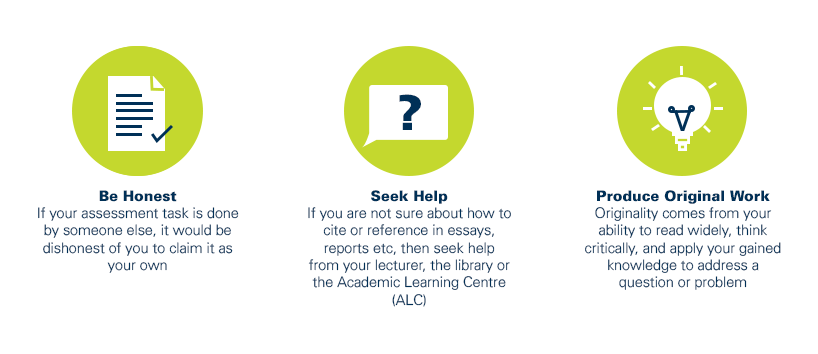
As a CQUniversity student you are expected to act honestly in all aspects of your academic work.
Any assessable work undertaken or submitted for review or assessment must be your own work. Assessable work is any type of work you do to meet the assessment requirements in the unit, including draft work submitted for review and feedback and final work to be assessed.
When you use the ideas, words or data of others in your assessment, you must thoroughly and clearly acknowledge the source of this information by using the correct referencing style for your unit. Using others’ work without proper acknowledgement may be considered a form of intellectual dishonesty.
Participating honestly, respectfully, responsibly, and fairly in your university study ensures the CQUniversity qualification you earn will be valued as a true indication of your individual academic achievement and will continue to receive the respect and recognition it deserves.
As a student, you are responsible for reading and following CQUniversity’s policies, including the Student Academic Integrity Policy and Procedure. This policy sets out CQUniversity’s expectations of you to act with integrity, examples of academic integrity breaches to avoid, the processes used to address alleged breaches of academic integrity, and potential penalties.
What is a breach of academic integrity?
A breach of academic integrity includes but is not limited to plagiarism, self-plagiarism, collusion, cheating, contract cheating, and academic misconduct. The Student Academic Integrity Policy and Procedure defines what these terms mean and gives examples.
Why is academic integrity important?
A breach of academic integrity may result in one or more penalties, including suspension or even expulsion from the University. It can also have negative implications for student visas and future enrolment at CQUniversity or elsewhere. Students who engage in contract cheating also risk being blackmailed by contract cheating services.
Where can I get assistance?
For academic advice and guidance, the Academic Learning Centre (ALC) can support you in becoming confident in completing assessments with integrity and of high standard.
What can you do to act with integrity?